
How to Diagnose AC Short Cycling in Wasatch Front Heat


.avif)

Why Your AC Keeps Turning On and Off in Wasatch Front Summer Heat
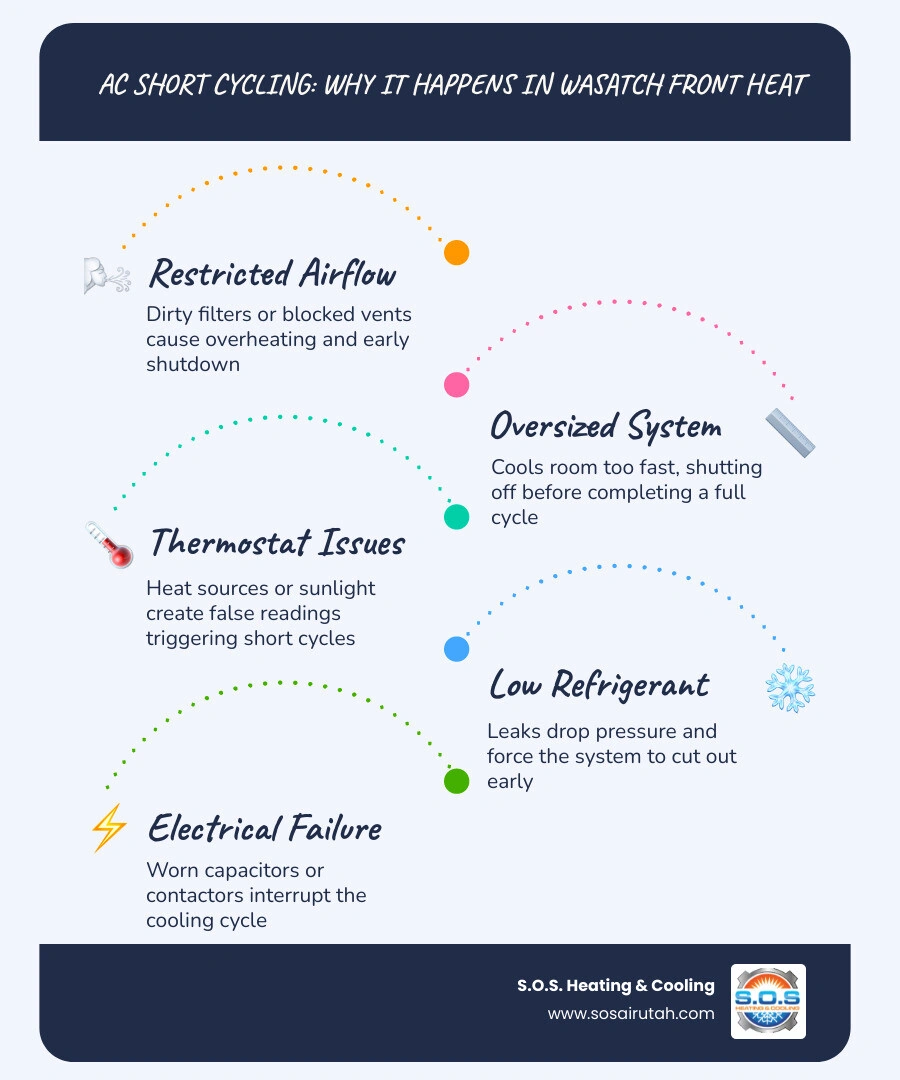
If your ac keeps turning on and off in Wasatch Front summer heat, the problem is almost certainly one of these five causes:
- Dirty or clogged air filter — restricted airflow forces the system to overheat and shut down early
- Oversized AC unit — cools the space too fast, shuts off before completing a full cycle
- Thermostat placement issues — heat sources or direct sunlight cause false temperature readings
- Low refrigerant — a leak causes pressure to drop, triggering the system to cut out
- Failing electrical components — a worn capacitor or contactor interrupts the cooling cycle
This is called short cycling, and it means your AC is turning on and off more frequently than it should. A healthy system runs about three full cycles per hour, each lasting roughly 10 minutes. If yours is clicking on and off every few minutes, something is wrong — and leaving it alone will make it worse.
The Wasatch Front adds its own layer of difficulty here. Summer temperatures regularly push past 100°F, the air is extremely dry, and the elevation sits around 4,300 feet. That combination puts real stress on AC systems, turning minor issues into urgent ones fast. Most AC breakdowns in Utah happen in July and August, right when you need your system the most.
I'm Bryson Ninow, an NATE-certified HVAC professional with years of experience helping Salt Lake Valley homeowners diagnose exactly why their ac keeps turning on and off in Wasatch Front summer heat — and getting their systems back to running reliably. In this guide, I'll walk you through every common cause, what you can check yourself, and when it's time to call a pro.
Understanding Short Cycling in Utah's Unique Climate
Living along the Wasatch Front is spectacular, but our weather is famously bi-polar. In the middle of July, we regularly experience diurnal temperature swings of up to 40 degrees. A crisp, 62°F morning in South Jordan can easily morph into a blistering 102°F afternoon by 5:00 PM. This rapid shift places immense back-and-forth stress on single-stage air conditioning systems that have to jump from dead silence to maximum capacity in a heartbeat.
But it isn’t just the heat that tests your AC; it is also our unique geographic conditions:
- High Elevation & Lower Air Density: Salt Lake City, Sandy, and the surrounding areas sit at an elevation of 4,200 to 4,800 feet. At this altitude, the air density is roughly 15% to 18% lower than at sea level. Because the air is thinner, your air conditioner has to move a higher volume of air to achieve the same cooling capacity. If your system is already struggling with restricted airflow, this thin air compounds the issue, causing internal temperatures to spike and triggering safety shutoffs.
- The Dry Arid Climate: Unlike humid coastal regions, Utah's humidity often drops below 15% in the summer. While this dry heat makes the high temperatures slightly more bearable for us, it causes dust, pollen, and fine sediment to hang suspended in the air.
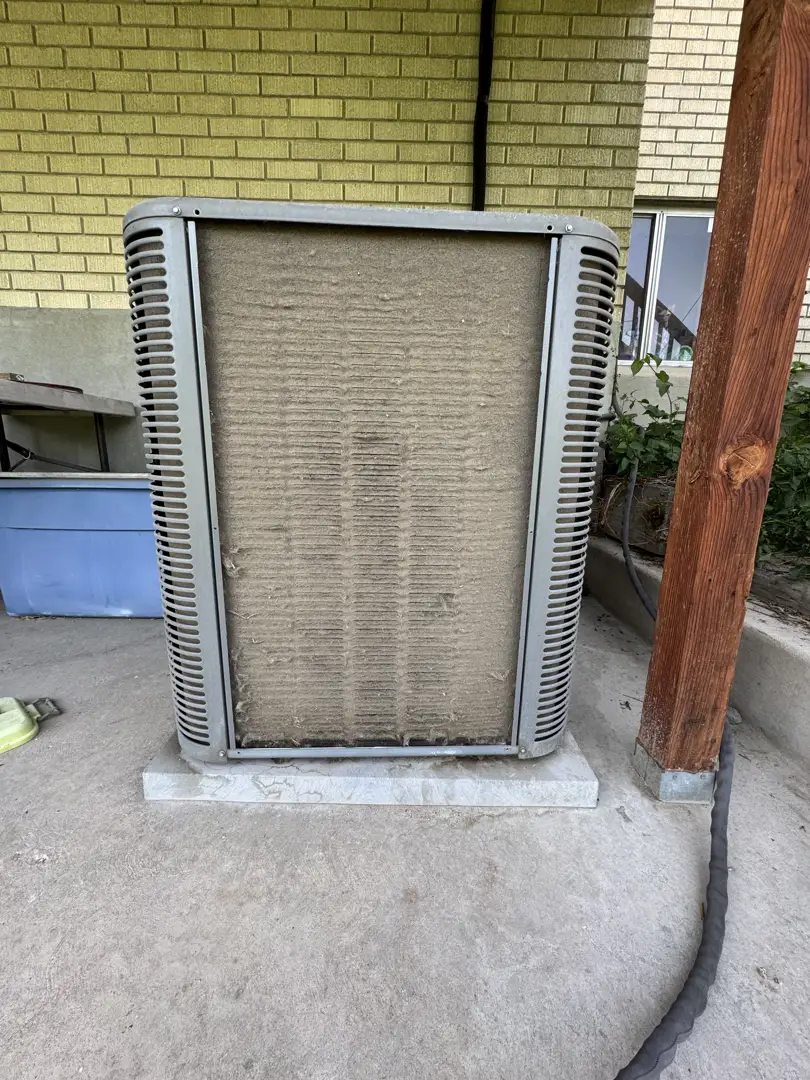
- The Winter Inversion Hangover: During the winter, the Salt Lake Valley suffers from strong temperature inversions that trap particulates close to the ground. This fine, microscopic dust settles into dormant outdoor condenser coils. When summer arrives, that baked-on grime acts as an insulating blanket, preventing the condenser from releasing heat and forcing the compressor to overheat and shut down prematurely.
To help understand how different types of systems handle these local conditions, let's look at how single-stage systems compare to modern variable-speed technology.
| AC System Type | Operation Style | Temperature Swing Tolerance | Strain in High Heat | Risk of Short Cycling |
|---|---|---|---|---|
| Single-Stage | On or Off (100% capacity only) | Drifts by 2 degrees or more | High (Frequent stop-and-go stress) | Very High |
| Two-Stage | High and Low gears (65% or 100%) | Drifts by about 1 to 2 degrees | Medium (Better capacity matching) | Moderate |
| Variable-Speed | Modulates in 1% increments (25%-100%) | Maintains within 0.5 degrees | Low (Runs continuously at low speed) | Extremely Low |
AC Keeps Turning On and Off in Wasatch Front Summer Heat: What Is Wrong?
When your central air conditioning unit behaves like a hyperactive light switch, it is experiencing a phenomenon known as short cycling. In a perfectly healthy setup, your system is designed to start up, run smoothly for a sustained period to evenly distribute cool air, and then shut down. This deliberate cycle allows the air in your home to mix properly, eliminating hot spots and drawing out excess moisture.
When short cycling occurs, the system starts up, runs for just a few minutes (sometimes even seconds), and then abruptly cuts out before completing its job. A few minutes later, it tries again. This constant stop-and-go cycle is incredibly damaging.
Each time your compressor starts up, it draws a massive burst of electrical current — up to six times the running amperage of steady operation. This electrical surge generates intense heat inside the motor windings. If the system is cycling on and off repeatedly, this heat never has a chance to dissipate, rapidly wearing out the compressor, fan motors, and control relays.
If you notice this happening, ignoring it is the fastest path to a complete system breakdown. You can read more about identifying these critical warnings in our guide on Signs Your AC Needs Immediate Repair.
Let's dive deep into the specific underlying issues that cause this behavior in Utah homes.
Why Your AC Keeps Turning On and Off in Wasatch Front Summer Heat: What Is Wrong with Your Thermostat?
Your thermostat is the brain of your HVAC system. If the brain is getting bad information, the body is going to behave erratically. The most common reason a thermostat causes short cycling is poor physical placement within the home, leading to what we call "ghost readings."
If your thermostat is installed on a wall that receives direct sunlight, or if it is located directly above a heat-producing appliance like a lamp, television, or kitchen stove, it will register temperatures that are much hotter than the rest of the house. The thermostat will signal the AC to kick on. As soon as the AC starts blowing cold air, the localized draft quickly cools the thermostat sensor down, making it think the entire house is cooled. It shuts the system off. Minutes later, the sun or the appliance heats the thermostat back up, and the cycle repeats.
Drafts from nearby supply vents, windows, or exterior doors can also trigger rapid cycling. If your AC is turning on and off but your home still feels warm and sticky, check the physical location of your thermostat. If you are experiencing general power or startup issues, you might also want to review AC Not Turning On: What to Check First to rule out basic electrical or connection faults.
AC Keeps Turning On and Off in Wasatch Front Summer Heat: What Is Wrong with System Sizing?
In the HVAC world, bigger is definitely not always better. Unfortunately, nearly 90% of central air conditioners are installed incorrectly or sized incorrectly, with approximately one-quarter of all residential systems being oversized for the homes they serve.
An oversized air conditioner is like putting a rocket engine inside a golf cart. When the system turns on, it blasts a massive volume of freezing air into your home, reaching the target temperature on your thermostat in five minutes or less. Because it satisfies the thermostat so quickly, it shuts down.
This rapid shutdown creates two major problems:
- Poor Air Mixing: The cold air is dumped quickly into one or two areas, leaving the rest of your home full of uncomfortable hot spots.
- No Dehumidification: An AC unit needs to run for sustained periods (at least 10 to 15 minutes) for the evaporator coils to get cold enough to condense and drain moisture from the air. An oversized system shuts off before this process even begins, leaving your home feeling cold but damp and clammy.
To prevent this, our team relies on detailed Manual J Heat Load Calculations. This scientific method evaluates your home's exact square footage, insulation values, window orientations, ceiling heights, and local climate data to determine the perfect system capacity. To understand how this delicate balance keeps your home comfortable, check out our resource on How Proper AC Sizing Affects Comfort.
Dirty Air Filters and Restricted Airflow
The single most common, yet easily preventable, cause of short cycling is a dirty air filter. Your air conditioner does not actually "create" cold; it removes heat from your indoor air by blowing it across a freezing cold evaporator coil.
If your air filter is clogged with dust, pet dander, or Utah dust storms, airflow is severely restricted. Without a steady stream of warm indoor air passing over the evaporator coil, the refrigerant inside the coil drops below freezing. The moisture in the air condenses on the coil and instantly freezes solid, turning your indoor unit into a block of ice.
As the coil freezes, safety switches detect the extreme drop in temperature and pressure, automatically shutting the system down to prevent catastrophic damage to the compressor. Once the system turns off, the ice begins to melt slightly, pressure rises, and the system attempts to start up again — only to freeze and shut down once more.
Regular filter maintenance is your first line of defense. For a comprehensive look at maintaining your system's airflow and overall health, read our AC Maintenance Draper UT Complete Guide.
Low Refrigerant Levels and Frozen Coils
Refrigerant is the lifeblood of your air conditioner. It circulates in a closed loop, absorbing heat from your indoor air and carrying it to the outdoor unit to be released. A common misconception is that air conditioners "use up" refrigerant over time. In reality, your system should never lose refrigerant unless there is a physical leak in the copper lines or coils.
When a leak occurs, the volume of refrigerant drops. This drop in volume causes a corresponding drop in pressure within the system. Modern air conditioners are equipped with low-pressure safety switches designed to protect the compressor from running dry, which would instantly destroy it.
When the system starts, the pressure drops below the safe threshold, and the low-pressure switch cuts power to the compressor. Once the unit shuts down, the pressure slowly rises back up to a "safe" resting level. The switch resets, the system starts up again, and the pressure immediately plummets, triggering another shutdown. This rapid cycle can destroy a compressor in a matter of days.
If you suspect your compressor is struggling with this issue, find out more about the mechanics and warning signs in our article on AC Compressor Short Cycling in Draper.
Electrical Failures and Failing Capacitors
Your air conditioner is a highly complex electrical appliance. Inside the outdoor condensing unit, two key components are highly susceptible to failing under the intense heat of a Wasatch Front summer: the start/run capacitor and the contactor.
Think of the capacitor as a heavy-duty battery that provides the high-voltage electrical boost needed to start the compressor and fan motors. Over time, sustained heat causes the oil inside capacitors to degrade, leading them to lose their electrical storage capacity. When a capacitor begins to fail, it can cause the compressor to stutter, click, and shut down shortly after starting.
The contactor is a heavy-duty switch that physically closes to send power to the compressor. If the electrical contacts become pitted, dirty, or worn, they can make intermittent contact, causing the system to rapidly turn on and off. Furthermore, if your system is drawing too much current due to a failing motor or dirty coils, it will trip your home's electrical breakers. If you are dealing with a breaker that won't stay reset, read our guide on AC Circuit Breaker Keeps Tripping: What It Means.
The Hidden Toll of Rapid AC Cycling on Your Home
Short cycling is not just an annoying sound in the background; it is an active threat to your home's comfort, your wallet, and your peace of mind. When your system is caught in this rapid loop, the negative effects accumulate quickly:
- Skyrocketing Energy Bills: Your AC uses the vast majority of its electricity during the startup phase. Running continuous, short bursts uses significantly more power than running a single, steady 20-minute cycle.
- Uneven Temperatures and Hot Spots: Because the system shuts off before the cool air has a chance to circulate through your ductwork, you will experience stark temperature differences between rooms.
- High Indoor Humidity: Without long, sustained cooling cycles, your AC cannot remove moisture from the air, leaving your home feeling sticky and promoting mold growth.
- Premature Compressor Failure: The compressor is the most expensive part of your system. Constant starting and stopping causes extreme mechanical wear that can shave years off its operational life.
While a well-maintained air conditioner should easily last 15 to 20 years, a system that is allowed to short cycle throughout the summer can suffer catastrophic failure in a fraction of that time. When facing major component failures, it is important to weigh your options. You can explore the financial breakdown of repairing an older system versus upgrading to a high-efficiency unit in our article on AC Repair vs New Unit: Long-Term Savings.
Homeowner Troubleshooting: Steps to Take Before Calling a Pro
Before you pick up the phone to schedule a service visit, there are several simple diagnostic steps you can perform yourself to see if you can resolve the issue or at least narrow down the cause.
Follow this step-by-step troubleshooting checklist:
- Check the Air Filter: Turn off your AC at the thermostat. Pull out your air filter and hold it up to a light source. If you cannot see light passing through the fibers, replace it immediately with a fresh, high-quality filter.
- Inspect Your Thermostat's Surroundings: Make sure there are no lamps, electronics, or appliances near your thermostat. Ensure it is not in the direct path of sunlight from a window or receiving a direct blast of cold air from a nearby supply vent.
- Open All Vents and Registers: Walk through your home and ensure that at least 80% of your supply registers and all return air grilles are completely open and unobstructed by furniture, drapes, or rugs. Closing vents does not save energy; it restricts airflow and causes short cycling.
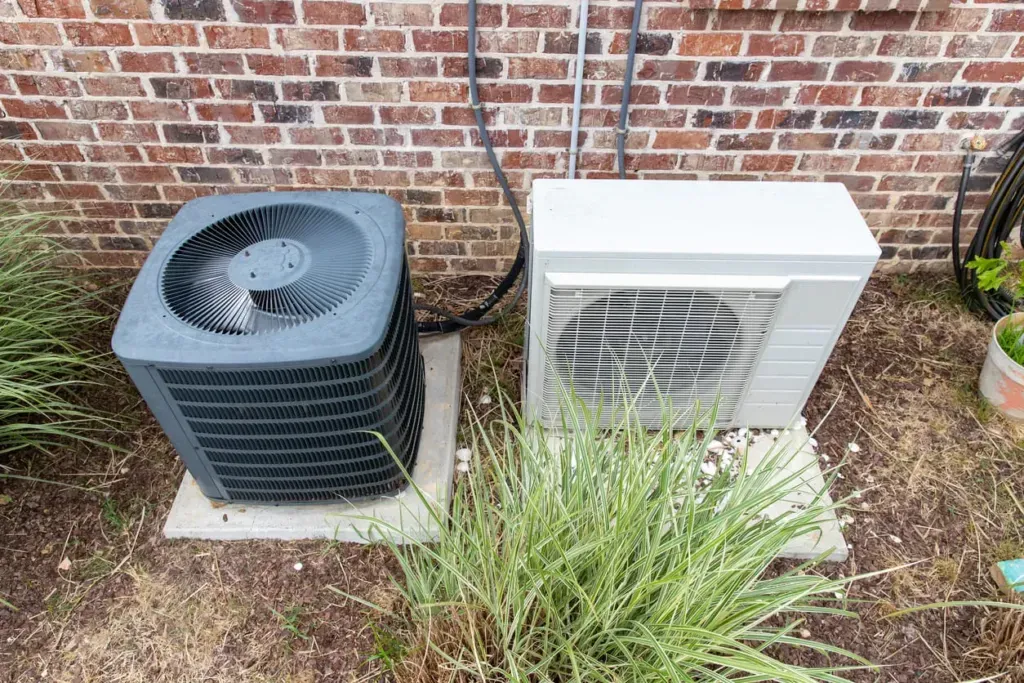
- Examine the Outdoor Condenser: Ensure the outdoor unit has at least two feet of clear space on all sides. Clear away any weeds, overgrown bushes, or accumulated leaves. If the metal fins are coated in a thick layer of dust or cottonwood fuzz, gently rinse them down with a garden hose (never use a pressure washer, as it will bend the delicate aluminum fins).
- Check for Ice Buildup: Look at the copper refrigerant lines entering your indoor evaporator coil and outdoor unit. If you see ice forming on the pipes or the cabinet, shut the system off immediately and set the thermostat fan to "On" to allow the ice to melt. Do not run the AC with ice on the lines, as this can destroy the compressor.
Frequently Asked Questions About AC Short Cycling
How long should a normal AC cooling cycle last?
On a typical summer day along the Wasatch Front, a properly sized air conditioning system should run for approximately 10 to 15 minutes per cycle, undergoing about three cooling cycles per hour. During extreme heatwaves (when temperatures exceed 100°F), it is completely normal for your system to run longer, sometimes continuously, to maintain your indoor temperature. This continuous operation is actually more efficient than frequent starting and stopping.
Can a dirty air filter cause my AC to turn on and off rapidly?
Yes, absolutely. A heavily clogged air filter restricts the volume of air passing over your indoor evaporator coil. This lack of warm air causes the coil temperature to drop rapidly, freezing any condensation on the coil. To prevent the compressor from being damaged by liquid refrigerant returning to it, safety limit switches will cut power to the system, causing it to shut down. Once the system warms up slightly, it will try to start again, repeating the cycle.
Is short cycling dangerous for my air conditioning unit?
While it does not pose an immediate safety hazard to your family, short cycling is highly destructive to the mechanical and electrical components of your air conditioner. The frequent electrical surges put extreme thermal stress on the compressor motor windings, which can lead to electrical shorts and complete compressor failure. Additionally, it causes rapid wear on contactors, fan motors, and capacitors, leading to frequent and expensive repairs.
Conclusion
If your ac keeps turning on and off in Wasatch Front summer heat, taking action early is the best way to avoid a hot, uncomfortable home and an expensive emergency repair bill. While changing a dirty air filter or adjusting your thermostat placement are great first steps you can take yourself, issues like low refrigerant, electrical failures, or system sizing problems require the tools and expertise of a trained professional.
At S.O.S. Heating & Cooling, we are dedicated to keeping our neighbors across Salt Lake City, Draper, Sandy, South Jordan, and Layton cool and comfortable all summer long. We provide honest, transparent diagnostics, 24/7 emergency repairs, and flexible financing options to fit your budget.
Preventive care is always the best investment you can make for your home. You can learn more about how simple, seasonal check-ups protect your system by reading Why Regular AC Tune-Ups Are Vital. For a deeper look at what our local technicians check during a visit, explore our AC Tune-Up Guide for Wasatch Front Homeowners and find out How Often Should You Schedule an AC Tune-Up to keep your warranty fully protected.
Don't let a short-cycling AC leave you sweating in the Utah heat. Schedule a professional diagnostic visit today and let our experienced team restore reliable, efficient comfort to your home.

Plumbing
Expert plumbing services offering reliable repairs, installations, maintenance, and emergency support.

Air Conditioning
Comprehensive air conditioning services include installation, repairs, maintenance, and energy-efficient solutions.
Heat Pumps
Enjoy year-round comfort with our energy-efficient and professional heat pump solutions.

Indoor Air Quality
Enhance your home’s air with our cutting-edge indoor air quality solutions you can trust.

Fireplaces
Transform your space into a warm and cozy atmosphere with our professional fireplace services.

Heating
Specialized heating services provide reliable installation, repair, system maintenance, and energy-optimization solutions.
Explore Our Latest Insights and Updates in Plumbing Services
What Does to the Rescue When You Need It Most Mean for HVAC Service in Utah
The Definitive Guide to Why Utah Has Some of the Hardest Water in the United States