

What Your Air Conditioner is Trying to Tell You


.avif)

What Your AC Is Trying to Tell You: A Noise Translation Guide
ac making strange noises what they mean is one of the most common questions Salt Lake City homeowners ask when their cooling system starts sounding off — and the answer matters more than most people realize. Modern air conditioners are engineered to run quietly, some as low as 19 decibels. When yours starts banging, hissing, or squealing, it is not just annoying. It is your system sending a warning.
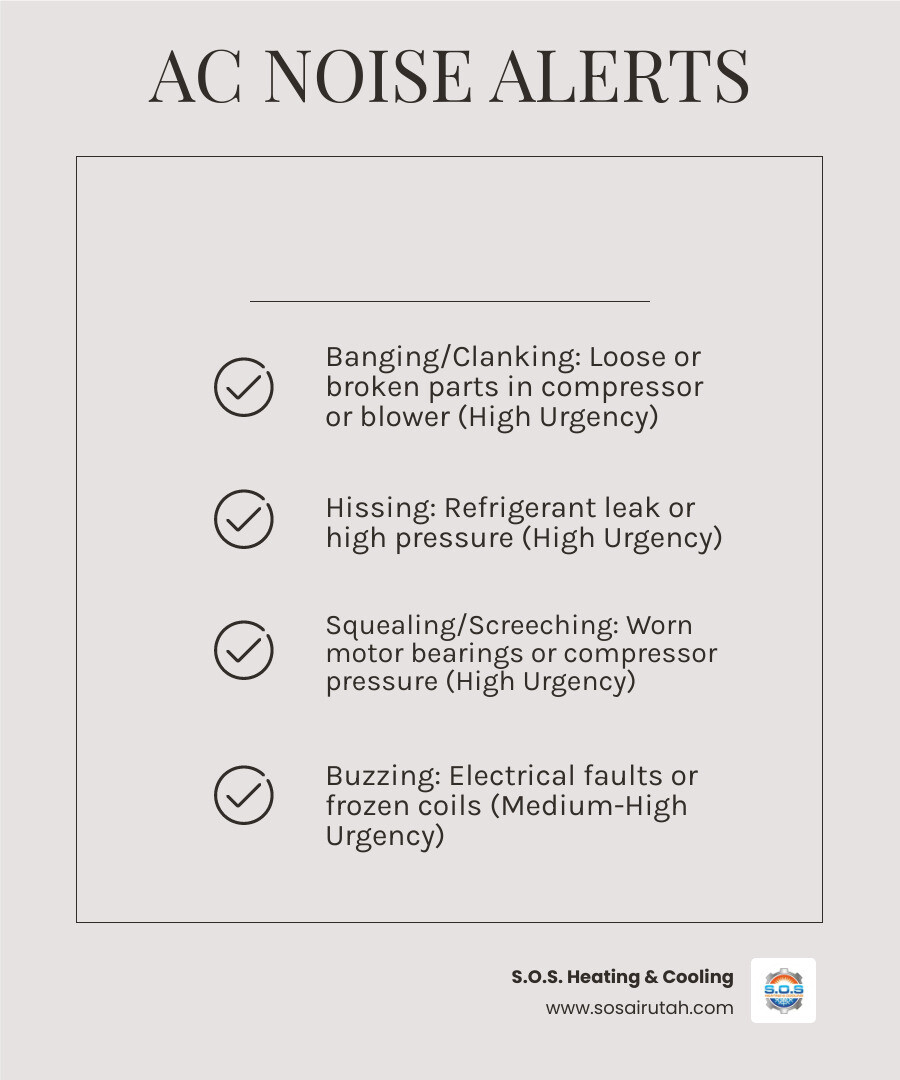
Here is a quick reference for the most common AC noises and what they typically signal:
| Noise | Most Likely Cause | Urgency |
|---|---|---|
| Banging / Clanking | Loose or broken part inside compressor or blower | High — shut off immediately |
| Hissing | Refrigerant leak or high internal pressure | High — call a pro |
| Squealing / Screeching | Worn motor bearings or high compressor pressure | High — shut off immediately |
| Buzzing | Electrical fault, frozen coils, or debris | Medium to High |
| Rattling | Loose panels, debris in outdoor unit | Low to Medium |
| Clicking (repeated) | Faulty contactor, capacitor, or thermostat | Medium |
| Gurgling / Bubbling | Clogged condensate drain or refrigerant leak | Medium |
| Whistling | Dirty air filter or blocked airflow | Low — check filter first |
| Grinding | Worn motor bearings | High — stop running the unit |
The good news: catching these audio clues early can mean the difference between a quick repair and a full system replacement. AC systems can last 15 to 20 years with proper care — but that lifespan shrinks fast when warning signs go ignored.
I'm Bryson Ninow, an HVAC professional with NATE, EPA, and DOPL certifications, and I've diagnosed more cases of ac making strange noises what they mean than I can count over my career in the trades. In this guide, I'll walk you through exactly what each sound means, what you can safely check yourself, and when it's time to call in a professional.
AC Making Strange Noises What They Mean: A Translation Guide
When we talk about an ac making strange noises what they mean, we are essentially translating the language of your HVAC system. A healthy unit should produce a gentle hum and a rhythmic whoosh of air through the vents. Anything else is a cry for help.
Banging and Clanking
If your outdoor unit sounds like someone threw a handful of coins into a dryer, you likely have a banging or clanking issue. This usually indicates that a part has come loose or broken entirely. Inside the outdoor condenser, it might be a loose fan blade hitting the cage. If the sound is coming from deep within the unit, it often signals a failure of internal components like the piston pin or connecting rod. This is a high-urgency situation; running the unit further can cause catastrophic damage to the entire system.
Squealing and Screeching
A high-pitched squeal is often heard right as a cooling cycle begins. In many cases, this stops about 10 to 15 seconds after the cycle starts. This is a classic sign of high internal pressure within the compressor. In older units, it might be a worn-out fan belt, but since many modern systems are beltless, it more frequently points to failing motor bearings. If you are curious about the specifics of these sharp tones, you can read more about Why Your AC Produces High-Pitched Sounds.
Hissing and Whistling
Hissing is almost always related to the movement of air or gas where it shouldn't be. The most common culprit is a refrigerant leak. Refrigerant is kept under high pressure; when it escapes through a tiny hole in the copper lines or the expansion valve, it creates a distinct hissing sound. Whistling, on the other hand, is usually an airflow issue. If your return vents sound like a tea kettle, it often means your system is struggling to pull air through a clogged filter or a blocked duct.
Troubleshooting AC Compressor Noise
The compressor is the heart of your cooling system, and it is also the most expensive part to replace. If you hear loud, persistent noises coming from the large outdoor cabinet, it is vital to act fast. For a deeper dive into diagnosing these specific sounds, check out our guide on Troubleshooting AC Compressor Noise.
Why Your AC Making Strange Noises What They Mean Often Points to the Compressor
The compressor is a sealed unit, meaning its internal parts—like the crankshaft, connecting rods, and piston pins—cannot be repaired individually. When these parts fail, they often break off and fly around inside the casing, creating a terrifying banging sound.
If you hear a single click when the unit starts or stops, that is usually just the electrical contactor engaging—perfectly normal. However, if the unit clicks repeatedly but refuses to start, you are likely looking at an electrical communication failure. This is often caused by a failing capacitor or a faulty relay. You can learn more about these electrical signals in our article on Why Your AC Makes Clicking Sounds.
Identifying Indoor vs. Outdoor Unit Sounds
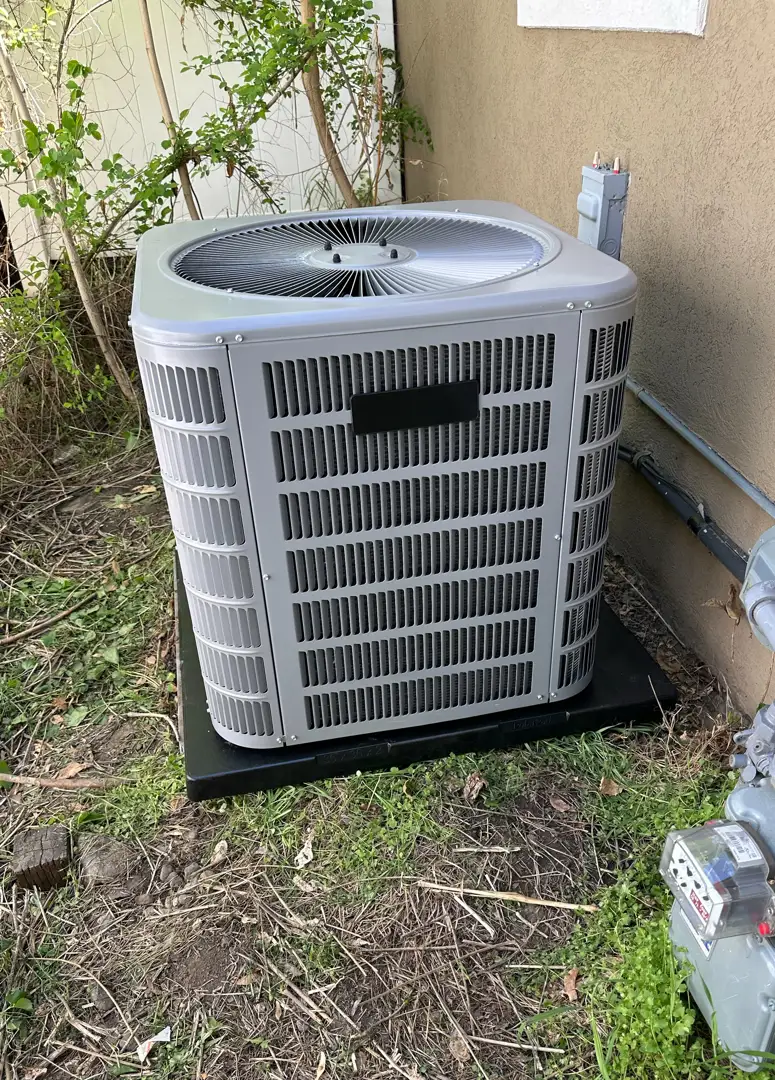
To solve the mystery of an ac making strange noises what they mean, you first need to pinpoint the location. Sounds from the indoor unit (the air handler or furnace) usually involve the blower motor or the evaporator coils. Sounds from the outdoor unit (the condenser) usually involve the fan or the compressor.
Rattling and Chattering
Rattling is one of the most common sounds we hear in places like Murray or Millcreek. Often, it is something simple like a loose panel screw vibrating against the metal frame. However, it can also be caused by twigs, leaves, or pebbles that have fallen into the outdoor unit. If the rattling is coming from your ductwork, it could be a sign that the metal is expanding and contracting or that a section of the duct has come loose. For residents in our area, we’ve put together a specific resource on Why AC Makes Rattling Noises in Murray Homes.
Gurgling and Bubbling
If you hear a sound like someone finishing a soda with a straw, your AC is likely dealing with liquid issues. Gurgling typically points to one of two things:
- Air bubbles in the refrigerant lines: This indicates a leak or an improper charge, as refrigerant lines should be a closed loop of pure liquid and gas.
- A clogged condensate drain line: Your AC removes moisture from the air. That water collects in a pan and flows out through a PVC pipe. If that pipe is clogged with algae or debris, the water can back up and gurgle.
Understanding Electrical AC Making Strange Noises What They Mean
Buzzing and humming are the "electrical" sounds of an HVAC system. While a light hum is normal, a loud, angry buzz is a red flag.
- Electrical Faults: A buzzing sound can be caused by loose wiring, a failing motor, or a malfunctioning contactor relay.
- Frozen Coils: If your air filter is so dirty that air can't pass through, the evaporator coils can actually freeze over into a block of ice. This puts immense strain on the blower motor, often resulting in a loud buzzing or vibrating sound.
- Blower Motor Strain: If the motor is struggling to turn because of dry bearings or a failing capacitor, it will hum loudly as it tries to draw more power to compensate.
For a comprehensive look at these electrical warnings, see our post on What Causes AC Buzzing Sounds in Homes.
DIY Troubleshooting and When to Call a Professional
Before you panic, there are a few safe DIY steps you can take. We always recommend starting with the basics to see if the fix is simpler than it sounds.
- Check the Air Filter: This is the #1 cause of AC issues. If you hold your filter up to a light and cannot see any light passing through, replace it immediately. We recommend doing this every 1 to 3 months.
- Inspect the Outdoor Unit: Turn off the power at the thermostat and the outdoor disconnect box. Look for any visible debris like branches or trash stuck in the fan blades.
- Tighten Panel Screws: If you hear a light rattle, use a screwdriver to ensure all exterior panels are snug.
- The 80% Vent Rule: Ensure that at least 80% of the supply vents in your home are open and unblocked. Closing too many vents creates backpressure that can lead to whistling and motor strain.
When to Call a Professional Immediately
While DIY is great for maintenance, certain sounds require an EPA-licensed technician. You should shut off your system and call us if you experience:
- High-pitched screaming: This signals dangerously high pressure.
- Loud banging: This indicates broken internal metal parts.
- Burning smells: This is a fire hazard involving electrical components.
- Tripped breakers: If your AC keeps tripping the circuit breaker, there is a short circuit or a grounded compressor.
Preventing Future Noises with Regular Maintenance
The best way to deal with an ac making strange noises what they mean is to prevent them from happening in the first place. In our Salt Lake City climate, the weather can be brutal. We see high summer temperatures that regularly climb into the 90s and 100s, putting massive strain on your system. Additionally, the air quality along the Wasatch Front can lead to dust and particulates clogging your outdoor coils faster than in other regions.
We recommend bi-annual tune-ups—once in the spring before the heat hits, and once in the fall. During a professional maintenance visit, we:
- Lubricate all moving parts: This prevents the screeching and grinding of dry bearings.
- Clean the coils: This ensures efficient heat transfer and prevents the "buzzing" associated with frozen units.
- Tighten electrical connections: This stops buzzing caused by loose wires.
- Check refrigerant levels: This prevents the hissing and gurgling of leaks.
Regular maintenance not only keeps things quiet but also protects your manufacturer's warranty and extends the life of your unit to that 15-to-20-year gold standard.
Frequently Asked Questions about AC Noises
Is it safe to run my AC if it’s making a loud banging noise?
No. A loud banging noise usually means a metal part has come loose or broken inside the compressor or blower motor. If you continue to run the unit, that loose part can act like shrapnel, destroying other expensive components. Turn the system off at the thermostat and call a technician immediately.
Why does my AC click repeatedly when it tries to turn on?
If your AC clicks but won’t start, it’s usually an electrical communication issue. The thermostat is telling the unit to turn on, but the contactor or capacitor is failing to "kickstart" the motor. This is a common repair, but it requires professional handling of electrical components.
Can weather conditions in Utah cause my outdoor unit to rattle?
Absolutely. High winds in areas like Draper or Herriman can blow debris, pebbles, or even heavy mulch into the outdoor condenser. If the rattling persists after the weather clears and you've checked for debris, it may be a loose fan motor mount.
Conclusion
Your air conditioner is the unsung hero of your home comfort, especially during a scorching Utah July. When it starts making noise, it is trying to protect itself from further damage. By listening to these audio clues and acting quickly, you can save yourself from the heat and the expense of a total system failure.
At S.O.S. Heating & Cooling, we are Salt Lake City’s HVAC experts. Whether you are in Bountiful, Sandy, or anywhere in between, we offer 24/7 emergency repairs to ensure you are never left in the heat. From minor rattles to major compressor issues, our team is dedicated to restoring your "Symphony of Silence."
Don't let a small sound turn into a big problem. Schedule your professional air conditioning service today and let us bring the quiet, cool comfort back to your home.
Explore Our Latest Insights and Updates in Plumbing Services
Don't Sweat the Bill: Easy Hacks to Keep Your Home Chilled

The Magic of Cold Air and How Your AC Makes It
How Your AC Moves Heat from Inside to Out