

The Ultimate Checklist for an AC Not Cooling Properly


.avif)

Why Your AC Not Cooling Properly — What to Check Before Calling a Pro
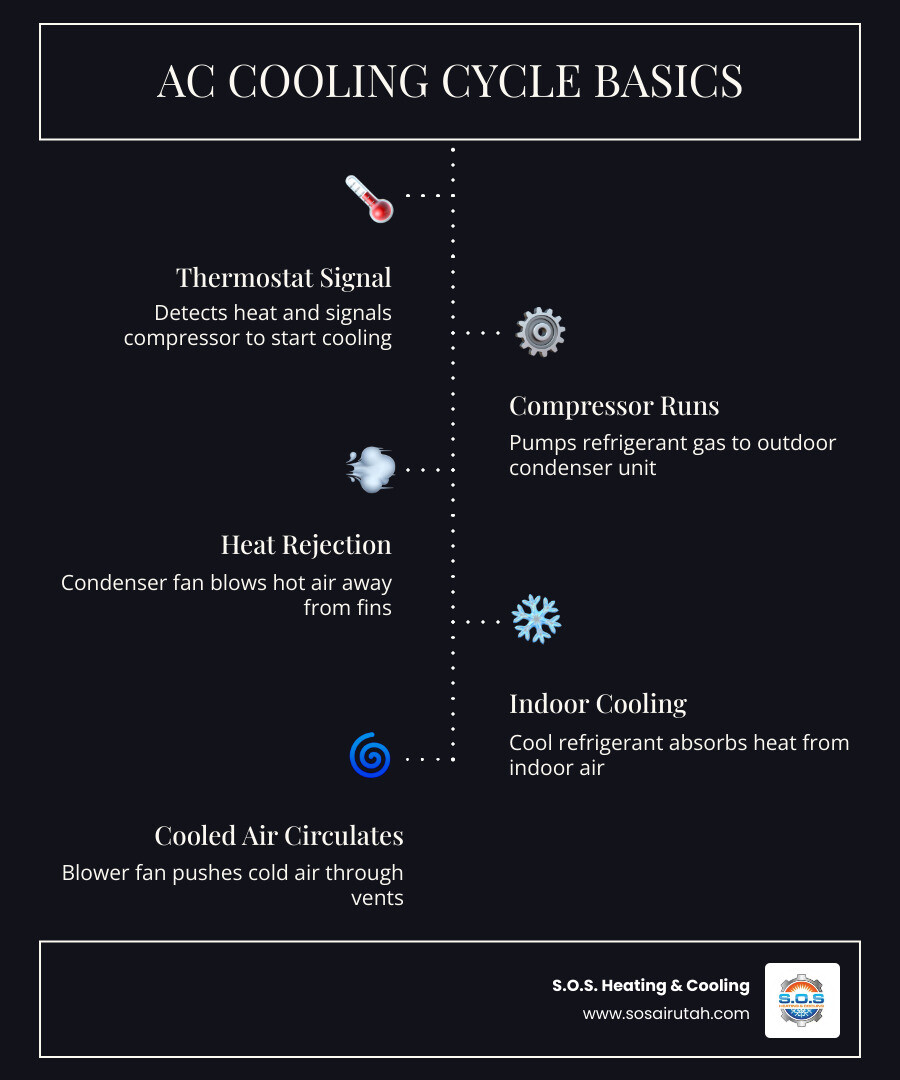
If your ac not cooling properly what to check is the question on your mind right now, here is a quick answer before we dive deeper:
Start with these checks in order:
- Thermostat — Make sure it's set to "Cool," the temperature is below the current room temp, and the fan is on "Auto"
- Air filter — A clogged filter is behind a surprising number of cooling failures; replace it if it looks gray or blocked
- Circuit breakers — Check both the indoor and outdoor breakers for trips
- Outdoor condenser unit — Clear any leaves, grass, or debris blocking airflow around the unit
- Supply vents and return grilles — Make sure none are blocked by furniture, rugs, or closed dampers
- Evaporator coil — Look for ice buildup on the indoor unit, which signals an airflow or refrigerant problem
- Refrigerant and mechanical components — Warm air, hissing sounds, or a humming outdoor unit that won't start point to issues that need a professional
Most AC cooling problems start with something simple — a dirty filter, a wrong thermostat setting, or a tripped breaker. But when those quick checks don't fix it, the problem usually runs deeper.
We know how miserable a hot house feels, especially during a Salt Lake City summer when temperatures push well past 95°F and your system is already working at its limit. Whether your AC is blowing lukewarm air, running nonstop without cooling down, or not turning on at all, this checklist will walk you through exactly what to look for — step by step — before deciding whether it's a DIY fix or time to call in a technician.
I'm Bryson Ninow, an NATE-certified HVAC professional with years of hands-on experience diagnosing every kind of ac not cooling properly what to check scenario — from a $5 filter fix to a failed compressor. I've built this guide around the real-world issues I see most often, so you can troubleshoot with confidence.
Start with the Basics: Thermostat and Power Checks
When we arrive at a home in Millcreek or Holladay for a "no cool" call, the first place we look isn't the big machine outside — it’s the small box on the wall. It sounds simple, but you would be surprised how often a cooling crisis is actually a settings mishap.
If your air conditioner is running but the house is still warm, check the "Fan" setting. If it's set to "On," the fan will blow air 24/7, even when the cooling cycle is off. This means you’re just circulating room-temperature air. Switch it to "Auto" so the fan only blows when the air is being actively chilled.
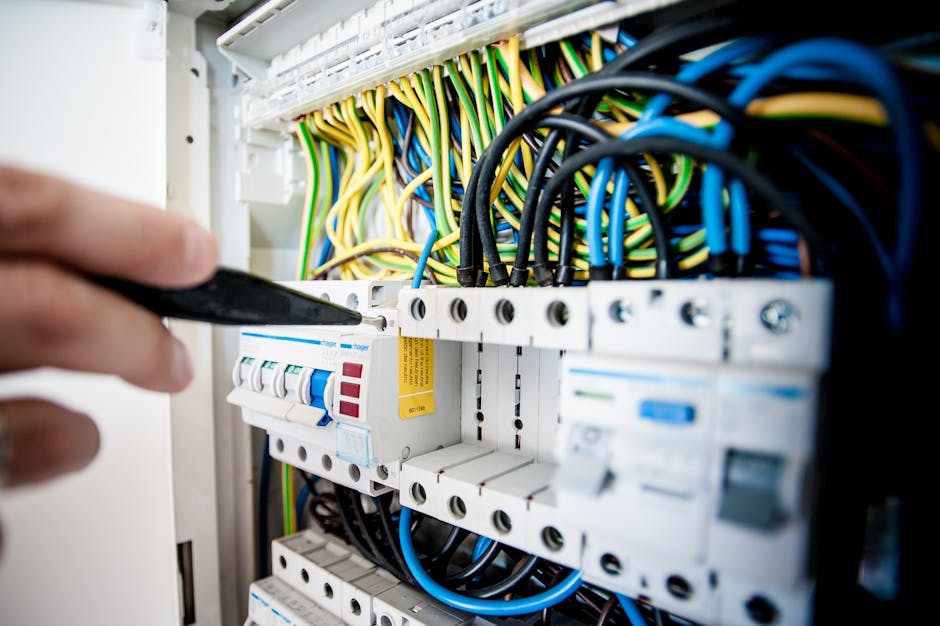
Next, check for power issues. Central air systems use two separate circuits: one for the indoor unit and one for the outdoor unit. If your indoor fan is blowing but the air is warm, the outdoor breaker might have tripped. This often happens during Utah’s summer storms or when the power grid is under heavy load.
For more on power-related failures, see our guide on Why Your AC Won't Turn On in Holladay.
How to verify your thermostat is set correctly
Modern smart thermostats are great, but they can be finicky. If the display is blank or flashing, it might just need a fresh set of AA batteries. If the screen is on, verify that the "Cool" mode is selected. We’ve seen many cases where a curious toddler or a accidental bump during cleaning switched the system to "Heat" or "Heat/Cool" mode with a high threshold.
If your settings look right but the house is still warm, try a "Hard Reset":
- Turn the thermostat to the "Off" position.
- Go to your electrical panel and flip the AC breaker to "Off" for 60 seconds.
- Flip it back "On."
- Wait 5 minutes (most systems have a built-in delay to protect the compressor) before turning the thermostat back to "Cool."
Keep an eye out for error codes. If you see a "low battery" icon or a specific numerical code, consult your manual. Sometimes, the internal calibration gets off, and the thermostat thinks it’s 70°F when it’s actually 78°F.
Airflow Obstructions: AC Not Cooling Properly What to Check First
Airflow is the lifeblood of your cooling system. Your AC doesn't actually "create" cold; it removes heat from your indoor air. If air can’t move across the coils, that heat stays trapped in your home. This is why we always tell our neighbors in Salt Lake City that airflow should be the first thing you investigate.
Start by walking through every room in your house. Are your supply vents (the ones that blow air) open? Are your return grilles (the larger vents that suck air in) clear of obstructions? We once found a dog bed placed directly over the only return vent in a Sandy home, which completely choked the system.
If you notice some rooms are cooler than others, you might be dealing with AC Has Weak Airflow in Salt Lake City. Addressing these blockages early can prevent a total system shutdown. For more tips, read about how to Solve AC Airflow Restriction in Salt Lake City.
Inspecting and replacing a dirty air filter
A dirty filter is the #1 cause of AC service calls. When a filter is clogged with dust, pet hair, and Salt Lake Valley pollen, the blower motor has to work twice as hard to pull air through. This leads to higher energy bills and, eventually, a frozen system.
- Check monthly: During our heavy cooling months (June through August), check your filter every 30 days.
- Replace regularly: Standard 1-inch filters usually need replacing every 30 to 90 days. If you have pets or live near construction in Draper or South Jordan, you’ll likely need to change them more frequently.
- The "Light Test": Hold your filter up to a light. If you can't see light passing through the fibers, it’s time for a change.
Neglecting this simple task is the fastest way to wear out your blower motor. Learn more about the signs that your Hvac Filter Needs Replacement and why it might be Time to Replace Your Air Conditioner Filter.
Troubleshooting an AC not cooling properly what to check in the ductwork
If your vents are open and your filter is clean, but you’re still sweating, the problem might be in the "veins" of your home — the ductwork. Over time, ducts can pull apart, or flexible ducts in attics can get kinked or crushed.
If a duct becomes disconnected in your attic, you aren't just losing air; you are literally paying to air-condition your attic while your living room stays hot. Check for:
- Disconnected joints: Look for silver tape that has peeled away or screws that have fallen out.
- Crushed flex ducts: Sometimes storage boxes or even heavy insulation can flatten these ducts, cutting off airflow to specific rooms.
- Air leaks: Feel for air blowing out of joints while the system is running.
Pro Tip: Do not use standard "duct tape" for repairs. Despite the name, it dries out and fails under heat. Use professional HVAC foil tape to seal any small gaps you find.
Inspecting the Outdoor Condenser and Indoor Coils
Now it’s time to head outside. The outdoor unit (the condenser) is responsible for releasing the heat collected from inside your home. In Utah, especially in areas like Bountiful and Murray, cottonwood seeds and lawn clippings are notorious for "blanketing" these units.
When the condenser fins are clogged, the heat has nowhere to go. This forces the compressor to run at higher temperatures and pressures, which can lead to a premature "death" of the unit. We recommend the "2-foot rule": keep at least 2 feet of clear space around the entire perimeter of the unit and 5 feet of clearance above it. Trim back any shrubs, weeds, or decorative grasses that have grown too close.
Understanding these external factors is a big part of AC Repair Recognizing Common Issues.
Troubleshooting a frozen evaporator coil
It sounds counterintuitive, but your AC can actually freeze solid in the middle of a July heatwave. This usually happens inside your indoor unit at the evaporator coil. When airflow is restricted (due to that dirty filter we mentioned) or refrigerant is low, the coil temperature drops below freezing. Humidity in the air then turns to ice on the coil.
Signs of a frozen coil:
- Visible frost on the copper refrigerant lines.
- Ice on the indoor cabinet.
- The AC is running, but very little air is coming out of the vents.
- Water pooling around the indoor unit as the ice melts.
If you find ice, turn the system off immediately. Running it while frozen can destroy the compressor. Switch the thermostat to "Off" and the fan to "On." This will blow warm air over the coils to thaw them safely. It can take 2 to 4 hours to melt completely. For a deeper dive into this issue, check out how to Fix AC That Freezes Up in Salt Lake City.
Cleaning a dirty condenser unit
You can safely clean the exterior of your condenser unit yourself.
- Shut off power: Use the disconnect switch near the unit or the breaker in your panel.
- Remove debris: Pull out any large leaves or sticks by hand.
- Gently hose it down: Using a garden hose with a gentle spray (never a pressure washer!), spray the fins from the inside out to push dirt and cottonwood seeds away from the unit.
- Straighten fins: If you notice the thin metal fins are bent, you can use a "fin comb" from a hardware store to gently straighten them.
This simple maintenance task can improve your system's efficiency by up to 15%.
Identifying Mechanical and Refrigerant Issues
Sometimes, the ac not cooling properly what to check list leads to issues that require specialized tools and EPA-certified handling. If you’ve checked the power, the filter, and the coils, and the air is still warm, you may have a mechanical failure or a refrigerant leak.
Refrigerant vs. Airflow Symptoms
| Symptom | Likely Airflow Issue | Likely Refrigerant/Mechanical Issue |
|---|---|---|
| Air Temperature | Often cold but very weak | Consistently warm or lukewarm |
| Sounds | Whistling or loud fan noise | Hissing, bubbling, or clunking |
| Indoor Unit | Often frozen or iced over | May be frozen or just warm |
| Outdoor Unit | Running normally | Compressor not starting or humming |
| Energy Bill | Moderate increase | Sudden, massive spike |
Signs of a refrigerant leak in your system
A common myth is that AC units "consume" refrigerant like a car consumes gas. In reality, your AC is a sealed system. If you are low on refrigerant, you have a leak.
Signs of a leak include a hissing or bubbling sound near the lines, ice on the lines, and high indoor humidity. Because refrigerant is a regulated chemical that can be hazardous, you should never attempt to "top it off" yourself. Low levels will eventually cause the system to blow warm air and can lead to water damage.
Learn more about Why Your AC Leaks Water Inside Your Home and the proper way to How to Fix AC Leaks in Salt Lake City. If you suspect a leak, see our list of Signs That Your AC Needs Immediate Repair.
When the AC not cooling properly what to check for electrical failure
If you hear your outdoor unit making a humming sound but the fan isn't spinning, you likely have a failed capacitor. Think of the capacitor like a giant battery that gives the motor the "kick" it needs to start. These are very common failure points in Utah because the extreme heat causes them to bulge and leak.
Other electrical failures include:
- Bad Contactor: This is the switch that tells the unit to turn on. If it’s pitted or burnt, the unit won't start.
- Blown Fuses: Many outdoor units have a "disconnect box" with internal fuses. If these blow, the unit loses all power.
- Failed Fan Motor: If the fan isn't spinning but you hear the compressor working, the motor has likely burnt out.
Frequently Asked Questions about AC Cooling Problems
Should I turn off my AC if it's not cooling properly?
Yes. If your AC is running but the temperature is rising, or if you see ice on the unit, turn it off. Continuing to run a struggling system puts immense strain on the compressor — the most expensive part of your AC. It’s much cheaper to fix a leak or replace a capacitor than it is to replace a burnt-out compressor.
Why is my AC running but not cooling the house?
Beyond the DIY fixes like filters and thermostats, it could be that your unit is undersized for your home or that the Utah heat is simply exceeding the system’s design limit. Most AC units are designed to keep a home about 20 degrees cooler than the outside temperature. If it's 105°F in Salt Lake City, your AC might struggle to get the house below 75°F.
How do I reset my AC system if it's not blowing cold air?
The best way to reset is the "5-minute power cycle." Turn the system off at the thermostat, flip the breaker off for 5 minutes to let the internal pressures equalize and the electronics reset, then flip it back on. If it doesn't start blowing cold within 15 to 30 minutes, the problem is likely mechanical.
Conclusion
Waking up in a sweltering house is never fun, but by following this checklist, you can rule out the simple fixes and get your home back to a comfortable temperature faster. Roughly 30% of "AC not cooling" calls are caused by a frozen evaporator coil, often triggered by something as simple as a $10 air filter.
At S.O.S. Heating & Cooling, we’ve been serving our neighbors from Bountiful to Riverton for years. We believe in customer convenience, which is why we offer 24/7 emergency repairs and no evaluation fees during business hours. Whether you just need a quick spring tune-up to prevent these issues or you are facing a major repair, we are here to help.
If you’ve gone through this checklist and your home is still warm, don't suffer through another hot night. Whether you need to decide between AC Repair or Replacement or you just aren't sure What to Do When Your AC Stops Cooling, our expert technicians are ready to restore your comfort.
Schedule your expert cooling service with S.O.S. Heating & Cooling today and stay cool all summer long!
Explore Our Latest Insights and Updates in Plumbing Services
Stop Wasting Watts with Variable Speed AC Technology
Upgrading Your Kitchen Sink and Faucet Without the Headache
Why Your Skin and Furniture Crave a Winter Humidifier