

First Steps to Take When Your Air Conditioner Refuses to Turn On


.avif)

Why Your AC Not Turning On Is More Common Than You Think
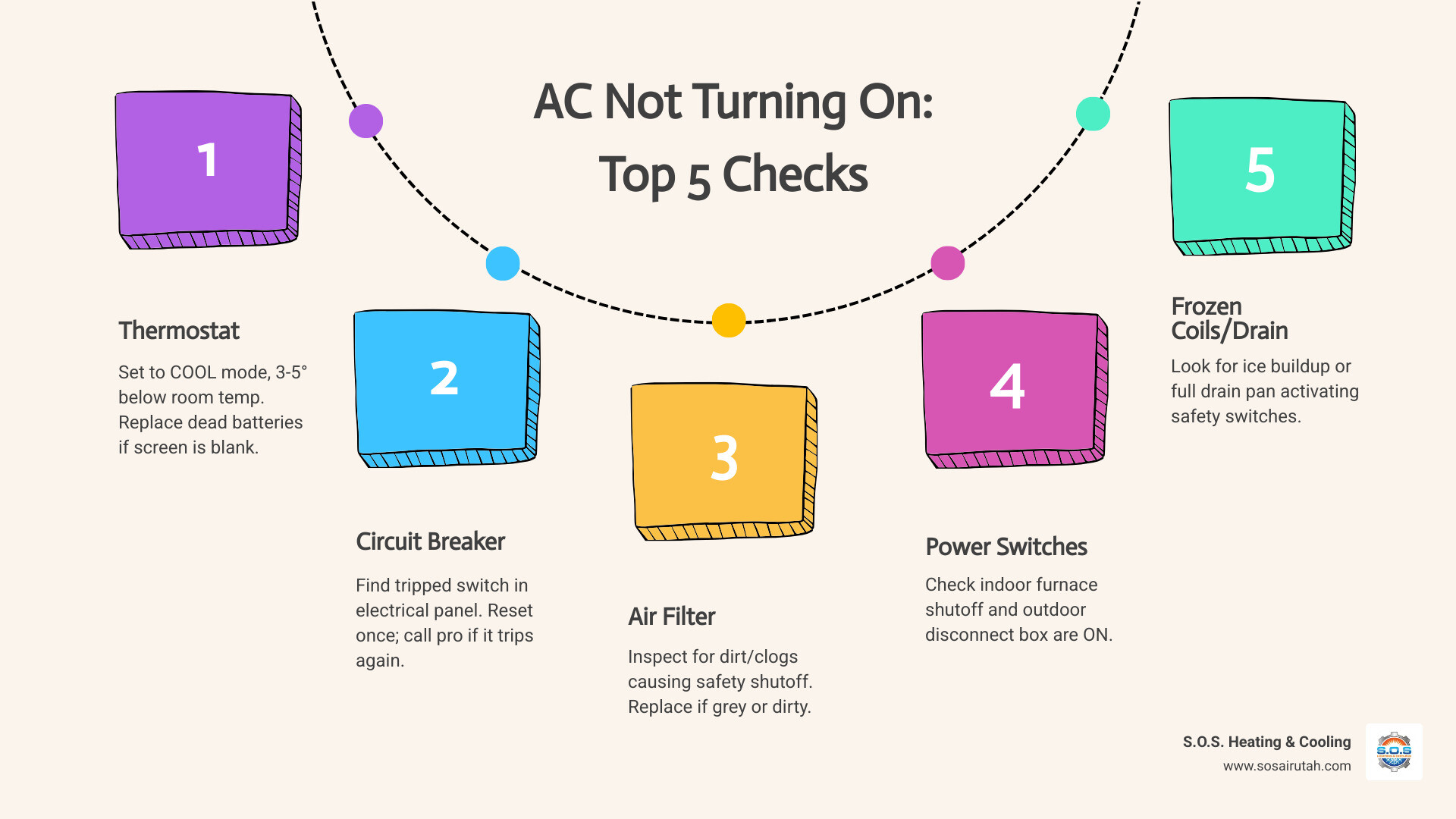
If you're dealing with ac not turning on what to check first, here's a quick answer before we dive deeper:
- Check your thermostat - Make sure it's set to COOL and the temperature is at least 3-5 degrees below the current room temperature. Replace batteries if the screen is blank.
- Check your circuit breaker - Look for a tripped breaker in your electrical panel and reset it once. If it trips again, stop and call a pro.
- Check your air filter - A heavily clogged filter can trigger a safety shutoff. Replace it if it looks dirty or grey.
- Check your power switches - Verify the indoor shutoff switch (near your furnace) and the outdoor disconnect box are both in the ON position.
- Check for frozen coils or a full drain pan - Ice buildup or standing water can activate safety switches that prevent your AC from starting.
It's a frustrating moment every Salt Lake City homeowner dreads: a sweltering day arrives, you reach for the thermostat, and nothing happens. Your AC simply won't turn on. The good news is that most no-start situations come down to a short list of common culprits, many of which you can identify yourself in just a few minutes. According to HVAC industry data, tripped circuit breakers and thermostat issues alone account for the majority of "no power" service calls — meaning there's a real chance you won't need an emergency visit to get your system running again.
That said, some causes go beyond what's safe or practical to fix on your own, and knowing the difference is just as important as knowing where to look.
My name is Bryson Ninow, and with years of hands-on HVAC experience and certifications including NATE and EPA, I've walked through the exact scenario of ac not turning on what to check first with countless homeowners across the Salt Lake City area. I'll guide you through each step clearly and safely so you know exactly what to do next.
AC Not Turning On: What to Check First for Power Issues
When your system is completely silent, the very first thing we recommend looking at is the power supply. It sounds simple, but you’d be surprised how often a small electrical hiccup is the culprit. Think of your AC like any other large appliance; if the "juice" isn't flowing, nothing else matters.
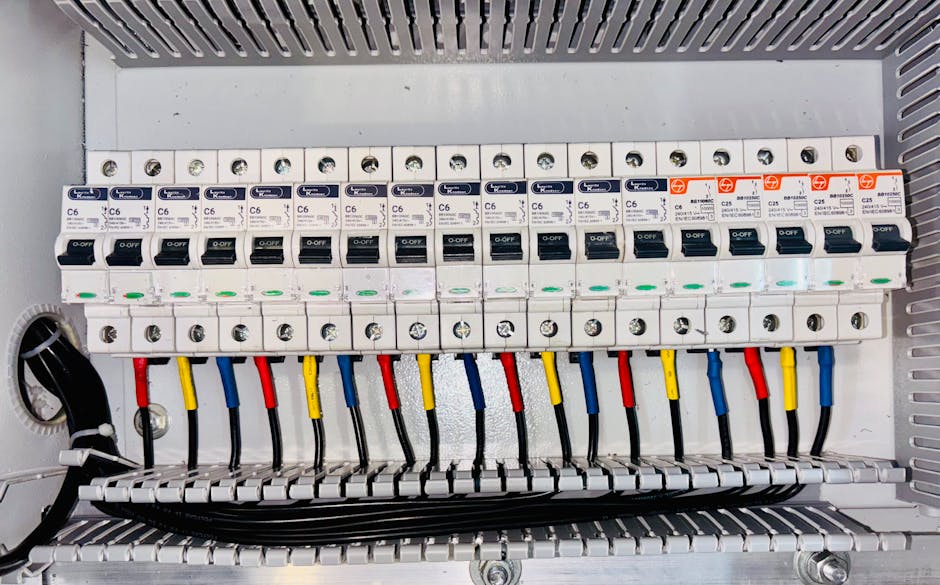
The Circuit Breaker
Start at your main electrical panel. During the peak of a Salt Lake City summer, your AC draws a significant amount of power—typically between 30 to 60 amps. If you were running multiple high-energy appliances during a heatwave, or if there was a minor power surge in your neighborhood, the breaker may have tripped to protect your home from an electrical fire.
Look for the switch labeled "AC" or "Air Conditioner." A tripped breaker usually sits in the middle position, between ON and OFF. To reset it, flip it all the way to OFF first, then back to ON. If it stays on and the AC starts, you’re in luck! However, if it trips again immediately, do not try a third time. This indicates a short circuit or a grounded compressor, which requires a professional eye. For residents in our service area, understanding Why Your AC Won't Turn On in Holladay often starts with these local electrical variations.
Indoor and Outdoor Shut-Off Switches
Next, check the physical switches on the units themselves.
- The Indoor Switch: This often looks exactly like a standard light switch and is usually located on or near your furnace or air handler (often in a basement, closet, or attic). It’s common for someone to accidentally flip this off thinking they are turning off a light.
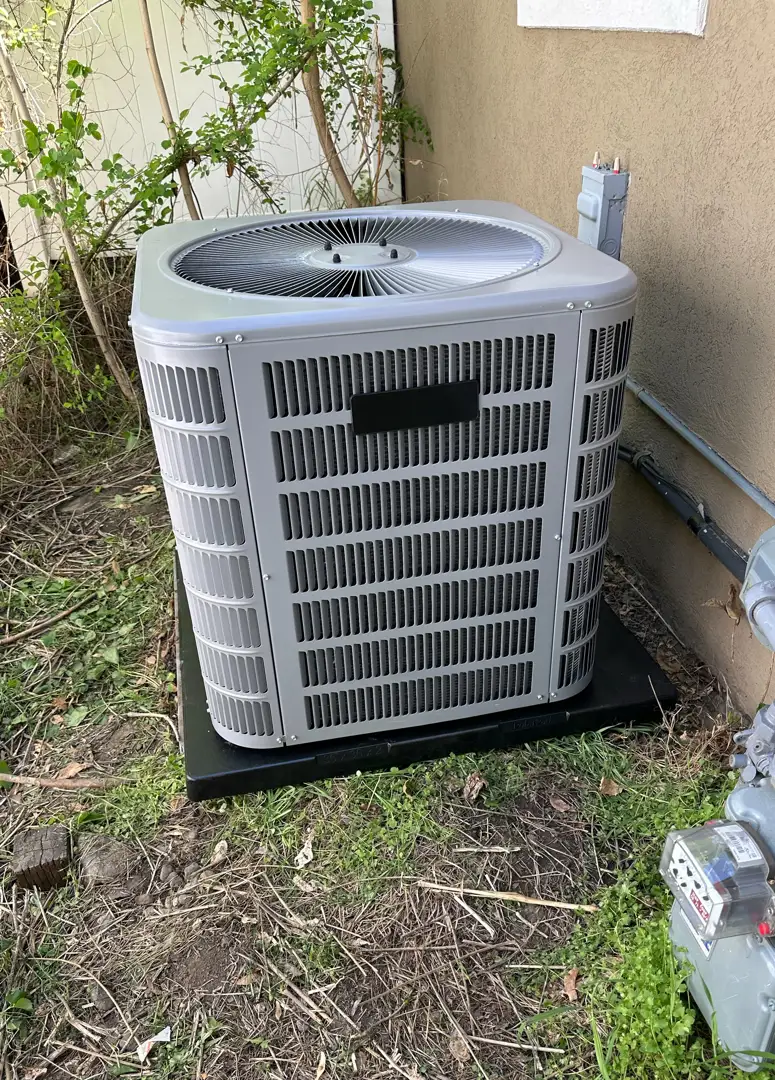
- The Outdoor Disconnect: Outside, next to your condenser unit, there is a metal box mounted on the wall. Inside this box is a "pull-out" or a switch that disconnects power to the outdoor unit. Sometimes these are left off after a previous service call or accidentally bumped by a landscaper.
Troubleshooting Your Thermostat and Control Settings
If the power is on but the system remains dormant, the thermostat is the next logical stop. As the "brain" of your HVAC system, any communication breakdown here means the rest of the unit won't know it's time to work. We often see AC Startup Problems After Winter Layton that stem directly from thermostat settings that weren't updated for the new season.
Why the thermostat is the first thing to check when your ac is not turning on
Before assuming the worst, verify these basics:
- The Blank Screen: If your thermostat screen is dark, it likely needs new batteries. Most modern thermostats use AA or AAA batteries. Even if your system is hardwired, batteries often act as a backup, and if they die, the signal to the AC can fail.
- The 5-Degree Rule: Ensure the thermostat is set to "COOL" (not "HEAT" or "FAN ONLY") and that the set temperature is at least 5 degrees lower than the current room temperature. This creates enough of a "call for cooling" to trigger the system.
- Signal Delays: Many units have built-in delay timers (usually 3-5 minutes) to protect the compressor from short-cycling after a power flicker. If you just adjusted the settings, give it five minutes before panicking.
- Wiring and Calibration: Over time, wires can vibrate loose behind the thermostat faceplate. If you're comfortable, you can pop the cover off to ensure the wires are snug in their terminals. If the unit seems to be "lying" about the temperature, it may need professional recalibration. Recognizing these AC Repair Recognizing Common Issues early can save you from a much hotter afternoon.
If the thermostat is on and calling for air, but you hear a clicking sound followed by nothing, this is one of the Signs Your AC Needs Immediate Repair, as it could indicate a failing contactor or control board.
Inspecting Airflow and Safety Shutoff Switches
Airflow is the lifeblood of your air conditioner. When airflow is restricted, the system becomes a safety hazard to itself, and modern units are designed to shut down entirely rather than risk permanent damage. This is a common reason for My AC Not Cooling My Home in Summer.
How a clogged filter leads to your ac not turning on what to check first
When your air filter is caked in Salt Lake City dust and pet dander, your blower motor has to work twice as hard to pull air through. This leads to two major problems:
- Overheating: The motor can get so hot that a thermal overload switch trips, shutting the unit down to prevent the motor from burning out.
- Freezing: Without enough warm air passing over the evaporator coil, the refrigerant inside gets too cold, causing humidity to freeze into a block of ice on the coil.
If you see ice on the copper lines or the indoor unit, turn the AC off immediately at the thermostat and switch the fan to "ON" to help it thaw. Do not try to scrape the ice off! Once it's thawed (which can take several hours), replace the filter with a fresh one (we recommend a MERV 8-11 for most homes) and try restarting.
The Condensate Drain and Float Switch
Your AC doesn't just cool the air; it removes moisture. That moisture drips into a drain pan and flows out through a PVC pipe. If that pipe gets clogged with algae or debris, the water backs up. To prevent a flood in your home, most systems have a "float switch" or "overflow switch." When the water level in the pan gets too high, the switch rises and cuts power to the AC.
If you find standing water in your drain pan, you've found your culprit. You can sometimes clear the clog using a wet/dry vacuum on the end of the drain line outside, but a professional flushing is often required to prevent it from happening again. Knowing What to Do When Your AC Stops Cooling includes checking these safety sensors. If you see these Indicators for Immediate AC Repair, like water leaking near your furnace, it's time to call in the experts.
Recognizing Mechanical Failures and When to Call a Pro
Sometimes, despite your best DIY efforts, the problem is mechanical or electrical in nature. These issues require specialized tools and training to fix safely. Below is a guide to help you distinguish between a quick fix and a professional repair.
| Symptom | Potential Cause | Fix Type |
|---|---|---|
| Blank thermostat screen | Dead batteries | DIY |
| Tripped breaker (once) | Power surge | DIY |
| Caked, grey air filter | Airflow restriction | DIY |
| Humming sound from outdoor unit | Faulty Capacitor | Professional |
| Burning smell from vents | Electrical short / Motor failure | Professional |
| Repeatedly tripping breaker | Grounded compressor / Short | Professional |
| Hissing or bubbling noises | Refrigerant leak | Professional |
| Unit clicks but won't start | Bad Contactor | Professional |
If you hear a humming or buzzing sound coming from your outdoor unit but the fan isn't spinning, you likely have a failed capacitor. Capacitors are like giant batteries that give the motors the "shove" they need to start. Warning: Capacitors store a dangerous electrical charge even when the power is off; never attempt to replace one yourself unless you are trained to discharge them safely.
Similarly, if your unit is older (10-15+ years), these Your HVAC System Needs Repair Indicators might suggest that the compressor—the heart of the system—is reaching the end of its life.
Frequently Asked Questions about AC Startup Problems
Can a dirty air filter really stop my AC from starting?
Yes, absolutely. While it might seem like a small thing, a clogged filter is the #1 cause of preventable system shutdowns. It triggers safety sensors due to overheating or causes the evaporator coil to freeze. When the system detects these dangerous conditions, it will cut power to prevent the compressor from "slugging" liquid refrigerant, which would destroy the unit.
What should I do if my circuit breaker keeps tripping?
If you reset the breaker once and it immediately flips back to the middle, stop. This is a clear sign of a serious electrical fault, such as a short circuit or a failing motor drawing too many amps. Repeatedly forcing a breaker to stay on can lead to an electrical fire or permanent damage to your HVAC system's expensive control boards.
How long should my central air conditioning unit last?
In the Salt Lake City climate, a well-maintained central AC unit typically lasts between 10 to 15 years. With exceptional care and annual tune-ups, some units can push toward 20 years. However, if your unit is over 12 years old and begins experiencing frequent "no-start" issues or requires expensive parts like a compressor or coil, it may be more cost-effective to consider a replacement.
Conclusion
When your ac not turning on what to check first becomes the question of the day, a systematic approach is your best friend. Start with the power, move to the thermostat, and then check your airflow. In many cases, a simple battery swap or a new air filter is all it takes to get your home back to a comfortable temperature.
However, if you've checked the breakers, replaced the batteries, and cleared the filters but your home is still heating up, it’s time for professional intervention. At S.O.S. Heating & Cooling, we’ve served our neighbors from Salt Lake City and Sandy to Layton and Draper for years. We provide 24/7 emergency support because we know that AC failures don't always happen during business hours.
Don't spend another minute "sweating the small stuff." If your system is acting up, we are here to help with expert diagnostics and reliable repairs. Schedule professional air conditioning service with our team today and let us get your cool back!
Explore Our Latest Insights and Updates in Plumbing Services
High Altitude HVAC: What Every Utah Homeowner Should Know
Upgrade Your Comfort with the Science of Advanced Air Conditioning
The Cold Hard Truth About Your Next AC Purchase and New Refrigerants