

How to Save Money on Cooling with These 5 Quick Changes


.avif)

Your Quick Answer: Best Thermostat Settings to Save Money During a Wasatch Front Summer
The best thermostat settings to save money during a Wasatch Front summer are straightforward once you know the numbers:
| Situation | Recommended Setting |
|---|---|
| Home and awake | 78°F |
| Away for 4+ hours | 85°F |
| Sleeping | 80–82°F (with ceiling fan) |
| Vacation or extended absence | 88°F max |
These settings follow U.S. Department of Energy guidelines and are specifically suited to Salt Lake City's high desert climate, where every degree below 78°F increases your energy usage by 3–5%.
If you've opened a Rocky Mountain Power bill this June and felt your stomach drop, you're not alone. Summer cooling costs along the Wasatch Front hit harder than the national average — air conditioning can account for up to 27% of your household energy bill in hot, arid regions like Salt Lake City, compared to just 12% nationally. And with the valley regularly pushing past 90°F, sometimes well above 100°F, your AC system works overtime just to keep up.
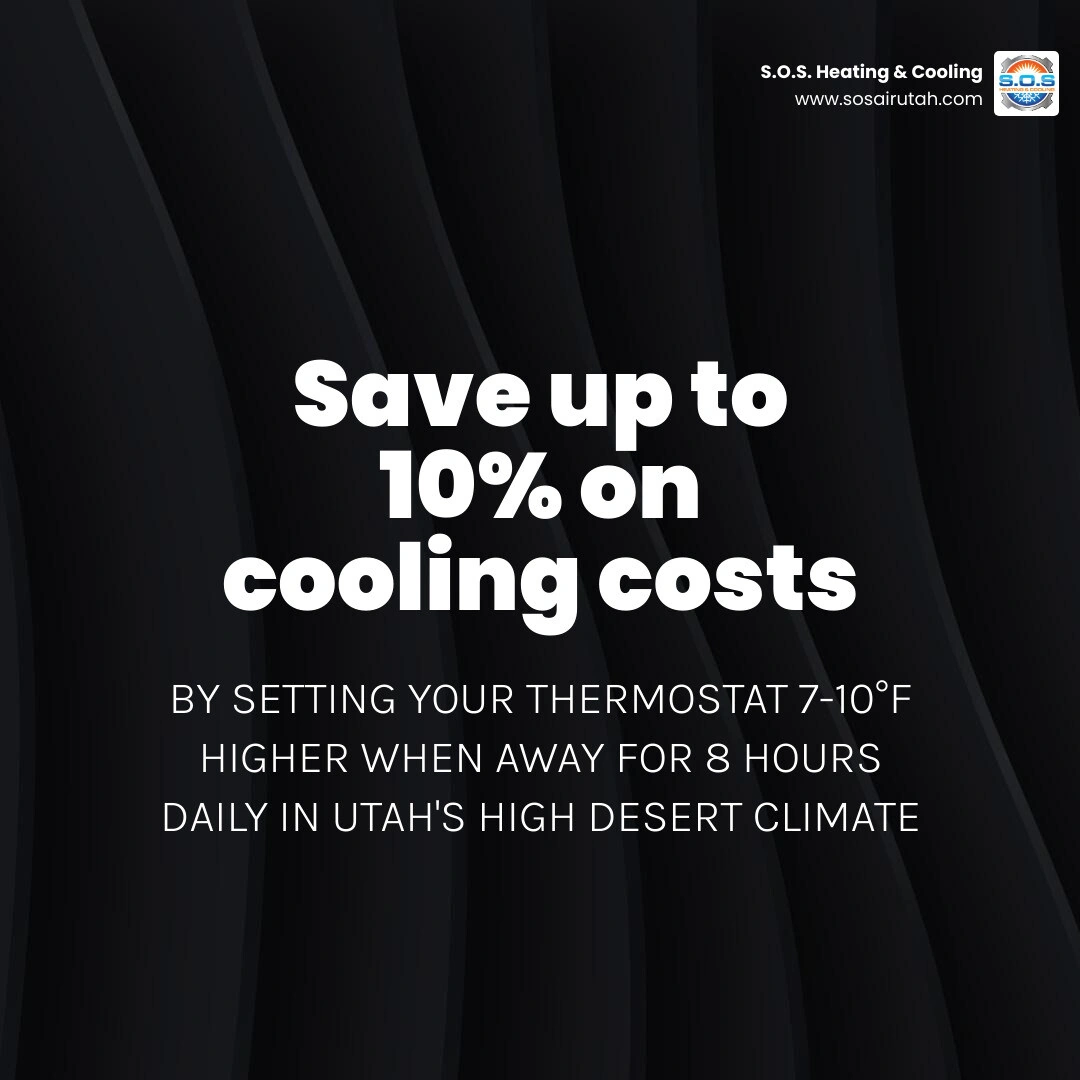
What most homeowners don't realize is that the biggest driver of those bills isn't the heat itself — it's how the thermostat is set. Small, consistent adjustments can make a surprisingly large difference. According to the U.S. Department of Energy, adjusting your thermostat by 7–10 degrees during periods of inactivity for just 8 hours a day can save up to 10% on your annual energy costs. And at Salt Lake City's elevation of approximately 4,200 feet, where thinner air makes your AC work harder than it would at sea level, getting those settings right matters even more.
This guide walks you through five practical changes — starting with your thermostat and building out from there — that can meaningfully reduce your summer cooling costs without making your home uncomfortable.
I'm Bryson Ninow, an HVAC professional, and I've helped countless Wasatch Front homeowners dial in the best thermostat settings to save money during a Wasatch Front summer while navigating Utah's unique high desert climate. In the sections below, I'll break down exactly what works here — and why generic advice often falls short for our region.
1. Master the Best Thermostat Settings to Save Money During a Wasatch Front Summer
Finding the sweet spot between comfort and cost-efficiency is the first and most impactful step you can take. Along the Wasatch Front, many homeowners default to keeping their homes at a constant 72°F or 74°F all day long. While that might feel refreshing when it is 100°F in Sandy or Draper, it forces your air conditioner to run almost continuously during the hottest parts of the day.
To keep your bills in check, we recommend adopting the "78-Degree Rule" when you are home and active. At 78°F, your system does not have to fight nearly as hard against the scorching outdoor temperatures. Because Utah has a remarkably dry summer climate with average humidity levels hovering between 24% and 36%, 78°F feels significantly cooler and more comfortable here than it would in a humid coastal city.
When you leave your home for work or errands for four hours or more, raise that setting to 85°F. This creates a wider temperature gap, allowing your home to naturally warm up when nobody is there to appreciate the cooled air. By keeping the target temperature closer to the outdoor temperature, you drastically slow down the rate at which heat enters your living spaces.
To make sure your system is prepared to handle these adjustments efficiently, you should always take steps to Optimize Your AC's Performance and Improve Your AC Unit's Efficiency before the heat of summer truly peaks.
Why Turning Your AC Completely Off Is a Costly Mistake
One of the most common pieces of advice well-meaning neighbors share is to turn the air conditioner completely off when you leave for work. While this seems logical, it is actually a recipe for high energy bills and severe mechanical strain.
When you turn your AC completely off on a 95°F day in South Jordan or Herriman, the temperature inside your home can easily climb past 90°F. But the air temperature is only half the problem. Every physical object inside your home — the drywall, the hardwood floors, the kitchen countertops, and your heavy furniture — absorbs that heat. This is known as "thermal mass."
When you return home at 5:30 PM and switch the AC back on, the system has to work incredibly hard. It doesn't just have to cool down the hot air; it has to run long enough to draw the stored heat out of your walls and furniture. This results in an excessive, uninterrupted runtime during the hottest part of the evening, putting immense strain on your compressor and blower motor. Keeping the thermostat at a moderate 85°F when you are away prevents your home's thermal mass from superheating, making it much easier and cheaper for your system to bring the temperature back down to a comfortable level when you return.
The Math Behind Every Degree Above 78°F
If you are skeptical about how much a few degrees can actually save you, the math is incredibly encouraging. Regional energy data shows that for every single degree you set your thermostat above 80°F, you can save roughly 3% on your cooling costs.
Conversely, the energy penalty for dropping below the recommended baseline is steep. Each degree you set your thermostat below 78°F increases your system's energy consumption by 3–5%.
Let's look at how this plays out over a typical summer month:
- Setting your thermostat to 72°F: Running your AC at 72°F instead of 78°F can increase your cooling costs by up to 30%. This means you are paying significantly more each month just for those six degrees of cooling.
- Setting your thermostat to 78°F: This serves as your economical baseline, keeping your system's runtime reasonable while maintaining a comfortable indoor climate.
- Setting your thermostat to 82°F (with ceiling fans): If you can tolerate 80°F or 82°F by using ceiling fans to create a breeze, you can slash your cooling costs by an additional 6–12%.
To understand how these savings compound over the life of your air conditioner, check out our detailed guide on How Much Does a High Efficiency AC System Save.
2. Leverage Smart Thermostat Features for Utah's High Desert Climate
Over 40% of American households now have a smart thermostat installed, but very few homeowners actually use these devices to their full potential. In a climate as variable as the Wasatch Front, a smart thermostat is one of the most effective tools in your energy-saving arsenal. These devices go far beyond basic scheduling; they can track your habits, monitor local weather patterns, and adjust your home's temperature automatically.
By automating your daily temperature setbacks, you ensure that you never waste money cooling an empty house because you forgot to adjust the thermostat on your way out the door. Utilizing these advanced features is a key strategy when looking at How High-Efficiency AC Systems Reduce Summer Costs.
Navigating Rocky Mountain Power Peak Hours with Pre-Cooling
If you are on a time-of-use rate plan with Rocky Mountain Power, you know that electricity prices spike dramatically during peak hours. In Utah, these peak hours typically run from 3 PM to 10 PM on weekdays from June through September. This coincides perfectly with the hottest part of the day, when your air conditioner naturally wants to run the most.
To avoid paying premium rates to cool your home, you can use a strategy called "pre-cooling." Here is how to program your smart thermostat to do this automatically:
- The Pre-Cool Phase (1 PM to 3 PM): Set your thermostat to 75°F or 76°F. This intentionally lowers the temperature of your home (and its thermal mass) using cheaper, off-peak electricity.
- The Coast Phase (3 PM to 10 PM): When the peak rate period begins at 3 PM, program your thermostat to rise to 80°F or 82°F. Because you pre-cooled the home, your air conditioner will barely need to run during the first few hours of the peak period, allowing you to "coast" through the most expensive hours of the day.
- The Recovery Phase (10 PM onward): Once off-peak rates return at 10 PM, you can lower the thermostat back to your preferred sleeping temperature.
This simple shift in when you consume energy can dramatically lower your monthly power bills without sacrificing your comfort during the evening.
Smart Thermostat Settings to Save Money During a Wasatch Front Summer
To get the absolute most out of your smart thermostat, we recommend enabling several key features that are perfectly suited to our high desert climate:
- Geofencing: This feature uses your smartphone's location to determine when you have left the house. If you commute from Kaysville to Salt Lake City, your thermostat will recognize when you cross a certain boundary and automatically shift into its energy-saving "away" mode.
- Adaptive Recovery: Smart thermostats learn how long it takes your specific system to cool your home. Instead of turning on hours early and wasting energy, the thermostat calculates the exact moment it needs to start running to reach your target temperature right as you walk through the door.
- Rate Awareness: Some modern smart thermostats can connect directly to your utility provider's pricing schedule, automatically adjusting your home's temperature by a few degrees during peak demand periods to save you money.
Studies show that after installing a Nest smart thermostat, homes used an average of 10% less gas in the winter and 17.5% less electricity in the summer compared to what they had used previously. In Utah, a professional smart thermostat installation reaches full payback quickly, delivering noticeable annual energy savings.
3. Compensate for Utah’s High Elevation and Thin Air
If you have ever felt out of breath while hiking in the foothills above Millcreek or Holladay, you have experienced the effects of high elevation. What you might not realize is that your air conditioner struggles with our altitude in a very similar way.
Salt Lake City sits at an elevation of approximately 4,200 feet, with surrounding bench areas like Cottonwood Heights and Mt. Olympus climbing even higher. At these altitudes, the air is significantly less dense than it is at sea level. Because thin air has less mass, it cannot carry away heat as effectively.
This physical limitation leads to "altitude derating." For every 1,000 feet of elevation above sea level, an air conditioner loses roughly 3% of its cooling capacity. Along the Wasatch Front, your system is operating with an automatic 12% efficiency penalty compared to the exact same system running in a coastal city. To offset this natural loss of capacity, we have to be smarter about how we manage our systems. One way to combat this is by understanding How Variable Speed Technology Saves Energy, as these systems can adjust their fan speeds to compensate for thinner air.
High-Altitude Thermostat Settings to Save Money During a Wasatch Front Summer
Because your AC has to run longer to move the same amount of heat in our thin air, aggressive, sudden temperature changes are incredibly hard on the equipment. If you come home to a warm house and crank the thermostat down by eight degrees, your system will have to run continuously for hours to reach that target.
To protect your system and keep your bills low at high altitudes, use these strategies:
- Make Gradual Adjustments: Limit your temperature changes to no more than 4 degrees at a time. This keeps the system's run cycles manageable and prevents the compressor from overheating.
- Manage Your Airflow: Because the air is thin, maintaining unrestricted airflow is critical. Ensure all supply vents are open and that your return air grilles are completely clear of furniture, dust, and pet hair.
- Protect the Compressor: High-altitude systems run hotter. Scheduling regular professional maintenance ensures that your refrigerant levels are perfect and your electrical connections are tight, preventing expensive mid-summer breakdowns.
4. Maximize Passive Cooling and Airflow
Your air conditioner should not have to do all the heavy lifting on its own. By combining strategic thermostat settings with passive cooling techniques, you can keep your home feeling remarkably comfortable at higher temperatures.
The most effective tool at your disposal is the humble ceiling fan. During the summer, make sure your ceiling fans are set to rotate counterclockwise. This direction pushes air straight down, creating a "wind-chill effect" on your skin. While a fan does not actually lower the temperature of the room, the breeze makes you feel up to 4 degrees cooler than the ambient air temperature.
This means you can comfortably set your thermostat to 80°F or 82°F while you are in the room, saving up to 12% on your cooling costs. Just remember: fans cool people, not rooms. Turn them off when you leave the room to avoid wasting electricity.
Our high desert climate also gives us a massive advantage: dramatic diurnal temperature swings. It is not uncommon for a 95°F day in Bountiful or Centerville to drop down to a cool 65°F overnight. Take advantage of this by opening your windows in the evening once the outdoor temperature drops below 70°F. Run your fans to pull the cool night air through your home, then make sure to close all your windows and blinds by 9 AM to trap that cool air inside before the sun begins to bake the valley.
Window Treatments and Solar Heat Gain
The intense Utah sun radiating through your windows is one of the primary sources of heat gain in your home. If you leave your blinds open on south- and west-facing windows during a hot summer afternoon, you are essentially turning your home into a greenhouse.
To block this solar heat gain, consider these highly effective window treatments:
- Reflective Window Films: These thin, transparent sheets are applied directly to your glass and can block up to 70% of solar heat gain before it even enters your home.
- Cellular Shades: Also known as honeycomb shades, these window coverings trap air in distinct pockets, providing an excellent thermal barrier that can reduce solar heat gain by up to 60%.
- Closed Blinds and Curtains: Simply closing medium-colored drapes with white plastic backings during peak sunlight hours can reduce heat gain by up to 45%.
By combining these passive strategies, you significantly reduce the load on your air conditioner, allowing it to easily maintain your preferred thermostat settings.
5. Avoid Common Thermostat Mistakes That Spike Bills
Many homeowners unknowingly make simple mistakes that force their air conditioners to run inefficiently, leading to higher bills and premature system wear. To help you identify and correct these habits, we have put together a quick comparison:
| Efficient Habits | Costly Mistakes |
|---|---|
| Setting the thermostat to 78°F when home | Cranking the thermostat down to 68°F to "cool the house faster" |
| Keeping all supply vents open and clear | Closing vents in unused rooms to "save energy" |
| Leaving the thermostat fan setting on AUTO | Running the fan continuously on the ON setting |
| Changing air filters every single month | Leaving a dirty, clogged filter in place all summer |
| Scheduling annual professional tune-ups | Waiting for the system to break down before calling a pro |
Cranking your thermostat down to an extremely low temperature does not make your air conditioner blow colder air or cool your home any faster; HVAC systems run at the exact same speed regardless of the setting. It simply forces the system to run much longer, wasting energy and putting unnecessary strain on the compressor.
Additionally, closing vents in unused rooms is highly counterproductive. Modern HVAC systems are designed to operate with a specific amount of air pressure. Closing vents increases the static pressure inside your ductwork, which forces your blower motor to work harder, increases the likelihood of duct leaks, and can even cause your evaporator coil to freeze up.
To ensure your system is running safely and efficiently, AC Tune-Ups Prevent Breakdowns.
The Importance of Air Filter Maintenance in Dusty Utah
The Wasatch Front is a dusty, arid environment, and our summer air often carries high levels of pollen, dust, and wildfire smoke. Because your air conditioner has to pull air through your return vents to cool it, your system's air filter quickly becomes clogged with these airborne particles.
A dirty, clogged air filter acts like a wall, severely restricting the airflow into your system. When airflow is restricted, your air conditioner has to run much longer to cool your home, consuming significantly more electricity. In fact, replacing a dirty filter with a clean one can reduce your AC's energy consumption by up to 15%.
During the peak summer months of June, July, and August, we recommend checking and replacing your air filter every single month. We suggest using a MERV 11 filter. This level of filtration is strong enough to capture fine dust, pet dander, and smoke particles common to our valley, but it still allows for excellent airflow. If you notice your air filter is starting to "bow" or bend inward, it is a clear sign that the filter is heavily restricted and needs to be changed immediately.
Keeping up with this basic maintenance is a critical part of home care, and understanding The Importance of AC Tune-Ups will help keep your system running smoothly for years to come.
When to Upgrade Your Cooling System for Maximum Efficiency
Even the most strategic thermostat settings cannot completely overcome the limitations of an old, inefficient cooling system. If your air conditioner is more than 10 to 12 years old, it is likely operating with a SEER (Seasonal Energy Efficiency Ratio) rating of 10 or 13.
Modern high-efficiency cooling systems boast SEER2 ratings of 18 to 25. Upgrading to a modern, high-SEER system can slash your monthly cooling bills by up to 40% compared to an older unit. Furthermore, systems manufactured before 2020 often rely on R-22 Freon, a refrigerant that has been completely phased out due to environmental regulations. If your older system develops a refrigerant leak, repairing it can be incredibly expensive.
If you are ready to make a smart investment in your home's comfort and value, we encourage you to read our guides on Investing in an Efficient AC System and our comprehensive AC Tune-Up Guide for Wasatch Front Homeowners. For homes with consistent hot spots, you might also want to explore the Benefits of Zone Controlled Cooling Systems to keep different areas of your home at different temperatures without wasting energy.
Frequently Asked Questions about Wasatch Front Summer Cooling
Why does my AC struggle more in the Utah high desert than in humid climates?
In humid, coastal climates, an air conditioner spends a massive amount of its energy removing moisture (latent heat) from the air before it can actually lower the temperature. In Utah's dry high desert, our systems focus almost entirely on lowering the actual air temperature (sensible heat).
However, our high elevation (4,200+ feet) and intense solar radiation create a different challenge. The thinner air carries less heat mass, meaning your system has to move more air to achieve the same cooling effect. When you combine this thin air with the intense, unshaded afternoon sun hitting our valley homes, the heat gain entering your house can easily outpace your system's cooling capacity.
Should I close vents in unused rooms to save money on cooling?
No, you should never close supply vents in unused rooms. Your home's ductwork was carefully sized to handle a specific volume of air. When you close vents, you restrict the airflow, which increases the static pressure inside the system.
This pressure forces your blower motor to work much harder, leading to premature motor failure and increased energy consumption. It can also cause the cold air to back up, freezing your evaporator coil and potentially causing liquid refrigerant to flood back into your compressor, which can destroy the unit.
How much can I save by upgrading to a smart thermostat in Utah?
A properly programmed smart thermostat can save you between 10% and 20% on your summer cooling costs compared to leaving a manual thermostat set at a single temperature all day. In Utah, where summer utility bills can easily climb, this translates to significant annual energy savings. With local utility rebates often available to offset the initial purchase, a smart thermostat typically pays for itself quickly.
Conclusion
Saving money on your summer cooling bills along the Wasatch Front doesn't require you to sweat through the season. By mastering the best thermostat settings to save money during a Wasatch Front summer, leveraging your smart thermostat's advanced features, and utilizing passive cooling techniques, you can enjoy a comfortable home while keeping your energy bills under control.
At S.O.S. Heating & Cooling, we are dedicated to helping families throughout Salt Lake City, Bountiful, Draper, Sandy, and the surrounding communities stay comfortable all year long. Whether you need a seasonal AC tune-up, a smart thermostat installation, or a complete high-efficiency system upgrade, our team of certified professionals is here to help.
Don't let rising summer temperatures drain your wallet. Schedule expert AC repair along the Wasatch Front today and let us help you optimize your home's efficiency for a stress-free summer!
Explore Our Latest Insights and Updates in Plumbing Services
The Fantastic Four Components That Keep You Cool
Avoid the Summer Meltdown with These Proactive Spring Steps
Should You Fix or Flee Your Old AC Unit?