

Central Air vs Mini Split for the Wasatch Front Homes and Utah Heat


.avif)

Central Air vs Mini Split for the Wasatch Front Homes: Which System Actually Works Here?
Central air vs mini split for the Wasatch Front homes is one of the most common questions Utah homeowners face — and the answer isn't the same for every house on every block. Here's a quick breakdown to help you decide:
Quick Comparison: Central Air vs Mini Split for Wasatch Front Homes
| Factor | Central Air | Ductless Mini Split |
|---|---|---|
| Best for | Homes with existing ductwork | Homes without ducts, additions, problem rooms |
| Efficiency | SEER2 14.3–26 | SEER2 20–30+ |
| Altitude impact | Reduced airflow through ducts | Capacity drop ~17% above 5,000 ft |
| Zoning | Single thermostat | Room-by-room control |
| Heating | Requires separate furnace | Built-in heat pump (works to -13°F) |
| Air quality | Whole-home filtration | Individual filters per unit |
| Installation | Easier with existing ducts | No ducts needed, minimal wall penetration |
| Wildfire smoke | Centralized MERV-13 filtration | Frequent filter cleaning required |
The honest answer is this: if your home already has solid ductwork, central air is often the more cost-effective whole-home solution. But if you're dealing with a 1920s bungalow in Sugar House, a hot upstairs bedroom, or a room addition that never gets cool enough — a mini split may be the smarter fit.
Utah's climate is genuinely demanding. Summers regularly push past 95°F, winters can dip to single digits or lower, and the Wasatch Front sits between 4,200 and 4,800 feet above sea level. That altitude alone reduces air density by 15–18% compared to sea level, which changes how both systems perform. Playing thermostat Tetris across multiple floors is a real frustration for local homeowners — and choosing the wrong system makes it worse.
I'm Bryson Ninow, an NATE-certified HVAC technician with hands-on experience helping Wasatch Front homeowners navigate exactly this decision — from altitude-corrected sizing to maximizing rebates on high-efficiency systems. In this guide, I'll walk you through everything you need to know about central air vs mini split for the Wasatch Front homes so you can make the right call for your specific situation.
Understanding Central Air vs Mini Split for the Wasatch Front Homes
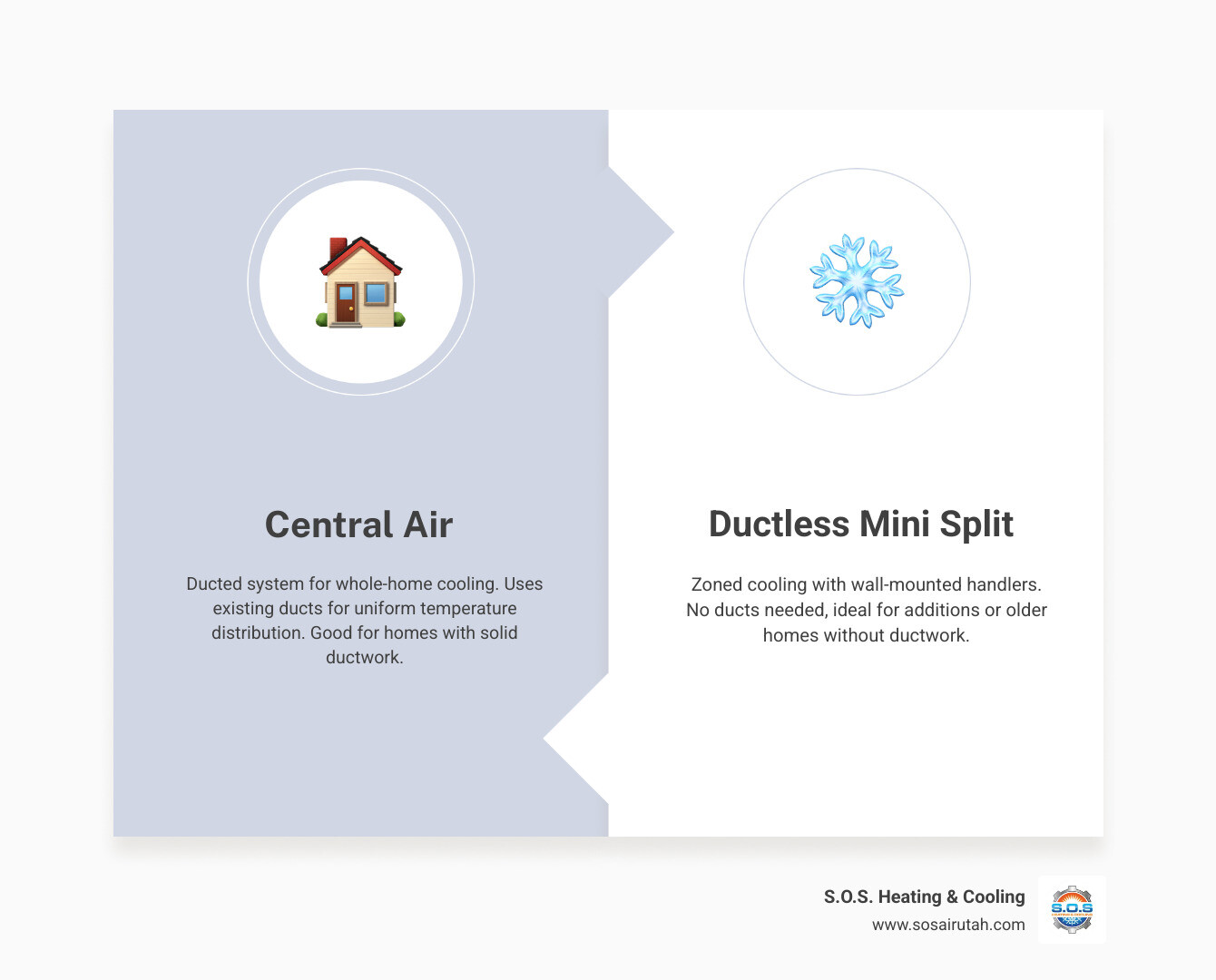
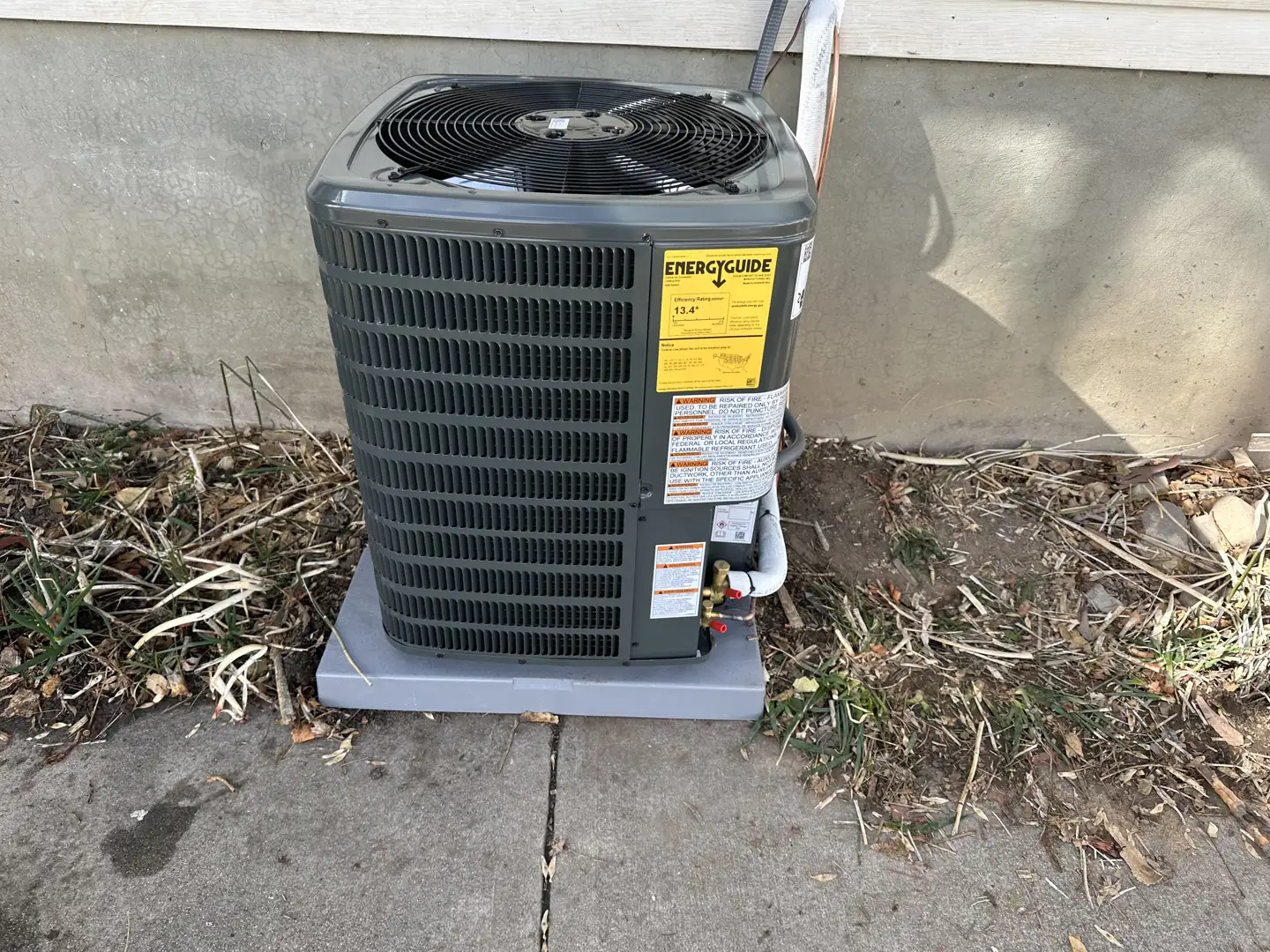
When we talk about central air vs mini split for the Wasatch Front homes, we are really comparing two different ways of moving heat. Both systems use an outdoor condenser and refrigerant lines to pull heat out of your home in the summer. However, the way they distribute that "coolness" is where they part ways.
Central air is like a "all-or-nothing" approach. It uses a large central unit to push air through a network of ducts and vents. If you want to find the perfect AC for your home, you have to consider if those ducts are in good shape. Mini-splits, on the other hand, are "targeted." They use small indoor air handlers mounted directly on the wall or ceiling of the room you want to cool. No ducts required.
Whole-Home Comfort with Central Air
For most modern homes in South Jordan or Herriman, central air is the standard. It relies on a heavy-duty blower (often part of your furnace) to circulate air. The biggest advantage here is uniformity. When the system is sized correctly, every room in the house stays roughly the same temperature. It also allows for sophisticated whole-home air filtration and humidification, which is a lifesaver during our dry Utah winters. If your home already has a duct network, a professional air conditioner installation in Salt Lake City, UT is usually the most straightforward path to comfort.
Targeted Cooling with Ductless Mini-Splits
Mini-splits are the rising stars of the HVAC world, especially for specific "problem areas." Because they don't use ducts, they avoid the 30% energy loss often associated with leaky ductwork in attics or crawlspaces. When you consider mini split heat pumps, you're looking at a system that offers incredible efficiency (SEER2 ratings up to 30+) and whisper-quiet operation. They allow for "zoned control," meaning you can keep the master bedroom at 68°F while leaving the guest room unconditioned, saving you a bundle on utility bills.
The Altitude Factor: How Utah’s Elevation Impacts HVAC Performance
Living on the Wasatch Front means we aren't just fighting the heat; we’re fighting thin air. At altitudes of 4,000 to 4,800 feet, the air density is significantly lower than at sea level. This is a critical detail that many "big box" installers overlook. Lower air density means there are fewer air molecules to carry heat away from your coils. For a detailed look at how local factors change the game, check out our ultimate HVAC Salt Lake City guide.
Capacity Loss at High Elevations
This "thin air" leads to what we call "derating." Essentially, a unit that is rated for 36,000 BTUs at sea level might only deliver about 30,000 BTUs in a place like Park City or the higher benches of Draper. Mini-split cooling capacity can drop by 17% or more at elevations above 5,000 feet. This is what you need to know before you replace your AC unit: if your contractor doesn't account for altitude, your new system will struggle to keep up on a 100-degree July afternoon.
Precision Sizing for the Wasatch Front
To get it right, we perform what is called a Manual J load calculation. This isn't just a guess based on square footage. It accounts for your home’s insulation, window orientation, and — most importantly — our local elevation. We also look at static pressure in your ducts. If the air is too thin and the ducts are too restricted, your central air blower will work twice as hard for half the results. Proper air conditioner installation in Salt Lake City, UT requires an expert who understands these physics.
Choosing the Right System for Your Utah Home Layout
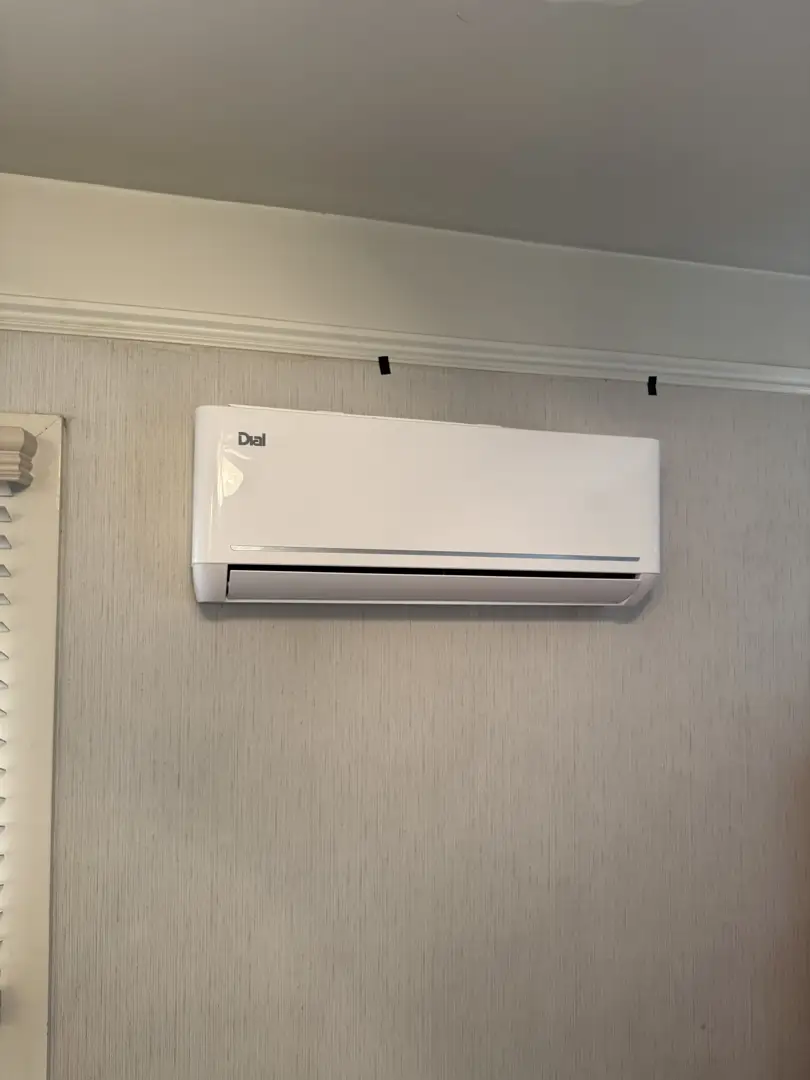
Your home's architecture often makes the decision for you. If you live in a historic 1920s bungalow in Sugar House or the Avenues, you likely have radiator heat and zero ductwork. In these cases, installing a ductless mini split system is a game-changer. It prevents you from having to tear apart your beautiful lath-and-plaster walls to install bulky ducts.
Solving the "Hot Upstairs" Syndrome
We’ve all been there: the basement is a walk-in freezer while the upstairs bedrooms feel like a sauna. This is a classic multi-level Utah home problem. Central air often struggles to push enough cool air to the highest point of the house. A ductless air conditioning setup in Salt Lake City can act as a "booster." By installing a single mini-split head in that hot master suite, you can finally sleep through the night without cranking the central AC so low that the basement occupants need parkas.
Retrofitting Older Wasatch Front Properties
Retrofitting ductwork into an older home can be a logistical and financial nightmare, often costing between $10,000 and $18,000 just for the ducts themselves. This is why mini split installation in Salt Lake City, UT has become so popular. We only need a small three-inch hole in the wall to connect the indoor and outdoor units. It’s the perfect solution for garage conversions, mother-in-law suites, or those charming Victorian homes that were never designed for modern cooling.
Efficiency and Incentives for Wasatch Front Homeowners
Efficiency isn't just about being "green" — it’s about keeping your hard-earned money in your pocket. In Northern Utah, heating accounts for roughly 60% of your energy costs, while cooling takes up the rest. Mini-splits are inherently more efficient because they use inverter technology to speed up or slow down exactly as needed, rather than clanging on and off like a leaf blower.
Maximizing Utah Utility Rebates
The good news is that both the federal government and local utilities want you to upgrade. Through the Inflation Reduction Act (IRA), you can often claim tax credits of up to $2,000 for high-efficiency heat pumps. Locally, Rocky Mountain Power (Wattsmart) and Dominion Energy (ThermWise) offer various rebates that can significantly lower the cost for a ductless heat pump or high-efficiency central system. When we perform a mini split installation in Salt Lake City, UT, we help you navigate these incentives to ensure you get every dollar you're owed.
Cold-Climate Performance in Utah Winters
A common myth is that mini-splits can't handle a "real" Utah winter. That might have been true twenty years ago, but modern "cold-climate" heat pumps are incredible. Many units can now extract heat from the outdoor air even when it’s -13°F outside. For homes in the Salt Lake Valley, a mini-split can often handle 95% of the heating season. For those extreme sub-zero nights, many homeowners opt for a "dual-fuel" setup where a gas furnace kicks in only when the temperature drops into the negatives. This gives you the best of both worlds.
Maintenance and Longevity in the Utah Climate
Whether you choose central air or a mini-split, the Wasatch Front environment is tough on machinery. We have extreme temperature swings, incredibly dry air, and "cottonwood season" that can clog up a condenser coil in a single weekend. A regular AC tune-up guide for Wasatch Front homeowners usually starts with one word: cleanliness.
Managing Air Quality and Wildfire Smoke
Utah’s "inversion" season and summer wildfires make indoor air quality a top priority. Central air systems have the edge here because they can use high-grade MERV-13 filters that scrub the air for the entire house. Mini-splits have individual filters in each head that need to be washed or replaced every few weeks, especially during smoke season. For the ultimate protection, we often recommend plasma ionization or UV lights to neutralize pollutants. You can find more on this in our ultimate HVAC Salt Lake City guide.
Protecting Equipment from Wasatch Snow
In cities like Bountiful or Sandy, we get serious lake-effect snow. It is vital to keep your outdoor unit clear. If snow piles up around the base, it restricts airflow and can cause the system to freeze over or trigger constant "defrost cycles," which wastes energy. During your annual service, we check the defrost sensors and ensure the outdoor unit is mounted high enough to stay above the snow line. Following a professional AC tune-up guide for Wasatch Front homeowners ensures your system lasts the full 15–20 years it’s designed for.
Frequently Asked Questions
Can mini-splits handle sub-zero Utah winters?
Yes! Modern cold-climate mini-splits are designed to provide efficient heat down to -13°F or even -22°F in some high-end models. They work by extracting tiny amounts of heat energy from the outside air. While they are incredibly effective for the majority of Utah's winter, we sometimes recommend a supplemental heat source (like a gas fireplace or furnace) for those rare nights when the temperature stays well below zero for extended periods.
Is central air vs mini split for the Wasatch Front homes better for air quality?
Central air generally wins on air quality because it can accommodate thicker, more powerful filters (like MERV-13) and whole-home air purifiers that clean the air in every room simultaneously. Mini-splits provide localized filtration. While they are great at filtering the air in a specific room, you have to maintain the filters in every single indoor unit to get the same effect, and they aren't quite as effective at dealing with the heavy particulate matter found during our valley inversions.
How does altitude affect central air vs mini split for the Wasatch Front homes?
Altitude is the "silent efficiency killer" in Utah. Because our air is thinner, your HVAC system has to move more volume to achieve the same cooling effect as a system at sea level. This leads to an approximate 17% capacity drop for units installed above 5,000 feet. This makes a professional Manual J load calculation essential. If you just buy a unit based on its "nominal" size without altitude correction, it will likely be undersized for our climate.
Conclusion
At the end of the day, the battle of central air vs mini split for the Wasatch Front homes usually comes down to your home's unique footprint. If you have a newer home with great ducts, stick with central air but consider a high-efficiency heat pump upgrade. If you have an older home, a new addition, or a room that refuses to stay cool, a mini-split is likely the "magic bullet" you've been looking for.
At S.O.S. Heating & Cooling, we’ve been serving the Salt Lake Valley since 1920. We know the "Sugar House shimmy" of trying to fit ducts into old closets, and we know exactly how to size a unit for the Draper benches. We offer 24/7 emergency repairs and flexible financing to make sure your family stays comfortable no matter what the Utah sky throws at us.
Ready to stop playing thermostat Tetris? Schedule your mini-split installation today or give us a call for a full home comfort assessment. We're here to help you find the perfect fit for your home and your budget.
Explore Our Latest Insights and Updates in Plumbing Services
Signs Your Home Is Too Dry or Too Humid
Are Tankless Water Heater Benefits Real in Hard Water Areas?
Stop Wasting Watts with Variable Speed AC Technology