

Slow Drain, No Gain? Quick Fixes for Your Clogged Bathtub


.avif)

When a Slow Drain Turns Your Bath into a Puddle
To fix a slow draining bathtub, start by removing and cleaning the drain stopper, then try pouring boiling water mixed with dish soap down the drain. If that doesn't work, use a baking soda and vinegar solution (let it sit 15-30 minutes, then flush with hot water), or use a plastic drain snake to pull out hair clogs. For stubborn blockages, you may need a plunger or professional help.
Quick Fix Methods:
- Clear the stopper - Remove visible hair and debris
- Boiling water + dish soap - Dissolves grease and soap scum
- Baking soda + vinegar - Natural cleaning reaction (15-30 min wait)
- Plastic drain snake - Pulls out hair clogs (under $5 at hardware stores)
- Plunger - Creates suction to dislodge blockages
Standing in ankle-deep water during your morning shower is frustrating. It's one of the first signs of a bathtub clog, which usually gets worse if ignored. The good news is that most slow-draining bathtubs in Salt Lake City are caused by simple clogs near the drain opening—hair, soap scum, and mineral deposits from our hard water. These are problems you can often fix yourself in under an hour.
For homeowners in the Salt Lake City area, knowing how to address clogged drains can save time and money. If DIY methods fail, our team offers professional drain cleaning services in Salt Lake City to tackle the toughest clogs.
At S.O.S. Heating & Cooling, we've helped countless homeowners troubleshoot common household issues. In this guide, we'll walk you through the most reliable DIY solutions to fix a slow draining bathtub and explain when it's time to call for professional help.
Why Is Your Bathtub Draining So Slowly?
When your bathtub drain slows down, it's a clear sign a blockage is forming. Ignoring it will only make the problem worse. Key warning signs include:
- Standing water during showers: This is the most common sign. Water pools around your ankles, and the tub takes several minutes to empty after a bath. This is a warning to fix a slow draining bathtub before it clogs completely.
- Gurgling sounds: Noises from the drain indicate trapped air struggling to escape past the blockage.
- Unpleasant odors: Smells like mildew or sulfur mean organic matter is trapped and decomposing in your pipes.
- Visible debris: Hair and soap scum around the drain opening is an obvious sign of a developing clog.
Acting on these early warnings can prevent a complete blockage and potential water damage.
The Usual Suspects: Hair and Soap Scum
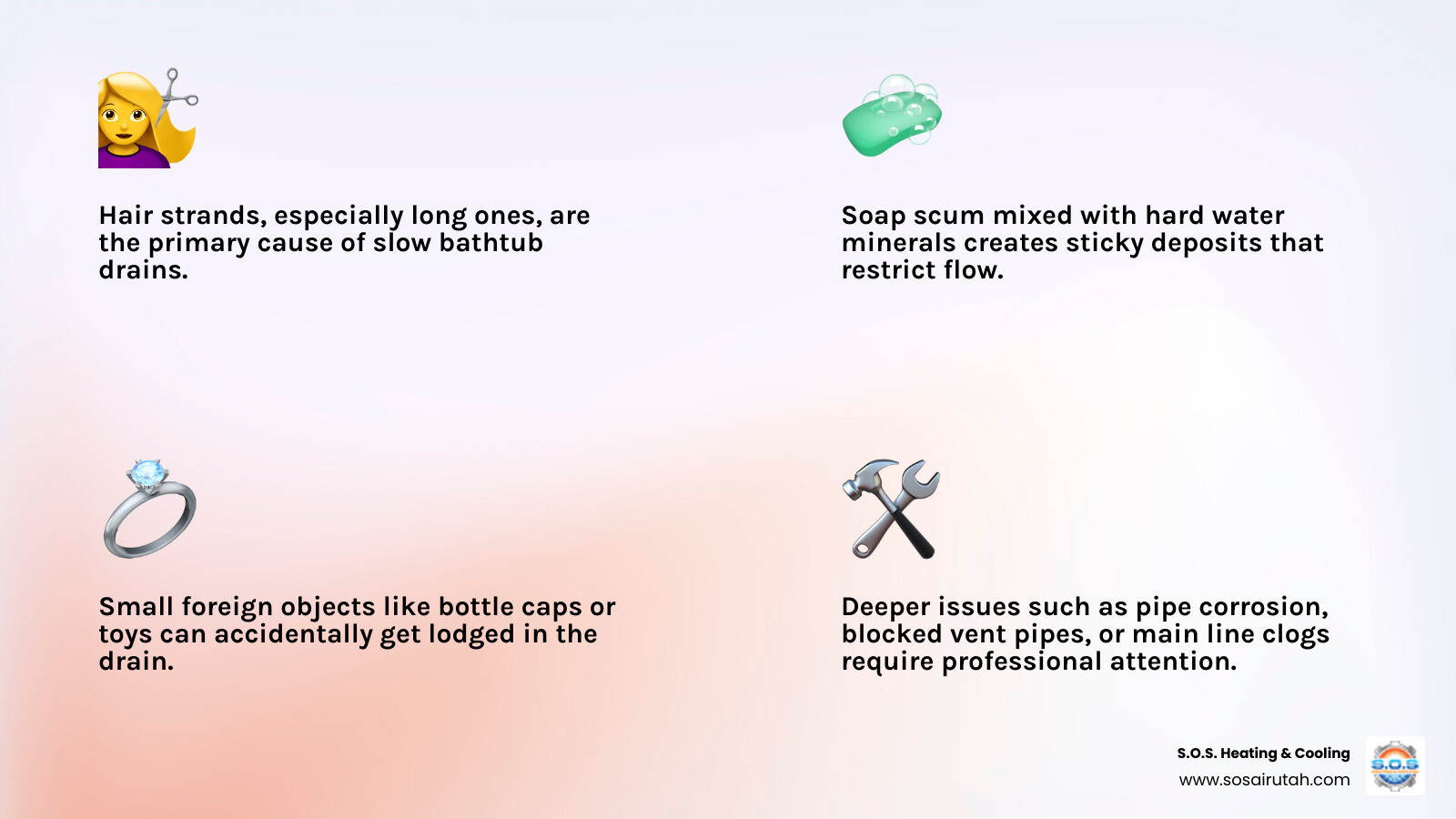
The good news is that most bathtub clogs are simple and located near the drain opening. The primary causes are:
- Hair: As the number one culprit, hair doesn't dissolve and easily catches on the drain stopper or inside the pipe, forming a net that traps other debris.
- Soap scum buildup: Soap, body oils, and minerals create a sticky residue on pipe walls, narrowing the passage and trapping hair.
- Mineral deposits from hard water: A common issue in Salt Lake City, hard water leaves limescale on pipe walls. This rough surface makes it easier for hair and soap scum to accumulate.
- Foreign objects: Bottle caps or small toys can fall down the drain and create an obstruction for other debris to build upon.
Deeper Plumbing Problems
While most clogs are simple, sometimes the issue is more complex and requires a professional:
- Pipe corrosion: In older homes, original cast iron pipes can rust, creating a rough interior surface that causes recurring clogs.
- Main drain line issues: If multiple fixtures in your home are draining slowly (sinks, toilets), the blockage is likely in your main sewer line, often caused by tree roots or major buildup.
- Blocked plumbing vents: Vents running through your roof allow air into the system for proper flow. If blocked by debris, drains will slow down, gurgle, and may release odors.
If you suspect a deeper issue, check out our guide on addressing clogged drains for more information.
How to Fix a Slow Draining Bathtub: 5 DIY Methods
Most bathtub clogs don't require a professional plumber. You can often fix a slow draining bathtub with basic household items or inexpensive tools. Before starting, wear protective gloves and ensure your bathroom is well-ventilated, especially when using cleaning solutions.
Step 1: Clear the Drain Stopper
Start here, as most clogs accumulate around the drain stopper. Clearing this area is often enough to fix a slow draining bathtub. The removal process varies by stopper type:
- Pop-up or Lever-operated: Unscrew the overflow plate and pull out the entire linkage assembly.
- Push-down (Toe-touch): Push the stopper to the open position, then unscrew it counter-clockwise.
- Lift-and-turn: Hold the stopper body and unscrew the knob on top.
Once removed, clear all hair and soap scum from the stopper and the drain opening. Reinstall the stopper and run water to check if the drain flows freely. This simple step often solves the problem.
Step 2: Use Boiling Water and Dish Soap
This method works well for clogs caused by greasy soap scum. First, pour about half a cup of liquid dish soap down the drain. Dish soap is designed to cut through grease and oil.
Next, carefully pour a kettle of boiling water down the drain in stages. The hot water will melt the grease and soap scum, while the soap helps break it all down. Let it sit for a few minutes, then flush with hot tap water to see if drainage has improved. Repeat if necessary, but always handle boiling water with caution to avoid burns.
Step 3: How to fix a slow draining bathtub with baking soda and vinegar
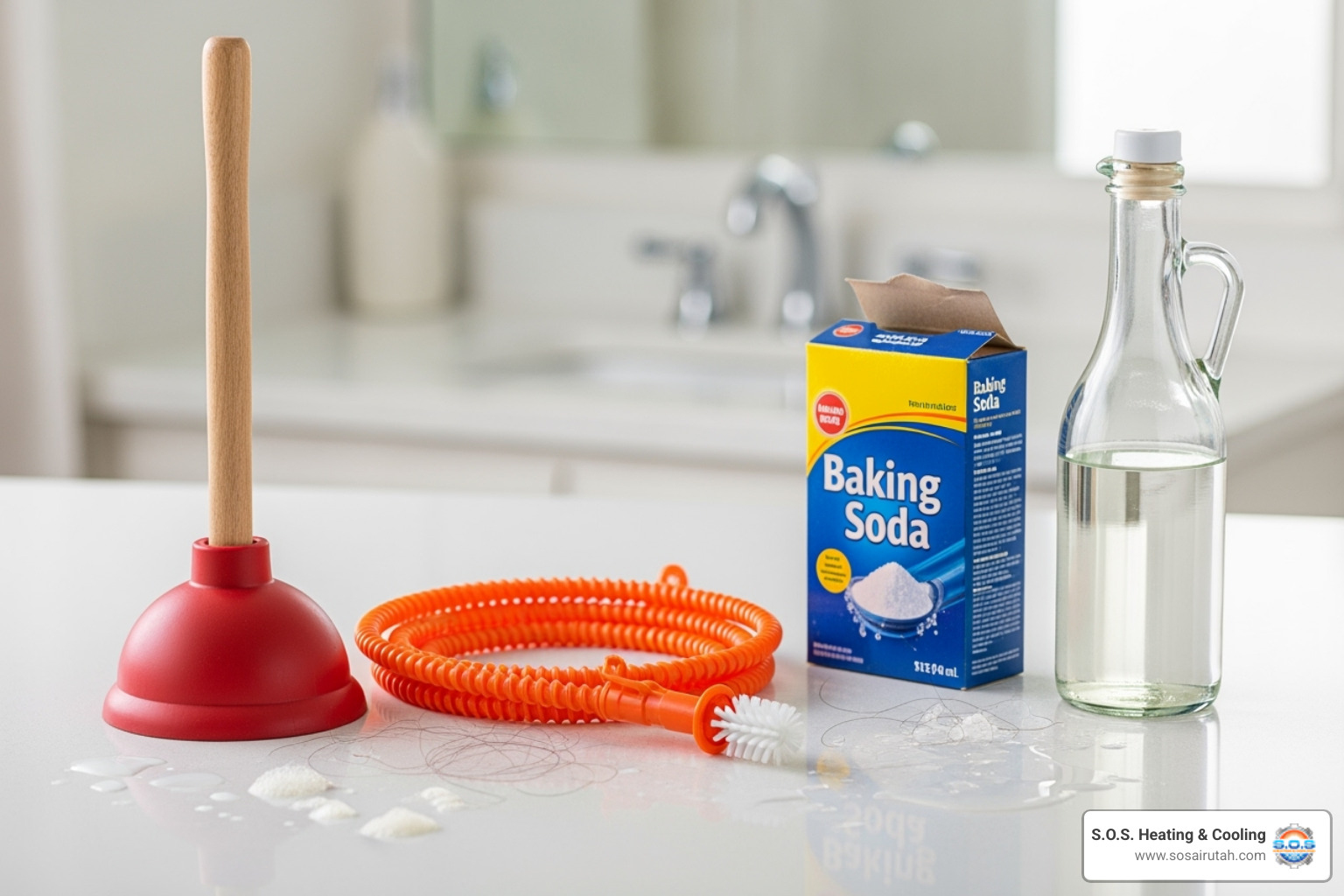
This natural method uses a chemical reaction to break apart clogs without harsh chemicals. First, remove any standing water. Pour one cup of baking soda down the drain, followed immediately by one cup of white vinegar. The mixture will fizz and bubble, working to loosen the clog. Cover the drain with a wet cloth to contain the reaction within the pipe.
Let the mixture sit for 15 to 30 minutes. Afterward, flush the drain thoroughly with hot (or boiling) water to wash away the loosened debris. This method is great for soap scum, grease, and minor hair clogs. For more natural solutions, see our guide on solutions for a clogged drain.
Step 4: Use a Plunger or Plastic Drain Snake
If gentler methods fail, it's time for mechanical tools like a plunger or a plastic drain snake.
For plunger success, you must seal the overflow opening with a wet rag or duct tape. Fill the tub with a few inches of water to cover the plunger's bell. Place the plunger firmly over the drain and plunge vigorously for 20-30 seconds. The pressure can dislodge stubborn clogs.
A plastic drain snake is an inexpensive tool that is excellent for pulling out hair clogs.
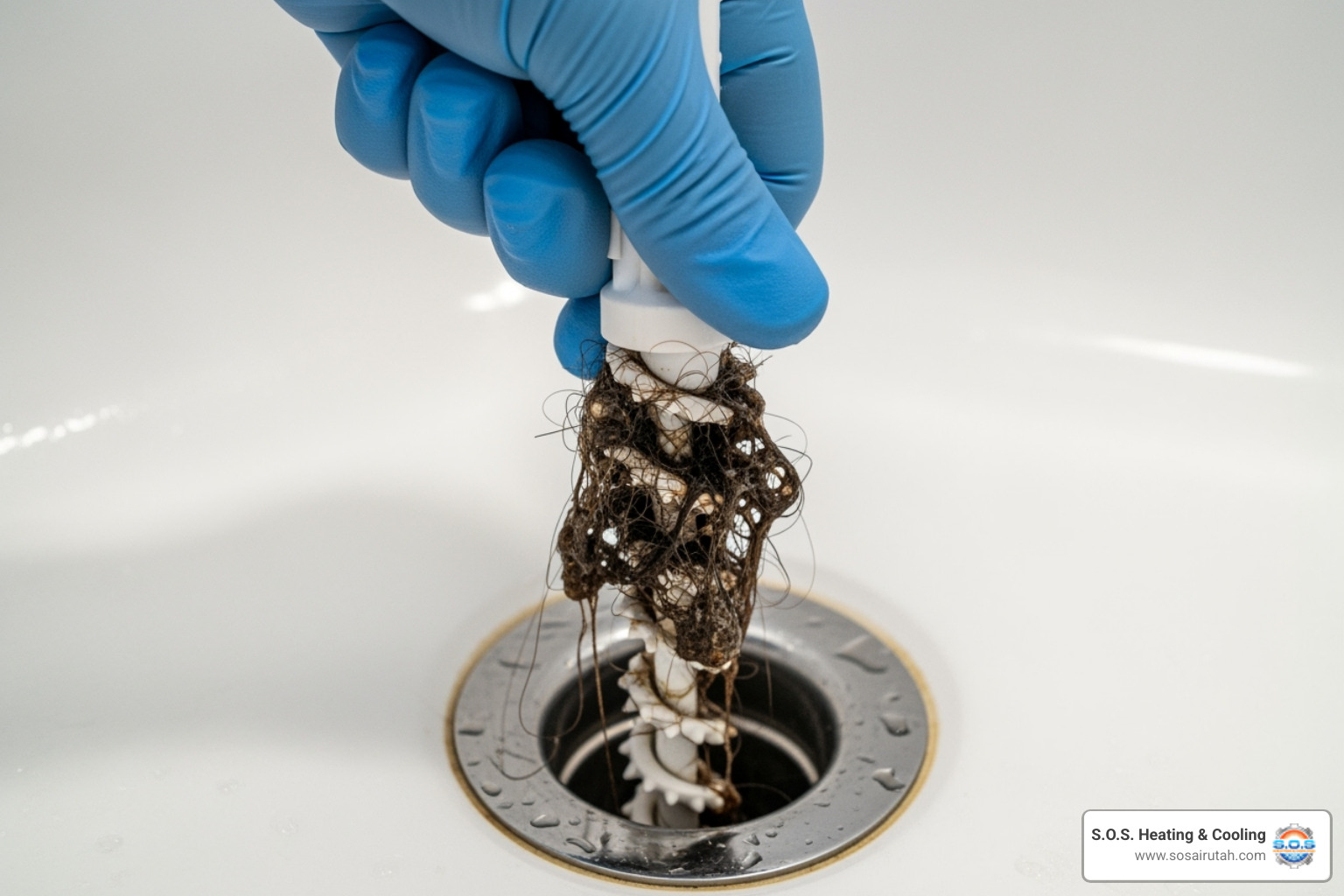
Insert the snake into the drain until you feel resistance. Twist it to allow the barbs to grab the hair and debris, then slowly pull it out. Repeat until you no longer pull up any gunk, then flush the drain with hot water.
Step 5: A Word of Caution on Chemical Drain Cleaners
We advise using chemical drain cleaners only as a last resort. These products contain harsh ingredients (like hydrochloric acid or caustic soda) that can damage pipes, especially older PVC or metal ones, potentially leading to costly leaks.
There are also significant safety hazards. The fumes are harmful and require excellent ventilation, and contact with skin or eyes can cause serious burns. Never mix different chemical cleaners, as this can create toxic gases. If the cleaner fails, you're left with a tub full of corrosive water, which is dangerous for your household and any plumber who assists you. There are also environmental concerns, as these chemicals enter our water systems.
If you must use one, follow the instructions precisely and ensure proper ventilation. For more on expert-approved methods, see The Spruce's article on slow-draining bathtubs.
When to Call a Professional Plumber
Despite your best DIY efforts, some clogs require a professional. Knowing when to call for help can save you time, money, and prevent further damage.

Here are clear signs your drain issue is beyond a simple DIY fix:
- Recurring clogs: If the drain keeps slowing down despite your efforts, there's likely a deeper issue.
- Multiple drains are affected: Slow drains in your sinks, toilets, and tub point to a main sewer line problem, not an isolated clog.
- Foul sewer odors: A sewage smell from your drain can indicate a serious blockage or a broken sewer line.
- Water backing up: If water backs up into your tub when you flush a toilet or use another sink, you have a significant main drain blockage that needs immediate attention.
When DIY methods to fix a slow draining bathtub fail
If you've tried cleaning the stopper, using baking soda and vinegar, plunging, and snaking the drain with no success, it's time to call a professional. Some clogs are too deep, stubborn, or complex for DIY tools.
A persistent blockage that doesn't respond to multiple methods often means the clog is far down the pipe. Furthermore, if you suspect pipe damage due to your home's age or past use of chemical cleaners, a professional assessment is crucial to avoid making the problem worse.
When you see no improvement after trying multiple methods, it's time to let our team at S.O.S. Heating & Cooling take over. We offer comprehensive drain cleaning services in Salt Lake City and the surrounding areas.
Advanced Tools for Tough Clogs
Professional plumbers use specialized tools that are far more powerful than DIY options.
- Professional drain augers: These motorized snakes can reach 100 feet or more into your plumbing, breaking through tough clogs in the main sewer line that are inaccessible with manual tools.
- Hydro-jetting technology: This method uses high-pressure water jets to scour the inside of pipes, completely removing grease, soap scum, and mineral buildup. It cleans the pipe walls, preventing future clogs, rather than just poking a hole through the blockage.
- Video camera pipe inspection: A small camera is fed into the drain to provide a real-time view of the pipe's interior. This allows for precise diagnosis of the clog's location and cause (e.g., roots, corrosion, collapsed pipe), ensuring the right solution is applied the first time.
Our team uses these advanced tools for thorough, lasting solutions. Learn more in our article on drain cleaning by our professionals.
Preventative Measures to Keep Your Drain Flowing
Now that your drain is clear, let's keep it that way. The best way to fix a slow draining bathtub is to prevent clogs from forming in the first place. A little regular maintenance can save you from a messy problem later.
The most effective preventative tool is a drain cover or hair catcher. These inexpensive devices sit over your drain to trap hair and debris before they enter your pipes. You can find simple mesh screens or pop-out hair catchers at any hardware store. Regularly cleaning this device is a smart and simple habit.
Develop Good Draining Habits
Small, consistent habits can prevent buildup and keep your drain clear.
- Weekly hot water flush: Run hot water for a minute after each use to wash away fresh soap scum and oils before they harden.
- Monthly baking soda and vinegar cleaning: Use this natural cleaning method once a month as a preventative measure to gently scrub away early buildup.
- Avoid oils and grease: Be mindful of greasy bath products, body oils, and conditioners, as they contribute to the sticky residue that traps hair.
- Clean your drain stopper regularly: Every few weeks, remove the stopper and clean off any accumulated hair and gunk.
- Schedule professional inspections: An annual or biennial plumbing inspection can catch issues like corrosion or mineral buildup before they cause a major clog.
These simple habits will help keep your drain flowing smoothly. For more strategies, see our guide on preventative drain cleaning tactics.
Your Go-To Experts for Stubborn Clogs in Salt Lake City
While DIY home repair is satisfying, it's smart to call a professional when you've done all you can to fix a slow draining bathtub and the water still won't go down.
At S.O.S. Heating & Cooling, we handle everything from simple hair clogs to complex main line blockages. Our skilled plumbers provide expert diagnosis to find the root cause of your drainage problem, not just treat the symptom. We proudly serve homeowners throughout the Salt Lake City area, including Bountiful, Centerville, Cottonwood Heights, Draper, Farmington, Herriman, Holladay, Kaysville, Layton, Millcreek, Mt. Olympus, Murray, Riverton, Sandy, South Jordan, South Salt Lake, and Woods Cross.
We make your life easier with 24/7 emergency service, because clogs don't keep business hours. We also offer priority service for our partners, no evaluation fees during business hours, and flexible financing options to make our services accessible.
If DIY methods have failed or you're facing recurring clogs, multiple slow drains, or suspect a serious issue, we're here to help. Don't let a stubborn clog disrupt your routine.
Contact us for professional plumbing services today, and let's get your drains flowing freely again. Your morning shower (and your sanity) will thank you.
Explore Our Latest Insights and Updates in Plumbing Services

How a Holistic Community Approach Makes Trust More Than Just a Buzzword

Why Your High Altitude Home Needs a Special Kind of AC Math
The Dynamic Duo of Home Cooling