

Utah's Best Kept Secret for Year Round Comfort


.avif)

Heat Pump Benefits for Utah Homeowners: What You Need to Know
Heat pump benefits for Utah homeowners are more significant than most people realize — and if you're trying to decide whether one makes sense for your home, here's the short answer:
Key benefits at a glance:
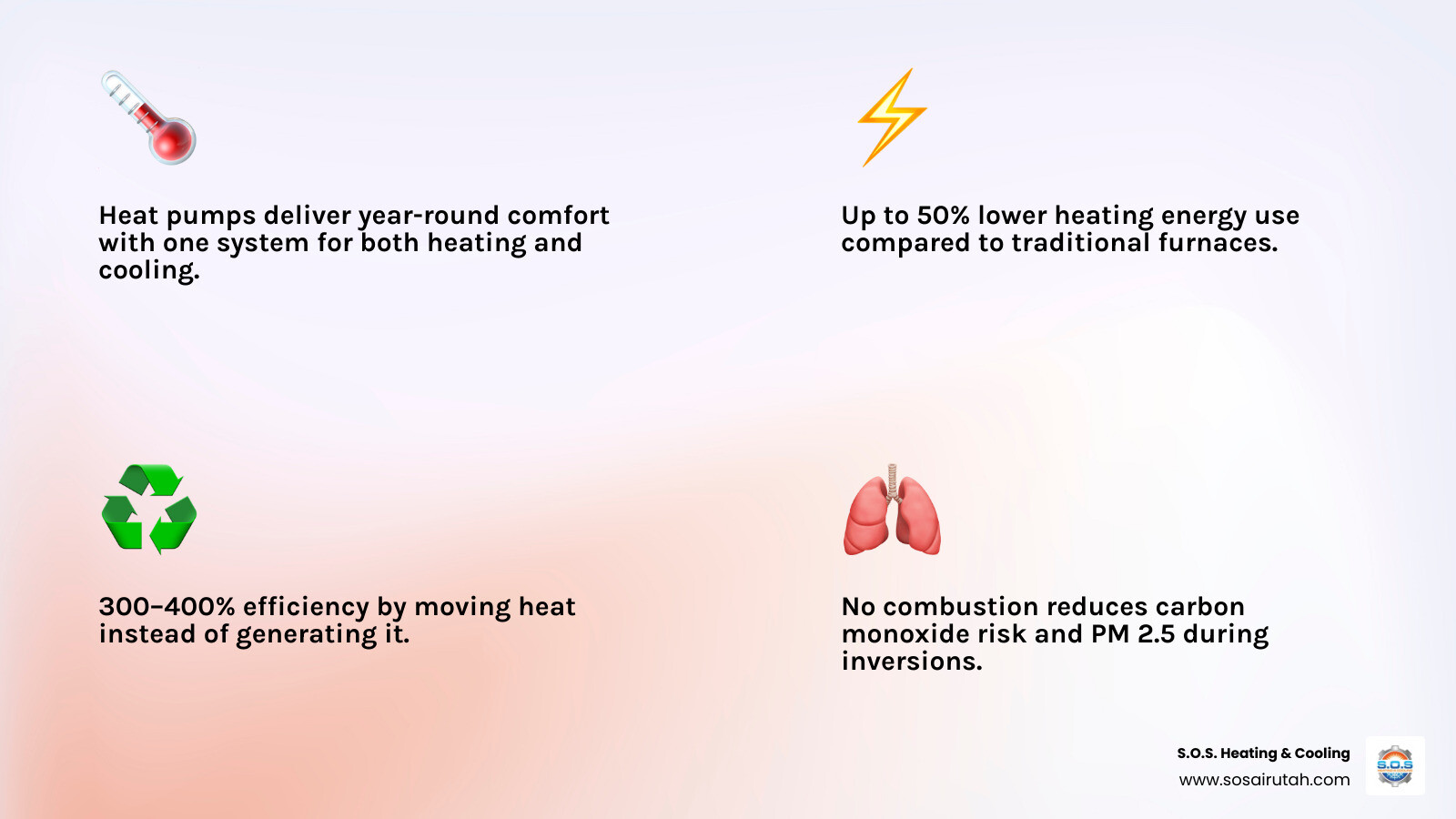
- Year-round comfort — one system handles both heating and cooling
- Up to 50% lower heating energy use compared to traditional furnaces and baseboard heating
- 300–400% efficiency — heat pumps move heat instead of generating it, so they produce far more energy than they consume
- Cleaner indoor air — no combustion means no carbon monoxide risk, which matters especially during Utah's notorious winter inversions
- Available incentives — federal tax credits up to $2,000 and Rocky Mountain Power rebates ranging from $200 to $1,700
- Cold-weather capable — modern cold-climate models operate efficiently down to -15°F
- Savings of $300–$500 per year on average for Utah households who make the switch
Utah's climate is genuinely demanding. Winters on the Wasatch Front can be brutal and prolonged, while summers push temperatures well into the triple digits. Most homeowners end up running two separate systems — a furnace for the cold months and an air conditioner for the hot ones — and paying for the upkeep of both. Meanwhile, Salt Lake City consistently ranks among the worst cities in the country for winter air quality, according to the American Lung Association, with residential furnaces and water heaters identified as a leading source of the fine particulate pollution (PM 2.5) that blankets the valley during inversion season. The case for rethinking how we heat and cool our homes has never been stronger.
I'm Bryson Ninow, a NATE-certified HVAC professional with hands-on experience helping Utah homeowners understand the real-world heat pump benefits for Utah homeowners — from navigating rebate programs to finding the right system for our unique high-elevation, high-demand climate. In the sections below, I'll walk you through everything you need to make a confident, informed decision.
How Heat Pumps Provide Year-Round Comfort in Utah
One of the most common questions we hear at S.O.S. Heating & Cooling is, "How can a single unit possibly handle a Salt Lake City winter and a July heatwave?" The answer lies in the physics of heat transfer. Unlike a gas furnace, which creates heat by burning fuel, a heat pump acts like a heat "transporter."
In the summer, it functions exactly like a high-efficiency air conditioner, pulling heat from inside your home and dumping it outside. In the winter, the process reverses. Using a specialized reversing valve, the system extracts thermal energy from the outdoor air—yes, even when it’s freezing outside—and moves it into your living room. Because it is moving heat rather than creating it, the energy efficiency is unparalleled. When you are Understanding Heat Pump Systems, you begin to see why they are the preferred choice for modern, sustainable homes in May 2026.
Efficiency Comparison: Heat Pump vs. Gas Furnace
| Feature | Air-Source Heat Pump | Standard Gas Furnace |
|---|---|---|
| Efficiency Rating | 200% – 400% (COP) | 80% – 95% (AFUE) |
| Energy Source | Electricity | Natural Gas / Propane |
| Method | Transfers existing heat | Combusts fuel to create heat |
| Dual Function | Yes (Heating & Cooling) | No (Heating only) |
Maximizing Heat Pump Benefits for Utah Homeowners During Winter
Many people worry that heat pumps will fail when the snow starts falling in Cottonwood Heights or Sandy. However, modern "cold-climate" heat pumps are engineered with advanced compressors and refrigerants that allow them to find heat in the air even at sub-zero temperatures.
One technical aspect we often manage for our customers is the defrost cycle. Because the outdoor coil gets very cold while extracting heat, frost can build up. The system automatically enters a brief defrost mode to melt this ice. If you notice steam rising from your unit in the winter, don't panic! It’s likely just the defrost cycle doing its job. However, if the unit stays encased in ice, you may be Diagnosing Heat Pump Defrost Cycle Problems that require a professional look to ensure you aren't losing efficiency.
Dual-Fuel and Hybrid Solutions
For homeowners who want the ultimate peace of mind, we often recommend a Hybrid Heat Pump System. This setup pairs an electric heat pump with a high-efficiency gas furnace.
In Utah, this is often the "sweet spot" for comfort. The heat pump handles about 80% of the heating season—specifically during the "shoulder seasons" of spring and fall when temperatures are between 30°F and 50°F. During these times, the heat pump is significantly cheaper to run than a furnace. When a massive arctic blast hits the Wasatch Front and temperatures drop into the single digits, the system automatically switches to the gas furnace for that extra "punch" of high-intensity heat.
Top Heat Pump Benefits for Utah Homeowners

Beyond the basic mechanics, the primary heat pump benefits for Utah homeowners revolve around long-term savings and environmental health. Research shows that air-source heat pumps can reduce electricity use for heating by approximately 50% compared to electric resistance heating like baseboard heaters or electric furnaces. For a typical Utah household, this translates to annual savings of $300 to $500 on utility bills. When you invest in a Heat Pump, you aren't just buying an appliance; you're hedging against rising natural gas prices.
Environmental Heat Pump Benefits for Utah Homeowners
If you live in Salt Lake City, Murray, or South Salt Lake, you are well aware of our winter inversions. The geography of our valleys traps pollutants close to the ground, leading to some of the worst air quality in the nation. While we often blame cars, residential combustion (furnaces and water heaters) is the second-largest source of PM 2.5 emissions in Utah County and the surrounding areas.
By switching to a heat pump, you eliminate the need for on-site combustion. There is no burning of gas, no exhaust being pumped into the inversion, and zero risk of carbon monoxide leaks inside your home. Switching to a heat pump can reduce a household’s carbon emissions by up to 60%, especially as Utah’s grid incorporates more renewable energy.
Improved Indoor Air Quality and Comfort
Standard furnaces provide heat in "blasts"—the system kicks on, blows hot air until the thermostat is satisfied, and then shuts off, leading to significant temperature swings. Heat pumps, particularly variable-speed models, provide a much more consistent flow of air. This constant circulation means your air is being filtered more frequently, removing dust, pollen, and allergens.
Additionally, heat pumps are excellent at regulating humidity. In the dry Utah climate, maintaining a stable indoor environment is key to protecting your skin, your furniture, and your respiratory health. Our team providing Heat Pump Service Salt Lake City UT often hears from customers that their homes feel "fresher" and more evenly heated after making the switch.
Performance in Cold Climates and Variable-Speed Efficiency
The technology behind these systems has moved light-years beyond the heat pumps of the 1990s. Today, the "gold standard" is the variable-speed heat pump. Traditional HVAC systems are like a light switch—they are either 100% on or 100% off. Variable-speed systems are more like a dimmer switch. They can operate at any capacity between 25% and 100%, allowing them to "sip" electricity while maintaining a perfectly steady temperature.
Cold-Climate Heat Pumps for Northern Utah
For our neighbors in Layton or those living in higher elevations near Mt. Olympus, "standard" heat pumps might struggle during the deepest parts of January. That is why we specialize in Heat Pump Installation featuring cold-climate technology. These units use advanced inverter-driven compressors that can maintain high heating capacities even when it's -15°F outside. While older models might have lost efficiency at 30°F, these modern marvels keep your home toasty without breaking a sweat. If you ever run into issues during a cold snap, our experts are ready for Heat Pump Repair Layton UT to get your system back to peak performance.
The Advantage of Variable-Speed Motors
Why does "variable speed" matter for heat pump benefits for Utah homeowners?
- Quiet Operation: Because the system spends most of its time running at lower speeds, it is significantly quieter than a traditional furnace or AC.
- Reduced Wear and Tear: Starting and stopping is what causes the most damage to HVAC components. By running continuously at a lower speed, the system lasts longer.
- Energy Precision: It only uses the exact amount of energy needed to maintain the temperature, eliminating the energy waste of "over-shooting" the thermostat setting.
Whether we are installing Heat Pump Systems South Jordan UT or upgrading a home in Kaysville, variable-speed technology is almost always the best ROI for the homeowner.
Maximizing Savings with Utah Rebates and Maintenance
The upfront cost of a heat pump can be higher than a standard AC/furnace combo, but the incentives available in 2026 make the transition more affordable than ever.
Navigating Local Utility Incentives
Through the Inflation Reduction Act, Utah homeowners can claim a federal tax credit of up to $2,000 annually for heat pump installations. But that’s just the beginning. Local utilities offer substantial "stackable" rebates:
- Rocky Mountain Power (Wattsmart): Offers rebates ranging from $200 up to $1,700 depending on the efficiency of the unit and whether you are replacing electric resistance heat.
- Dominion Energy (ThermWise): Provides incentives for dual-fuel systems that reduce natural gas consumption.
When we install Heat Pump Systems Sandy UT, we help our customers navigate this paperwork to ensure they get every dollar they are owed. Between the tax credits and utility cash-back, the "payback period" for a heat pump is often just a few years. To keep those savings rolling, we highly recommend a regular Heat Pump Tune Up Salt Lake City UT to ensure the sensors and coils are clean and calibrated.
Essential Maintenance for Longevity
Because a heat pump works year-round, it essentially does twice the work of a furnace. This means maintenance isn't optional—it's vital. We recommend bi-annual servicing: once in the spring before the cooling season and once in the fall before the heating season.
Simple tasks like changing your filters every 1–3 months (especially during Utah's dusty summer months) and keeping the outdoor unit clear of snow and debris can extend the life of your system to 20 years or more. For those in the metro area, our Heat Pump Heat Pump Maintenance Salt Lake City UT plans take the guesswork out of system care, ensuring your investment is protected.
Frequently Asked Questions about Utah Heat Pumps
Do heat pumps really work in Utah's freezing winters?
Yes! While this was a myth 20 years ago, today’s cold-climate heat pumps are designed for places like Utah. Modern units can extract heat down to -15°F. For homes in particularly cold micro-climates, we often suggest a Hybrid Heating System Installation Complete Guide to ensure you have a gas backup for those rare nights when the temperature drops into record-breaking territory.
How long do heat pumps typically last in our climate?
With proper maintenance, a high-quality heat pump will last between 15 and 20 years. Because they run year-round, they do face more mechanical wear than a furnace that sits idle all summer. This is why professional installation and regular check-ups are so important. If you ever notice uneven heating or strange noises, don't wait—get a Heat Pump Repair Draper UT to catch small issues before they become major failures.
Can a heat pump replace both my furnace and air conditioner?
Absolutely. This is one of the primary heat pump benefits for Utah homeowners. It simplifies your home's mechanical systems, frees up space (since you don't need a separate indoor furnace cabinet in many cases), and reduces the number of systems you have to maintain. If you’re building a new home or doing a major renovation, Heat Pump Installation Holladay UT is often the most cost-effective way to get high-end heating and cooling in one package.
Conclusion
The secret is out: heat pumps are no longer just for "moderate" climates. For homeowners in Salt Lake City, Bountiful, Draper, and across the Wasatch Front, they represent the future of home comfort. By moving heat instead of burning fuel, these systems offer a rare "win-win-win"—lower utility bills, superior indoor comfort, and a cleaner environment for our local community.
At S.O.S. Heating & Cooling, we’ve spent years mastering the nuances of Utah’s climate. Whether you need a 24/7 emergency repair, flexible financing for a new system, or a professional Heat Pump Installation Salt Lake City UT, our team is here to help. We don't just fix HVAC systems; we help our neighbors build more efficient, valuable, and comfortable homes.
Ready to see how much you could save? Contact us today to schedule an evaluation and discover how a heat pump can transform your home's comfort.
Explore Our Latest Insights and Updates in Plumbing Services
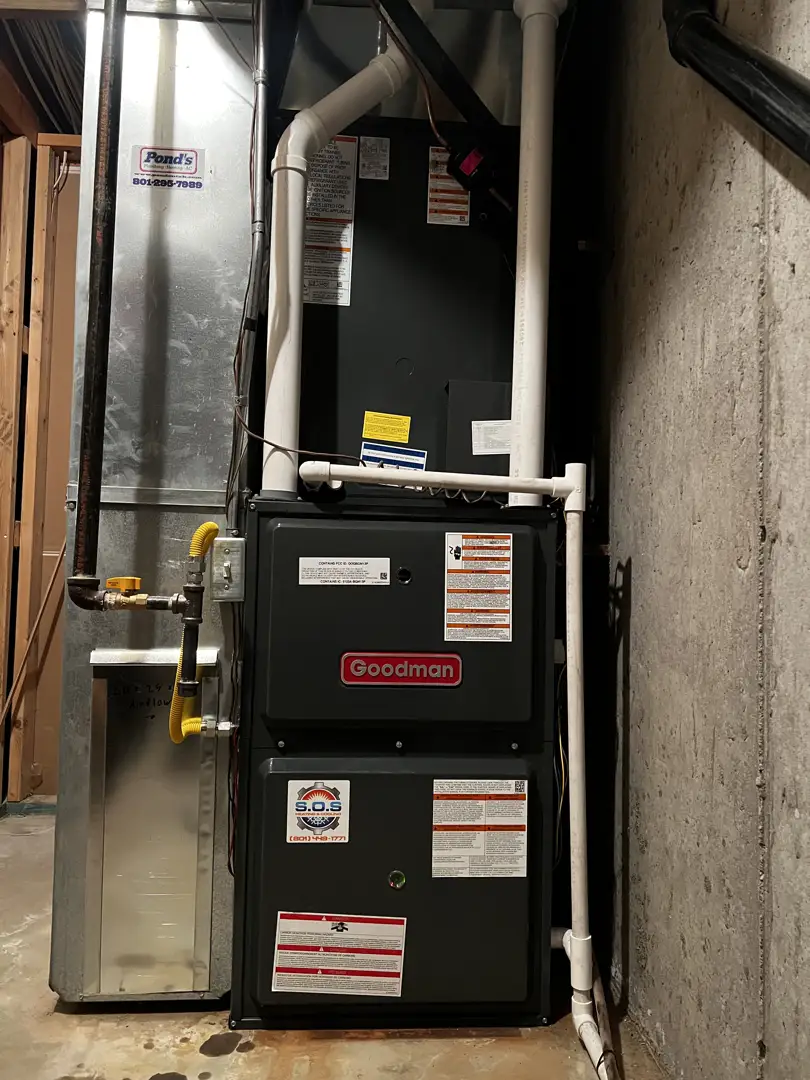
How to Choose the Right Furnace for a Salt Lake Valley Home
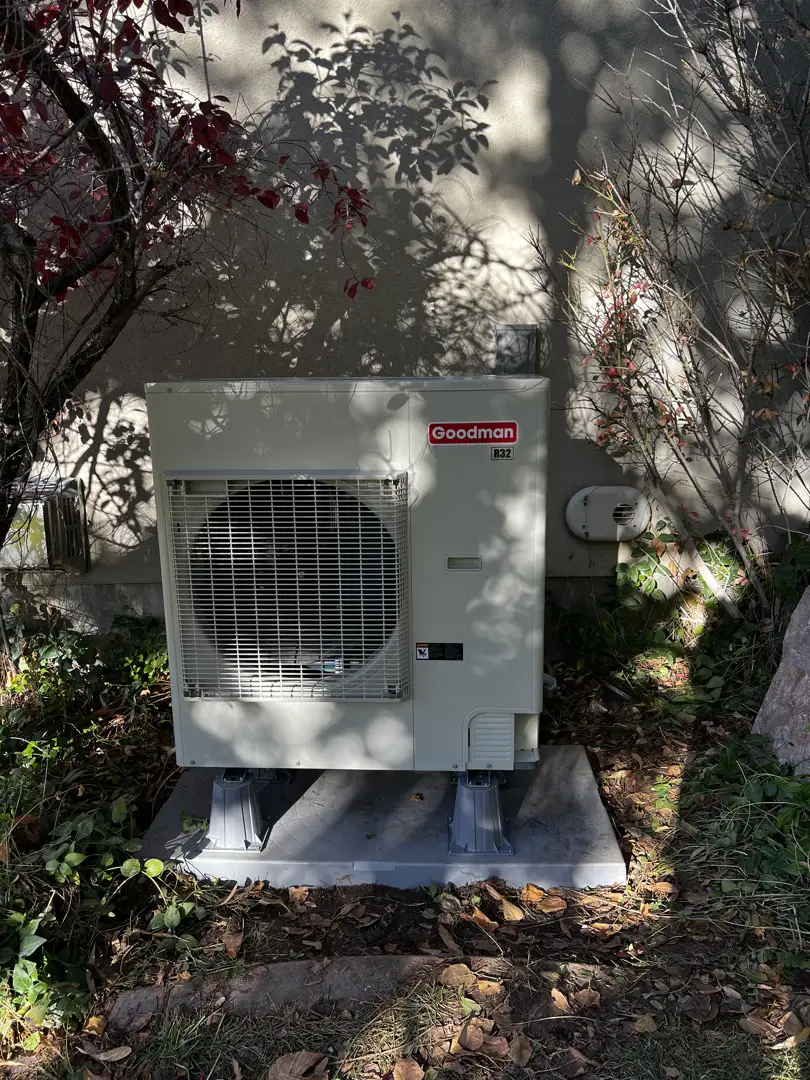
Average Lifespan of a Central Air Conditioner in Hot Dry Utah Climate
How Heat Pumps Work for Heating and Cooling in Utah