

The Complete Guide to Heat Pump Installation


.avif)

Why Heat Pump Installation Is the Right Choice for Salt Lake City Homes
Heat pump installation is one of the smartest upgrades for year-round comfort and energy savings. Instead of burning fuel to create heat, a heat pump transfers it—pulling warmth from outdoor air in winter and reversing the process to cool your home in summer. This dual functionality makes heat pumps incredibly efficient, often using 40-60% less electricity than traditional electric resistance heaters.
Quick Answer: What You Need to Know About Heat Pump Installation
- What it is: An energy-efficient system that heats and cools by transferring heat.
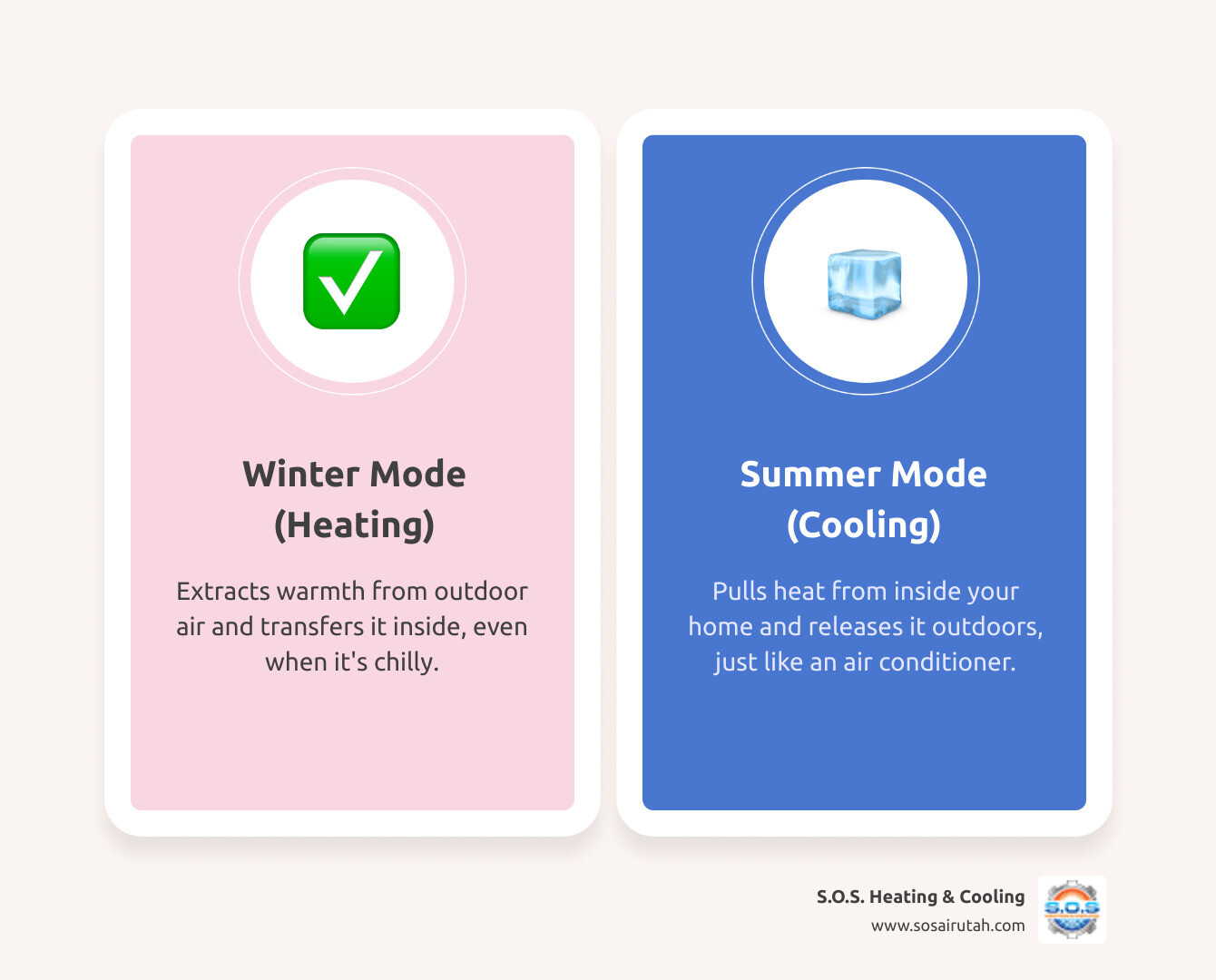
- Key steps: Professional installation includes a home assessment, proper sizing (Manual J Load Calculation), ductwork evaluation, potential electrical upgrades, safe removal of old equipment, and thorough system commissioning.
- Timeline: Most installations take 4-8 hours, depending on complexity.
- Types available: Air-source (most common), ductless mini-splits, geothermal, and hybrid/dual-fuel systems.
- Who should do it: Professional installation is essential for safety, efficiency, warranty compliance, and proper refrigerant handling.
For Salt Lake City homeowners with an aging furnace or air conditioner, a heat pump can replace both with a single, efficient solution. Our climate is an excellent match for modern cold-climate heat pumps, especially when professionally sized and installed. Understanding the installation process helps you make a confident decision for your home's comfort system.
Looking for expert guidance? Check out our heating services guide or contact us today for a professional heat pump consultation.
I'm Bryson Ninow, and I help Salt Lake City families steer heat pump installations. My goal is to make the process clear and custom to your home's unique needs.
Introduction: What is a Heat Pump and Why Consider One?
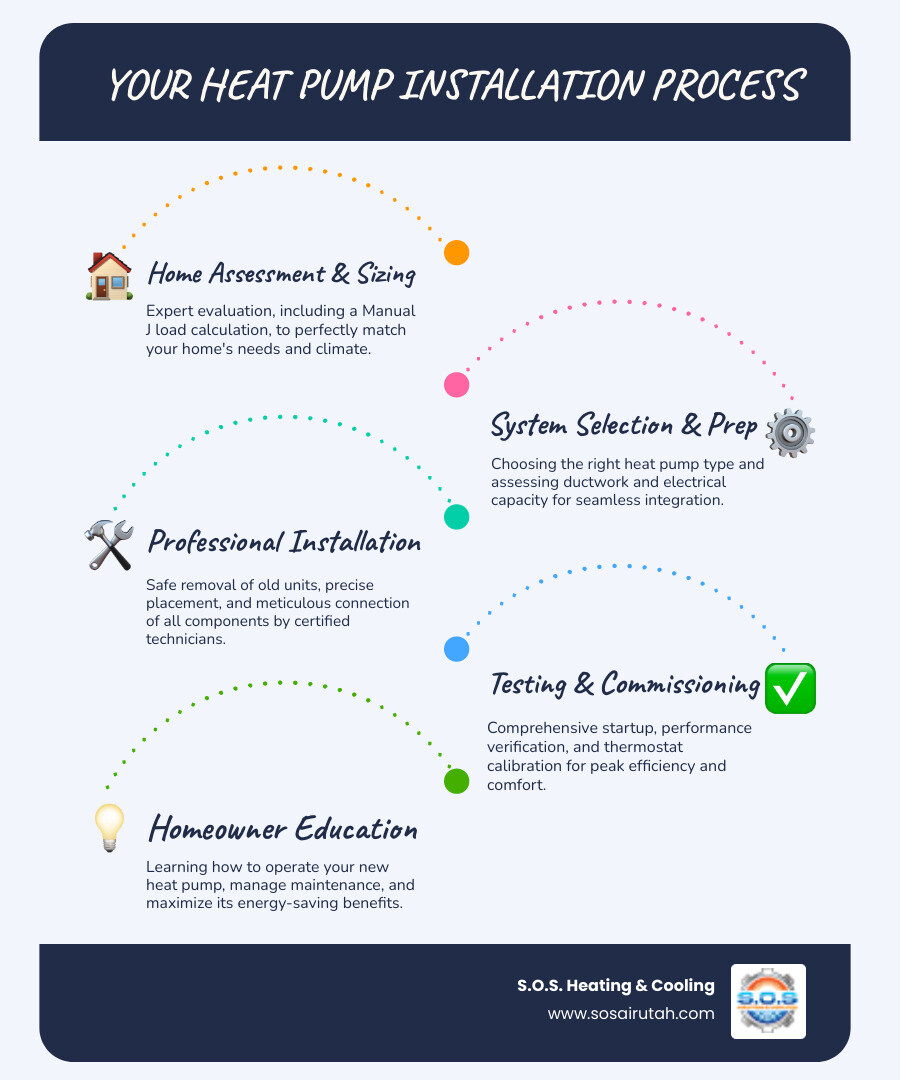
A heat pump is a single, highly efficient system that keeps your Salt Lake City home comfortable year-round, providing both cooling in the summer and heating in the winter. Instead of creating heat by burning fuel like a furnace, a heat pump transfers heat. In winter, it pulls warmth from the outdoor air and moves it inside. In summer, it reverses the process, moving heat from your home to the outdoors, acting just like an air conditioner.
This heat transfer method is why heat pumps are so energy-efficient. If you currently use an electric furnace, fuel oil, or propane, switching to a heat pump installation can lead to substantial savings on your energy bills. A heat pump is a true two-in-one solution, replacing both your air conditioner and your heating system.
When shopping for a heat pump, you'll see two key efficiency ratings:
- SEER2 (Seasonal Energy Efficiency Ratio 2) measures how efficiently the heat pump cools your home. Think of it as a summer efficiency score.
- HSPF2 (Heating Seasonal Performance Factor 2) measures heating efficiency. This is your winter efficiency score.
For both ratings, a higher number means the system uses less electricity, leading to lower monthly bills and a smaller environmental impact. Choosing a heat pump with high SEER2 and HSPF2 ratings is an investment in long-term savings.
Ready to explore if a heat pump is right for your home? Our team at S.O.S. Heating & Cooling can help. Learn more about air-source heat pumps from the Department of Energy or contact us for a professional consultation.
Preparing for Your Heat Pump Installation
Proper preparation is key to a successful heat pump installation. This phase is about understanding your home's unique needs to ensure your new system is a perfect fit.
We begin with a comprehensive home assessment, examining insulation, checking for air leaks, and seeing how well your home retains conditioned air. A well-sealed and insulated home may allow for a smaller, less expensive system. From there, we perform a Manual J Load Calculation. This detailed engineering analysis considers dozens of factors—from window types and insulation values to Salt Lake City's climate data—to determine the precise size system your home needs. Proper sizing is essential for efficiency and longevity.
Modern cold climate heat pumps are engineered to handle our region's hot summers and cold winters, extracting heat from the air even when temperatures drop below freezing. We also inspect your existing ductwork, as leaky or improperly sized ducts can sabotage efficiency. If ducts are problematic, a ductless system may be a better option. Finally, we evaluate your electrical panel to ensure it can safely handle the new system, preventing surprises on installation day.
Types of Residential Heat Pumps
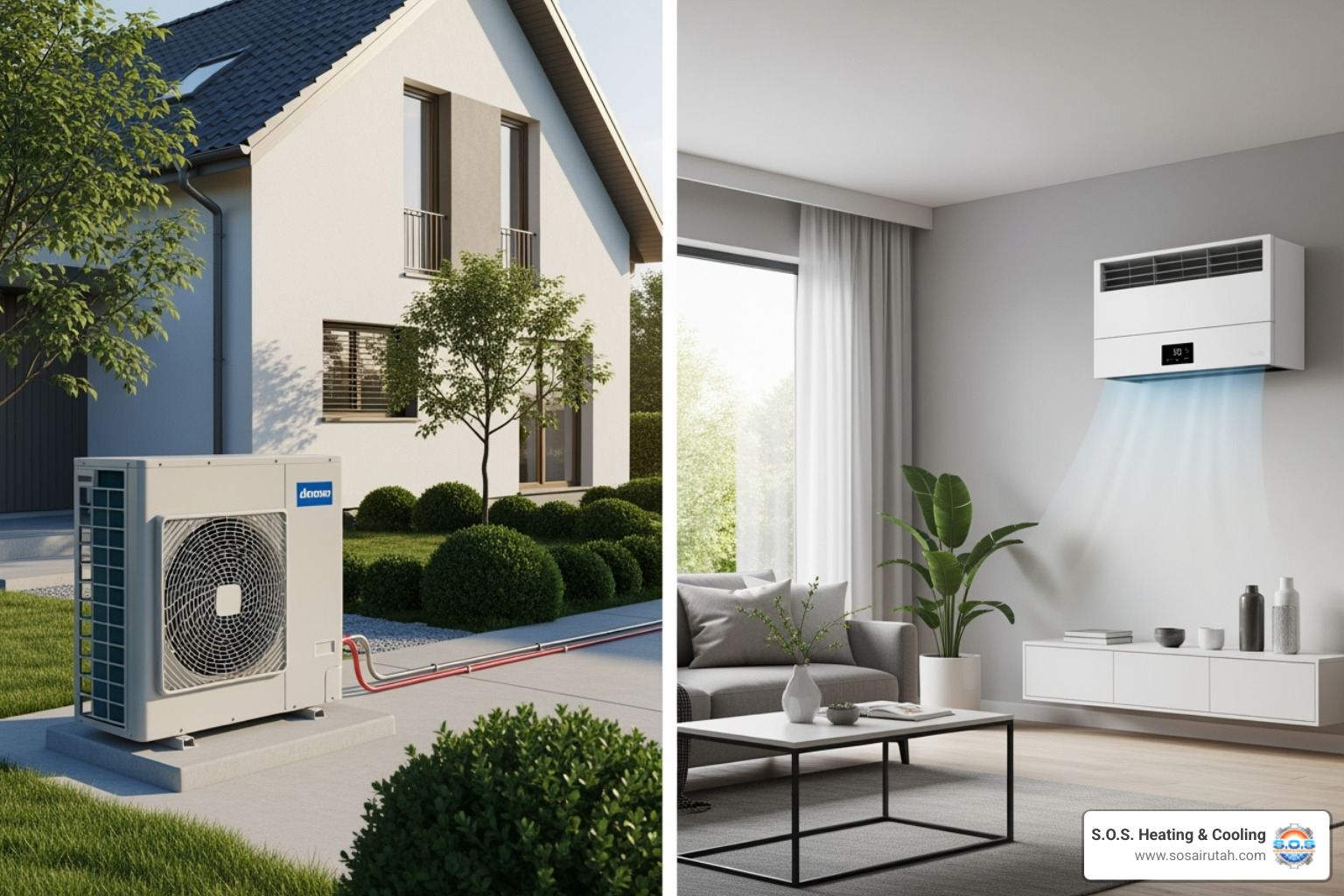
- Air-source heat pumps: The most popular choice, these systems transfer heat between your home and the outside air. They can be connected to existing ductwork or installed as ductless units. The Department of Energy offers a great guide on air-source heat pumps.
- Geothermal heat pumps: These systems use the stable temperature of the earth via underground pipes. While the installation is more involved, they offer exceptional, consistent efficiency.
- Ductless mini-split systems: Ideal for homes without ductwork or for room additions. A single outdoor unit can connect to one (single-zone) or multiple (multi-zone) indoor units, allowing for independent temperature control in different rooms.
- Hybrid or dual-fuel systems: This setup combines an electric heat pump with a traditional furnace. The heat pump handles most of the work, while the furnace provides powerful backup heat in extreme cold.
Before installation, it's also wise to explore potential government incentives. Federal, state, and local programs often provide financial rebates or tax credits for energy-efficient upgrades, which can significantly reduce your investment. You can search the Database of State Incentives for Renewables and Efficiency to see current programs.
The Professional Heat Pump Installation Process Step-by-Step
Professional heat pump installation is essential for safety, efficiency, and warranty compliance. A DIY or unlicensed job can void warranties, create electrical or refrigerant hazards, and lead to poor performance. A typical installation takes 4-8 hours, depending on the system's complexity.
Site Preparation and Old System Removal
First, we prepare the site, using drop cloths to protect your home. We create a level, stable pad for the outdoor unit, which is crucial for proper drainage, especially with Salt Lake City's snowfall. Then, we safely disconnect and remove your old system. This includes the lawful recovery of all refrigerants using EPA-certified equipment, as according to EPA standards, releasing them is illegal and harmful. We also replace the electrical disconnect and wiring for safety with the new unit.
Installing the New Indoor and Outdoor Units
With the site prepared, we install your new heat pump components.
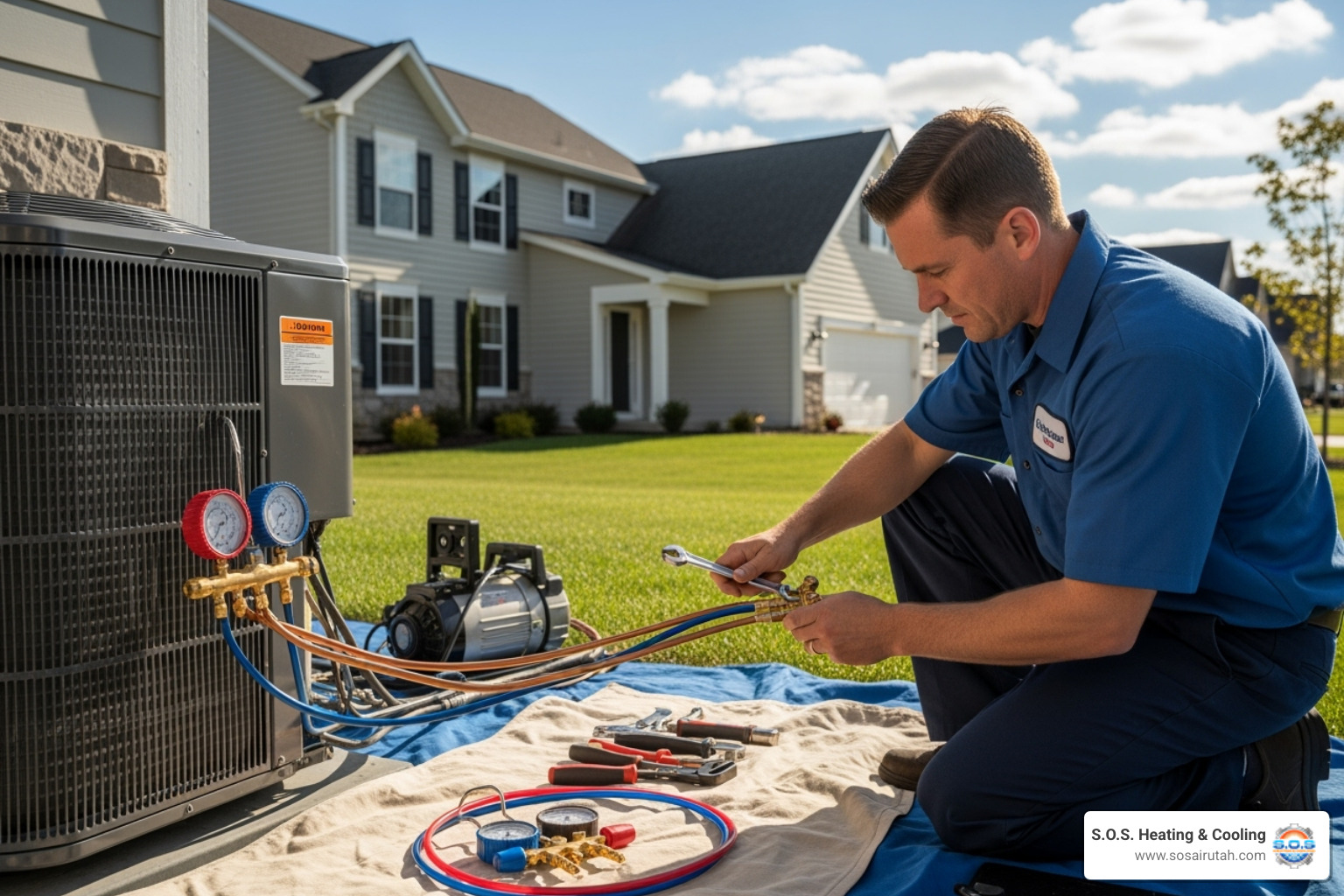
We strategically place the outdoor unit to ensure adequate airflow clearance (at least two feet on all sides), minimize noise, and allow for future maintenance access. The indoor unit installation varies by system. For ducted systems, we install the evaporator coil. For ductless mini-splits, we mount the indoor units on walls or ceilings for optimal air distribution.
We then connect the units with refrigerant lines. These connections are brazed (a specialized welding process) to create leak-proof seals. Afterward, we conduct a crucial pressure test with dry nitrogen to confirm the integrity of the entire refrigerant circuit, preventing future leaks and performance issues.
Final Connections and System Commissioning
Once the units are in place, we complete the final connections. We connect all high and low-voltage electrical wiring according to code and install a properly sloped condensate drain to prevent water damage from humidity removed during cooling.
The final step is system startup and testing, or commissioning. This is a meticulous process where we verify the correct refrigerant charge, test all operating modes (heating, cooling, defrost), measure airflow, and calibrate the thermostat. This comprehensive check ensures your system runs at peak performance and efficiency, and it's required to validate your manufacturer's warranty.
Post-Installation: What to Expect and How to Maintain Your System
Congratulations on your new heat pump! After your heat pump installation is complete, we conduct a final walkthrough to ensure you're comfortable with your new system. We'll show you how to use your thermostat, including switching between regular and emergency heat, and explain normal functions like the defrost cycle—when the outdoor unit steams on a cold day to melt ice.
Ongoing Maintenance for Your Heat Pump
Simple habits will keep your system performing at its best and protect your investment.
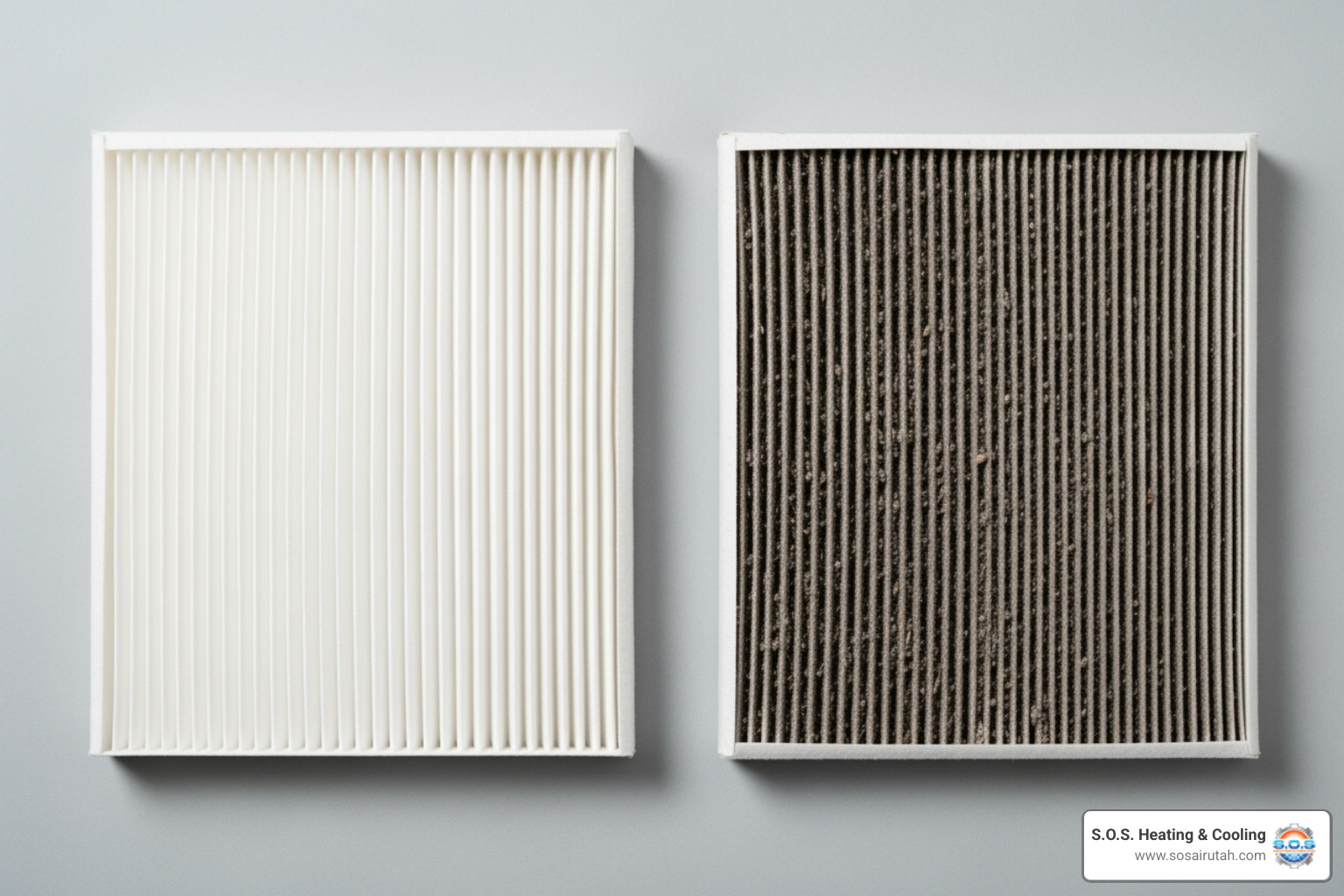
- Filter Cleaning and Replacement: This is the most impactful task you can do. Check filters monthly and replace them every 60-90 days. A clean filter ensures good airflow and efficiency, while a clogged one strains the system.
- Keep the Outdoor Unit Clear: Regularly clear leaves, snow, and debris from around the outdoor unit. It needs at least two feet of clearance on all sides to operate correctly.
- Check for Unusual Noises: Your heat pump should operate with a quiet hum. If you hear banging, rattling, or grinding, call for service to address potential issues early.
- Schedule Professional Service: Annual professional tune-ups are the cornerstone of long-term health. Our technicians inspect, clean, and service the system, catching small problems before they become major repairs. This is also often required to keep your warranty valid.
Also, be aware of signs of potential issues, such as uneven heating or cooling, frequent cycling, higher-than-expected energy bills, or poor airflow. If you notice any of these, contact us immediately. Your comfort and satisfaction are our priority.
Frequently Asked Questions about Heat Pump Installation
We've answered countless questions about heat pump installation. Here are some of the most common ones we hear from homeowners.
When should I consider replacing my existing heat pump?
Knowing when to replace versus repair can be tough. Here are a few key indicators:
- Age: Most heat pumps last 10-15 years. If yours is over a decade old, newer models offer significant efficiency gains.
- Frequent or Costly Repairs: If repair bills are adding up, or a single repair costs nearly half as much as a new system, replacement is often more economical.
- Declining Efficiency: If your utility bills are climbing without a change in your habits, your system is likely losing efficiency.
- Inadequate Performance: If your system can no longer keep your home comfortable, it's a clear sign it's time for an upgrade.
- Home Expansion: If you've added on to your home, your old system may be too small for the new space.
Can a heat pump be added to my existing furnace?
Yes, and this is an excellent solution for Salt Lake City homes. It's called a dual-fuel or hybrid heating system. We install a heat pump to work with your existing furnace. The heat pump provides highly efficient heating and cooling for most of the year. During periods of extreme cold, a smart thermostat automatically switches to your furnace for powerful backup heat. This setup offers the best of both worlds: year-round efficiency and reliable performance. We always conduct a professional assessment to ensure system compatibility.
What are the potential downsides of heat pump ownership?
While heat pumps are a fantastic choice, there are a few things to be aware of.
- Performance in Extreme Cold: In very cold temperatures, a heat pump's efficiency decreases. This is why we often recommend a dual-fuel system with a furnace backup in our region.
- Defrost Cycle: During winter, your heat pump will periodically run a defrost cycle to melt ice from the outdoor coil. You might notice steam or feel cooler air from the vents for a few minutes. This is a normal and necessary function.
- Importance of Proper Installation: The biggest potential downside is improper sizing and installation. An incorrectly installed system will be inefficient, unreliable, and wear out prematurely. This is why professional heat pump installation with a proper Manual J Load Calculation is non-negotiable.
Conclusion: Enjoy Year-Round Comfort and Efficiency
A professional heat pump installation is a smart investment in your home's future comfort and efficiency. You'll enjoy consistent temperatures throughout Salt Lake City's seasons, from snowy winters to hot summers, all from a single system. By transferring heat instead of creating it, heat pumps can significantly lower your energy bills and reduce your household's carbon footprint.
Of course, these benefits all depend on one critical factor: expert installation. Proper sizing, careful refrigerant handling, and thorough system commissioning are what separate a high-performing system from one that struggles. We never cut corners and stand behind every installation we complete.
At S.O.S. Heating & Cooling, we've been helping families across the Salt Lake City area, including Bountiful, Centerville, Cottonwood Heights, Draper, Farmington, Herriman, Holladay, Kaysville, Layton, Millcreek, Mt. Olympus, Murray, Riverton, Sandy, South Jordan, South Salt Lake, and Woods Cross. We understand Utah's climate and homes, and we provide honest, straightforward advice to help you make the best choice.
Whether you're dealing with an aging system, planning an upgrade, or are simply curious about heat pumps, we'd love to hear from you. Our team is ready to answer your questions and help you enjoy the year-round comfort a new heat pump delivers.
Ready to take the next step? Get professional heat pump services from S.O.S. Heating & Cooling today. We're here when you need us.
Explore Our Latest Insights and Updates in Plumbing Services
Don't Sweat the Bill: Easy Hacks to Keep Your Home Chilled

The Magic of Cold Air and How Your AC Makes It
How Your AC Moves Heat from Inside to Out