

Why Your Water Heater is Leaking and How to Stop the Drip


.avif)

When You Find Your Hot Water Heater Leaking
A hot water heater leaking can quickly turn from a small inconvenience into a major headache for homeowners in Salt Lake City, UT. A puddle around the base of your tank, dripping from a valve, or an unexplained damp spot all demand immediate attention to prevent water damage, mold growth, and costly repairs.
When you find a leak, the first steps are to turn off the power and water supply to the unit. Then, you'll need to locate the source of the leak to determine the next steps. According to the EPA, water leaks in the average home waste 10,000 gallons per year, and a leaking water heater can contribute significantly to this waste while posing risks to your property.
If you need immediate water heater repair service in Salt Lake City, professional guidance can save you time and money. I'm Bryson Ninow, and with years of experience in the plumbing industry, I've helped many Salt Lake City families resolve hot water heater issues. My goal is to provide technical expertise and honest guidance to help you make the right decision for your home.
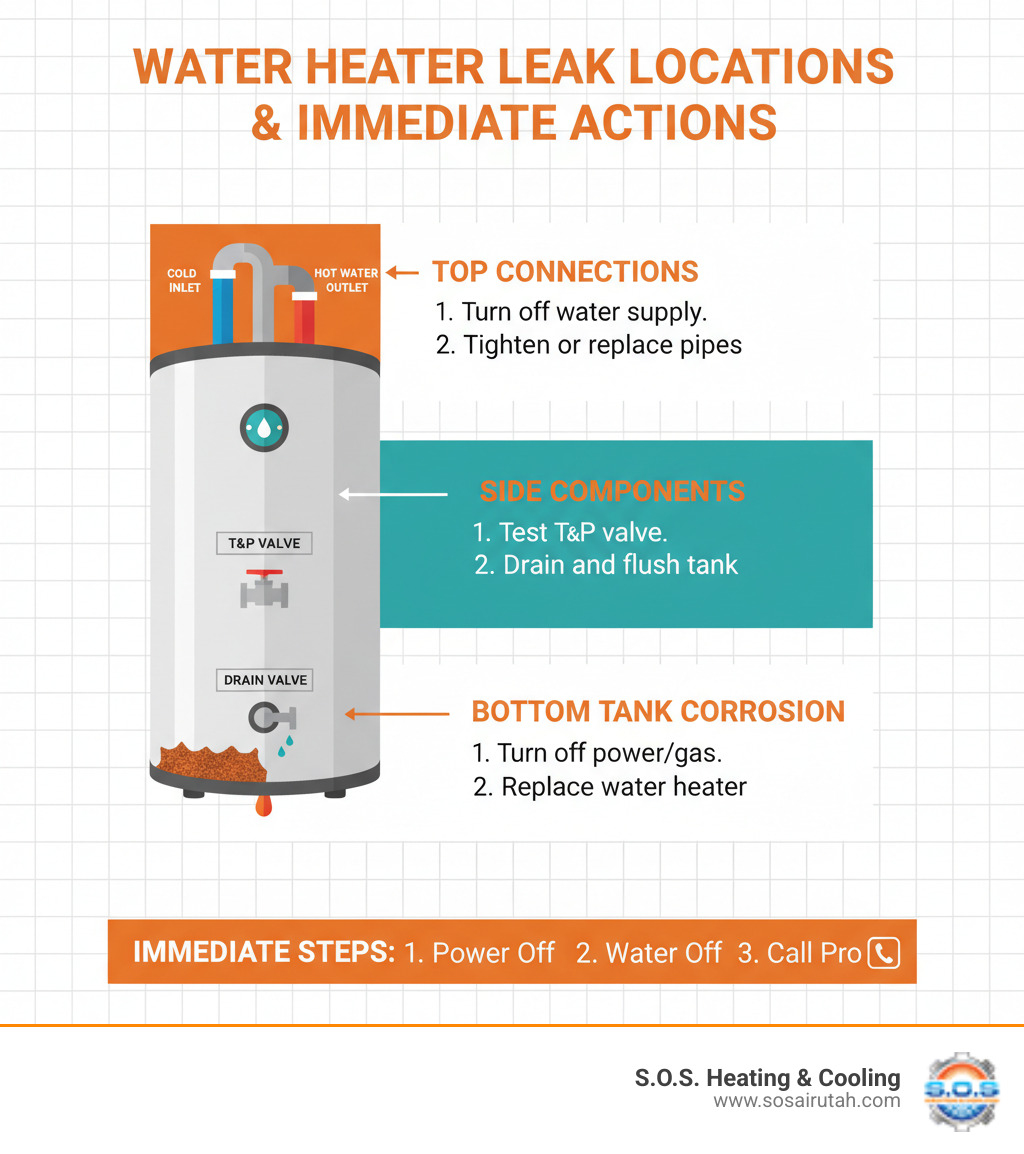
First Steps: What to Do Immediately When You Find a Leak
When you find your hot water heater leaking, your first priority is safety and preventing further damage. You can handle these initial steps yourself to control the situation before a professional arrives.
How to Shut Off the Power and Water
First, disconnect the power to prevent electrical hazards and stop the tank from building more pressure.
- For electric water heaters: Go to your electrical panel and flip the circuit breaker labeled for the water heater to the "Off" position.
- For gas water heaters: Find the gas control valve on the unit (usually a dial on the gas line) and turn it to "Off" or "Pilot." If you smell gas, leave your home immediately and call 911 from a safe distance.
Next, stop the water flow. Turn the cold water inlet valve, located on the pipe entering the top of the tank, clockwise until it stops. If you can't find this valve, shut off the main water supply to your house. This valve is typically near your water meter or where the main water line enters your home.
Once the water and power are off, open a hot water faucet to relieve pressure in the tank. Be careful, as the water will be hot.
Is It a Leak or Just Condensation?
Before assuming you have a hot water heater leaking, check if the moisture is just condensation. This often occurs in humid basements or during colder months when cold water enters the tank, causing moisture from the warm air to condense on its surface.
To tell the difference, perform the paper towel test.
- Thoroughly dry the outside of the water heater and the floor around it.
- Place paper towels on the floor around the base of the unit.
- Wait a few hours and check the towels.
If the towels are slightly and evenly damp, it's likely condensation, which is not a cause for concern. However, if you find distinct drips or water pooling from a specific valve, pipe, or seam, you have a genuine leak that needs to be addressed.
Diagnosing the Source of Your Hot Water Heater Leaking Problem
After taking safety precautions and ruling out condensation, it's time to find the source of your hot water heater leaking problem. Pinpointing the location—top, side, or bottom—is the most important step in determining if it's a simple fix or a serious issue. Leaks from different areas have very different implications.
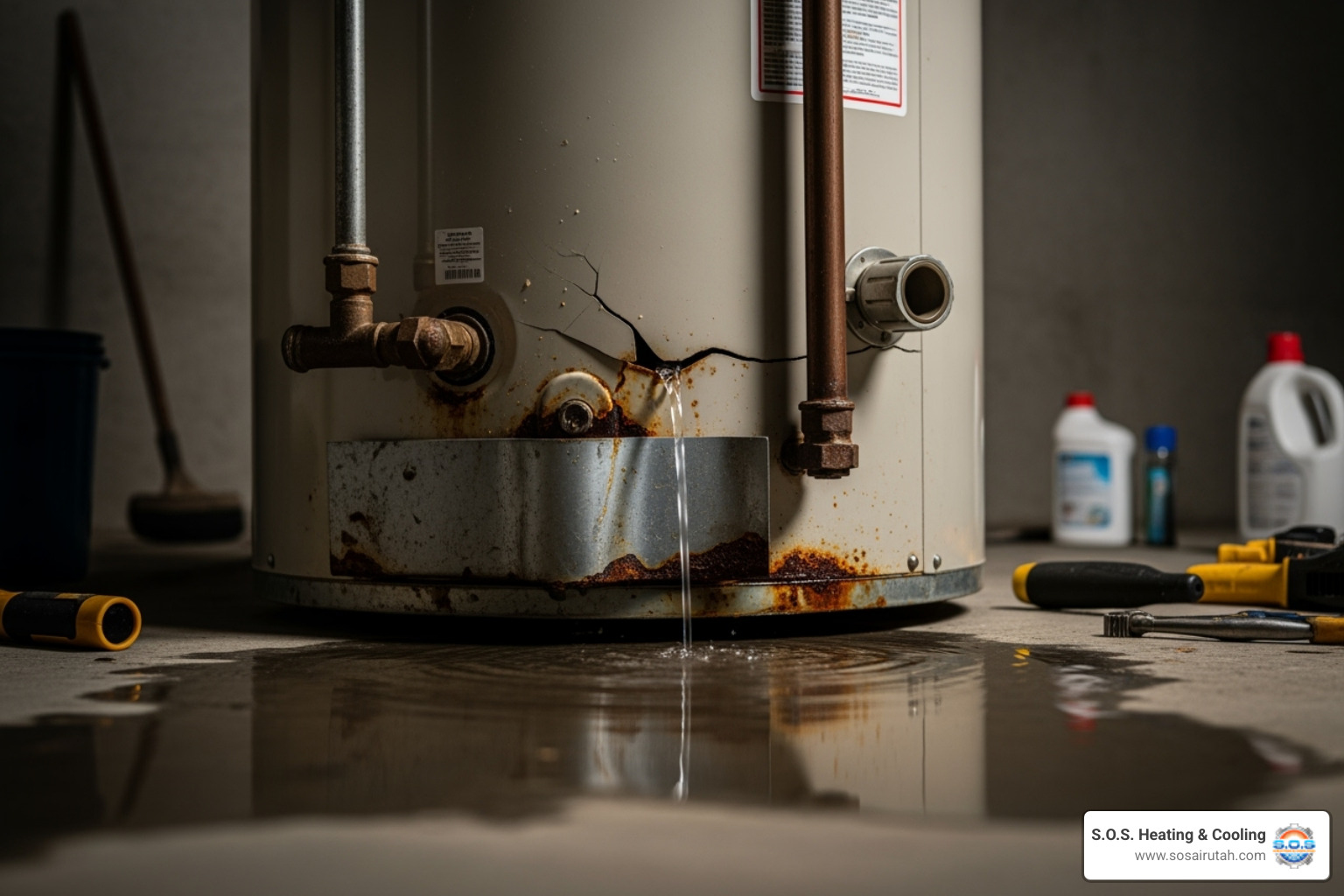
Leaks from the Top: What to Do When Your Hot Water Heater is Leaking
A leak from the top of the tank is often the easiest to fix. The cold water inlet pipe and hot water outlet pipe are located here, and their fittings can loosen over time due to temperature changes.
Inspect these connections for drips. Often, a simple fix is to gently tighten the fittings with a wrench. If tightening doesn't stop the leak, the cause is likely worn gaskets or corrosion at the connection points. The rubber gaskets inside can degrade, or corrosion can form. In this case, the connections need to be disassembled, cleaned, and fitted with new gaskets or parts.
Leaks from the Side of the Unit
Leaks from the side of the unit usually point to a problem with an attached component.
- Temperature and Pressure Relief (T&P) Valve: This crucial safety device releases water if the temperature or pressure inside the tank gets too high. A dripping T&P valve could mean your water temperature is set too high (the Department of Energy suggests 120° F), your home's water pressure is over 80 psi, or the valve itself is faulty and needs replacement.
- Drain Valve: Located near the bottom of the tank, this valve is used for flushing. If it's leaking, try gently tightening it. If the leak persists, the valve is likely faulty and needs to be replaced, which requires draining the tank.
- Heating Element Gaskets (Electric Heaters): The gaskets sealing the heating elements can fail, causing water to seep out. This repair involves replacing the gasket and often the element itself, and it's best left to a professional due to the electrical components.
Leaks from the Bottom: Why Your Hot Water Heater is Leaking and What it Means
Unfortunately, a hot water heater leaking from the bottom usually indicates the most serious problem: the internal tank has failed. This is typically caused by internal tank corrosion.
The inner steel tank is protected by a glass lining and a sacrificial anode rod. Over time, the anode rod depletes. If not replaced, corrosion attacks the tank's lining and eventually the steel itself, creating a leak that cannot be repaired.
Sediment buildup, common in areas with hard water like Salt Lake City, speeds up this process. Sediment traps heat at the bottom of the tank, causing overheating and accelerating corrosion.
While a leak near the bottom could be from a faulty drain valve (which is replaceable), water seeping from the tank's base or seams signifies irreparable damage. A corroded tank has lost its structural integrity and must be replaced to prevent a catastrophic failure and major flooding.
Repair or Replace? Making the Right Decision
Once you've found the source of your hot water heater leaking, you face the big question: repair or replace? The right choice depends on the heater's age, the leak's location, and the unit's overall condition.
A typical water heater lasts 8 to 20 years. If your unit is old and has a major leak, replacement is often the best financial decision. However, not every leak means you need a new water heater.
Common Repairs You Can Consider
If your water heater is relatively new and the tank is in good condition, a repair can be a cost-effective solution. Common repairs that can extend your unit's life include:
- Tightening loose fittings on the inlet and outlet pipes or replacing their worn gaskets.
- Replacing a faulty T&P valve to ensure safe operation.
- Replacing a leaking drain valve, which requires draining the tank.
- Replacing heating element gaskets on electric models to stop seepage around the elements.
These repairs are sensible when the tank itself is sound and can provide several more years of service.
When Replacement is the Only Option
Some leaks indicate that a water heater is beyond repair. Replacement is the only safe and practical option in these situations:
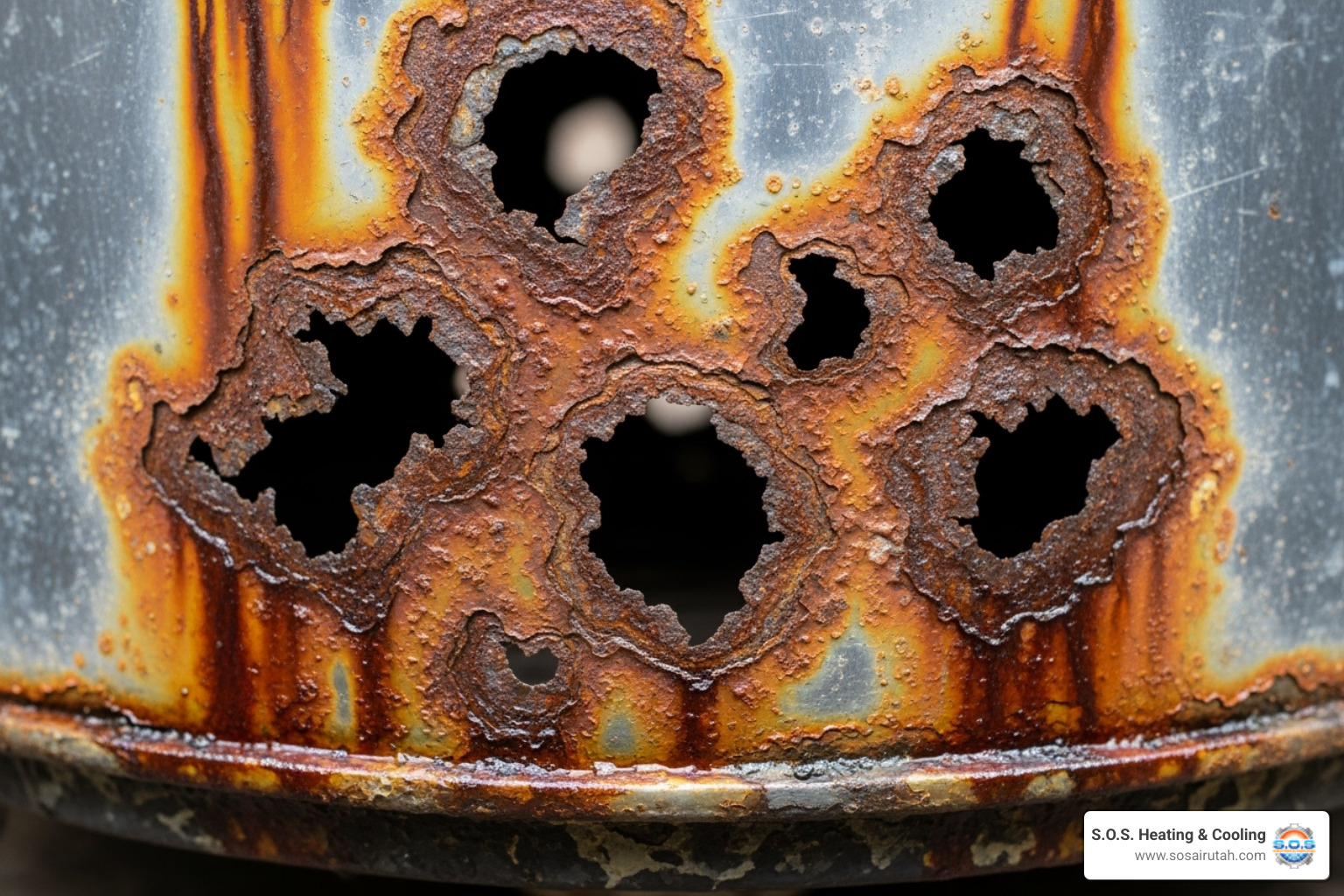
- Internal Tank Rust or Cracks: If the leak comes from the tank body, it means the inner tank has corroded through. This damage is irreparable and poses a risk of catastrophic failure.
- Frequent Repairs: If your unit needs constant fixes, the cumulative cost and hassle often make a new, reliable unit a better investment.
- Old Age: If your water heater is near or past its expected lifespan (8-12 years for tank models), replacement is a wise choice, as other parts are likely to fail soon.
- Improved Energy Efficiency: Modern water heaters are far more efficient. A new unit can lead to significant savings on your utility bills and offers better performance and safety features.
Our team at S.O.S. Heating & Cooling provides honest advice to help you decide. We'll help you evaluate your situation and make the best choice for your home and budget.
Proactive Prevention: How to Avoid Future Leaks
Regular maintenance is the best way to prevent a hot water heater leaking and avoid unexpected breakdowns and water damage. A few proactive steps can extend your water heater's life and ensure it runs safely and efficiently.
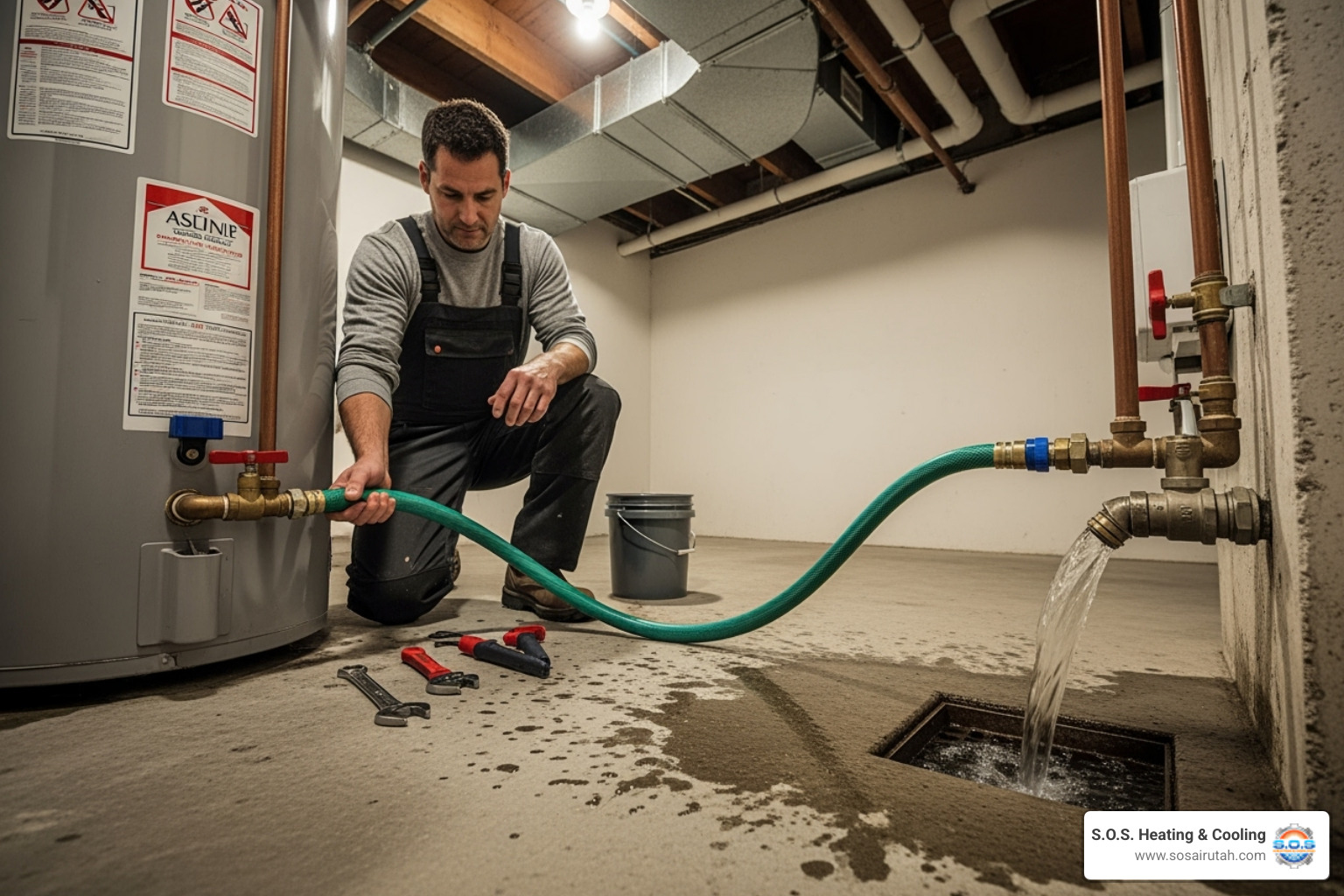
Incorporate these tasks into your annual home routine:
- Visual Inspections: Look for moisture, rust, or corrosion on the tank and connections.
- Listen for Sounds: Popping or rumbling noises can indicate sediment buildup.
- Check Water Pressure: Ensure it's in a healthy range (50-60 psi) to avoid stress on the system.
A professional annual inspection can catch minor issues before they escalate. Our team can evaluate your system, test safety components, and provide an honest assessment of its health.
The Role of the Anode Rod and Regular Flushing
Two maintenance tasks are critical for preventing leaks: anode rod care and regular tank flushing.
The Anode Rod: This "sacrificial rod" is made of a metal that corrodes more easily than the steel tank. It attracts corrosive elements in the water, protecting the tank's lining. Anode rods typically need to be inspected and replaced every 3-5 years, especially in areas with hard water like Salt Lake City. This inexpensive part can prevent internal tank corrosion and add years to your water heater's life.
Annual Tank Flushing: Minerals from hard water settle at the bottom of your tank as sediment. This layer reduces efficiency and, more importantly, traps moisture against the tank's bottom, which accelerates corrosion. Flushing your tank annually by connecting a hose to the drain valve removes this sediment. This simple task prevents corrosion that can cause a hot water heater leaking from the bottom.
Additionally, test your T&P valve annually by lifting the test lever. If it doesn't release water properly, it needs replacement. If you're not comfortable with these tasks, our team at S.O.S. Heating & Cooling can handle all your water heater maintenance needs.
Frequently Asked Questions about Leaking Water Heaters
When you find a hot water heater leaking, it's natural to have questions. Here are answers to the most common concerns we hear from Salt Lake City homeowners.
Is a leaking water heater an emergency?
It depends on the severity, but any leak should be treated seriously. A small drip needs prompt attention, but a steady stream of water or spraying is a genuine emergency.
Major leaks require urgent action due to the risk of rapid water damage to floors, drywall, and belongings, as well as mold growth. There are also significant safety hazards. Water near electrical components on an electric heater creates a shock risk. On a gas heater, a major leak could affect the burner or gas lines, posing a fire hazard.
If a leak feels like an emergency, treat it as one. Shut off the power and water, and call us for 24/7 emergency service.
How long will a water heater last once it starts leaking?
This depends entirely on the leak's source and severity.
- A minor component leak (e.g., a loose fitting or faulty valve) on an otherwise healthy tank might be manageable for weeks, but the problem will only worsen over time.
- A leak from the internal tank itself means its structural integrity is compromised. The tank is on borrowed time and could fail catastrophically at any moment—in hours, days, or weeks. There is no way to predict it.
A leak is a clear warning sign. Delaying a repair increases the risk of a major flood and more extensive damage.
Can I still use my water heater if it’s leaking?
We strongly advise against using a hot water heater leaking until it has been professionally inspected. The risks are significant:
- Safety Hazards: For electric units, water near wiring creates a shock risk. For gas units, leaks can affect the burner or gas lines, leading to fire or gas leak dangers.
- Worsening Damage: Continued use can expand the leak, causing more water damage and potentially turning a repairable issue into one that requires a full replacement.
- Inefficiency: A leaking heater runs inefficiently, wasting energy and increasing your utility bills.
For your safety, turn off the power and water supply as soon as you find a leak. Contact us for a proper diagnosis to determine if it's safe to operate and discuss your best options.
Conclusion
Finding a hot water heater leaking is stressful, but now you are equipped with the knowledge to take swift, informed action. You know how to secure the unit by shutting off the power and water, diagnose the leak's location, and understand when to repair or replace it. A leak from the top is often fixable, while a leak from the bottom usually means the tank has failed.
Preventive maintenance is key. Regular flushing to remove sediment and checking the anode rod can add years to your water heater's life and help you avoid emergencies.
When you need expert help, S.O.S. Heating & Cooling is here for you. For professional diagnosis and water heater repair in Salt Lake City, trust our experts. We offer 24/7 emergency repairs, no evaluation fees during business hours, and flexible financing. Serving Salt Lake City, Bountiful, Draper, and surrounding areas, we provide honest solutions to keep your home safe and comfortable. Give us a call to get your hot water situation sorted out.
Explore Our Latest Insights and Updates in Plumbing Services
The Inside Scoop on What Happens During an AC Tune-Up
Don't Let the Utah Heat Break Your AC This Summer
What Should Your Wasatch Front Home Humidity Actually Be