

The Secret Bodyguard for Your Home's Plumbing


.avif)

The Silent Threat Hiding in Your Home's Water Supply
How a water softener protects your plumbing and appliances comes down to one core process: removing the calcium and magnesium minerals in hard water before they can form scale inside your pipes, fixtures, and appliances. Here's a quick breakdown of what that protection actually looks like:
- Pipes - Soft water prevents mineral scale from narrowing pipe interiors, maintaining healthy water pressure and reducing corrosion risk
- Water heaters - Without scale coating the heating elements, your water heater runs more efficiently and lasts longer
- Dishwashers and washing machines - Soft water keeps spray nozzles clear and internal components free of mineral buildup, extending appliance life
- Faucets and showerheads - No limescale means no chalky crust, no restricted flow, and no premature fixture failure
- High-efficiency and tankless systems - Sensitive heat exchangers and flow sensors stay cleaner and perform better without mineral interference
Most homeowners in the Salt Lake City area don't realize hard water is causing damage until they notice a drop in water pressure, a sky-high energy bill, or an appliance that gives out years too soon. The minerals in your water supply — mostly calcium and magnesium picked up as groundwater moves through underground rock — are invisible, but their impact on your home's infrastructure is very real. Scale builds slowly and silently, narrowing pipes, coating heating elements, and grinding down appliances from the inside out.
I'm Bryson Ninow, and through years of working in home comfort systems, I've seen how water quality issues quietly undermine even the best-maintained homes — understanding how a water softener protects your plumbing and appliances is one of the most practical things a Salt Lake City homeowner can learn. Let's walk through exactly what's happening inside your pipes and what you can do to stop it.
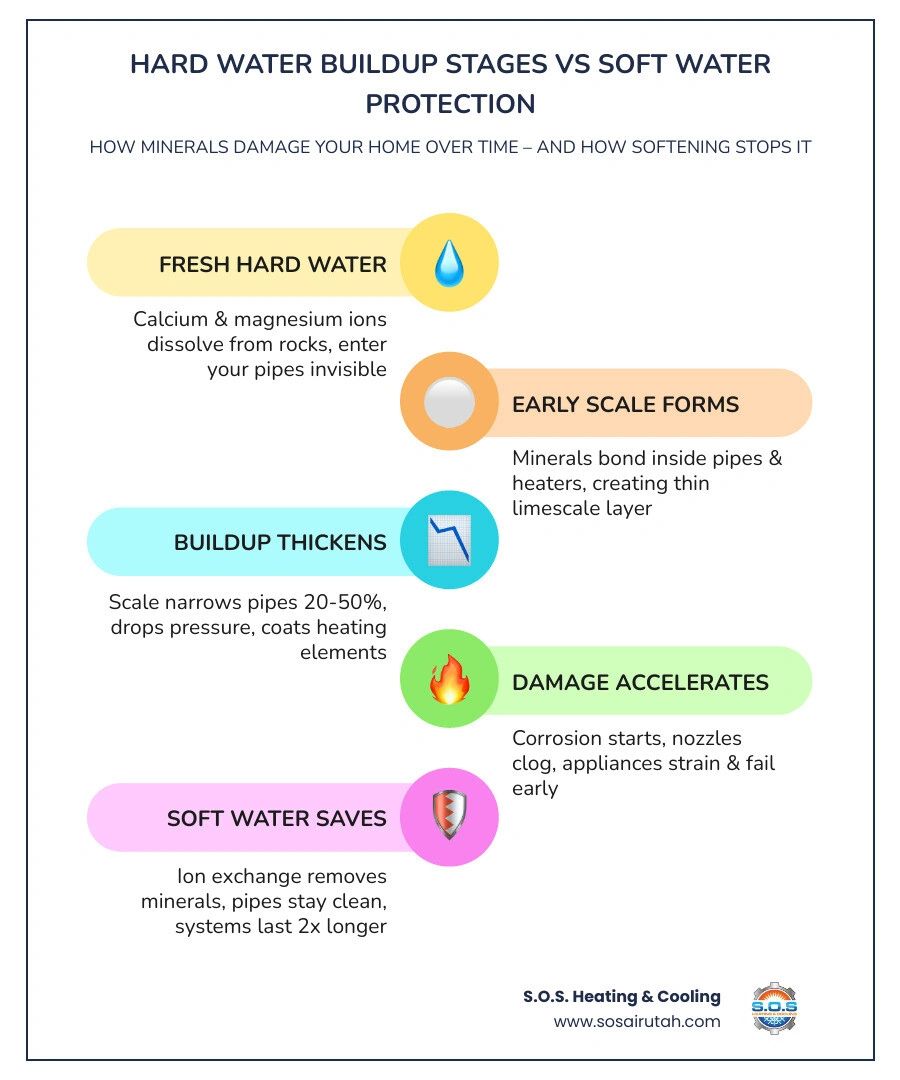
Understanding Hard Water and the Ion Exchange Process
To understand why your plumbing needs a bodyguard, we first have to look at the "bad guys" in the water. In areas like the Wasatch Front, our water often travels through underground limestone and chalk deposits. As it moves, it dissolves minerals, specifically calcium and magnesium. By the time it reaches your tap, it is "hard."
A water softener acts as a gatekeeper. Most systems use a scientific process called ion exchange. Inside the softener’s mineral tank are millions of tiny, negatively charged plastic beads known as resin. These beads are coated with sodium ions. Because calcium and magnesium have a stronger positive charge than sodium, they are attracted to the resin beads like magnets as the water flows through. The minerals stick to the beads, and a tiny, harmless amount of sodium is released into the water in exchange.
Eventually, those resin beads get "full" of minerals and need to be cleaned. This is the regeneration cycle. The system flushes the beads with a concentrated salt brine, which knocks the calcium and magnesium off the beads and sends them down the drain, recharging the resin for the next round of softening. This constant cycle ensures the water quality in Woods Cross, UT and surrounding areas stays safe for your home's infrastructure.
How a water softener protects your plumbing and appliances through science
The "magic" of water softening is actually chemistry. When hard water is heated—which happens every time you use your water heater, dishwasher, or washing machine—the dissolved calcium and magnesium undergo a chemical reaction. They transform into solid calcium carbonate, better known as limescale.
By removing these minerals through ion exchange, you prevent this chemical bonding from ever occurring. Instead of turning into a rock-hard crust inside your pipes, the water remains clear and liquid. This mineral neutralization is the primary way how a water softener protects your plumbing and appliances. While some people opt for reverse osmosis in Kaysville, UT to purify their drinking water, a whole-home softener is what provides the heavy-duty protection your entire plumbing network needs.
Signs your home needs a mineral intervention
How do you know if the "silent threat" is already active in your home? You don’t need a lab coat to find out. Look for these common red flags:
- The "Soap Scum" Struggle: If you find a white, sticky film on your shower doors or tiles, that’s hard water minerals reacting with your soap.
- Dry Skin and Brittle Hair: Hard water strips the natural oils from your body. If you feel "squeaky" or itchy after a shower, or if your hair feels like straw, the minerals are to blame.
- Cloudy Dishes: If your glasses come out of the dishwasher looking foggy or spotted, it’s not the detergent—it’s the minerals.
- Dingy Laundry: Hard water makes clothes look gray and feel scratchy because the minerals get trapped in the fabric fibers.
If these signs sound familiar, it’s time to look into water filtration in Kaysville, UT or a dedicated softening system to stop the damage before it gets worse.
How a Water Softener Protects Your Plumbing and Appliances from Scale

The most dangerous damage is the kind you can't see. Inside your walls, hard water is slowly performing a "clogging" act on your pipes. As limescale builds up, it creates a rough surface that catches even more minerals. Over time, the interior diameter of the pipe narrows.
This narrowing leads to a significant drop in water pressure. Your shower might feel like a weak drizzle, and your toilet might take ages to refill. Even worse, scale buildup can lead to galvanic corrosion. When minerals trap sediment against the metal of a pipe, it can create a localized chemical reaction that eats through the pipe wall. Whether you need water softeners in South Jordan, UT or are looking for water softeners in Bountiful, UT, the goal is the same: keep the "veins" of your home clear and flowing.
Shielding your water heater and high-value fixtures
Your water heater is the biggest target for hard water. Because heat accelerates scale formation, the bottom of a traditional tank heater often fills up with several inches of mineral sediment. This acts as an insulator.
Think of it this way: your water heater is trying to cook dinner through a thick layer of rock. It has to run longer and hotter to reach the desired temperature, which sky-rockets your energy bills and causes the metal tank to overheat and eventually crack. By installing water softeners in Layton, UT or water softeners in Mt. Olympus, UT, you ensure that the heating elements stay clean, keeping your efficiency high and your repair bills low.
Preventing pinhole leaks and valve failure
Hard water is also tough on the "moving parts" of your plumbing. Shut-off valves, faucet cartridges, and shower mixers rely on smooth surfaces to create a watertight seal. When scale builds up on these parts, they become "frozen" or brittle.
If you’ve ever tried to turn off the water to your sink during a leak only to find the valve stuck, you’ve experienced hard water damage. Softening the water in South Salt Lake, UT prevents this internal pipe pressure and valve failure, ensuring that when you need to turn off the water in an emergency, the equipment actually works.
Extending the Lifespan of Household Appliances
When we talk about how a water softener protects your plumbing and appliances, we are talking about real years added to your investments. Research shows that appliances using soft water can last up to 30% longer than those running on hard water.
| Appliance | Lifespan (Hard Water) | Lifespan (Soft Water) |
|---|---|---|
| Water Heater | 8–10 years | 12–15+ years |
| Dishwasher | 6–7 years | 10+ years |
| Washing Machine | 7–8 years | 11+ years |
| Faucets/Fixtures | 5–10 years | 15+ years |
Whether you are installing water softeners in Draper, UT or water softeners in Murray, UT, the math is simple: soft water saves you from premature replacement costs.
How a water softener protects your plumbing and appliances in the kitchen and laundry
In the kitchen, soft water prevents the tiny spray nozzles in your dishwasher from clogging. When these nozzles are clear, the machine can actually do its job, meaning you don't have to "pre-wash" your dishes by hand. It also eliminates the cloudy film on your glassware.
In the laundry room, soft water allows detergents to lather and clean effectively. In fact, you can often use 50% less detergent with soft water and still get cleaner clothes. This protects the internal seals of your washing machine from the abrasive nature of mineral-heavy water. Residents using water softeners in Kaysville, UT often report that their towels stay fluffy and their colors stay bright much longer.
Impact on high-efficiency and tankless systems
If you have a tankless water heater, a water softener isn't just a "nice-to-have"—it's a requirement. Tankless systems use narrow heat exchangers to flash-heat water. Even a tiny amount of scale can cause these systems to overheat and shut down. By providing soft water through water softeners in Centerville, UT, you protect the sensitive flow sensors and heat exchangers that make these high-efficiency systems so effective.
Choosing and Maintaining the Right System for Your Home
Choosing a system depends on your goals.
- Salt-Based Softeners: These are the gold standard for mineral removal. They physically take the calcium and magnesium out of the water.
- Salt-Free Conditioners: These don't remove minerals but "condition" them so they don't stick to surfaces. They are great for those on low-sodium diets but aren't as effective at preventing soap scum.
When selecting a system for Farmington, UT, you need to consider the "grain capacity." This is a measure of how much hardness the system can remove before it needs to regenerate.
Maintenance best practices for long-term protection
A water softener is a hard-working appliance, and it needs a little love to keep your home safe.
- Check Salt Levels: Check your brine tank every 4–6 weeks. If the salt is too low, the system can't recharge, and hard water will start leaking back into your pipes.
- Watch for Salt Bridges: Sometimes a hard crust forms over the water in the brine tank. It looks full, but there's a hollow space underneath. Break these up with a broom handle.
- Clean the Brine Tank: Every year or two, it’s a good idea to empty the tank and scrub it out to prevent "mush" from clogging the valves.
- Resin Bed Flushing: Use a specialized resin cleaner once a year to keep the beads effective. For more tips, check out our water softener guide for Woods Cross, UT.
Sizing your system for Salt Lake City water
To size a system correctly, we multiply the number of people in your home by 75 gallons (the average daily use) and then multiply that by your water's "grains per gallon" (GPG) of hardness. In many Utah areas, hardness can exceed 10 or 15 GPG, which is considered "very hard." Getting the sizing right ensures you don't run out of soft water during high-use days. We often recommend reverse osmosis in Centerville, UT as a companion to a softener for the ultimate water quality setup.
Frequently Asked Questions about Water Softening
Is a water softener safe for my septic system?
Yes! In fact, softeners can be beneficial for septic systems. By preventing mineral buildup in your wastewater, you reduce the speed at which sludge accumulates in your tank. This can lead to healthier bacterial action and a longer-lasting drainfield.
How often should I check my softener's salt levels?
We recommend checking the brine tank once a month. Most modern systems are automatic, but they still need you to keep the salt pellets replenished. If you notice your skin feeling dry or spots returning to your dishes, your salt levels are likely the first thing to check.
Does softened water affect my home's energy bills?
Absolutely—in a good way! Because soft water prevents the "insulation effect" of scale in your water heater, your heater doesn't have to work as hard. Studies have shown that softened water can improve water heater efficiency by 22% to 29%, leading to significant long-term savings on your monthly utilities.
Conclusion
At S.O.S. Heating & Cooling, we believe a water softener is the single best investment you can make for the "health" of your home. It’s the secret bodyguard that stays in the utility room, quietly ensuring that your pipes stay clear, your appliances last for a decade or more, and your family stays comfortable.
From Bountiful to South Jordan, we’ve helped thousands of Utah homeowners reclaim their water quality. If you’re tired of scrubbing limescale or worried about the "silent threat" in your pipes, protect your home with professional plumbing services. We’re here to help you find the perfect system for your needs, ensuring your home’s plumbing remains as reliable as the day it was installed. Give us a call today!

Plumbing
Expert plumbing services offering reliable repairs, installations, maintenance, and emergency support.

Air Conditioning
Comprehensive air conditioning services include installation, repairs, maintenance, and energy-efficient solutions.

Heating
Specialized heating services provide reliable installation, repair, system maintenance, and energy-optimization solutions.

Indoor Air Quality
Enhance your home’s air with our cutting-edge indoor air quality solutions you can trust.

Fireplaces
Transform your space into a warm and cozy atmosphere with our professional fireplace services.

Heat Pumps
Enjoy year-round comfort with our energy-efficient and professional heat pump solutions.
Explore Our Latest Insights and Updates in Plumbing Services
Cheat Sheet to How Hard Water Scale Buildup Leads to Pipe Failure in the Wasatch Front
How Often to Inspect a Sewer Line in Salt Lake Valley
5 Most Common AC Repairs in Hot Dry Wasatch Front Climates
