

Step-by-Step Guide to How Bryson Ninow Built SOS on Fair and Honest Service


.avif)

How Bryson Ninow Built SOS on Fair and Honest Service — And Why It Matters for Salt Lake City Homeowners
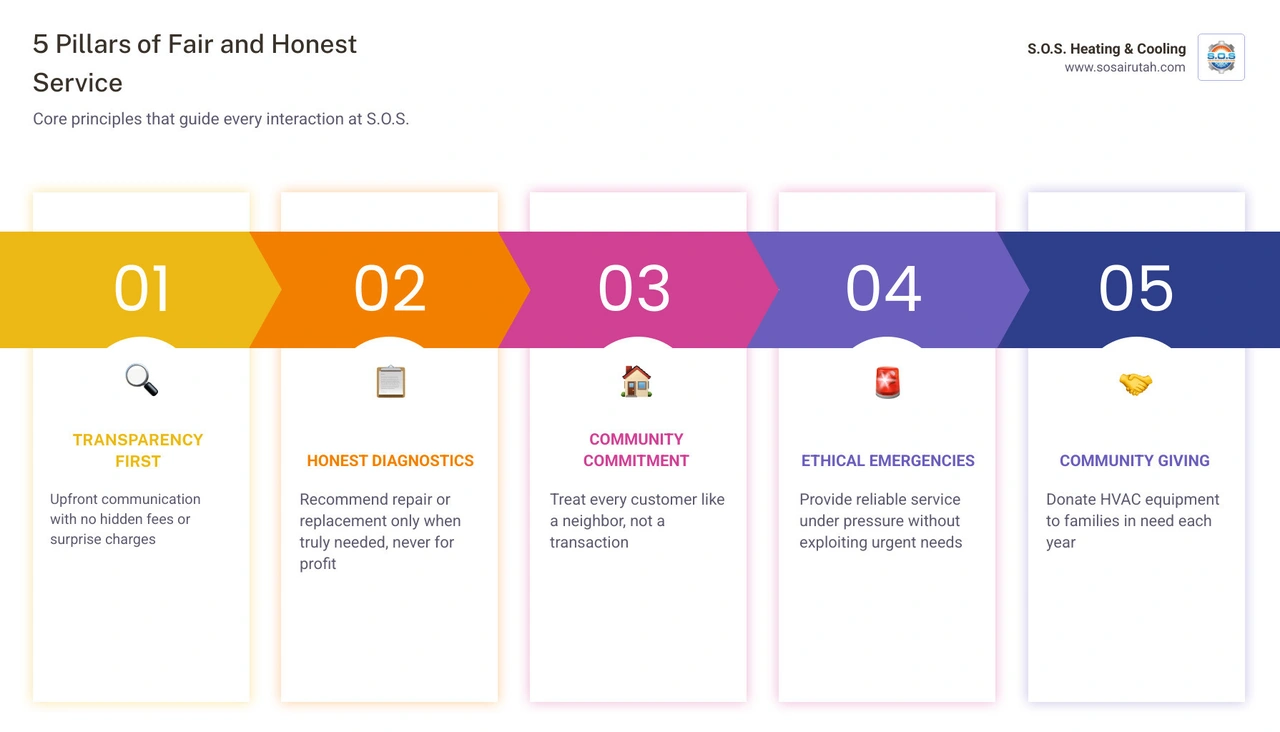
How Bryson Ninow built SOS on fair and honest service comes down to a few core principles he put into practice from day one:
- Transparency first — upfront communication with no hidden fees or surprise charges
- Honest diagnostics — recommending repair or replacement based on what's actually needed, not what's most profitable
- Community commitment — treating every Salt Lake City customer like a neighbor, not a transaction
- Integrity in emergencies — providing ethical, reliable service even under the pressure of urgent situations
- Giving back — donating HVAC equipment to families in need each year
When an HVAC system breaks down or a drain backs up at the worst possible moment, the last thing a homeowner needs is a company that takes advantage of the situation. Yet that's a reality too many people in Salt Lake City have experienced. From vague estimates to unnecessary upsells, a lack of honest service in the home services industry is a real and frustrating problem. That's exactly the gap Bryson Ninow set out to close when he founded S.O.S. Heating & Cooling — building a company where integrity isn't a marketing slogan, it's the operating standard.
I'm Bryson Ninow, and my path into the trades started simply — I needed a job — but it quickly became a calling rooted in showing up for people with honesty and care. Understanding how Bryson Ninow built SOS on fair and honest service means understanding that every decision I've made, from hiring to how we handle emergency calls, has been guided by a single question: would I be comfortable if this were my neighbor's home?
Simple how bryson ninow built sos on fair and honest service word guide:
- advantages of a company that treats your home like their own
- benefits of choosing a local hvac and plumbing company built on integrity
The Foundation: How Bryson Ninow Built SOS on Fair and Honest Service
At its core, this story is not really about equipment. It is about standards.
Bryson Ninow’s background in home services shaped S.O.S. Heating & Cooling around a practical truth: homeowners are rarely calling us on their best day. Usually, they are dealing with no heat, no cooling, no hot water, a clogged drain, a leak under the floor, or a plumbing emergency that has somehow chosen dinner time to become dramatic. In those moments, trust matters as much as technical skill.
That background appears to have influenced the founding principles of S.O.S. in a few clear ways:
- We focus on solving the actual problem.
- We communicate clearly before work begins.
- We treat homes with respect.
- We build for long-term relationships, not one-time wins.
- We keep service local and community-centered.
Those values align closely with what we share in our piece on the Benefits of Choosing a Local HVAC and Plumbing Company Built on Integrity. For us, integrity is not a soft extra. It is the framework for every service call.
That matters in Salt Lake City and surrounding communities like Bountiful, Draper, Sandy, South Jordan, Layton, Murray, Holladay, Farmington, and nearby areas because local homes come with local challenges. Utah’s hard water, older plumbing in established neighborhoods, seasonal HVAC stress, and urgent after-hours issues all create situations where homeowners need facts, not pressure.
Bryson’s founding vision appears simple but powerful: if we would not recommend it in our own home, we should not recommend it in yours.
That standard has a ripple effect across the whole company. It affects how we answer calls, how we inspect systems, how we explain options, and how we measure success. It also helps explain why community trust is such a central part of the S.O.S. identity. We are not trying to become a faceless name. We are trying to be the company people feel comfortable calling again.
Implementing Ethical Practices in Modern Plumbing and HVAC
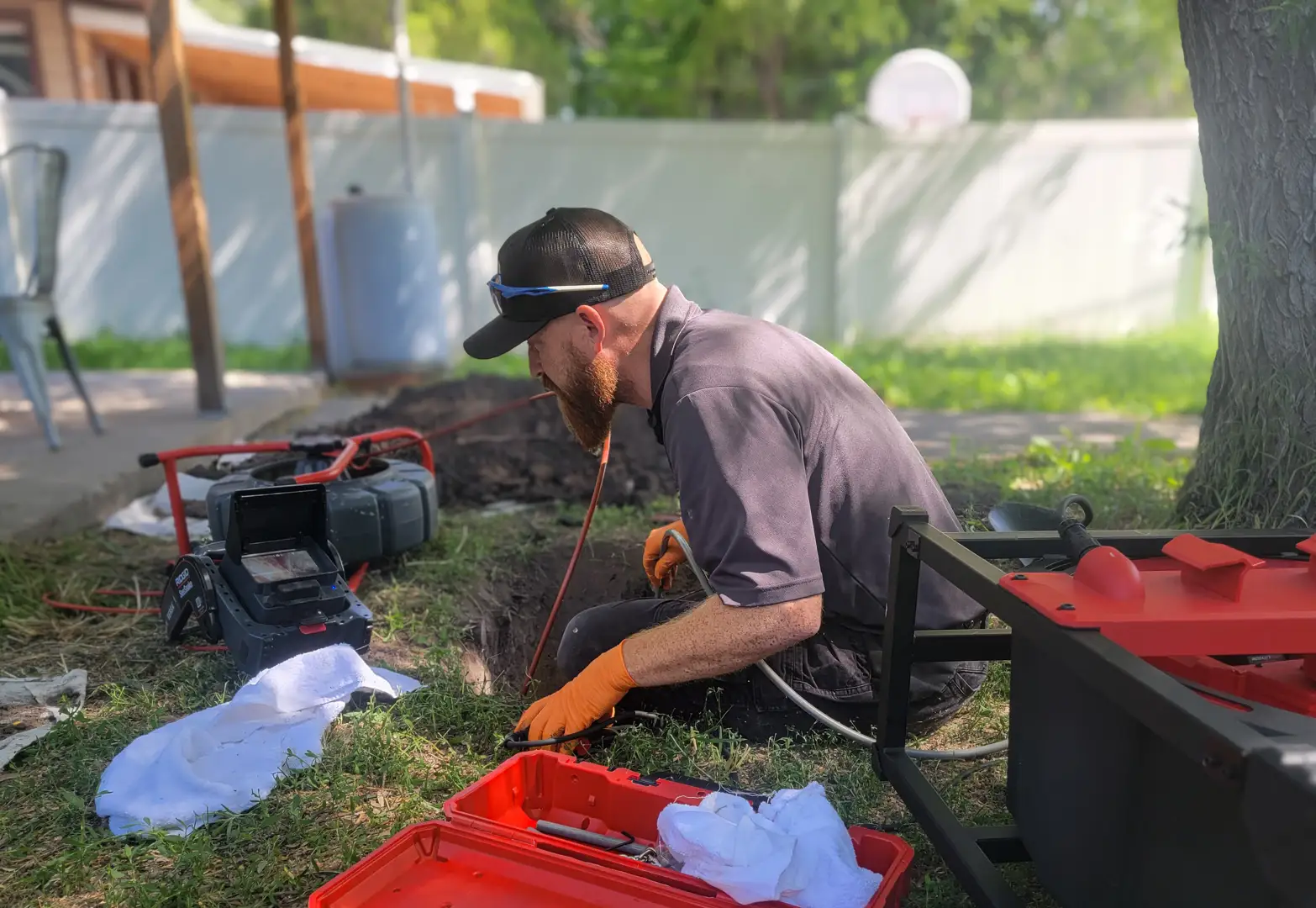
Fair and honest service sounds nice in theory. The important question is what it looks like in practice.
For us, ethical service is built into the small operational habits that homeowners notice right away:
- Clear communication before work starts
- No evaluation fees during business hours
- Honest explanations of what we found
- Repair recommendations based on condition, age, and performance
- Well-stocked service vehicles to improve first-visit repairs
- Advanced diagnostic tools that help us find root causes, not guess
- 24/7 response for urgent plumbing and HVAC emergencies
- Flexible financing options for customer convenience
- A focus on satisfaction and follow-through
These are not flashy ideas, but they are the kind that build trust over time.
In plumbing, that means using tools like video camera inspections to actually see what is happening inside a line before recommending the next step. In HVAC, it means diagnosing a system carefully instead of jumping straight to replacement talk. In both cases, it means giving homeowners information they can understand.
This is closely connected to the mindset we describe in Advantages of a Company That Treats Your Home Like Their Own. Respect shows up in the way we communicate, the way we work, and the way we avoid creating extra mess, confusion, or stress.
Just as important, ethical practices help us create long-term relationships. A homeowner who feels informed and respected is much more likely to trust us next time a drain slows down, a water heater starts acting up, or the AC chooses the hottest week of July to retire.
How Bryson Ninow Built SOS on Fair and Honest Service Through Transparency
Transparency is probably the clearest answer to the question of how Bryson Ninow built SOS on fair and honest service.
In real homes, transparency means we do not hide the process. We show people what we are seeing whenever possible. In drain work, that may involve a camera inspection to identify scale, grease buildup, root intrusion, or a foreign object. In HVAC, it may involve walking through system performance issues, wear patterns, or maintenance-related problems.
The goal is not to overwhelm homeowners with jargon. The goal is to replace mystery with clarity.
A few transparency practices stand out:
- We explain findings in plain language
- We distinguish between urgent issues and monitor-only issues
- We discuss repair versus replacement honestly
- We focus on the root cause, not just the symptom
- We help homeowners understand why a recommendation makes sense
One useful guideline in the industry is that repair is often the more honest recommendation when a unit is still relatively young and the issue is isolated. Research in the material you provided notes that repair is commonly favored when a water heater is under 8 years old and the needed fix is well below replacement territory. By contrast, replacement becomes more reasonable when a unit is older, breaking down repeatedly, or nearing the end of a typical 10 to 15 year lifespan.
That does not mean every situation fits a neat formula. Homes rarely read the manual. But it does show the kind of logic honest companies should apply: age, condition, frequency of failure, efficiency, and safety should guide the recommendation.
Our educational approach also matters. Homeowners deserve to understand whether they are dealing with a temporary clog, heavy mineral scale, a failing component, or a larger system issue. That is one reason our broader company story matters, and why readers can learn more About SOS Air Utah.
Transparency builds confidence because it makes people feel included in the decision, not cornered by it.
How Bryson Ninow Built SOS on Fair and Honest Service in Emergency Situations
Emergencies are where a company’s values get stress-tested.
It is easy to talk about integrity on a calm Tuesday morning. It is harder at 11:40 p.m. when a sewer line backs up, a drain disaster is spreading through the basement, or a heating system quits during freezing weather. That is where standards either hold or disappear.
S.O.S. Heating & Cooling provides 24/7 emergency response for drain and plumbing issues in Salt Lake City and the surrounding service area. That matters because urgent problems do not politely wait for business hours.
But emergency service is not just about speed. It is also about ethics.
An ethical emergency approach includes:
- Responding quickly without using urgency to pressure people
- Prioritizing safety and damage control first
- Explaining the immediate problem clearly
- Identifying what must happen now versus what can wait
- Protecting the long-term integrity of plumbing or HVAC systems
For example, if a drain line is fully blocked, the honest first step may be restoring safe flow and assessing the line condition. If the issue appears linked to recurring scale, roots, or line damage, we should say that plainly. If a temporary clearing will not solve the bigger issue, homeowners deserve to know that too.
That is especially important across Salt Lake City, South Salt Lake, Millcreek, Cottonwood Heights, Kaysville, Woods Cross, and other nearby communities where older homes and established landscapes can create recurring plumbing concerns.
In short, emergency ethics means we do not let urgency replace honesty.
Addressing Salt Lake City’s Unique Challenges with Integrity
Salt Lake City homes have some very specific plumbing realities, and fair service means acknowledging those realities instead of treating every clog like a generic problem.
One of the biggest factors is hard water. Research shows Salt Lake City water measures around 13 grains per gallon, which is hard enough to create noticeable mineral buildup over time. That scale can narrow pipes, slow drainage, contribute to recurring clogs, and place extra stress on water-using appliances.
For homeowners, that means a “simple clog” is not always simple. Sometimes the issue is not one dramatic blockage. It is years of mineral deposits, soap scum, grease, hair, and debris slowly shrinking the usable diameter of the pipe.
That is why honest plumbing service in this area often includes talking about prevention, not just rescue.
We encourage homeowners to:
- Avoid flushing wipes, paper towels, and hygiene products
- Keep grease out of kitchen drains
- Use drain screens where appropriate
- Consider a water softener to reduce mineral scale
- Schedule regular professional cleaning for older homes
For homes that are 30 years old or more, annual professional drain cleaning is often recommended in this region because of the combined effect of hard water and aging plumbing. For newer homes, a longer interval may be enough, depending on use and history.
When buildup is severe, hydro-jetting can be one of the most effective long-term solutions. Professional hydro-jetting can use up to 4,000 PSI of water pressure to scour pipe walls and remove years of scale, grease, and debris. In the right application, it can restore pipes to a much cleaner, more open condition than basic clearing alone.
That distinction matters.
| Method | What it does | Best for | Limitations |
|---|---|---|---|
| Drain clearing | Opens a path through a clog so water can move again | Immediate stoppages and short-term relief | Often leaves buildup on pipe walls |
| Professional hydro-jetting | Cleans the full interior of the pipe with high-pressure water | Heavy scale, grease, sludge, recurring clogs, some root-related buildup | Requires proper inspection and professional evaluation |
Using the right solution is part of honest service. If a line only needs a targeted clearing, we should not oversell a larger process. If a line is heavily scaled and likely to clog again, we should not pretend a quick poke-through is a permanent fix either.
Salt Lake City also has mature neighborhoods with older sewer lines and established trees. Tree roots can find tiny cracks and joints, then expand inside the line. Camera inspections become especially useful here because they help us confirm whether the issue is roots, scale, a foreign object, a belly in the line, or a break. Without that visibility, recommendations become guesswork. And guesswork is not a service standard.
Measuring Success Beyond the Bottom Line
If revenue were the only scorecard, a company could look successful while leaving a trail of frustrated homeowners behind. That is not the kind of business Bryson Ninow appears to have wanted to build.
A healthier measure of success includes:
- Customer satisfaction
- Repeat business from families who trust us
- Positive community reputation
- Quality of workmanship
- Ethical consistency as the company grows
- Team accountability
- Fewer callbacks for unresolved root causes
Those are harder to fake and much more meaningful.
For a local company, reputation is built one home at a time. If we handle an emergency with calm communication, arrive prepared, explain what is happening, and do quality work, that experience tends to travel. Neighbors talk. Families share recommendations. Trust compounds.
That said, growth creates challenges. As any service business expands across more communities, maintaining the same standards becomes more difficult. Systems have to become more consistent. Communication has to stay clear. Team members have to understand not just what to do, but why it matters.
Maintaining fair and honest service during growth likely requires ongoing quality control such as:
- Clear service standards for every call
- Consistent communication expectations
- Documentation of findings and recommendations
- Feedback loops from customer experiences
- A culture that rewards honesty, not pressure tactics
That final point matters a lot. Values do not survive on posters alone. They survive when the company reinforces them operationally.
For us, success beyond the bottom line also includes being useful to the community. That means offering convenient service features, showing up when people need help, and keeping the relationship human. In a world full of automated everything, homeowners still appreciate being treated like real people with real concerns and not like another box on a route sheet.
Frequently Asked Questions about S.O.S. Service Standards
How does the company handle Salt Lake City's hard water issues?
We start by acknowledging that hard water is not a minor side note in this area. At around 13 grains per gallon, Salt Lake City’s water can lead to steady mineral buildup inside pipes, drains, and water-using equipment.
Our honest approach is to explain how that buildup affects the home:
- Drains can narrow over time
- Soap scum and minerals combine into stubborn residue
- Water heaters can collect sediment faster
- Fixtures and plumbing components may wear sooner
- Recurring clogs can become more common
Where appropriate, we may recommend preventive steps such as regular maintenance, annual drain cleaning for older homes, and water softener solutions to reduce future scale. A water softener can help limit the calcium and magnesium that cause pipe narrowing, which supports better flow and longer plumbing life.
The key is that we treat hard water as a real local condition, not an afterthought.
What is the difference between drain clearing and professional cleaning?
Drain clearing is usually a short-term restoration of flow. Think of it as opening a channel through the clog so the sink, tub, or sewer line can start moving again.
Professional drain cleaning goes further. It removes the buildup left behind on the pipe walls.
That difference matters because a line can seem “fixed” after clearing but still contain:
- Mineral scale
- Grease
- Soap residue
- Sludge
- Root intrusion
Hydro-jetting is one of the strongest examples of professional cleaning. It can use up to 4,000 PSI to wash the line thoroughly, which often provides a much longer-lasting result than a simple clearing. It is especially useful when clogs keep coming back.
So the short version is:
- Clearing restores flow
- Cleaning restores the pipe more fully
If we are being honest, some homes need one and some need the other.
When is it more honest to recommend a repair over a replacement?
A fair recommendation depends on the age of the system, the severity of the problem, efficiency considerations, and whether the breakdown is isolated or recurring.
In many cases, repair is the more honest recommendation when:
- The system is still relatively young
- The issue is specific and fixable
- The unit has otherwise been operating well
- Safety and reliability can be restored
Research in your source material notes a useful guideline for water heaters: repair is often the better choice when the unit is under 8 years old and the problem is not approaching replacement-level severity. Replacement becomes more reasonable when a unit is older, breaking down often, or nearing the end of its expected lifespan, which is commonly around 10 to 15 years for many water heaters.
The broader principle applies beyond water heaters too. If a repair will responsibly extend service life, that should be part of the conversation. If repeated failure makes replacement the smarter long-term choice, that should be explained plainly.
Honesty means we do not force either answer before the facts are in.
Conclusion
The real lesson in how Bryson Ninow built SOS on fair and honest service is that trust is not built through slogans. It is built through repeated choices: telling the truth, using the right diagnostic tools, communicating clearly, respecting the home, and doing right by people even when they call us in the middle of a stressful emergency.
For homeowners in Salt Lake City and nearby communities, that approach matters. It affects whether you feel informed or pressured, whether the solution lasts or just buys time, and whether you feel comfortable calling us again when your home needs help.
S.O.S. Heating & Cooling continues to reflect those family-owned values through HVAC and plumbing service that aims to put ethics on the same level as technical skill. That includes 24/7 emergency support, convenient service policies, and a local mindset rooted in community trust.
If you want to learn more about who we are and what guides our work, Discover the S.O.S. difference and our commitment to your home.
Explore Our Latest Insights and Updates in Plumbing Services
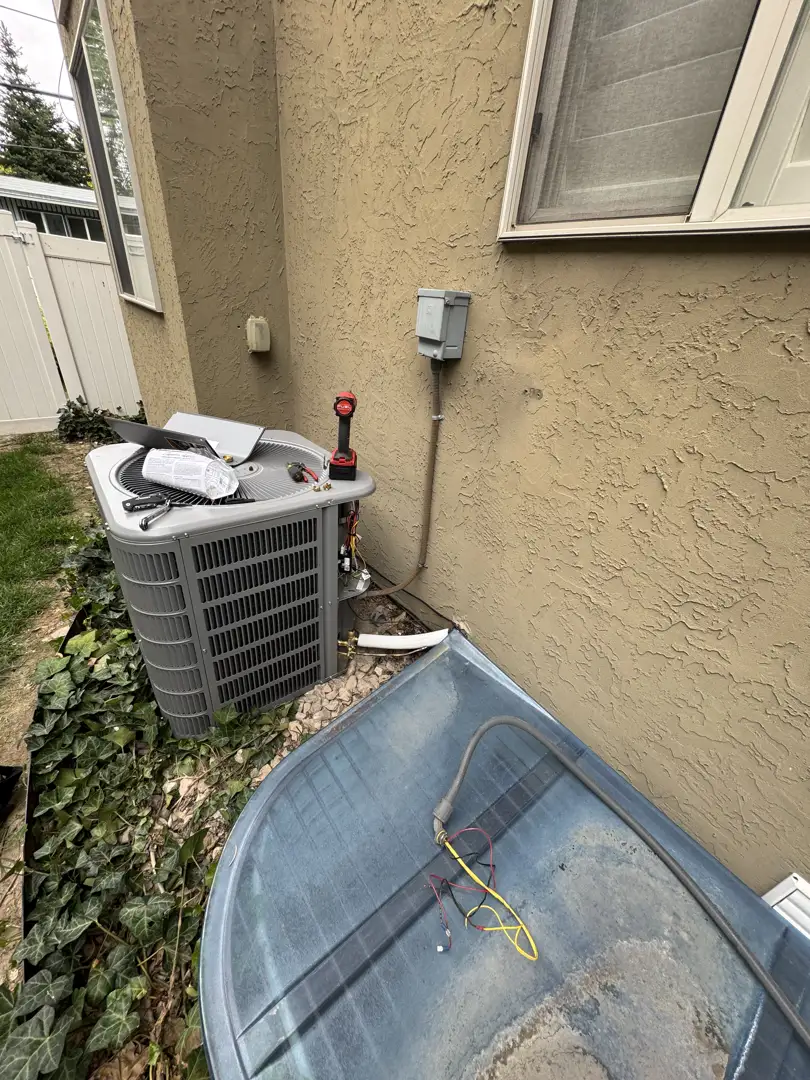
Don't Let the Utah Heat Break Your AC This Summer
What Should Your Wasatch Front Home Humidity Actually Be
High Altitude HVAC: What Every Utah Homeowner Should Know