

Ultimate Guide to Hard Water from Utah Aquifers Damaging Pipes and Fixtures


.avif)

Why Hard Water from Utah Aquifers Is Silently Destroying Your Plumbing
How hard water from Utah aquifers damages pipes, fixtures, and water heaters is one of the most common — and most overlooked — problems facing homeowners across the Salt Lake City area. Utah's groundwater travels through thick layers of limestone, dolomite, and mineral-rich rock before it ever reaches your tap. Along the way, it picks up high concentrations of calcium and magnesium. By the time that water flows through your home, it often exceeds 180 parts per million (ppm) in hardness — well into the "very hard" category by USGS standards. On the Wasatch Front, levels frequently surpass 15 grains per gallon, which is roughly 50% harder than the threshold that already qualifies as "very hard."
Here is a quick breakdown of how Utah's hard water causes damage:
- Pipes: Mineral scale builds up on interior pipe walls, steadily narrowing the diameter and restricting water flow — similar to how plaque narrows an artery. In older copper systems, this can reduce flow capacity by 30–50%.
- Fixtures: Calcium deposits clog aerators and showerheads, corrode finishes, and leave stubborn white or greenish crust that wears down metal over time.
- Water heaters: Heat causes dissolved minerals to precipitate and harden into scale on heating elements and tank floors. Just 1/8 inch of scale can reduce a gas water heater's efficiency by up to 48%. Heaters that should last 10–12 years may fail in 4–6 years in Utah's hard water conditions.
- Appliances: Washing machines, dishwashers, and other water-using appliances lose efficiency and years of useful life as scale clogs internal components and sensors.
The damage is gradual, quiet, and cumulative — which is exactly what makes it so costly over time.
I'm Bryson Ninow, and through years of hands-on work serving Utah homeowners in the HVAC and home systems space, I've seen how hard water from Utah aquifers damages pipes, fixtures, and water heaters in ways that most people don't catch until the repair bill arrives. In this guide, I'll walk you through the science, the warning signs, and the most effective ways to protect your home.
Understanding Utah Aquifers and the Science of Hard Water
To understand why our water behaves the way it does, we have to look beneath our feet. The water that supplies homes along the Wasatch Front — including Salt Lake City, Bountiful, Sandy, and South Jordan — doesn't just fall from the sky and flow directly into your faucet. A massive portion of our municipal and well water comes from deep underground aquifers.
Water hardness is measured using two primary scales: parts per million (ppm) or grains per gallon (gpg). According to the United States Geological Survey (USGS), water is classified as:
- Soft: 0–60 ppm (0–3.5 gpg)
- Moderately Hard: 61–120 ppm (3.6–7.0 gpg)
- Hard: 121–180 ppm (7.1–10.5 gpg)
- Very Hard: 181+ ppm (10.6+ gpg)
Along the Wasatch Front, our tap water routinely tests between 200 and 350 ppm (11.7 to over 20 gpg). In some of our deep-well communities, the mineral load is even higher. For example, if you look at the local water reports, the Water Quality in Woods Cross UT reveals a heavy reliance on deep groundwater wells that yield incredibly mineral-rich water.
When you wash your hands or run a bath in these areas, you are dealing with water that is saturated with dissolved geological history. While these minerals are perfectly safe to drink and actually provide a crisp taste, they act like a slow-motion wrecking ball inside your plumbing system.
The Geological Origins of Utah's Mineral-Rich Water
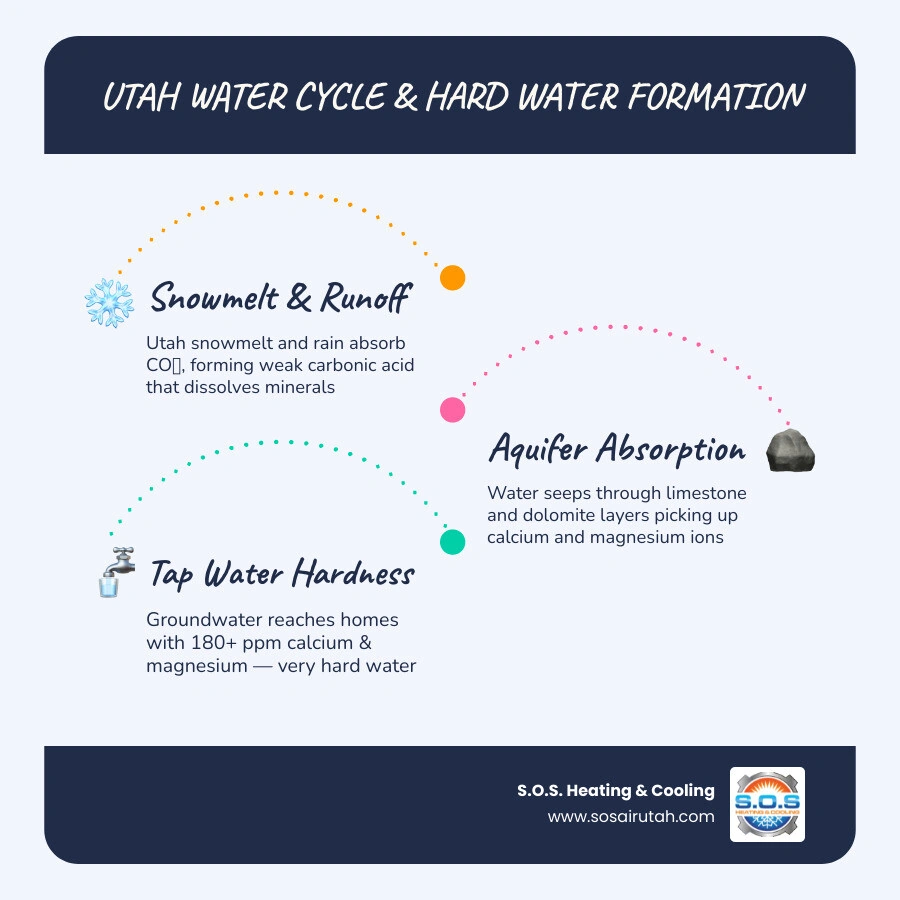
Our hard water story begins high up in the Wasatch Range. Every winter, heavy snowpacks accumulate across the mountains. As spring and summer arrive, this snowmelt runs down the canyons, rushing over rocks and seeping deep into the earth to recharge our underground aquifers.
As this groundwater percolates through the soil and rock layers, it undergoes a natural chemical process. It passes through vast underground deposits of limestone (calcium carbonate) and dolomite (calcium magnesium carbonate). Because groundwater remains in contact with these ancient geological formations for decades, it slowly dissolves the rock, absorbing calcium and magnesium ions.
Rainwater is naturally slightly acidic, which makes it incredibly efficient at breaking down these rock formations. By the time this water is pumped up by municipal wells or private systems, it is heavily loaded with dissolved minerals. When this mineral-heavy water enters your home's pressurized, heated plumbing system, those dissolved minerals are eager to return to their solid, rock-like state.
How Hard Water from Utah Aquifers Damages Pipes Fixtures and Water Heaters
The transition of minerals from a dissolved liquid state back into a solid is the root cause of all hard water plumbing damage. This chemical reaction is known as thermal precipitation, and it is governed by a scientific rule called "inverse solubility."
Most solids dissolve better in hot water than cold water (think of how easily sugar dissolves in hot tea compared to iced tea). However, calcium carbonate does the exact opposite. As water temperature rises, calcium carbonate becomes less soluble. This means that the hottest spots in your home's plumbing system — namely, your water heater, hot water pipes, and showerheads — are the exact places where calcium and magnesium precipitate out of the water first, forming a rock-hard crust known as limescale.
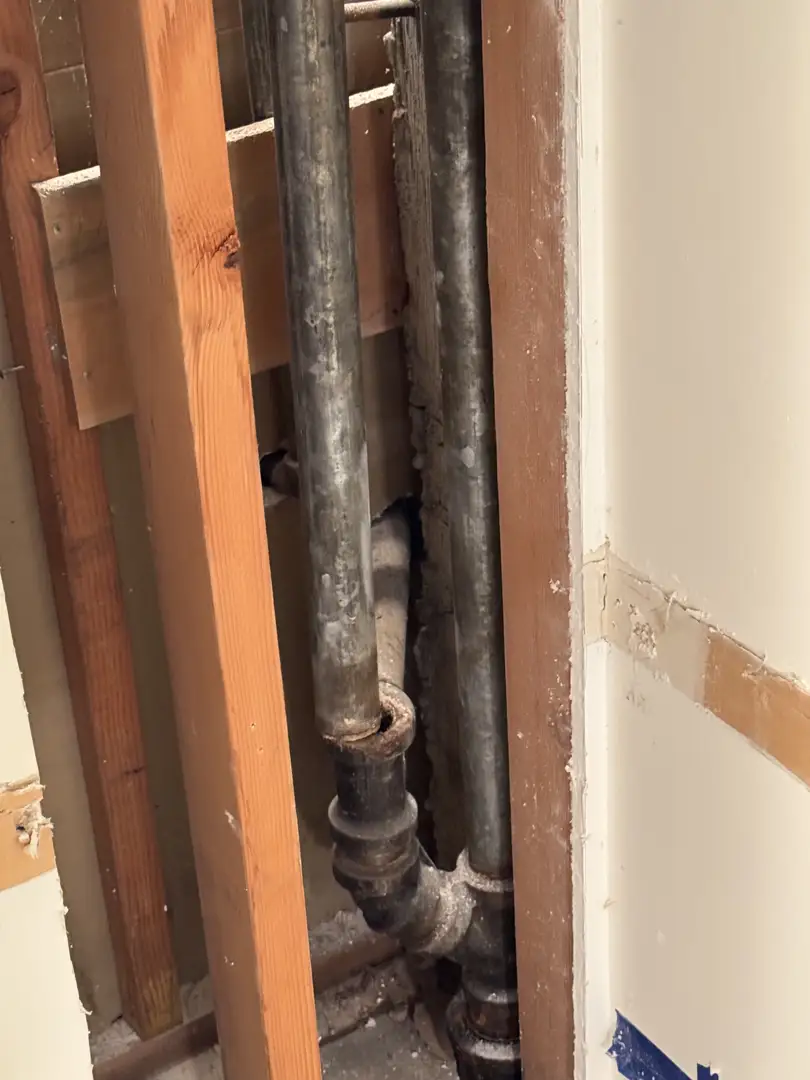
This mineral crust acts like a thermal insulator and a physical barrier. Over time, it restricts flow, lowers your home's water pressure, and degrades the integrity of your plumbing materials. If you want to dive deeper into the specific mechanics of this process, you can read our detailed breakdown on How Utah Hard Water Affects Your Plumbing.
The Plaque Effect: How Hard Water from Utah Aquifers Damages Pipes Fixtures and Water Heaters Over Time
Think of limescale as arterial plaque for your home. When hard water flows through your main lines, a microscopic layer of calcium carbonate bonds to the interior walls of your pipes. Day after day, year after year, this layer thickens.
In older copper piping systems, this scale accumulation can narrow the interior diameter of a pipe by 30% to 50% over a 15-to-20-year period. As the pathway for water shrinks, your water pressure drops, and your plumbing has to work twice as hard to deliver water to your fixtures.
While modern PEX tubing is smoother and less susceptible to scale clinging to its flexible plastic walls, the brass and copper fittings used to connect PEX runs are highly vulnerable. Scale accumulates quickly at these joints, elbows, and connections, creating localized bottlenecks.
Furthermore, this scale buildup can trap chlorine and other corrosive agents against the metal walls of copper pipes. This localized chemical concentration leads to a phenomenon known as pinhole corrosion, where tiny, silent leaks develop behind your drywall.
Fixture Corrosion and Aesthetic Ruin
Your fixtures are the visible ambassadors of your plumbing system, and hard water treats them mercilessly. The most immediate victim is usually the faucet aerator — the tiny mesh screen at the tip of your spout. As hard water passes through, minerals precipitate on the screen, clogging the microscopic holes. This results in an uneven, spraying water stream or a sudden loss of pressure.
Showerheads suffer a similar fate. The small rubber or metal nozzles become encased in a white, chalky crust. Beyond the aesthetic frustration, this mineral scale causes physical damage:
- Dezincification: The zinc in brass fixtures is slowly leached out by mineral interactions, leaving the metal brittle, porous, and prone to cracking.
- Finish Degradation: The protective chrome, brushed nickel, or matte black finishes on your faucets are chemically eaten away by persistent mineral deposits.
- Soap Scum Bond: When calcium and magnesium ions react with the fatty acids in soaps and shampoos, they form an insoluble curd (soap scum). This gray film clings to tub surrounds, glass shower doors, and tile, creating a stubborn layer that requires harsh chemical cleaners to remove.
The Heavy Toll on Water Heaters and Home Appliances
If your pipes are the arteries of your home, your water heater is the heart. Unfortunately, because of the inverse solubility of calcium carbonate, your water heater is the primary target for hard water damage. Whether you have a traditional tank model or a modern tankless system, hard water is their number one enemy.
In traditional tank water heaters, the mineral scale precipitates out of the water and settles to the very bottom of the tank. Over time, this creates a thick, sandy layer of sediment that can easily measure two to four inches deep. In tankless water heaters, the minerals coat the narrow copper tubing of the heat exchanger, restricting water flow and causing the system to overheat. To decide which system is best suited to handle these conditions in your home, check out our guide on Tankless vs Tank Water Heater for Utah Hard Water.
Why Heating Elements Fail and How Hard Water from Utah Aquifers Damages Pipes Fixtures and Water Heaters
To understand why water heaters fail so prematurely in Utah, we have to look at the thermal conductivity of scale. Limescale has a thermal conductivity of only 0.5 to 2.5 W/m·K, whereas steel has a conductivity of around 50 W/m·K. This means that limescale is an incredibly effective insulator — which is the absolute last thing you want on a heating element.
When a thick layer of scale coats an electric heating element or blankets the bottom of a gas water heater:
- The Burnout: The heating element has to work much harder and run much hotter to transfer heat through the scale barrier into the water. This causes the metal of the element to overheat and physically melt or crack, leading to sudden failure.
- The Kettle Effect: Water becomes trapped in tiny pockets beneath the hardened sediment at the bottom of the tank. As this trapped water boils, it turns into steam, creating loud popping, rumbling, or gravel-rolling noises. This constant micro-boiling causes mechanical fatigue, stressing the steel tank and cracking its protective glass lining.
- Anode Rod Destruction: The sacrificial anode rod, designed to protect your tank from rusting, is forced to work overtime in highly conductive, mineral-heavy water. An anode rod that should last 5 years can be completely dissolved in under 2 years, leaving your steel tank wide open to rust and catastrophic leaks.
The impact on equipment lifespan is drastic. For a comprehensive look at how these factors combine to destroy your system, read our Hard Water Shortens Water Heater Lifespan Guide.
Lifespan Reduction in Modern Smart Appliances
Modern high-efficiency (HE) washing machines and dishwashers are wonderful for saving water, but their advanced designs actually make them more vulnerable to hard water. These appliances rely on incredibly small internal solenoids, precise water-level sensors, and tiny spray nozzles to operate.
When hard water scale enters these smart systems:
- Solenoid Valves: Small mineral particles get trapped in the rubber seals of the water inlet valves. This prevents the valves from closing completely, leading to slow, silent leaks that can flood your laundry room or kitchen.
- Heating Coils: Just like in water heaters, the heating elements in your dishwasher and washing machine become coated in scale, forcing them to run longer and consume more electricity.
- Spray Arms: The tiny holes in dishwasher spray arms become blocked with scale, leaving your dishes covered in cloudy spots and food residue.
On average, hard water shortens the lifespan of water-using appliances by 30% to 50%. A dishwasher expected to last 10 years may find its way to a landfill in just 7 years, while washing machines frequently experience premature pump failures.
The Financial Impact: Calculating the Hidden Hard Water Tax
Living with hard water without a treatment system is highly expensive. Homeowners in hard water regions like Herriman, Layton, or South Salt Lake pay a continuous "hard water tax" in the form of inflated utility bills, frequent appliance replacements, and wasted cleaning products.
Let's look at how hard water directly impacts your wallet over time:
| Appliance / System | Expected Lifespan (Soft Water) | Average Lifespan (Utah Hard Water) | Efficiency / Financial Impact |
|---|---|---|---|
| Gas Water Heater | 11–12 Years | 5.5–6 Years (50% reduction) | Up to 48% loss in energy efficiency |
| Electric Water Heater | 13 Years | 6.5 Years (50% reduction) | Up to 25% loss in energy efficiency |
| Washing Machine | 11 Years | 7.7 Years (30% reduction) | Uses up to 50% more detergent |
| Dishwasher | 10 Years | 7 Years (30% reduction) | Requires specialized rinse aids |
| Faucets & Fixtures | 9 Years | 5.4 Years (40% reduction) | Frequent cartridge and aerator replacement |
| Toilets | 6.5 Years | 2 Years (70% reduction) | Scale ruins flappers, causing constant running |
When you add up the extra energy required to heat water through a layer of stone, the cost of replacing appliances years ahead of schedule, and the constant purchase of harsh descaling chemicals, the total is staggering. A typical Utah household can easily spend an extra $550 to $1,795 every single year just dealing with the consequences of untreated hard water. Over a decade, that's up to $12,000 or more in preventable losses. To see a detailed breakdown of these hidden expenses, check out our analysis on How Much Does Hard Water Cost You Over Time.
Signs of Hard Water Damage in Your Home
Because plumbing is largely hidden behind walls and inside metal jackets, you need to know how to read the early warning signs of mineral damage before a major pipe or heater fails.
Keep an eye out for these classic symptoms in your home:
- Cloudy Glassware: If your glasses emerge from the dishwasher looking foggy, etched, or covered in white spots, that is calcium carbonate left behind as the water evaporates.
- Dry, Itchy Skin and Brittle Hair: Hard water prevents soaps from lathering properly and makes them incredibly difficult to rinse off. The remaining soap residue strips the natural oils from your skin and hair, leaving you feeling itchy and dry.
- The "Kettle" Rumbling: If your water heater sounds like a popcorn popper or a gravel mixer when it's running, you have a severe sediment buildup at the bottom of the tank.
- Dwindling Water Pressure: A gradual decrease in water pressure at your showerheads or faucets is a clear sign that scale is choking your aerators or narrowing your pipes.
If you are noticing any of these issues, your home is actively accumulating damage. You can read more about identifying these symptoms in our guide to the Signs of Hard Water Damage in Your Home.
Proven Solutions to Protect Your Utah Home
The good news is that you do not have to accept hard water damage as an inevitable cost of living in Utah. There are highly effective, scientifically proven water treatment systems designed to neutralize minerals before they ever touch your pipes, fixtures, or appliances.
Depending on your household size, your budget, and the specific hardness level of your water, there are several treatment pathways available. To explore the full spectrum of technologies we install and service, take a look at our Water Treatment Options for Utah Homes.
Choosing the Right Water Treatment System
When it comes to treating Utah's exceptionally hard water, there are three primary technologies on the market:
- Ion Exchange Water Softeners (The Gold Standard): These systems use a resin bed loaded with sodium or potassium ions. As hard water passes through the tank, the calcium and magnesium ions chemically bind to the resin, which releases a harmless sodium or potassium ion in exchange. This completely removes the hardness minerals from the water.
- Template-Assisted Crystallization (TAC) / Salt-Free Conditioners: These systems do not remove the minerals. Instead, they pass the water through a specialized media that changes the physical structure of the calcium and magnesium, turning them into microscopic crystals that cannot stick to metal surfaces. While this prevents scale buildup in pipes, it does not provide the "soft water" feel or prevent soap scum.
- Reverse Osmosis (RO) Systems: These point-of-use systems force water through a semi-permeable membrane, removing up to 99% of all dissolved solids, including minerals, heavy metals, and chlorine. They are ideal for drinking water and ice makers but are not practical for whole-home use due to their flow limitations.
If you are wondering whether a whole-home system is a smart financial move for your household, we have compiled two comprehensive resources to help you decide: the Water Softener Worth It Utah Guide 2026 and our detailed investment analysis, Is a Water Softener Worth the Investment in Utah.
Essential Maintenance and Descaling Practices
If you already have hard water damage or want to keep your current systems running at peak performance, a proactive maintenance routine is essential.
Here is what you should be doing to protect your plumbing investments:
- Flush Your Water Heater Regularly: You should flush your tank water heater at least once a year. If you live in an extremely high-mineral area like Riverton or Bountiful, we highly recommend flushing it every six months to prevent the sediment from baking into a solid crust.
- Descale Tankless Heat Exchangers: Tankless water heaters must be flushed with a food-grade citric acid or vinegar solution annually to dissolve scale on the copper heat exchanger.
- Soak Fixtures in Vinegar: If your showerhead or faucet aerator is spraying sideways, unscrew it and soak it in warm white distilled vinegar overnight. The mild acid will safely dissolve the calcium buildup.
- Check Your Anode Rod: Have a professional inspect your water heater's sacrificial anode rod every two years, especially if you do not have a water softener.
For a complete checklist of how to care for your water-using appliances, check out our Water Treatment Guide Plumbing Appliances.
Frequently Asked Questions about Utah Hard Water
Which Utah cities have the hardest water?
While almost all of Utah has hard water, several cities along the Wasatch Front and surrounding areas have exceptionally high mineral concentrations. According to municipal water reports, some of the hardest water in our service area can be found in Riverton (averaging 574 ppm / 34 gpg), Bountiful (averaging 513 ppm / 30 gpg), and Herriman (frequently exceeding 15 gpg). Salt Lake City averages around 13 gpg, which is still well into the "very hard" category.
How often should I flush my water heater in Utah?
In Utah, the standard recommendation of flushing your water heater once a year is often not enough. If your water hardness exceeds 300 ppm (about 17.5 gpg), you should flush your water heater every six months. Regular flushing removes loose sediment before it has a chance to bake into a solid, rock-like crust at the bottom of the tank.
Can a water softener reverse existing scale damage in pipes?
A water softener is primarily a preventative solution, but it can help with existing scale. Over several years, running soft water through your home will slowly dissolve some of the existing calcium carbonate scale on your pipe walls. However, for severely clogged pipes or heavily scaled water heaters, a professional chemical descaling or pipe replacement may be required to restore proper flow.
Protect Your Home with S.O.S. Heating & Cooling
Understanding how hard water from Utah aquifers damages pipes, fixtures, and water heaters is the first step toward safeguarding your home. The mineral-rich water of the Wasatch Front is a natural part of our beautiful mountain landscape, but it doesn't belong inside your plumbing. From clogged pipes and ruined faucets to water heaters that burn out years ahead of schedule, untreated hard water is an expensive problem that only worsens over time.
At S.O.S. Heating & Cooling, we are dedicated to helping our neighbors in Salt Lake City, Sandy, Draper, Bountiful, and across the entire valley protect their homes. We provide comprehensive water quality testing, professional water softener installations, tankless descaling, and 24/7 emergency plumbing services. We focus on your comfort and peace of mind, offering straightforward solutions with no evaluation fees during regular business hours and flexible financing options to fit your budget.
Don't let Utah's underground aquifers wear down your home's plumbing. Schedule a professional water softener consultation with S.O.S. Heating & Cooling today, and let us help you wash the hard water worries right down the drain.
Explore Our Latest Insights and Updates in Plumbing Services
Everything You Need to Know About Signs Your 12 Year Old AC Is Nearing End of Life in Utah
A Quick Start Guide to Heat Pump Winter Performance in the Salt Lake Valley
Ultimate Guide to How a Whole Home Humidifier Makes Your Heating System Feel Warmer in a Dry Utah Winter