

The High Cost of an Improperly Sized AC System


.avif)

How Improperly Sized Systems Shorten Equipment Life — And Why It Costs Utah Homeowners More Than They Expect
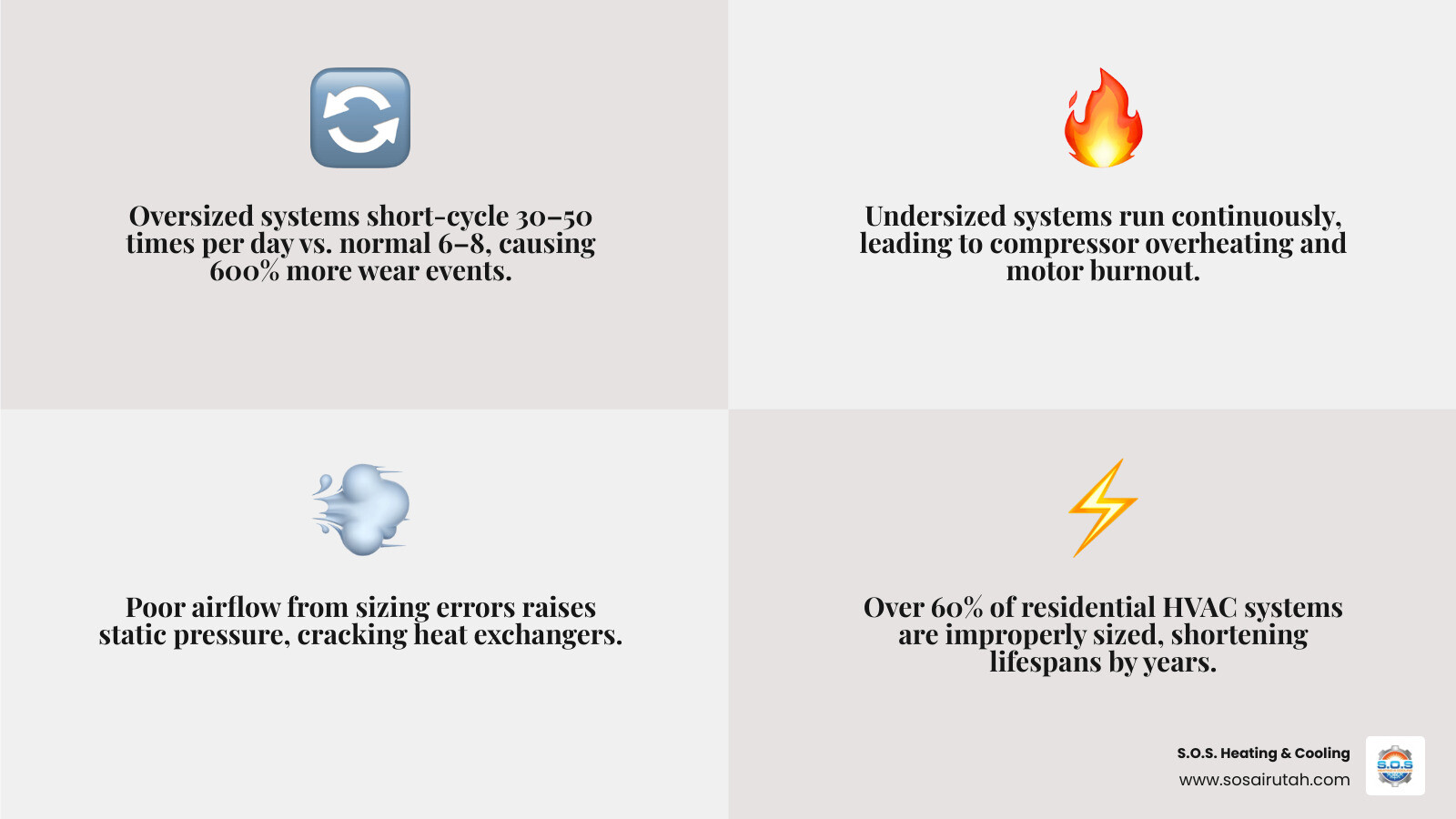
How improperly sized systems shorten equipment life comes down to two core problems: oversized systems short-cycle relentlessly, burning out compressors and electrical components years ahead of schedule, while undersized systems run nonstop, overheating motors and wearing out parts through sheer exhaustion. Either way, the result is the same — an HVAC system that fails far sooner than it should.
Here is a quick breakdown of how sizing errors damage your equipment:
- Oversized systems start and stop 30–50 times per day instead of the normal 6–8 cycles, creating up to 600% more wear events and cutting a system's lifespan from 15–20 years down to 8–10 years
- Undersized systems run almost continuously, causing compressor overheating, motor burnout, and lubrication failure — and driving utility costs up by 25–30%
- Poor airflow from incorrect sizing raises static pressure inside ducts, leading to blower motor faults, heat exchanger cracking, and compressor failure
- Improper commissioning after installation compounds these problems, often voiding manufacturer warranties and accelerating early component failure
- Over 60% of residential HVAC systems are incorrectly sized, meaning the odds are not in your favor if a proper load calculation was never performed
If your system runs constantly, shuts off too fast, can't keep up with Salt Lake City summers, or seems to need repairs every season, there is a real chance it was never sized correctly in the first place — and it is quietly shortening its own life every day it runs.
I'm Bryson Ninow, an NATE-certified HVAC professional with hands-on experience helping Salt Lake City homeowners navigate exactly these kinds of sizing and installation problems. Understanding how improperly sized systems shorten equipment life is something I've seen play out in homes across the Wasatch Front, and it's one of the most preventable — and most overlooked — causes of premature HVAC failure. In the sections below, I'll walk you through exactly what happens inside your equipment when sizing goes wrong, and what you can do about it.
Typical Lifespans of Major HVAC Components
When we talk about equipment life being "shortened," it’s helpful to know what the finish line is supposed to look like. In a perfect world—one where your system is sized correctly and maintained regularly—you can expect a decent run from your investment. However, in the Salt Lake City area, our extreme temperature swings from winter to summer put a unique strain on these machines.
Here is a comparison of typical lifespans for the major components we install and service:
| HVAC Component | Expected Lifespan (Years) | Primary Failure Point |
|---|---|---|
| Gas Furnace | 15 – 20 Years | Heat Exchanger Cracks |
| Central Air Conditioner | 12 – 15 Years | Compressor Failure |
| Heat Pump | 10 – 15 Years | Reversing Valve/Compressor |
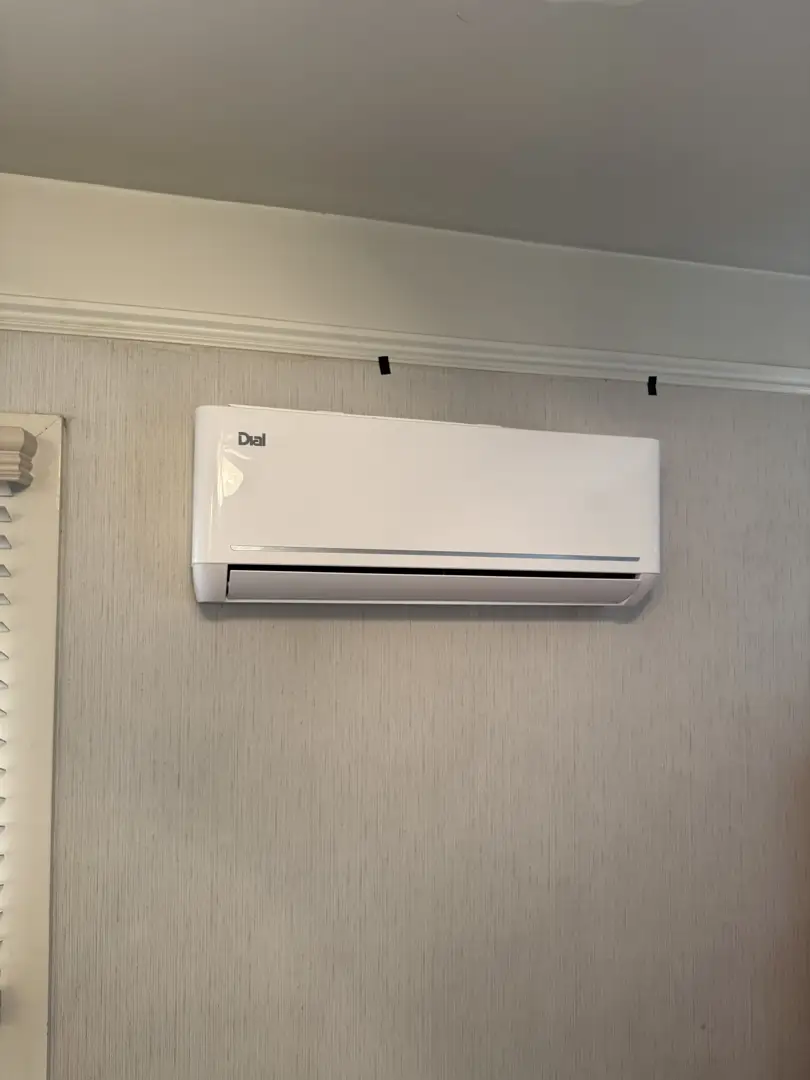
| Ductless Mini-Split | 15 – 20 Years | Electronic Control Boards |
It is worth noting that heat pumps often have slightly shorter lifespans than dedicated AC units because they work year-round. They don't get a "vacation" in the winter; they just switch modes. When you consider HVAC Services, our goal is always to push your equipment toward the higher end of these ranges.
Unfortunately, research shows that systems in the U.S. are, on average, three times larger than necessary. This isn't just a minor "oops"—it's a fundamental error that can cut these lifespans in half. If you are living in Bountiful or Sandy and your 8-year-old AC unit is already giving up the ghost, sizing is the first thing we investigate.
How Improperly Sized Systems Shorten Equipment Life Through Oversizing
There is a common misconception in the HVAC world that "bigger is better." Many homeowners (and unfortunately, some contractors) believe that a larger unit will cool the house faster or provide a "safety margin" for those record-breaking 100-degree days in Murray or Layton.
In reality, an oversized system is one of the most damaging things you can do to your home's mechanical health. When a system has too much capacity, it reaches the thermostat's setpoint almost instantly. While that might sound efficient, it creates a cascade of mechanical and electrical stress. The Importance of Proper AC Installation cannot be overstated here; if the unit is too big for the space, it simply cannot operate within its intended design parameters.
How Improperly Sized Systems Shorten Equipment Life via Short Cycling
Short cycling is the "silent killer" of HVAC equipment. Think of it like driving a car in heavy Salt Lake City traffic where you are constantly flooring the gas and then slamming on the brakes every 30 seconds. Your engine and brakes wouldn't last long, and your HVAC system is no different.
A properly sized system should run for 10 to 20 minutes per cycle. This allows the system to reach peak efficiency and ensures that oil circulates through the compressor correctly. An oversized system, however, might only run for 3 to 5 minutes before shutting off.
This leads to:
- Compressor Strain: The compressor draws 6 to 10 times its normal operating current every time it starts. If it starts 50 times a day instead of 8, you are putting 400-600% more wear on the "heart" of your system.
- Electrical Component Failure: Contactors and capacitors have a finite number of "clicks" in them. Frequent cycling burns through these components, leading to frequent repairs.
- Lubrication Issues: Short cycles often don't last long enough to move oil through the system properly, leaving critical moving parts unlubricated.
By following a Guide to Residential AC Installation, we ensure the unit stays on long enough to protect itself.
The Impact of Humidity and Airflow on Oversized Units
In Utah, we often think we don't have to worry about humidity because of our "dry heat." However, indoor humidity still needs to be managed for comfort and health. An air conditioner's job is twofold: it removes heat and it removes moisture.
Moisture removal happens as air passes over the cold evaporator coil. This process takes time—usually about 10 minutes of runtime before the coil is cold enough to start condensing water effectively. Because oversized units shut off so quickly, they never actually dehumidify the air. You end up with a home that is "cold and clammy."
Furthermore, oversized units often struggle with airflow. If you put a 5-ton unit on a duct system designed for 3 tons, the static pressure skyrockets. High static pressure is essentially "clogged arteries" for your HVAC. It forces the blower motor to work twice as hard to push air through a restricted space, leading to premature motor burnout and even cracked heat exchangers in furnaces. For more on matching equipment to your home's specific needs, check out our AC Installation Complete Guide Kaysville.
The Dangers of Undersizing: Constant Running and Overheating
On the flip side, we have undersized systems. This usually happens when a home has been expanded—perhaps a basement finish in Herriman or an attic conversion in Holladay—without upgrading the HVAC capacity.
While an oversized system dies from "stop-and-go" stress, an undersized system dies from exhaustion. It is the equivalent of trying to pull a massive trailer with a small sedan; eventually, the engine is going to blow. This is why a proper Furnace Installation Guide emphasizes matching the BTU output to the actual heat loss of the building.
How Improperly Sized Systems Shorten Equipment Life in Undersized Units
When a system is too small, it runs continuously. On a hot July day in South Jordan, an undersized AC might start at 10:00 AM and not shut off until 2:00 AM the next morning.
This leads to several critical failure points:
- Blower Motor Burnout: These motors are designed for high duty cycles, but not for 24/7 operation under high load. The heat buildup inside the motor housing eventually breaks down the winding insulation.
- Compressor Overheating: The refrigerant returning to the compressor is what actually cools the compressor motor. In an undersized system that is struggling, the refrigerant can become too warm to provide adequate cooling, leading to internal mechanical failure.
- Lubrication Failure: Continuous high-heat operation can cause the oil inside the compressor to break down or "slug," losing its ability to protect the bearings.
Knowing When to Schedule Professional AC Installation is key to preventing your current system from literally running itself to death.
Component Wear and Utility Spikes
Beyond the mechanical failure, undersized systems are a disaster for your wallet. Because the unit never reaches the thermostat's setpoint, it never enters its "off" cycle. This can lead to utility costs that are 25–30% higher than they should be.
You aren't just paying for the electricity; you are paying for the "mechanical fatigue" of every moving part. Bearings in the fan motors and the compressor are under constant friction. In the Wasatch Front, where we have high mineral content in our air and soil, this constant operation also means filters clog faster and coils get dirtier, further compounding the strain on the system.
Why Manual J and Commissioning are Critical for Longevity
So, how do we avoid these "Goldilocks" problems of being too big or too small? The answer lies in two technical processes: Manual J Load Calculations and System Commissioning.
A Manual J is the industry-standard "physics" of your home. It doesn't just look at square footage (which is a lazy and often wrong way to size). Instead, it looks at:
- The orientation of your home (which rooms get the afternoon sun?)
- The type and amount of insulation in your walls and attic.
- The number and quality of your windows.
- Local climate data for Salt Lake City.
- The number of occupants and even the type of lightbulbs you use.
Once the right size is selected (Manual S), the job isn't done. The system must be commissioned. This is the process of testing the unit after it's installed to ensure the refrigerant charge is exact and the airflow is balanced. Improper commissioning is a leading cause of early compressor failure. If you're wondering How to Choose the Right HVAC Contractor, always ask if they perform a full Manual J and provide a commissioning report.
Signs Your HVAC System is Improperly Sized
If you are worried your current system might be the wrong size, look for these "red flags":
- Short Runtime: Your AC turns on and off every 5 to 7 minutes.
- The "Clammy" Factor: The house is at the right temperature, but it feels humid or "sticky."
- Non-Stop Operation: The unit runs all day but the indoor temperature keeps rising.
- Dramatic Temperature Swings: One room is an icebox while the other is a sauna (this can also be a ductwork issue, but sizing is often the culprit).
- Frequent Breakdowns: You are replacing capacitors, contactors, or fan motors every 2 or 3 years.
- Unusually High Bills: Your summer energy bills are significantly higher than your neighbors' with similar-sized homes.
If you notice these signs, scheduling HVAC Maintenance Salt Lake City is the first step. A technician can measure the "static pressure" and "temperature drop" to determine if the system is fighting its own size.
Frequently Asked Questions about HVAC Sizing
What is the most common sign of an oversized AC?
The most common sign is short cycling. If your system reaches the desired temperature in less than 10 minutes and then shuts off, it is likely oversized. You will also notice high indoor humidity and frequent failures of electrical components like capacitors.
How much does improper sizing reduce equipment life?
On average, an improperly sized system will have its lifespan cut by 50%. A unit that should last 15–20 years will often fail between year 8 and year 10 due to the extreme mechanical stress of short cycling or constant running.
Can professional maintenance fix a sizing issue?
Maintenance cannot change the physical capacity of the unit, but it can mitigate the damage. A professional can adjust blower speeds, clear airflow restrictions, and ensure the refrigerant charge is perfect to help an improperly sized unit last as long as possible. However, replacement with a correctly sized unit is usually the only long-term solution for efficiency and comfort.
Conclusion
At S.O.S. Heating & Cooling, we’ve seen how a "bargain" installation can turn into a nightmare when sizing is ignored. Whether you're in Cottonwood Heights, Draper, or South Salt Lake, your home deserves a system that is tailored to its unique footprint. Understanding how improperly sized systems shorten equipment life is the first step toward making a smarter investment in your home's comfort.
Proper sizing isn't just about comfort; it's about protecting your wallet and ensuring your family has reliable air for the next two decades. We take pride in our "science-based" approach to installation, ensuring every unit we place is backed by accurate load calculations and rigorous commissioning.
If you suspect your system is short cycling or struggling to keep up, don't wait for a total breakdown. Understanding Why Regular AC Tune-Ups Are Vital can help you catch sizing issues before they lead to a dead compressor. When it is time for a change, the Professional HVAC Installation Benefits we provide—including Manual J calculations and 24/7 support—ensure your new system is built to last.
Ready to ensure your home is perfectly balanced? Explore our full range of HVAC Services or contact us today to schedule a professional assessment. We're here to keep Salt Lake City comfortable, one correctly sized system at a time.
Explore Our Latest Insights and Updates in Plumbing Services
What Should Your Wasatch Front Home Humidity Actually Be
High Altitude HVAC: What Every Utah Homeowner Should Know
Upgrade Your Comfort with the Science of Advanced Air Conditioning