

A Quick Start Guide to Deciding AC Repair vs Replace in Utah


.avif)

Is Your AC Repair Bill Telling You Something? Here's How to Know
Knowing how much AC repair is too much before replacing your unit in Utah can save you from throwing good money after bad — especially when summer temperatures in Salt Lake City regularly push past 100°F. The short answer: if a single repair is valued at more than 50% of what a new system would be, or if your unit is over 12 years old and repairs are stacking up, replacement is almost always the smarter call.
Here's a quick-reference breakdown to help you decide:
| Situation | Likely Decision |
|---|---|
| Unit under 8 years old, minor repair | Repair |
| Unit 8–12 years old, repair under 50% of replacement value | Repair (evaluate carefully) |
| Unit over 12 years old, major repair | Lean toward replacement |
| Any unit, repair exceeds 50% of new system value | Replace |
| Compressor failure on unit over 8 years old | Replace |
| Two or more repairs in a single season | Replace |
| R-22 refrigerant system with a leak | Replace |
| Unit over 15 years old, any significant repair | Replace |
Utah's dry heat, intense UV exposure, and high altitude at around 4,200 feet mean AC systems here work harder than in most other parts of the country — and they age faster for it. That context matters when you're staring down a repair quote on a system that's already been running for over a decade.
I'm Bryson Ninow, an experienced HVAC professional with years of hands-on experience helping Utah homeowners navigate exactly this kind of decision — including figuring out how much AC repair is too much before replacing your unit in Utah. In this guide, I'll walk you through the guidelines, age-based thresholds, and Utah-specific factors that make this decision clearer than you might expect.

The Financial Threshold: How Much AC Repair Is Too Much Before Replacing Your Unit in Utah?
When your cooling system acts up in the middle of a Wasatch Front heatwave, it is easy to make an emotional decision. You want cold air, and you want it now. However, taking a step back to look at the numbers can save you significantly in the long run. To make an objective choice, we rely on established HVAC industry rules of thumb that remove the guesswork.
To help you visualize the crossing point, we have compiled the primary indicators that point toward either fixing your existing system or investing in a new one:
| Repair Indicators | Replacement Indicators |
|---|---|
| System is under 8 years old | System is over 12 to 15 years old |
| Repairs are minor and infrequent | Single repair exceeds 50% of a new system's value |
| Energy bills are stable during summer | Energy bills are rising without a change in usage |
| Unit is still under manufacturer warranty | Warranty has expired and major parts are failing |
| Uses modern, eco-friendly refrigerant | Uses phased-out R-22 (Freon) refrigerant |
| Home cools evenly and quickly | Uneven cooling, hot spots, and persistent humidity |
By weighing these factors, you can determine where your system stands on the spectrum of reliability. If you are trying to decide whether to call for a quick fix or prepare for an upgrade, exploring the details of AC Repair or Replacement options is the best place to start.
The 50% Rule for HVAC Decisions
The most straightforward decision-making threshold we use is the 50% Rule. This rule states that if the value of a single repair exceeds 50% of the value of a brand-new replacement system, you should almost always choose to replace the unit.
Spending a significant portion of a new system's value on a repair for an aging unit is a high-risk investment. Older components are highly likely to experience secondary failures shortly after a major repair. By applying this threshold, you protect yourself from pouring resources into a sinking ship and instead redirect those funds toward a reliable, modern system with a fresh warranty.
The Age and Frequency Rule
Another excellent tool for Utah homeowners is evaluating the age of your system alongside its repair history. As a rule of thumb, as your system gets older, the frequency and severity of necessary repairs will naturally increase. If you have a 10-year-old system that requires frequent attention, it is a clear indicator that the unit's age and cumulative issues make a replacement the better long-term strategy. You can learn more about how to analyze these long-term trade-offs by reading our guide on the Cost of Repairing Old AC vs Buying a New System.
Evaluating Your System's Age and Performance
An air conditioner does not just stop working overnight without warning; it typically leaves a trail of clues as it nears the end of its operational life. Understanding how age intersects with mechanical performance is crucial when trying to determine how much AC repair is too much before replacing your unit in Utah.
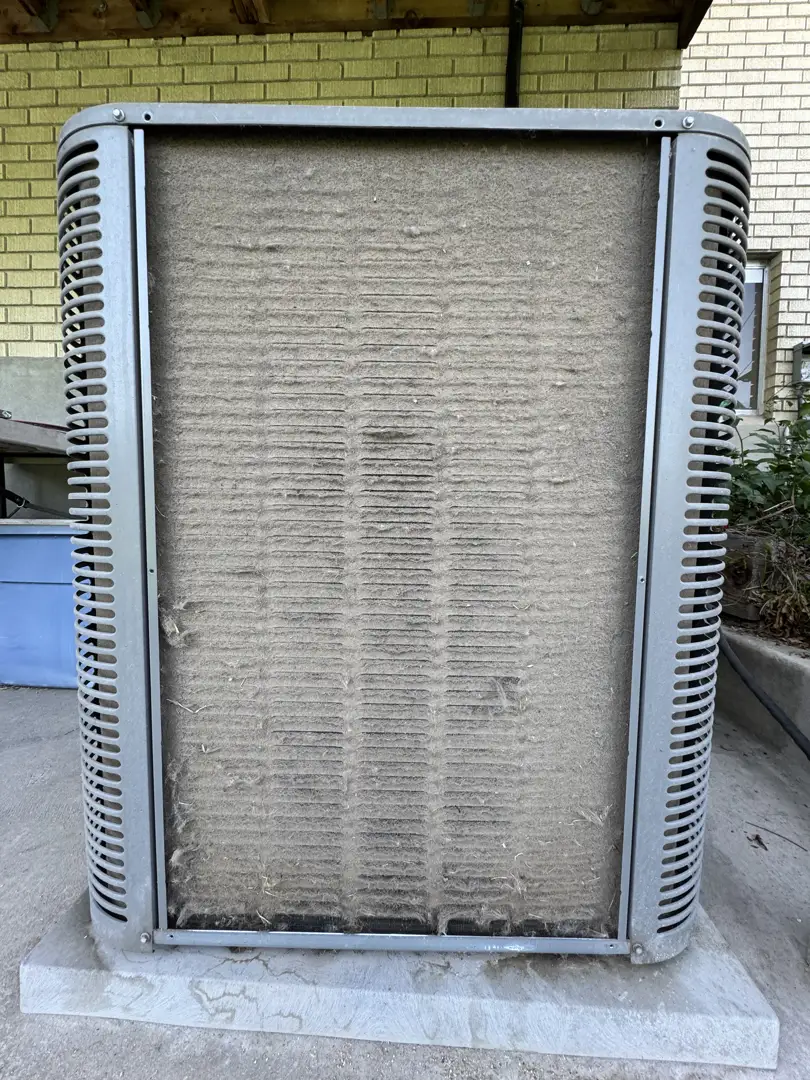
Before you authorize another technician to open up your outdoor cabinet, it is important to understand what you are dealing with. For a complete overview of what to look for, check out our article on What You Need to Know Before You Replace Your AC Unit.
Age vs. Repair Value: How Much AC Repair Is Too Much Before Replacing Your Unit in Utah?
In the dry, high-UV climate of places like Layton, Kaysville, and Salt Lake City, a central air conditioner typically has a lifespan of 12 to 15 years. As your system crosses the decade mark, the physical wear and tear on its internal components accelerates.
When a system is in this late-life stage, even relatively small repairs can become uneconomical. For a unit that is 12 years or older, we generally recommend leaning toward replacement for any repair that is more than a minor fix. At this age, the mechanical integrity of the entire system is compromised, and paying for repairs often just delays the inevitable. We go into greater detail on how to analyze these milestones in our resource on Evaluating Your Aging HVAC System.
Compressor Failure: The Ultimate Red Flag
The compressor is the heart of your air conditioning system. It is responsible for pumping refrigerant through the coils to facilitate the heat transfer process. Because it is the most heavily taxed component in the unit, replacing a failed compressor is one of the most labor-intensive and significant undertakings in the HVAC industry.
If your air conditioner is under 8 years old and still covered by a manufacturer warranty, replacing a failed compressor is often the right call. However, if your system is over 8 years old and the warranty has expired, a failed compressor is almost always a definitive trigger to replace the entire system. Investing in a new compressor for an old outdoor unit is rarely wise, as the aging fan motor, electrical contactors, and indoor evaporator coil remain prone to failure.
Frequency of Breakdowns: The "Death by a Thousand Cuts"
Sometimes, it isn't a single massive repair bill that drains your wallet, but rather a constant trickle of smaller ones. We call this "death by a thousand cuts."
If you find yourself calling a technician out to your home in Sandy, Draper, or Murray multiple times in a single summer, you are dealing with a highly unreliable system. A single repair per season on an older unit is a yellow flag; two or more repairs in a single season is a flashing red flag. The cumulative impact of these service calls, diagnostic fees, and minor parts will quickly approach the investment of a brand-new, worry-free system. If you are noticing these recurring patterns, read up on the common Signs Your AC Needs Repair to see if your system is experiencing systemic failures.
Energy Efficiency and Modern Standards
When deciding whether to repair or replace, you must look beyond the immediate repair bill and consider your ongoing monthly energy usage. Older air conditioning systems are significantly less efficient than modern units, meaning they require much more energy to run during our hot Utah summers. You can explore these efficiency dynamics further in our article on AC Repair vs New Unit Long-Term Savings.
SEER2 Ratings and Rising Utility Bills
Energy efficiency in air conditioning is measured by the Seasonal Energy Efficiency Ratio (SEER), which was updated to the SEER2 standard in 2023. Older systems, particularly those installed before 2015, often operate at ratings of 10 to 13 SEER. Modern entry-level units are required to meet a minimum of 14.3 SEER2, while high-efficiency systems can reach ratings of 18 to 20+ SEER2.
If you keep an inefficient system running, you are paying a premium on your utility bills every month. Here are several warning signs that your AC is losing its efficiency and draining your energy efficiency:
- Your summer electricity bills are steadily rising year-over-year, even though your usage habits remain the same.
- The system has to run constantly without a break just to keep up with moderate outdoor temperatures.
- The air coming out of your supply vents feels lukewarm or weak.
- You notice significant hot spots or uneven cooling in different rooms of your home.
Upgrading an old, inefficient system to a modern SEER2-compliant unit can reduce your cooling energy consumption by 20% to 40%, resulting in immediate savings on your monthly utility bills.
Environmental Regulations and Refrigerant Phase-Outs
Environmental mandates have a massive impact on maintaining older air conditioners. If your system was installed before 2010, it likely relies on R-22 refrigerant (commonly known as Freon). The U.S. Environmental Protection Agency (EPA) fully banned the production and import of R-22 in 2020.
Because the supply of R-22 is extremely limited and dwindling every year, recharging a system with a refrigerant leak has become increasingly difficult and impractical. If an older R-22 system develops a leak in the evaporator or condenser coil, repairing the leak and refilling the system is highly uneconomical. Furthermore, the industry is currently transitioning away from R-410A to newer, lower-GWP (Global Warming Potential) refrigerants. Keeping an obsolete system running is a gamble that becomes harder to justify with each passing season.
Utah-Specific Environmental Factors
Utah's unique geography and climate place extraordinary stress on mechanical equipment. From the high-altitude sunshine along the Wasatch Front to the particulate-heavy winter air, our local environment directly impacts how long your air conditioner will last.
Climate Factors: How Much AC Repair Is Too Much Before Replacing Your Unit in Utah?
Our state is famous for its dry heat, dramatic temperature swings, and intense UV radiation. During the peak of summer in locations like Bountiful, Centerville, and Farmington, your air conditioner must run for hours on end to combat the high-desert heat.
This intense operational demand accelerates the physical degradation of outdoor condenser coils and electrical components. The dry, dusty air also acts as an abrasive, wearing down moving parts like fan motors and bearings faster than in milder, more humid climates. When evaluating how much AC repair is too much before replacing your unit in Utah, you must account for the fact that a 12-year-old system in Utah has endured much harsher conditions than a 12-year-old system in a coastal region.
Altitude and System Derating
One of the most overlooked aspects of HVAC performance in Utah is our elevation. Salt Lake City sits at over 4,200 feet above sea level, and many surrounding communities in the valley sit even higher. At these elevations, the air is thinner and less dense.
Because thin air cannot transfer heat as effectively as dense air at sea level, air conditioning systems suffer from capacity derating. An AC unit operating at our altitude loses roughly 3% of its cooling capacity for every 1,000 feet of elevation. This means a standard 3-ton unit may only provide about 2.5 tons of actual cooling. If your system was not properly sized or calibrated for this altitude during its original installation, it will run longer, work harder, and fail prematurely. You can learn more about how this impact shortens equipment lifespans by reading about How Improperly Sized Systems Shorten Equipment Life.
Air Quality and Winter Inversions
The Salt Lake Valley is famous for its winter inversions, which trap fine particulate matter (PM2.5) close to the valley floor. While your air conditioner does not run during the winter, the outdoor condenser unit sits exposed to this highly concentrated, corrosive air pollution for months at a time.
These airborne particulates, combined with summer dust and cottonwood debris, settle deep into the delicate aluminum fins of your condenser coil. If these coils are not regularly cleaned, the restricted airflow forces the compressor to operate at higher temperatures and pressures, drastically reducing its lifespan. This environmental strain makes regular maintenance essential and explains why older systems along the Wasatch Front often experience sudden, catastrophic compressor failures.
Frequently Asked Questions about AC Repair vs. Replacement
Deciding what to do with a struggling air conditioner can bring up many questions. Here are some of the most common inquiries we receive from local homeowners.
How long does a central AC unit typically last in Utah?
In Utah's dry, high-altitude climate, a well-maintained central air conditioning system typically lasts between 12 and 15 years. Factors such as regular annual maintenance, prompt repairs, and proper sizing play a massive role in reaching the upper end of this lifespan. If your unit is approaching or has exceeded this window, it is wise to start planning for its eventual replacement rather than continuing to invest in repairs. If you are currently facing this dilemma, our article on whether you Should You Repair or Replace Your AC offers an excellent framework to help you decide.
Is it worth repairing an old R-22 refrigerant system?
Almost never. Because R-22 has been phased out and is no longer produced, sourcing this refrigerant is incredibly difficult and impractical. If your pre-2010 system has a refrigerant leak, the combined effort of locating the leak, repairing or replacing the damaged coil, and recharging the system with obsolete refrigerant is rarely a sound long-term decision. Your resources are far better spent as a down payment on a modern, environmentally friendly system. To help you understand the timeline of system obsolescence, we recommend reading When Should You Replace Your Air Conditioner.
What incentives or rebates are available for Utah homeowners?
Fortunately, replacing an old, inefficient air conditioner is more affordable than ever thanks to local utility rebates and federal tax credits. Programs like the Rocky Mountain Power Wattsmart Homes program and federal incentives under the Inflation Reduction Act offer significant financial support for homeowners who upgrade to qualifying high-efficiency cooling systems or heat pumps. These incentives can support your replacement while setting you up for years of lower energy bills. To learn more about maximizing your system's lifetime value, check out our guide on How Long Does an AC Unit Last.
Conclusion
Deciding whether to repair or replace your air conditioner does not have to be a stressful guessing game. By applying objective guidelines like the 50% Rule and evaluating your system's age, and factoring in the unique environmental demands of the Wasatch Front, you can make a confident decision that protects both your home's comfort and your long-term peace of mind.
At S.O.S. Heating & Cooling, we are dedicated to helping our neighbors throughout Salt Lake City and the surrounding communities make the right choice for their homes. Whether you need a fast, reliable repair to get through the summer or a professional, altitude-calibrated system replacement, our team is here to help. We provide honest assessments, 24/7 emergency repairs, and flexible financing options to ensure your long-term comfort.
If you are ready to get a professional, pressure-free evaluation of your cooling system, contact us today to schedule an appointment. Let us help you navigate your AC Repair or Replacement decision with confidence!

Plumbing
Expert plumbing services offering reliable repairs, installations, maintenance, and emergency support.

Air Conditioning
Comprehensive air conditioning services include installation, repairs, maintenance, and energy-efficient solutions.

Heating
Specialized heating services provide reliable installation, repair, system maintenance, and energy-optimization solutions.

Indoor Air Quality
Enhance your home’s air with our cutting-edge indoor air quality solutions you can trust.

Fireplaces
Transform your space into a warm and cozy atmosphere with our professional fireplace services.

Heat Pumps
Enjoy year-round comfort with our energy-efficient and professional heat pump solutions.
Explore Our Latest Insights and Updates in Plumbing Services

A Practical Guide to Utah Inversion Season Air Filtration
How to Verify an HVAC and Plumbing Contractor Is Licensed in Utah
Ultimate Guide to Hard Water from Utah Aquifers Damaging Pipes and Fixtures
