
The Hidden Impact of Aging Pipes on Your Kitchen Remodel


.avif)

How Old Pipes Affect Your Kitchen Renovation Plan in Salt Lake City, UT
How old pipes affect your kitchen renovation plan is something every homeowner should understand before the first cabinet comes down or the first tile gets pulled up. If your home is several decades old, the pipes hidden behind your kitchen walls may be quietly setting the stage for costly surprises — leaks, low water pressure, contaminated water, and even insurance claim denials — right after you've finished your brand-new remodel.
Here's a quick look at the most common ways aging plumbing can derail your renovation:
- Forced layout changes — Old pipe locations may limit where you can move your sink, dishwasher, or refrigerator water line
- Code compliance issues — Outdated materials like galvanized steel or polybutylene often fail to meet current building codes, requiring replacement before inspections pass
- Appliance incompatibility — Modern dishwashers, tankless water heaters, and high-flow fixtures need water pressure and flow rates that corroded old pipes simply can't deliver
- Hidden water damage — Sealing deteriorating pipes behind new cabinetry is a gamble; a single leak can destroy thousands of dollars in finishes
- Health risks — Corroded pipes can leach rust, lead from old solder joints, or other contaminants into the water you use for drinking and cooking
- Doubled labor costs — If pipe problems are discovered after walls are closed, you pay twice: once to tear out the new work and again to redo it
According to industry data, most plumbing pipes last between 40 and 70 years depending on the material — and household leaks alone waste nearly 10,000 gallons of water per year. If your home is approaching or past that window, a kitchen renovation is the single best opportunity to address what's behind the walls before it becomes an emergency.
My name is Bryson Ninow, and through years of work in the home services industry across the Salt Lake City area, I've seen how understanding how old pipes affect your kitchen renovation plan can be the difference between a smooth remodel and a costly redo. I'll walk you through everything you need to know so you can plan with confidence.
Identifying Signs of Aging Pipes in Your Kitchen
Before you start picking out granite countertops or high-end cabinetry, it is vital to perform a "health check" on the infrastructure you can actually see. Most plumbing issues are hidden, but they often leave breadcrumbs.
One of the most obvious red flags is low water pressure. If your kitchen faucet used to have a strong stream but now feels like a weak trickle, it’s likely not the fixture—it’s the pipe. In older homes throughout the Salt Lake Valley, galvanized steel pipes are notorious for rusting from the inside out. This internal corrosion narrows the diameter of the pipe, restricting flow and eventually leading to total blockages.
You should also keep an eye out for discolored water or a persistent metallic taste. If the first cup of water you pour in the morning has a brownish or yellowish tint, you are likely seeing rust flakes from deteriorating iron pipes. This isn't just an aesthetic issue; it’s a sign that the structural integrity of your plumbing is failing.
Other warning signs include:
- Frequent leaks: If you are constantly tightening valves or dealing with small drips under the sink, the system is telling you it’s tired.
- Visible corrosion: Check the exposed pipes in your basement or crawlspace. Look for "pimples" on the metal, green stains (oxidized copper), or white crusty mineral buildup. For more details, check out our guide on Pipe Repair Warning Signs.
- Noisy pipes: Banging, whistling, or chattering sounds (often called "water hammer") can indicate that pipes are loose or that internal buildup is causing extreme turbulence.
- Slow drainage: If your sink takes forever to empty despite using Solutions for a Clogged Drain, the issue might be deep-seated corrosion or root intrusion in your main lines. You can learn more about these Drain and Sewer Line Problems Signs and Solutions to see if your renovation needs to extend beneath the floorboards.
How Old Pipes Affect Your Kitchen Renovation Plan
When we talk about how old pipes affect your kitchen renovation plan, we’re talking about the "bones" of the room. A kitchen remodel isn't just a facelift; it’s an opportunity to ensure your home’s most hard-working room functions perfectly for the next 30 years.
If you are planning an open-concept layout or simply moving the sink to a new island, the existing plumbing will dictate the complexity of the project. Relocating a fixture isn't as simple as extending a hose. It involves rerouting supply lines and, more importantly, ensuring the drain lines have the proper "slope" or "fall" to move waste effectively. In many older Salt Lake City homes, the original cast iron or clay drains are brittle and may crack the moment a contractor tries to tie a new PVC line into them.
Furthermore, code compliance is a major factor. Building codes in Utah have evolved significantly. What was acceptable in a 1950s build in Millcreek or a 1970s home in Sandy may no longer pass a modern inspection. If your renovation requires a permit—which most kitchen remodels do—the inspector will likely require you to bring any exposed plumbing up to current standards. This is specifically covered in our Kitchen Plumbing Guide Draper UT.
Lastly, consider appliance compatibility. Modern high-efficiency dishwashers and refrigerators with advanced ice makers and water filtration systems are sensitive. If your old pipes are full of sediment and rust, they can clog the intake valves of your brand-new $1,000 dishwasher within months. Planning for an upgrade now protects those expensive investments. For a broader look at planning, see our Kitchen Remodeling Guide Sandy UT or our specific insights on Kitchen Remodeling in Draper UT.
Why pipe material dictates how old pipes affect your kitchen renovation plan
The material of your current pipes is the biggest "X-factor" in your renovation timeline and budget.
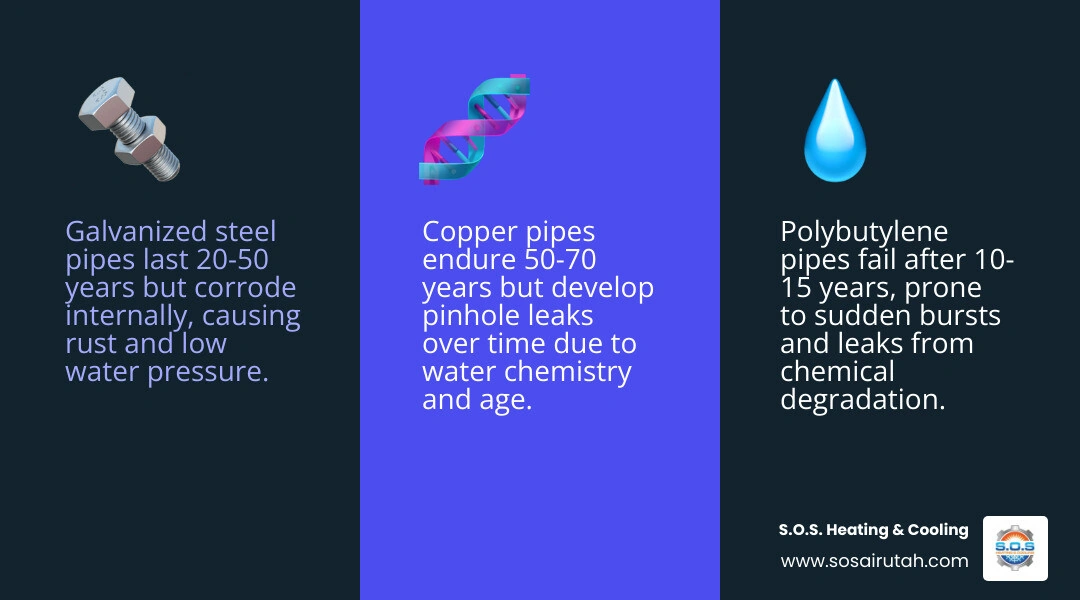
- Galvanized Steel: Common in homes built before the 1960s. These pipes have a lifespan of about 20–50 years. If you have these, they are likely at the end of their life and should be replaced regardless of their current appearance.
- Polybutylene: This "pipe of the future" was popular from the late 70s to the mid-90s. It is notorious for sudden, catastrophic failure due to the chemicals in municipal water. If we find this during a remodel, we strongly recommend immediate replacement.
- Copper: While copper is a high-quality material that can last 50–70 years, it is susceptible to "pinhole leaks," especially in areas with specific water pH levels or hard water.
- PEX: This is the modern standard. Its flexibility makes it much easier to snake through existing walls, which can save you significant labor costs during a remodel. If you're curious about local repair standards, our Pipe Repair Salt Lake City Guide offers deeper insights.
Assessing infrastructure: how old pipes affect your kitchen renovation plan
You shouldn't have to guess what's happening behind your walls. A professional assessment is the only way to truly know how old pipes affect your kitchen renovation plan. At S.O.S. Heating & Cooling, we use camera inspections to look deep into your drain lines. This allows us to see cracks, grease buildup, or root intrusions without tearing up your floor.
We also perform pressure testing to ensure there aren't tiny leaks that haven't become "big" problems yet. Another critical check is identifying lead solder. Even if your pipes are copper, homes built before 1986 often used lead-based solder to join them, which can leach into your drinking water. For those in the northern part of the valley, our Pipe Repair Centerville UT Guide explains these diagnostic steps in detail. If budget is a concern, don't worry—there are ways to handle this efficiently, as noted in our Affordable Pipe Repair SLC UT Guide.
The Risks of Keeping Outdated Plumbing Behind New Cabinets
It is tempting to save a few dollars by leaving "perfectly fine" old pipes in place. However, the risks often outweigh the savings. Imagine spending $40,000 on custom cabinetry and quartz countertops, only to have a 50-year-old pipe burst three months later. To fix that leak, a plumber might have to cut through your new cabinets or tear up your new backsplash.
Water damage is consistently one of the most expensive insurance claims a homeowner can face. Even worse, many insurance companies may deny a claim if they determine the damage was caused by "known" aging infrastructure that wasn't maintained or upgraded during a major renovation.
There are also health and structural risks to consider:
- Mold Growth: Slow, "silent" leaks behind cabinets create the perfect damp environment for mold, which can affect your family’s respiratory health.
- Structural Rot: Constant moisture can weaken the wooden studs in your walls and the subfloor beneath your kitchen, leading to sagging or expensive structural repairs later.
- Contaminated Water: Old iron or lead-soldered pipes can degrade water quality. If you’re investing in a dream kitchen, you want the water coming out of that fancy new pot filler to be clean and safe.
We always emphasize to our clients that you should Prevent Plumbing Issues During Remodeling by being proactive. This philosophy applies to other areas of the home too, such as Bathroom Remodeling Plumbing Considerations, where hidden leaks can be just as devastating.
Benefits of Upgrading to Modern Piping Materials
Upgrading your plumbing during a renovation isn't just about avoiding a disaster; it’s about improving your home's performance. Modern materials like PEX and high-grade copper offer several advantages over the "standard" pipes of the past.
| Feature | PEX (Cross-linked Polyethylene) | Modern Copper |
|---|---|---|
| Durability | High (Resistant to scale/chlorine) | High (Antimicrobial properties) |
| Freeze Resistance | Excellent (Expands slightly) | Low (Can burst if frozen) |
| Installation | Fast (Flexible, fewer joints) | Slower (Requires soldering) |
| Cost | More Affordable | Premium |
| Lifespan | 50-100 Years | 50-70 Years |
| Water Flow | Quiet and smooth | Can be noisy if high pressure |
PEX-A is particularly popular in Utah because it is incredibly freeze-resistant—a major plus during our cold Wasatch Front winters. Because it is flexible, it requires fewer joints, which means fewer points of potential failure.
Upgrading also boosts your home resale value. When it comes time to sell your home in Salt Lake City or Draper, being able to document a "full plumbing repipe" is a massive selling point. It gives buyers peace of mind that they won't be facing a plumbing nightmare the week they move in. Plus, smoother interiors on modern pipes reduce friction, helping hot water reach your faucet faster and improving overall energy efficiency.
Strategic Timing for Pipe Replacement During a Remodel
Timing is everything. The "Golden Window" for pipe replacement is during the demolition phase. Once the old cabinets are out and the drywall is stripped, your plumbing system is fully exposed. This is the moment when labor costs are at their lowest because our technicians don't have to spend hours carefully navigating around your finishes.
By coordinating with your general contractor, we can:
- Inspect everything while the walls are open.
- Reroute lines to fit your new layout perfectly.
- Install new shut-off valves for every fixture, making future maintenance much easier.
- Pressure test the entire system before the new drywall or cabinets are installed.
This proactive approach ensures that the foundation of your kitchen is just as high-quality as the finishes on top of it.
Frequently Asked Questions about Kitchen Plumbing Upgrades
How long do most kitchen pipes last before needing replacement?
Most residential pipes have a lifespan of 40 to 70 years. However, environmental factors in Utah—like our notoriously hard water—can accelerate this. Hard water causes mineral scale to build up inside pipes, which can lead to "pinhole" leaks in copper or total blockages in galvanized steel much sooner than the 70-year mark. If your home was built before May 1986, you should also be concerned about lead solder.
Can I move my kitchen sink without replacing the old drain lines?
While it is technically possible, it is rarely recommended. Moving a sink requires extending the drain and vent lines. If you try to connect a brand-new PVC pipe to a 50-year-old, brittle cast iron drain, you risk a "mismatch" that leads to leaks or venting issues. Modern codes also have specific requirements for how far a sink can be from its vent stack; moving the sink often triggers the need for a completely new venting setup to prevent sewer gases from entering your home.
Is it better to use PEX or copper for a Utah kitchen remodel?
In Salt Lake City, PEX is often the preferred choice for kitchen remodels. It handles our hard water better than copper (which can corrode over time due to mineral buildup) and is much more resistant to bursting during a deep freeze. However, some homeowners prefer copper for its natural antimicrobial properties and "classic" feel. We can help you weigh the pros and cons based on your specific neighborhood and home age.
Conclusion
At S.O.S. Heating & Cooling, we believe a kitchen renovation should be a source of joy, not a source of future stress. Understanding how old pipes affect your kitchen renovation plan is the first step toward protecting your investment and ensuring your home remains a safe, comfortable place for your family. Whether you are in Bountiful, Sandy, or right here in Salt Lake City, our team is ready to provide the expert guidance you need.
Don't let aging infrastructure hide behind your beautiful new cabinets. From 24/7 emergency support to detailed renovation consultations, we are here to help you build a kitchen that lasts.
Schedule your kitchen plumbing inspection today and let us give you the peace of mind you deserve.

Plumbing
Expert plumbing services offering reliable repairs, installations, maintenance, and emergency support.

Air Conditioning
Comprehensive air conditioning services include installation, repairs, maintenance, and energy-efficient solutions.
Heat Pumps
Enjoy year-round comfort with our energy-efficient and professional heat pump solutions.

Indoor Air Quality
Enhance your home’s air with our cutting-edge indoor air quality solutions you can trust.

Fireplaces
Transform your space into a warm and cozy atmosphere with our professional fireplace services.

Heating
Specialized heating services provide reliable installation, repair, system maintenance, and energy-optimization solutions.
Explore Our Latest Insights and Updates in Plumbing Services
Hydro Jetting vs Drain Snake: Which Is Better for Stubborn Clogs in Utah?
Step-by-Step Guide to Diagnosing Simultaneous Drain Backups