

Why Plumbing Delays Can Sink Your Kitchen Remodel Schedule


.avif)

Why Plumbing Is the Hidden Force Behind Your Kitchen Remodel Timeline
Understanding how plumbing affects your kitchen remodel timeline can be the difference between a smooth renovation and a months-long ordeal. Here is a quick overview of the key ways plumbing shapes your schedule:
- Permits: Moving or adding drain and supply lines requires permits that can take 1 to 6+ weeks to approve before any physical work begins.
- Rough-in plumbing: Installing pipes behind walls and under floors typically takes 3 to 10 days, but hidden issues can stretch this significantly.
- Inspections: Rough-in work must pass a city inspection before drywall goes up — skipping this step can force walls to be torn back open.
- Pipe relocation: Moving a sink or adding an island fixture requires rerouting drain lines, which can add days or weeks depending on subfloor access.
- Hidden conditions: Corroded pipes, water damage, or outdated venting discovered during demolition can pause the entire project while repairs are made.
- Trade sequencing: Plumbing decisions directly control when cabinets, countertops, and appliances can be installed — a delay in rough-in pushes everything else back.
A standard full kitchen remodel takes 3 to 6 months from start to finish. Major plumbing changes are one of the most common reasons projects land at the longer end of that range — or beyond it.
Most homeowners walk into a kitchen remodel focused on cabinet finishes and countertop materials. That is completely natural. But underneath the surface, it is the pipes, drains, vents, and supply lines that quietly dictate when each phase of your project can actually move forward. A single missed inspection or an unexpected stretch of corroded galvanized pipe found behind the drywall can bring an entire renovation to a standstill — sometimes for weeks.
The good news is that most plumbing-related delays are preventable when you understand the sequencing upfront and plan around it intentionally.
I'm Bryson Ninow, and through years of working in the home services trades here in the Salt Lake City area, I've seen how plumbing affects your kitchen remodel timeline in ways that catch even well-prepared homeowners off guard. In the sections ahead, I'll walk you through exactly what to expect at each phase so you can plan smarter and avoid the most common scheduling pitfalls.
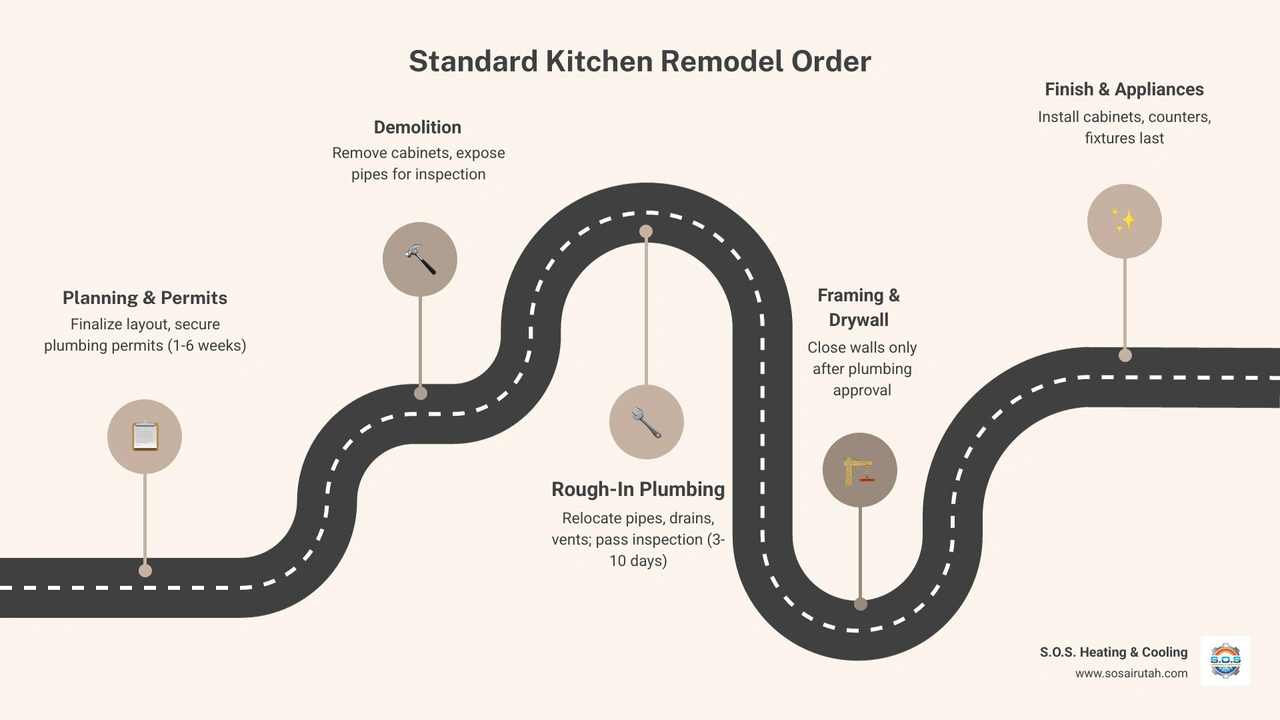
How Plumbing Affects Your Kitchen Remodel Timeline During the Planning Phase
The most critical work of a remodel often happens before a single hammer swings. If you treat plumbing as an afterthought, you’re essentially inviting delays into your home. During the planning phase, every layout decision has a ripple effect on the calendar.
When we talk about Kitchen Remodeling Services, we emphasize that the design must be anchored in reality. Moving a sink three feet might seem simple on a 2D floor plan, but it requires calculating drain slopes and venting routes. If the new layout isn't finalized before you order custom cabinetry, you risk a "mismatch" delay—where the cabinets arrive, but the plumbing lines aren't in the right spot to accommodate them.
Material procurement is another timeline driver. In May 2026, we are still seeing lead times for specialty fixtures or high-end faucets that can stretch several weeks. If you haven't selected your sink and dishwasher early, your plumber won't know the exact specifications needed for the rough-in. This "information gap" can stall the project before it even starts.
The Impact of Permits on How Plumbing Affects Your Kitchen Remodel Timeline
In cities like Sandy or Salt Lake City, the permitting process is the first major hurdle. Many homeowners assume they can start demolition while waiting for paperwork, but if the city requires a plan review for moving a gas line or a drain stack, you could be stuck with a gutted kitchen for over a month.
According to our Kitchen Remodeling Guide Sandy UT, permitting for significant plumbing changes typically takes between 1 and 6 weeks. This phase is entirely out of your contractor's hands. Safety compliance is the priority; the city wants to ensure your new gas lines won't leak and your drainage won't back up. Attempting to bypass this stage is a recipe for disaster—if you're caught without a permit, the city can stop work immediately, adding months of legal and administrative delays to your schedule.
Pre-Demolition Inspections and Layout Finalization
Before the demo crew arrives, we recommend a thorough utility mapping session. This involves identifying where your main shut-off valves are located and assessing the condition of existing pipes. In our Kitchen Plumbing Guide Draper UT, we highlight that knowing the "path of least resistance" for your refrigerator water lines or gas routing can save days of labor later.
If you discover that your existing lines are not up to current code, you’ll need to factor in an upgrade before the "pretty" parts of the remodel begin. Finalizing the layout during this pre-demo phase ensures that when the walls come down, the plumber can get straight to work without having to ask, "Wait, where did you say the pot filler was going?"
The Critical Role of Rough-In Plumbing in Your Schedule
The "rough-in" phase is where the "bones" of your kitchen are built. This is the longest part of active construction because it involves installing everything that will eventually be hidden by drywall and cabinetry.
During rough-in, we install supply lines, drain lines, and vent pipes. This phase usually takes 3 to 10 days for a standard kitchen, but that timeline assumes everything goes perfectly. If you are rerouting a main drain stack or moving the kitchen to a different part of the house, expect this phase to extend significantly.
Essential Rough-In Tasks Include:
- Rerouting water supply lines to match the new sink and appliance locations.
- Installing new drain lines with the correct gravity-fed slope.
- Running gas lines for a new range or cooktop.
- Installing the vent system to prevent odors and ensure smooth drainage.
- Pressure testing all lines to ensure there are zero leaks before the walls are closed.
Why Moving a Sink Changes How Plumbing Affects Your Kitchen Remodel Timeline
Moving a sink is the single biggest plumbing change you can make. While water supply lines are flexible and relatively easy to move, drain lines are a different story. Drains rely on gravity, meaning they must maintain a specific downward slope (usually 1/4 inch per foot) to function.
If you move a sink to a central island, we often have to cut into the concrete slab or navigate floor joists to create that path. This "trenching" can add a week to your timeline. Furthermore, a sink in an island needs a special venting solution, like an island vent or an air admittance valve, which requires more planning. As noted in our Garbage Disposal Complete Guide Salt Lake City, the sink's location also dictates where your disposal and dishwasher will sit, creating a "hub" of plumbing that must be perfectly aligned.
Integrating High-Demand Fixtures and Appliances
Modern kitchens in 2026 often feature high-demand fixtures like pot fillers, dual dishwashers, or steam ovens. Each of these adds a layer of complexity to the rough-in. A pot filler, for example, requires a supply line to be run precisely behind the stove at a specific height. If that measurement is off by even an inch, it might not reach your pots, requiring the plumber to come back and move the line—a delay known as "rework."
We also have to consider your water heater capacity. If you’re adding high-flow faucets or a second prep sink, your existing water heater might not be able to keep up. Consulting our Garbage Disposal Murray UT Complete Guide can help you understand how these integrated systems work together, but the bottom line is: more fixtures equals more time in the rough-in phase.
Hidden Plumbing Issues That Derail Remodel Schedules
Nothing stops a project faster than a "surprise" behind the walls. When the old cabinets come down, we occasionally find evidence of long-term leaks or structural decay.
| Pipe Material | Typical Lifespan | Common Issues in Remodels |
|---|---|---|
| Galvanized Steel | 40–50 Years | Internal corrosion, low pressure, prone to leaks |
| Copper | 50–70 Years | Pinpoint leaks, expensive to replace |
| PEX | 40–50+ Years | Flexible, resistant to scale/chlorine, fast install |
If we find galvanized steel pipes, especially in older homes in Draper or Salt Lake City, we almost always recommend replacement. As we mention in our article on Kitchen Remodeling in Draper UT, replacing these pipes while the walls are open is the most cost-effective move you can make. However, it will add several days to the schedule that you might not have planned for.
When to Proactively Replace Old Pipes During a Renovation
The perfect time to replace your plumbing is when the walls are already open. It might feel like a setback to add "pipe replacement" to your to-do list, but the alternative is much worse: finishing your beautiful new kitchen only to have a 50-year-old pipe burst six months later.
Signs that you should proactively replace pipes include:
- Discolored water or low water pressure.
- Visible corrosion or "flaking" on exposed pipes in the basement.
- History of frequent leaks.
- The presence of polybutylene or galvanized steel.
Upgrading to PEX or new copper provides long-term peace of mind and increases your home's ROI. While it adds time to the rough-in phase, it prevents the "total disaster" scenario of having to tear out new cabinets to fix a leak later.
Coordinating Plumbing with Other Remodel Trades
Plumbing doesn't happen in a vacuum. It is a choreographed dance with cabinet installers, countertop fabricators, and electricians. The "handover points" between these trades are where the most common delays occur.
For example, the plumber finishes the rough-in, then the drywall goes up, then the cabinets are installed. Only after the cabinets are in and leveled can the countertop company come to "template" the stone. If the plumber's rough-in for the sink is slightly off-center, the cabinet might not fit correctly, which means the countertop can't be measured. This "domino effect" can push your move-in date back by weeks.
Avoiding the Domino Effect of Plumbing Delays
To keep things moving, we use cabinet shop drawings to reconcile exactly where the pipes should come through the floor or wall. We ensure the sink is on-site before the countertop fabricator arrives so they can measure the exact cutout.
Once the countertops are installed, the plumber returns for "finish plumbing." This is when we connect the faucets, the garbage disposal, and the dishwasher. If the dishwasher isn't on-site or the faucet is the wrong model, this final connection phase gets stalled. A successful remodel requires constant communication between us and your other contractors to ensure no one is waiting on a part or a measurement.
Frequently Asked Questions about Kitchen Plumbing Timelines
How long does the plumbing rough-in phase typically take?
For a standard kitchen, active labor for the rough-in takes about 3 to 5 days. However, you must factor in the "inspection pause." Most local codes require a city inspector to sign off on the work before you can cover the pipes with insulation or drywall. Depending on how busy the Salt Lake City building department is, waiting for an inspector can add 2 to 5 days to this phase.
Do I need a permit for moving a kitchen sink?
Yes. In almost every jurisdiction we serve—from Bountiful to South Jordan—moving a sink requires a permit because it involves changing the drainage and venting system. Simple "like-for-like" fixture swaps (replacing an old faucet with a new one in the same spot) usually don't need a permit, but a remodel almost always involves enough change to trigger a requirement.
Can I DIY the plumbing to speed up the remodel?
We strongly advise against DIY plumbing for a major remodel. While it might seem like a way to save time, an amateur mistake in the rough-in phase can lead to a failed inspection. If the city inspector finds code violations, you'll have to hire a pro to tear it out and do it again, effectively doubling your timeline and your costs. Licensed professionals ensure the work is done right the first time and that it meets all safety standards.
Conclusion
At S.O.S. Heating & Cooling, we know that a kitchen remodel is one of the most significant investments you'll ever make in your home. Our goal is to ensure that the "hidden" part of that investment—your plumbing—is a foundation for success rather than a source of stress. By planning for permits, anticipating rough-in needs, and being prepared for the occasional hidden pipe issue, you can keep your project on track and enjoy your new space sooner.
Whether you're in Salt Lake City, Sandy, or Draper, our team is here to provide the expertise and coordination needed for a seamless renovation. From the first utility map to the final faucet connection, we focus on your convenience and satisfaction.
Are you ready to start your kitchen transformation without the scheduling headaches? Contact our expert plumbers at S.O.S. Heating & Cooling today to schedule a consultation and ensure your remodel stays on a winning timeline.

Plumbing
Expert plumbing services offering reliable repairs, installations, maintenance, and emergency support.

Air Conditioning
Comprehensive air conditioning services include installation, repairs, maintenance, and energy-efficient solutions.
Heat Pumps
Enjoy year-round comfort with our energy-efficient and professional heat pump solutions.

Indoor Air Quality
Enhance your home’s air with our cutting-edge indoor air quality solutions you can trust.

Fireplaces
Transform your space into a warm and cozy atmosphere with our professional fireplace services.

Heating
Specialized heating services provide reliable installation, repair, system maintenance, and energy-optimization solutions.
Explore Our Latest Insights and Updates in Plumbing Services

Average Lifespan of a Central Air Conditioner in Hot Dry Utah Climate
How Heat Pumps Work for Heating and Cooling in Utah