

How to Fix Constant AC Running from Poor Insulation


.avif)

How Poor Insulation Makes AC Run Constantly in a Salt Lake Valley Home
How poor insulation makes ac run constantly in a salt lake valley home is a problem that catches many homeowners off guard. You notice the AC never seems to shut off, your energy bills keep climbing, and no matter what temperature you set the thermostat to, certain rooms just never feel comfortable. Before you assume your cooling system is broken or needs replacing, the real culprit is often hiding in your attic, walls, and crawl spaces.
Here is a quick summary of why poor insulation forces your AC to run nonstop:
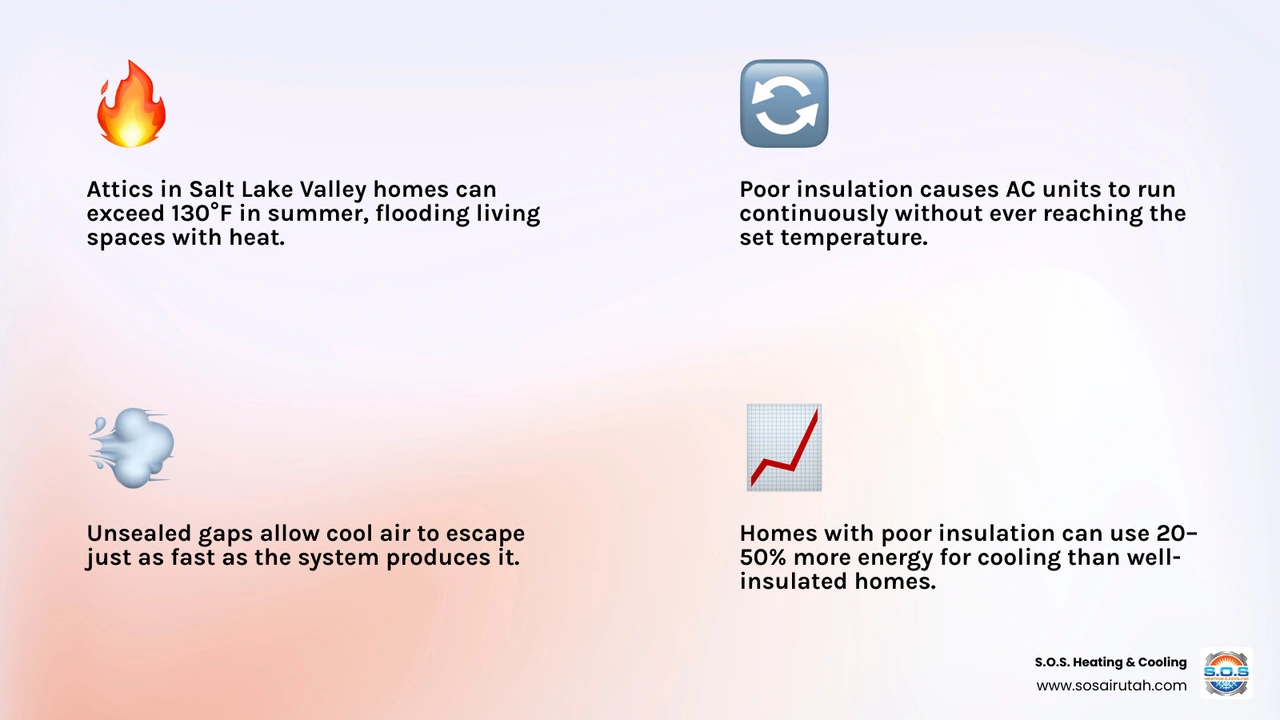
- Heat floods in faster than your AC can remove it. Without adequate insulation, your Salt Lake Valley attic can reach temperatures above 130°F in summer, and that heat pours directly into your living spaces.
- Your AC never reaches its target temperature. Because heat enters faster than the system can cool, the AC runs in continuous cycles trying to catch up.
- Conditioned air escapes just as fast as it is produced. Gaps in insulation and unsealed air leaks let the cool air you are paying for bleed out of the home.
- The system wears out faster. Extended runtime puts extra strain on the compressor, fan motors, and other components, shortening the life of your equipment.
- Energy bills spike significantly. Homes with poor attic insulation can use 20–50% more cooling energy than properly insulated homes.
Most of the time, the fix is not a new AC unit. It is a better-sealed, better-insulated home that stops the heat from getting in to begin with.
Salt Lake Valley's high desert climate makes this problem worse than in most parts of the country. Summer temperatures regularly push past 100°F, humidity drops below 15%, and daily temperature swings of 40 degrees or more put constant stress on your cooling system. During winter inversion season, fine particulates settle into your HVAC equipment and compound the problem come summer. If your home was built before the 1990s, there is a strong chance it was never insulated to meet today's energy standards, meaning your AC has been fighting a losing battle every summer since.
I'm Bryson Ninow, an HVAC professional with NATE, EPA, and DOPL certifications and years of hands-on experience helping Salt Lake Valley homeowners understand exactly how poor insulation makes their AC run constantly and what they can do about it. In this guide, I'll walk you through everything you need to know — from diagnosing the problem to the upgrades that deliver the best results.
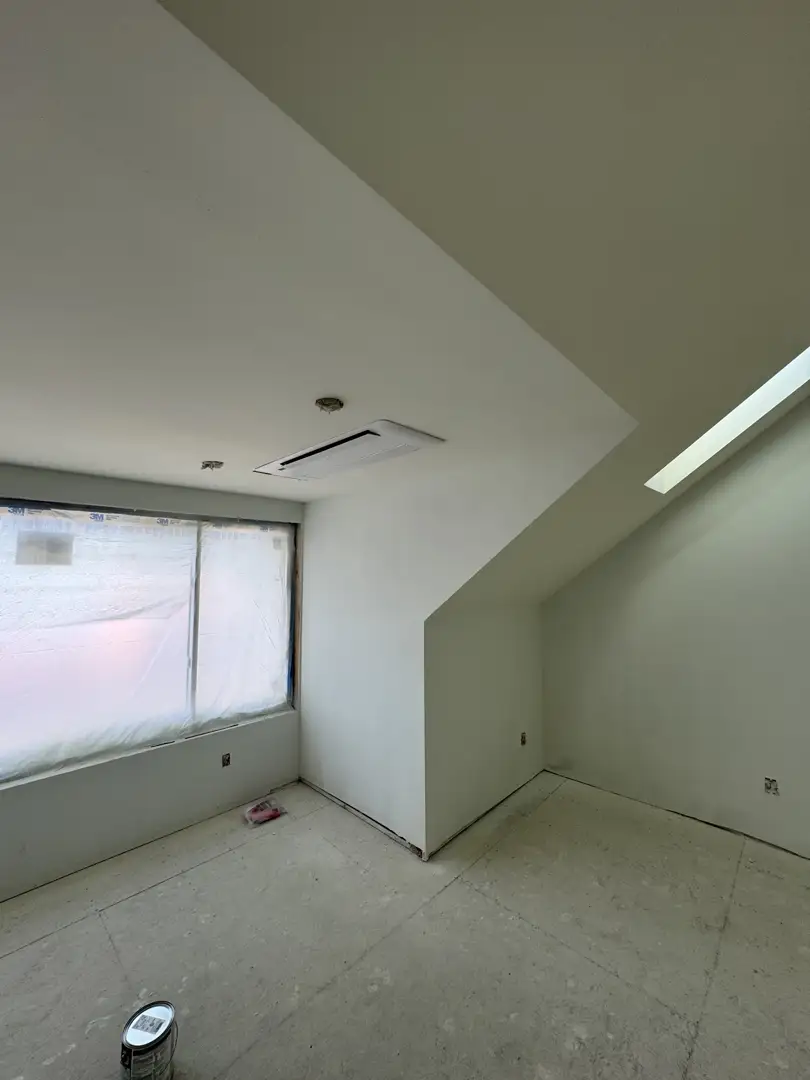
To understand how insulation directly affects your air conditioner's runtime, we have to look at your home as a complete thermal system. Your home consists of three main parts: the cooling machine (your AC), the delivery system (your ductwork), and the container (your home’s thermal envelope, which includes your walls, windows, and insulation).
When your container has weak spots, the entire system breaks down. During a typical Salt Lake Valley summer, solar radiation bakes your roof. Without a thick layer of high-quality insulation to block it, your attic quickly becomes a massive thermal battery, with temperatures easily soaring past 130°F—and sometimes exceeding 150°F on triple-digit afternoons.
This extreme heat does not stay in the attic. It continuously pushes downward into your drywall ceilings and radiates into your bedrooms and living spaces. In physics, heat always moves toward cold. Your air conditioner is trying to maintain a comfortable 72°F, but the ceiling is radiating heat like a giant heating pad. This constant heat gain forces your AC to run much longer cycles just to keep up.
In our dry, high-altitude climate, this dynamic shifts how your system handles the load. To learn more about how our local atmosphere changes the physics of home comfort, check out our guide on How Air Conditioning Works Differently in Arid Climates.
How Poor Insulation Makes AC Run Constantly in a Salt Lake Valley Home During Summer Heat
Heat enters your living space through three primary methods:
- Conduction: Direct heat transfer through solid materials. When your roof deck gets hot, it conducts heat down through the wooden rafters and ceiling joists directly into your drywall.
- Convection: Heat transfer through air movement. Hot air in your attic naturally circulates, and if there are gaps in your insulation or ceiling drywall (such as around canned lights or attic hatches), that hot air leaks straight into your home.
- Radiation: Electromagnetic heat transfer. The hot underside of your roof deck radiates infrared heat waves directly onto your attic floor.
When attic insulation is thin, degraded, or missing, it cannot resist these forces. The heat transfers into your ceilings, making them hot to the touch. Your air conditioner is forced to run continuously because it is fighting a constant, active heat source right above your head.
This nonstop operation has severe consequences for your cooling system. Instead of running efficient 15-to-20-minute cycles, your compressor and fan motors run for hours at a time. This accelerated wear and tear can dramatically shorten the lifespan of your system. For a closer look at how this impacts your equipment, read about How High Desert Weather Affects AC Equipment Lifespan.
The Impact of Utah's High Desert Climate and Inversions
The Salt Lake Valley presents a unique set of environmental challenges that make insulation even more critical:
- Extreme Diurnal Temperature Swings: It is common for a July day in South Jordan or Draper to start at a cool 62°F and skyrocket to 101°F by late afternoon. This rapid 40-degree swing forces your home’s building materials to expand and contract, which can worsen air leaks and cause loose insulation to shift over time.
- Bone-Dry Air: With summer relative humidity regularly dropping below 15%, there is very little moisture in the air to absorb heat. This "lightweight" air transfers sensible heat very rapidly, allowing attic temperatures to rebound almost instantly after your AC shuts off.
- Dust and Inversion Season: Our winter inversions trap fine particulate matter (PM2.5) in the valley floor. When these microscopic particles settle over your dormant outdoor condenser unit during the winter, they form a dirty insulating blanket over the coils. When summer arrives, this dust buildup limits heat rejection, compounding the strain of an already long-running system.
Recommended Insulation R-Values for Utah Climates
To stop the constant cycle of heat gain, your home needs the right amount of thermal resistance, which is measured as an "R-value." The higher the R-value, the better the material is at resisting heat flow.
Because the Salt Lake Valley spans across Climate Zone 5, our homes require robust insulation levels to handle both freezing winters and scorching summers. Unfortunately, many older homes in areas like Millcreek, Holladay, and Murray were built under outdated building codes that required only a fraction of what is recommended today.
| Insulation Location | Older Salt Lake Valley Homes (Pre-1990s) | Modern Building Code / Energy Star Recommendations |
|---|---|---|
| Attic | R-19 to R-30 (Approx. 6–9 inches) | R-49 to R-60 (Approx. 16–20 inches) |
| Exterior Walls | R-11 to R-13 | R-13 to R-21 (Depending on framing size) |
| Floors / Crawl Spaces | R-11 or None | R-30 |
| Rim Joists | None | R-13 to R-21 (Air sealed and insulated) |
Attic Insulation Standards
For the absolute best return on investment, the attic is where you should start. Upgrading your attic insulation from a meager R-19 to the modern standard of R-49 or R-60 can drastically reduce AC runtime.
The most common and cost-effective materials for this upgrade are:
- Blown-In Fiberglass: Excellent for filling tight corners and hard-to-reach areas around attic eaves. It is naturally fire-resistant and does not settle as much as other materials.
- Cellulose (Blown-In): Made from recycled paper treated with boric acid for fire and pest resistance. Cellulose has a slightly higher R-value per inch than fiberglass and is highly effective at blocking airflow.
Wall and Floor Insulation Requirements
While exterior walls are harder to upgrade without removing drywall, they should not be ignored—especially in older brick-and-plaster homes in downtown Salt Lake City or older parts of Sandy. Upgrading to R-13 or R-21 insulation in walls prevents lateral heat transfer on hot summer afternoons when the sun beats directly on the west-facing sides of your home.
Additionally, uninsulated crawl spaces and rim joists allow cool air to dump out of the lower levels of your home while pulling hot, dusty air inside through a process known as the "stack effect."
Signs Your Home Has Insufficient Thermal Protection
Many homeowners assume that when their home is too hot, they automatically need to call for AC repair or a complete system replacement. However, before you look at the cooling equipment, you should look for signs that your home’s thermal envelope is failing.
If your AC system is relatively new and well-maintained but still struggles, the issue is almost certainly a lack of insulation or severe air leakage. If you ever find your system completely unresponsive on a hot day, it is always wise to start with the basics; learn more in our checklist on AC Not Turning On: What to Check First.
Diagnosing How Poor Insulation Makes AC Run Constantly in a Salt Lake Valley Home
Watch out for these classic diagnostic indicators:
- The "Temperature Rebound" Effect: Your AC runs for 40 minutes, finally hits the thermostat setpoint, and shuts off. Within 5 to 10 minutes, the indoor temperature jumps right back up, and the system kicks on again. This rapid heat gain indicates that your walls and ceilings are radiating stored heat directly into your living spaces.
- Uneven Multi-Level Temperatures: Your basement feels like an icebox, but your upstairs bedrooms feel like a sauna. Because hot air rises and cold air sinks, a poorly insulated attic allows the top floor to bake, creating massive temperature imbalances.
- The AC Runs Nonstop During Moderate Weather: If your AC is running continuously even when it is only 80°F outside, your home is losing its conditioned air far too quickly.
In extreme cases, an AC forced to run nonstop can overheat, pulling high electrical currents that trip your electrical panel. If you are dealing with this issue, read our guide on AC Circuit Breaker Keeps Tripping: What It Means.
Physical Indicators of Poor Insulation
You do not need specialized tools to spot some of the most obvious signs of poor thermal protection:
- Ceilings and Walls Feel Hot: On a warm afternoon, gently press your hand against your ceiling. If it feels noticeably warm or hot to the touch, your attic insulation is failing to block solar heat transfer.
- Drafty Electrical Outlets: Feel for air movement around outlets and light switches on exterior walls. If you feel warm air blowing in during the summer, there are major voids in your wall insulation.
- Winter Clues (Ice Dams): Look back at how your home behaves in the winter. If snow melts off your roof much faster than your neighbors' homes, or if you regularly deal with ice dams along your gutters, it means massive amounts of heat are escaping your attic due to poor insulation.
Cost-Effective Insulation Upgrades and Air Sealing
If you have determined that your home lacks adequate thermal protection, you do not have to spend a fortune to see a massive difference in your comfort and utility bills. A few strategic, cost-effective upgrades can quickly pay for themselves by reducing your AC's daily workload.
When planning your upgrades, consider these top-performing materials:
- Blown-In Cellulose: Highly cost-effective, eco-friendly, and excellent at packing tightly around joists to stop minor air leaks.
- Spray Foam (Closed-Cell or Open-Cell): Though more expensive, spray foam acts as both an insulator and a complete air barrier. It is ideal for sealing rim joists, attic rafters, and vaulted ceilings.
- Radiant Barriers: Highly effective in our sunny climate, these reflective foil barriers are installed on the underside of your roof rafters to reflect radiant heat away from your attic floor.
To get the most out of these upgrades, it is highly recommended to pair them with a professional cooling system tune-up. If you live in the southern end of the valley, check out our specialized services for AC Maintenance in Herriman UT.
Sealing Air Leaks and Ductwork
Insulation works like a wool sweater: it keeps you warm, but if the wind blows right through it, it loses its effectiveness. To make your insulation work properly, you must seal air leaks.
- Duct Sealing: The average home loses 20% to 30% of its conditioned air through leaky ductwork joints in the attic or crawl space. In a 130°F attic, a leaky return duct will pull superheated, dusty air straight into your system, forcing the AC to work twice as hard. Sealing these joints with professional-grade mastic sealant ensures that 100% of the air you pay to cool actually reaches your living rooms.
- Weatherstripping and Caulking: Seal gaps around windows, exterior doors, plumbing penetrations, and electrical wires.
If you are located in the northern part of the valley, you can find local tips on sealing and system care in our AC Maintenance Farmington UT Guide.
DIY vs. Professional Insulation Audits
While many homeowners enjoy tackling minor caulking and weatherstripping projects themselves, evaluating your home’s overall thermal envelope is best left to professionals.
A professional energy audit often includes:
- Blower Door Testing: A powerful fan is mounted to an exterior door frame to depressurize your home, revealing exactly where outside air is leaking in.
- Thermal Imaging Cameras: Infrared cameras show precise "cold spots" in the winter or "hot spots" in the summer, pinpointing gaps in wall and ceiling insulation without tearing down drywall.
- Safety Hazard Identification: Working in hot attics carries risks of heat exhaustion, stepping through drywall ceilings, or disturbing older materials like asbestos. Professionals have the training and safety gear to handle these spaces securely.
Maximizing Efficiency and Local Incentives
Improving your home's insulation and sealing air leaks does more than just give your AC a break—it also qualifies you for significant financial savings. Thanks to federal programs and local utility incentives, upgrading your home's efficiency is more affordable than ever.
- Federal Tax Credits (Inflation Reduction Act): Homeowners can claim up to 30% of the cost of qualified insulation and air sealing materials, up to a maximum of $1,200 per year. If you choose to upgrade to an energy-efficient heat pump, you may qualify for up to $2,000 in federal tax credits.
- Rocky Mountain Power Rebates: Our local electric utility offers cash-back rebates for customers who upgrade their attic insulation or perform professional duct sealing.
- Dominion Energy Incentives: If your home uses natural gas for winter heating, you can take advantage of additional rebates for insulation upgrades that lower your winter energy consumption.
By combining these financial incentives with lower monthly power bills, most homeowners see a complete return on their investment within just a few seasons. Best of all, keeping your home sealed protects your cooling equipment from premature failure. To learn more about protecting your investment, read our expert advice on How to Extend the Life of Your AC Unit.
Long-Term Maintenance for Insulation and AC Systems
To ensure your newly insulated home continues to run efficiently year after year, establish a simple seasonal maintenance routine:
- Check Attic Baffles: Ensure that blown-in insulation does not block your attic soffit vents. Air must flow freely from your eaves up through the ridge vents to keep attic temperatures down.
- Change Filters Regularly: In our dusty high desert environment, check your air filters every 30 to 60 days. A clogged filter restricts airflow, which can cause your system to run longer cycles regardless of how well your home is insulated.
- Schedule Spring Tune-Ups: Having a professional clean your condenser coils and check refrigerant levels every spring ensures your system is ready for the summer heat. Discover how routine care keeps your system running smoothly with our guide on Better AC Lifespan with Regular Tune-Ups.
Frequently Asked Questions about Salt Lake Valley Home Insulation
How do I check if my attic has enough insulation?
The easiest way to check is to take a quick look into your attic. If your insulation is level with or below your attic floor joists (meaning you can easily see the wooden beams), you have insufficient insulation (usually R-19 or less). In a properly insulated Salt Lake Valley home, the insulation should completely cover the joists and be at least 16 to 20 inches deep.
Will upgrading insulation stop my AC from making unusual noises?
While insulation itself does not quiet your AC, reducing your system's runtime prevents the mechanical strain that leads to component failures. When an AC runs constantly due to poor insulation, fan motors overheat and bearings wear down, which can lead to loud issues. If you are already hearing strange sounds from your system, consult our guides on Why Your AC Produces High-Pitched Sounds and what to do when your AC Makes Grinding and Squealing Sounds.
How much can I reduce my AC runtime by improving insulation?
On average, homeowners who upgrade their attic insulation to R-49 or R-60 and seal major air leaks experience a 20% to 25% reduction in AC runtime. This not only slashes your summer electricity bills but also adds years to the lifespan of your cooling equipment by eliminating excessive wear and tear.
Conclusion
Stopping your air conditioner from running constantly starts with addressing your home's thermal envelope. By upgrading your attic insulation to modern R-value standards, sealing leaky ductwork, and closing up drafty air leaks, you can transform your home into a comfortable, energy-efficient sanctuary.
If you are ready to lower your utility bills and restore true comfort to your home, here are the immediate steps you should take:
- Inspect your attic to see if your insulation is deep enough to cover the floor joists.
- Feel your ceilings and walls on a hot afternoon to check for active heat transfer.
- Seal obvious air leaks around doors, windows, and electrical outlets.
- Schedule a professional HVAC tune-up to clean dirty coils and optimize airflow.
At S.O.S. Heating & Cooling, we are dedicated to helping our neighbors throughout the Salt Lake Valley—from Bountiful and Layton down to Sandy and Herriman—achieve year-round home comfort. We provide expert HVAC services, 24/7 emergency repairs, and flexible financing options to keep your systems running at peak efficiency.
Don't let poor insulation run your cooling system into the ground. Schedule your professional air conditioning service today!
Explore Our Latest Insights and Updates in Plumbing Services
Are Tankless Water Heater Benefits Real in Hard Water Areas?
Stop Wasting Watts with Variable Speed AC Technology
Upgrading Your Kitchen Sink and Faucet Without the Headache