
The Ultimate Guide to Preventing Costly Drain Backups


.avif)

Why Understanding How Regular Drain Maintenance Prevents Costly Backups Could Save You Thousands
How regular drain maintenance prevents costly backups is simpler than most homeowners expect — and the payoff is enormous. Here is a quick summary:
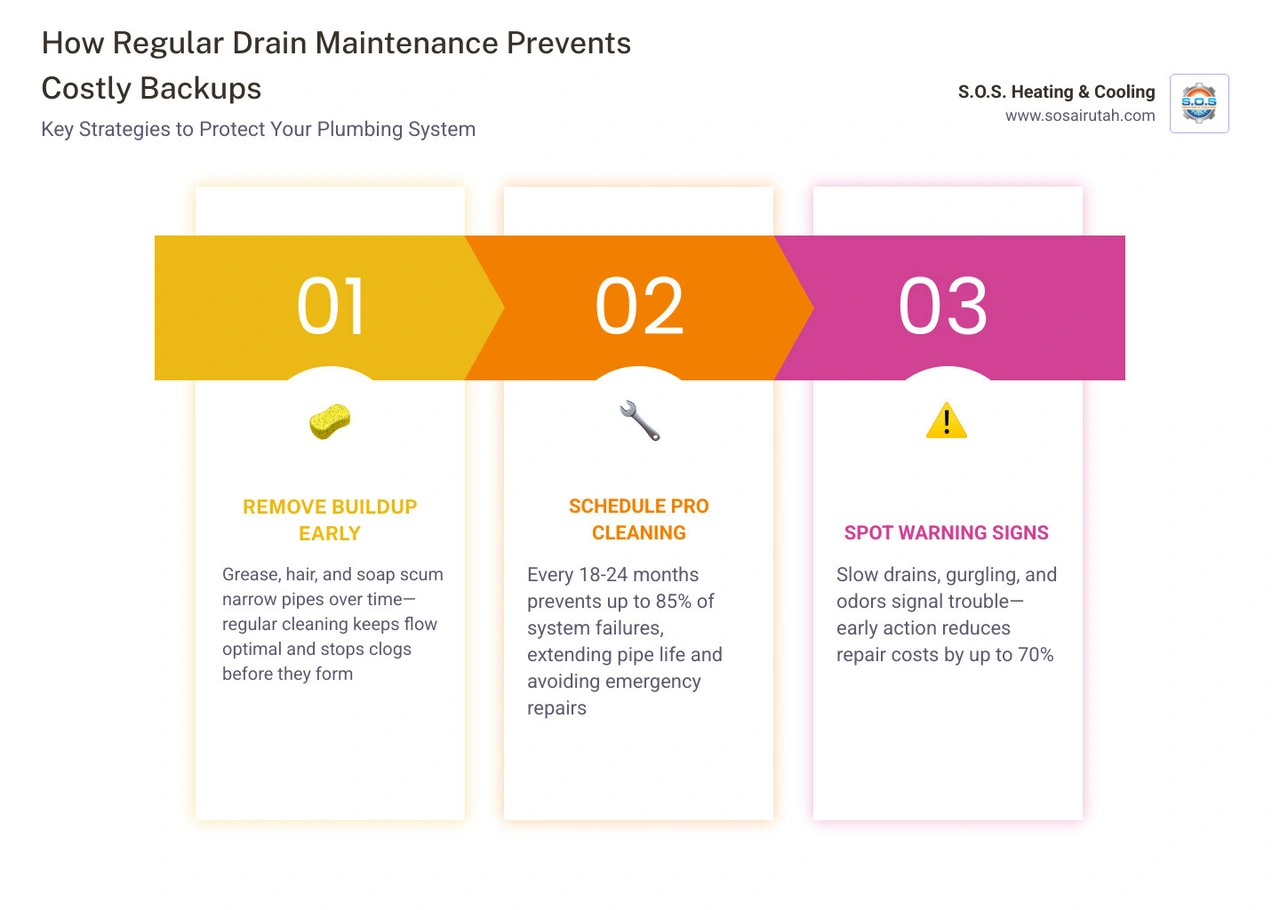
- Remove buildup before it hardens — grease, hair, and soap scum narrow your pipes long before a full clog forms
- Schedule professional cleaning every 18–24 months — this alone can prevent up to 85% of potential plumbing system failures
- Watch for early warning signs — slow drains, gurgling sounds, and foul odors are your system asking for help
- Avoid chemical cleaners — they offer short-term relief but corrode your pipes over time
- Get a video camera inspection — professionals can spot hidden damage, root intrusion, and mineral buildup before it becomes an emergency
If your drains are slow, smelly, or backing up, the problem almost certainly started long before you noticed it.
Plumbing problems have a way of hiding in plain sight. A sink that drains just a little slower than it used to. A faint odor drifting up from the bathroom floor drain. A toilet that gurgles when you run the shower. These are easy to brush off — until the morning you wake up to sewage backing into your basement or a burst pipe flooding your kitchen. For homeowners in Salt Lake City, where aging infrastructure and shifting soils add extra stress to underground plumbing lines, the stakes are even higher.
The frustrating part? Most of these emergencies are completely preventable. According to industry data, preventative drain maintenance can reduce overall plumbing repair costs by up to 70% over a home's lifetime. Yet 15% of homeowners are still spending time and money reacting to backed-up drains that proper upkeep could have stopped before they started.
Think of your drain system the way you think of your car's engine. You would not skip oil changes and wait for the engine to seize before taking action. Your pipes deserve the same logic. Grease congeals. Hair mats together. Mineral deposits harden. Over time, a four-inch pipe can be reduced to half its usable diameter — and by then, you are not dealing with a slow drain. You are dealing with a backup, a repair bill, and a disrupted home.
My name is Bryson Ninow, and through my years of experience in the home services industry, I have seen how understanding how regular drain maintenance prevents costly backups can make the difference between a simple service call and a full-scale plumbing emergency. In this guide, I will walk you through everything you need to know to protect your home's plumbing system before a small problem becomes a very expensive one.
Primary Causes of Clogs and Backups
To understand how to stop a backup, we first have to look at what is happening inside your pipes. Most people assume a clog is a sudden event—like a toy being flushed down a toilet. While that certainly happens, the vast majority of plumbing failures are the result of a slow, silent accumulation of debris.

The primary culprits in most households are Fats, Oils, and Greases (often called FOGs). When these substances are liquid and warm, they slide down the drain easily. However, as soon as they hit the cooler water in your pipes, they solidify. This creates a sticky "lining" on the pipe walls that catches everything else passing by.
Other major contributors include:
- Hair Accumulation: This is the number one cause of bathroom clogs. Hair binds with soap scum to create thick, waterproof mats that are difficult to move.
- Soap Scum: Modern soaps contain fats that react with minerals in our Utah water to create a hard, lime-like substance.
- Mineral Deposits: In areas like Salt Lake City and Draper, hard water can lead to calcium buildup that narrows the pipe’s diameter over time.
- Non-Flushable Items: Wipes (even those labeled "flushable"), paper towels, and feminine hygiene products do not break down like toilet paper and are a leading cause of main line blockages.
If you are already struggling with a slow sink, we have put together a guide on Solutions for a Clogged Drain to help you navigate the immediate steps.
How regular drain maintenance prevents costly backups from FOGs
Fats, oils, and greases are particularly dangerous because they act like "clogged arteries" for your home. As grease congeals, it doesn't just sit there; it traps organic matter which then begins to decompose. This process can lead to pipe narrowing, where a standard four-inch pipe is reduced to just two inches of available space.
Regular maintenance prevents this by using professional-grade organic breakdown methods or high-pressure cleaning to strip that sticky lining away before it can catch hair or food particles. Following basic Plumbing Tips for Clogged Drains like scraping plates into the trash rather than the sink can significantly slow this buildup.
The impact of tree roots and structural shifts
In older neighborhoods like Millcreek or South Salt Lake, tree roots are a major threat. Roots are biologically programmed to seek out moisture, and a tiny pinhole leak or a loose joint in a sewer pipe is like a beacon for them. Once a root finds a way in, it grows rapidly, eventually causing a total blockage or even a pipe collapse.
Structural shifts from soil erosion or seasonal temperature changes can also cause pipes to "belly" or shift, creating low spots where debris settles. When these issues aren't caught early through Drain Blockage Removal services, they can lead to foundation cracks as leaking water softens the soil beneath your home.
How Regular Drain Maintenance Prevents Costly Backups
The core of how regular drain maintenance prevents costly backups lies in being proactive rather than reactive. By the time you see water pooling in your sink, the "damage" is already done—you are now paying for a repair. Maintenance, on the other hand, is an investment in your home’s longevity.
Regularly scheduled cleaning and inspections ensure that your pipes remain at their full diameter. This reduces the stress on your entire plumbing system, including your fixtures and water heater. Furthermore, professional maintenance acts as a sanitization process, removing the bacteria and mold that thrive in stagnant debris.
| Feature | Reactive Repair (Emergency) | Preventative Maintenance |
|---|---|---|
| Cost | High (Emergency rates + damage) | Low (Scheduled service) |
| Timing | Unexpected and disruptive | At your convenience |
| Pipe Health | Addresses the symptom | Extends system life by up to 40% |
| Property Damage | Risk of floor/wall damage | Nearly zero risk |
| Success Rate | Fixes the current clog | Prevents 85% of future failures |
Reducing pressure and pipe rot
When a pipe is partially blocked, the water behind the obstruction builds up excess pressure. This pressure puts immense strain on your pipe joints and seals. Over time, this can lead to joint separation or "pipe rot," where the pipe material itself begins to deteriorate.
By keeping the lines clear, you ensure that water flows at the intended velocity, preventing the "standing water" that causes corrosion. For residents in our area, checking out a Clogged Drain Murray UT Complete Guide can provide localized insights into how our specific soil and water conditions contribute to these issues.
Improving household sanitation and air quality
Neglected drains are more than just a plumbing risk; they are a health risk. Decomposing organic matter in your pipes produces sewer gases, including methane and hydrogen sulfide, which can escape into your home. These drains also become breeding grounds for bacteria and mold.
Regular maintenance involves flushing out these pathogens and ensuring that your "P-traps" are functioning correctly to block gases. Properly Addressing Clogged Drains through professional sanitization can reduce the risk of pathogenic contamination by up to 85%, significantly improving your indoor air quality.
Essential Signs Your System Needs Immediate Attention
You don't always have to wait for a total backup to know something is wrong. Your plumbing system gives off several "early warning" signals that it's time to call in the experts.
- Slow Drainage: If your shower is pooling water around your ankles, it isn't just a minor annoyance—it’s a sign that the interior of your pipe is narrowing.
- Gurgling Noises: If your toilet bubbles when you run the sink, or you hear "glug-glug" sounds after a bath drains, there is likely a venting issue or a partial blockage deep in the system.
- Foul Odors: A persistent "rotten egg" or sewage smell near a drain usually means organic material is trapped and decomposing.
- Drain Fly Infestations: These tiny gnats live and breed in the "gunk" inside dirty pipes. If you see them, your drains need a deep clean.
If your toilet is the main culprit, you might need Pro Help for Unclogging Toilets to determine if the issue is local to the fixture or deeper in the sewer line.
Identifying early warning signs of a main line issue
A main line backup is the "final boss" of plumbing problems. Unlike a single clogged sink, a main line issue affects the entire house. Signs include:
- Multiple fixtures backing up at the same time.
- Water appearing in the shower when you flush the toilet.
- Unexplained puddles or unusually green patches of grass in your yard.
- Sewage smells coming from floor drains in the basement.
For those living in the heart of the valley, these Clogged Drain Salt Lake City Tips can help you identify if the city's main lines or your private lateral lines are to blame.
Professional Strategies and DIY Habits for Pipe Health
Maintaining a healthy plumbing system is a partnership between your daily habits and professional expertise. You don't need to be a plumber to keep things running smoothly, but you do need the right tools and a consistent schedule.
Why professional inspections are key to how regular drain maintenance prevents costly backups
While a plunger or a hand snake can clear a surface clog, they cannot reach deep into your system or address the "root" cause of the problem. Professional plumbers use advanced diagnostics like video camera inspections to establish a "baseline condition" of your pipes. This allows us to see pinhole leaks, root intrusion, or mineral scale before they cause a burst.
Using Affordable Drain Cleaning Utah services ensures you are getting high-tech solutions like hydro-jetting. Hydro-jetting uses water at up to 4,000 psi to literally scrub the inside of your pipes clean, removing years of grease and scale that a standard snake would simply poke a hole through. You can learn more about these methods in our Clogged Drain Service Guide 2025.
Best practices for kitchen and bathroom drains
To keep your system healthy between professional visits, we recommend these monthly DIY habits:
- Install Hair Traps: Inexpensive mesh strainers in every tub and shower can catch 90% of the hair that would otherwise cause a clog.
- The "Full Sink" Flush: Once every few months, fill your sinks to the brim and pull the stopper. The weight of the water creates enough pressure to push minor debris through the system.
- Enzyme Cleaners: Use organic, enzyme-based cleaners once a month. Unlike harsh chemicals, these use bacteria to "eat" the organic buildup without damaging your pipes.
- Hot Water Flushes: Once a week, pour a kettle of boiling water down your kitchen drain to help melt and move any grease that has started to settle.
For more detailed strategies, review our Plumbing Tips for Clogged Drains.
Frequently Asked Questions about Drain Maintenance
How often should I schedule professional drain cleaning?
For a standard household, we recommend a professional cleaning every 18 to 24 months. However, if you live in an older home with galvanized or cast-iron pipes, or if you have large trees near your sewer line, an annual inspection is a much safer bet. This frequency is proven to prevent up to 85% of major plumbing system failures.
Are chemical drain cleaners safe for my pipes?
In short: No. While store-bought chemical cleaners are convenient, they are highly corrosive. They work by creating a chemical reaction that generates heat to melt clogs. This heat and acidity can weaken PVC pipes and accelerate corrosion in metal pipes, leading to leaks and "pipe rot" over time. We always recommend enzyme-based cleaners or mechanical cleaning (like snaking or hydro-jetting) instead.
Can regular maintenance improve my water bill efficiency?
Yes! It might seem strange, but slow drains can actually lead to higher water bills. When your plumbing isn't functioning at its best, tasks like showering or washing dishes take longer and use more water because the "grey water" isn't clearing the basin efficiently. Furthermore, maintenance helps identify small, hidden leaks that could be wasting hundreds of gallons of water every month.
Conclusion
At S.O.S. Heating & Cooling, we believe that a little prevention goes a long way. Understanding how regular drain maintenance prevents costly backups is about more than just avoiding a mess; it's about protecting your biggest investment—your home. From Bountiful to Sandy and everywhere in between, we have helped Salt Lake City residents maintain their property value and find peace of mind through proactive plumbing care.
Don't wait for a gurgle to turn into a flood. Whether you need a routine camera inspection or a deep hydro-jetting clean, our team is here to help 24/7.
Schedule your professional service with S.O.S. Heating & Cooling today

Plumbing
Expert plumbing services offering reliable repairs, installations, maintenance, and emergency support.

Air Conditioning
Comprehensive air conditioning services include installation, repairs, maintenance, and energy-efficient solutions.
Heat Pumps
Enjoy year-round comfort with our energy-efficient and professional heat pump solutions.

Indoor Air Quality
Enhance your home’s air with our cutting-edge indoor air quality solutions you can trust.

Fireplaces
Transform your space into a warm and cozy atmosphere with our professional fireplace services.

Heating
Specialized heating services provide reliable installation, repair, system maintenance, and energy-optimization solutions.
Explore Our Latest Insights and Updates in Plumbing Services
Tankless vs Tank Water Heater: Utah Homeowner Guide
How to Detect Hidden Pipe Leak in Salt Lake Valley