

Stop the Seasonal Stress: Managing Year-Round Maintenance Demands


.avif)

Why How Seasonal Extremes Create Year Round Maintenance Demands Is the Question Every Utah Homeowner Should Be Asking
How seasonal extremes create year round maintenance demands is one of the most important — and most overlooked — realities of owning a home in Salt Lake City. Each season doesn't just bring its own problems. It sets up the next season's failures.
Here's a quick breakdown of how each season drives maintenance needs throughout the entire year:
| Season | Primary Stressor | Year-Round Impact |
|---|---|---|
| Summer | Extreme heat, UV exposure, high AC load | Refrigerant loss, coil wear, compressor strain that surfaces in fall |
| Fall | Rapid temperature swings, furnace reactivation | October service call surge, air quality issues from inversions |
| Winter | Freezing temps, freeze-thaw cycles, snow loads | Cracked pipes, heat exchanger stress, structural fatigue |
| Spring | Snowmelt, flooding, soil shifting | Drainage failures, mold risk, maintenance backlogs that stretch into summer |
The pattern is clear: no season is truly "off-season" when it comes to your home's systems. A summer heatwave doesn't just strain your air conditioner in July — it quietly degrades components that fail when your furnace kicks on in October. A hard winter freeze doesn't end when the snow melts — it leaves behind cracked foundations, stressed pipes, and worn seals that cause problems all spring and summer long.
What makes this especially frustrating for homeowners is that the damage is often invisible until it becomes an emergency. And emergency repairs, according to industry data, can cost anywhere from three to nine times more than planned maintenance work. That gap between what you'd pay for a tune-up and what you'll pay for a crisis is exactly where seasonal extremes do their most expensive work.
I'm Bryson Ninow, an NATE-certified HVAC professional with over two decades of experience helping Salt Lake City homeowners navigate exactly this challenge — understanding how seasonal extremes create year round maintenance demands so you can get ahead of failures instead of reacting to them. In the sections below, I'll walk you through each season's specific threats, what they mean for your home's systems, and how a proactive maintenance plan can protect your comfort and your wallet all year long.
How Seasonal Extremes Create Year Round Maintenance Demands
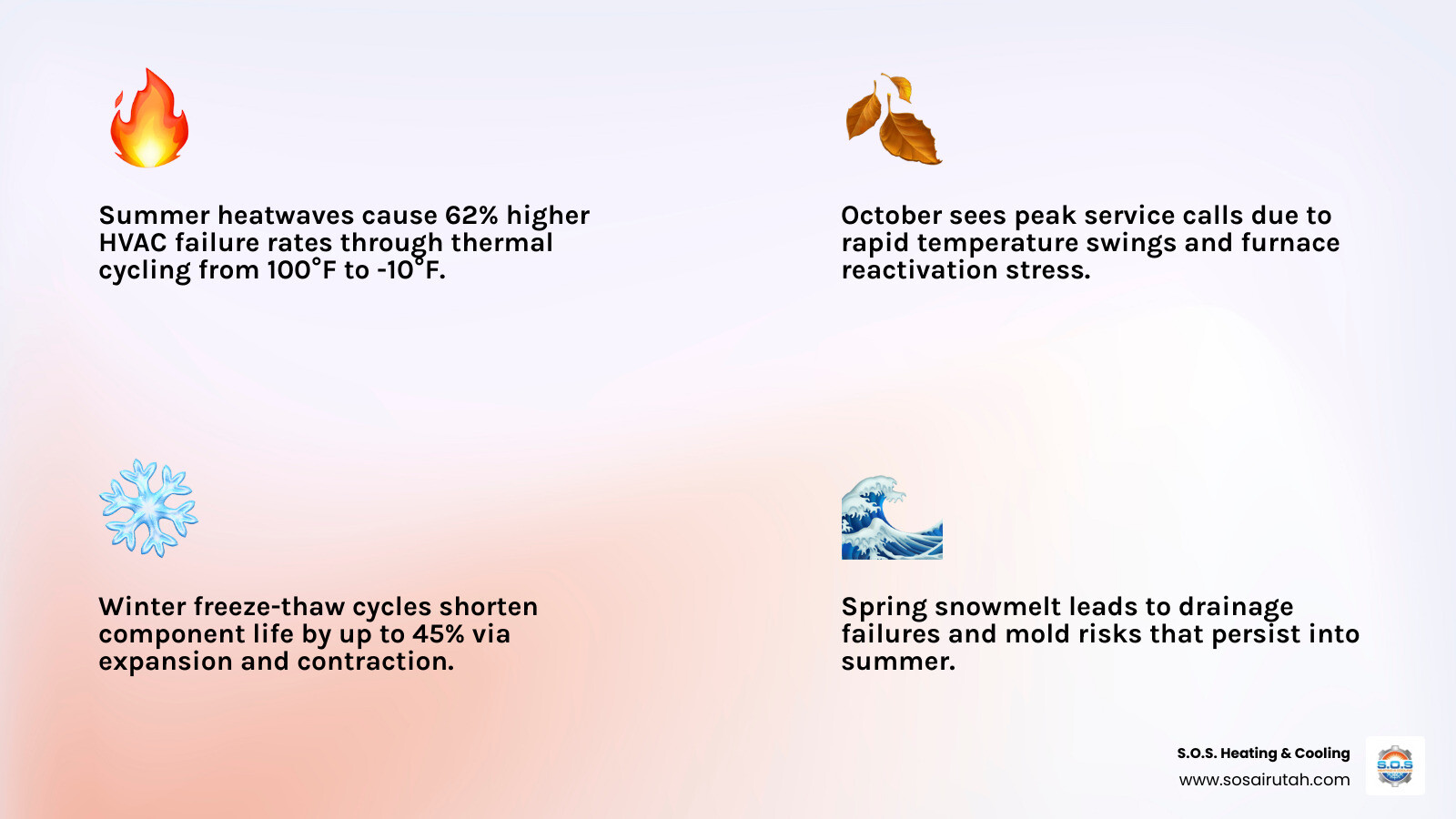
When we talk about HVAC Maintenance Utah, we are really talking about asset protection. In our corner of the country, equipment is exposed to extreme conditions that lead to 62% higher failure rates compared to more temperate regions. This constant "thermal cycling"—the expansion and contraction of metal components as temperatures swing from 100°F to -10°F—effectively shortens component life by up to 45%.
The stress of these extremes creates a domino effect. A system that struggles through a record-breaking heatwave in August doesn't just "recover" when the weather cools down; its internal components, like capacitors and motors, have already been pushed to their thermal limits. This accumulated fatigue is why we see so many breakdowns during the first minor frost of the year.
How seasonal extremes create year round maintenance demands for cooling systems
During a Utah summer, your air conditioner isn't just fighting the heat; it's fighting the dust and dry air characteristic of our high-desert climate. When temperatures stay above 90°F for weeks, refrigerant levels that are even slightly off can cause the compressor to overheat. Dirty coils, often clogged by spring pollen and summer dust, force the system to work 40% harder to achieve the same cooling effect. Following an AC Maintenance Sandy UT Complete Guide helps ensure these stressors don't lead to a permanent system failure mid-July.
How seasonal extremes create year round maintenance demands for heating systems
Winter brings a different set of mechanical headaches. Frozen pipes are the most immediate threat, but for your HVAC system, the danger often lies in the heat exchanger. As the furnace cycles on and off rapidly to combat sub-zero temperatures, the metal expands and contracts. Over time, this can lead to microscopic cracks. These aren't just maintenance issues; they are safety hazards that can release carbon monoxide into your home. Consistent Residential Heating Maintenance is the only way to catch these structural failures before they become dangerous.
Summer Heatwaves and the Impact on Cooling Infrastructure
In the industry, we often look at the "85°F threshold." Once the outdoor temperature hits 85 degrees, search volume for "AC repair" spikes by over 266%. This is the point where a neglected system can no longer keep up. The high head pressure caused by extreme heat puts immense stress on the condenser, and if the hydraulic fluids or lubricants in the fan motor have thinned out or degraded, a total seizure is likely.
To stay ahead of this, homeowners should consult an AC Maintenance Millcreek UT Complete Guide and follow a Pre-Summer AC Inspection Checklist. These proactive steps ensure that your system's "blood pressure"—its refrigerant and electrical draw—is within healthy limits before the heat hits.
Managing High-Demand Surges in Utah
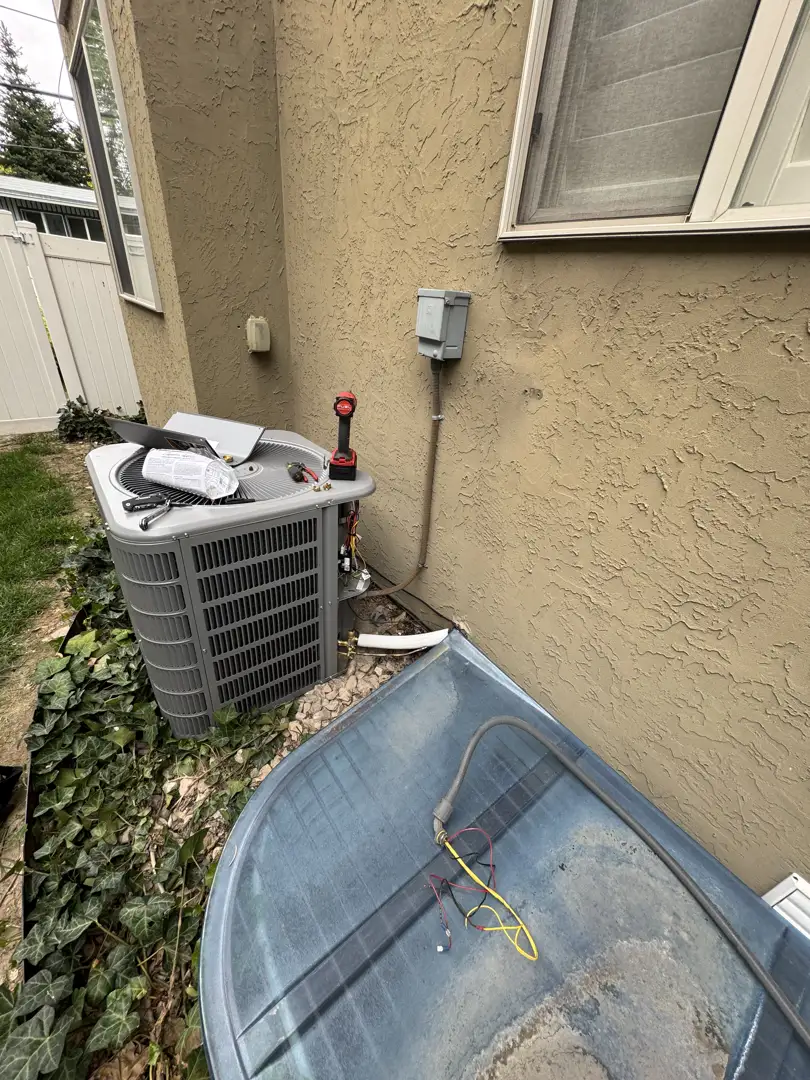
Our geography in places like Spanish Fork and Salt Lake City adds a layer of complexity. The dry heat evaporates moisture quickly, which can actually lead to soil shrinkage around your outdoor unit's pad, causing it to tilt and put strain on the refrigerant lines. Altitude also plays a role; thinner air is less efficient at carrying away heat from the condenser coils. If you live in the northern part of the valley, checking an AC Maintenance Farmington UT Guide can help you understand these local geographic stressors.
The Role of Smart Thermostats During Heatwaves
One of the best ways to mitigate the demands of extreme heat is through smart technology. Using a smart thermostat allows the system to ramp up cooling gradually before the hottest part of the day, rather than "crashing" into a high-load state at 4:00 PM. Occupancy sensors can also reduce the load when nobody is home, giving the mechanical components a much-needed break. For those in Davis County, our AC Maintenance Bountiful UT Guide highlights how integrating these tools can actually extend the life of your equipment.
Navigating the October Peak and Fall Transitions
Most people assume July is the busiest month for HVAC companies. Surprisingly, data from millions of service trips shows that October is often the true peak. Why? Because it’s the "Great Reactivation." After sitting dormant or running in cooling mode for months, furnaces are suddenly asked to provide heat. This transition is a massive stress test.
Knowing When to Schedule Heating Maintenance is crucial. If you wait until the first snow, you're competing with thousands of other homeowners for a technician's time. Following 5 Fall and Winter HVAC Maintenance Tips in September can save you from the October rush.
Why October Outpaces July for Service Calls
The October surge is driven by a combination of factors: lingering summer heat that requires AC during the day and falling night temperatures that trigger the furnace. This "dual-demand" increases technician drive time and mileage significantly. In areas like Kaysville, where homes often have large yards and multiple units, the complexity of these transitions is even higher. Check our AC Maintenance Kaysville UT Guide for more on managing these "shoulder season" challenges.
Preparing for Winter Inversions and Air Quality
In Utah, fall isn't just about temperature; it’s about the air. Our winter inversions trap pollutants in the valley, making Seasonal Effects on Indoor Air Quality a primary concern. Fall maintenance must include a deep dive into your filtration system. Standard 1-inch filters often aren't enough to combat the fine particulate matter (PM2.5) that characterizes a Salt Lake winter. Upgrading to high-efficiency filtration during your fall tune-up is a proactive move for your family's health.
Winter Resilience and the Freeze-Thaw Cycle
Winter in Utah is a battle of physics. The "freeze-thaw cycle" is perhaps the most destructive force your property faces. Water enters tiny fissures in concrete, brick, or even your HVAC's outdoor housing, then expands as it freezes, widening the gaps. This leads to "ground heave," which can shift your furnace's venting or destabilize the foundation.
Reviewing Winter Heating Tips for Home and Critical Furnace Maintenance Tips can help you identify these risks before they lead to a mid-winter lockout.
Protecting Structural Integrity from Cold Contraction
Metal becomes physically brittle in freezing temperatures. In your heating system, this means that parts like blower fans or motor mounts are more prone to cracking under stress. Even your home's structure is affected; cold contraction can cause micro-cracks in the foundation that allow moisture to seep in during the spring thaw. Specialized Heating Maintenance Salt Lake City UT focuses on identifying these structural stressors before they result in catastrophic failure.
Safety Inspections for Heating Systems
We cannot stress safety enough. A furnace that hasn't been inspected is a potential risk. Burners can become clogged with dust during the off-season, leading to "delayed ignition"—that scary "boom" sound you hear when the furnace starts. More importantly, the heat exchanger must be checked for cracks. Our Furnace Maintenance Tips guide explains why these inspections are the only way to ensure your home remains safe from carbon monoxide throughout the winter.
Proactive Scheduling and Smart Technology Integration
Managing how seasonal extremes create year round maintenance demands requires a shift from a "reactive" mindset to a "proactive" one.
| Maintenance Type | Approach | Cost Impact | Reliability |
|---|---|---|---|
| Reactive | Fix it when it breaks | 3x to 9x more expensive | Low (subject to peak season wait times) |
| Proactive | Scheduled inspections | Predictable, lower costs | High (detects issues before failure) |
By utilizing Spring HVAC Tune-Up Essentials, you are essentially stress-testing your system before the environment does it for you.
Flattening the Demand Curve
In the HVAC world, "flattening the curve" means moving non-urgent maintenance tasks into the "shoulder seasons" of March, April, September, and October. This ensures that when the 100-degree heatwave hits, our technicians are available for true emergencies rather than routine filter changes. For you, the homeowner, this means faster service and more thorough inspections. Consistent HVAC Maintenance Utah is the key to this balance.
ROI of Climate-Adaptive Maintenance
The Return on Investment (ROI) for regular maintenance is undeniable. A well-maintained system operates up to 40% more efficiently, directly lowering your monthly utility bills. Furthermore, by catching small issues—like a worn belt or a failing capacitor—during a routine Residential Heating Maintenance visit, you avoid the high cost of emergency parts and labor during a blizzard.
Frequently Asked Questions about Seasonal Maintenance
Why is October the peak month for HVAC service calls?
October represents the "Great Reactivation." Most homeowners turn on their furnaces for the first time in six months, only to discover that dust, worn ignitors, or cracked heat exchangers are preventing the system from running safely or at all.
How do summer heatwaves affect my system in the winter?
Extreme summer heat causes "thermal fatigue." Components like capacitors, fan motors, and electrical wiring are pushed to their limits. While they may survive the summer, the damage is done, and the stress of the first cold snap in winter is often enough to cause these weakened parts to finally fail.
Can smart technology prevent weather-related failures?
While it can't stop the weather, smart technology provides "predictive alerts." Modern smart thermostats and IoT sensors can monitor system performance and alert you (and us!) if the system is drawing too much power or failing to reach the set temperature, allowing for a repair before a total breakdown occurs.
Conclusion
At S.O.S. Heating & Cooling, we’ve spent over 20 years helping our neighbors in Salt Lake City, Bountiful, Draper, and across the valley stay comfortable regardless of what the Utah sky throws at us. We know that how seasonal extremes create year round maintenance demands is a challenge, but it’s one that can be managed with the right partner.
Whether you need a 24/7 emergency repair during a January inversion or a proactive spring tune-up to prepare for the July heat, our team is here to provide expert service with transparent pricing. Don't let the seasons run your schedule—take control of your home's comfort today.
Explore Our Latest Insights and Updates in Plumbing Services
How to Troubleshoot AC Not Cooling but Running
How to Stop Your AC from Running All Day in Utah Summers
Everything You Need to Know About Repair or Replace Air Conditioner in Salt Lake Valley