

How to Choose the Right Furnace for a Salt Lake Valley Home


.avif)

Why Getting Your Furnace Choice Right Matters in Salt Lake Valley
Knowing how to choose the right furnace for a salt lake valley home could be the difference between staying warm all winter and dealing with costly breakdowns when temperatures drop below freezing. Salt Lake Valley winters are no joke — cold snaps, dry air, and the region's unique elevation all put real demands on your heating system.
Here is a quick guide to the key decisions you need to make:
- Fuel type - Natural gas is the most common and cost-effective option in Salt Lake Valley. Electric and propane are available alternatives.
- Furnace size - A 1,500–2,000 sq ft home typically needs a 60,000–80,000 BTU furnace, but a proper Manual J load calculation is the only reliable way to size your system.
- Efficiency rating (AFUE) - Look for 90%+ AFUE for meaningful energy savings in Utah's cold winters.
- Repair vs. replace - If your furnace is over 10–15 years old or repair costs exceed 50% of a new unit's price, replacement is usually the smarter move.
- Incentives - Federal tax credits and local utility rebates can meaningfully offset the cost of a high-efficiency upgrade.
- Professional installation - Proper venting, ductwork, electrical prep, and permits are non-negotiable for safety and warranty coverage.
Salt Lake Valley homeowners face a unique combination of cold winters, dry climate, and altitude that makes furnace selection more nuanced than a simple online search can address. Whether your current system is aging, struggling to keep up, or you are starting fresh, the choices you make now will affect your comfort and energy bills for the next 15–20 years.
My name is Bryson Ninow, and with years of hands-on HVAC experience in the Salt Lake Valley — along with certifications including NATE, EPA, and RMGA — I have helped hundreds of homeowners navigate exactly this decision. In this guide, I will walk you through everything you need to know about how to choose the right furnace for a salt lake valley home, so you can make a confident, informed choice.
Key Factors in How to Choose the Right Furnace for a Salt Lake Valley Home
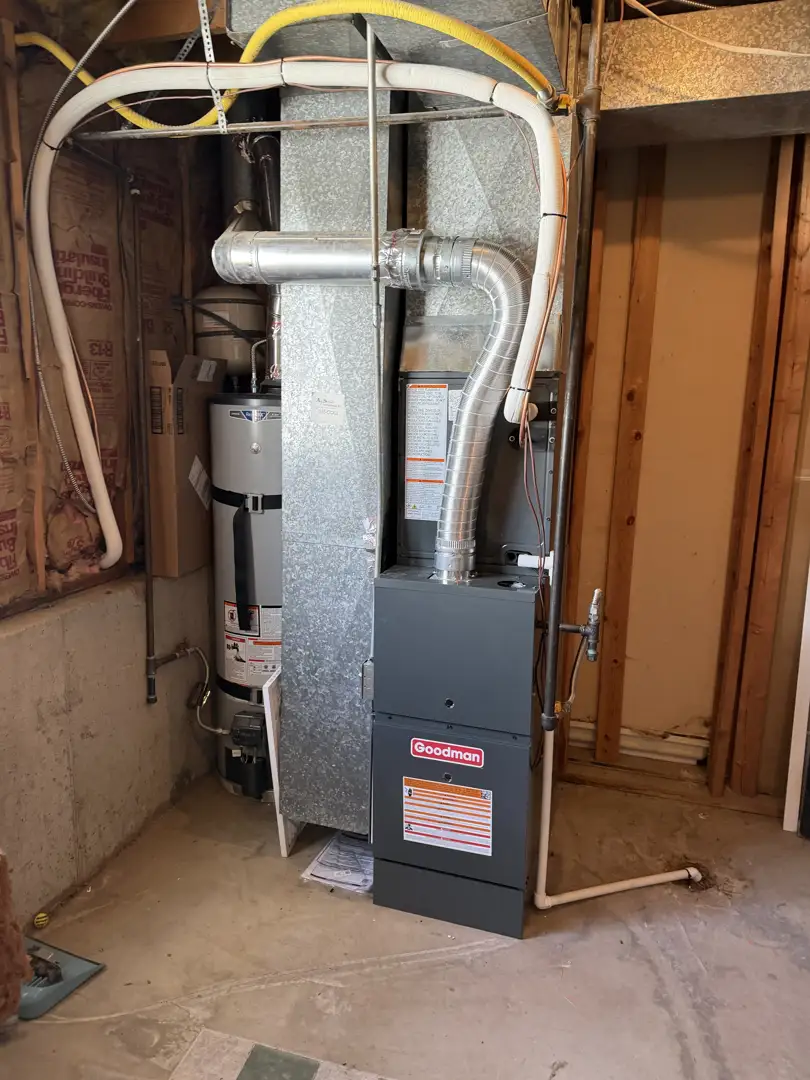
When selecting a heating system along the Wasatch Front, we have to look beyond basic square footage. The layout of your home plays a massive role in how heat distributes. For instance, a historic, multi-story home in the Avenues of Salt Lake City will have vastly different heating dynamics than a sprawling, modern single-level rambler in Herriman or South Jordan.
Insulation quality is another critical factor. Older homes built in Bountiful or Murray during the mid-20th century often have less efficient wall insulation and older window designs. These homes lose heat much faster than newly constructed homes in Draper or Riverton, requiring a system that can reliably offset that rapid thermal loss.
Perhaps the most overlooked factor in our region is elevation. Our thin mountain air directly impacts how fuel burns. Furnaces rely on a precise mixture of oxygen and fuel to create combustion. At higher altitudes, such as in Sandy, Cottonwood Heights, or Mt. Olympus, the lower air density means your furnace must be properly adjusted, or "derated," by a professional installer. Failing to account for this can lead to incomplete combustion, decreased efficiency, and premature equipment wear. To understand this phenomenon in detail, you can read about How High Altitude Affects Your HVAC Performance.
Sizing Your System with Manual J Calculations
When it comes to furnace capacity, bigger is definitely not better. An oversized furnace will turn on, rapidly heat the air near your thermostat, and shut off before the rest of your home reaches a comfortable temperature. This cycle is known as short-cycling. It wastes energy, stresses the electrical components, and leaves you with cold spots. Conversely, an undersized furnace will run continuously, struggling to keep up on freezing January nights, which spikes your utility bills and accelerates wear and tear.
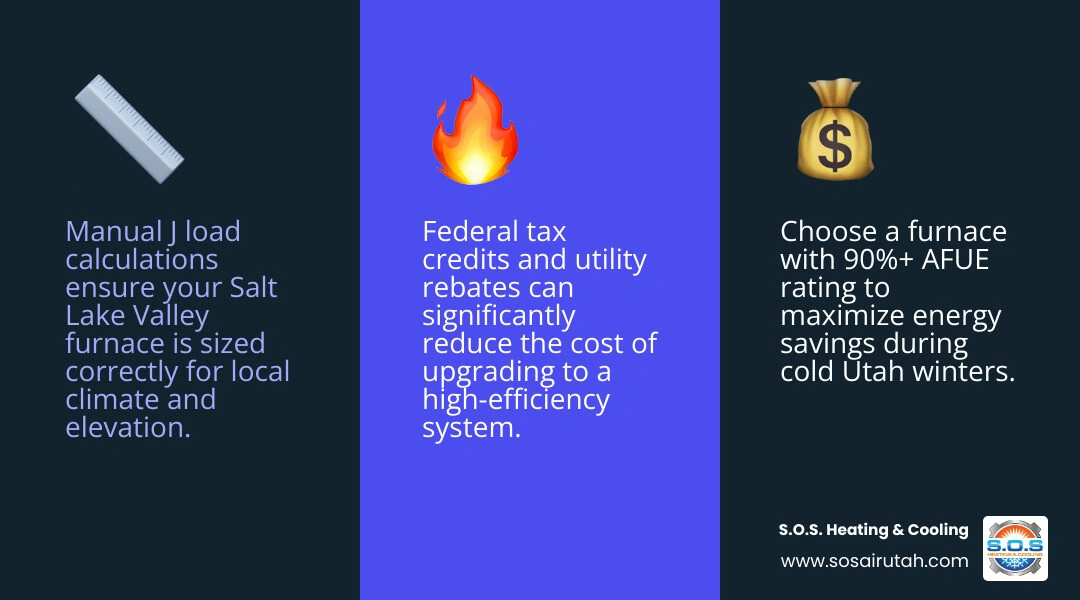
To avoid these issues, we rely on the industry gold standard: the Manual J Load Calculation. Rather than using outdated rules of thumb, this scientific method evaluates:
- The exact square footage and layout of your home
- Local climate data for the Salt Lake Valley
- The orientation of your home relative to the sun
- Insulation values in your walls, attic, and crawlspaces
- The type, size, and U-factor of your windows
- Heat generated by occupants and appliances
A typical 1,500 to 2,000 square foot home in our area generally requires between 60,000 and 80,000 BTUs (British Thermal Units) of heating capacity. However, a Manual J calculation ensures we pinpoint the exact BTU requirements for your specific property. For a deeper dive into sizing and selecting the right unit, check out our guide on Selecting the Perfect Furnace for Home.
Understanding AFUE Efficiency Ratings
Every new furnace comes with an Annual Fuel Utilization Efficiency (AFUE) rating, which is displayed as a percentage. This rating tells you how much of the fuel the furnace consumes is converted directly into usable heat for your home, and how much is lost up the chimney or flue.
- Standard Efficiency (80% AFUE): These units convert 80% of the fuel into heat, while the remaining 20% is vented outdoors as exhaust. They are generally less expensive to purchase initially but cost more to operate over time.
- High Efficiency (90% to 98% AFUE): These condensing furnaces utilize a secondary heat exchanger to extract extra heat from the exhaust gases before they leave the home. A 95% AFUE furnace converts 95% of the fuel to heat, wasting only 5%.
In the Salt Lake Valley, where winters are consistently cold and heating systems run heavily from late autumn through early spring, choosing a high-efficiency model delivers substantial long-term savings on your monthly gas bills. You can explore the technical differences and available models by visiting our page on Furnace Systems Salt Lake City UT.
Comparing Furnace Types and Fuel Options
To help you visualize your choices, we have compiled a comparison of the primary heating systems utilized by homeowners along the Wasatch Front:
| Heating System Type | Typical Efficiency Range | Ideal For | Key Advantage |
|---|---|---|---|
| Natural Gas Furnace | 80% – 98% AFUE | Homes with existing gas lines in established neighborhoods | Lowest operating costs; rapid, high-heat output |
| Electric Furnace | 100% AFUE | Homes without natural gas access; additions or accessory dwellings | Low upfront equipment cost; no combustion or gas leak risks |
| Electric Heat Pump | 2.0 – 4.0 COP (equivalent to 200%–400% efficiency) | Well-insulated modern homes; mild-to-moderate winter days | Dual heating and cooling; incredibly low operating costs in moderate weather |
| Dual-Fuel (Hybrid) | Variable (Combines Gas & Heat Pump) | Homeowners seeking maximum seasonal efficiency and reliability | Automatically switches fuels based on outdoor temperatures |
For a comprehensive breakdown of these options, take a look at our Furnace Replacement Ultimate Guide.
Natural Gas vs. Electric Heating in Utah
For the vast majority of our service areas — from Kaysville and Layton down to Sandy and Riverton — natural gas is the preferred fuel source. Because Utah has highly developed natural gas infrastructure, natural gas is highly cost-effective compared to standard electric resistance heating. A gas furnace provides that classic, warm air from your registers, quickly raising the indoor temperature even when it is below zero outside.
Electric furnaces, on the other hand, are technically 100% efficient because they convert all incoming electricity directly into heat. However, because electricity rates are generally higher than natural gas rates per unit of energy, operating an electric resistance furnace throughout a Utah winter can lead to very high utility bills. Electric furnaces are best suited for smaller spaces, homes without natural gas access, or situations where absolute combustion safety is the primary concern. To learn more about replacing your existing system with either option, visit our Furnace Replacement Salt Lake City UT page.
Heat Pumps and Dual-Fuel Hybrid Systems
Electric heat pumps are rapidly growing in popularity across the Salt Lake Valley. Unlike furnaces, which generate heat through combustion or electrical resistance, a heat pump uses a refrigerant loop to extract ambient heat from the outdoor air and transfer it indoors. Because it moves heat rather than creating it, a heat pump can achieve efficiencies far exceeding 100% (often measured as a Coefficient of Performance, or COP, of 2.0 to 4.0).
While older heat pumps struggled when temperatures dipped below freezing, modern cold-climate heat pumps perform exceptionally well even in low temperatures. However, for complete peace of mind during Utah's coldest winter stretches, many homeowners opt for a dual-fuel (hybrid) system.
A dual-fuel system pairs an electric heat pump with a high-efficiency natural gas furnace. When outdoor temperatures are moderate (above 35°F), the heat pump handles the heating efficiently and affordably. When a true winter cold snap hits, the system automatically switches over to the gas furnace to deliver powerful, reliable warmth. To see how these systems fit into a complete home comfort strategy, check out our Ultimate HVAC Salt Lake City Guide.
When to Repair vs. Replace Your Heating System
It is the classic homeowner dilemma: do you patch up your existing furnace one more time, or bite the bullet and invest in a brand-new system?
To make this decision easier, we recommend using the 50% Rule. If your furnace is approaching or has exceeded its expected lifespan (which is typically 15 to 20 years for gas units and up to 25 years for well-maintained electric models), and a single repair estimate exceeds 50% of the cost of a brand-new unit, replacement is almost always the wiser financial move. Investing significant money into an old, out-of-warranty system that will likely break down again soon is rarely cost-effective. If you are currently dealing with a broken system and need an expert opinion, you can learn about our fast diagnostic services on our Furnace Repair Salt Lake City UT page.
Telltale Signs Your Furnace Needs Replacement
Keep an eye out for these warning signs that indicate your furnace is nearing the end of its useful life:
- A Yellow or Flickering Burner Flame: A healthy gas burner should always burn a steady, bright blue. A yellow, dancing, or flickering flame is a major warning sign of incomplete combustion, which can produce dangerous levels of carbon monoxide.
- Frequent Short-Cycling: If your system is constantly turning on and off in rapid succession, it is experiencing severe operational stress.
- Unexplained Spikes in Utility Bills: If your gas or electric bills are climbing year-over-year while your heating habits remain the same, your furnace's internal components are losing their efficiency.
- Inconsistent Airflow and Temperature Zones: If your living room is freezing while your upstairs bedrooms are stiflingly hot, your blower motor or heat exchanger may be failing to distribute air properly.
Installation, Venting, and Electrical Requirements
A successful furnace replacement requires precise technical execution. A standard installation typically takes between 5 and 8 hours, though complex retrofits involving ductwork modifications or electrical upgrades can take longer.
Furthermore, replacing a furnace is not a simple "plug-and-play" task. Municipalities across the Salt Lake Valley — including West Jordan, Millcreek, and Holladay — require professional mechanical permits and post-installation inspections to verify compliance with local building and safety codes. When you work with a licensed professional, they handle these permits and inspections for you, ensuring your system is fully compliant and safe to operate. To learn more about what to expect during our professional installation process, visit our Furnace Installation Salt Lake City UT page.
Sizing and Ductwork Considerations in how to choose the right furnace for a salt lake valley home
Your brand-new, high-efficiency furnace is only as good as the ductwork distributing its air. During the planning phase of how to choose the right furnace for a salt lake valley home, we must carefully inspect your existing duct system.
If your ducts are improperly sized, leaky, or poorly insulated, they will restrict airflow and create high static pressure. This forces your new furnace's blower motor to work significantly harder, leading to premature motor failure and uneven temperatures throughout your home. Sealing and insulating your ductwork during a furnace replacement ensures your entire system operates at its peak rated efficiency.
Electrical and Venting Upgrades in how to choose the right furnace for a salt lake valley home
Upgrading from an older, standard furnace to a modern, high-efficiency condensing unit requires several critical infrastructure updates:
- Venting Upgrades: Older 80% AFUE furnaces vent their hot exhaust gases naturally through metal chimneys. Modern 90%+ AFUE condensing furnaces extract so much heat that their exhaust is relatively cool. This cool, acidic exhaust must be vented horizontally through dedicated, corrosion-resistant PVC pipes.
- Condensate Drainage: High-efficiency furnaces produce liquid condensation as they extract heat from exhaust gases. Your installation team must run a dedicated drain line to a nearby floor drain or install a condensate pump to safely remove this water.
- Electrical Capacity: Modern variable-speed blower motors and smart control boards require stable, dedicated electrical circuits. In older homes in areas like South Salt Lake or Farmington, we may need to upgrade the breaker capacity or run new wiring to support the electrical demands of your upgraded system.
Maximizing Lifespan with Regular Maintenance and Incentives
Once your new furnace is installed, the best way to protect your investment and keep your utility bills low is through consistent, annual maintenance. Just like your car needs regular oil changes, your heating system requires professional calibration.
An annual autumn tune-up ensures your burners are clean, your electrical connections are secure, your heat exchanger is free of dangerous cracks, and your system is operating safely. Additionally, most major manufacturers require documented annual professional maintenance to keep your equipment warranty active. You can schedule your annual safety check or learn more about what our comprehensive service includes by visiting our Furnace Maintenance Salt Lake City UT page.
Leveraging Rebates and Tax Credits
Upgrading your home's energy efficiency does not have to be an overwhelming financial burden. Thanks to federal programs and local utility initiatives, you can significantly offset your upfront costs:
- Federal Tax Credits: Under the Energy Efficient Home Improvement Credit, qualified Energy Star certified high-efficiency gas furnaces and heat pumps may qualify for substantial federal tax credits.
- Utility Rebates: Local utility providers serving the Salt Lake Valley, including Dominion Energy and Rocky Mountain Power, offer excellent cash-back rebates for homeowners who upgrade to high-efficiency furnaces, heat pumps, or smart thermostats.
By bundling these incentives, you can dramatically lower the net cost of your home comfort upgrade. For a detailed guide on how to navigate these applications, check out our resource on Utah Energy Rebates for HVAC Upgrades.
Frequently Asked Questions about Salt Lake Valley Furnaces
What is the average lifespan of a gas furnace in Utah?
With regular professional maintenance, a high-quality gas furnace in the Salt Lake Valley typically lasts between 15 and 20 years. Electric models can sometimes reach up to 25 years because they do not experience the chemical stress of combustion. However, Utah's cold, dry winters mean our heating systems work hard, making annual tune-ups essential to reaching these lifespans.
How often should I replace my furnace filter?
We recommend checking your furnace filter once a month. For standard 1-inch pleated filters, replace them every 3 to 6 months. If you have pets, allergies, or live in an area with high dust levels (such as near active construction zones in rapidly growing parts of the valley), you may need to replace them more frequently. Keeping a clean filter in place is the single easiest way to maintain strong airflow and protect your blower motor from overheating.
Can a heat pump completely replace a furnace in the Salt Lake Valley?
Yes, modern cold-climate heat pumps are fully capable of keeping a well-insulated Salt Lake Valley home warm throughout our freezing winters. However, many local homeowners still prefer to install a dual-fuel hybrid system — pairing the heat pump with a natural gas furnace — to ensure maximum heating performance and lower operating costs during extreme sub-zero cold snaps.
Conclusion
Choosing the right furnace for your home along the Wasatch Front is a major decision, but you do not have to navigate it alone. From calculating precise BTU requirements to selecting high-efficiency systems that qualify for local utility rebates, our team at S.O.S. Heating & Cooling is here to guide you every step of the way. We proudly serve homeowners across the entire Salt Lake Valley, including Bountiful, Layton, Sandy, Draper, and beyond, with 24/7 emergency services, flexible financing options, and a commitment to your absolute comfort.
Ready to upgrade your home comfort? Schedule your professional furnace installation with S.O.S. Heating & Cooling today, and let our local experts help you stay warm all winter long.
Explore Our Latest Insights and Updates in Plumbing Services
The Fantastic Four Components That Keep You Cool
Avoid the Summer Meltdown with These Proactive Spring Steps
Should You Fix or Flee Your Old AC Unit?