
How to Prevent Drain Backups Year Round


.avif)

Why Utah Homeowners Deal With Drain Backups More Than They Expect
Knowing how to prevent drain backups in a Utah home year round can save you thousands of dollars and a whole lot of stress. Here is a quick overview of the most important steps:
- Never pour grease, oils, or fats down any drain — they solidify inside pipes and cause serious blockages.
- Stop flushing wipes, even ones labeled "flushable" — they are the number one cause of sewer lateral backups.
- Install hair traps in every shower and tub — they catch up to 90% of hair before it reaches your pipes.
- Flush basement floor drains monthly — Utah's dry climate causes P-traps to evaporate faster than in humid states.
- Schedule professional sewer line cleaning every 18 to 24 months — this prevents up to 85% of potential plumbing system failures.
- Grade soil away from your foundation and keep gutters clear — this protects against basement flooding during snowmelt and summer storms.
- Know the early warning signs — slow drains, gurgling noises, foul odors, and multiple fixtures backing up at once all mean trouble is building.
A drain backup is not just a messy inconvenience. It is a genuine health hazard. Raw sewage contains bacteria, viruses, and pathogens that can make your family sick. Mold can begin growing within 24 to 48 hours of water exposure, and average water damage claims in the United States exceed $10,000. The good news is that most backups are completely preventable with the right habits and a little seasonal attention.
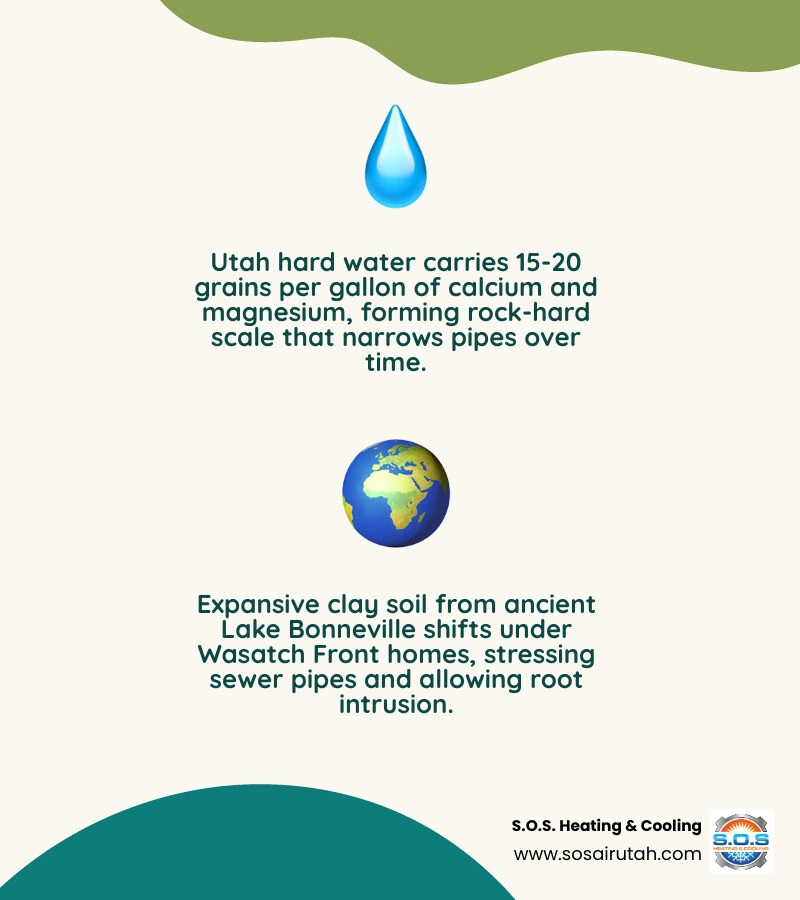
Utah homes face a specific set of challenges that homeowners in other states simply do not deal with. Hard water with 15 to 20 grains per gallon builds up mineral deposits inside pipes, narrowing them over time. Expansive clay soil from the ancient Lake Bonneville lakebed shifts under homes across the Wasatch Front, stressing underground pipes and causing cracks where tree roots sneak in. Freeze-thaw cycles in winter and a surge in water usage during summer put additional strain on plumbing systems that may already be working harder than they should.
This guide walks you through everything you need to know, from daily drain habits to seasonal strategies to professional maintenance tools like hydro jetting and backwater valves.
I'm Bryson Ninow, and my years of hands-on experience in Utah's home services industry have shown me how the state's unique hard water, clay soil, and extreme seasonal swings make learning how to prevent drain backups in a Utah home year round a genuinely different challenge than anywhere else in the country. I've put together this guide to give you practical, honest answers you can act on today.
The Unique Challenges of Utah Soil and Hard Water
To understand why drains in Salt Lake City, Layton, and Murray act up so frequently, we have to look beneath the surface. The geological and environmental makeup of the Wasatch Front directly impacts the longevity and functionality of your plumbing system.
First, let's talk about what is coming out of your taps. Utah is famous for its hard water, which contains high concentrations of calcium and magnesium sourced from our mountain aquifers. When this water flows through your pipes, it leaves behind microscopic mineral deposits. Over time, these minerals crystallize and form a rock-hard crust known as scale.
Understanding How Utah Hard Water Affects Your Plumbing is the first step in protecting your home. This scaling acts like plaque in an artery. It narrows the usable diameter of your pipes, turning a standard four-inch sewer line into a much smaller passage. This rough, scaled surface also creates the perfect catching point for hair, soap scum, and food waste, accelerating blockages.
Second, the very ground our homes are built on presents a physical hazard to underground sewer lines. Much of the Wasatch Front sits on the ancient lakebed of Lake Bonneville, which left behind highly expansive clay soil. This clay behaves like a sponge: it swells significantly when wet and shrinks and cracks when dry.
When you look at How Shifting Soils Along The Wasatch Front Damage Sewer Pipes, you see how this constant ground movement puts immense physical stress on buried pipes. Clay, cast-iron, and even older plastic pipes can shift, sag, crack, or completely collapse under this pressure. Once a sewer pipe develops even a hairline fracture due to soil movement, thirsty tree roots seek out the nutrient-rich water inside, invading the pipe and creating a dense, solid barrier that guarantees a major backup.
Finally, our local weather patterns do not make things any easier. Seeing How The Wasatch Front Climate Affects Your HVAC And Plumbing reveals how extreme temperature swings cause pipes to expand and contract. This thermal stress, combined with shifting clay and mineral-weakened joints, makes Utah sewer systems uniquely vulnerable to failure.
How to Prevent Drain Backups in a Utah Home Year Round: Seasonal Strategies
Preventing drain backups requires a proactive approach that changes with our seasons. Each time of year brings distinct demands that can push a vulnerable plumbing system over the edge.
By learning How Seasonal Extremes Create Year Round Maintenance Demands, you can align your home care tasks with Utah's natural climate cycles.
Winter: Freeze Protection and Pipe Safety
Winter in Utah brings freezing temperatures that can quickly turn a small plumbing issue into a catastrophic emergency. Approximately 20% of winter insurance claims involve frozen or burst pipes. When water freezes inside a pipe, it expands, causing pressure to build up until the pipe ruptures.
To protect your home during cold snaps below 20°F:
- Keep your home heated to at least 55°F, even when you are away.
- Open cabinet doors under sinks on exterior walls to let warm air circulate around the pipes.
- Let faucets drip slightly overnight during extreme freezes to keep water moving.
- Insulate exposed pipes in unheated areas like basements, crawl spaces, and garages with foam sleeves.
Spring: Snowmelt, Gutters, and Foundation Grading
As the winter snowpack melts from the Wasatch Mountains, massive volumes of water saturate the clay soil around your home. If your property is not set up to shed this water, it will pool against your foundation, seep into your basement, or overwhelm your sewer lateral.
Proper grading is critical: your yard should slope away from your foundation at least six inches over the first ten feet. Additionally, clean your gutters at least twice a year and extend your downspouts at least four to six feet away from your home. If you have a basement, your sump pump is your last line of defense. Test your sump pump quarterly—and especially in early spring—by pouring water into the pit until the float switch activates. We also highly recommend installing a battery backup system to keep your sump pump running during spring storm power outages.
Summer: High Water Usage, Irrigation, and Laundry Surges
Summer water usage can jump up to 50% in the average Utah household. With kids out of school, outdoor irrigation systems running, and guests visiting, your drains handle much more volume than usual.
Laundry loads often double in the summer. Traditional washing machines use 27 to 54 gallons of water per load, which can easily overwhelm a partially clogged basement drain. To prevent a messy backup in your utility room, install an inexpensive mesh lint trap on your washing machine discharge hose to catch fibers before they enter your home's drain system. Also, Utah's incredibly dry summer air causes the water in unused floor drains (like those in your basement utility room) to evaporate quickly. When this P-trap dries out, sewer gases can escape into your home. Prevent this by pouring a gallon of water down your floor drains once a month.
Daily Habits and Prohibited Items to Keep Drains Clear
The most effective way to prevent backups is to control what enters your plumbing system in the first place. Many homeowners unknowingly wash items down the drain that are guaranteed to cause structural blockages.
| Item Type | Safe to Flush / Pour? | Why or Why Not? |
|---|---|---|
| Toilet Paper | Yes | Designed to break down rapidly in water. |
| "Flushable" Wipes | No | Do not dissolve; bind with grease to create massive blockages. |
| Fats, Oils, and Grease (FOG) | No | Solidify as they cool, coating pipe walls. |
| Feminine Products | No | Designed to absorb liquid and expand, instantly wedging in pipes. |
| Food Scraps / Coffee Grounds | No | Accumulate in pipe sags and create heavy, solid obstructions. |
| Hair | No | Binds with soap scum to form thick, waterproof mats. |
To keep your kitchen and bathroom drains running smoothly, implement these simple daily habits:
- Scrape Plates into the Trash: Never pour cooking grease, oils, or fats down the sink. Instead, let them cool in a container and throw them in the garbage. Even if you run hot water, grease eventually cools and solidifies deep inside your sewer line, acting like glue for other debris.
- Use Drain Strainers and Hair Traps: Hair is one of the primary culprits behind bathroom clogs. By installing simple silicone hair traps in your tubs and showers, you can catch up to 90% of hair before it ever enters your plumbing.
- Maintain Your Garbage Disposal: Avoid putting starchy foods (like pasta or potato peels), fibrous vegetables (like celery), eggshells, or coffee grounds down the disposal. Always run cold water for 30 seconds before, during, and after using your disposal to ensure waste is fully flushed out of the branch lines.
For more detailed strategies on maintaining your local plumbing fixtures, check out our Clogged Drain Salt Lake City Tips or read our guide on how to Fix A Slow Draining Bathtub to resolve minor bathroom issues before they turn into major sewer backups.
Recognizing Early Warning Signs and Knowing When to Call a Pro
Sewer backups rarely happen without warning. In most cases, your plumbing system will try to tell you that a blockage is forming long before wastewater begins spilling onto your floors.
Pay close attention to these early warning signs:
- Slow Draining Fixtures: If your sink, tub, or shower takes longer than usual to empty, a partial clog is developing.
- Gurgling Noises: Bubbling or gurgling sounds coming from your toilets or drains when you run water elsewhere (like running the washing machine or dishwasher) indicate trapped air in the system, usually caused by a growing restriction.
- Foul Odors: Persistent sewer smells coming from your drains indicate that waste is not clearing the system properly or that a P-trap has dried out.
- Multiple Clogged Drains: If more than one fixture is draining slowly at the same time—especially on the lowest level of your home—the issue is not in an individual pipe. It is a main sewer line blockage.
- Wastewater Repercussions: If flushing your toilet causes water to back up into your shower or tub, you have a severe main line restriction that requires immediate attention.
If you notice any of these signs, it is important to act quickly. While minor, isolated clogs in a single sink can often be cleared with a standard plunger, recurring issues or main line symptoms require professional expertise.
To learn more about identifying these issues early, read our comprehensive guide on Drain And Sewer Line Problems Signs And Solutions.
If you are dealing with a persistent issue and need local help, you can find a reliable technician through our Clogged Drain Service Near Me locator to get your system flowing safely again.
Professional Maintenance and Advanced Prevention Systems
While good daily habits and seasonal prep go a long way, some plumbing issues are deep underground and out of reach for DIY methods. That is where professional maintenance and advanced prevention systems come into play.
Investing in preventative drain maintenance can reduce your overall plumbing repair costs by up to 70% over your home's lifetime. Think of your plumbing system like a car engine: regular maintenance is far cheaper and less stressful than waiting for a complete breakdown.
Two of the most powerful tools professionals use to keep your sewer lateral clear are:
- Video Camera Inspections: A high-definition, waterproof camera is snaked through your cleanout to see exactly what is happening inside your pipes. By scheduling a Sewer Line Camera Inspection What It Reveals, we can identify cracks, sags, mineral scale, and root intrusion without any destructive digging.
- Hydro Jetting: While traditional drain snaking is great for punching a hole through a localized clog, it does not clean the pipe walls. Hydro jetting uses highly pressurized water (up to 4,000 psi) to blast away years of grease buildup, tree roots, and mineral scale, restoring your pipe to like-new condition.
To understand the long-term financial and structural benefits of this proactive approach, read our guide on How Regular Drain Maintenance Prevents Costly Backups.
Professional Inspections: How to Prevent Drain Backups in a Utah Home Year Round
For homes along the Wasatch Front, especially those built before the 1990s or properties with mature trees, we recommend having your sewer lateral inspected regularly.
If you live in the southern Salt Lake Valley, our guide to a Sewer Line Inspection In Murray Ut outlines exactly what to expect during a professional assessment. Staying on top of these inspections ensures that minor root intrusions or shifting pipe joints are caught and repaired before they cause a dirty basement flood. For a complete look at modern drain maintenance practices, explore our Clogged Drain Service Guide 2025.
Advanced Valves: How to Prevent Drain Backups in a Utah Home Year Round
If your home is lower than the surrounding street level or the municipal sewer main, you are at risk of a backflow event. During heavy rainstorms or rapid snowmelt, municipal sewer systems can become overwhelmed, forcing raw sewage backward through your lateral line and into your basement drains.
To protect your home from this nightmare, you can install a backwater valve (also known as a backflow preventer). This valve contains a one-way flap that allows wastewater to exit your home but automatically seals shut if water tries to flow backward from the city main.
For a complete overview of how these safety systems are integrated into local homes, see our Fix Sewer Line Murray Ut Complete Guide.
Frequently Asked Questions about Utah Drain Backups
Why does my basement drain smell during dry Utah summers?
Utah's incredibly low summer humidity causes water inside your drains' P-traps to evaporate much faster than in other parts of the country. The P-trap is the U-shaped pipe beneath your drain designed to hold a small amount of water, which acts as a physical barrier against rising sewer gases. When this water dries up, foul-smelling sewer gas (containing methane and hydrogen sulfide) escapes directly into your home. To prevent this, simply pour a gallon of water down your basement floor drains once a month to keep the P-traps full.
Are chemical drain cleaners safe for older Utah pipes?
No, you should avoid store-bought chemical drain cleaners. These products contain highly corrosive acids or bases that generate intense heat inside your pipes. This heat can warp or melt plastic PVC pipes and accelerate corrosion in older cast-iron or galvanized steel lines, leading to leaks and structural pipe rot. Instead, use natural enzyme-based drain cleaners, a manual drain snake, or call a professional to safely clear the line.
How often should I schedule professional sewer line cleaning?
For most homes along the Wasatch Front, we recommend scheduling a professional sewer line cleaning and camera inspection every 18 to 24 months. If your home was built before 1990, has mature trees near the sewer lateral, or has a history of slow drains, an annual cleaning is highly recommended to keep mineral scale and root intrusion under control.
Conclusion
Preventing drain backups in your Utah home does not have to be a guessing game. By understanding how our local hard water, clay soils, and seasonal weather swings affect your plumbing, you can take simple, proactive steps to protect your property. From basic daily habits like keeping grease out of your kitchen sink to seasonal tasks like testing your sump pump and flushing your floor drains, prevention is always easier—and far less expensive—than dealing with a messy emergency.
If you are experiencing slow drains, gurgling toilets, or want to schedule a preventative camera inspection to protect your home, we are here to help. S.O.S. Heating & Cooling provides expert plumbing services throughout Salt Lake City and the surrounding Wasatch Front communities.
Contact us today to schedule your preventative maintenance or explore our S.O.S. Heating & Cooling Plumbing Services to keep your home's drains running smoothly and safely year round!

Plumbing
Expert plumbing services offering reliable repairs, installations, maintenance, and emergency support.

Air Conditioning
Comprehensive air conditioning services include installation, repairs, maintenance, and energy-efficient solutions.
Heat Pumps
Enjoy year-round comfort with our energy-efficient and professional heat pump solutions.

Indoor Air Quality
Enhance your home’s air with our cutting-edge indoor air quality solutions you can trust.

Fireplaces
Transform your space into a warm and cozy atmosphere with our professional fireplace services.

Heating
Specialized heating services provide reliable installation, repair, system maintenance, and energy-optimization solutions.
Explore Our Latest Insights and Updates in Plumbing Services
Ultimate Guide to Hard Water from Utah Aquifers Damaging Pipes and Fixtures
An Essential Guide to Pipe Replacement Age