
The Easiest Way to Stop Tree Roots From Infiltrating Drain Lines


.avif)

The Science of How Tree Roots Infiltrate Drain Lines in Older Salt Lake City and South Salt Lake Neighborhoods
How tree roots infiltrate drain lines in older Salt Lake City and South Salt Lake neighborhoods is one of the most common — and most overlooked — causes of sewer backups in the region. If you're dealing with slow drains, gurgling toilets, or recurring clogs in an older home, here's the short answer:
How Tree Roots Get Into Drain Lines in Older Salt Lake City and South Salt Lake Neighborhoods:
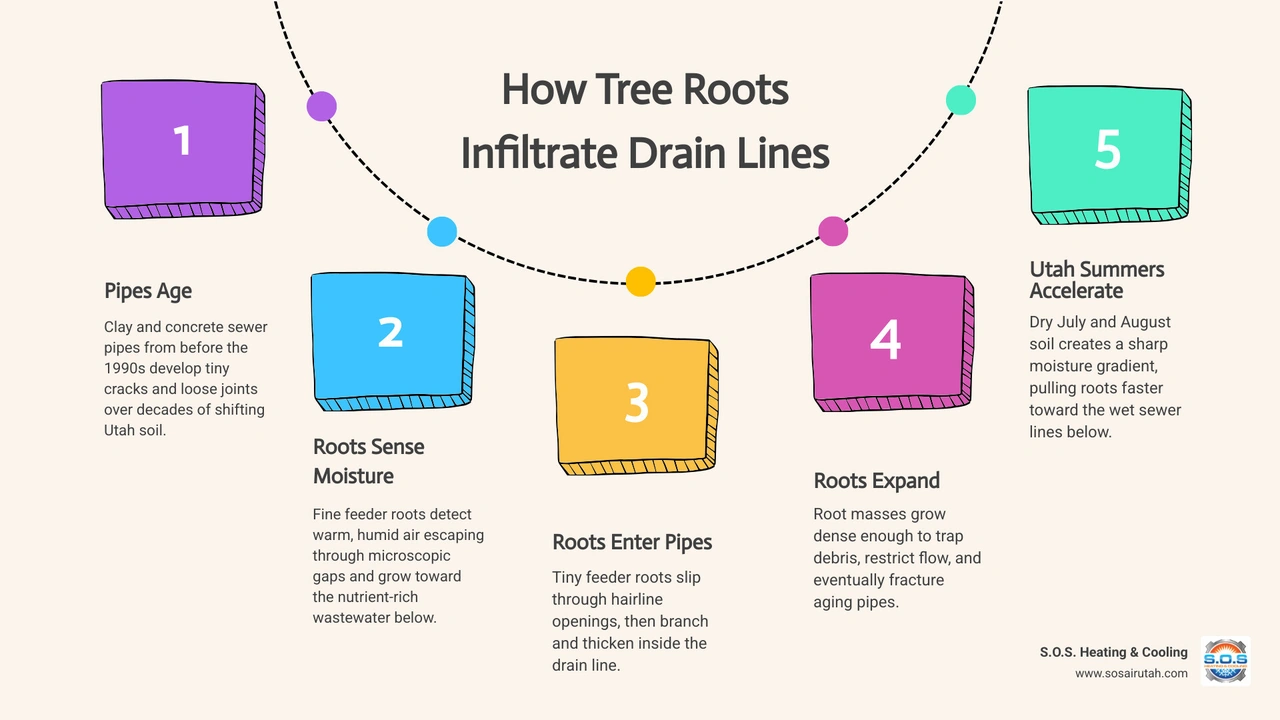
- Pipes develop tiny cracks or loose joints — Clay and concrete sewer pipes installed before the 1990s have joints every few feet. Over decades, those joints shift and open small gaps.
- Roots detect moisture vapor — Fine feeder roots sense warm, humid air escaping through even microscopic pipe imperfections and grow toward the source.
- Roots enter through hairline openings — They don't need a large gap. A feeder root slips in, then branches and thickens inside the pipe.
- Roots expand and block flow — Over months and years, root masses grow dense enough to catch debris and cause full blockages or pipe fractures.
- Utah's dry summers accelerate the process — When surface soil dries out in July and August, the moisture gradient between the dry ground above and the wet pipe below grows sharper, pulling roots downward and toward sewer lines faster.
Older neighborhoods like Sugar House, The Avenues, Capitol Hill, and South Salt Lake are especially at risk because many homes still have original clay or concrete lateral lines — materials that crack, shift, and leak far more than modern PVC.
According to Salt Lake City's Urban Forest Action Plan, the city's public trees number around 86,500, with roughly 75% planted as street trees in the right-of-way — many of them directly above aging sewer infrastructure. That combination of mature tree canopy and deteriorating pipes is a recipe for recurring drain problems.
I'm Bryson Ninow, and while my background is rooted in home services and energy systems, I've spent years helping Salt Lake Valley homeowners understand exactly how aging infrastructure and local environmental factors — including how tree roots infiltrate drain lines in older Salt Lake City and South Salt Lake neighborhoods — turn small maintenance issues into costly emergencies. In the sections below, I'll walk you through everything you need to know to protect your pipes and your trees.
To solve a problem permanently, we have to look beneath the surface—literally. The quiet battle taking place under your lawn is a mix of biology and geology.
When wastewater flows from your sinks, showers, and washing machines, it is warm and packed with organic material. Because older pipes are rarely completely airtight, they constantly release a faint, warm plume of moisture vapor into the surrounding soil.
To a tree root, this vapor plume is the ultimate survival signal. Tree roots do not possess a brain, but they are incredibly efficient at detecting moisture gradients. They grow in the direction of increasing moisture, oxygen, and nutrients. Once a microscopic root hair locates the source of the vapor—usually a loose joint or a hairline crack—it slips inside. Once inside, the root finds a paradise of continuous water and nutrient-rich waste, prompting it to branch out, thicken, and eventually form a massive, woven barrier.
This biological drive is heavily amplified by local soil dynamics. The Wasatch Front is famous for its dramatic seismic history and shifting soil profiles. As the ground expands, contracts, and settles, it places immense physical stress on buried utilities. You can read more about this geological phenomenon in our guide on How Shifting Soils Along the Wasatch Front Damage Sewer Pipes. When the soil shifts, it pulls pipe joints apart, creating the perfect doorways for thirsty roots.
Why Older Infrastructure in the Salt Lake Valley is Vulnerable
If you live in a historic area of Salt Lake City, Millcreek, Holladay, or South Salt Lake, your home likely relies on legacy pipe materials. Until the late 1980s, clay and concrete were the industry standards for residential sewer laterals.
Vitreous clay pipes were typically laid in short three-to-four-foot segments. This means a standard 100-foot sewer lateral running from your home to the city main in the street can have up to 30 individual joints. Originally, these joints were sealed with mortar or early rubber gaskets. Over 50, 70, or even 100 years, these seals degrade completely.
Cast iron pipes, commonly used under the home’s foundation and extending into the yard, suffer from their own issues. Over time, cast iron undergoes internal rusting and tuberculation, creating a rough, scaled surface that catches debris. When these pipes crack due to age or soil settling, roots quickly take advantage of the openings. For a detailed look at how these systems were constructed and why they fail, check out our guide on Salt Lake City Drains and Sewers.
The Biological Drive: How Tree Roots Infiltrate Drain Lines in Older Salt Lake City and South Salt Lake Neighborhoods
During Northern Utah's hot, dry summers, this underground search for water becomes an urgent race for survival. By July and August, surface soils along the Wasatch Front dry out completely.
While the top 12 inches of dirt are baked dry, your sewer line—typically buried 18 to 24 inches or deeper—remains a reliable, flowing stream of water. The sharp contrast between the dry topsoil and the moist sewer line creates a powerful moisture gradient.
Thirsty trees redirect their energy from shallow feeder roots downward toward this deep water source. During peak summer season, active root tips can grow surprisingly fast when chasing water. What starts as a single root hair sneaking through a joint in June can become a dense, toilet-paper-catching root mat by late August, leading to sudden, messy basement backups.
Identifying the Culprits and Warning Signs of Root Intrusion
Understanding how tree roots infiltrate drain lines in older Salt Lake City and South Salt Lake neighborhoods also means knowing which trees are the most likely suspects and how to spot the early warning signs of trouble before a major backup occurs. For a comprehensive overview of general system failures, you can read about Drain and Sewer Line Problems Signs and Solutions.
High-Risk Tree Species in Northern Utah
Salt Lake City’s beautiful urban forest is one of our greatest assets, providing an estimated $7.5 million in annual environmental benefits, including $330,000 in stormwater management and $140,000 in air quality improvements. However, managing this canopy is a delicate balance. The rate at which Salt Lake City loses public trees doubled every decade between 1998 and 2018 (growing from 300 removed in 1998 to 1,200 in 2018), often due to infrastructure conflicts and aging.
A 2019 analysis found that Salt Lake City’s publicly owned urban forest contains roughly 86,500 individual trees, with approximately 75% of them classified as street trees in the public right-of-way. Many of these street trees are species with highly aggressive, water-seeking root systems:
- Fremont Cottonwoods & Poplars: These native giants have incredibly wide-reaching root systems. A mature cottonwood's roots can easily extend two to three times the width of its canopy, actively seeking out any underground water source.
- Willows: Famous for their love of water, willows should never be planted near underground utilities. Their root systems are dense, fibrous, and highly efficient at finding pipe joints.
- Silver Maples: While they provide beautiful shade, their shallow, aggressive roots are notorious for lifting sidewalks and invading older clay sewer lines.
Warning Signs of Root Intrusion in Your Home
Root intrusion doesn't happen overnight. It is a gradual process, but your plumbing will start sending you warning signs long before a complete blockage occurs.
- Multiple Slow Drains: If only your kitchen sink is slow, it’s likely a localized grease clog. But if your basement shower, floor drain, and toilets are all draining slowly at the same time, the main sewer lateral is restricted.
- Gurgling Toilets: If your toilet bubbles or makes gurgling noises when you run the washing machine or take a shower, it means air is trapped in the line by an accumulating root mass.
- Unusually Green Patches in the Yard: If you notice a strip of grass over your sewer line that is significantly greener, taller, and more lush than the rest of your lawn, it’s a sign that a leaking pipe joint is feeding the soil below.
- Foul Sewage Odors: Persistent sewer smells in your basement or yard indicate that wastewater is escaping the pipe or backing up near floor drains.
If you notice any of these red flags, the most effective first step is to see exactly what is happening underground. You can learn more about this diagnostic process in our guide on Sewer Line Camera Inspection What It Reveals.
Professional vs. DIY Solutions for Root Removal and Prevention
When dealing with root blockages, homeowners are faced with a choice between quick, temporary fixes and long-term, structural solutions. Let's look at how the most common methods compare:
| Method | How It Works | Pros | Cons |
|---|---|---|---|
| Mechanical Cutting | A motorized drain snake with rotating blades cuts through root masses. | Restores flow quickly; relatively inexpensive for single blockages. | Does not seal the pipe; roots will grow back within 1-3 years, often thicker than before. |
| Hydro Jetting | High-pressure water (3,500 to 4,000 PSI) blasts away roots and clears grease/scale. | Clears the entire pipe circumference; thoroughly cleans legacy cast iron and clay. | Does not repair underlying structural damage or cracks. |
| Chemical Treatments | Foaming herbicides (like copper sulfate) are flushed down to kill roots on contact. | Easy to apply; can slow down root regrowth when used as maintenance. | Temporary solution; cannot clear heavy, established blockages; copper sulfate can have local environmental impacts. |
| Trenchless Pipe Lining | An epoxy-infused liner is inserted and cured inside the old pipe, creating a seamless line. | Permanently seals all joints and cracks; lifetime fix; preserves mature trees and landscaping. | Requires specialized professional equipment and upfront investment. |
To dig deeper into the various strategies for managing these blockages, explore our detailed breakdown of Solutions for Tree Root Sewer Blockages.
The Limits of DIY Root Killers
It can be tempting to head to the local hardware store in Murray or Sandy, grab a bag of rock salt or copper sulfate, and dump it down the toilet. While chemical root killers can kill the root tissues they directly touch, they are fundamentally temporary band-aids.
Chemicals do not remove the physical root mass already blocking your pipes; they merely kill it, leaving a dead organic mat that can still trap toilet paper and grease. More importantly, chemical treatments do nothing to seal the cracks or open joints where the roots entered. Within a few months to a year, new feeder roots will find the exact same entry point. Over-reliance on harsh chemical treatments can also weaken older, fragile pipe materials, accelerating structural failure.
Professional Methods to Clear and Restore Your Pipes
For active blockages, professional intervention is necessary to safely clear the line without destroying your legacy pipes.
We utilize heavy-duty mechanical root cutters to slice through dense root curtains, followed by high-pressure hydro jetting. Operating at 3,500 to 4,000 PSI, hydro jetting doesn't just poke a hole in the clog—it scrubs the inner walls of your clay or cast iron pipes clean, removing grease, scale, and root fibers. To understand the difference between standard snaking and professional jetting, check out our Drain Cleaning Salt Lake City Guide.
Trenchless Technology and Pipe Replacement
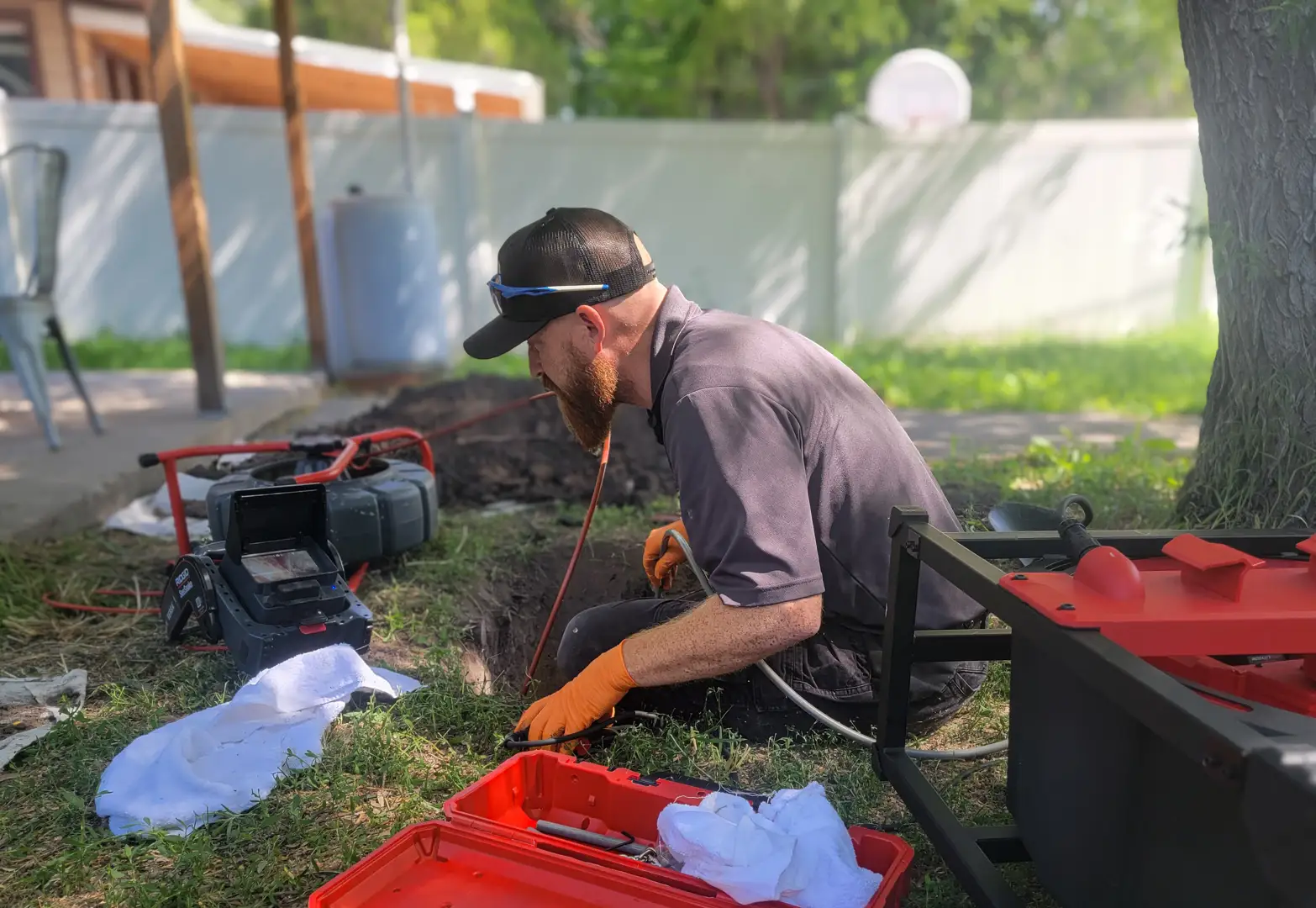
If a camera inspection reveals that your clay lateral has offset joints, severe cracks, or structural sagging, simply cleaning the line is no longer cost-effective. The roots will return, and the pipe will eventually collapse.
Fortunately, modern plumbing technology allows us to repair these lines without digging up your entire yard, preserving your beautiful historic trees and landscaping.
- Cured-in-Place Pipe (CIPP) Lining: Often referred to as epoxy lining or Perma-Liner, this process involves inserting a flexible, resin-saturated felt tube into your existing sewer line. Once positioned, the liner is inflated and cured, creating a brand-new, seamless, joint-free pipe inside your old clay or cast iron line. Because there are no joints, roots can never enter again.
- Pipe Bursting: For pipes that are too structurally compromised to line, pipe bursting uses a powerful pulling machine to draw a new HDPE (high-density polyethylene) pipe directly through the old, fractured clay pipe, breaking the old pipe outward while replacing it with a seamless, durable line.
To learn more about these modern, non-invasive repair strategies across our service areas, explore our comprehensive guides:
- Sewer Line Repair Salt Lake City Guide 2025
- Fix Sewer Line Murray UT Complete Guide
- Slugfix Sewer Line Salt Lake City Complete Guide
- Plumbing Pipe Repair Murray UT
Landscaping Best Practices to Prevent How Tree Roots Infiltrate Drain Lines in Older Salt Lake City and South Salt Lake Neighborhoods
If you are adding new landscaping to your property in Holladay, Millcreek, or South Salt Lake, a little planning can prevent decades of plumbing headaches:
- Know Your Local Utility Codes: Salt Lake City Public Utilities policy requires that new trees be planted at least 10 feet away from water and sewer lines.
- Install Physical Root Barriers: If you must plant a tree near a utility easement, install solid plastic root barriers (at least 24 inches deep) between the tree and the pipe path to redirect root growth downward and away from your lines.
- Choose Sewer-Safe Species: Opt for slow-growing, small ornamental trees with non-aggressive root systems, such as Japanese Maples, Amur Maples, or Eastern Redbuds, keeping them as far from your sewer lateral as possible.
Frequently Asked Questions about Sewer Root Intrusion
Does homeowners insurance cover tree root damage in sewer lines?
In almost all cases, standard homeowners insurance policies do not cover damage caused by tree root intrusion. Insurance companies view root growth and pipe wear-and-tear as routine maintenance issues rather than sudden, accidental events. Homeowners are fully responsible for maintaining their private sewer lateral from the home's foundation all the way to the city main connection in the street. Some insurers offer optional "Water Line and Sewer Line Service Layer" endorsements for an additional premium, which we highly recommend looking into.
How often should I get my sewer line inspected in Salt Lake City?
If you own a home built before 1990 in older neighborhoods like Sugar House, Yalecrest, or South Salt Lake, we recommend scheduling a professional sewer camera inspection every 12 to 18 months—especially if you have mature street trees nearby. Regular inspections allow us to catch fine feeder roots when they first enter the joints, allowing for simple, low-cost maintenance before a major, messy basement backup occurs.
Can a tree root break a solid PVC pipe?
Modern PVC (polyvinyl chloride) and ABS pipes are incredibly durable because their joints are chemically welded (glued) together, making them completely watertight. Because they do not leak moisture vapor, tree roots are rarely attracted to them. However, if a PVC pipe is cracked due to severe ground shifting, Wasatch Front soil movement, or poor installation, roots can still find their way inside.
Conclusion
Understanding how tree roots infiltrate drain lines in older Salt Lake City and South Salt Lake neighborhoods is the key to protecting your home's plumbing and preserving our beautiful urban canopy. While legacy clay and concrete pipes are highly vulnerable to thirsty, water-seeking roots, you don't have to choose between a healthy lawn and a clear sewer line.
At S.O.S. Heating & Cooling, we are proud to serve homeowners across the Salt Lake Valley, including Salt Lake City, South Salt Lake, Murray, Millcreek, Holladay, Sandy, and surrounding communities. Whether you need an emergency sewer clearing, a preventive camera inspection, or a permanent trenchless pipe repair, our expert plumbing team is here to help 24/7.
Don't wait for a slow drain to turn into a major basement emergency. Schedule professional drain cleaning with S.O.S. Heating & Cooling today and keep your home's plumbing flowing smoothly all year long!

Plumbing
Expert plumbing services offering reliable repairs, installations, maintenance, and emergency support.

Air Conditioning
Comprehensive air conditioning services include installation, repairs, maintenance, and energy-efficient solutions.
Heat Pumps
Enjoy year-round comfort with our energy-efficient and professional heat pump solutions.

Indoor Air Quality
Enhance your home’s air with our cutting-edge indoor air quality solutions you can trust.

Fireplaces
Transform your space into a warm and cozy atmosphere with our professional fireplace services.

Heating
Specialized heating services provide reliable installation, repair, system maintenance, and energy-optimization solutions.
Explore Our Latest Insights and Updates in Plumbing Services
The Definitive Guide to Trenchless Sewer Repair Lifespan
How to Extend Water Heater Life in Hard Water Areas