

Stop Wasting Watts with Variable Speed AC Technology


.avif)

Why Understanding How Variable Speed Technology Saves Energy Can Cut Your Utility Bills
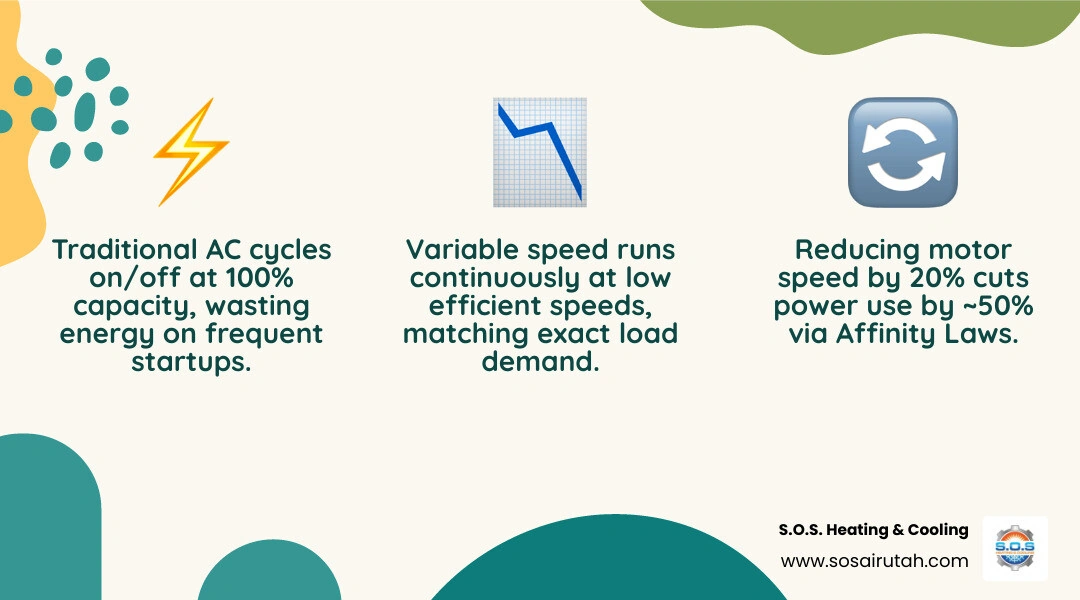
How variable speed technology saves energy comes down to one core principle: instead of blasting at full power and then shutting off completely, a variable speed system continuously adjusts its output to match exactly what your home needs at any given moment.
Here is a quick breakdown of how it works:
- Matches output to demand - The motor speeds up or slows down in real time rather than cycling on and off at 100% capacity
- Uses physics to your advantage - Reducing a motor's speed by just 20% cuts energy consumption by nearly 50%, thanks to the Affinity Laws of fluid dynamics
- Eliminates startup waste - Traditional systems draw a large surge of electricity every time they kick on; variable speed systems ramp up gradually, avoiding that energy spike
- Runs longer at lower speeds - Continuous low-speed operation is far more efficient than repeated short, high-power bursts
- Reduces total energy use by 30–85% - Depending on the application, real-world savings range from significant to dramatic
For Salt Lake City homeowners, this technology is especially relevant. Your system works hard across every season, and every watt of wasted energy shows up on your monthly bill. Understanding this technology puts you in control of those costs.
I'm Bryson Ninow, an HVAC professional with certifications in energy efficiency and a passion for helping homeowners navigate smarter equipment choices — including guiding families through exactly how variable speed technology saves energy in their specific homes. I've seen how the right system upgrade can transform both comfort and monthly operating costs, and I'm here to walk you through everything you need to know.
Understanding the Mechanics of Variable Speed Drives
To understand how variable speed technology saves energy, we first need to look under the hood. In a traditional HVAC system, the motor is like a light switch: it is either 100% on or 100% off. When your thermostat calls for cooling, the system roars to life at maximum capacity, stays there until the temperature drops, and then abruptly shuts down.
Variable speed technology replaces that "all-or-nothing" approach with a "dimmer switch" mentality. This is achieved through devices known as Variable Frequency Drives (VFDs) or Variable Speed Drives (VSDs). These components sit between the power supply and the motor, acting as a brain that translates your home’s needs into precise electrical signals.
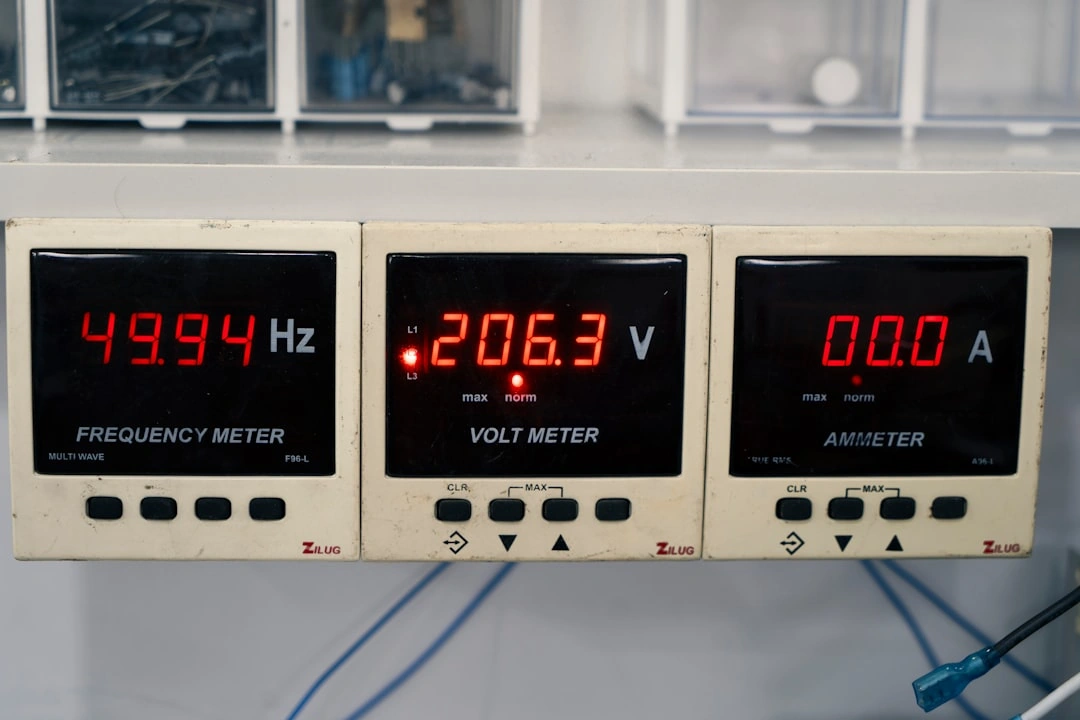
By modulating the frequency and voltage of the electricity sent to the motor, a VFD can control the motor’s RPM (revolutions per minute). If your home only needs a tiny bit of cooling to maintain a comfortable 72 degrees on a mild May afternoon in Sandy or Draper, the drive tells the motor to spin slowly. If a heatwave hits the Wasatch Front, the drive scales the speed up. This precision is a major factor in Investing in an Efficient AC System because it ensures you never pay for more cooling than you actually use.
The Difference Between VFDs and ECMs
While the terms are often used interchangeably in casual conversation, there are technical differences between the types of motors we use in your Salt Lake City home.
- Variable Frequency Drives (VFDs): These are typically used to control AC induction motors. They work by changing the frequency (Hertz) of the power. Historically, these were massive units used in industrial settings, but modern engineering has shrunk them down for residential air conditioners and heat pumps.
- Electronically Commutated Motors (ECMs): These are essentially DC motors that use built-in electronics to control speed and torque. They are incredibly efficient—often consuming 60% to 80% less electricity than the older Permanent Split Capacitor (PSC) motors found in legacy furnaces.
One of the coolest things about ECMs is their ability to maintain target airflow even if your filters are getting a bit dusty or if you have high static pressure in your ducts. They "sense" the resistance and adjust their torque to keep the air moving, which is a key part of how they maintain efficiency in real-world conditions.
The Science of Savings: How Variable Speed Technology Saves Energy
If you remember anything from high school physics, let it be the Affinity Laws. This is the secret sauce behind how variable speed technology saves energy.
For centrifugal loads like the fans and pumps in your AC unit, the relationship between speed and power is non-linear. Specifically, the power required to drive a fan is proportional to the cube of the speed. This sounds like a math headache, but the results are beautiful for your wallet:
- If we reduce the fan speed by just 10%, the power consumption drops by about 25%.
- If we reduce the fan speed by 20%, the power consumption drops by nearly 50%.
- If the motor runs at half speed, it uses only 12.5% to 25% of the power required at full speed.
In a traditional system, you can’t take advantage of this. It’s always at 100% speed, 100% of the time it's running. By allowing the system to drop down to 40% or 50% capacity during the majority of the day, variable speed technology exploits these laws of physics to slash your electricity usage.
| Feature | Fixed-Speed System | Variable-Speed System |
|---|---|---|
| Operation | 100% On or 0% Off | Modulates from 1% to 100% |
| Energy Waste | High (due to frequent cycling) | Low (matches demand) |
| Startup Draw | Massive Inrush Current | Soft-Start (Gradual) |
| Efficiency | Standard SEER2 | High SEER2 (up to 26+) |
| Humidity Control | Limited | Superior (longer run cycles) |
How Variable Speed Technology Saves Energy in HVAC Systems
In your home’s cooling system, variable speed technology is usually found in two places: the compressor (the heart of the outdoor unit) and the blower motor (the fan inside your furnace or air handler).
Inverter-driven compressors are the gold standard. Instead of the "clunk" and roar of a standard compressor, an inverter compressor ramps up quietly. It optimizes the refrigerant flow so that the heat exchange process is as efficient as possible. Because the refrigerant spends more time in the coils at a lower velocity, it can extract more heat from your indoor air for every watt of electricity spent.
This technology pairs perfectly with Benefits of Zone-Controlled Cooling Systems. In a zoned home, you might only be cooling the upstairs bedrooms at night. A fixed-speed unit would still blast enough cold air for the whole house, wasting energy and potentially freezing up the coils. A variable speed unit simply slows down to match the needs of that single zone.
Real-World Examples of How Variable Speed Technology Saves Energy
We don't just rely on theory; the data from 2026 shows incredible results. Across various applications, the energy reduction is measurable and significant:
- Residential AC: Variable speed compressors typically reduce energy use by 30–50% compared to fixed-speed systems.
- Industrial Upgrades: In larger applications, implementing VSDs across pumps and fans has been shown to drop total energy use by as much as 67%.
- Pumping Systems: A hotel case study recently showed a 53% reduction in energy used for hot water pumping after switching to variable speed drives.
- Public Utilities: Even the City of Columbus saw a 30% improvement in wastewater pumping efficiency just by adding VFDs to their motors.
For a homeowner in Herriman or Riverton, this translates to a system that pays for itself over time. When you look at an AC Installation Herriman UT Complete Guide, you’ll see that while the upfront cost is higher, the "total cost of ownership" is often much lower because you aren't sending extra money to the utility company every month.
Operational Benefits Beyond Electricity Reduction
While the headline is always about the "watts," the benefits of variable speed technology extend into the very feel of your home.
One of the biggest advantages is humidity control. In the humid parts of the country, this is a lifesaver, but even here in the Salt Lake Valley, managing moisture is key to comfort. Because a variable speed system runs for longer cycles at a lower speed, the air spends more time passing over the cold evaporator coil. This allows the system to pull more moisture out of the air. You might find that you feel perfectly comfortable at 74 degrees with low humidity, whereas you’d need the thermostat at 70 degrees with a traditional system to feel the same level of comfort.
Then there is the "Soft-Start" technology. Traditional motors experience a massive "inrush current"—a spike in electricity—every time they start. This creates mechanical stress on the belts, bearings, and the motor itself. Variable speed drives ramp the speed up gradually, which eliminates that stress. This is one of the best ways How to Extend the Life of Your AC Unit because it reduces the wear and tear that leads to mid-summer breakdowns.
Improved Indoor Air Quality and Comfort
Have you ever noticed that some rooms in your house are freezing while others are stuffy? That’s often because a fixed-speed system finishes its cycle too quickly. It blasts air into the rooms closest to the unit and shuts off before the air can reach the far corners of the house.
Variable speed systems solve this by providing consistent temperatures. Because the fan is almost always moving air (at a very low, efficient speed), the air in your home is constantly being filtered and mixed. This eliminates those annoying hot and cold spots.
Furthermore, these systems are whisper-quiet. Instead of the "loud bang" of a unit kicking on, you get a gentle ramp-up. At low speeds, you might not even realize the AC is running. This decibel reduction makes your backyard and your living room much more peaceful environments.
Maximizing Efficiency and Regulatory Compliance
As of May 2026, the regulatory landscape has shifted heavily toward efficiency. The Department of Energy (DOE) now enforces SEER2 and HSPF2 standards, which are more rigorous than the old ratings. Variable speed technology is the primary pathway manufacturers use to meet these new requirements.
To get the most out of this technology, proper installation is non-negotiable. At S.O.S. Heating & Cooling, we emphasize the importance of a Manual J load calculation. If a variable speed system is oversized, it won't be able to modulate down effectively, defeating the purpose of the technology. We also ensure AHRI matching, meaning the outdoor unit and indoor coil are designed to work together to hit those high efficiency ratings. Regular maintenance, like a professional AC Tune-Up, ensures the sensors and inverter boards are communicating correctly to keep those savings coming.
Overcoming Implementation Challenges
While we love this technology, we believe in being transparent about the challenges.
- Harmonics: VFDs can sometimes cause electrical "noise" or harmonics in your home’s wiring. In rare cases, this requires power quality protection to prevent interference with other electronics.
- Upfront Investment: There is no sugar-coating it—variable speed systems cost more initially. However, with utility rebates (like those from Rocky Mountain Power) and federal tax credits from the Inflation Reduction Act, that gap is narrowing.
- Complexity: These systems use advanced computer boards. They require specialized diagnostic tools and technicians who stay up-to-date with the latest training. This isn't a DIY project; it requires professional commissioning to ensure the refrigerant charge and airflow are perfect.
Frequently Asked Questions about Variable Speed Technology
Does variable speed technology work in cold climates?
Absolutely! In fact, variable speed technology is what makes modern heat pumps so effective in Salt Lake City winters. Older heat pumps struggled when the temperature dropped, but variable speed (inverter) compressors can maintain high heating capacities even in sub-freezing weather. This is a core component of a Hybrid Heat Pump System, which switches between electricity and gas to keep you warm as efficiently as possible.
How much can I expect to save on my monthly utility bill?
While every home is different, motor energy use can be reduced by 25% to 85%. For a typical 30-hp industrial motor, that’s thousands of dollars a year. For a residential home, you are likely looking at a 30% to 50% reduction in the cooling portion of your power bill. Your specific savings will depend on your local climate in places like Layton or Kaysville, how well your home is insulated, and your personal thermostat habits.
Is variable speed technology louder than traditional systems?
Actually, it’s much quieter! Because the system spends most of its time running at lower speeds, the fan noise and compressor hum are significantly reduced. Many variable speed outdoor units include sound blankets and vibration-dampening mounts, making them "whisper-quiet" compared to the "roar" of a 10-year-old fixed-speed unit.
Conclusion
At S.O.S. Heating & Cooling, we’ve spent years serving our neighbors from Bountiful to South Jordan. We’ve seen the HVAC industry evolve, and nothing has been as for homeowner comfort and cost-savings as variable speed technology.
By matching your home’s cooling needs with surgical precision, these systems stop the cycle of "wasted watts" and start a new era of sustainable, affordable comfort. Whether you are in Millcreek, Holladay, or right in the heart of Salt Lake City, investing in this technology is a move toward a more efficient future.
If you’re ready to see how variable speed technology saves energy in your own home, or if your current system is struggling to keep up with the Utah heat, we’re here to help. From expert installations to 24/7 emergency repairs, our team is dedicated to keeping your home perfectly tempered.
Ready to upgrade your comfort? Explore our Air Conditioning Services today and let’s find the perfect high-efficiency solution for your family.
Explore Our Latest Insights and Updates in Plumbing Services
Upgrade Your Comfort with the Science of Advanced Air Conditioning
The Cold Hard Truth About Your Next AC Purchase and New Refrigerants
Will Your AC Survive Another Wasatch Front Summer?