

Why Your House and Lungs Hate Extreme Humidity


.avif)

Understanding How Humidity Affects Your Health and Your Home
How humidity affects your health and your home is something most people don't think about until something goes wrong — a musty smell, a bloody nose in January, or a heat wave that feels suffocating indoors. Here's a quick summary of what you need to know:
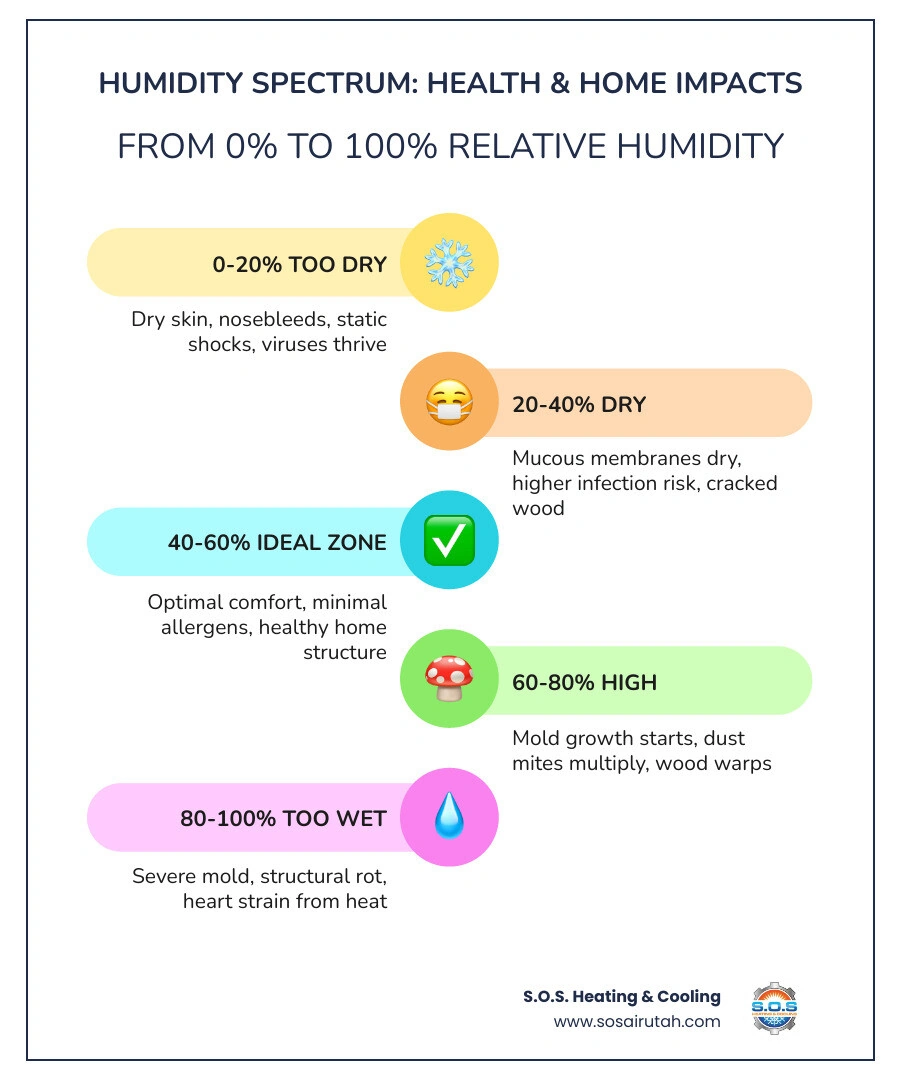
- Too high (above 60%): Mold grows, dust mites thrive, wood warps, and your heart works harder to cool your body
- Too low (below 30%): Viruses survive longer, mucous membranes dry out, skin cracks, and respiratory infections spread more easily
- The sweet spot (40-60%): Most health risks are minimized, allergens are suppressed, and your home stays structurally sound
- How to fix it: Use a hygrometer to measure levels, then add a humidifier or dehumidifier as needed — or have your HVAC system do the heavy lifting year-round
There's an old saying: "It's not the heat, it's the humidity." It turns out that phrase applies just as much to the air inside your home as it does to a sweltering summer afternoon. Whether your indoor air is too wet or too dry, your body and your house are both paying a price — often in ways you can't see until real damage is done.
I'm Bryson Ninow, an HVAC professional with certifications in indoor air quality and energy efficiency, and I've seen in homes across the Salt Lake City area how humidity affects your health and your home in ways most homeowners never connect back to moisture levels. In the sections ahead, we'll walk through exactly what's happening — and what you can do about it.
Before we dive into the "why," we need to understand the "what." Humidity is simply a measure of water vapor in the air. However, there are a few different ways we talk about it in the HVAC world, and knowing the difference can help you improve your home’s indoor air quality.

- Relative Humidity (RH): This is the most common measurement. It’s a percentage that tells us how much water vapor is in the air compared to the maximum amount the air could hold at that specific temperature. Warm air can hold significantly more water than cold air. This is why 50% humidity on a 90°F day feels like a swamp, while 50% humidity on a 30°F day feels quite dry.
- Absolute Humidity: This is the actual weight of water vapor in a specific volume of air, regardless of temperature.
- Dew Point: This is often the most accurate measure of physical comfort. It is the temperature at which the air becomes 100% saturated and water begins to condense (forming dew). The National Weather Service generally considers a dew point of 55°F or lower to be comfortable. Once it hits 65°F, things start feeling "muggy," and above 75°F, it’s officially "oppressive."
| Dew Point (°F) | Comfort Level | Physical Sensation |
|---|---|---|
| Under 55 | Comfortable | Dry and pleasant |
| 55 to 65 | Sticky | Noticeable moisture; "muggy" |
| 65 to 75 | Oppressive | Very uncomfortable; heavy air |
| Over 75 | Miserable | Extremely high moisture; dangerous for some |
The Dangers of High Humidity: Mold, Mites, and Heart Strain
In May 2026, as we transition into the warmer months in Utah, high humidity becomes a major player in home comfort. When indoor moisture levels climb above 60%, your home becomes a breeding ground for biological "uninvited guests."
Fungal Growth and Dust Mites
Most species of fungi and mold cannot grow if the relative humidity stays below 60%. However, once you cross that threshold, mold spores find the perfect environment to colonize your walls, carpets, and air ducts. This creates a direct link between indoor air quality and mold, which can trigger chronic respiratory issues.
Dust mites are another concern. These microscopic critters don't drink water; they absorb it from the air. Their populations are minimized when humidity is below 50%, but they thrive and reach peak numbers at 80% humidity. For those with asthma, dust mite waste (which becomes airborne) is a primary trigger for attacks.
Cardiovascular and Respiratory Stress
High humidity doesn't just make you "feel" hot; it physically changes how your body functions. Your primary cooling mechanism is the evaporation of sweat. In high humidity, the air is already saturated, so sweat stays on your skin.
To compensate, your brain sends more blood to the surface of your skin to try and shed heat. This forces your heart to pump faster and stronger. In extreme cases, your heart may work two to four times harder than it does on a dry day. This is why high humidity is particularly dangerous for those with heart disease or hypertension. Furthermore, humid air is denser, containing more nitrogen and hydrogen, which can make it feel "thick" and harder to breathe, leading to bronchial constriction in sensitive individuals. To combat this, many homeowners in areas like Salt Lake City invest in whole home dehumidification.
How high humidity affects your health and your home's structure
While your lungs are struggling, your house is taking a beating, too. Excess moisture is the enemy of structural integrity. You might notice:
- Wood Warping: Hardwood floors can "cup" or "crown," and wooden doors may swell until they no longer fit in their frames.
- Paint and Wallpaper Failure: High humidity causes paint to blister and wallpaper glue to fail, leading to peeling.
- Structural Rot: Over time, sustained high moisture can lead to wood rot in the framing of your home.
- Musty Odors: That classic "old basement" smell is actually the scent of mold and bacteria off-gassing.
- Pest Attraction: Termites and cockroaches are naturally drawn to damp wood and high-moisture environments.
If you are noticing these signs, check out our Indoor Air Quality FAQs for more troubleshooting tips.
The Hidden Risks of Low Humidity in the High Desert
While many parts of the country struggle with "too wet," here in Utah, we often deal with the opposite. During our winters, the cold outdoor air holds very little moisture. When we bring that air inside and heat it up, the relative humidity can plummet to 10-20%—which is actually drier than parts of the Sahara Desert.
Virus Survival and Transmission
Low humidity is a friend to the flu. Scientific research shows that the influenza virus survives longer and spreads more efficiently in dry air. Furthermore, dry air dehydrates your mucous membranes—the "sticky" lining in your nose and throat that traps pathogens. When these membranes dry out and crack, they lose their ability to protect you, making you far more susceptible to respiratory infections.
Managing how humidity affects your health and your home during Utah winters
Living in a "dry" home isn't just uncomfortable; it can lead to several health and maintenance issues:
- Sinus and Throat Irritation: Waking up with a "scratchy" throat or a bloody nose is a classic sign of low humidity.
- Snoring: Dehydrated throat tissues are more likely to vibrate, which can worsen snoring and decrease sleep quality.
- Skin Conditions: Eczema and psoriasis flare-ups are common in winter because the dry air leaches moisture directly from your skin.
- Furniture Damage: Just as wood swells in high humidity, it shrinks in low humidity. This can lead to permanent cracks in wooden furniture, musical instruments (like pianos), and crown molding.
To protect your family and your investments, we often recommend whole home humidifiers in Salt Lake City or South Jordan. These systems integrate with your HVAC to ensure you aren't living in a desert all winter. Residents in Sandy often find that adding moisture to the air also makes the home feel warmer, allowing them to turn the thermostat down a few degrees.
Practical Solutions for Maintaining the 40-60% "Healthy Zone"
The consensus among health experts and HVAC professionals is that the "Healthy Zone" for indoor air is between 40% and 60% relative humidity. This range minimizes the survival of viruses, prevents mold growth, and keeps your home's wood components stable.
Step 1: Measure and Monitor
You can't manage what you don't measure. We recommend every homeowner keep a digital hygrometer in their main living area. These are inexpensive tools that give you a real-time readout of your RH levels. Modern smart thermostats can also monitor this and even control your HVAC equipment to adjust levels automatically.
Step 2: Control the Source
Maintaining optimal indoor air quality involves both adding and removing moisture:
- In the Summer: Your air conditioner is actually a giant dehumidifier. However, if your AC is oversized, it might "short cycle" (turn on and off too quickly), cooling the air but leaving the moisture behind. If your home feels cool but "clammy," your system might need a professional inspection.
- In the Winter: A whole-home humidifier is the most effective solution. We prefer evaporative or steam humidifiers over portable "cool mist" units. Portable units can sometimes disperse minerals (white dust) or bacteria if they aren't cleaned every three days. Whole-home systems are plumbed in and much easier to maintain.
- Ventilation: Use exhaust fans in bathrooms and kitchens to remove moisture at the source. This prevents the "steam room" effect from lingering and soaking into your drywall.
Step 3: Air Filtration
Humidity and air particles go hand-in-hand. High humidity keeps allergens like mold spores and dust mites active, while low humidity allows dust to stay airborne longer. Utilizing whole home air filtration in Salt Lake City ensures that whatever is in your air—be it moisture-loving spores or dry-air dust—is filtered out before you breathe it in. This is a key way to enhance sleep quality with better indoor air.
Optimizing how humidity affects your health and your home year-round
To keep your home in the sweet spot, follow these best practices:
- Seasonal Adjustments: Set your humidistat lower in the winter (around 30-35%) to prevent window condensation, and aim for 45-50% in the summer.
- Filter Replacements: Clogged filters restrict airflow, making it harder for your system to regulate moisture.
- Professional Inspections: Have us perform a seasonal tune-up. We check for refrigerant leaks (which kill dehumidification) and ensure your humidifier is clean and functional. Enhancing your home’s comfort is our top priority.
Frequently Asked Questions about Indoor Humidity
What is the ideal indoor humidity range for health?
While "comfort" varies, the ideal range for health is 30% to 50%, with the 40-60% range being the gold standard for minimizing the survival of airborne pathogens like viruses and bacteria. Staying within this zone prevents your mucous membranes from drying out while also stopping mold and dust mites from taking over.
Can high humidity cause heart problems?
High humidity doesn't "cause" heart disease, but it places significant cardiovascular strain on the body. Because your heart has to pump much harder to help you cool down when sweat won't evaporate, it can lead to heat exhaustion or even heat stroke. For those with pre-existing heart conditions, this extra workload (sometimes 2-4x normal) can be dangerous.
How do I measure the humidity in my house?
The most accurate way is with a hygrometer. You can also look for physical signs:
- Too High: Condensation on windows, musty smells, or feeling "clammy" at normal temperatures.
- Too Low: Frequent static shocks, itchy skin, or seeing gaps in your hardwood flooring.
Conclusion
Understanding how humidity affects your health and your home is a vital part of being a homeowner, especially in our unique Utah climate. From the bone-dry winters in Layton and Bountiful to the occasional humid summer stretches in Salt Lake City and Draper, your indoor environment is constantly shifting.
At S.O.S. Heating & Cooling, we believe that your home should be a sanctuary, not a source of respiratory stress or structural worry. Whether you need a whole-home humidifier to save your skin and furniture this winter, or a dehumidification solution to stop mold in its tracks, we are here to help. We serve the entire Wasatch Front, from Kaysville down to Riverton, providing the expertise needed to keep your air quality at its peak.
Don't let invisible moisture (or the lack of it) dictate your health. Keep your "Healthy Zone" in check, and your lungs—and your house—will thank you.
Ready to balance your home's air? Contact S.O.S. Heating & Cooling today for an indoor air quality evaluation. We’re here 24/7 to ensure your family breathes easy in every season.
Explore Our Latest Insights and Updates in Plumbing Services
Don't Sweat the Bill: Easy Hacks to Keep Your Home Chilled

The Magic of Cold Air and How Your AC Makes It
How Your AC Moves Heat from Inside to Out