
The Hybrid Heat Pump System Explained: Your Home's Smartest HVAC Choice


.avif)

Why Homeowners Are Switching to Smarter Heating and Cooling
A Hybrid heat pump system is a smart HVAC solution that combines an electric heat pump with a gas furnace. It automatically switches between them based on outdoor temperature to provide the most efficient heating and cooling year-round. This dual-fuel approach delivers the efficiency of a heat pump in mild weather and the power of a furnace when it's cold, resulting in lower utility bills, reduced emissions, and consistent comfort.
Quick Answer: What You Need to Know
- What it is: An electric heat pump paired with a gas furnace that work together
- How it works: Automatically switches between heat pump and furnace based on outdoor temperature
- Key benefit: Uses the most efficient heat source for current conditions
- Best for: Homes in climates with hot summers and cold winters (like Salt Lake City)
- Typical savings: Up to 30-50% on heating costs compared to furnace-only systems
- Lifespan: 20-25 years with proper maintenance
If you're dealing with high heating bills during Salt Lake City's winters or an unreliable furnace, a hybrid system could be the answer. These systems are designed for the temperature swings we experience in Utah, providing powerful air conditioning in July and reliable heat in January.
For more information on heat pump technology, check out our guide on Understanding Heat Pump Systems, or visit our Heat Pump Systems page to learn how S.O.S. Heating & Cooling can help.
I'm Bryson Ninow, and I've helped many Salt Lake City families transition to efficient hybrid heat pump systems. My passion is helping homeowners understand these systems and find the right solution for their needs and budget, reducing energy bills while improving comfort.
What is a Hybrid Heat Pump System and How Does It Work?
A hybrid heat pump system pairs an electric air-source heat pump with a gas or propane furnace. The system automatically chooses the most efficient and cost-effective heating source based on the outdoor temperature. This flexibility is a game-changer for Salt Lake City's climate, which ranges from hot summers to cold winters.
The Main Components
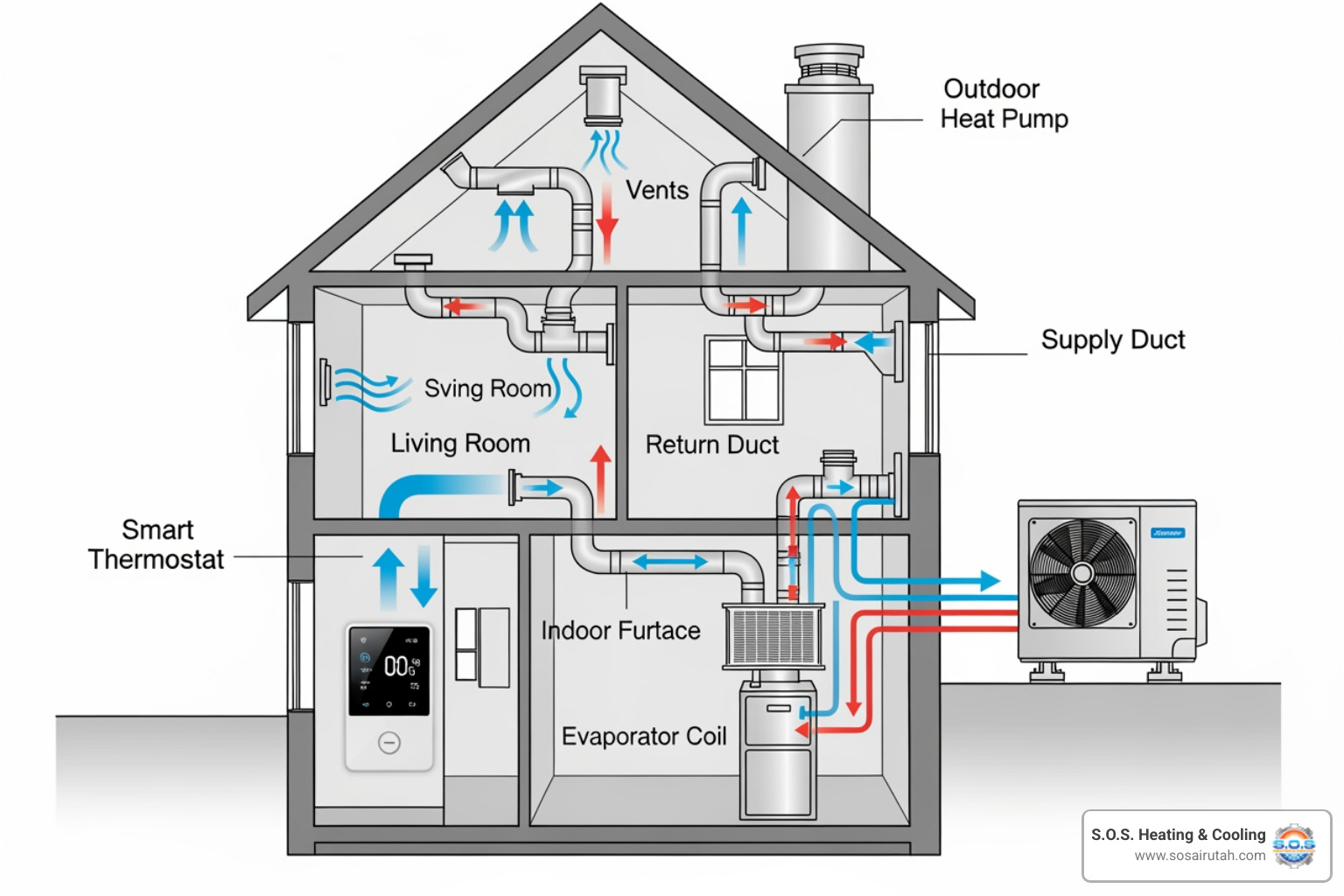
Understanding a hybrid heat pump system starts with its main components. Your heat pump sits outside and looks like an AC unit. In summer, it cools your home by moving heat out. In winter, it reverses to pull heat from the outdoor air to warm your home. Inside, your furnace is the gas or propane unit that provides powerful heat by burning fuel. The evaporator coil works with the heat pump to transfer heat, and refrigerant lines connect the indoor and outdoor units.
The smart thermostat is the brains of the operation. It monitors outdoor temperatures and decides which heating source to use for maximum efficiency and comfort. If you want to dive deeper into how these systems function, our guide on Understanding Heat Pump Systems covers the technical details.
The Switching Process: Best of Both Worlds
In cooling mode during hot Utah summers, the heat pump acts as a highly efficient air conditioner, moving heat outdoors.
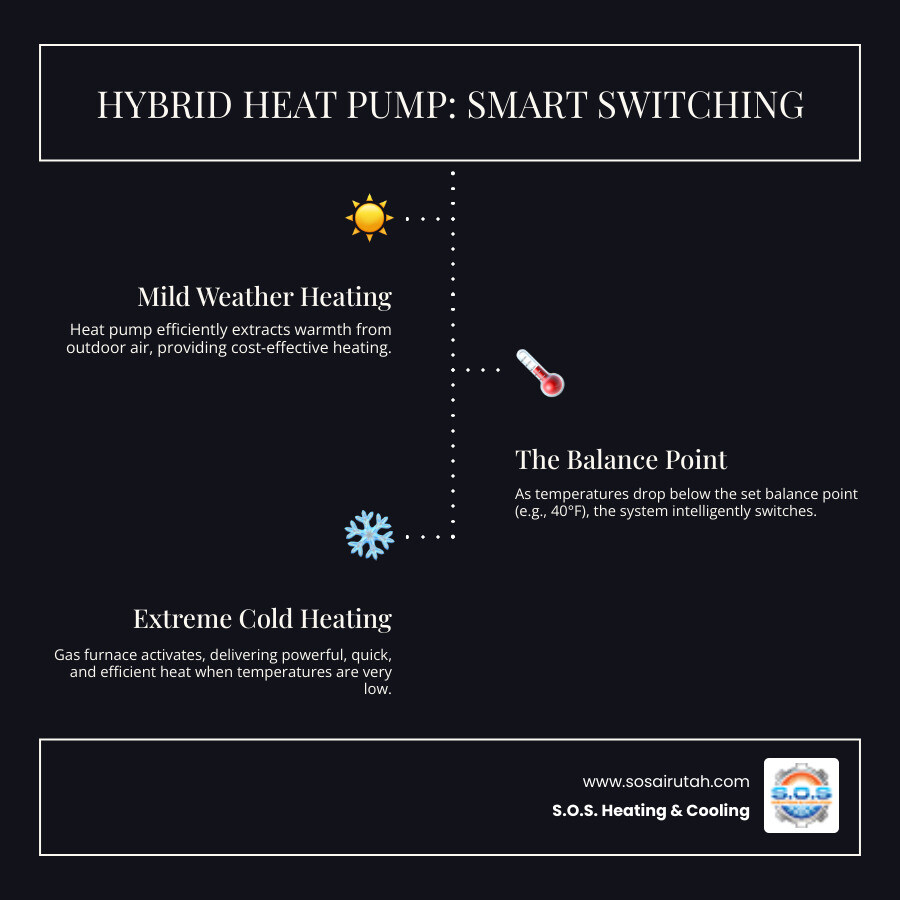
For heating in milder weather—typically above 32-40°F—the heat pump takes the lead. It moves heat from the outdoor air inside, which is incredibly efficient because it isn't burning fuel. According to the Department of Energy, heat pumps can reduce your electricity use for heating by about 50% compared to traditional furnaces. This makes a significant difference on utility bills.
When extreme cold hits Salt Lake City, the heat pump becomes less efficient. Your smart thermostat automatically switches to the furnace, which provides powerful, reliable heat. The transition is seamless, ensuring your home stays warm.
This switch happens at the balance point, usually between 25-40°F. An HVAC professional can adjust this during installation to optimize efficiency for your home. The automatic adjustment ensures you're always using the most cost-effective heating source. This dual approach lets each component work in its sweet spot: the heat pump for most of the season, and the furnace for the coldest days. If you're curious about cold weather challenges, check out our article on Diagnosing Heat Pump Defrost Cycle Problems to understand another aspect of cold-weather operation.
The Best Advantages of a Hybrid System
When you invest in a hybrid heat pump system for your Salt Lake City home, you're making a decision that pays dividends in energy savings, environmental responsibility, and year-round comfort.
Superior Energy Efficiency
A hybrid heat pump system cuts energy bills without sacrificing comfort. During milder weather, it efficiently moves heat from outside to inside instead of burning fuel to create it. Modern hybrid systems boast impressive high SEER ratings (up to 25) and high HSPF ratings (up to 12.5), which measure cooling and heating efficiency. The higher these numbers, the less energy you use. According to the Department of Energy, heat pumps can reduce your electricity use for heating by about 50% compared to traditional furnaces.
The intelligent switching constantly evaluates conditions to select the most cost-effective heating method. During mild Utah fall days, your heat pump runs efficiently on electricity. When we hit brutal January nights, your furnace kicks in to provide powerful, reliable heat.
Here's how the numbers stack up:
| Feature | Traditional Furnace & AC | Hybrid Heat Pump System |
|---|---|---|
| Energy Use | Moderate to high (constant fuel burning) | Optimized (switches to most efficient source) |
| Fuel Source | Natural gas/propane + electricity | Primarily electricity, gas backup when needed |
| Seasonal Performance | Consistent but inefficient in mild weather | Maximized efficiency across all temperature ranges |
For Salt Lake City homeowners exploring their options, our Heat Pumps Salt Lake City page offers detailed information about available systems.
Environmental and Comfort Benefits
Beyond cost savings, a hybrid heat pump system improves your home's comfort and is better for the environment. These systems produce reduced GHG emissions—about 30% less than a natural gas furnace alone. By relying on electricity for most of your heating and cooling, you're reducing fossil fuel consumption.
You'll notice the comfort daily. Modern heat pumps offer quieter operation and provide consistent temperature control, eliminating the hot and cold spots common with traditional furnaces.
Hybrid systems also offer better humidity control. In summer, they remove excess moisture, preventing a sticky feeling. In winter, they avoid the overly dry air produced by furnaces, which means less dry skin and static shock.
If you're in Holladay and want to learn more about how these systems perform in our local climate, check out our Heat Pumps Holladay UT page for area-specific information.
Is a Hybrid System Right for Your Home?
Deciding if a hybrid heat pump system is the right fit isn't a one-size-fits-all answer, but if you're in the Salt Lake Valley, you're in an ideal location. The real question is whether your home's setup and your goals align with what these systems offer.

Ideal Climate Conditions
Hybrid heat pump systems excel in climates with distinct seasons. If you experience both hot summers and cold winters, you're a perfect candidate for hybrid technology.
Salt Lake City and the surrounding areas check every box. Our summers demand serious cooling, while our winters bring freezing temperatures. This variable climate is where a hybrid heat pump system proves its worth. The heat pump operates at peak efficiency on mild days, becomes your air conditioner in summer, and lets the furnace take over in a deep freeze. The system handles it all automatically, giving you efficiency when conditions are right and robust heating when temperatures drop. For homeowners in areas like Bountiful facing similar weather, our Heat Pumps Bountiful UT page offers more information.
Integrating with Your Existing HVAC
One common concern is whether you need to replace your entire system. Usually, the answer is no. If you have a gas or propane furnace with central ductwork, you're already halfway there. A typical retrofit involves adding an outdoor heat pump unit to work alongside your existing furnace, using your current ductwork.
Even an aging furnace can serve as the backup heating source, as the heat pump will handle most of the work, reducing wear and tear. If you're replacing an old air conditioner, upgrading to a heat pump instead makes tremendous sense. You get more efficient cooling plus heating capability for much of the year. Pair it with your furnace, and you've created a hybrid system.
We can evaluate your current setup and walk you through the options. For information about new installations, check our Heat Pump Installation Salt Lake City UT page. If you're considering a replacement, our Heat Pump Replacement Salt Lake City UT services can help.
Optimizing and Maintaining Your Hybrid System
To truly reap the long-term benefits of your hybrid heat pump system, proper optimization and regular maintenance are crucial. Think of it like taking care of a hybrid car – you need to ensure both engines are running smoothly and the smart technology is making the best decisions.

The Role of Smart Thermostats
Your smart thermostat is honestly the unsung hero of your hybrid heat pump system. It's doing so much more behind the scenes than just letting you set a temperature from your phone – though that's pretty convenient, too!
The real magic happens with automatic optimization. These smart devices constantly monitor outdoor temperatures and seamlessly decide whether your heat pump or furnace should be doing the heavy lifting. The best part? Some advanced models even look at current electricity and natural gas prices to choose the most cost-effective heating source. It's like having a tiny energy accountant working 24/7 in your home.
That decision point – when the system switches from heat pump to furnace – is called the balance point, and it's usually set somewhere around 32-40°F. While the default setting works well for most homes, a qualified technician can fine-tune this sweet spot based on your home's insulation, your personal comfort preferences, and local energy costs. Getting this right can make a noticeable difference in your monthly bills.
The Wi-Fi connectivity feature means you can check in on your system from anywhere – whether you're at work, on vacation, or just lounging on the couch. You can adjust temperatures, review energy usage reports, and make sure everything's running efficiently without getting up. Many homeowners love seeing those energy reports, too. They provide real insights into how your system is performing and can help you spot opportunities to save even more.
If your system ever displays error codes or unusual behavior, don't panic. Our guide on Heat Pump Error Code Solutions in Millcreek can help you understand what your heat pump is trying to tell you.
Lifespan and Maintenance Requirements
Here's some great news: a well-maintained hybrid heat pump system is built to last. With proper care, you can expect your system to provide reliable comfort for 20 to 25 years. That's longer than many standalone heat pumps, which typically last around 15 years because they're working year-round for both heating and cooling. The beauty of a hybrid system is that neither component is constantly overworked – they share the load, which extends the life of both.
Annual tune-ups are the single best thing you can do to protect your investment. We recommend scheduling a professional maintenance visit in the fall, right before the cold weather arrives. During this visit, our technicians will inspect both the heat pump and furnace components, check refrigerant levels, test electrical connections, clean coils, and ensure your smart thermostat is communicating correctly with both systems. This proactive approach catches small issues before they become expensive headaches.
Between professional visits, there's one simple task that makes a huge difference: changing your air filters every 1-3 months, depending on how much you use your system and what's happening in your home. If you have pets, kids tracking in dirt, or you're doing renovation work, you'll want to check filters more often. Clean filters ensure good airflow and protect all those internal components from dust and debris.
Coil cleaning is another important maintenance task. That outdoor heat pump unit sits outside through all of Utah's weather – dust storms, cottonwood season, winter snow, and everything in between. Over time, the coil can get dirty, which reduces efficiency. Professional cleaning as part of your annual tune-up helps restore peak performance and keeps your energy bills in check.
Regular maintenance truly is the key to extending your system's life and ensuring it runs efficiently year after year. If you're due for a check-up, our Heat Pump Maintenance Salt Lake City UT services are here to help. And should you ever need a repair, our team is ready with Heat Pump Repair Salt Lake City UT services to get you back to comfort quickly.
Frequently Asked Questions about Hybrid Heat Pumps
We get a lot of great questions about hybrid heat pump systems from homeowners throughout the Salt Lake City area. It's natural to want to understand exactly what you're investing in, especially when it comes to something as important as your home's comfort. Let me clear up some of the most common points of confusion.
What's the difference between a hybrid heat pump system and a dual-fuel system?
Here's the short answer: there isn't one! These two terms are completely interchangeable and describe exactly the same thing. Whether someone calls it a hybrid heat pump system or a dual-fuel system, they're talking about the same core concept: an electric heat pump working together with a fossil fuel furnace (typically natural gas or propane).
Both terms describe a system where these two heating sources automatically switch back and forth to give you the most efficient heating for current conditions. So if you hear your neighbor talking about their "dual-fuel system" and you're considering a "hybrid heat pump," you're both looking at the same smart heating and cooling solution. Don't let the terminology confuse you – it's all about combining electric heat pump efficiency with fossil fuel furnace power.
Are there government incentives for installing a hybrid heat pump system?
Yes, and this is one of the best parts about making the switch! Governments at federal, state, and local levels are increasingly offering financial incentives to homeowners who choose energy-efficient HVAC systems like hybrid heat pump systems. These programs exist because heat pumps significantly reduce energy consumption and greenhouse gas emissions, which aligns with broader environmental goals.
Federal tax credits are often available for installing high-efficiency heat pump equipment, which can help offset your initial investment. These programs change periodically, so it's worth checking current offerings when you're ready to install.
At the state and local level, Utah has various energy efficiency programs that may provide rebates or other financial incentives. States are beginning to pass new laws that encourage and reward energy efficiency in HVAC, recognizing that heat pumps play a crucial role in reducing overall energy demand. You can find information through state energy offices and organizations.
Utility company programs are another great source of potential savings. Many local utility providers in the Salt Lake City area offer rebates to customers who upgrade to more efficient systems, since this helps reduce strain on the electrical grid and overall energy consumption.
The incentive landscape does change, so we always recommend checking what's currently available when you're planning your installation. These programs are designed to make it easier and more affordable for homeowners to choose energy-efficient solutions, and they can make a real difference in your overall investment.
What are the different types of hybrid systems?
While all hybrid heat pump systems work on the same basic principle – a heat pump paired with a backup heating source – there are a few variations depending on your home's existing infrastructure and fuel availability.
The air-source heat pump with gas furnace is by far the most common residential setup, especially here in Utah. This system uses an electric air-source heat pump that extracts heat from the outdoor air for heating (and releases heat outdoors for cooling), paired with a natural gas furnace that provides backup heating during extreme cold. This is what most homeowners in Salt Lake City, Sandy, and surrounding areas have installed.
An air-source heat pump with propane furnace works exactly the same way, but uses propane instead of natural gas for the backup heating. This setup is particularly common in more rural areas around Utah where natural gas lines aren't readily available, but propane delivery is accessible.
Less common for typical forced-air systems, but worth mentioning, is integration with boilers. Some homes with hydronic heating (hot water radiators or in-floor radiant heat) can integrate a heat pump with their existing gas or oil boiler. These systems are more specialized but can still deliver the efficiency benefits of dual-fuel technology.
For most homeowners in our service area, the air-source heat pump combined with either a natural gas or propane furnace is the most practical and widely available option. It's the setup we install most frequently, and it's proven to work exceptionally well in Utah's four-season climate.
Your Partner for Year-Round Comfort
If you've made it this far, you now know that a hybrid heat pump system isn't just another HVAC upgrade—it's a genuinely smart investment in your home's future. You're looking at lower utility bills, a smaller carbon footprint, increased property value, and the kind of consistent comfort that makes your house feel like the sanctuary it should be, whether it's July or January here in Salt Lake City.
The beauty of these systems is that they're designed for exactly the kind of weather rollercoaster we experience in Utah. They give you energy independence by reducing your reliance on any single fuel source, and they do it automatically, without you having to think about it. That's the kind of technology that just makes sense for modern homeowners who want both comfort and efficiency.
At S.O.S. Heating & Cooling, we've helped countless families throughout Salt Lake City, Bountiful, Draper, Sandy, and the surrounding communities make the switch to hybrid heat pump systems. Our team doesn't just install equipment—we take the time to understand your home's unique needs, your comfort preferences, and your budget. We're committed to finding the solution that works best for you, not just what's easiest for us.
What sets us apart is our dedication to being there when you need us most. We offer 24/7 emergency repairs because we know that HVAC problems don't wait for business hours. Our priority service for partners means you'll never be left waiting in the cold (or the heat). We don't charge evaluation fees during business hours, and we offer flexible financing options to make these smart upgrades accessible to more homeowners.
Whether you're dealing with an aging furnace that's costing you a fortune, an AC unit that can't keep up with our summers, or you're simply ready to take control of your energy bills, we're here to help. For expert advice and professional installation of a hybrid heat pump system, explore our Heat Pump Systems and services. Let's work together to create the comfortable, efficient home you deserve.

Plumbing
Expert plumbing services offering reliable repairs, installations, maintenance, and emergency support.

Air Conditioning
Comprehensive air conditioning services include installation, repairs, maintenance, and energy-efficient solutions.
Heat Pumps
Enjoy year-round comfort with our energy-efficient and professional heat pump solutions.

Indoor Air Quality
Enhance your home’s air with our cutting-edge indoor air quality solutions you can trust.

Fireplaces
Transform your space into a warm and cozy atmosphere with our professional fireplace services.

Heating
Specialized heating services provide reliable installation, repair, system maintenance, and energy-optimization solutions.
Explore Our Latest Insights and Updates in Plumbing Services

How to Prevent Drain Backups Year Round

How Often to Change Air Filters in Dry Dusty Utah Home