
Federal Tax Credits: Maximizing the Inflation Reduction Act for Utah Homes


.avif)

What Are the Inflation Reduction Act Benefits for Utah Homeowners?
Inflation reduction act benefits for utah homeowners include a powerful set of federal tax credits and rebates that can significantly reduce the cost of upgrading your home's heating, cooling, insulation, and renewable energy systems. Here is a quick breakdown of what is available:
Key IRA Benefits for Utah Homeowners
| Benefit | Maximum Amount | Income Limit |
|---|---|---|
| Energy Efficient Home Improvement Credit (25C) | $3,200/year | None |
| Heat pump tax credit | $2,000/year | None |
| Residential Clean Energy Credit (25D) for solar/battery | 30% uncapped | None |
| HOMES Rebate (whole-home efficiency) | $8,000 ($16,000 low-income) | 150% AMI |
| HEEHRA electrification rebates | Up to $14,000 | 150% AMI |
| EV tax credit (new) | Up to $7,500 | Income limits apply |
| EV tax credit (used) | Up to $4,000 | Income limits apply |
Utah has been approved for $101 million in federal Home Energy Rebate funding, and the state's clean energy job market is growing fast — with over 43,000 workers already employed in the sector. Whether you are replacing an aging furnace, adding solar panels, or installing a heat pump, these incentives are designed to make the transition affordable for nearly every household.
But here is the honest reality: the landscape of these programs is complex, and some rebate programs in Utah have faced funding delays. Knowing exactly which credits apply to your situation — and how to claim them correctly — makes a real difference in how much you save.
My name is Bryson Ninow, and as an NATE-certified HVAC professional with years of hands-on experience helping Utah homeowners navigate inflation reduction act benefits for utah homeowners, I have guided families through equipment upgrades that cut their energy costs without unnecessary financial stress. In this guide, I will walk you through everything you need to know to maximize every dollar available to you.
Understanding Inflation Reduction Act Benefits for Utah Homeowners
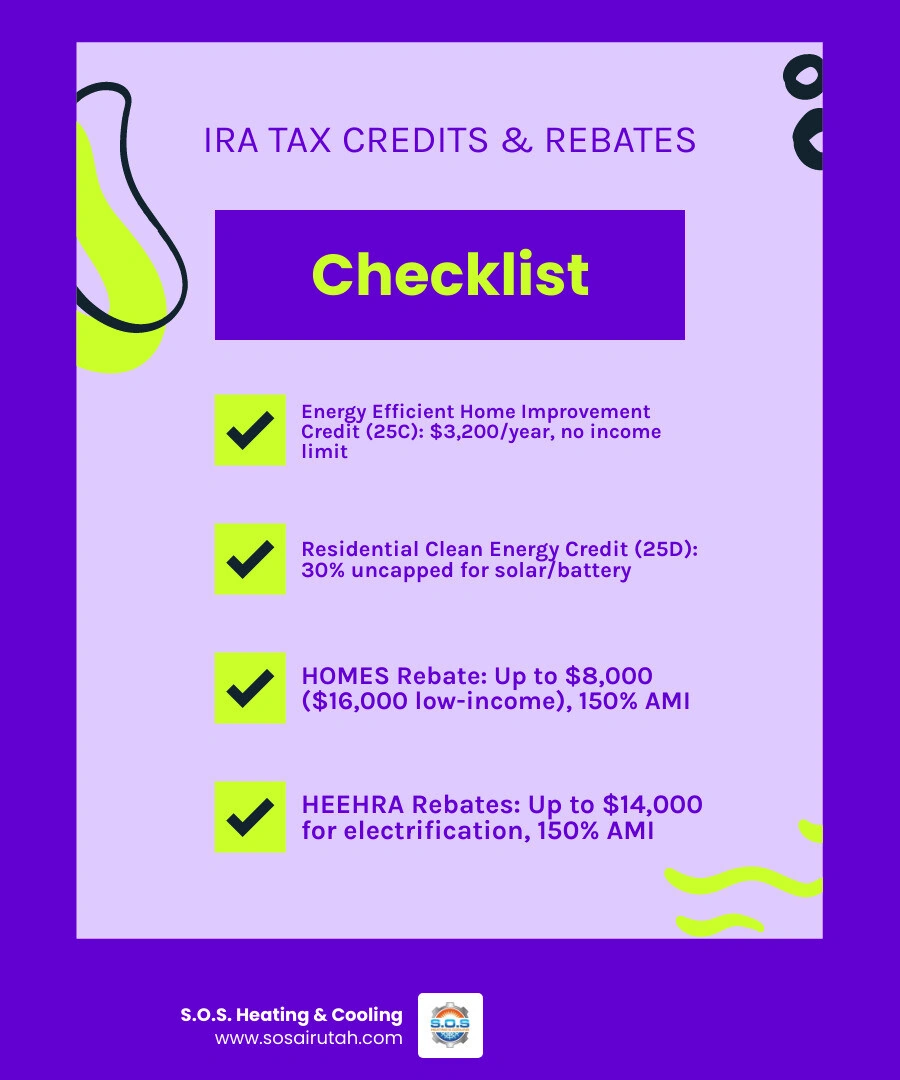
The Inflation Reduction Act (IRA) isn't just a massive piece of federal legislation; it's a direct investment in your home’s comfort and your monthly budget. For those of us living along the Wasatch Front—from Bountiful down to Draper and Riverton—this act provides the financial "nudge" needed to move away from old, inefficient systems toward modern technology.
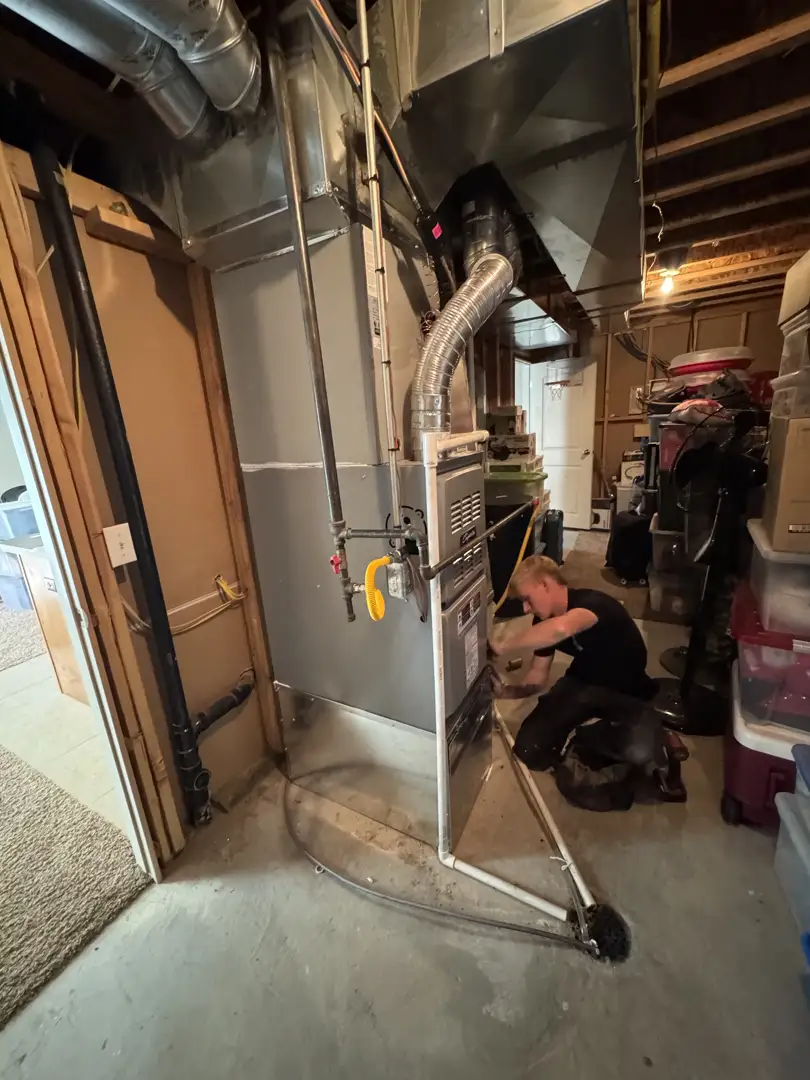
The core of the inflation reduction act benefits for utah homeowners lies in two main tax credits: Section 25C and Section 25D.
- Section 25C (Energy Efficient Home Improvement Credit): This is the "bread and butter" for most HVAC upgrades. It offers a 30% credit for weatherization and equipment, but it now has an annual limit of $3,200, including a specific $2,000 carve-out for heat pumps.
- Section 25D (Residential Clean Energy Credit): This is for big-ticket renewable items like solar panels and battery storage. It is uncapped, meaning you get 30% back regardless of the total cost.
Why does this matter for Utah? Beyond the immediate tax savings, these upgrades are projected to bring $1 billion in clean energy investment to our state by 2030. For the average new homeowner in Utah, adopting the latest energy codes can lead to a 16.4% savings on utility bills, putting roughly $334 back in your pocket every year. When you consider Heat Pump Benefits for Utah Homeowners, you’re looking at improved air quality and a system that handles both our scorching Salt Lake summers and our freezing winters with ease.
If you are still Understanding Heat Pump Systems, think of them as high-tech heat movers rather than heat creators. They are incredibly efficient, which is why the federal government is willing to pay you to install them.
Maximizing 25C and 25D Tax Credits for Home Improvements
To get the most out of the IRA, you have to play the "long game." Unlike the old system, which had a $500 lifetime limit, the new 25C credit resets every year. This means you can phase your projects. You might do your insulation and windows this year, then tackle Heat Pump Installation next year to maximize your credits over time.
The 30% Rule and Annual Caps
The federal government essentially offers to pay 30% of your project costs, but they put "speed limits" on how much you can claim in a single tax year for 25C items.
| Improvement Type | Annual Tax Credit Cap |
|---|---|
| Heat Pumps & Heat Pump Water Heaters | $2,000 |
| Central Air Conditioners | $600 |
| Furnaces & Boilers (Natural Gas/Propane) | $600 |
| Electrical Panel Upgrades | $600 |
| Insulation & Air Sealing | $1,200 |
| Exterior Windows & Skylights | $600 |
| Exterior Doors ($250 per door) | $500 total |
| Home Energy Audits | $150 |
| Solar Panels & Battery Storage (25D) | Uncapped 30% |
As you can see, the Cost for Ductless Heat Pump or a whole-home central heat pump becomes much more manageable when you realize $2,000 of that cost is coming right back to you at tax time.
Furthermore, Section 25D covers 30% of the cost for solar panels, wind energy, and geothermal systems. A huge win for 2026 is that battery storage systems are now eligible for this uncapped 30% credit even if they aren't connected to solar. If you want to ensure your home in Sandy or South Jordan stays powered during a grid outage, this is your chance.
Utah Home Energy Rebates: HOMES and HEEHRA Programs
While tax credits reduce what you owe the IRS, rebates are even better—they are often "point-of-sale" discounts that lower the price you pay upfront. Utah was approved for $101 million to fund two specific programs: the HOMES (Home Efficiency Rebates) and HEEHRA (High-Efficiency Electric Home Rebate Act) programs.
Eligibility for Inflation Reduction Act Benefits for Utah Homeowners
Eligibility for these rebates is primarily determined by your household income relative to the Area Median Income (AMI). The Utah Office of Energy Development oversees these funds, and they are specifically targeted to help low-to-moderate-income families.
- Low-Income (Under 80% AMI): You may qualify for 100% of the project cost, up to $14,000 total. This can cover everything from a new heat pump to the electrical wiring needed to support it.
- Moderate-Income (80% to 150% AMI): You can receive rebates covering 50% of the project cost.
- Multi-family Housing: Owners of apartment buildings can also qualify if at least 50% of their residents are low-to-moderate income, which helps renters across the Salt Lake Valley benefit from lower utility bills.
Check our Rebates page for the latest updates on when these point-of-sale discounts become active in your specific city, as the state rollout has seen various "paused" phases due to federal administrative shifts.
Qualifying Equipment and Efficiency Standards for Inflation Reduction Act Benefits for Utah Homeowners
You can't just buy any unit off the shelf and expect a check. The IRA requires equipment to meet strict efficiency standards.
- Heat Pumps: Must be ENERGY STAR certified. For our climate, look for units that perform well in cold weather. A Hybrid Heat Pump System (dual fuel) is a popular choice in Utah, combining an electric heat pump with a gas furnace backup for those sub-zero January nights.
- Air Conditioners: Split systems must have a SEER2 rating of 16 or higher.
- Furnaces: Gas furnaces must reach a staggering 97% AFUE (Annual Fuel Utilization Efficiency) to qualify for the $600 credit.
- Electrical Panels: If you need to upgrade your breaker box to handle a new electric heat pump or EV charger, you can claim a $600 tax credit and potentially up to $4,000 in HEEHRA rebates.
Strategic Planning: Stacking Incentives and Claiming Credits
One of the most frequent questions we get in locations like Millcreek and Murray is: "Can I combine these?" The answer is a resounding yes, but you have to be careful.
Stacking with Local Utility Rebates
Federal IRA benefits are designed to "stack" with local incentives.
- Rocky Mountain Power (Wattsmart): Offers rebates for heat pumps and smart thermostats.
- Enbridge Gas (ThermWise): Provides incentives for high-efficiency furnaces and weatherization.
You can claim a federal tax credit, a state rebate, and a utility rebate for the same piece of equipment. This "triple-dipping" can sometimes cover a massive portion of the total installation cost.
How to Claim Your Credits
To claim the federal tax credits, you will need to fill out IRS Form 5695 when you file your taxes. It is vital to keep a "paper trail":
- Manufacturer Certification Statement: A signed document from the manufacturer stating the equipment meets IRA standards.
- Paid Invoices: Detailed receipts showing the equipment cost and labor.
- Energy Audit Results: While not always required, having a professional energy audit (which qualifies for a $150 credit) provides proof of why certain upgrades were necessary.
If your tax credit is larger than what you owe the IRS for the year, some credits (like the 25D for solar) allow you to carry the balance forward to next year's taxes. For those looking for manageable payments, exploring HVAC Financing Options Utah can help bridge the gap between installation and tax season. You can also view our Financing page for flexible payment plans.
Frequently Asked Questions about Utah IRA Incentives
Can I combine federal tax credits with Rocky Mountain Power or Enbridge Gas rebates?
Yes! Federal tax credits (25C and 25D) can be combined with local utility rebates like Wattsmart or ThermWise. In many cases, this allows Utah homeowners to significantly offset the cost of high-efficiency systems. However, you generally cannot combine two different federal grants for the exact same dollar spent.
What is the maximum rebate amount available for Utah electrification projects?
Under the HEEHRA program, eligible low-income households in Utah can receive up to $14,000 in total rebates. This includes up to $8,000 for a heat pump for space heating, $1,600 for weatherization (insulation/sealing), and $4,000 for electrical panel upgrades.
Do I need a professional home energy audit to qualify for these benefits?
A professional audit is not strictly required to claim a tax credit for a new heat pump or AC. However, the audit itself qualifies for a $150 tax credit, and it is highly recommended. An audit helps you identify "energy leaks" so you don't buy a high-tech HVAC system only to have the air escape through a drafty attic.
Conclusion
The inflation reduction act benefits for utah homeowners represent a once-in-a-generation opportunity to modernize our homes. By taking advantage of these tax credits and rebates, you aren't just saving money; you're contributing to better air quality along the Wasatch Front and ensuring your family stays comfortable regardless of the weather in Salt Lake City, Layton, or Herriman.
At S.O.S. Heating & Cooling, we take pride in being more than just installers—we are your partners in navigating these complex incentives. From 24/7 emergency repairs to helping you select the perfect ENERGY STAR certified system, we are here to ensure you maximize your savings and your home's performance.
Don't wait for your old system to fail in the middle of a heatwave or a blizzard. Start planning your upgrades today to lock in these credits before legislative changes or funding shifts occur.

Plumbing
Expert plumbing services offering reliable repairs, installations, maintenance, and emergency support.

Air Conditioning
Comprehensive air conditioning services include installation, repairs, maintenance, and energy-efficient solutions.
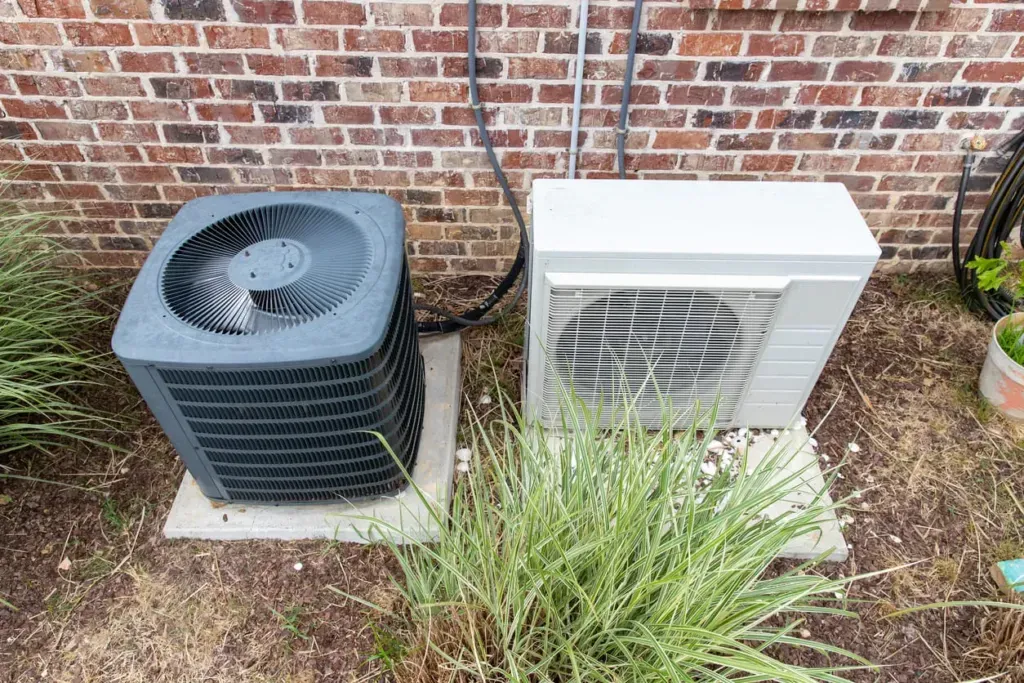
Heat Pumps
Enjoy year-round comfort with our energy-efficient and professional heat pump solutions.

Indoor Air Quality
Enhance your home’s air with our cutting-edge indoor air quality solutions you can trust.

Fireplaces
Transform your space into a warm and cozy atmosphere with our professional fireplace services.

Heating
Specialized heating services provide reliable installation, repair, system maintenance, and energy-optimization solutions.
Explore Our Latest Insights and Updates in Plumbing Services
Tankless vs Tank Water Heater: Utah Homeowner Guide
How to Detect Hidden Pipe Leak in Salt Lake Valley