

How to Detect Hidden Pipe Leak in Salt Lake Valley


.avif)

Signs You Have a Hidden Pipe Leak in Your Salt Lake Valley Home
The signs you have a hidden pipe leak in your Salt Lake Valley home are not always obvious — but catching them early can save you thousands of dollars in water damage and repairs. Here is a quick summary of the most common warning signs to watch for:
- Unexplained water bill spike — your usage hasn't changed, but your bill keeps climbing
- Sound of running water when all faucets and fixtures are off
- Warm or damp spots on floors — especially near the water heater or bathrooms
- Musty odors or visible mold in areas that shouldn't be wet
- Stains or discoloration on walls, ceilings, or baseboards
- Low water pressure throughout the house without a clear cause
- Cracks in your foundation or walls that weren't there before
- Water meter moving when no water is being used in the home
According to the EPA, 10% of homes have leaks wasting 90 or more gallons of water every single day — often without the homeowner knowing it.
I'm Bryson Ninow, a licensed plumbing and HVAC professional serving the Salt Lake Valley, and I've seen how the signs you have a hidden pipe leak in your Salt Lake Valley home can go unnoticed for months until serious structural damage sets in. In this guide, I'll walk you through exactly what to look for and what to do next.
Visible vs. Hidden Leaks: What is the Difference?
When most of us think of a plumbing leak, we picture a sudden, dramatic scene: a pipe bursting under the kitchen sink, spraying water everywhere, or a bathtub overflowing through the living room ceiling. These are visible leaks. They are loud, messy, and demand immediate action. While they certainly cause a mess, they have one major advantage: you know about them instantly, allowing you to shut off the main water valve and minimize the total volume of water waste.
Hidden leaks, on the other hand, are the silent saboteurs of your home's plumbing system. These leaks occur out of sight—deep inside wall cavities, beneath concrete slab foundations, behind heavy appliances, or buried in the yard along your main water line. Instead of a sudden burst, a hidden leak is often a slow, persistent drip or a tiny pinhole spray.
Because they are concealed, hidden leaks can quietly drip for weeks, months, or even years before you notice any physical evidence. While a major pipe burst is an obvious emergency, a slow, hidden drip can actually cause far more extensive long-term damage to your home's structural integrity, rot your wooden framing, and trigger widespread mold growth.
Understanding the subtle differences between these plumbing issues is the first step in protecting your property. If you want to learn more about how to manage these issues before they get out of hand, check out our comprehensive Home Pipe Repair Salt Lake City Guide for expert tips on keeping your system running smoothly.
Major Signs You Have a Hidden Pipe Leak in Your Salt Lake Valley Home
Because hidden leaks are buried behind drywall or beneath flooring, you have to rely on secondary clues to identify them. If you know what to look, listen, and smell for, you can catch these problems before they escalate into a full-blown restoration project.
Unchecked water waste is one of the most immediate consequences of a hidden leak. Even a tiny crack in a pipe can waste thousands of gallons of water each year, slowly eroding your home's foundation and driving down your water pressure. Over time, this constant moisture can lead to foundation cracks, sagging ceilings, and ruined flooring.
Water Bill Spikes and Signs You Have a Hidden Pipe Leak in Your Salt Lake Valley Home
One of the most reliable and objective signs you have a hidden pipe leak in your Salt Lake Valley home is a sudden, unexplained jump in your monthly water bill. If your household habits haven't changed—you aren't watering a new lawn, you haven't filled up a swimming pool, and you don't have extra guests staying with you—but your utility bills are steadily climbing, you likely have water escaping somewhere in your system.
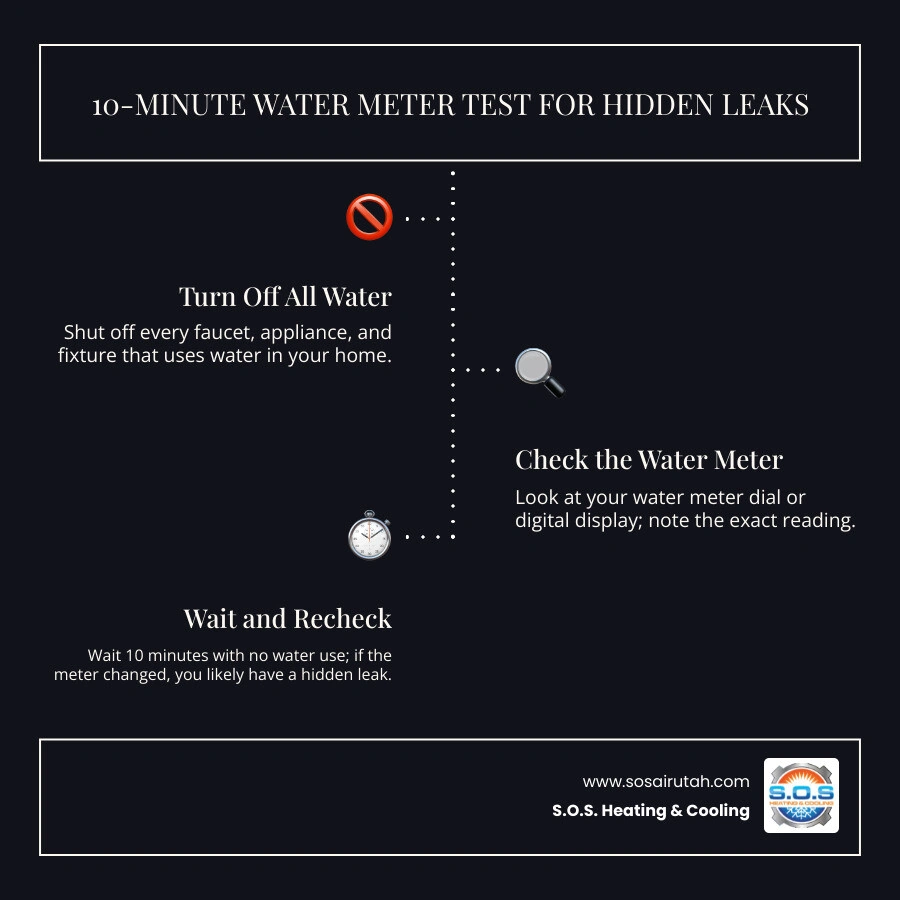
To confirm this, you can perform a simple check using your home's water meter:
- Turn off all water fixtures, appliances, and irrigation systems inside and outside your home.
- Locate your water meter box (usually found near the street or in your front yard).
- Open the meter cap and look at the dial. Many meters have a small, highly sensitive flow-indicator triangle or wheel that spins when even a tiny amount of water passes through.
- If that indicator is spinning, or if the digital reading continues to climb while all your water is shut off, you have an active leak.
Monitoring your water usage closely is essential for catching these issues early. For more practical advice on how to troubleshoot these early warning signs, take a look at our Pipe Repair Salt Lake City Tips.
Structural Damage and Signs You Have a Hidden Pipe Leak in Your Salt Lake Valley Home
When water leaks behind walls or under floors, gravity forces it downward and outward, where it quickly saturates building materials. Drywall, wood framing, subflooring, and carpet act like giant sponges, soaking up the moisture and losing their structural strength in the process.
Keep a close eye out for these physical changes in your home:
- Drywall Stains: Active leaks behind walls often manifest as brown, yellow, or copper-colored water spots on your walls or ceilings. The drywall may feel soft, spongy, or sag to the touch.
- Warped Flooring: If a pipe is leaking beneath your floorboards, you might notice hardwood planks buckling, vinyl flooring bubbling, or carpet that feels permanently damp or cold underfoot.
- Foundation Damage: In Salt Lake Valley homes, underground leaks can saturate the surrounding soil, leading to foundation cracks, uneven floors, or concrete slabs that begin to sink and settle.
If you suspect the issue might extend beyond your clean water lines, it is also wise to understand the warning signs of wastewater issues. Read our guide on the Signs of Hidden Sewer Line Damage to ensure your entire drainage system is secure.
Musty Odors and Mold Growth
Mold and mildew thrive in dark, damp, and warm environments—which is exactly what the inside of your walls becomes when a pipe starts leaking. Mold spores can begin to colonize and grow within 24 to 48 hours of initial water exposure.
Even if you cannot see the mold, you will almost certainly smell it. A persistent, musty, or earthy odor in a specific room, closet, or basement corner is a classic sign of trapped moisture. As the mold grows, it releases microbial volatile organic compounds into the air, which can severely degrade your indoor air quality and trigger respiratory issues, allergies, or asthma symptoms for your family.
If you notice these musty smells or see dark spots spreading along your baseboards or ceiling edges, you need to act quickly to stop the moisture source. For immediate steps on handling sudden plumbing failures, consult our Emergency Pipe Repair Sandy UT Tips.
How Utah’s Hard Water and Clay Soil Cause Hidden Leaks
Living in the Salt Lake Valley presents some unique environmental challenges that put extra stress on our residential plumbing systems. Two of the biggest culprits behind hidden leaks in our local communities—from Bountiful down to Draper—are our highly alkaline hard water and our expansive clay soil.
The water along the Wasatch Front is notorious for its high mineral content, often exceeding 300 to 400+ parts per million (ppm) of calcium and magnesium. Over time, these minerals settle inside your pipes, creating a hard scale buildup. This scale restricts water flow, increases internal water pressure, and chemically reacts with metal pipes—especially older copper and galvanized steel lines—leading to localized corrosion and pinhole leaks.
At the same time, the soil in many parts of the Salt Lake Valley contains a high percentage of clay. Clay soil is highly expansive, meaning it acts like a sponge. When it rains or when snow melts in the spring, the clay absorbs water and swells significantly, putting immense physical pressure on your home's foundation and buried pipes. During our hot, dry summer months, the clay shrinks and cracks, causing the ground to shift. This constant expansion and contraction cycle, combined with the extreme freeze-thaw cycles of Utah winters, puts incredible shear stress on buried water lines, often cracking joints and causing underground leaks.
| Environmental Factor | Primary Impact on Pipes | Common Warning Signs |
|---|---|---|
| Utah Hard Water | Mineral scale buildup, internal pipe corrosion, pinhole leaks in copper and galvanized steel. | Reduced water pressure, rust-colored water, frequent fixture clogs. |
| Expansive Clay Soil | Ground shifting, soil expansion and contraction, extreme physical stress on buried pipes. | Foundation cracks, warped concrete slabs, underground main line leaks. |
| Freeze-Thaw Cycles | Ground heaving, pipe expansion, joint separation during rapid temperature swings. | Sudden spring water line failures, wet patches in lawn after winter thaw. |
To protect your plumbing from these harsh local elements, it is highly beneficial to understand how mineral buildup behaves in your home. You can learn more about managing these mineral deposits by reading our detailed article on How Utah Hard Water Affects Your Plumbing.
Professional Non-Invasive Leak Detection Methods
In the past, finding a hidden pipe leak often involved a lot of destructive guesswork. Plumbers would have to tear open drywall or jackhammer through concrete slabs just to find the source of the drip. Fortunately, modern technology allows us to pinpoint the exact location of a hidden leak without causing unnecessary damage to your beautiful home.
When we perform professional leak detection, we use a combination of advanced, non-invasive tools:
- Acoustic Sensors: Pressurized water escaping from a tiny crack makes a distinct hissing or dripping sound. We use highly sensitive microphones and acoustic listening devices to hear these vibrations through walls, soil, and concrete slabs, locating the leak down to a matter of inches.
- Thermal Imaging Cameras: Water leaks create temperature differences behind walls and under floors. By scanning your home with infrared cameras, we can see these temperature anomalies as distinct "hot" or "cold" spots, revealing the exact path of the leaking water.
- Pipe Inspection Cameras: We can feed small, flexible fiber-optic video cameras directly into your drain and sewer lines to visually inspect the interior of your pipes for cracks, root intrusion, or joint failures.
- Pressure Testing: By isolating sections of your plumbing system and monitoring the static pressure, we can quickly determine which specific line is losing water.
Using these advanced diagnostic methods ensures we only cut or excavate exactly where the repair is needed, saving you time, money, and mess. If you want a closer look at our complete repair process, check out our Pipe Repair Salt Lake City Guide.
What to Do If You Suspect a Slab Leak or Underground Leak
A slab leak—which is a leak in the water lines running beneath your home's concrete foundation—is one of the most serious plumbing issues a homeowner can face. If left untreated, the escaping water can wash away the supporting soil beneath your home, leading to uneven settling, major foundation cracks, and potential structural failure.
If you suspect you have a slab leak or an underground leak in your yard, follow this immediate action plan:
- Locate Your Main Shut-Off Valve: Every adult in your home should know where the main water shut-off valve is located. In Salt Lake Valley homes, this is typically found in the basement near the water heater, in the utility closet, in the garage, or inside a ground box near the street. If you see active flooding or a rapidly spinning water meter, turn this valve clockwise to shut off the water supply immediately.
- Conduct a Toilet Dye Test: Before assuming you have a massive slab leak, rule out simpler issues. Toilets account for nearly 30 percent of indoor water waste, and more than 20 percent of gravity-flush toilets leak. Put a few drops of food coloring into your toilet tank and wait 15 to 20 minutes without flushing. If color appears in the toilet bowl, your flapper valve is leaking and needs to be replaced.
- Check Your Irrigation System: If you notice lush, unusually green patches of grass in your lawn, or pooling water when your sprinklers are off, you may have a cracked underground irrigation line or a leaking anti-siphon valve.
- Call a Professional: Do not attempt to dig up your yard or break through your concrete floor as a DIY project. Specialized equipment is required to safely locate and repair under-slab plumbing.
Taking swift action is key to minimizing structural damage. For localized tips on addressing pipe failures in your specific neighborhood, take a look at our Pipe Repair Guide Sandy UT or check out our Pipe Repair Guide Holladay UT.
Frequently Asked Questions about Hidden Pipe Leaks
How much water can a tiny hidden leak waste?
It is easy to dismiss a tiny drip, but the cumulative water waste of a minor leak is staggering. According to EPA statistics, a single faucet dripping at a rate of one drop per second can waste more than 3,000 gallons of water in a year.
If you have a pinhole leak in a pressurized water line—which is about the size of a ballpoint pen tip—it can waste over 10,000 gallons of water in a single month! This constant flow can easily add significant costs to your monthly utility bills and cause immense damage to your home's structure. If you live in the northern part of the valley and want to keep your system in check, read our Pipe Repair Woods Cross UT Guide for more detailed water-saving tips.
Does homeowners insurance cover hidden pipe leaks?
Whether your homeowners insurance covers a hidden pipe leak depends entirely on the cause of the leak and how quickly you addressed it.
Most standard policies cover "sudden and accidental" water damage, such as a pipe that suddenly bursts and floods your living room. However, insurance companies typically exclude coverage for "gradual damage." If a slow, hidden leak has been dripping behind a wall for months due to age, wear and tear, or lack of maintenance, the insurer may deny your claim for both the pipe repair and the resulting mold remediation. This is why routine inspections and early detection are so critical. Homeowners in Davis County can find more information on local plumbing care in our Pipe Repair Centerville UT Guide.
How do old pipes affect my home's risk of hidden leaks?
The age and material of your home's plumbing system play a massive role in your overall leak risk. Homes built along the Wasatch Front between the 1950s and 1980s often rely on galvanized steel or copper pipes.
Galvanized steel pipes have a maximum lifespan of about 40 to 50 years. As they age, they corrode internally, rusting from the inside out. This corrosion restricts water flow and eventually leads to widespread pinhole leaks. Copper pipes are highly durable but are still susceptible to pinhole leaks caused by Utah's hard water and acidic soil chemistry. If you are planning a home update, it is crucial to evaluate your plumbing first. Learn more about how aging infrastructure can impact your home improvement projects in our guide on How Old Pipes and Fixtures Affect Your Remodel Plan.
Conclusion
Detecting and repairing a hidden pipe leak is not something you should put off. The longer water flows unchecked behind your walls or beneath your foundation, the more expensive and destructive the damage will become. From high water bills and mold growth to serious structural foundation issues, a hidden leak can quickly compromise the comfort, safety, and value of your home.
At S.O.S. Heating & Cooling, we are proud to provide expert, reliable plumbing and HVAC services to homeowners throughout the Salt Lake Valley. Whether you are dealing with an emergency in Bountiful, a slab leak in Sandy, or a musty smell in Murray, our team of experienced professionals is here to help. We offer 24/7 emergency repairs, priority service for our valued partners, no evaluation fees during regular business hours, and flexible financing options designed with your convenience and satisfaction in mind.
Do not let a silent leak damage your home. Schedule professional pipe repair in Murray, UT with S.O.S. Heating & Cooling today, and let us give you the peace of mind you deserve!
Explore Our Latest Insights and Updates in Plumbing Services
How to Save Money on Cooling with These 5 Quick Changes
The Science of Sip: How Reverse Osmosis Levels Up Your Tap Water

Step-by-Step Guide to How Bryson Ninow Built SOS on Fair and Honest Service