

Tankless vs Tank Water Heater: Utah Homeowner Guide


.avif)

Which Water Heater Is Right for Your Salt Lake Valley Home?
Making a tankless vs tank water heater comparison for Salt Lake Valley homeowners is more than a simple efficiency question — it's a decision shaped by Utah's notoriously hard water, cold winter groundwater temperatures, and the real cost of keeping your household in hot water year-round.
Here's a quick look at how the two systems stack up in the Salt Lake Valley:
| Factor | Tankless | Traditional Tank |
|---|---|---|
| Energy Efficiency | 24–34% more efficient; no standby heat loss | Continuously reheats stored water; higher utility bills |
| Hot Water Supply | Unlimited, on-demand | Finite; 20–40 min recovery after tank drains |
| Lifespan (Utah) | 20+ years with annual maintenance | 8–12 years in hard water conditions |
| Hard Water Impact | High sensitivity; heat exchanger clogs without descaling | Sediment buildup; less vulnerable than tankless |
| Maintenance | Annual descaling required | Annual flush + anode rod inspection |
| Space | Wall-mounted; small suitcase size | 30–80 gallon floor unit |
| Installation Complexity | Gas line, venting, and sizing upgrades often needed | Works with most existing home infrastructure |
| Best For | Long-term homeowners committed to maintenance | Budget-conscious buyers or high-simultaneous-demand homes |
Salt Lake County water hardness routinely measures between 250–350 mg/L — classified as "very hard." That single factor changes the performance equation for both systems in ways that most general guides simply don't address. And when winter groundwater temperatures drop to around 40–50°F, tankless units have to work significantly harder just to deliver a comfortable shower.
Whether your current water heater is making strange popping sounds, you've been hit with an unexpected cold shower on a January morning, or you're weighing a full replacement, this guide will help you make a confident, informed choice for your specific home and household.
I'm Bryson Ninow, an HVAC and home comfort professional with hands-on experience navigating the exact hard water, altitude, and seasonal challenges that make a tankless vs tank water heater comparison for Salt Lake Valley homeowners so different from advice written for other parts of the country. In the sections ahead, I'll walk you through everything you need to know — from sizing and lifespan to incentives and installation requirements.
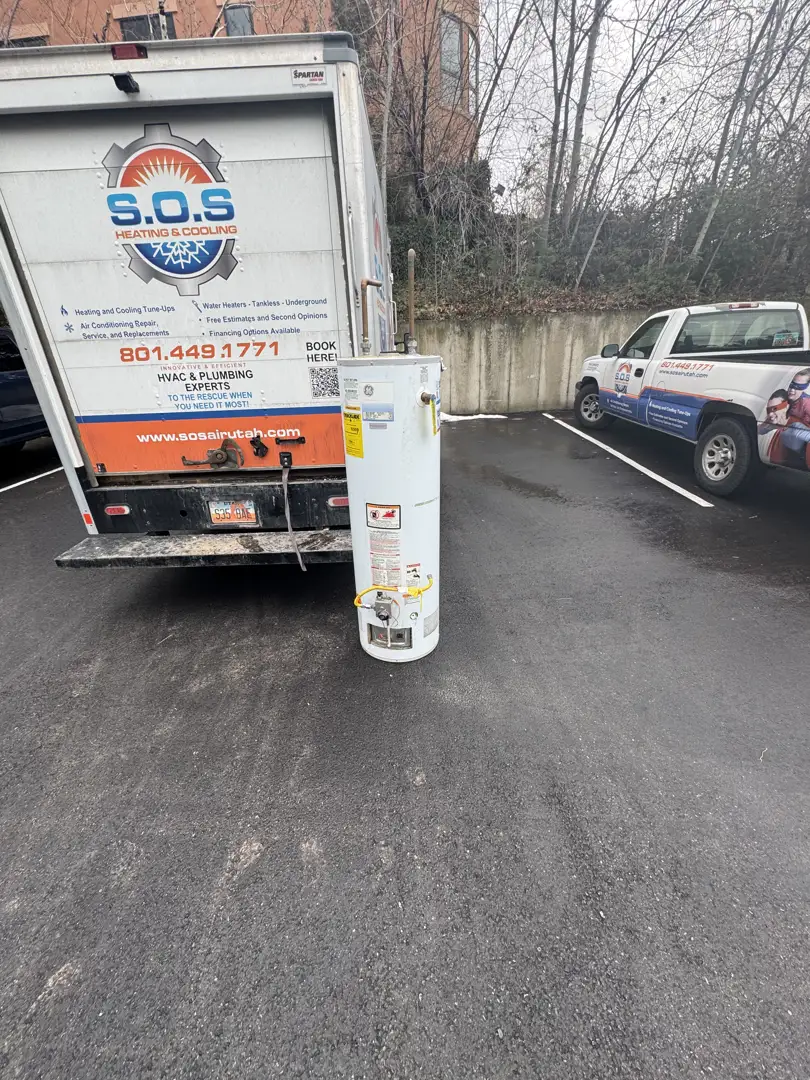
Tankless vs Tank Water Heater Comparison for Salt Lake Valley Homeowners
When we look at the core differences between these two systems, it really comes down to how they handle heat. Traditional tank water heaters are the "floor-hogs" of the utility room. They hold anywhere from 30 to 80 gallons of water in an insulated steel tank, continuously heating and reheating that water so it is ready when you turn on the tap. This constant heating cycle leads to standby heat loss, meaning your system is consuming energy to keep water hot even when you are asleep or away at work.
Tankless water heaters, on the other hand, are roughly the size of a carry-on suitcase and mount directly to your wall, freeing up valuable floor space. Instead of keeping a massive reservoir hot, they use high-powered burners to heat water instantly on demand. When you open a hot water faucet, cold water flows into the unit, passes through a heat exchanger, and exits at your desired temperature. Because there is no storage tank, standby heat loss is completely eliminated.
This fundamental design difference is why tankless systems are 24% to 34% more energy efficient than traditional tanks. For households looking to lower their monthly utility savings, choosing a tankless system is a highly effective way to reduce gas or electric consumption. However, as we explore the local factors in communities like Murray, Sandy, and Millcreek, you will see that maximizing these energy savings requires a clear understanding of how our local environment impacts each system.
To understand the full scope of making this upgrade, we highly recommend reading our detailed Tankless vs. Tank Water Heater for Utah Hard Water guide.
Sizing and Performance: Tankless vs Tank Water Heater Comparison for Salt Lake Valley Homeowners
Sizing a water heater along the Wasatch Front requires accounting for our dramatic seasonal temperature swings. The performance of a tankless water heater is directly tied to the temperature of the incoming groundwater. In the middle of a Salt Lake Valley winter, our groundwater temperature can plunge to 40°F.
To deliver a comfortable 120°F shower, your water heater must achieve an 80-degree temperature rise. This extreme temperature rise reduces the maximum flow rate (measured in gallons per minute, or GPM) that a tankless unit can produce. In the summer, when groundwater is warmer, a tankless unit might easily supply enough hot water for three simultaneous showers. In January, however, that same unit's capacity might drop by 30% to 40%, meaning running a second shower or a dishwasher at the same time could result in a sudden drop in water temperature—a phenomenon often called the "cold-water sandwich."
Traditional tank water heaters do not suffer from this immediate capacity drop because they rely on a preheated reservoir. However, they have a finite supply. Once those 40 or 50 gallons are drained by back-to-back showers, the recovery time to heat a fresh tank of freezing winter water can take 20 to 40 minutes.
To avoid winter performance issues, proper sizing by a professional is critical. If you are planning a replacement, review our comprehensive Water Heater Replacement SLC Guide to learn how we calculate peak household demand.
Lifespan and Maintenance: Tankless vs Tank Water Heater Comparison for Salt Lake Valley Homeowners
System longevity is a major consideration for any home improvement project. In the Salt Lake Valley, a traditional tank water heater typically lasts between 8 and 12 years. The constant presence of water inside the steel tank eventually leads to internal rust and corrosion, especially as the protective anode rod degrades over time.
Tankless water heaters are built with more durable components, such as copper or stainless steel heat exchangers, allowing them to last 20 years or more. However, this impressive lifespan comes with a very important catch: mandatory maintenance.
Because tankless units flash-heat water through narrow passages, mineral scale precipitates rapidly inside the heat exchanger. In our region, neglecting annual descaling can cause a tankless unit to fail in as little as 3 to 5 years. Traditional tanks also require maintenance, specifically an annual tank flushing to remove sediment from the bottom of the tank and a periodic anode rod inspection.
If you want to dive deeper into how local water quality accelerates wear and tear, check out our resource on How Hard Water Damages Your Water Heater Faster.
How Utah’s Hard Water Affects Water Heater Performance
To understand why water heaters behave the way they do in our area, we have to look at the chemistry of our water supply. The Salt Lake Valley is surrounded by mineral-rich mountain ranges, meaning our municipal and well water picks up high concentrations of calcium and magnesium as it flows down to our communities.
With water hardness levels routinely exceeding 15 to 25 grains per gallon (GPG) along the Wasatch Front, our water is classified as "very hard." When this mineral-heavy water is heated, a chemical reaction occurs: the dissolved minerals solidify and precipitate out of the water, forming a hard, chalky crust known as calcium carbonate, or scale.
To find the most resilient systems for our unique water chemistry, you can read our breakdown of the Best Water Heater Options for Hard Water.
Mineral Buildup and Scale Formation
In a traditional tank water heater, this scale settles to the bottom of the tank, creating a thick layer of sediment insulation. This layer acts as a barrier between the gas burner (located at the bottom of the tank) and the water inside. As a result, the burner must run longer and hotter to heat the water, severely reducing the system's thermal efficiency. You may also start hearing loud popping or rumbling sounds coming from your basement. This is the sound of water boiling beneath the trapped layer of sediment—a clear sign that your tank is working overtime and wearing out faster.
In a tankless water heater, the impact is even more immediate. The heat exchanger utilizes incredibly narrow water channels to transfer heat rapidly. When scale forms inside these tight passages, it restricts water flow and creates hot spots on the heat exchanger walls. Without regular intervention, this scale buildup will cause the unit to overheat, throw error codes, and eventually crack the heat exchanger, leading to a costly system failure.
The Role of Water Softeners and Filtration
Because of our extreme water quality, installing a whole-home water softener is one of the smartest decisions a Salt Lake Valley homeowner can make. A water softener removes calcium and magnesium ions before they ever reach your plumbing fixtures, providing excellent scale prevention for your entire home.
For tankless water heaters, a water softener is practically a technical requirement. In fact, many major manufacturers specify a maximum water hardness limit (typically around 10 GPG) in their warranty guidelines. If your water exceeds this limit and you do not have a water softener or documented proof of regular chemical descaling, the manufacturer may void your warranty protection entirely. Pairing your new water heater with a water softener is the best way to safeguard your investment and ensure your system achieves its maximum possible lifespan.
Sizing, Installation, and Infrastructure Requirements
Switching from a traditional tank to a tankless water heater is rarely a simple "plug-and-play" swap. Because tankless units operate on demand, they require a massive, instantaneous burst of energy to heat freezing groundwater in a split second. This means retrofitting an older home in neighborhoods like Holladay, Sugar House, or Cottonwood Heights often requires upgrading your home's infrastructure.
If you are considering making the switch, it is helpful to understand what a professional installation entails by visiting our Tankless Water Heater Installation in Salt Lake City service page.
Gas Line and Venting Upgrades
The most common hurdle when retrofitting a gas tankless water heater is the gas line capacity. A standard 40-gallon tank water heater typically operates at around 40,000 BTU/hr, slowly heating water over time. A tankless unit, however, needs to fire at 150,000 to 199,000 BTU/hr to heat water instantly.
Because of this high demand, the existing half-inch gas line that supplied your old tank is usually insufficient. Our installation team must often run a larger three-quarter-inch or one-inch gas line directly to the unit to ensure it receives adequate gas pressure.
Venting is another critical consideration. Older tank units utilize atmospheric venting, sending hot exhaust straight up a metal chimney. Modern high-efficiency condensing tankless units produce much cooler exhaust containing acidic condensation. This requires specialized, sealed PVC venting that must be run through an exterior wall to safely vent the exhaust and pull in fresh combustion air.
Electrical Panel and Space Considerations
While gas line and venting upgrades are common for gas models, electric tankless water heaters present their own challenges. A whole-home electric tankless unit can draw upwards of 120 to 150 amps of power, which often requires a complete electrical breaker panel upgrade to 200 or 300 amps.
On the plus side, space considerations are where tankless systems truly shine. Because they are wall-mounted, they free up valuable floor space in small utility closets, basements, or garages. This makes them highly popular for townhomes and condos in areas like West Valley City or Murray.
Additionally, because we live in the Wasatch Fault zone, local plumbing codes strictly enforce seismic strapping requirements. Any traditional tank water heater must be double-strapped (top and bottom) and anchored securely to structural wall studs to prevent tipping during an earthquake. While tankless units are securely bolted to the wall, they must also be installed in strict compliance with local safety codes to protect your home.
Frequently Asked Questions About Salt Lake Valley Water Heaters
Navigating local plumbing codes and home maintenance can be confusing. To help you make the right choice, we have answered some of the most common questions we hear from homeowners across the valley. For more details on our complete range of services, you can visit our main Salt Lake City Water Heater Installation page.
Does hard water void a water heater warranty?
Yes, it absolutely can. Most major water heater manufacturers include specific water quality and hardness limits in their warranty guidelines. If your home's water hardness exceeds these limits (which is very common along the Wasatch Front), and you cannot provide documented maintenance records showing regular descaling or the use of a water softener, the manufacturer has the right to deny your warranty claim. Keeping detailed service records is essential for protecting your investment.
Are there local rebates or incentives available in Utah?
Yes! Because high-efficiency water heaters help reduce regional energy demand, there are several active incentives available for Salt Lake Valley homeowners. Local utility companies like Dominion Energy and Rocky Mountain Power frequently offer rebates for qualifying high-efficiency gas tankless systems and hybrid heat pump water heaters. Additionally, federal tax credits may allow you to claim up to 30% of the installation cost for qualifying ENERGY STAR certified systems.
When should a homeowner choose a traditional tank over tankless?
While tankless systems offer incredible benefits, a traditional tank remains the better option for several scenarios:
- Upfront Budget: If you need a straightforward, cost-effective replacement without the added expense of gas line or venting retrofits.
- Short-Term Home Tenure: If you plan on moving within the next 3 to 5 years, you likely won't stay long enough to reach the break-even point on a tankless system's energy savings.
- Simultaneous Demand in Large Families: If your household frequently runs multiple showers, the washing machine, and the dishwasher all at the exact same time, a large-capacity traditional tank (or a multi-tank setup) can sometimes handle the simultaneous flow rate better than a single, undersized tankless unit during cold Utah winters.
Conclusion
Choosing between a tankless and a traditional tank water heater is a highly personal decision that depends on your budget, how long you plan to stay in your home, and your willingness to keep up with annual maintenance.
If you want a system that provides unlimited hot water, saves floor space, and offers maximum energy efficiency for the next two decades, a tankless water heater paired with a water softener is an outstanding investment. If you prefer a simpler, lower-upfront-cost installation that reliably handles heavy simultaneous water usage, a modern, high-efficiency traditional tank remains a tried-and-true solution.
No matter which path you choose, our team at S.O.S. Heating & Cooling is here to help. We provide expert, code-compliant plumbing services throughout the Salt Lake Valley, including Bountiful, Draper, Sandy, Holladay, and beyond. We are proud to offer 24/7 emergency repairs, flexible financing options, and no evaluation fees during regular business hours to ensure your home comfort is always restored quickly and professionally.
Ready to find the perfect hot water solution for your home? Contact us today to schedule your professional Water Heater Installation Salt Lake City consultation!
Explore Our Latest Insights and Updates in Plumbing Services
Why Your House and Lungs Hate Extreme Humidity
Why Your HVAC Needs a Humidity Sidekick to Keep You Comfortable

Signs Your Home Is Too Dry or Too Humid