

The Definitive Guide to Undersized AC Unit Signs and Problems


.avif)

Why Recognizing Undersized AC Unit Signs and Problems in a Hot Dry Utah Home Can Save You Thousands
If you're noticing undersized ac unit signs and problems in a hot dry Utah home, here's a quick breakdown of what to look for:
- AC runs constantly but never reaches your thermostat setting
- Uneven temperatures between rooms, especially upstairs or west-facing areas
- Higher energy bills than neighbors with similar-sized homes
- Weak airflow from vents even with clean filters
- Humidity feels off — sticky or clammy air indoors despite Utah's dry climate
- Frequent breakdowns or a system that seems to age faster than it should
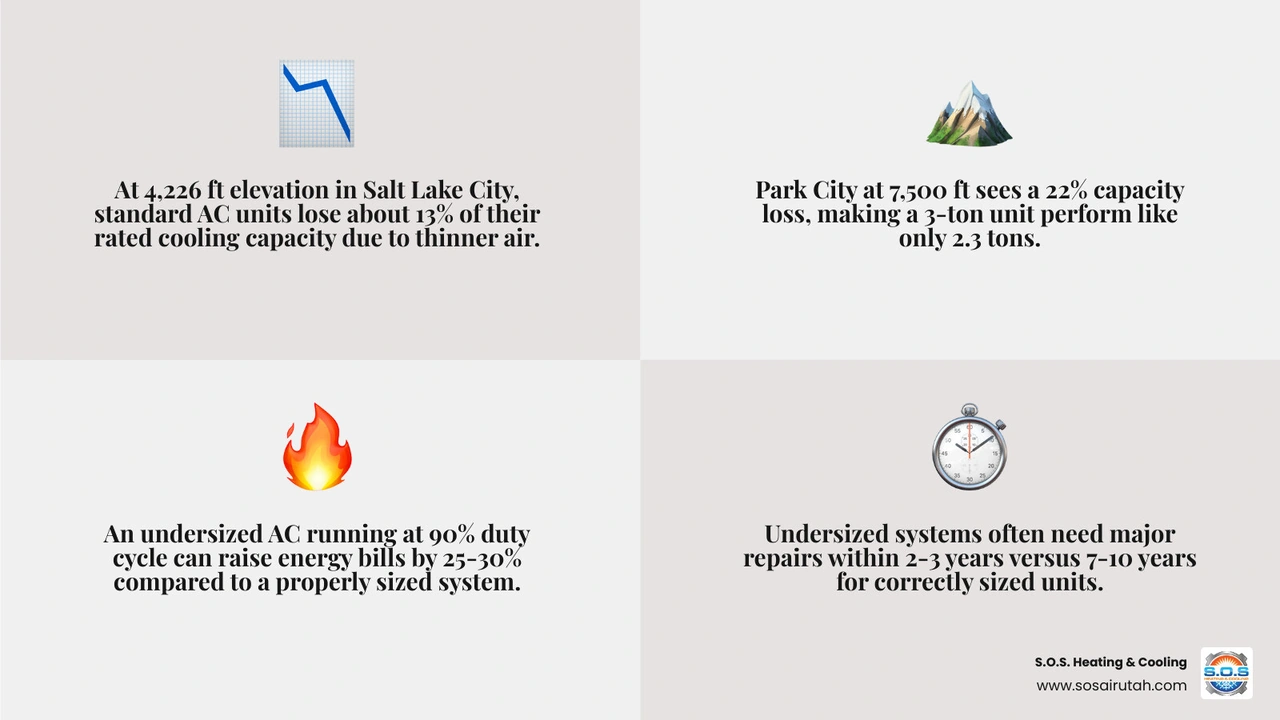
Utah's unique combination of high altitude and intense desert heat makes undersizing a bigger problem here than almost anywhere else in the country. At 4,226 feet above sea level, Salt Lake City's thinner air already cuts a standard AC unit's cooling capacity by roughly 13% before the summer heat even kicks in. Push up to Park City at 7,500 feet, and that same unit loses 22% of its rated capacity — performing more like a 2.3-ton unit when you paid for 3 tons. Add in the relentless sun, low humidity, and 100-degree summer days across the Wasatch Front, and a system that's even slightly undersized will be pushed well past its limits from June through August.
Most homeowners don't realize their AC is undersized until the system starts breaking down early or their utility bills climb far higher than expected. An undersized AC running at a 90% duty cycle can raise your energy costs by 25–30% compared to a correctly sized unit — and undersized systems often need major repairs within just 2–3 years, compared to 7–10 years for a properly sized system. That's a problem worth catching early.
I'm Bryson Ninow, an NATE-certified HVAC professional with years of hands-on experience diagnosing undersized AC unit signs and problems in a hot dry Utah home across the Salt Lake Valley and surrounding communities. I've seen how often systems are spec'd without accounting for Utah's elevation or desert heat load, and I'm here to help you understand exactly what's happening with your home's cooling system.
The Physics of Cooling Thinner Air: Why Utah Altitude Demands More Capacity
Many homeowners moving to the Wasatch Front from coastal states are shocked when their brand-new, high-efficiency air conditioners struggle to keep up on a 95-degree afternoon. They assume the system is broken, but the truth is often simpler: the system was sized using sea-level calculations.
At high elevations, air is less dense. Because air conditioners rely on the physical mass of air passing over the evaporator coils to absorb heat and carry it away, thinner air directly translates to a loss in cooling capacity. When there are fewer air molecules to grab that heat, your air conditioner has to work significantly harder to achieve the same temperature drop. This is why understanding How the Wasatch Front Climate Affects Your HVAC and Plumbing is absolutely critical when designing or updating a home's comfort systems.
How High Elevation Reduces AC Cooling Power
The physical reality of altitude derating is one of the most overlooked aspects of HVAC design in Utah. The industry standard, backed by the U.S. Department of Energy and local building codes, is a 3% capacity reduction for every 1,000 feet of elevation above sea level.
Let’s look at how this plays out in our local communities:
- Salt Lake City (approx. 4,226 feet): Air density drops to about 86% of sea level, resulting in a 13% loss in cooling capacity. A nominal 3-ton (36,000 BTU) unit only delivers about 31,320 BTUs of actual cooling.
- Herriman or Draper Bench (approx. 5,000 feet): The system faces a 15% capacity loss.
- Park City (approx. 7,500 feet): Air density drops to 78% of sea level, leading to a massive 22% loss in capacity. That same 3-ton unit now performs like a 2.3-ton system.
If a contractor installs a system based strictly on national square-footage charts without applying altitude derating, the system is guaranteed to be undersized from day one. To prevent this, we look closely at How AC Load Calculations Work for High-Altitude Homes to ensure the physical equipment matches the thin mountain air.
Four major components struggle when forced to operate in Utah's high-altitude environment:
- The Compressor: It must work longer and under higher pressure to compress refrigerant and reject heat through thinner air.
- The Blower Fan: Because thin air has less mass, standard blower fans move up to 20% less air mass at high elevations, reducing heat transfer.
- Refrigerant Pressures: Standard pressure charts used by sea-level technicians don't align with high-altitude barometric pressures, frequently leading to improper charging if the technician isn't locally trained.
- The Condenser Coil: The outdoor coil fights thin air to reject heat, meaning the entire system retains more thermal stress.
Dry Air and Sensible Heat in a Desert Climate
Utah's high desert climate is famous for its exceptionally low relative humidity, often dropping below 15% during the hottest summer months in cities like Layton, Bountiful, and South Jordan. While dry heat is more comfortable to live in than muggy coastal humidity, it changes how your air conditioner processes heat.
In HVAC terms, cooling is split into two categories:
- Sensible Cooling: Lowering the actual air temperature you see on the thermometer.
- Latent Cooling: Removing moisture (humidity) from the air.
Because Utah’s air is so dry, your AC doesn't have to spend much energy on latent cooling. Almost 100% of its capacity goes toward sensible cooling (dropping the temperature). While this dry air partially offsets some of the capacity lost to altitude, it also accelerates how quickly heat transfers into your home.
In a high desert environment, intense solar radiation combined with dry air causes rapid heat gain through west-facing windows and poorly insulated attics. This means your home heats up incredibly fast in the afternoon. If your air conditioner lacks the capacity to match this rapid sensible heat gain, it will fall behind and run continuously without ever catching up. Over time, this constant battle shortens the system's operational life, which is a key reason why understanding How High Desert Weather Affects AC Equipment Lifespan is vital for long-term home planning.
Undersized AC Unit Signs and Problems in a Hot Dry Utah Home
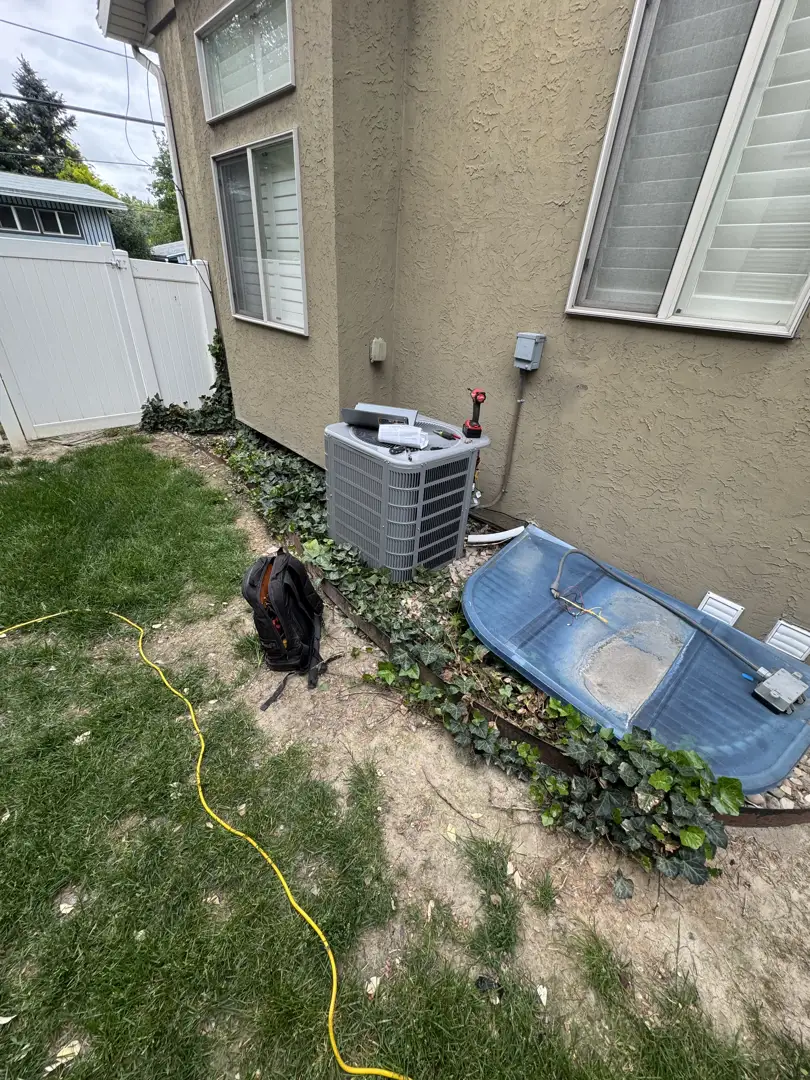
When an air conditioner is too small for the home it is trying to cool, it will exhibit clear warning signs. Recognizing these symptoms early can prevent total system failure during a July heatwave. To understand how proper sizing directly impacts your daily life, you can read more about How Proper AC Sizing Affects Comfort.
Recognizing Undersized AC Unit Signs and Problems in a Hot Dry Utah Home
If you suspect your home has an undersized ac unit signs and problems in a hot dry Utah home, look closely for these five classic indicators:
- Non-Stop Operation (High Duty Cycle): A properly sized AC system should run in cycles of 15 to 20 minutes to maintain your set temperature. If your system runs continuously from 10:00 AM to 10:00 PM (or even until 2:00 AM) on a 95-degree day without ever shutting off, it is a clear sign the unit lacks the capacity to handle the heat load.
- The Thermostat Gap: Your thermostat is set to 72°F, but the actual indoor temperature stubbornly hovers at 77°F or 79°F all afternoon. The system is running at 100% capacity but simply cannot remove heat as fast as the Utah sun is pushing it in.
- Massive Utility Spikes: Because the system is running nearly 24/7 at a 90% or higher duty cycle, your electric bills will skyrocket. An undersized unit can increase utility bills by 15% to 30% during peak summer months compared to a properly sized system that cycles normally.
- Severe Uneven Cooling: You might notice that your main floor feels relatively cool, but your upstairs bedrooms or rooms with west-facing windows feel like saunas. While this can sometimes point to ductwork issues, an undersized system lacks the air volume and capacity to push cool air evenly to the furthest reaches of your home.
- Weak Airflow and Comfort Issues: Even with a clean air filter, the air coming from your vents may feel weak or lukewarm. In our dry climate, you might also notice the air feels strangely clammy or warm, because the system cannot maintain a steady-state cooling cycle.
Long-Term Mechanical Damage from Running an Undersized System
Running an undersized air conditioner isn't just uncomfortable; it is mechanically destructive to the equipment. When a system is forced to run continuously under high thermal stress, its internal components wear out at an accelerated rate.
- Compressor Failure: The compressor is the heart of your AC system. It is designed to cycle on and off, allowing it to cool down between runs. Continuous operation causes the compressor to overheat, degrading the internal lubricants and leading to mechanical burnout. Replacing a compressor is one of the most expensive HVAC repairs a homeowner can face.
- Frozen Evaporator Coils: It sounds counterintuitive, but an overworked, undersized system can actually freeze over. Because the system runs continuously, the temperature of the evaporator coil can drop below freezing, especially if there is any slight restriction in airflow. Once ice forms on the coil, it acts as an insulator, completely blocking heat transfer and stopping all cooling.
- Blower Motor Burnout: The indoor blower motor is forced to run non-stop to circulate air. Operating under constant load causes the motor windings to overheat and fail prematurely.
- Shortened Lifespan: While a properly sized and maintained air conditioner in Utah should easily last 12 to 15 years, an undersized system often suffers catastrophic component failure within 5 to 8 years.
To understand the full financial and mechanical impact of this issue, explore our detailed guide on How Improperly Sized Systems Shorten Equipment Life.
Diagnosing Sizing Issues vs. Other Common HVAC Problems
Before assuming your air conditioner is undersized and needs to be replaced, it is crucial to rule out other common HVAC issues. Many problems, such as a low refrigerant charge, dirty filters, or restricted ductwork, can mimic the symptoms of an undersized system.
To help you distinguish between a system that is physically too small and one that simply needs professional maintenance or repair, we have put together this diagnostic comparison table:
| Symptom | Undersized AC Unit | Low Refrigerant Charge | Restricted/Leaky Ductwork | Dirty Evaporator/Condenser Coils |
|---|---|---|---|---|
| System Runtime | Runs continuously on hot days; cycles normally on mild days. | Runs continuously regardless of outdoor temperature. | Runs long cycles; may short-cycle if safety limits trip. | Runs long cycles; struggles to transfer heat. |
| Airflow Strength | Normal, steady airflow from vents, but air is not cold enough. | Normal airflow, but air feels warm or lukewarm. | Weak airflow from some or all vents; whistling noises. | Reduced airflow; air feels lukewarm. |
| Coil Freezing | Rare, unless run continuously with restricted airflow. | Very common; ice forms on copper lines and indoor coil. | Common due to restricted airflow over the coil. | Common; dirt insulates the coil, causing ice buildup. |
| Refrigerant Pressures | Pressures read normal when checked by a professional. | Pressures are low on both liquid and suction lines. | Pressures may read unusual due to poor heat exchange. | Pressures are abnormal due to lack of heat transfer. |
| Temperature Consistency | Severe hot spots in rooms furthest from the indoor unit. | Evenly warm throughout the entire house. | Specific rooms or entire zones have zero airflow. | General inability to cool the home evenly. |
Distinguishing Undersized AC Unit Signs and Problems in a Hot Dry Utah Home from Ductwork Leaks
Ductwork issues are one of the most common reasons a properly sized AC unit appears undersized. According to industry data, leaky or restricted ducts can waste up to 30% of an HVAC system's overall efficiency.
If your ductwork has leaks, cool air escapes into your attic, crawlspace, or wall cavities before it ever reaches your living spaces. This means your air conditioner has to run much longer to cool the home, creating the illusion of an undersized system.
Alternatively, if your home has restricted or poorly designed ducts (a common issue in older homes in areas like Murray, Holladay, and Bountiful), the system cannot move enough air mass to satisfy the thermostat. This restriction increases static pressure within the system, forcing the blower motor to work harder, reducing airflow, and potentially causing the evaporator coil to freeze.
A professional HVAC technician can perform a static pressure test to measure the resistance inside your ductwork, allowing us to pinpoint whether your comfort issues are caused by the size of your AC unit or the design of your ducts.
Frequently Asked Questions about AC Sizing in Utah
Navigating air conditioner sizing can be confusing, especially with Utah's unique high-altitude climate. Here are answers to the most common questions we hear from local homeowners.
What is a Manual J load calculation?
A Manual J load calculation is the industry-standard, scientific method developed by the Air Conditioning Contractors of America (ACCA) to determine the exact heating and cooling load of a building.
Unlike outdated "rules of thumb" that only look at square footage, a Manual J calculation takes into account a wide range of specific home characteristics, including:
- Local high-altitude climate data and design temperatures
- The home's precise orientation to the sun (solar heat gain)
- Insulation values (R-values) in the attic, walls, and floors
- The total square footage of windows, their direction, and their U-factor (shading coefficient)
- Ceiling heights and total interior volume
- Number of occupants and heat-producing appliances
A professional Manual J calculation is the only way to ensure your new air conditioner is sized correctly for your specific home and our unique Utah environment.
Can adding insulation fix an undersized AC unit?
In some cases, yes. If your air conditioner is only slightly undersized, improving your home’s thermal envelope can reduce the overall heat load enough for the system to keep up.
Adding blown-in fiberglass or cellulose insulation to your attic (aiming for R-49 or R-60, which is ideal for Utah's climate zone) and sealing air leaks around windows and doors can reduce your cooling load by 10% to 15%. This can make a noticeable difference on hot summer afternoons. However, if your system is significantly undersized (by a full ton or more), insulation alone will not solve the problem, and equipment replacement will be necessary.
How many square feet per ton of cooling do I need in Utah?
There is no single "magic number" for square footage per ton in Utah. While some builders and contractors still use the old rule of thumb of "1 ton per 500 to 600 square feet," this method is highly inaccurate.
A modern, tightly sealed home built in Herriman or South Jordan might only need 1 ton of cooling per 800 or 1,000 square feet. Conversely, an older, poorly insulated home with vaulted ceilings and large west-facing windows in Holladay or Salt Lake City might require 1 ton per 400 square feet. Relying on square footage alone to size an AC is the leading cause of improperly sized systems along the Wasatch Front.
Conclusion
Living with an undersized air conditioner in Utah means dealing with high energy bills, inconsistent comfort, and the constant worry of an unexpected system breakdown during the hottest weeks of the year. Because of our high altitude and dry desert climate, proper system sizing is not something that can be guessed or ignored.
If you are noticing undersized ac unit signs and problems in a hot dry Utah home, the first step is getting an accurate, professional assessment. At S.O.S. Heating & Cooling, we specialize in high-altitude load calculations and system diagnostics for homeowners across the Salt Lake Valley and Wasatch Front.
Whether you are in Bountiful, Draper, Herriman, Sandy, or Salt Lake City, we are here to help you find the perfect comfort solution for your home. We offer 24/7 emergency repairs, priority service, flexible financing options, and no evaluation fees during business hours.
Don't spend another summer sweating through the afternoon heat. Schedule your expert AC evaluation with S.O.S. Heating & Cooling today, and let us help you restore comfort, efficiency, and peace of mind to your home.

Plumbing
Expert plumbing services offering reliable repairs, installations, maintenance, and emergency support.

Air Conditioning
Comprehensive air conditioning services include installation, repairs, maintenance, and energy-efficient solutions.

Heating
Specialized heating services provide reliable installation, repair, system maintenance, and energy-optimization solutions.

Indoor Air Quality
Enhance your home’s air with our cutting-edge indoor air quality solutions you can trust.

Fireplaces
Transform your space into a warm and cozy atmosphere with our professional fireplace services.

Heat Pumps
Enjoy year-round comfort with our energy-efficient and professional heat pump solutions.
Explore Our Latest Insights and Updates in Plumbing Services
Ultimate Guide to How a Whole Home Humidifier Makes Your Heating System Feel Warmer in a Dry Utah Winter
A Quick Start Guide to 25C Tax Credit for HVAC in Utah
Hydro Jetting vs Drain Snake: Which Is Better for Stubborn Clogs in Utah?
