

Hot Water Hero: Fixing Your Water Heater Element Without Draining


.avif)

When Your Hot Water Goes Cold: Understanding Water Heater Element Repair
Water heater element repair is often the solution when your electric water heater stops producing hot water or only delivers lukewarm water. Here's what you need to know:
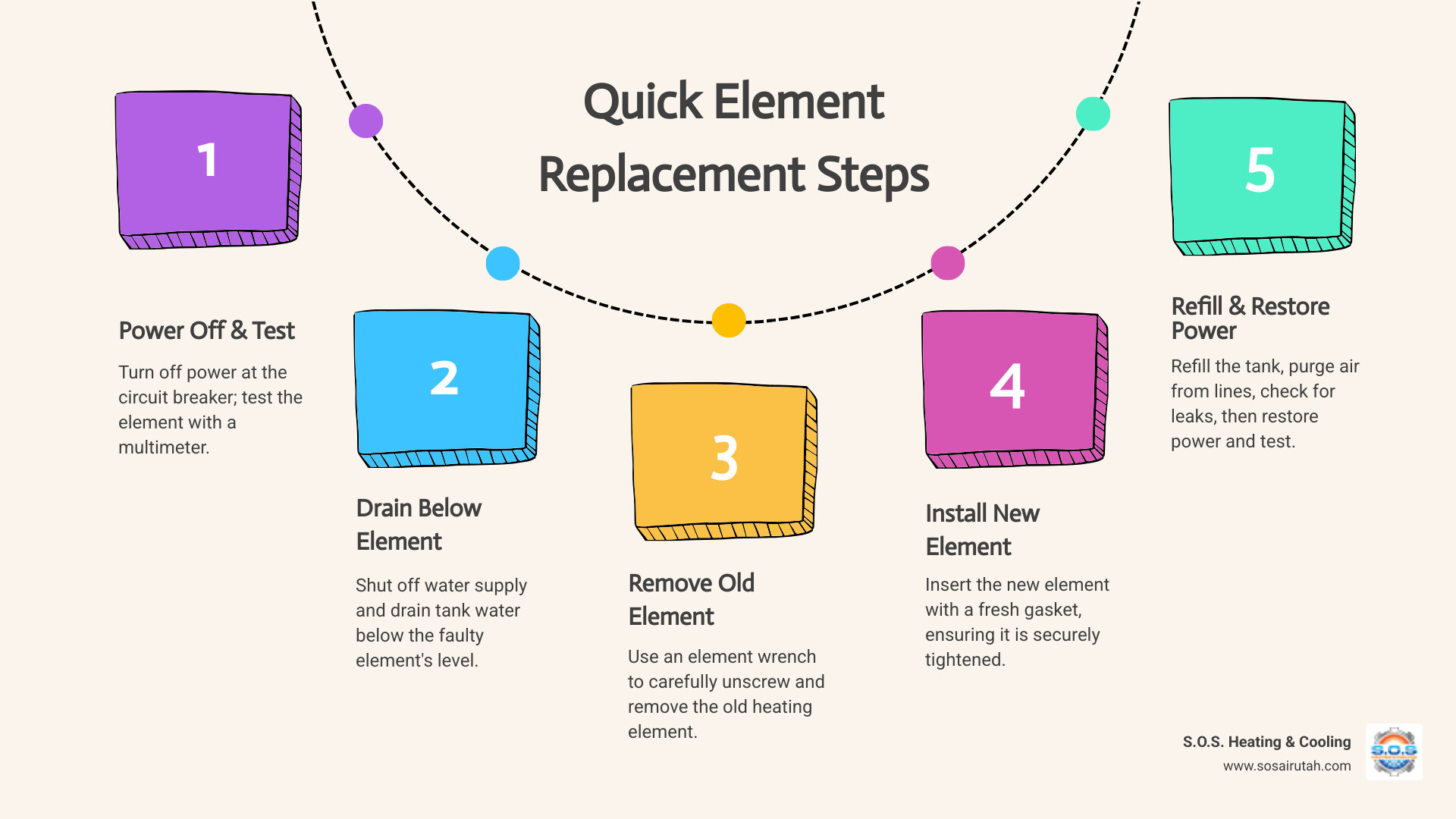
Quick Answer: How to Replace a Water Heater Element
- Turn off power at the circuit breaker
- Test the element with a multimeter (should read 10-30 ohms)
- Drain the tank below the element level
- Remove the old element with an element wrench
- Install the new element with a fresh gasket
- Refill the tank and purge air from lines
- Restore power and test
Common signs you need element repair: No hot water, lukewarm water only, hot water runs out quickly, or frequent circuit breaker trips.
If your electric water heater has stopped working, there's a 90 percent chance that replacing a heating element will fix it. This repair is inexpensive and manageable for most homeowners.
Electric water heaters use two elements—an upper and a lower one. The upper element heats water at the top of the tank first, while the lower one maintains the overall temperature. They can burn out from age or mineral buildup but are designed for easy replacement.
I'm Bryson Ninow with S.O.S. Heating & Cooling. I've helped many Salt Lake City homeowners with water heater element repair, saving them from costly system replacements. This guide will walk you through the process to restore your hot water safely.
Is Your Heating Element the Culprit? Signs and Diagnosis
An icy shower or hot water that disappears mid-task are frustrating signs that your water heater has a problem. Often, a failing heating element is the culprit. Learning to spot the warning signs is the first step to a fix. While some issues mean a full replacement is needed, as covered in our guide on Signs Your Water Heater Needs Replacement, many hot water problems can be solved with a simple water heater element repair.
Common Signs of a Failing Element
Your water heater isn't shy about letting you know when something's wrong. When a heating element starts to fail, you'll notice some pretty clear symptoms.
Lukewarm water is often the first sign. If your water is only warm, not hot, it usually means the lower heating element has failed. The upper element is working alone but can't heat the entire tank.
When your hot water runs out quickly, that's another red flag. If your hot water supply is shorter than usual, it's because a single working element can't keep up with demand.
No hot water at all is the most obvious symptom. Getting only cold water suggests both heating elements have failed, or at least the upper one has. The upper element controls the initial heating, so if it's burned out, you won't get any hot water.
If you hear hissing, crackling, or popping noises from your water heater, it often indicates sediment buildup on the heating elements. This layer traps water, which boils and makes noise. The buildup forces elements to work harder, leading to failure and the need for water heater element repair.
A tripped circuit breaker that keeps happening is a warning sign. A malfunctioning heating element can draw excessive electricity, causing your breaker to trip as a safety measure.
How to Test for a Faulty Element Before Starting a Water Heater Element Repair
Before taking anything apart, confirm the element is the problem. Testing is straightforward, but safety is paramount.
Turn off the power at your main electrical panel. Find the breaker for your water heater and flip it off. This is a critical safety step.
Next, access the elements. Remove the two metal access panels on the side of the heater. Pull back the insulation and plastic safety covers to reveal the thermostat and element terminals.
Even with the breaker off, always confirm the power is off with a non-contact voltage detector. Touch it to the electrical connections for the elements. If it doesn't light up or beep, it's safe to proceed.
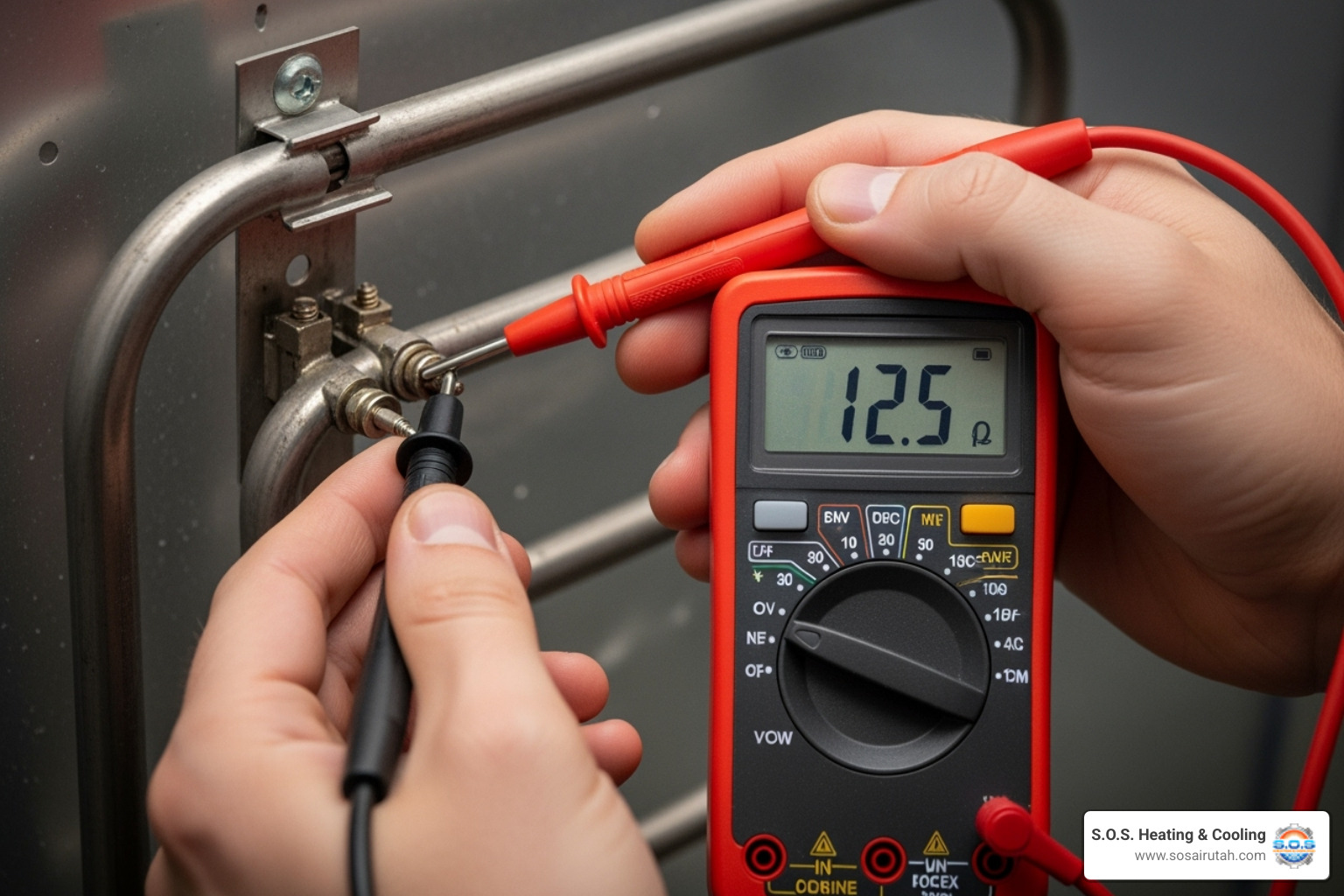
Now for the actual testing. You'll need a continuity tester for this step or a multimeter set to the lowest ohms setting.
Testing for continuity tells you if the element is burned out. Disconnect one wire from an element's screw terminal. Touch the tester's probes to both screw terminals.
A continuity tester will light up if the element is good. No light means it's burned out. With a multimeter, a healthy element reads between 10 and 30 ohms. A reading of zero or "OL" (open circuit) indicates a failed element.
You should also check for a short circuit. Touch one probe to an element terminal and the other to its metal mounting bracket. If the tester lights up or the multimeter shows any reading besides "OL," the element is shorted and must be replaced.
Run these tests on both elements. Even one faulty element requires water heater element repair.
Electric Water Heaters: The Focus of This Guide
This guide is specifically for electric water heaters, which use heating elements. Gas water heaters use a burner and pilot light, so their troubleshooting and repair are completely different. If you have a gas model, issues like a faulty thermocouple or gas control valve may be the cause. At S.O.S. Heating & Cooling, we service both types across the Salt Lake City area, but this guide focuses on water heater element repair for electric models.
Step-by-Step Guide to Water Heater Element Repair
Now that you've identified the problem, it's time for the fix. Replacing a heating element is a straightforward water heater element repair that many homeowners can do themselves. With the right tools and a careful approach, you can restore your hot water and save on a service call. If you're not comfortable, we're always here to help. For more DIY tips, see this resource: DIY Water Heater Testing and Repair.
Tools and Materials You'll Need
Before you dive in, let's make sure you have everything on hand.
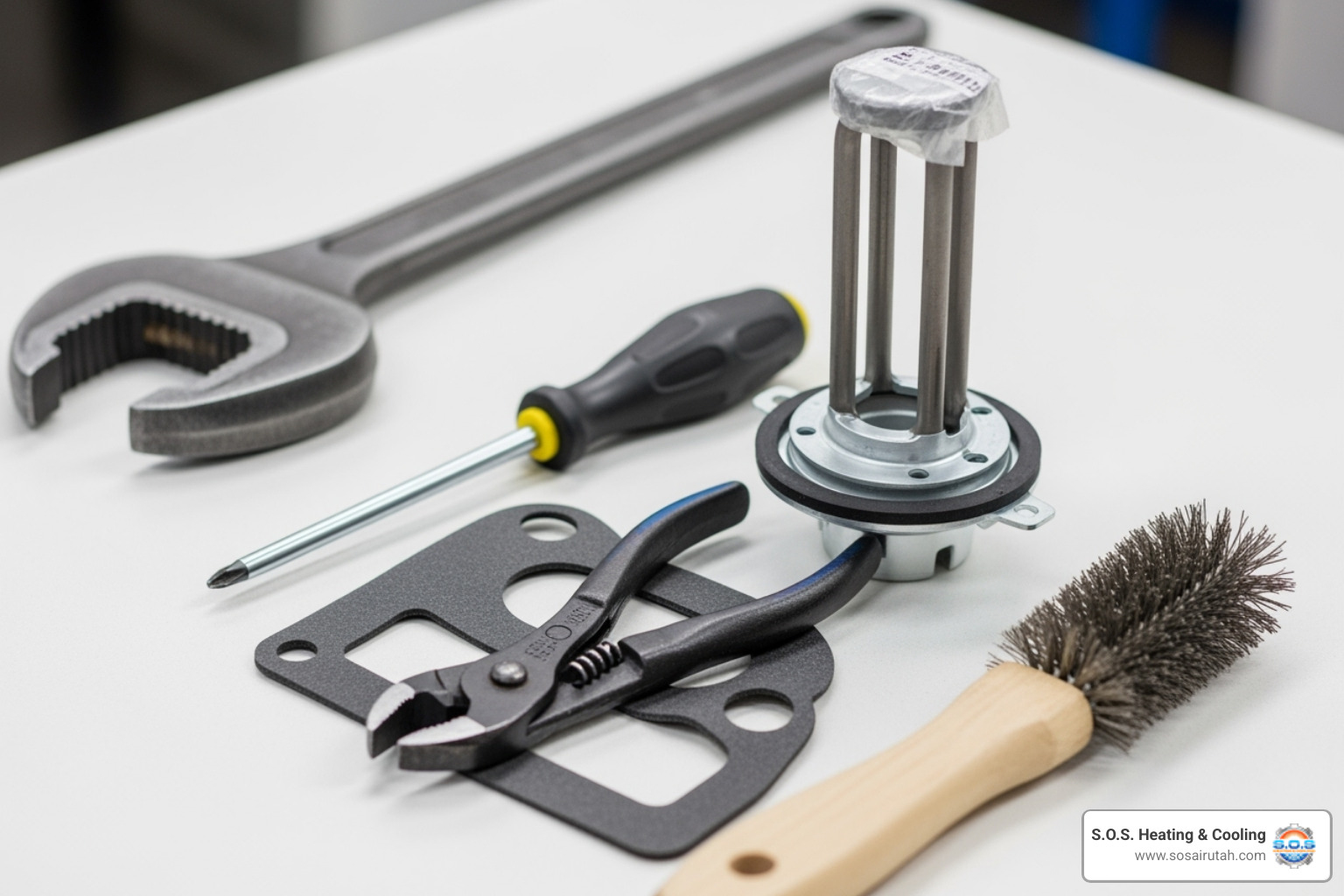
Your new heating element must match the voltage and wattage of the old one. Check the old element or the heater's data plate. Using the wrong one is dangerous and can damage your system.
You'll need a special element wrench or a 1 1/2-inch socket, as regular wrenches won't work. Also gather a garden hose, Phillips and flathead screwdrivers, needle-nose pliers, and a wire brush.
For safety, have a non-contact voltage detector and your multimeter or continuity tester. You'll also need a new gasket (most elements include one), a bucket, rags, and possibly Teflon tape for screw-in elements to ensure a watertight seal.
The Replacement Process: From Draining to Powering On
Now for the main event. Take your time with each step, and you'll have hot water flowing again soon.
Turn off the power first. At your electrical panel, flip the water heater's breaker to OFF. Double-check with a non-contact voltage detector that power is off. Then, shut the cold water inlet valve on top of the heater. Open a nearby hot water faucet to relieve pressure and let air in as it drains.
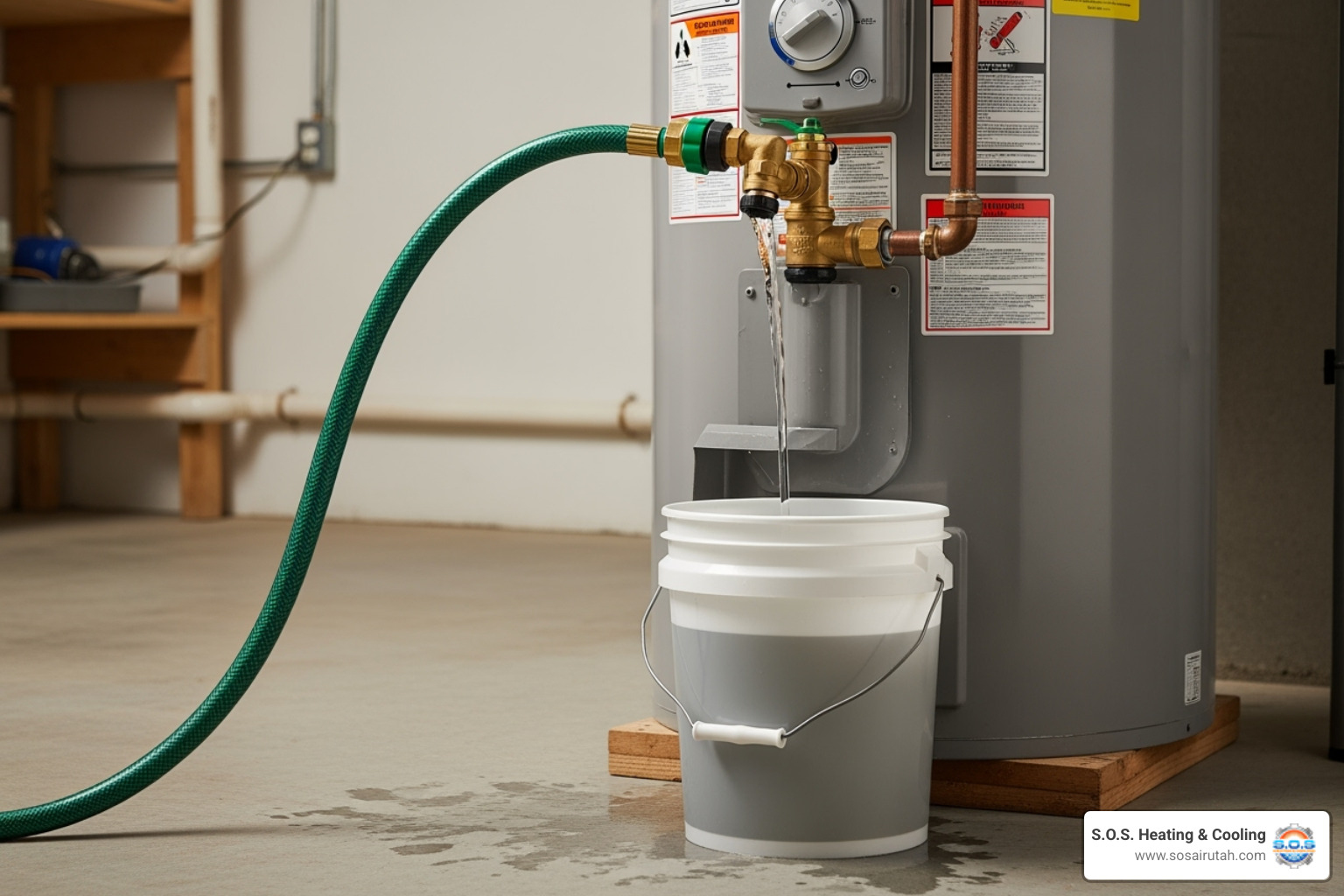
Next, drain the tank partially. Attach a garden hose to the drain valve at the bottom and run it to a floor drain. Open the valve. For the lower element, drain most of the tank. For the upper element, drain just below it. Tap the tank to hear where the water level is (it will sound hollow above the water).
Once the water level is right, remove the old heating element. Disconnect the wires (take a photo first to remember their placement). Use your element wrench to unscrew the old element counter-clockwise. A small amount of water may dribble out.
Before installing the new element, clean the threads and mounting area with your wire brush. Remove any sediment or old gasket material to ensure a proper seal.
Now for the installation. Place the new gasket on the new element. Hand-thread the new element clockwise, then use your element wrench to snug it up. Tighten enough to seal but don't overtighten, as this can damage the gasket or tank.
Time to refill the tank. Close the drain valve and turn on the cold water inlet. Crucially, open a nearby hot water faucet and let it run for at least three minutes. This purges all air from the tank. If you restore power with air in the tank, the new element will "dry fire" and burn out instantly.
Once water flows steadily from your faucet, close it and check carefully for leaks around the new element. If you see a few drops, tighten it slightly. For a steady drip, you may need to reinstall it.
Finally, restore the power. Reconnect the wires to the new element, then replace the safety cover, insulation, and access panel. Go to your electrical panel and flip the breaker back to ON.
Give the heater a few hours to heat the water, then test the tap. You should have hot water again. You've just completed a successful water heater element repair!
Pro Tips for Prevention and When to Call for Help
Now that your hot water is back, let's discuss prevention. A little maintenance and knowing when to call a pro can save you future trouble. For more on water heater health, see our Water Heater Repair Salt Lake City Guide.
Safety First: Key Precautions for Water Heater Element Repair
We want you to succeed with your DIY project, but we also want you to stay safe.
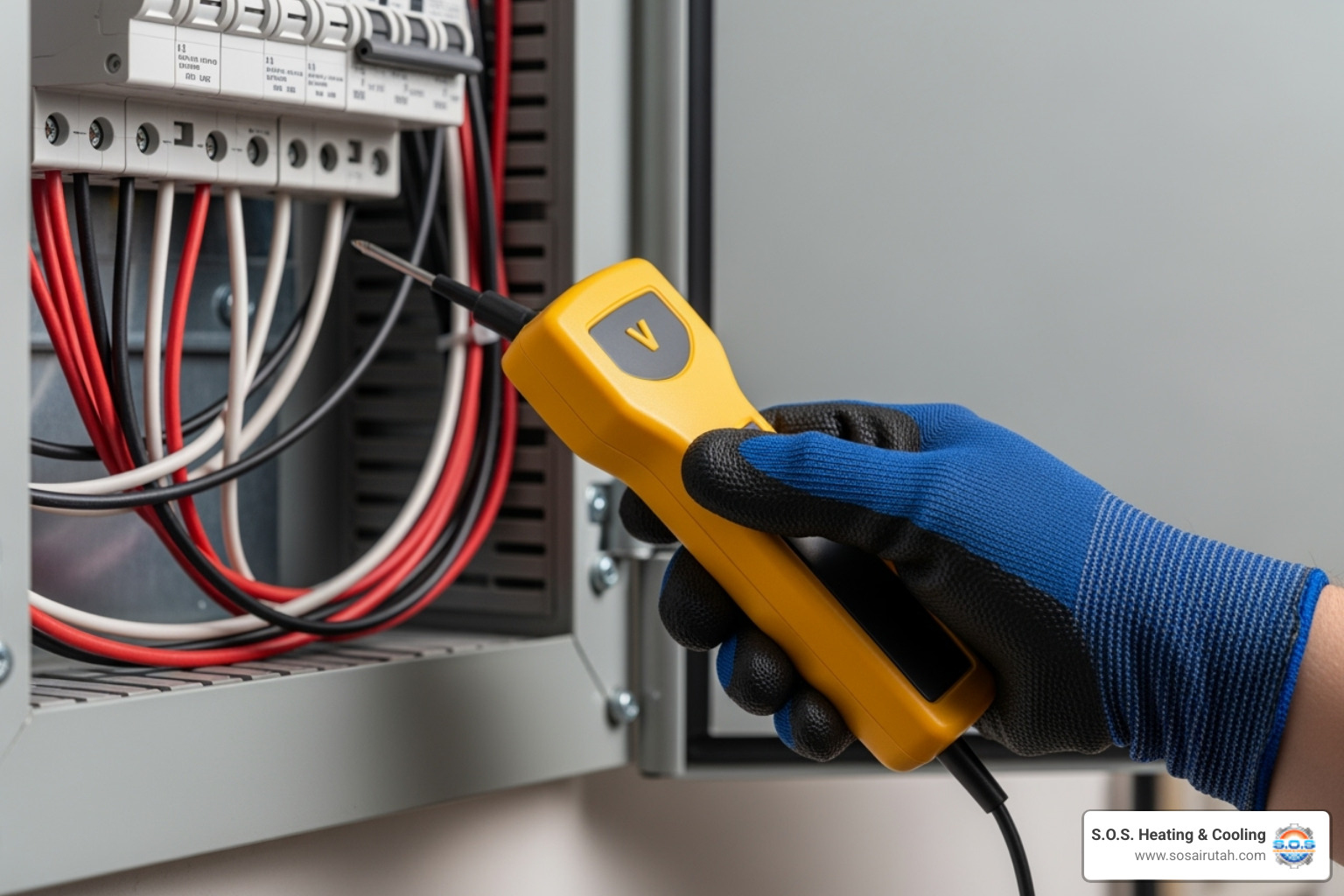
Electrical shock is the biggest hazard. Always turn off power at the circuit breaker before starting. Don't just trust the label; confirm power is off using a non-contact voltage detector. If you're uncomfortable with electrical work, call a professional.
Scalding water is another risk. Water in the tank can be 120-140 degrees Fahrenheit. Let it cool for several hours before draining, or run hot water faucets to lower the temperature.
Using the right tools is crucial. Use a proper element wrench to avoid stripping the element or tank threads, which would create a bigger problem. Always consult your owner's manual for model-specific instructions.
Preventing Future Failures with Regular Maintenance
Most heating element failures are preventable. The main enemy is sediment buildup.
In Utah, hard water is common. Minerals like calcium and magnesium settle in your tank, forming sediment. This buildup covers the lower element, forcing it to work harder and burn out prematurely.
Flushing your tank annually is the most effective way to prevent this. This simple process removes sediment before it causes damage. We often see heaters fail early in Salt Lake City because this step was skipped.
Your anode rod deserves attention too. This sacrificial component corrodes to protect your tank from rust. Once it's gone, the tank rusts, leading to leaks and failure. Inspect and replace it every few years to extend your heater's life. Learn more on our Water Heater service page.
For hard water, common in the Salt Lake Valley, a water softener is a great investment. It protects your water heater, plumbing, and appliances by reducing mineral buildup, leading to longer-lasting elements and fewer repairs.
When to Call a Professional Instead of DIY
While DIY repair is satisfying, some situations require a professional. At S.O.S. Heating & Cooling, we've seen DIY repairs create bigger issues, and we want to help you avoid that.
If you're uncomfortable with electrical work, stop right there. This is the top reason to call a pro. Electricity is dangerous. If you're hesitant about testing voltage or handling wires, trust your gut and let our trained technicians handle it safely.
When the problem persists after you've replaced an element, it could be a faulty thermostat, wiring, or a defective new part. Diagnosing these issues requires specialized knowledge. Let us find the root cause.
A leaking tank is non-negotiable—you need a professional. A leak from the tank body itself means it has corroded and must be replaced. This isn't a DIY fix; it requires professional removal and installation.
If your water heater is over 10 years old and experiencing multiple issues, don't sink money into it. We can help you decide if another repair makes sense or if a new, efficient model is a better investment.
And sometimes you just don't have the time, tools, or inclination. Our team serves the Salt Lake Valley with 24/7 emergency repairs, offering no evaluation fees during business hours in Salt Lake City. For urgent help, see our Emergency Water Heater Repair Utah Guide.
Frequently Asked Questions about Water Heater Elements
Here are answers to the most common questions our team at S.O.S. Heating & Cooling receives about water heater elements.
What's the difference between the top and bottom heating elements?
The upper element heats the water at the top of the tank first for quick hot water. The lower element then takes over to heat the rest of the tank and maintain the temperature. They work in turns, never at the same time. For water heater element repair, it's crucial to know they are not interchangeable. They often have different wattages, so always match the new element to the old one's specifications.
Do all water heaters have heating elements?
No, only electric water heaters use heating elements. Gas water heaters use a burner and pilot light. If your gas heater fails, the issue might be the pilot light, thermocouple, or gas control valve. You can tell the difference: gas heaters have a vent pipe and gas line, while electric models have an electrical conduit.
How long should a water heater element last?
Heating elements typically last 10 to 15 years, but this varies. Water quality is the main factor; hard water creates scale buildup that causes elements to overwork and fail early. High hot water usage also increases wear. Regular maintenance, like annual tank flushing to remove sediment, is key to extending element life. With proper care, elements can last 15+ years; without it, they might fail in 5-7 years. Annual flushing is the best way to prevent premature water heater element repair.
Conclusion: Enjoy Your Hot Water Again
Successfully completing a water heater element repair is empowering. By following this guide, you've taken control of an essential home system and saved money. Enjoy that hot water!
However, DIY repair isn't for everyone. Electrical and plumbing work can be intimidating, and sometimes the problem is more complex than it seems. If you're not comfortable, professional help is the right choice.
At S.O.S. Heating & Cooling, we help homeowners across the Salt Lake Valley, including Salt Lake City, Sandy, and Layton, keep their hot water flowing. We know a broken water heater is frustrating, so we offer 24/7 emergency repair services. Our team can fix any issue, from failing elements to leaking tanks, right the first time.
To make it easy for you, we offer no evaluation fees during business hours in the Salt Lake City area and flexible financing options. Our goal is your complete satisfaction and peace of mind.
Whether you've completed your DIY water heater element repair or decided to call the experts, we're ready to help. For professional water heater repair in Salt Lake City, UT, contact our expert team at S.O.S. Heating & Cooling. We're your local hot water heroes, ready to keep your home comfortable.
Explore Our Latest Insights and Updates in Plumbing Services
The Fantastic Four Components That Keep You Cool
Avoid the Summer Meltdown with These Proactive Spring Steps
Should You Fix or Flee Your Old AC Unit?