

5 Tips and Tricks to Find Water Heater Repair Cottonwood


.avif)

Why Finding the Right Water Heater Repair Service in Cottonwood Matters
A water heater failure often starts with a cold shower or a puddle in the utility closet, disrupting your daily routine. The challenge isn't just the breakdown, but finding a qualified professional for water heater repair cottonwood homeowners can trust for a quick, accurate diagnosis and transparent service.
If you need water heater repair in Cottonwood, here are the five key steps:
- Recognize warning signs like no hot water, strange noises, leaks, or rusty water
- Decide between repair and replacement based on age, frequency of issues, and efficiency
- Find a qualified professional with proper licensing, insurance, and local experience
- Schedule regular maintenance to prevent sudden breakdowns and extend equipment life
- Know how to handle emergencies by shutting off water and power safely before help arrives
For comprehensive plumbing services in the Salt Lake area, visit our main plumbing page, or if you're ready to schedule service, contact our team directly.
Understanding these five tips will help you make informed decisions and avoid the stress of an emergency. Most water heater problems show warning signs before a complete failure, giving you time to act if you know what to look for.
I'm Bryson Ninow, and I've spent years helping Cottonwood-area families steer water heater challenges. My goal is to bring clarity and peace of mind during what can be a stressful situation.
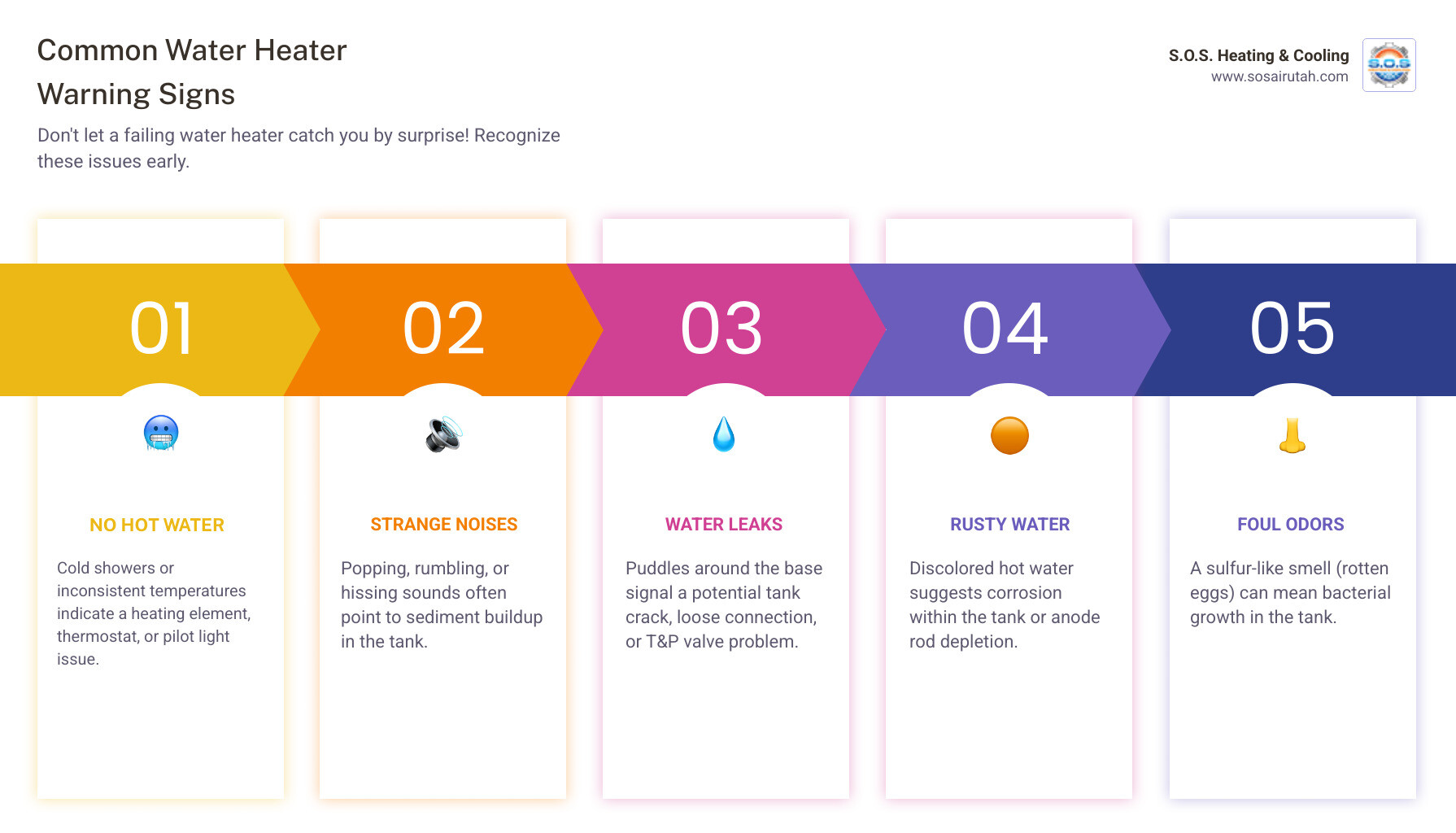
Tip 1: Recognize the Warning Signs of a Failing Water Heater
Most water heaters show signs of trouble before they fail completely. Learning to recognize these warnings can help you schedule water heater repair Cottonwood services on your terms, avoiding a middle-of-the-night emergency.
- No hot water or lukewarm water is the most obvious red flag. For gas heaters, it could be a pilot light or thermocouple issue. For electric models, it might be a tripped breaker or a bad heating element.
- Popping or rumbling noises usually indicate sediment buildup at the bottom of the tank. Minerals in the water get superheated, creating noise and forcing the unit to work harder.
- Rusty or discolored water from your hot water taps suggests the inside of your tank is corroding. This is a serious warning that the tank's protective lining is failing.
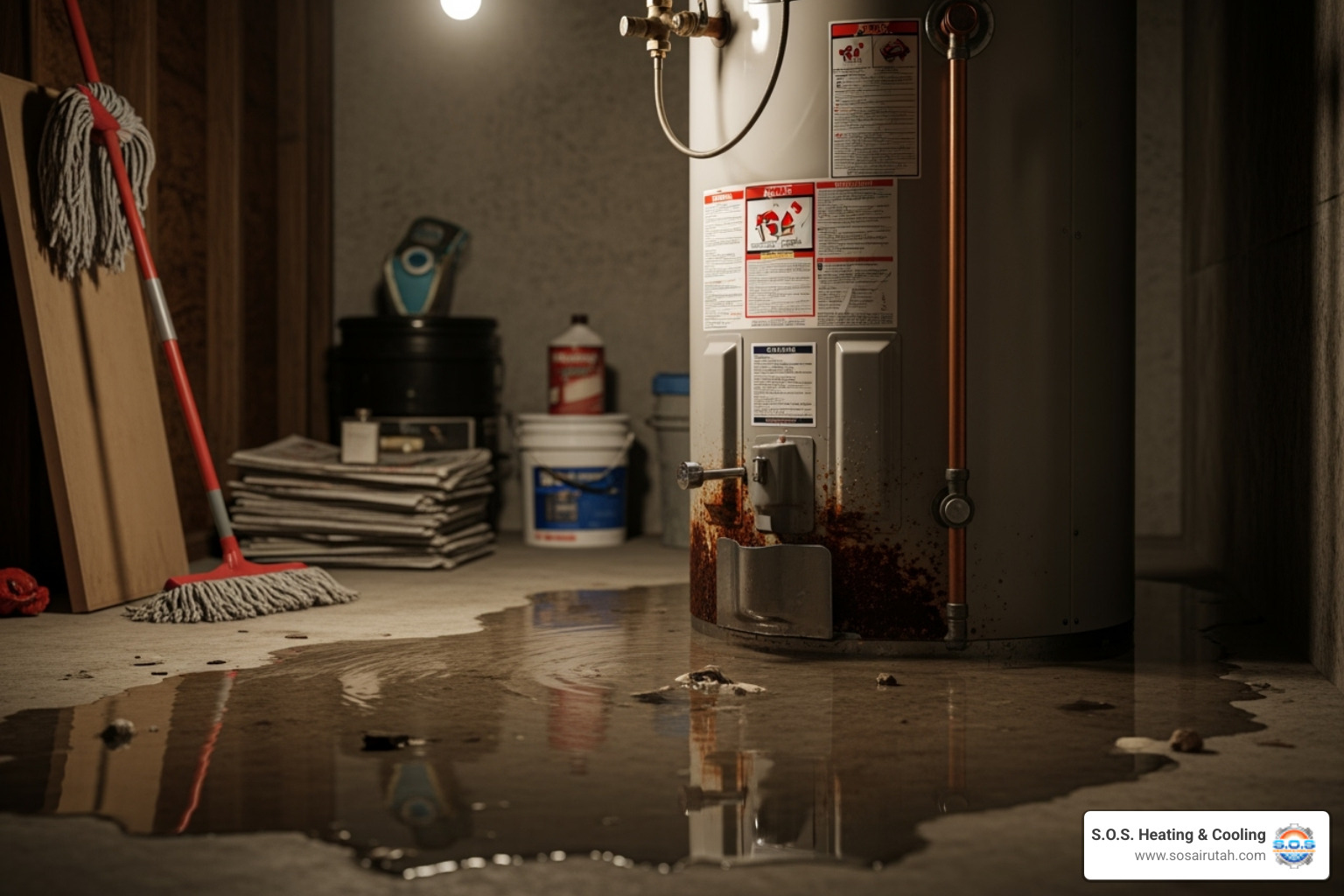
- Water leaks around the tank demand immediate attention. While some leaks from valves are fixable, water seeping from the tank itself usually means it has cracked and needs replacement.
- Foul odors from hot water, like a rotten egg smell, often point to a chemical reaction involving the anode rod. This indicates internal components need professional service.
Differentiating Minor Issues from Major Problems
Some issues, like a tripped breaker or an extinguished pilot light, might be simple fixes. However, significant leaks, gas odors, or problems requiring internal part replacement need a professional. In Cottonwood, common issues are exacerbated by local conditions. Hard water leads to sediment buildup, causing noise and inefficiency, which requires regular tank flushing. Anode rod corrosion is another frequent problem, as this sacrificial rod protects the tank and needs replacement every 3-5 years. Gas and electric heaters have unique failure points like thermocouples or heating elements, while tankless units require periodic descaling to combat mineral buildup.
If you smell gas near your water heater, leave your home immediately, call your gas company from outside, and then contact a professional. Gas leaks are genuine safety emergencies and are not DIY territory.
Tip 2: Decide Between Repair and Replacement
When your water heater has a problem, you face a big decision: repair or replace? This choice depends on age, repair frequency, and cost, making it a common dilemma for homeowners needing water heater repair Cottonwood services.
Repair vs. Replacement: Key Considerations
| Factor | Repair | Replacement |
|---|---|---|
| Water Heater Age | Best for younger units (under 8-10 years for tank, under 15 for tankless). | Recommended for older units nearing or past their typical lifespan (8-12 years for tank, 20+ years for tankless). |
| Repair Frequency | If this is a first-time or infrequent issue. | If repairs are becoming frequent, indicating a pattern of decline. |
| Declining Efficiency | No significant change in energy bills. | Noticeable increase in energy bills, despite no change in usage. Sediment buildup or aging components reduce efficiency. |
| Visible Tank Rust | Minor external rust on fittings might be repairable. | Any rust on the tank itself, or rusty water, suggests internal corrosion and an imminent leak. |
| Cost of Repair | If the repair cost is less than 50% of the cost of a new unit. | If the repair cost is significant, especially if the unit is old, replacement often offers better long-term value and efficiency. |
| Long-Term Value | Extends the life of a relatively new, efficient unit. | Provides improved energy efficiency, modern features, a new warranty, and peace of mind for many years. |
- Water heater age is a key factor. Repair is usually best for tank-style heaters under eight years old, as they have a typical lifespan of 8-12 years. Tankless units can last 20+ years, so repairing an older one can still be worthwhile.
- Repair frequency tells a story. If you're calling for service every few months, you may be paying for a new unit one expensive repair at a time.
- Declining efficiency often appears as higher utility bills. A new, energy-efficient model can offer long-term savings that offset the initial cost.
- Visible tank rust or rusty water is a clear sign of internal corrosion. A leak is inevitable at this point, and replacement is the only solution.
- The cost of repair should be weighed against replacement value. A common rule is if the repair costs more than 50% of a new unit's price, replacement is the smarter financial choice, especially for an older heater.
A new unit provides improved energy efficiency, modern safety features, a new warranty, and peace of mind. We can help you make the most cost-effective decision for your home.
Tip 3: Know What to Look for in a Qualified Professional
When you need water heater repair Cottonwood services, don't just call the first number you find. Choosing a qualified, trustworthy professional is crucial for a proper fix. Look for these key qualifications:

- State Licensing: A licensed technician has the required training and has passed exams to uphold professional standards. Always ask for proof of licensing.
- Full Insurance Coverage: The professional should carry both liability insurance (to protect your home) and workers' compensation (to cover their technicians). This protects you from accidental damages or injuries.
- Years of Experience: An experienced technician can diagnose issues faster and more accurately, having seen hundreds of different problems across various models.
- Positive Customer Reviews: Check online reviews to see how the company treats its customers. Look for patterns of punctuality, clear communication, and quality work.
- 24/7 Emergency Availability: Water heaters fail at all hours. A company offering around-the-clock emergency service is essential for handling urgent issues like major leaks.
The Advantage of Choosing a Local Cottonwood Plumber
Choosing a local plumber for your water heater repair Cottonwood needs offers distinct advantages. A local team provides a faster response in emergencies, which can prevent significant water damage. They are also familiar with local building codes and common issues like Utah's hard water, ensuring your repair is done correctly and to standard. Local businesses thrive on their community reputation, which often translates to a higher level of service and accountability. Over time, you can build a trusted relationship with a local pro, giving you peace of mind for any future plumbing needs.
At S.O.S. Heating & Cooling, we are that trusted local partner for Cottonwood families, committed to providing prompt, professional service.
Tip 4: Understand the Importance of Regular Maintenance
Regular maintenance is a smart investment for your water heater, much like a tune-up for your car. It prevents unexpected breakdowns, improves efficiency, and extends the unit's lifespan, giving Cottonwood homeowners peace of mind.
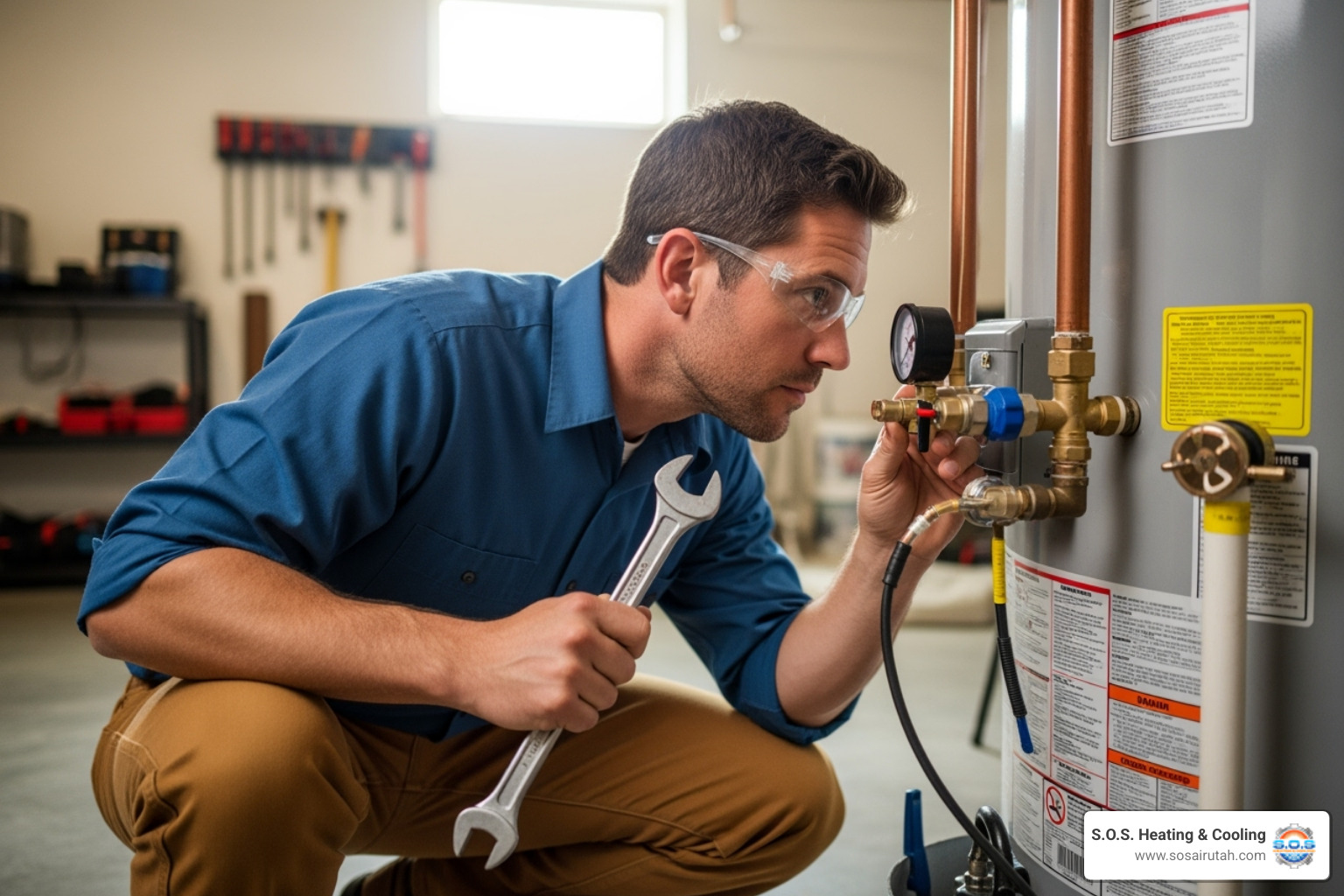
Most water heater emergencies are the result of neglect. A little preventive care can stop small issues before they become expensive disasters. The key benefits include:
- Extending Equipment Lifespan: A well-maintained tank heater can last 8-12 years, while a tankless unit can exceed 20 years. Neglect can shorten this lifespan significantly.
- Improving Energy Efficiency: Sediment buildup forces your heater to work harder, increasing utility bills. Regular flushing keeps it running efficiently.
- Preventing Sudden Breakdowns: A routine check can catch a corroding anode rod or a faulty valve before it causes a crisis, saving you from an emergency repair.
- Ensuring Safety: Water heaters combine water, pressure, and either gas or electricity. Maintenance ensures safety features, like the temperature-pressure relief valve, are functioning correctly.
Key Steps in a Professional Water Heater Tune-Up for Water Heater Repair Cottonwood
When we perform a professional water heater repair Cottonwood maintenance visit, we follow a comprehensive checklist. Key steps include:
- Tank Flushing: We drain the tank to remove sediment and mineral deposits, which is crucial in areas with hard water like Cottonwood.
- Anode Rod Inspection: We check the sacrificial anode rod, which corrodes to protect your tank. It typically needs replacement every 3-5 years.
- T&P Valve Testing: We test the temperature-pressure relief valve to ensure this critical safety feature works properly.
- Thermostat Calibration: We verify the thermostat is accurate and set to a safe, efficient temperature (usually around 120°F).
- Component Inspection: We inspect and clean heating elements (electric) or the burner assembly (gas) and check all connections for leaks.
Regular maintenance is one of the smartest things you can do as a homeowner to keep your water heater running safely and efficiently.
Tip 5: How to Handle a Water Heater Emergency
Even with proper maintenance, emergencies can occur. Knowing how to react safely to a sudden water heater failure can prevent a minor issue from becoming a major disaster. When facing a water heater repair Cottonwood emergency, your first priority is safety.
Recognizing a True Water Heater Emergency
Immediate action is required for certain signs. A major water leak that is quickly flooding the area is a clear emergency. If you smell gas (a rotten egg odor) near your water heater, it is a critical situation that requires immediate evacuation. Likewise, any smoke, burning smells, or loud banging noises signal a serious problem that needs an emergency response.
Your Emergency Action Plan
If you identify an emergency, stay calm and follow these steps:
- Shut Off the Water Supply: Turn the shut-off valve on the cold water inlet pipe (usually at the top of the tank) clockwise. If you can't find it or it's stuck, turn off your home's main water shut-off valve.
- Shut Off the Power or Gas: For an electric heater, flip the corresponding breaker in your electrical panel to "OFF." For a gas heater, turn the gas shut-off valve handle so it is perpendicular to the pipe.
- Call for Professional Help: Once the immediate danger is contained, call for 24/7 emergency service. Our team is ready to respond to your water heater repair Cottonwood emergency day or night.
CRITICAL SAFETY NOTE: If you smell gas, do not use any phones, light switches, or create any sparks inside the house. Evacuate everyone immediately, call your gas company from a safe distance, and then call a plumber once the scene is secure.
Quick Reference: Emergency Shutdown Steps
- Identify: Major leak, gas smell, smoke, or loud banging.
- Shut Off Water: Turn the cold water inlet valve clockwise.
- Cut Power/Gas: Flip the breaker (electric) or turn the gas valve (gas).
- Evacuate (If Gas Smell): Leave immediately and call the gas company from outside.
- Call a Professional: Contact us for 24/7 emergency service.
Taking these steps can significantly reduce damage and keep everyone safe until we arrive.
Frequently Asked Questions about Water Heater Repair Cottonwood
We've heard many questions about water heater repair Cottonwood issues. Here are answers to some of the most common concerns.
What types of water heaters are common in Cottonwood homes?
Cottonwood homes feature a mix of water heaters. Tank-style gas heaters are popular, especially in older homes, and often need repairs related to pilot lights, thermocouples, or gas valves. Electric tank-style heaters are also common and typically require heating element or thermostat replacements. Tankless water heaters are gaining popularity for their efficiency but are susceptible to mineral buildup from our hard water, requiring regular descaling. You may also find highly efficient heat pump water heaters or eco-friendly solar water heaters, each with its own specialized repair needs. We have experience servicing all these types.
Can I perform my own water heater repairs?
While you can handle simple tasks like checking a breaker or pilot light, most water heater repair Cottonwood projects are not safe for DIY. Working with gas lines, high-voltage electricity, or pressurized hot water requires professional training and tools to avoid fire, shock, or scalding hazards. Attempting complex repairs can also void your warranty and lead to more extensive damage. For safety and peace of mind, it's best to call a professional who is licensed, insured, and guarantees their work.
How long does a typical water heater last?
This depends on the type, maintenance, and local water quality. Tank water heaters (gas and electric) generally last 8 to 12 years. Tankless water heaters are more durable, often lasting 20 years or more. The biggest factor affecting longevity in our area is hard water, which causes mineral buildup that strains the unit. Regular maintenance, including flushing the tank and checking the anode rod, is the single best way to maximize your water heater's lifespan. If your unit is approaching the 10-year mark and having frequent issues, it may be time to discuss replacement.
Conclusion
Your water heater is an essential appliance you rely on daily. By recognizing warning signs, making smart repair-or-replace decisions, choosing a qualified pro, performing regular maintenance, and knowing emergency procedures, you can manage your water heater with confidence.
Water heater repair Cottonwood homeowners need is about more than just a quick fix; it's about having a reliable local partner. It's about the peace of mind that comes from knowing an expert is just a phone call away.
At S.O.S. Heating & Cooling, we've served families throughout Cottonwood and the Greater Salt Lake Area for years. We understand the stress of a broken water heater, which is why we offer 24/7 emergency service, transparent communication, and reliable work. We believe in doing the job right the first time and treating your home with respect.
Ready to schedule maintenance, need an emergency repair, or just have questions about your water heater? We're here for you. Contact us for expert water heater repair and experience the difference that local expertise and genuine care can make.
For comprehensive plumbing services throughout the Salt Lake area, visit our main plumbing page, or reach out directly through our contact page. We're your neighbors, and we're committed to keeping Cottonwood homes comfortable and safe.
Explore Our Latest Insights and Updates in Plumbing Services
The Dynamic Duo of Home Cooling
Utah Energy Rebates: How to Save Big on High Efficiency Heating and Cooling

Is Your AC Working Too Hard? How Dry Air Impacts Performance