

Everything You Need to Know About the Distress to Rest Partner Program


.avif)

What the Distress to Rest Partner Program Means for Your Home — And Why It Matters
What the distress to rest partner program means for your home is simple: it's a pathway that helps homeowners facing financial hardship or property deterioration access the support, repairs, and stability they need to turn a stressed, struggling home into a safe and comfortable one.
Here's a quick breakdown of what the program covers:
| What It Does | What It Means for You |
|---|---|
| Connects distressed homeowners with rehabilitation resources | Your home gets the repairs it needs |
| Ties into federal HOME Investment Partnerships funding | Eligible homeowners can access assistance without bearing the full cost alone |
| Requires property safety compliance (smoke alarms, CO detection, energy standards) | Your home is brought up to modern safety and efficiency standards |
| Includes long-term affordability protections | You stay in your home without falling back into financial distress |
| Involves local Participating Jurisdictions and CHDOs | Support is coordinated through trusted community organizations |
For many Salt Lake City homeowners, an unexpected HVAC breakdown or a failing home system can feel like the beginning of a financial spiral. Emergency repairs are stressful, costs add up fast, and it can be hard to know where to turn. That's exactly the kind of distress this program is designed to address — by connecting struggling homeowners with the resources, standards, and support systems that restore both their property and their peace of mind.
I'm Bryson Ninow, an HVAC professional with certifications including NATE, EPA, and RMGA, and years of experience helping Salt Lake City homeowners navigate energy efficiency upgrades, emergency repairs, and assistance programs that make home comfort more accessible. Understanding what the distress to rest partner program means for your home is something I'm passionate about, because I've seen how the right support at the right time can transform a family's living situation. Let's walk through everything you need to know.
Basic what the distress to rest partner program means for your home terms:
- advantages of a company that treats your home like their own
- benefits of choosing a local hvac and plumbing company built on integrity
Understanding the Distress to Rest Initiative
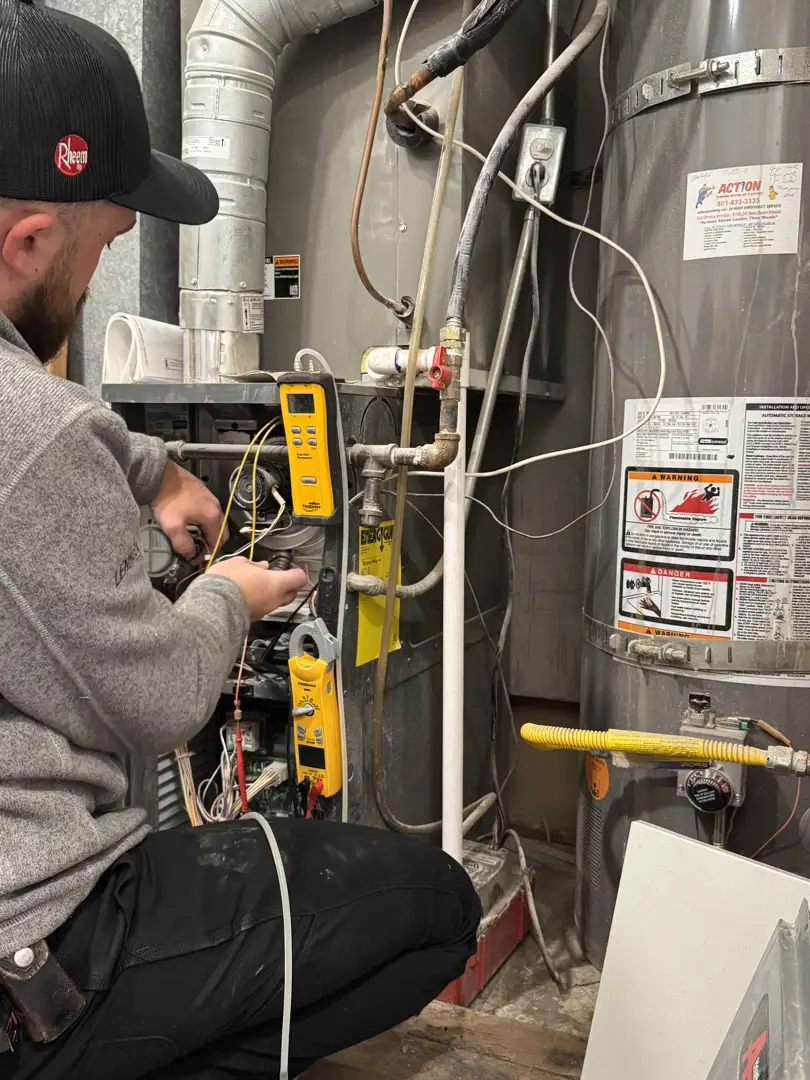
When we talk about the transition from distress to rest, we are looking at a comprehensive approach to home stability. In the context of housing, "distress" isn't just an emotional state—it often refers to a property that is falling into disrepair or a homeowner facing financial hurdles like foreclosure. To address this, the program integrates closely with the HOME Investment Partnerships Program, a federal block grant designed to create affordable housing for low-income households.
A major shift occurred recently with the HUD final rule that became effective on February 5, 2025. This rule was designed to streamline how these programs work, making it easier for homeowners to receive help while ensuring the quality of the work is top-tier. For us here in the Salt Lake City area, this means more flexibility in how local Participating Jurisdictions (PJs) and Community Housing Development Organizations (CHDOs) can use funds to rehabilitate homes.
The initiative focuses on property rehabilitation—taking a home that might have a failing furnace or leaky plumbing and bringing it back to a state of "rest." By updating definitions around project commitments and land use, the 2025 rules ensure that when a project starts, it has a clear 12-month timeline to get moving, preventing homes from sitting in a state of "distress" for longer than necessary.
Eligibility and Participation Criteria
To understand what the distress to rest partner program means for your home, you first need to know if you qualify. The program is specifically tailored to help those who need it most.
- Income Determinations: Eligibility is primarily based on household income. The recent HUD updates have streamlined how income is determined, ensuring that the process is fair and aligns with other programs like Section 8.
- Participating Jurisdictions (PJs): These are the local government entities (like Salt Lake County or specific city offices) that manage the funds. They decide which specific local needs are prioritized.
- Homeownership Units: The program applies to single-family homes that are owner-occupied. If you are facing financial hardship or the threat of foreclosure, the program acts as a buffer to help you keep your home while making it livable.
- CHDO Involvement: Community Housing Development Organizations often act as the "boots on the ground," helping manage the rehabilitation of distressed properties.
Property Standards and Safety Compliance
One of the most important aspects of the 2025 HUD rule is the adoption of NSPIRE (National Standards for the Physical Inspection of Real Estate). This isn't just a fancy acronym; it’s a rigorous set of standards that ensures your home is actually safe.
- Carbon Monoxide and Smoke Detection: The new rules mandate strict requirements for CO and smoke alarms. In our line of work, we know that these aren't just "extras"—they are life-saving devices that every home in Sandy, Draper, or Millcreek needs.
- 20% Sample Inspections: To ensure quality across the board, the program requires a 20% sample size for property inspections. This ensures that the rehabilitation work meets federal and local standards.
- Energy Efficiency and Green Building: There is a big push for sustainability. In fact, the recent rules allow for a 5% increase in the maximum per-unit subsidy if the home meets specific green building standards. This means better insulation, higher-efficiency HVAC systems, and lower utility bills for you.
What the Distress to Rest Partner Program Means for Your Home
At its heart, this program is about moving from a state of constant worry to a state of total comfort. When your home is in "distress," you're always waiting for the next thing to break. You might be sleeping in a cold room because the heater is temperamental, or you might be stressed about a high water bill from a hidden leak.
What the distress to rest partner program means for your home is the end of that cycle. By providing a framework for emergency repairs and priority service, the program ensures that your essential systems—heating, cooling, and plumbing—are reliable. It turns your home into a sanctuary rather than a source of stress.
Improving Physical Comfort: What the Distress to Rest Partner Program Means for Your Home
We often think of rest as just "sleeping," but true rest is multifaceted. Research suggests there are seven types of rest: physical, mental, emotional, social, sensory, creative, and spiritual. Your home environment plays a massive role in almost all of them.
- Physical Rest: This is about more than just a bed. It’s about the quality of the air you breathe and the temperature of the room. A properly maintained HVAC system ensures you aren't shivering or sweating, allowing your body to actually recover.
- Sensory Rest: Old, struggling furnaces can be loud and disruptive. Modern, high-efficiency systems are whisper-quiet, reducing the "sensory load" on your brain.
- Mental Peace: When you know your home is compliant with the latest safety standards (like the 2025 HUD updates), you can stop the "racing thoughts" about potential house fires or gas leaks.
Think of your home’s efficiency as an "energy bank account." When your home is in distress, you’re constantly overdrawing that account through high utility bills and frequent repairs. The partner program helps you make a massive "deposit" into that account, giving you a buffer of comfort and financial ease.
Ensuring Future Stability: What the Distress to Rest Partner Program Means for Your Home
Stability is the foundation of a happy life. The program ensures this through several mechanisms:
- Utility Allowances: The program aligns utility allowances with local schedules, ensuring that your monthly costs are predictable and manageable.
- Reduced Energy Costs: By incentivizing green building and high-efficiency upgrades, the program permanently lowers your cost of living.
- Property Value: Rehabilitation doesn't just fix problems; it restores the value of your asset. For a family in South Jordan or Riverton, this means building equity rather than losing it.
- Period of Affordability: The program includes "periods of affordability," which are legal agreements that ensure the home remains affordable for a set number of years. This prevents the home from being flipped or becoming unaffordable shortly after the repairs are made.
Navigating the Application and Rehabilitation Process
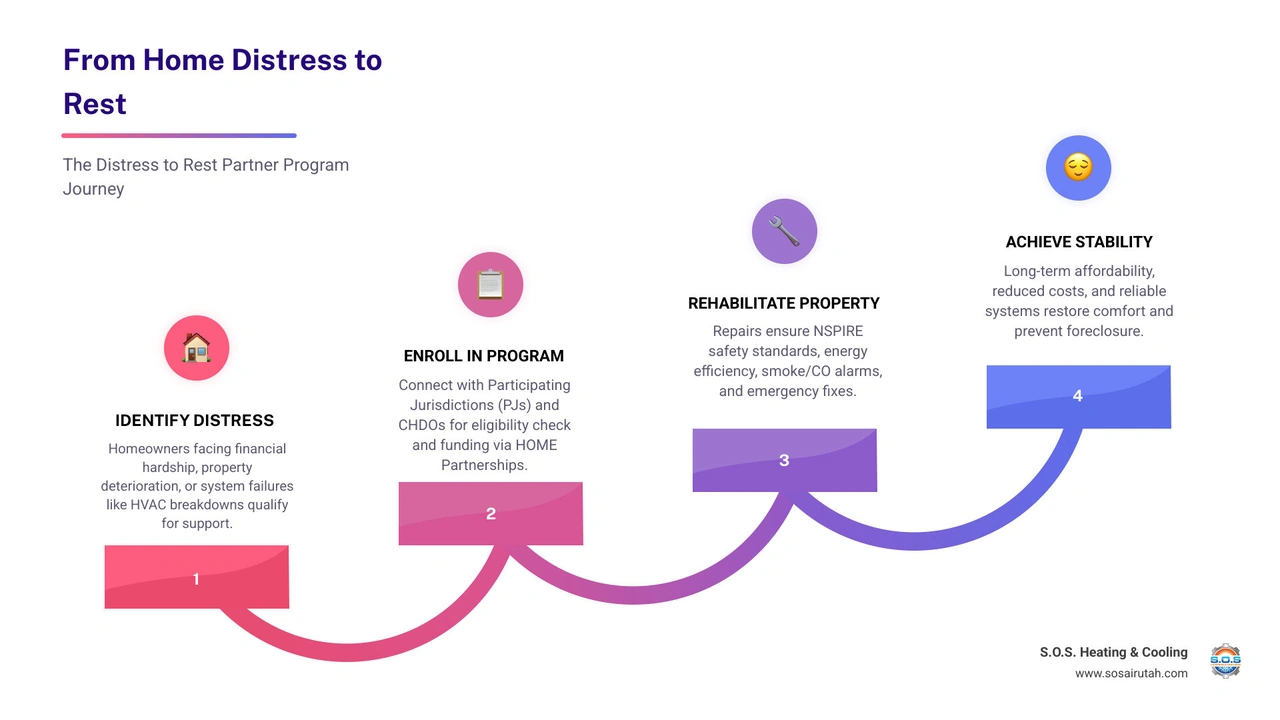
Getting started can feel overwhelming, but the process is structured to be as smooth as possible. Here is how the typical journey looks:
- Initial Inquiry: You reach out to your local Participating Jurisdiction (PJ) or a designated CHDO in the Salt Lake City area.
- Income Verification: You’ll provide documentation to confirm your eligibility based on the updated HUD income determination rules.
- Property Assessment: An inspector will visit your home to identify "distress" points. They will look at your HVAC system, plumbing, roof, and general safety.
- Written Agreements: Once approved, a formal written agreement is created. This specifies the "eligible soft costs" (like inspections and architectural fees) and the actual rehabilitation work to be done.
- The 12-Month Timeline: Under the February 2025 rule, there is a clear expectation for project commitments. Work needs to be scheduled and moving forward within a 12-month window to ensure funds are used efficiently.
- Rehabilitation: The actual work begins. This is where technicians (like us) come in to install those high-efficiency furnaces, repair plumbing, and ensure your home meets the NSPIRE standards.
- Final Inspection: A final check ensures everything is up to code and that your home has successfully transitioned from distress to rest.
Frequently Asked Questions about the Partner Program
How does the program help with emergency home repairs?
The program is designed to catch homes before they become unlivable. If your primary heating or plumbing system fails and you meet the income requirements, the program can provide the funding and technical assistance needed to perform emergency rehabilitations. This is especially critical in Utah, where a winter without heat isn't just uncomfortable—it's a safety hazard.
What are the long-term residency requirements for participants?
To ensure the program helps families stay in their homes, there is usually a "period of affordability." This means you generally need to commit to living in the home as your primary residence for a specific number of years (often 5 to 15 years, depending on the amount of assistance provided). If you sell the home before this period ends, you may be required to repay a portion of the assistance.
How do the 2025 HUD updates impact property inspections?
The 2025 updates make inspections more comprehensive and standardized. By adopting NSPIRE, HUD has created a more uniform way to check for things like lead-based paint, structural integrity, and—most importantly—functional systems like HVAC and plumbing. The requirement for smoke and carbon monoxide alarms is now more stringent, ensuring that every rehabilitated home is a safe haven.
Conclusion
At S.O.S. Heating & Cooling, we believe that every family in the Salt Lake City area deserves a home that is a place of rest, not a source of distress. Whether you are in Bountiful, Herriman, or anywhere in between, our team is dedicated to providing the high-quality HVAC and plumbing services that turn these program goals into a reality.
We pride ourselves on our integrity and our commitment to customer satisfaction. We know that home repairs can be daunting, which is why we offer 24/7 emergency support and flexible financing options for our partners. We are here to help you navigate the technical side of home comfort, ensuring your systems are efficient, safe, and ready for whatever the Utah weather throws at them.
If you’re ready to take your home from a state of distress to a state of total rest, we are here to support you every step of the way.
Explore Our Latest Insights and Updates in Plumbing Services
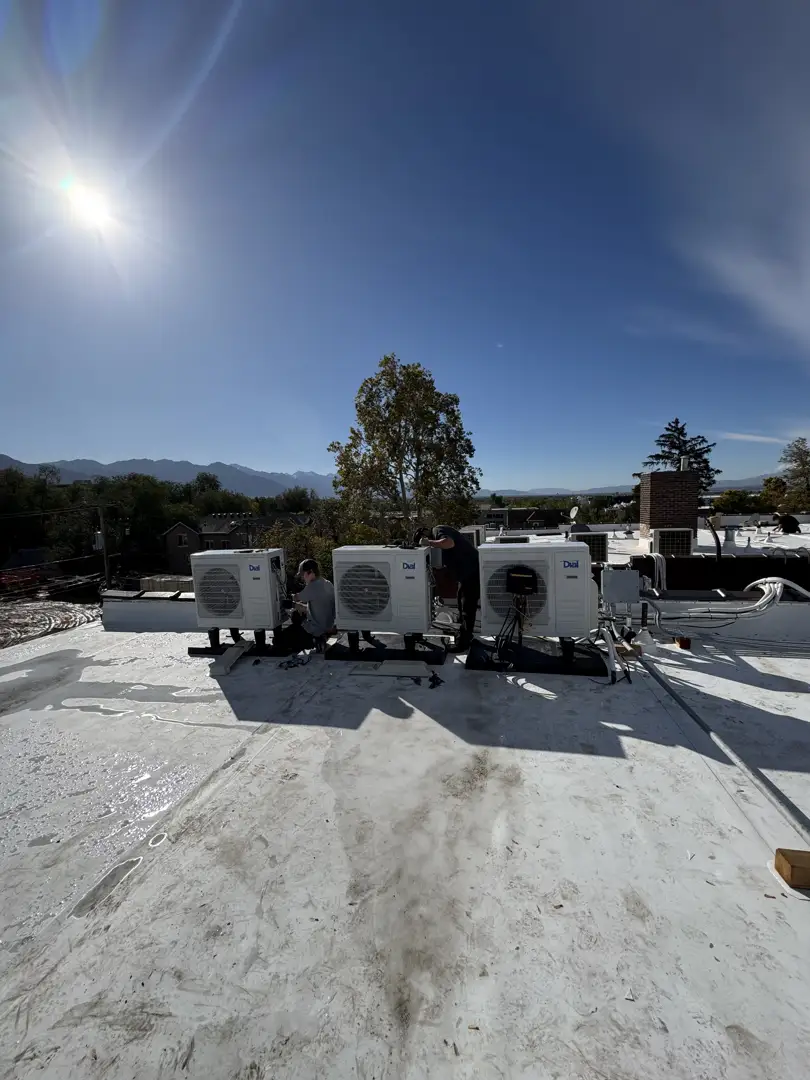
Central Air vs Mini Split for the Wasatch Front Homes and Utah Heat
Stop the Seasonal Stress: Managing Year-Round Maintenance Demands

Don't Let the Desert Dry You Out: Pro Tips for Home Humidity