
The Definitive Guide to When a Furnace Is Too Old to Repair


.avif)

Is Your Furnace Too Old to Repair in the Wasatch Front Area?
When is a furnace too old to repair in the Wasatch Front area? Most furnaces in Utah are past the point of worthwhile repair once they hit 15 to 20 years old — especially when repairs are becoming frequent, energy bills keep climbing, or the system can no longer keep up with a cold Utah winter.
Here is a quick reference to help you decide:
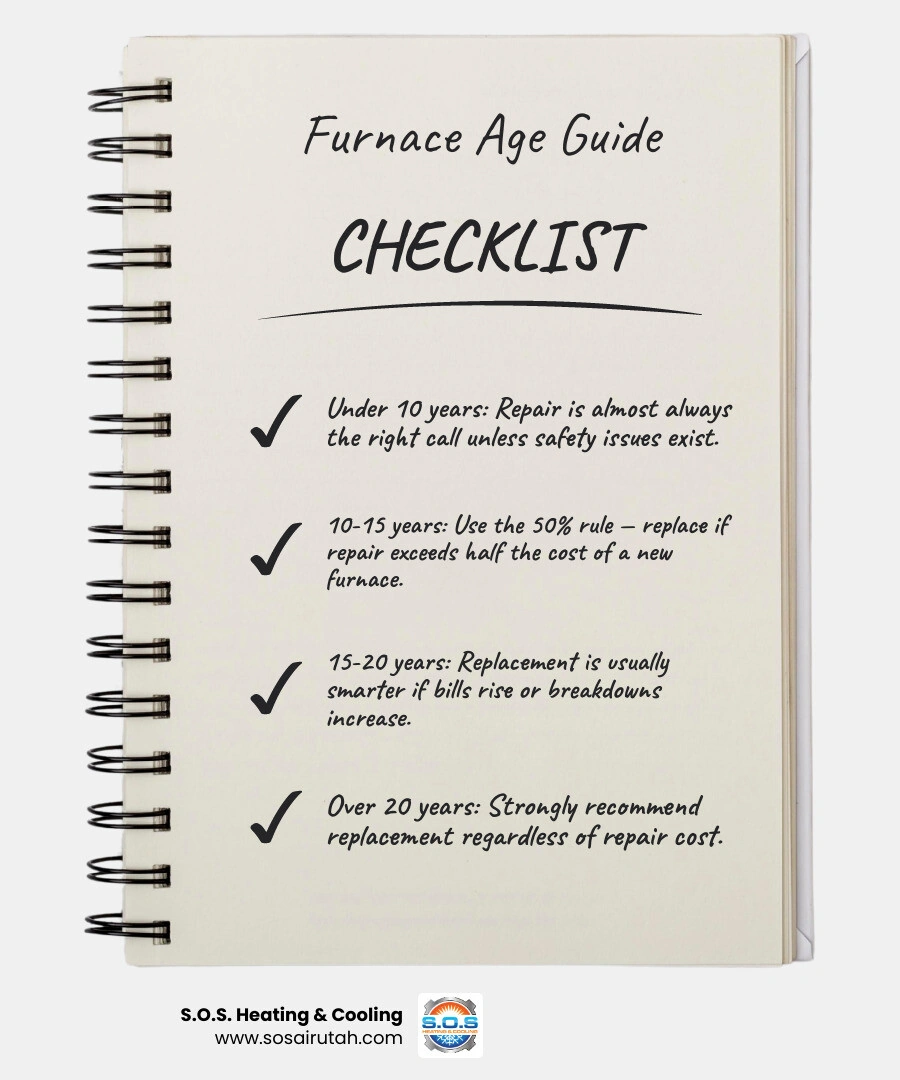
- Under 10 years old: Repair is almost always the right call, assuming no major safety issues.
- 10 to 15 years old: Weigh repair cost against the 50% rule — if the repair costs more than half the price of a new furnace, lean toward replacement.
- 15 to 20 years old: Replacement is usually the smarter investment, particularly with rising bills or repeated breakdowns.
- Over 20 years old: Replacement is strongly recommended regardless of repair cost.
If your furnace is older than 15 years and has needed multiple repairs in the past two years, chances are it is costing you more to keep it running than a new system would cost over the long term. That is especially true along the Wasatch Front, where furnaces work harder and longer than in milder climates.
I'm Bryson Ninow, and after years of working in HVAC across the Wasatch Front, I've helped hundreds of homeowners navigate the exact question of when a furnace is too old to repair in the Wasatch Front area — and I've seen how the right decision at the right time saves families real money and real stress. In this guide, I'll walk you through everything you need to make a confident, informed choice before winter puts your heating system to the test.
Understanding Furnace Lifespan in Utah
When we talk about the average lifespan of a residential heating system, most gas furnaces are engineered to last between 15 and 20 years. However, a furnace's chronological age is only part of the story. In Utah, environmental factors play a massive role in how gracefully a heating system ages.
The geography of the Wasatch Front presents a unique set of challenges for mechanical equipment. From the canyon winds in Kaysville and Layton to the intense winter inversions in Salt Lake City and Murray, our local climate forces heating systems to work under extreme conditions. To understand how these regional variables impact your equipment, it helps to look at How the Wasatch Front Climate Affects Your HVAC and Plumbing.
At our high altitude, the air is thinner, which means your furnace has to move a higher volume of air to transfer the same amount of heat as a system operating at sea level. This altitude wear, combined with the relentless winter strain of keeping a home comfortable when outdoor temperatures plunge into the single digits, means a Utah furnace often accumulates wear and tear much faster than the national average.
Determining When Is a Furnace Too Old to Repair in the Wasatch Front Area
As a system approaches the 15-year mark, it naturally enters a period of performance decline. Internal components become brittle from years of thermal expansion and contraction, electrical connections loosen, and the heat exchanger experiences structural fatigue. When we help homeowners evaluate an aging system, our primary goal is to determine if the unit can still operate safely, reliably, and efficiently.
To figure out exactly where your system stands on this timeline, you first need to understand When to Consider Furnace Replacement. If you are unsure of your unit's exact age, you can usually find it on the manufacturer's label attached to the inside of the furnace cabinet.
Look for a metal rating plate or a large sticker containing the model and serial numbers. While some modern labels clearly print the manufacture date, older units often hide this information within the serial number. For example, a serial number might start with a sequence where the third and fourth digits represent the year of manufacture. If you cannot decode it yourself, a quick online search of the brand name along with the serial number will usually reveal its age, or you can have a professional technician verify it during a routine inspection.
The Impact of Maintenance History on Longevity
While regional climate sets the baseline for wear and tear, the single most influential factor in determining whether a 15-year-old furnace is ready for retirement or still has a few good years left is its maintenance history.
A furnace that has received annual professional tune-ups, regular filter changes, and prompt repairs of minor issues will almost always outlast a neglected system. Regular maintenance preserves system reliability by ensuring that components like the blower motor, gas valves, and burners are clean and operating within their original specifications.
Airflow optimization is another critical benefit of regular upkeep. When air filters are neglected, the blower motor must work twice as hard to pull air through the system, leading to premature motor failure and localized overheating within the heat exchanger. By investing in consistent maintenance, you protect these expensive internal parts from unnecessary thermal stress, extending the window of time before replacement becomes your only logical option.
When Is a Furnace Too Old to Repair in the Wasatch Front Area?
When deciding whether to move forward with a repair on an older unit, we must look at the reality of our local climate. Along the Wasatch Front—whether you live in Bountiful, Centerville, Sandy, or Draper—winter is not just a season of light snow; it is a prolonged period of intense freezing cycles.
When outdoor temperatures drop rapidly, your furnace must cycle on and off frequently to maintain a steady indoor climate. If your heating system is already structurally compromised by age, these sudden temperature drops and high heating demands can cause it to fail when you need it most. If you are currently facing a sudden breakdown, our Ultimate Furnace Repair Salt Lake Guide offers a deep dive into common issues and what it takes to restore system reliability during a cold snap.
How Utah's Harsh Winters Accelerate Furnace Aging
The sheer volume of work a Utah furnace performs over a single winter is staggering. The constant cycle of heating up to intense temperatures and then cooling back down to room temperature causes the metal components of your furnace—especially the heat exchanger—to expand and contract thousands of times each year.
Over time, this continuous thermal stress leads to metal fatigue. If your system also suffers from minor airflow restrictions due to dirty ducts or clogged filters, the internal temperatures can spike even higher, accelerating the degradation of critical parts. In older systems, this wear and tear eventually manifests as cracked components, failed electrical controls, or a completely burned-out blower motor.
Sizing and Floor Plan Changes in Older Wasatch Front Homes
Another common issue we encounter in older communities across the Wasatch Front, from Kaysville to Millcreek, is the mismatch between an old furnace and a modified home layout. Many homes built between the 1970s and 1990s have undergone significant renovations over the years, such as:
- Finished basements that add several hundred square feet of living space.
- Home additions or sunrooms that require dedicated heating.
- Structural modifications that alter the home's original airflow patterns.
If your home's floor plan has changed but the original furnace remains, the system is likely undersized for the current heating load. An undersized furnace will run continuously, struggling to reach the temperature set on the thermostat. This constant operation leads to short cycling, uneven heating, and extreme wear on the system's mechanical parts. If your furnace is already old and is now being forced to heat a larger or restructured space, attempting to repair it is often a losing battle. Replacement allows you to install a system that is properly sized for your home's modern layout.
Warning Signs Your Heating System Is Failing
As a furnace nears the end of its functional life, it will rarely fail completely without warning. Usually, it will send out several distress signals. Recognizing these physical symptoms and changes in system behavior early can prevent you from being left in a freezing home during a mid-winter storm. If you want to learn more about identifying these early indicators, take a moment to read about how to Recognize Furnace Issues.
Rising Energy Bills and Efficiency Loss
One of the most common signs of a failing, older furnace is a steady, unexplained increase in your monthly utility bills. As mechanical parts wear down, the furnace must run longer and work harder to produce the same amount of heat.
This loss of efficiency is directly tied to the unit's Annual Fuel Utilization Efficiency (AFUE) rating. Older furnaces typically operate at AFUE ratings of 60% to 80%, meaning that up to 40% of the fuel you pay for is lost up the chimney. Over time, as heat loss increases and components degrade, that efficiency drops even lower, causing your gas and electric bills to spike.
Strange Noises and Unusual Odors
Your furnace should operate relatively quietly in the background. While a gentle whoosh of air is normal, loud or unusual noises are a clear sign of mechanical trouble:
- Banging or Booming: This often indicates delayed ignition. Gas builds up in the combustion chamber before finally igniting, creating a small explosion that can crack your heat exchanger over time.
- Screeching or Squealing: This typically points to a failing blower motor or a slipped belt.
- Rattling or Popping: Loose components or structural cracks within the housing can cause persistent vibrations.
Similarly, unusual odors should never be ignored. While a dusty smell during the first startup of the fall is common, persistent burning smells, metallic odors, or the distinct scent of rotten eggs (which indicates a natural gas leak) require immediate professional attention.
Carbon Monoxide Risks and Cracked Heat Exchangers
The most serious risk associated with an aging furnace is a cracked heat exchanger. The heat exchanger is the metal chamber that keeps toxic combustion byproducts—such as carbon monoxide (CO)—separate from the clean air being circulated through your home's vents.
If this metal chamber cracks due to age, rust, or thermal stress, carbon monoxide can escape into your living spaces.
A yellow, flickering pilot flame or burner flame (instead of a steady, crisp blue flame) is a classic warning sign of incomplete combustion and a potentially cracked heat exchanger. Other indicators include visible soot buildup inside the furnace cabinet, rust on the venting pipes, or family members experiencing unexplained headaches, nausea, or flu-like symptoms.
Because carbon monoxide is tasteless, odorless, and invisible, keeping functional CO detectors on every level of your home is vital. If you suspect your heat exchanger is compromised, you must shut down the system immediately. For guidance on how to navigate these safety-critical decisions, review our Heating System Replacement Tips for Homeowners.
Repair vs. Replacement: The Decision Framework
When you are caught between the choice of repairing your old system or investing in a new one, it helps to have a structured decision matrix. The table below compares the key factors that should guide your choice:
| Decision Factor | Lean Toward Repair | Lean Toward Replacement |
|---|---|---|
| System Age | Under 12 years old | Over 15 years old |
| Repair Frequency | Rare, isolated issues | Multiple service calls in the last 2 years |
| Energy Efficiency | Stable utility bills | Spiking bills; low AFUE rating |
| Safety Status | No combustion or electrical risks | Cracked heat exchanger; CO risk |
| Air Quality & Comfort | Consistent heat; low dust | Uneven temperatures; excessive dust |
| Warranty Status | Parts and labor still covered | Warranty expired; parts hard to source |
By evaluating your current system against these criteria, you can determine which option offers the best long-term value, safety, and energy savings for your household.
The Financial Formula for When Is a Furnace Too Old to Repair in the Wasatch Front Area
To remove the guesswork from the financial side of the decision, we recommend using two industry-standard guidelines:
- The 50% Rule: If the cost of a single repair estimate exceeds 50% of the cost of a brand-new furnace, replacement is almost always the wiser financial move. Investing a significant sum into a system that is already near the end of its expected lifespan is rarely a good return on investment.
- The Age-Multiplication Index: Multiply the age of your furnace by the cost of the recommended repair. If the resulting index number exceeds a standard safety threshold (commonly valued around 5,000 in industry calculations), it is highly recommended to allocate those funds toward a replacement rather than a temporary fix.
Additionally, consider the frequency of your repairs. A minor repair on a 16-year-old furnace might seem manageable on its own, but if you have had to call an HVAC technician out multiple times over the last two winters, those individual repair bills will quickly add up to the cost of a new, reliable system.
Efficiency Gains of Modern Heating Systems
If you do decide to replace your aging furnace, the immediate drop in your monthly energy consumption can help offset the initial investment. Modern heating systems utilize advanced technology to deliver superior comfort while using significantly less fuel.
Older systems rely on single-stage gas valves and standard blower motors, meaning they are either running at 100% capacity or are completely off. Modern high-efficiency systems feature variable-speed blowers and multi-stage heating. These systems can adjust their output to match the precise heating needs of your home, running at lower, highly efficient speeds for most of the day and only ramping up to full capacity during extreme cold snaps.
By upgrading to a system with a 95% to 98% AFUE rating, you ensure that nearly every dollar you spend on natural gas is converted directly into heat for your home. To explore these technological advancements and learn what to expect during the upgrade process, check out our Furnace Replacement Ultimate Guide. Furthermore, installing a high-efficiency system often qualifies you for valuable local utility rebates and federal tax credits, helping you maximize your savings from day one.
Frequently Asked Questions
How do I find out the exact age of my furnace?
You can find the exact age of your furnace by locating the manufacturer's nameplate, which is typically a metal plate or sticker located inside the main cabinet door. Note down the brand, model number, and serial number. Many manufacturers encode the year and month of production directly into the serial number. You can use an online serial number decoder for your specific brand, or simply schedule a professional inspection with us to have a technician verify the age and overall health of your system.
Is it safe to run a furnace with a cracked heat exchanger?
No, it is absolutely not safe to run a furnace with a cracked heat exchanger. The heat exchanger's job is to keep toxic combustion gases, including carbon monoxide, safely contained and vented outside your home. A crack allows these gases to escape directly into your indoor air supply, posing a severe safety hazard to your family. If a technician discovers a cracked heat exchanger, they are legally and professionally obligated to shut down the gas supply to the furnace to protect your home. In this scenario, immediate replacement is almost always required.
What is the best time of year to replace a furnace in Utah?
The best times to replace a furnace in Utah are during the "shoulder seasons"—specifically spring (March through May) and early autumn (September through October). During these off-peak periods, heating and cooling companies are generally less busy with emergency repair calls. This allows for more flexible scheduling, faster installation times, and access to seasonal manufacturer promotions or discounts before the extreme summer heat or winter cold sets in.
Conclusion
Deciding when is a furnace too old to repair in the Wasatch Front area does not have to be a stressful or confusing process. By keeping a close eye on your system's age, tracking your monthly utility bills, and staying alert to physical warning signs like strange noises or uneven heating, you can make a proactive decision before a winter emergency occurs. Taking the time to plan a furnace replacement as a home improvement project is always more comfortable, convenient, and cost-effective than dealing with a sudden breakdown in the middle of a freezing Utah night.
Whether you need a thorough safety inspection of an older unit or want to explore your options for a modern, high-efficiency upgrade, our team is here to help. We proudly serve homeowners across the entire Wasatch Front, including Salt Lake City, Bountiful, Layton, Sandy, Draper, and the surrounding areas.
Don't wait for the next big winter storm to find out if your heating system has what it takes to keep your family safe and warm. Schedule professional furnace repair with S.O.S. Heating & Cooling today, and let us help you prepare your home for a cozy, worry-free winter.

Plumbing
Expert plumbing services offering reliable repairs, installations, maintenance, and emergency support.

Air Conditioning
Comprehensive air conditioning services include installation, repairs, maintenance, and energy-efficient solutions.

Heating
Specialized heating services provide reliable installation, repair, system maintenance, and energy-optimization solutions.

Indoor Air Quality
Enhance your home’s air with our cutting-edge indoor air quality solutions you can trust.

Fireplaces
Transform your space into a warm and cozy atmosphere with our professional fireplace services.

Heat Pumps
Enjoy year-round comfort with our energy-efficient and professional heat pump solutions.
Explore Our Latest Insights and Updates in Plumbing Services

How to Fix Constant AC Running from Poor Insulation
How to Calculate Energy Savings From a New AC Replacement in the Wasatch Front

How a Dirty Filter Raises Your Energy Bill in Dry Utah Climate
