

How to Fix AC Leaking Water Inside Your Utah Home


.avif)

AC Leaking Water Inside the House: Causes and Fixes in a Utah Home
If you're dealing with ac leaking water inside the house causes and fixes in a Utah home, here's a quick summary of what's likely happening and what to do:
Most common causes:
- Clogged condensate drain line (most frequent cause)
- Dirty air filter causing frozen evaporator coils
- Low refrigerant levels
- Damaged or rusted drain pan
- Broken condensate pump
Immediate fixes to try:
- Turn your thermostat to Off right away
- Replace a dirty air filter
- Use a wet/dry vacuum to clear the condensate drain line
- Check the drain pan for cracks or rust
- Call a professional for refrigerant issues, recurring clogs, or pump failures
Finding water pooling near your indoor AC unit is one of those problems that looks small but can spiral fast. In Utah homes, a leaking air conditioner can soak drywall, damage flooring, and create the right conditions for mold growth — all within 24 to 48 hours. And because many Utah homes run their AC hard through long, hot summers, the window to catch a leak before it causes real damage is shorter than most homeowners expect. Whether you're seeing a puddle under your air handler, water stains forming on your ceiling, or dripping sounds inside your walls, this guide walks you through exactly what's causing it and how to fix it.
I'm Bryson Ninow, an NATE-certified HVAC professional with hands-on experience diagnosing and resolving AC leaking water inside the house — causes and fixes — in Utah homes across the Salt Lake City area. I'll walk you through everything you need to know to protect your home and get your system running right again.
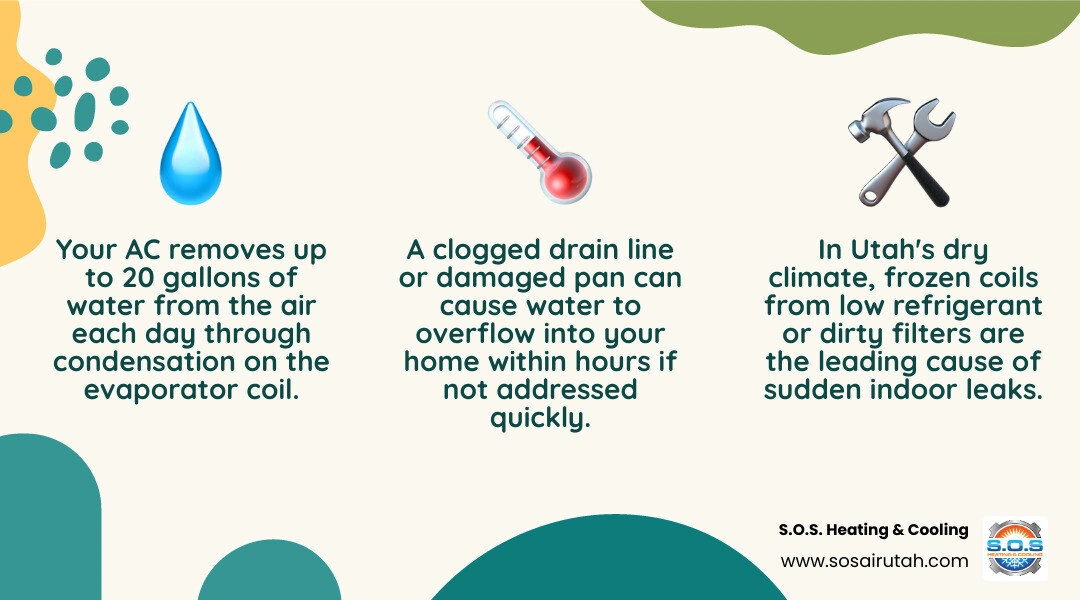
Why Does an Air Conditioner Produce Water?
To understand why your air conditioner is leaking water inside your home, it helps to look at how these systems are designed to operate. Many homeowners are surprised to learn that an air conditioner doesn't actually "create" cold air; instead, it removes heat and moisture from the air inside your living spaces.
This magic happens at the indoor evaporator coil. As your system runs, warm, humid air from your home is drawn across this cold metal coil. The coil is filled with cold refrigerant, which absorbs the heat. As the warm indoor air hits the cold surface of the evaporator coil, the moisture in the air condenses into liquid water droplets.
Think of it exactly like a cold glass of iced tea sitting on your counter during a hot afternoon in Salt Lake City or Layton. Moisture from the surrounding air naturally clings to the outside of the glass and runs down to form a puddle.
In a properly functioning HVAC system, this condensation is a normal and necessary byproduct. The water droplets drip off the evaporator coil and land in a sloped drain pan positioned directly underneath. From there, gravity directs the water down a PVC pipe known as the condensate drain line, which safely carries the water outside your home or into a designated floor drain.
However, if anything disrupts this delicate cycle, water will quickly back up and overflow. This is why maintaining proper system balance is so crucial. If you want to dive deeper into how air circulation keeps this process running smoothly, check out our guide on How Airflow Affects Your Air Conditioner's Performance.
AC Leaking Water Inside the House Causes and Fixes in a Utah Home
When your air conditioner begins dripping or pooling water indoors, it is usually a symptom of one of five classic mechanical or maintenance issues.

To help you quickly diagnose the issue, we have put together a quick reference table comparing the most common causes of indoor AC water leaks and how they are typically resolved:
| Common Cause | Why It Happens | Primary Fix |
|---|---|---|
| Clogged Condensate Drain Line | Algae, mold, and dust block the PVC pipe, forcing water backward. | Flush with vinegar or clear the blockage using a wet/dry vacuum. |
| Dirty Air Filter | Restricted airflow causes the evaporator coil to freeze; melting ice overflows the pan. | Replace the dirty filter and allow the ice to thaw completely. |
| Low Refrigerant Levels | Pressure drops cause the coil to drop below freezing, leading to ice buildup. | Locate and repair the refrigerant leak, then recharge the system. |
| Rusted or Damaged Drain Pan | Old metal pans (especially on systems 12-15 years old) rust through or crack. | Replace the damaged pan or install a secondary emergency pan. |
| Broken Condensate Pump | The pump fails to push water out of basements or closets to the exterior. | Repair or replace the pump assembly. |
Let's break down each of these common causes in detail so you can identify exactly what is happening in your Bountiful, Draper, or Sandy home.
Clogged Condensate Drain Line
A clogged condensate drain line is, by far, the most common reason an air conditioner leaks water inside a Utah home.
Because the air handler pulls in microscopic dust, pet dander, and mold spores from your indoor air, some of this debris naturally mixes with the wet condensation on your evaporator coil. Over time, this mixture flows into the narrow 3/4-inch PVC drain line. Combined with the dark, damp environment inside the pipe, bacteria and algae can thrive, forming a thick, slimy blockage.
When the line is fully blocked, the condensation has nowhere to go. The drain pan quickly fills to the brim and spills over onto your flooring, ceiling, or nearby drywall.
Fortunately, this is often a highly fixable DIY project. Homeowners can hook up a standard wet/dry shop vacuum to the exterior end of the drain line (usually located near the outdoor condenser unit) and run it for three to five minutes to suck out the slimy clog. Flushing the line from the indoor access T-joint with a cup of distilled white vinegar every few months can also keep algae from taking root. If you want to try troubleshooting this on your own first, take a look at our helpful list of AC Troubleshooting Tips Before Calling a Pro.
Dirty Air Filter and Frozen Evaporator Coils
It might seem hard to believe that a simple piece of cardboard and pleated fabric can cause a massive water leak, but a dirty air filter is a frequent culprit behind indoor water damage.
Your air conditioner requires a constant, steady stream of warm indoor air flowing over the evaporator coil to keep the refrigerant warm enough to stay above freezing. When your air filter becomes choked with dust, pet hair, and debris, it severely restricts this airflow. Without enough warm air passing over the coil, the temperature of the refrigerant drops below 32°F, causing the condensation on the coil to freeze solid.
Before you know it, your indoor unit is encased in a thick block of ice.
The real trouble starts when the system cycles off or can no longer keep up. As that massive block of ice begins to thaw, it melts at a rate that completely overwhelms the shallow condensate drain pan. Water spills over the sides, pooling on your floor or soaking through your ceiling.
To prevent this, we recommend changing your air filters every 1 to 3 months, especially during peak summer seasons in Utah. If your coils have accumulated a layer of grime that is restricting airflow directly, you can learn more about restoring efficiency in our guide on How to Clean Air Conditioner Coils.
Low Refrigerant Levels in Utah's Dry Climate
While Utah is famous for its dry, beautiful mountain climate, our hot summers still force air conditioners to work incredibly hard. When your system is low on refrigerant, it creates a unique set of thermodynamic problems that lead directly to water leaks.
Refrigerant does not get "used up" like fuel; if your system is low, it means you have a leak somewhere in the copper lines. A drop in refrigerant levels causes a corresponding drop in pressure inside the evaporator coil. Just like a dirty air filter, this pressure drop causes the coil's surface temperature to plunge below freezing, turning the normal condensation into ice.
In Utah's dry air, homeowners often assume their systems aren't producing much moisture, so they might ignore a slight drop in cooling performance. However, once the unit is turned off or struggles to maintain temperature, that hidden ice sheet thaws rapidly, leading to a sudden, unexpected indoor flood.
Because refrigerant lines are pressurized and require specialized tools to repair, handling a leak is not a DIY job. If you suspect your system is low on refrigerant or has stopped keeping your home comfortable, read our advice on What to Do When Your AC Stops Cooling.
Damaged or Rusted Drain Pan
If your air conditioner is between 12 and 15 years old, the leak might simply be due to physical wear and tear on the drain pan itself.
Older HVAC systems typically featured metal drain pans positioned directly beneath the evaporator coils. Over more than a decade of constant exposure to water, these metal pans can rust through, developing small pinholes or large cracks. Instead of directing water into the PVC drain line, the condensation drips straight through the rusted bottom of the pan and onto your floor or ceiling.
Modern systems often use heavy-duty plastic pans, but even these can warp, crack, or become brittle over time due to temperature fluctuations.
If you discover a cracked or rusted drain pan, it is usually a sign of an aging system that may be nearing the end of its reliable lifespan. While minor, temporary cracks can sometimes be sealed with water-resistant epoxy, a permanent replacement is highly recommended. To help you weigh your options during this process, explore our breakdown on AC Repair or Replacement.
What to Do Immediately When You Spot a Leak
Discovering an active water leak inside your home can be incredibly stressful, but taking quick, decisive action can mean the difference between a simple cleanup and thousands of dollars in structural restoration.
If you see water pooling around your indoor air handler or dripping from a ceiling, follow these immediate steps to protect your home.
Immediate Steps for AC Leaking Water Inside the House Causes and Fixes in a Utah Home
- Turn Off the System Immediately: Walk to your thermostat and switch the system from "Cool" to Off. Running the system while it is leaking will only produce more condensation, worsening the water damage. Additionally, turning the system off protects sensitive electrical components inside the air handler from short-circuiting.
- Clear and Protect the Area: Move furniture, electronics, rug, and valuables away from the pooling water. Place towels, buckets, or plastic sheeting directly beneath active drips to catch falling water.
- Clean Up Standing Water: Use a wet/dry shop vacuum to extract water from carpets, rugs, and hard flooring. The faster you remove standing water, the lower your risk of long-term flooring damage and mold growth.
- Dry Out the Drywall and Joists: Use household fans or a dehumidifier to circulate air around the wet area. Mold can begin growing on damp drywall and wood within 24 to 48 hours.
- Inspect the Air Filter: Check to see if a clogged filter caused the system to freeze up. If the filter is dirty, replace it immediately, but keep the system turned off to allow any hidden ice on the coils to melt naturally.
Taking these steps ensures you control the situation before professional help arrives. If your system won't respond or you are experiencing electrical issues after a leak, read our guide on AC Not Turning On: What to Check First. For a deeper look at other emergency warning signs, check out our resource on Signs That Your AC Needs Immediate Repair.
How to Prevent Future AC Water Leaks
While knowing how to fix an active leak is important, preventing water leaks from happening in the first place is always the smartest approach.
With a few simple maintenance habits, you can keep your air conditioner running safely and efficiently all summer long.
Long-Term Prevention of AC Leaking Water Inside the House Causes and Fixes in a Utah Home
- Establish a Filter Replacement Schedule: Set a recurring reminder on your phone to check your air filter every month. Replace it immediately if it looks grey or dusty. Keeping a clean filter ensures optimal airflow and prevents frozen coils.
- Flush Your Drain Line Regularly: Every three months during the cooling season, pour one cup of distilled white vinegar down your condensate drain line access port. This simple step kills algae and bacteria before they can grow into a stubborn, slimy clog.
- Install a Condensate Float Switch: A float switch (or safety overflow switch) is an inexpensive device installed on your drain pan or drain line. If the water level rises too high due to a clog, the switch automatically cuts power to your AC, shutting down the system before water can overflow onto your ceiling or floor.
- Schedule Annual Professional Maintenance: Having an expert inspect your system before the heat of summer arrives is the best insurance policy against unexpected water damage. A technician will thoroughly clean your coils, check refrigerant levels, inspect the drain pan for cracks, and flush the drain line.
Investing in regular upkeep saves you from emergency headaches down the road. To schedule your next tune-up, visit our AC Maintenance Salt Lake City UT page, or check out our comprehensive AC Service Salt Lake City UT options for homeowners throughout the region.
Frequently Asked Questions About AC Water Leaks
Is water leaking from my indoor AC unit dangerous?
While a water leak isn't immediately dangerous in the way a gas leak is, it should still be treated as an urgent issue.
Water leaking near an indoor electrical appliance like an air handler carries a risk of electrical shock or short-circuiting sensitive control boards. Furthermore, standing water can quickly ruin drywall, warp hardwood floors, and rot structural wooden joists. Perhaps the most significant concern is mold growth; mold spores can begin colonizing damp drywall, insulation, and carpeting within 24 to 48 hours, which can negatively impact your family's indoor air quality and respiratory health.
How much water does a typical residential AC produce daily?
A typical residential air conditioning system can produce anywhere from 5 to 20 gallons of water per day depending on the humidity levels inside your home.
Even in Utah's semi-arid climate, cooking, showering, breathing, and doing laundry all introduce moisture into your indoor air. Because your AC is constantly extracting this moisture, a massive volume of water passes through your condensate drain system over the course of a hot summer week. This is why a clogged line can result in a significant indoor puddle so quickly.
Why is my AC making a popping noise along with the leak?
If you notice a popping or gurgling sound coming from your indoor unit alongside an active water leak, it is usually a sign of a backed-up P-trap or drain line.
As water struggles to push past a partial clog or a poorly vented trap, air bubbles can get trapped in the water, creating a distinct popping, gurgling, or bubbling noise. This sound is your system's way of warning you that water is accumulating where it shouldn't. To learn more about identifying odd system sounds, check out our guide on AC Making Strange Noises: What They Mean.
Conclusion
Dealing with an AC leak inside your home can be incredibly disruptive, but understanding the ac leaking water inside the house causes and fixes in a Utah home gives you the knowledge to handle the situation calmly and effectively. The very first step you should always take is to shut down your system at the thermostat to prevent further water generation. From there, cleaning up standing water and checking for simple issues like a dirty filter or a mildly clogged drain line can help you resolve the issue quickly.
If you are facing a recurring clog, a rusted drain pan, a broken condensate pump, or a refrigerant leak, it is time to call in the professionals. At S.O.S. Heating & Cooling, we have spent years helping homeowners across Salt Lake City, Bountiful, Layton, Sandy, Draper, and the surrounding areas keep their homes dry, comfortable, and safe. We are proud to offer 24/7 emergency repairs, flexible financing, and a team of dedicated technicians ready to solve your HVAC problems with honest, reliable service.
Do not let a small leak turn into expensive water damage. Contact us today to schedule your professional inspection, and let us get your system back in perfect working order.
Schedule Your Professional AC Repair in Salt Lake City Today
Explore Our Latest Insights and Updates in Plumbing Services
How Heat Pumps Work for Heating and Cooling in Utah
How to Fix Dry Winter Air in Utah Homes
How to Stack Rocky Mountain Power and Federal Rebates for HVAC Upgrades in Utah