

Say Goodbye to Clogs: Your Ultimate Guide to Drain Blockage Removal


.avif)

Spotting the Telltale Signs of a Clogged Drain
Drain blockage removal is a common challenge for Salt Lake City homeowners. A slow-draining sink, gurgling toilet, or a foul smell from your shower are clear signals that your pipes are blocked. The good news is that while many clogs can be resolved with simple DIY methods, more serious blockages may require professional help.
Quick signs your drain is blocked:
- Slow drainage - Water takes longer than usual to empty from sinks, tubs, or showers
- Gurgling sounds - Odd noises when water drains or when you flush the toilet
- Unpleasant odors - Foul smells around drains, especially in kitchens and bathrooms
- Water backups - Water rising in one fixture when another is used
- Multiple clogs - More than one drain affected at the same time
A clogged drain is more than an annoyance. It can lead to flooding, damage your piping system, and create unsanitary conditions. When fats, oils, and greases cool in your kitchen sink's pipes, they solidify and form blockages that can cause serious sewer flooding. Likewise, flushing unsuitable items down the toilet creates problems for your home's plumbing and the environment.
If you're dealing with persistent plumbing issues, professional plumbing services can diagnose and resolve problems quickly. For emergency situations, contact S.O.S. Heating & Cooling for prompt, reliable service in the Salt Lake City area.
I'm Bryson Ninow, and while I primarily work in HVAC, I've helped countless Salt Lake City families address home comfort and safety issues, including guidance on plumbing challenges like drain blockage removal. My commitment is to provide clear, honest information that helps homeowners make informed decisions.
Locating the Problem: Common Causes and Clog Locations
Before fixing a drain blockage, it's helpful to understand its cause and location. Knowing the culprit often points to the best solution for effective drain blockage removal.
Here are the most common causes of drain blockages in Salt Lake City homes:
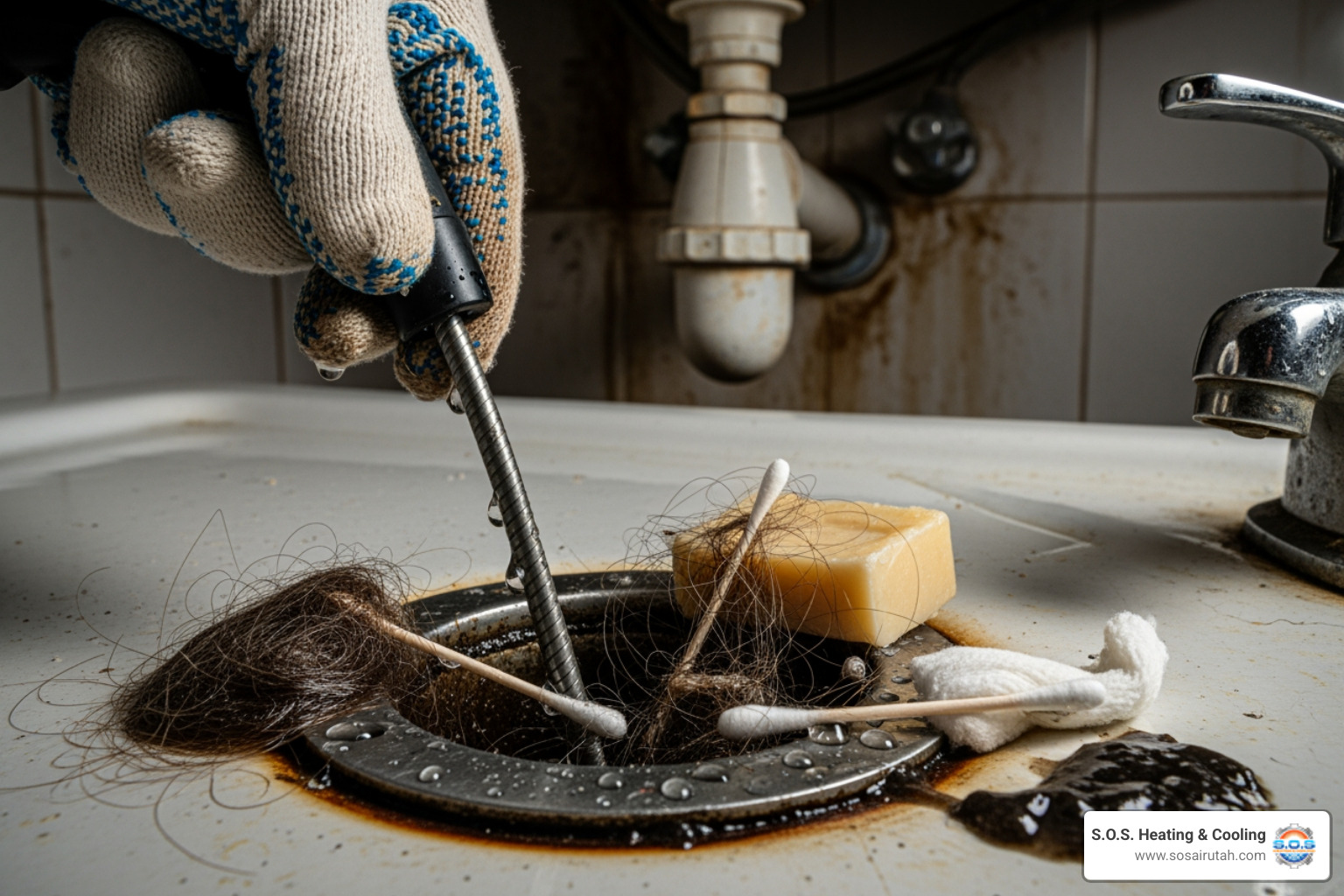
- Fats, Oils, & Grease (FOGs): A major cause of kitchen sink clogs. Hot liquid FOGs pour easily down the drain but solidify as they cool. These solid masses stick to pipes, trap other debris, and create stubborn clogs that can lead to serious blockages.
- Hair & Soap Scum: In bathrooms, hair mixes with soap scum to form tangled webs that cling to pipe walls, constricting water flow. This is one of the most frequent causes of shower clogs.
- Food Waste: Even with a garbage disposal, items like coffee grounds, eggshells, and fibrous or starchy foods can accumulate and create sludge, leading to blockages.
- Foreign Objects: Items that don't belong in drains, such as so-called "flushable" wipes, feminine hygiene products, cotton swabs, and paper towels, do not dissolve and cause significant obstructions in toilets and pipes.
- Tree Root Intrusion: Tree roots are a serious problem for main sewer lines. Attracted to moisture, they can penetrate pipes through tiny cracks. Once inside, they grow into a dense mass that traps debris and blocks the pipe. While cutting roots is a temporary fix, a permanent repair is often necessary. If you suspect tree roots, our blog on Solutions for Tree Root Sewer Blockages offers more insights, as does our guide to Sewer Line Repair Salt Lake Guide 2025. We also have resources on Signs of Hidden Sewer Line Damage.
P-trap clogs
The P-trap, the curved pipe under your sink, is a common spot for clogs. Its U-shape is designed to block sewer gases but also collects hair, grease, and debris. A slow-draining sink often points to a blockage in the P-trap, which can be a straightforward DIY fix.
Single vs. multiple fixture blockages
Observing which fixtures are affected helps locate the blockage:
- Single fixture blockage: A clog in one drain (e.g., a single sink or shower) is likely localized in that drain's pipe, often in the P-trap. These are typically easier to fix yourself.
- Multiple fixture blockages: If several drains are slow or backed up, the problem is likely in your main drain or sewer line. This is a more serious issue requiring professional help.
- Main sewer line issues: Signs include water backing up into a tub when a toilet is flushed or a toilet bubbling when a sink is running. If you suspect a main line clog, stop using all plumbing immediately to prevent wastewater backups and significant damage. Our blog on How to Unclog the Main Household Drain has more information.
Your Guide to DIY Drain Blockage Removal
When you first notice a slow drain, a DIY approach can often save the day. We'll walk you through some effective and safe methods for your plumbing.
Eco-Friendly Solutions for Minor Clogs
For less severe clogs or regular maintenance, eco-friendly methods can be surprisingly effective and are much safer for your plumbing and the environment.
Boiling Water Method: This is the simplest first step. Boiling water is excellent for dissolving grease and soap scum.
- How it works: Hot water helps melt solidified fats and loosen grime.
- How to do it: After removing any standing water, carefully pour a kettle of boiling water down the drain. Repeat a few times. This is effective for kitchen sinks and for fixing a slow draining bathtub.
- Safety precautions: Handle boiling water with care. Avoid this method on older or damaged PVC pipes. Never pour boiling water down a drain after using chemical cleaners, as this can cause dangerous reactions.
Baking Soda & Vinegar Reaction: This method is great for dislodging debris and neutralizing odors, and is an excellent way to unclog a drain without harsh chemicals.
- How it works: The reaction between baking soda and vinegar creates carbon dioxide bubbles that fizz through the clog, breaking it up. Boiling water then flushes the debris away.
- How to do it:
- Pour about 1 cup of boiling water down the drain.
- Pour 1 cup of baking soda down the drain.
- Follow with a mixture of 1 cup of white vinegar and 1 cup of hot water.
- Cover the drain with a plug for 5-10 minutes to contain the fizzing.
- Flush the drain again with another pot of boiling water.
- Safety precautions: Avoid inhaling fumes directly and do not use this method after using chemical cleaners.
Mechanical Methods for Stubborn Drain Blockage Removal
When eco-friendly solutions aren't enough, mechanical tools are your next best bet for effective drain blockage removal.
Plunger Techniques: The trusty plunger is often all you need.
- How it works: A plunger uses hydraulic pressure to dislodge clogs.
- How to do it:
- For sinks: With enough water to cover the plunger's cup, seal it over the drain. For double sinks, block the other drain. Plunge vigorously 15-20 times, then pull the plunger off quickly.
- For toilets: Use a toilet plunger (with a flange) to create a tight seal. Plunge forcefully. Our blogs on Toilet Clog Repair and Unclog Toilet Salt Lake City UT provide more advice for unclogging toilets.
- Safety precautions: Wear rubber gloves and be mindful of splashes.
Plumbing Snakes & Augers: These tools reach deeper into pipes to physically break up or retrieve clogs.
- How it works: A plumbing snake (or drain auger) is a flexible cable fed into the drain. A crank rotates the cable, allowing its tip to break up or hook onto the blockage.
- How to use a drain snake or auger:
- Preparation: Wear gloves and safety glasses. For better access, consider removing the P-trap or using the overflow opening.
- Insert the snake: Feed the snake into the drain until you feel resistance from the clog.
- Engage the clog: Lock the cable and rotate the handle clockwise while pushing gently to bore into or hook the blockage.
- Clear the clog: Twist, push, and pull to break up the clog or pull it out.
- Test: Retract the snake and flush the drain with hot water. Repeat if necessary.
- Types of augers: There are light-duty hand-crank augers for sinks, specialized toilet augers, and heavier-duty powered augers for more stubborn clogs. The largest, drum augers, are typically used by professionals for main drain lines.
- Safety precautions: Wear safety glasses and gloves. Don't force the snake to avoid pipe damage. Be extremely cautious with power augers, especially near water.
The Risks of Chemical Drain Blockage Removal
We strongly advise against using chemical drain cleaners for drain blockage removal due to significant risks.
- Health impacts: Chemical cleaners contain corrosive toxins like sulfuric acid or lye, which can burn skin, eyes, and lungs. They are also dangerous to pets.
- Environmental hazards: These chemicals pollute waterways and harm aquatic life. An overflowing clog can also create an environmental hazard by spreading harmful microorganisms.
- Pipe corrosion: Chemicals corrode metal pipes and degrade seals and plastic pipes, leading to leaks. The heat they generate can also warp or melt PVC pipes.
- Septic system damage: Chemicals kill the beneficial bacteria in septic tanks, disrupting their function and leading to system failure. Our Clogged Drain Repair services often address damage from these products.
Proactive Prevention: Keeping Your Drains Clear for Good
An ounce of prevention is worth a pound of cure. By adopting simple habits, you can significantly reduce clogs and keep your plumbing running smoothly. This is a key part of preventative drain cleaning tactics.
- Drain screens & baskets: Install screens in all sinks, showers, and tubs to catch hair and debris before they enter your pipes. Empty them regularly.
- Proper grease disposal: Never pour fats, oils, or grease (FOGs) down the drain. Instead, pour cooled FOGs into a container and dispose of it in the trash.
- What not to flush: The general rule is to only flush human waste and toilet paper. Avoid flushing so-called "flushable" wipes, feminine hygiene products, dental floss, and paper towels, as they don't break down and are major contributors to clogs.
- Regular maintenance schedule: Incorporate periodic drain flushing into your routine.
- Hot water flush: Every week or two, pour a kettle of boiling water down your kitchen and bathroom drains (if your pipes are suitable) to help melt minor grease and soap buildup.
- Baking soda and vinegar flush: Once a month, use the baking soda and vinegar method for a natural, scouring clean that also neutralizes odors.
- Enzyme-based cleaners: As a safe alternative, enzyme-based cleaners are the greenest choice. They use natural bacteria to break down organic matter like hair and grease without harming pipes or the environment. They are safe for septic systems and can even help your sewer system’s biome.
By being mindful of what goes down your drains and performing regular upkeep, you can avoid the headache of frequent clogs.
When to Call a Professional Plumber
While DIY methods are great for minor issues, a professional plumber is essential for effective and lasting drain blockage removal. Trying to tackle complex problems yourself can lead to more costly damage.
Here's when it's time to call for professional help:
- Recurring clogs: If a drain repeatedly clogs despite DIY efforts, it signals a deeper problem like a pipe defect or tree root intrusion that needs professional diagnosis.
- Multiple fixtures blocked: Clogs in multiple drains at once strongly suggest a main sewer line blockage. This serious issue requires professional equipment. Stop using your plumbing immediately to prevent wastewater backups.
- Sewage backup: Sewage backing up into your home is an emergency. It indicates a severe main line blockage and poses significant health risks. You must call an emergency plumber immediately. Our Emergency Plumber Salt Lake City Guide has more information.
- Foul sewer gas odor: A persistent, strong sewer gas smell may indicate a dry or damaged P-trap or a breach in your sewer line, which requires professional attention.
- DIY methods fail: If all your DIY attempts are unsuccessful, the clog is likely too stubborn for home tools and requires a professional.
- Homeowner vs. utility responsibility: Homeowners are responsible for pipes on their property, while the local utility handles the public sewer mains. A professional plumber can determine the blockage location and who is responsible. We serve various areas including Salt Lake City, Woods Cross, and Layton, and can help determine the source of the problem.
Professional Methods
When you call S.O.S. Heating & Cooling, our skilled plumbers use advanced tools for drain blockage removal:
- Hydro-jetting: This powerful method uses high-pressure water to blast away stubborn clogs, grease, and even tree roots, thoroughly cleaning pipes and restoring them to near-original condition.
- Camera inspections: We use specialized sewer cameras to visually inspect pipes, pinpointing the exact location and nature of blockages or damage. This is particularly useful for diagnosing signs of hidden sewer line damage.
- Advanced augers: We use commercial-grade, electric-powered augers with various cutter heads to break through dense obstructions like tree roots.
Calling a professional ensures the job is done safely and effectively. Our team offers comprehensive drain cleaning by our professionals across Salt Lake City and its surrounding communities like Murray, Holladay, and Farmington.
Frequently Asked Questions about Clogged Drains
Here are answers to some of the most common questions we hear about clogged drains.
How do I know if the blockage is in my main sewer line?
Identifying a main sewer line blockage is crucial. Look for these key indicators:
- Multiple fixtures affected: Slow drainage or backups in more than one fixture, especially on the lowest floor, is a strong sign.
- Water backing up in the lowest drain: A classic symptom is water backing up in a downstairs tub or shower when an upstairs toilet is flushed.
- Gurgling sounds from multiple drains: Gurgling from various drains when water is used elsewhere can indicate trapped air from a main line clog.
- Checking the cleanout plug: Your main sewer line has a cleanout plug (often in the basement or outside). If you carefully remove the cap and water flows out, the blockage is in the main line. If it's dry, the clog is elsewhere. Our guide on how to unclog the main household drain has more details.
Are enzyme-based drain cleaners a good alternative to chemicals?
Yes, absolutely. We highly recommend enzyme-based drain cleaners as a safe and effective alternative.
- How they work: They use natural bacteria and enzymes to digest organic waste like hair and grease without corrosive chemicals.
- Benefits for pipes: They are gentle on all types of plumbing and won't cause corrosion or damage like chemical cleaners.
- Safety for septic systems: They are safe for septic systems and can even help your sewer system’s biome, unlike chemicals that harm essential bacteria.
- Biodegradable: They are environmentally friendly and pose no threat to waterways.
For regular maintenance and minor clogs, enzyme-based cleaners are a smart, eco-conscious choice.
What are the most important safety precautions when unblocking a drain?
Safety should always be your top priority when attempting drain blockage removal.
- Protective gear: Always wear rubber gloves and safety goggles to protect against dirty water and splashes. A face mask is also recommended.
- Chemical handling: Never mix chemical cleaners. If you've used one, wait and flush the drain thoroughly with water before trying mechanical methods like plunging.
- Electrical safety with power augers: When using a power auger, keep hands dry, wear tight gloves, and never operate it in or near standing water. Always follow the manufacturer's instructions.
- Disconnect power: Always turn off power to garbage disposals or other connected appliances before working on the drain.
- Ventilation: Work in a well-ventilated area to avoid inhaling fumes or sewer gas.
- Know your limits: If a clog is too stubborn or you're unsure, call a professional. It's always better to be safe than sorry.
Conclusion: Restore Your Flow and Peace of Mind
A clogged drain can be a headache, but with the right knowledge, you can often tackle the problem yourself or know when to call for help. We've covered the common culprits, how to identify where the problem lies, and a range of DIY solutions.
Remember the key takeaways for effective drain blockage removal:
- Identify: Pay attention to the signs—slow drains, gurgles, or smells—to catch clogs early.
- DIY safely: Start with simple, eco-friendly methods. If those don't work, move on to mechanical tools like plungers and drain snakes, always prioritizing safety.
- Prevent: Proactive measures like drain screens, proper grease disposal, and regular maintenance are your best defense against future clogs.
- Call a pro when needed: Don't hesitate to contact us for stubborn, recurring, or main sewer line blockages. Our team at S.O.S. Heating & Cooling is equipped with advanced tools like hydro-jetting and camera inspections to resolve complex issues efficiently, ensuring your plumbing runs smoothly throughout Salt Lake City.
At S.O.S. Heating & Cooling, we're committed to keeping your home comfortable and your plumbing flowing freely. We're here for all your Plumbing Services needs. When you need expert help you can trust, we're just a call away.
Explore Our Latest Insights and Updates in Plumbing Services
The Early Bird Gets the Coolest Air This Summer
The Fantastic Four Components That Keep You Cool
Avoid the Summer Meltdown with These Proactive Spring Steps