The Ultimate Toilet Clog Repair Handbook: From Mild to Severely Stuck
Why Toilet Clog Repair Matters for Every Salt Lake City Homeowner Toilet clog repair is a common household issue that can quickly become…
Why Toilet Clog Repair Matters for Every Salt Lake City Homeowner
Toilet clog repair is a common household issue that can quickly become a messy disaster. Knowing how to address a slow-draining or overflowing toilet can save you time, money, and stress. While most clogs can be cleared with simple DIY methods, it's crucial to know when to call a professional to protect your plumbing and prevent water damage in your Salt Lake City home.
Quick Solutions for Toilet Clog Repair:
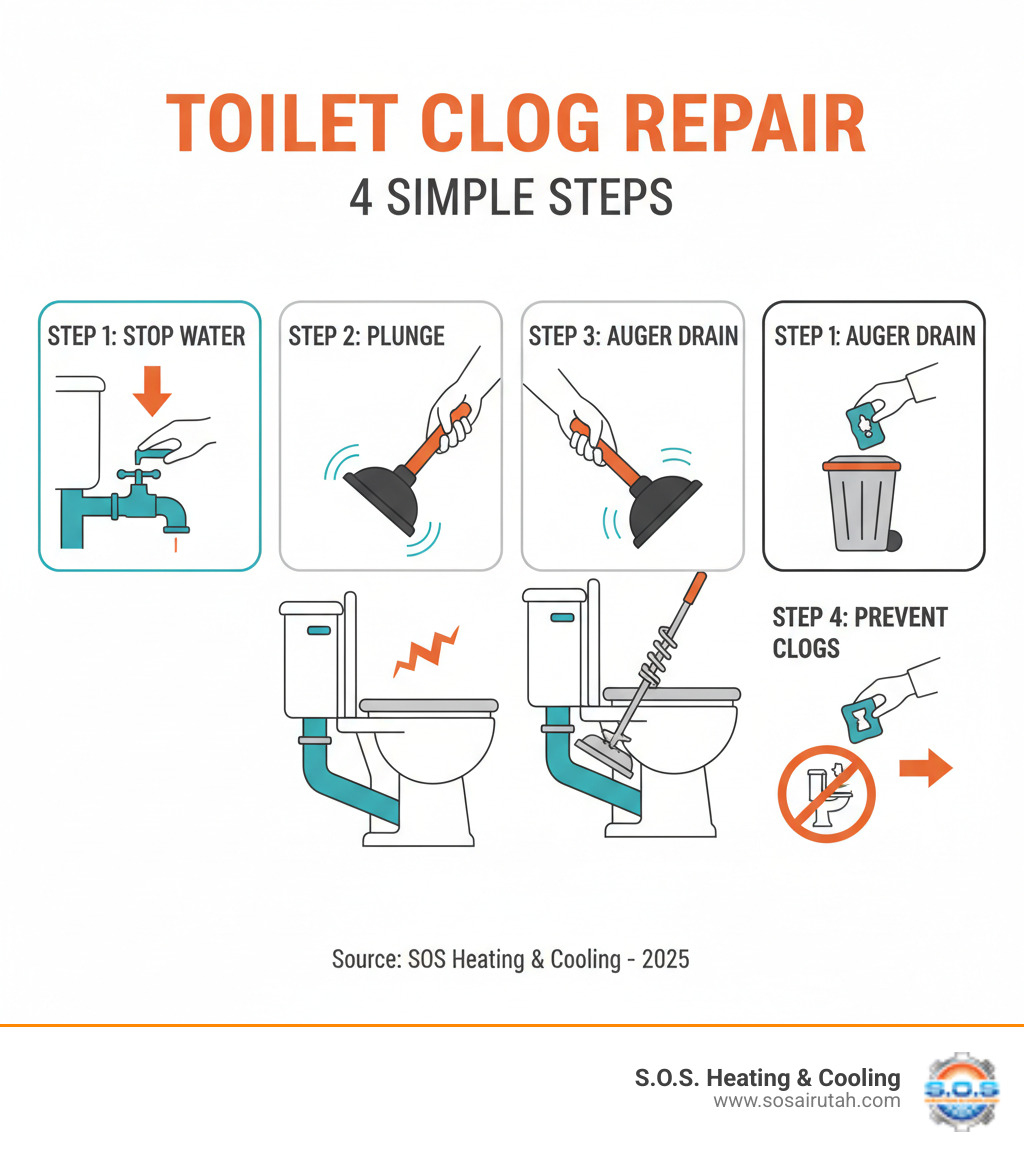
- Stop the Water Flow: Turn off the supply valve or close the flapper in the tank to prevent an overflow.
- Use a Flange Plunger: Create a tight seal and plunge vigorously to dislodge the blockage.
- Try Household Solutions: Use dish soap and hot water or baking soda and vinegar to break down organic clogs.
- Snake the Drain: Insert a toilet auger to break up or retrieve stubborn blockages.
- Know When to Call a Pro: If clogs recur, multiple drains are affected, or DIY methods fail, professional help is needed.
A clogged toilet is always an unwelcome disruption. The good news is that most clogs are located within the first few bends of the pipe and can be resolved with the right approach. Understanding the causes—from excessive toilet paper to flushing non-flushable items—is the first step toward prevention.
If you're in the Salt Lake City area and need help with a stubborn clog, learn more about professional plumbing services or get emergency help now.
My name is Bryson Ninow. At S.O.S. Heating & Cooling, I've helped countless Salt Lake City families with home emergencies, including toilet clog repair. I'm passionate about empowering homeowners to solve problems with confidence, and I'm here to offer practical guidance for your home's systems.
Understanding the Clog: Causes and Telltale Signs
Before starting a toilet clog repair, it's helpful to understand what's causing the problem. Diagnosing the issue helps you work smarter and can even prevent future clogs. Not all clogs are the same; some are simple blockages, while others signal a deeper plumbing problem.
What Causes a Toilet to Clog?
Most toilet clogs are caused by what goes into the bowl. Here are the most common culprits in Salt Lake City homes:
- Excessive toilet paper: Thick, multi-ply toilet paper can create a dense mass that doesn't dissolve quickly.
- Non-flushable items: Paper towels, facial tissues, cotton balls, and feminine hygiene products do not break down in water and create stubborn blockages.
- "Flushable" wipes: Despite the label, these wipes are a leading cause of clogs. They don't disintegrate like toilet paper and should always be thrown in the trash.
- Foreign objects: Small toys or other household items can get lodged in the toilet's trapway, especially in homes with young children.
- Older low-flow toilets: Early water-saving models from the mid-1990s often lack the flushing power to clear waste effectively.
- Mineral and waste buildup: Salt Lake City's hard water can cause mineral deposits to accumulate over time, narrowing pipes and making clogs more likely.
The Toilet's Anatomy: Trap and Vent
Understanding two key parts of your toilet makes toilet clog repair less mysterious.
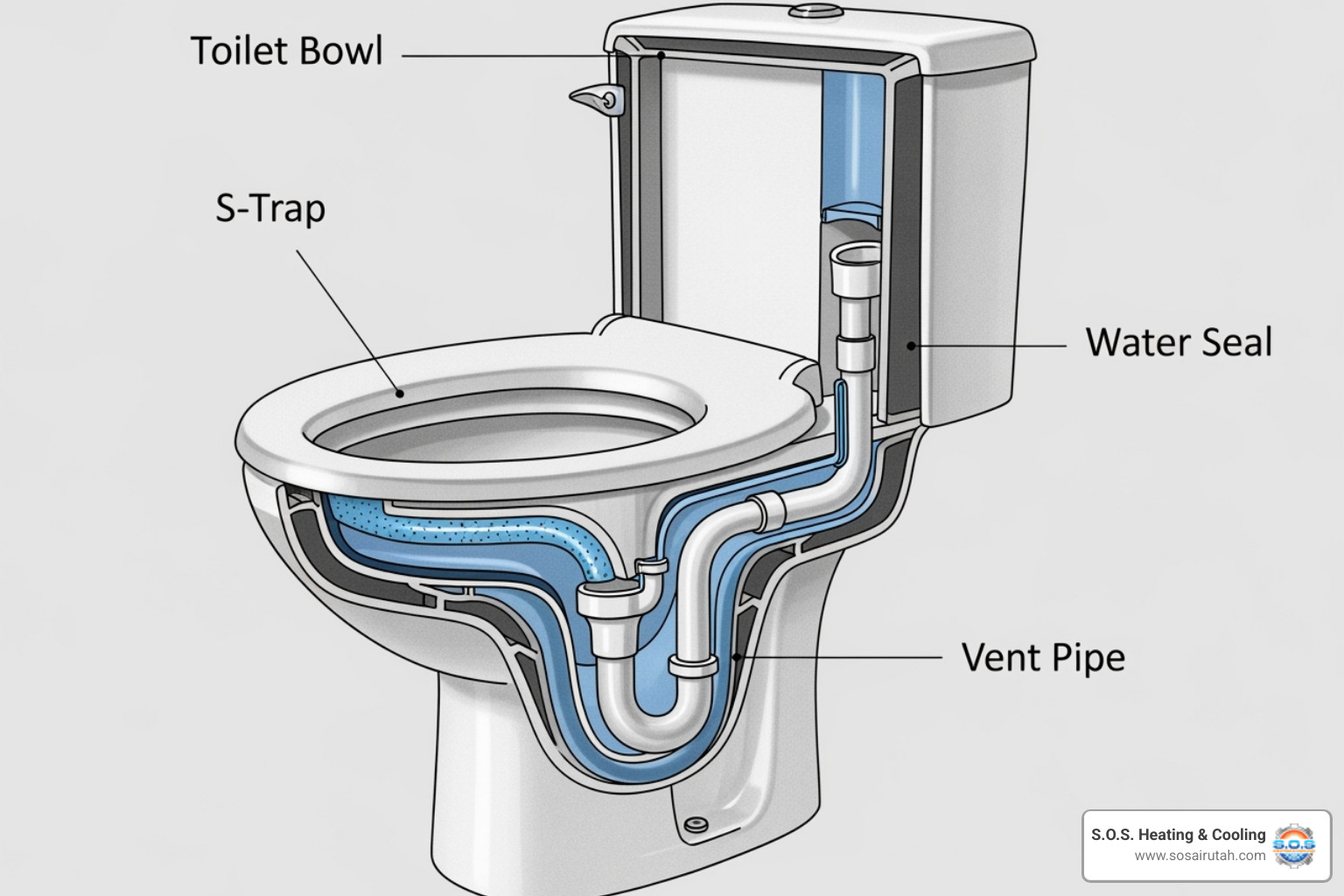
The toilet trap is the S-shaped curve in the pipe beneath the bowl. It holds water to create a seal that blocks sewer gases from entering your bathroom. This curve is also where most clogs form, as it's the narrowest point in the toilet's path.
The toilet vent is a pipe system, usually running through your walls to the roof, that allows air into your plumbing lines. Proper airflow is necessary for water to drain efficiently. Signs of a blocked vent include gurgling sounds from drains, slow drainage in multiple fixtures, and persistent sewer smells. Vent issues require a different approach than a simple plunger.
Toilet Clog vs. Sewer Line Clog
It's critical to distinguish between a simple toilet clog and a more serious sewer line problem.
A toilet clog is localized. If only one toilet is clogged and all other drains in your home (sinks, showers) work fine, you can likely fix it with DIY methods.
A sewer line clog affects multiple fixtures. Signs include:
- Several toilets or drains backing up at once.
- Water backing up in your shower or tub when you flush a toilet.
- Slow drains throughout the house.
- Foul odors that won't go away.
In older Salt Lake City neighborhoods, tree root intrusion is a common cause of main sewer line clogs. These widespread issues require professional tools and expertise. You can learn more about how these are handled at Professional Methods for Severe Toilet Clogs.
The good news is that most toilet clogs are simple, localized problems that you can absolutely handle yourself. Now that you understand what causes them and how to tell the simple clogs from the serious ones, you're ready to roll up your sleeves and get to work.
Step-by-Step DIY Toilet Clog Repair Methods
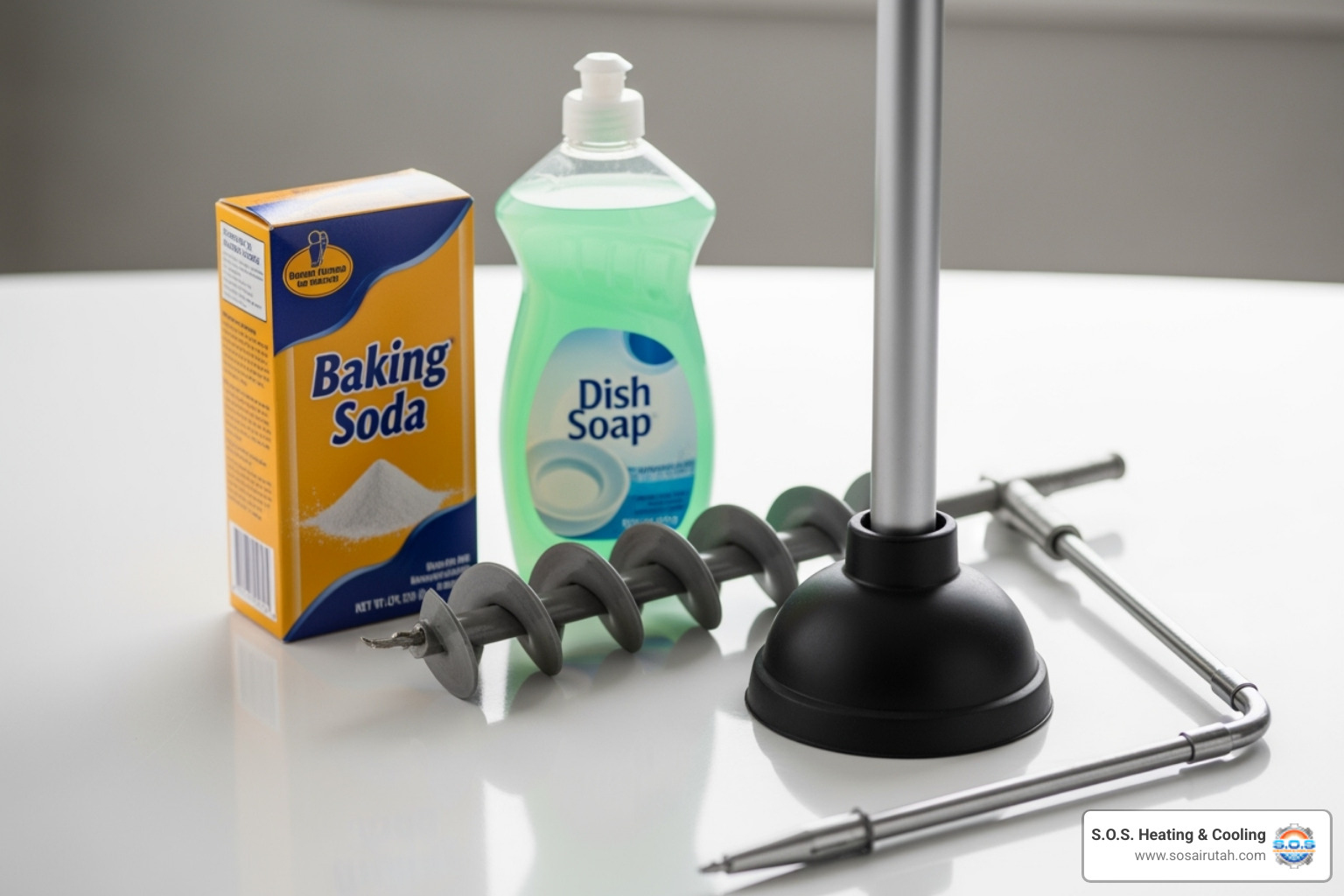
Once you've identified the problem, it's time to tackle the toilet clog repair. Most clogs can be cleared with common household tools. Always wear rubber gloves and place towels around the toilet base to protect your floors before you begin.
Essential First Steps for Toilet Clog Repair
When you notice a clog, your first actions are critical to prevent an overflow.
- Don't flush again: This is the most important rule. A second flush will likely send water onto your bathroom floor.
- Turn off the water: Find the water supply valve on the wall or floor behind the toilet and turn it clockwise to shut it off.
- Close the flapper: If the water level is high, remove the tank lid and push down the rubber flapper at the bottom of the tank to stop water from entering the bowl.
Method 1: Using a Plunger Correctly
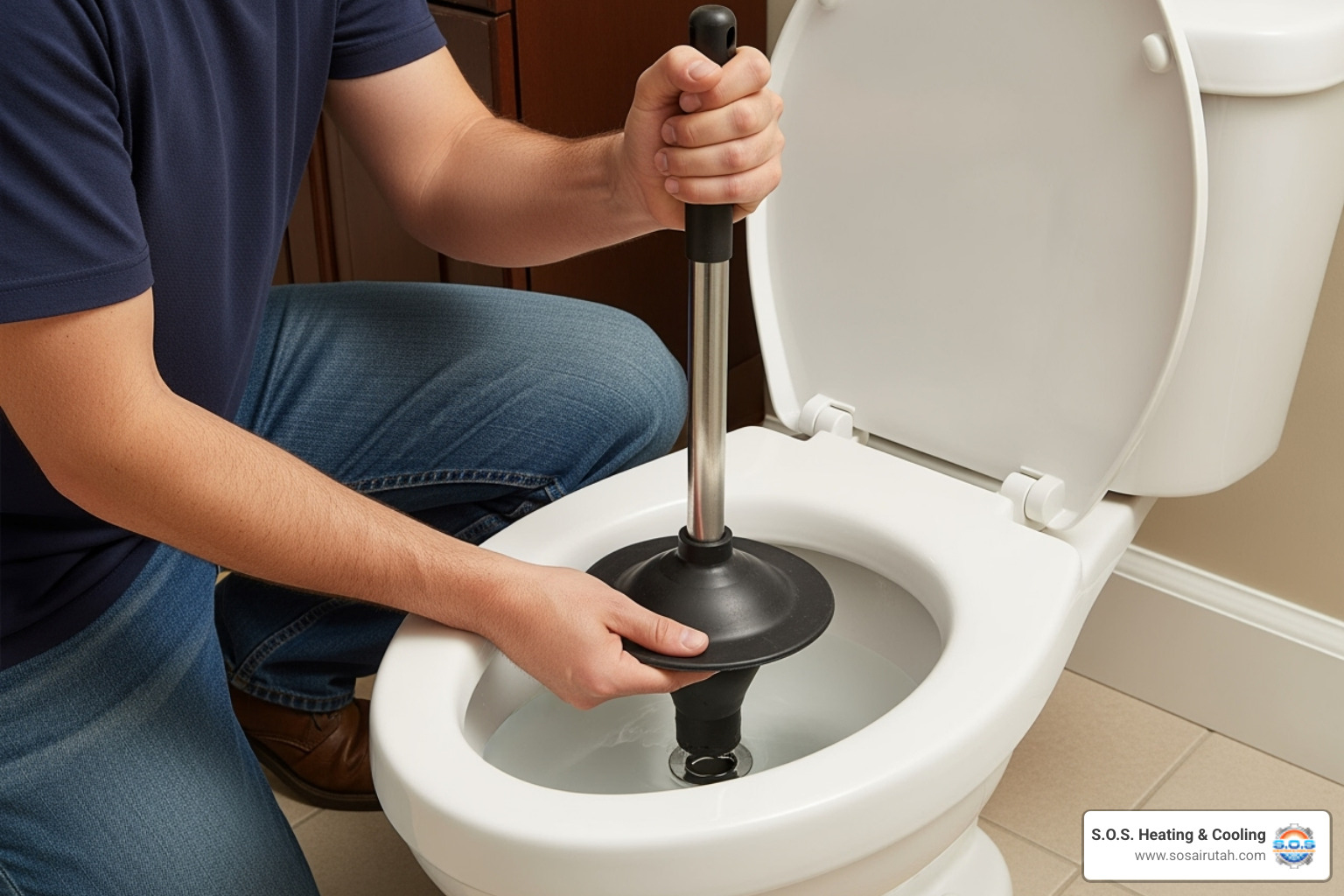
A plunger is your best tool for toilet clog repair, but only if used correctly.
- Use the right plunger: A flange plunger, with its soft rubber flap, is designed for toilets. It creates a much better seal than a standard cup plunger.
- Create a proper seal: Ensure there's enough water in the bowl to cover the plunger's head. Position the flange directly into the drain opening to form a tight seal.
- Use the right technique: Push down gently to expel air, then begin a series of vigorous up-and-down thrusts for 15-20 seconds. The goal is to use water pressure to dislodge the clog.
- Be persistent: It may take several cycles of plunging to clear the blockage. If the water drains, the clog is cleared. If not, it's time for another method. For more tips, see How to Unclog a Toilet.
Method 2: No-Plunger Household Solutions
If you don't have a plunger, your kitchen cabinet may hold the solution. These methods are great for Safe and Quick Toilet Unclogging.
- Dish Soap and Hot Water: Pour about a quarter cup of liquid dish soap into the toilet bowl, followed by a gallon of hot (not boiling) water. The soap lubricates the clog, and the hot water helps break it down. Let it sit for at least 30 minutes before flushing. Boiling water can crack the porcelain bowl.
- Baking Soda and Vinegar: Pour one cup of baking soda into the bowl, followed slowly by two cups of white vinegar. The chemical reaction can help dissolve organic clogs. Let it fizz and work for at least 20 minutes (or overnight for tough clogs) before flushing.
Advanced DIY Toilet Clog Repair: Using a Toilet Auger
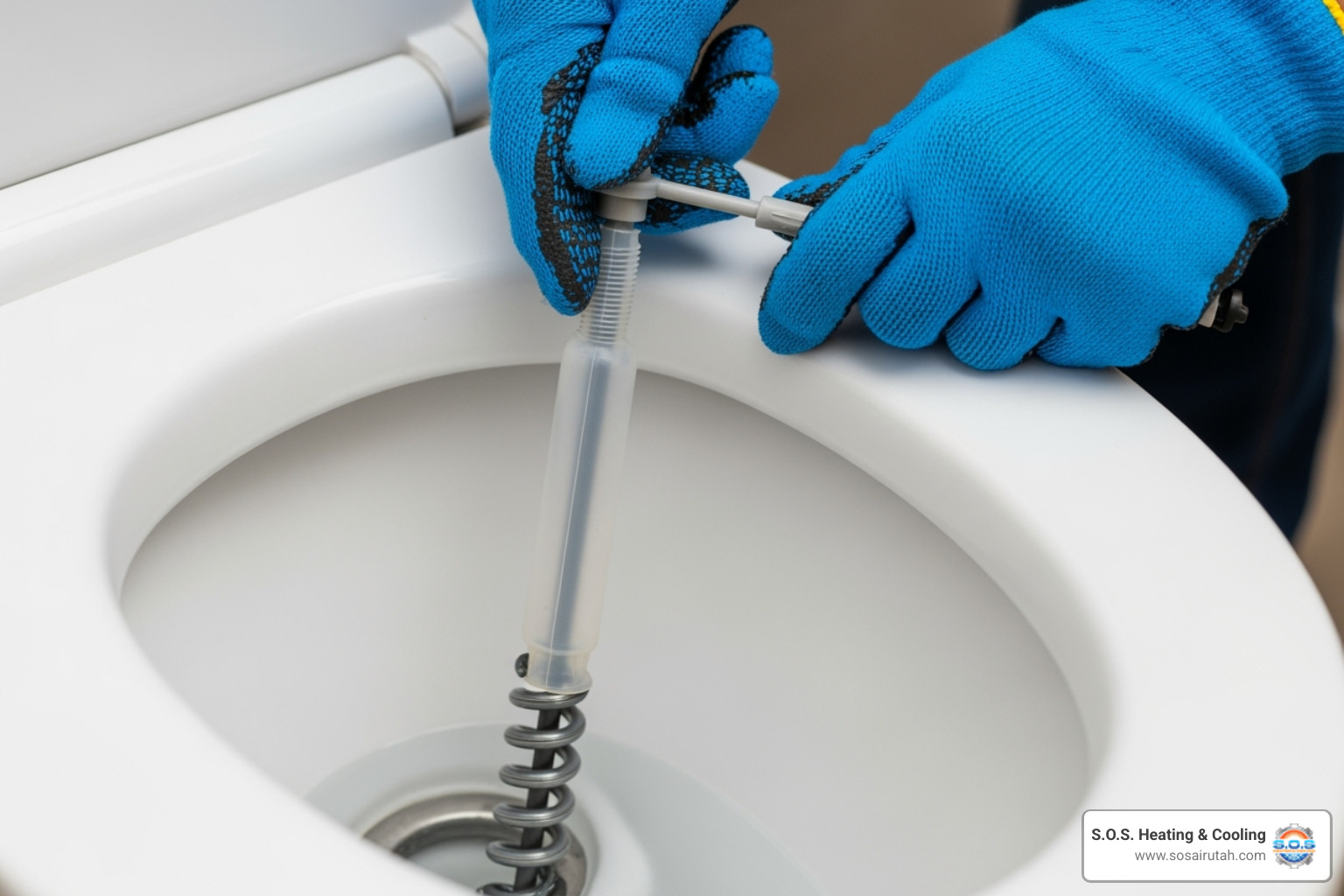
When other methods fail, a toilet auger (or closet auger) can reach deeper to break up or retrieve a clog.
- When to use an auger: Use an auger for stubborn clogs that plunging and household solutions can't clear. It's effective for solid objects or dense blockages.
- Use the right tool: A closet auger is designed for toilets. It has a protective rubber sleeve to prevent the metal cable from scratching the porcelain bowl. Do not use a standard drain snake, which can cause damage.
- How to use it: Carefully insert the auger's sleeve into the drain. Push the cable down until you feel resistance—that's the clog. Turn the handle clockwise while pushing gently to bore into or hook the obstruction. If you've snagged an object, pull the auger back to retrieve it. If the clog breaks apart, retract the auger and flush to test. For more details, check out How to use a toilet auger.
If the auger doesn't work, the clog may be too deep in the system, and it's time to call a professional.
Preventing Future Clogs: Best Practices for a Healthy Toilet
After a successful toilet clog repair, you'll want to prevent it from happening again. Most clogs are preventable with a few simple habits. Being mindful of what you flush can save you from future plumbing headaches.
What Not to Flush
The golden rule is simple: your toilet is only for human waste and toilet paper. Everything else belongs in the trash. Keep a wastebasket next to every toilet to make it easy. Avoid flushing:
- 'Flushable' wipes: They do not break down and are a primary cause of clogs.
- Paper towels and facial tissues: These are designed for strength, not to dissolve in water.
- Feminine hygiene products: They are designed to absorb liquid and expand, creating severe blockages.
- Cotton balls and swabs: They don't dissolve and can easily snag in pipes.
- Dental floss and hair: Both can create net-like structures that trap other debris.
- Grease and cooking oils: They solidify in pipes, creating a sticky buildup that narrows the passage.
- Medications, pet litter, or food scraps: These items can cause blockages and contaminate the water supply.
Smart Flushing Habits
How you flush is just as important as what you flush.
- Use toilet paper wisely: Avoid using excessive amounts of toilet paper in a single flush, especially thick, 2-ply varieties. If your home is prone to clogs, consider switching to a 1-ply paper.
- Teach children proper usage: Make sure kids understand that toilets are not trash cans and that only toilet paper should be flushed.
- Clean regularly: Weekly scrubbing prevents the buildup of minerals and waste. Pay special attention to the small rim jets under the bowl's edge. In Salt Lake City, hard water can clog these jets, reducing flush power. Use a vinegar-soaked brush to keep them clear.
- Consider an upgrade: If you have an older, clog-prone low-flow toilet from the 1990s, upgrading to a modern high-efficiency model can solve persistent issues while still conserving water.
When DIY Fails: Recognizing a Stubborn Clog
While it's satisfying to handle toilet clog repair yourself, some clogs require professional help. Knowing when to stop is key to protecting your home from more extensive and expensive damage.
The Dangers of Harsh Chemical Drain Cleaners
When frustrated, it's tempting to reach for a chemical drain cleaner like Drano, but we strongly advise against it.
- They are hazardous: These products contain toxic chemicals that can cause skin burns and irritate your eyes and lungs. They are also harmful to the environment.
- They can damage pipes: The corrosive agents can eat away at pipes over time, especially older ones. If the chemical sits in a clogged toilet, it can also permanently damage the porcelain bowl.
- They are often ineffective: Chemical cleaners are designed for hair and grease, not the wads of toilet paper, wipes, or foreign objects that typically clog toilets. This leaves you with a clogged toilet now filled with hazardous chemicals.
- They create a safety risk: If you've already used chemicals, inform your plumber immediately. Plunging or snaking a toilet with caustic chemicals is dangerous and requires extra safety precautions.
A safer alternative for maintenance is an enzyme-based cleaner, which uses natural bacteria to slowly break down organic waste without harming your pipes.
Signs You Need to Call a Professional
Recognizing these warning signs can save you time, money, and frustration. It's time to call a plumber if:
- Clogs are recurring: If the same toilet clogs repeatedly despite your efforts, there's likely an underlying issue like a damaged pipe or tree root intrusion.
- Multiple drains are affected: If flushing a toilet causes a gurgle in your shower, or if several drains are slow or backed up, you probably have a main sewer line clog.
- There are persistent foul odors: A sewer smell that won't go away could indicate a blocked vent pipe or a break in the sewer line.
- Water backs up in other fixtures: If water appears in your tub or shower when you flush the toilet, the blockage is in the main sewer line and requires professional equipment.
- DIY methods have failed: If you've tried plunging, household remedies, and an auger without success, it's time to stop. Continuing could cause more damage.
- A foreign object is stuck: If you know a solid object is lodged in the toilet and you can't retrieve it with an auger, a plumber may need to remove the toilet to clear it.
For any emergency, such as an overflowing toilet you can't stop, call for help immediately. We offer Emergency Solutions for Overflowing Toilets 24/7.
At S.O.S. Heating & Cooling, our experienced plumbers serve Salt Lake City with the tools and expertise to handle any toilet clog repair, from simple blockages to complex sewer line issues. Learn more about our plumbing services or contact us for help.
Frequently Asked Questions about Toilet Clogs
We've helped many Salt Lake City homeowners with toilet clog repair and have answered countless questions. Here are a few of the most common ones.
What's the best type of plunger for a toilet?
A flange plunger is the best choice. It has a soft rubber flap extending from the cup that is specifically designed to create a tight seal in a toilet's curved drain. A standard flat cup plunger, meant for sinks, won't generate enough pressure to be effective for toilet clog repair.
My toilet is about to overflow, what do I do immediately?
First, do not flush again. This will only cause an overflow. Instead, quickly remove the tank lid and press down on the rubber flapper at the bottom to stop water from entering the bowl. Then, find the water supply valve on the wall behind the toilet and turn it clockwise to shut off the water completely. This gives you control of the situation.
Can 'flushable' wipes really be flushed?
No, absolutely not. Despite the name, these wipes do not break down in water like toilet paper. They are a leading cause of stubborn clogs in both home plumbing and city sewer systems. They might flush out of the bowl, but they create serious problems down the line. Always dispose of all wipes in a trash can.
Your Next Steps for a Clog-Free Toilet
We've covered the essentials of toilet clog repair, from identifying the cause to using DIY tools like plungers and augers. We've also discussed the importance of prevention and knowing when a clog requires professional attention. Most toilet clogs are manageable with the right technique, but for those that aren't, help is available.
For persistent issues or complex plumbing problems in the Salt Lake City area, our team at S.O.S. Heating & Cooling is here to support you. Our expert plumbers serve communities throughout the valley, from Bountiful to Herriman and Sandy to Layton. We bring the right tools to diagnose and resolve even the most stubborn clogs, protecting your home from water damage.
We offer 24/7 emergency services because plumbing problems don't wait for business hours. For our partners, we provide priority service, and during business hours, there are no evaluation fees—just honest, effective service.
A clogged toilet doesn't have to ruin your day. With this guide, you can handle many situations yourself. And when you need backup, we're ready to help.
Explore our comprehensive plumbing services today and find out why Salt Lake City homeowners trust S.O.S. Heating & Cooling for reliable, expert care. For stubborn clogs, our team offers professional drain cleaning.
Contact Us
Let's Get You From Distress to Rest
No heat, no cool, a backed-up drain, or just due for a tune-up? Call now or request service and our local team will be on the way — upfront pricing, no surprises.