

Replacing Your Heating System? What You Need to Know Before You Buy


.avif)

Making the Right Decision for Your Home's Comfort and Efficiency
A heating system replacement is a major home investment, but it's also an opportunity to significantly improve your comfort and lower your energy bills. If your furnace is over 15 years old, needs frequent repairs, or struggles to keep your home evenly heated, it's time to consider an upgrade. Today's high-efficiency systems can reduce heating costs by 20% or more while providing consistent, reliable warmth.
Key signs you may need a replacement:
- Age: Furnaces often last 15-20 years; heat pumps 10-15 years.
- Frequent Repairs: Costs are adding up, and breakdowns are common.
- Rising Energy Bills: Your system is losing efficiency and working harder.
- Uneven Heating: You have persistent cold spots or overheated rooms.
- Strange Noises or Smells: Banging, rattling, or unusual odors are red flags.
- Visible Deterioration: You notice rust, corrosion, or cracks on the unit.
For homeowners in Salt Lake City, a failing heating system can be a true emergency during a winter storm. Planning your replacement ahead of time allows you to research options and find the best fit for your home without the pressure of a crisis. Whether you need a traditional furnace or a modern heat pump, understanding your choices is the first step toward a smart investment.
I'm Bryson Ninow, and I've spent my career in the HVAC industry helping families steer the heating system replacement process. My goal is to provide the information you need to make a confident decision that fits your home and budget, whether you need a full replacement or are looking into options like a heating repair in Sandy.
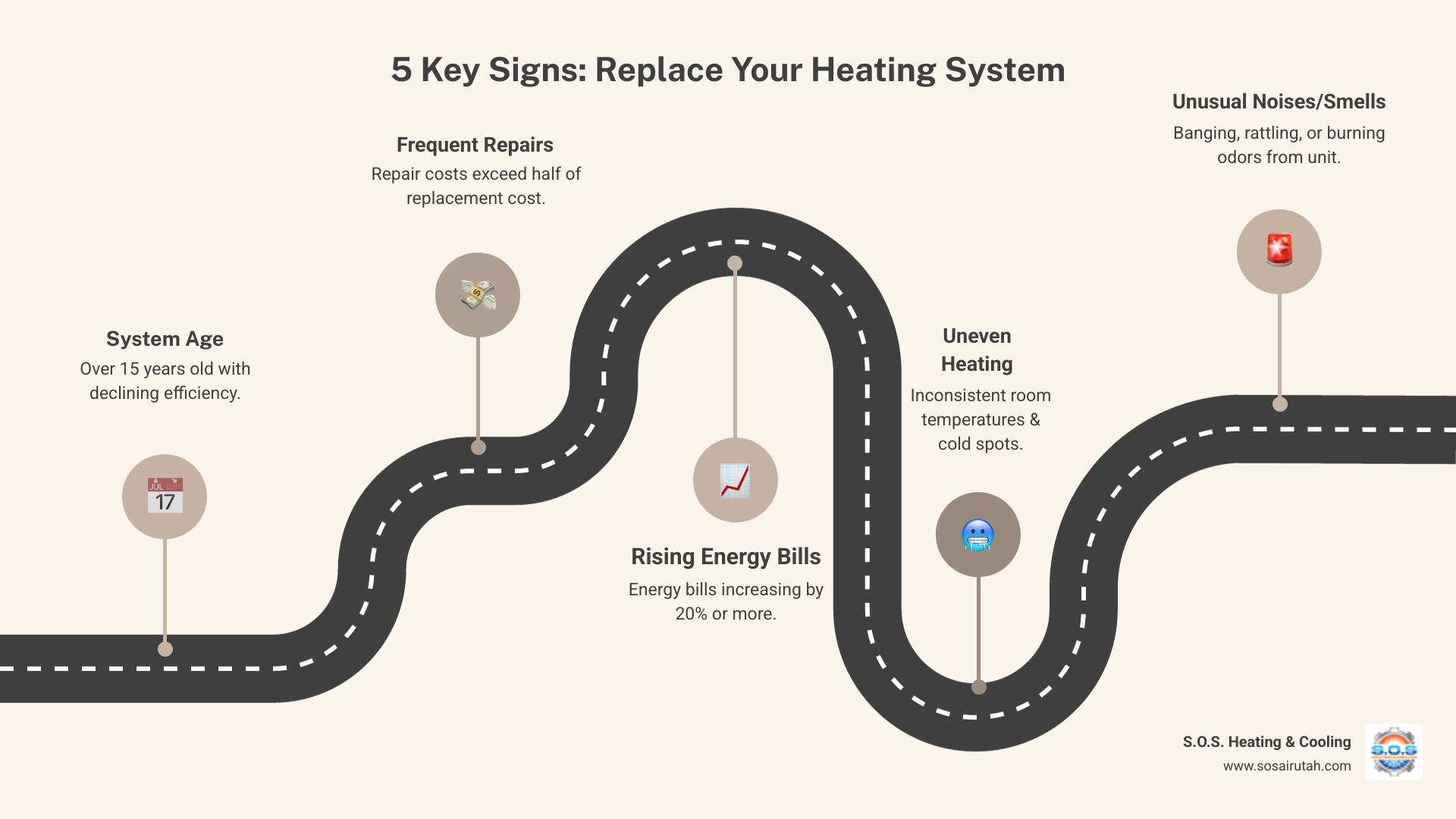
Signs It's Time for a Heating System Replacement
Your heating system will usually give you warning signs before it fails completely. Recognizing these hints early allows you to plan a heating system replacement on your own schedule, rather than during a blizzard.
Your System's Age and Lifespan
Like any major appliance, heating systems have a finite lifespan. Most furnaces last between 15 and 20 years, while heat pumps, which provide both heating and cooling, typically last 10 to 15 years. Boilers can last longer but are less common in the Salt Lake City area.
Once your system reaches these age milestones, it's wise to start planning for a replacement, even if it's still running. An older unit is likely far less efficient than a modern one, costing you more in monthly energy bills. If an aging system is also showing other signs of trouble, a replacement is almost always a better financial choice than another expensive repair.
Performance and Comfort Issues
How your system performs daily is a clear indicator of its health. If you're experiencing any of the following issues, it's time for a professional evaluation:
- Inconsistent Temperatures: Are some rooms in your Salt Lake City home always cold while others are too warm? This means your system is struggling to distribute heat evenly.
- Short Cycling: If your furnace or heat pump turns on and off frequently, it's working inefficiently and causing unnecessary wear and tear on its components.
- Poor Indoor Air Quality: An increase in dust, allergens, or respiratory irritation can be linked to an aging heating system that no longer filters air effectively or has leaky ductwork.
- Rising Energy Bills: If your heating costs are climbing without a change in your usage, your unit is losing efficiency and wasting energy.
- Strange Noises and Smells: Banging, rattling, or grinding sounds are cries for help. Musty smells can indicate mold, while burning odors could signal a dangerous electrical issue. If you ever smell gas, leave your home immediately and call your gas provider.
- Visible Wear and Tear: Obvious rust, corrosion, or cracks on the unit are signs of advanced deterioration. A cracked heat exchanger is especially dangerous, as it can leak carbon monoxide into your home.
When you notice several of these problems, a heating system replacement is often the smartest investment for your comfort, safety, and budget.
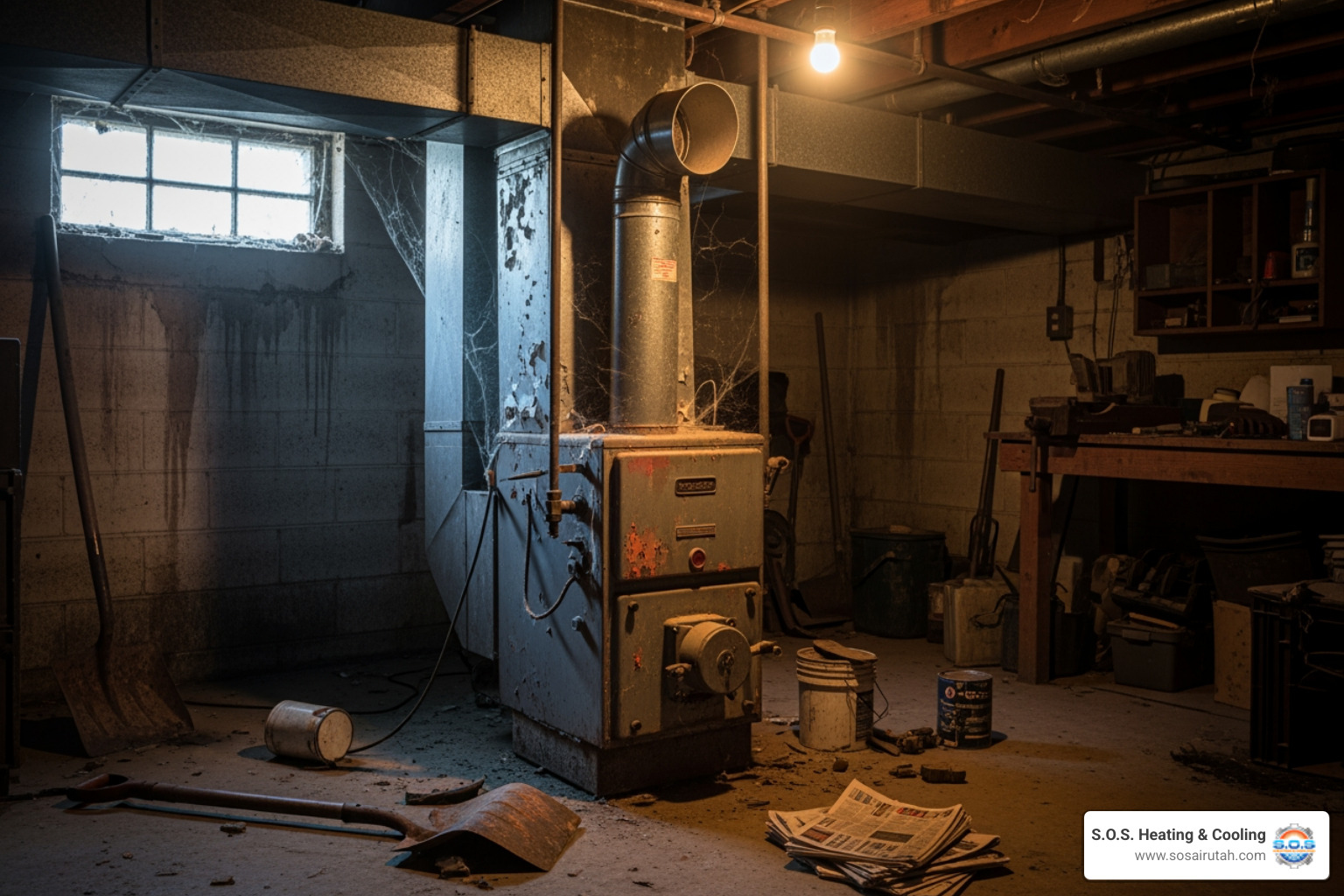
When it comes to deciding if it's time to replace your heating and cooling equipment or improve your overall system's performance, certain telltale signs point the way. You can learn more about these indicators here: When is it time to replace?
Exploring Your Heating System Options
Once you've decided on a heating system replacement, it's time to explore your options. Today's technology offers major improvements in efficiency and comfort. The right choice for your Salt Lake City home will depend on available fuel types, your home's layout, and your budget.
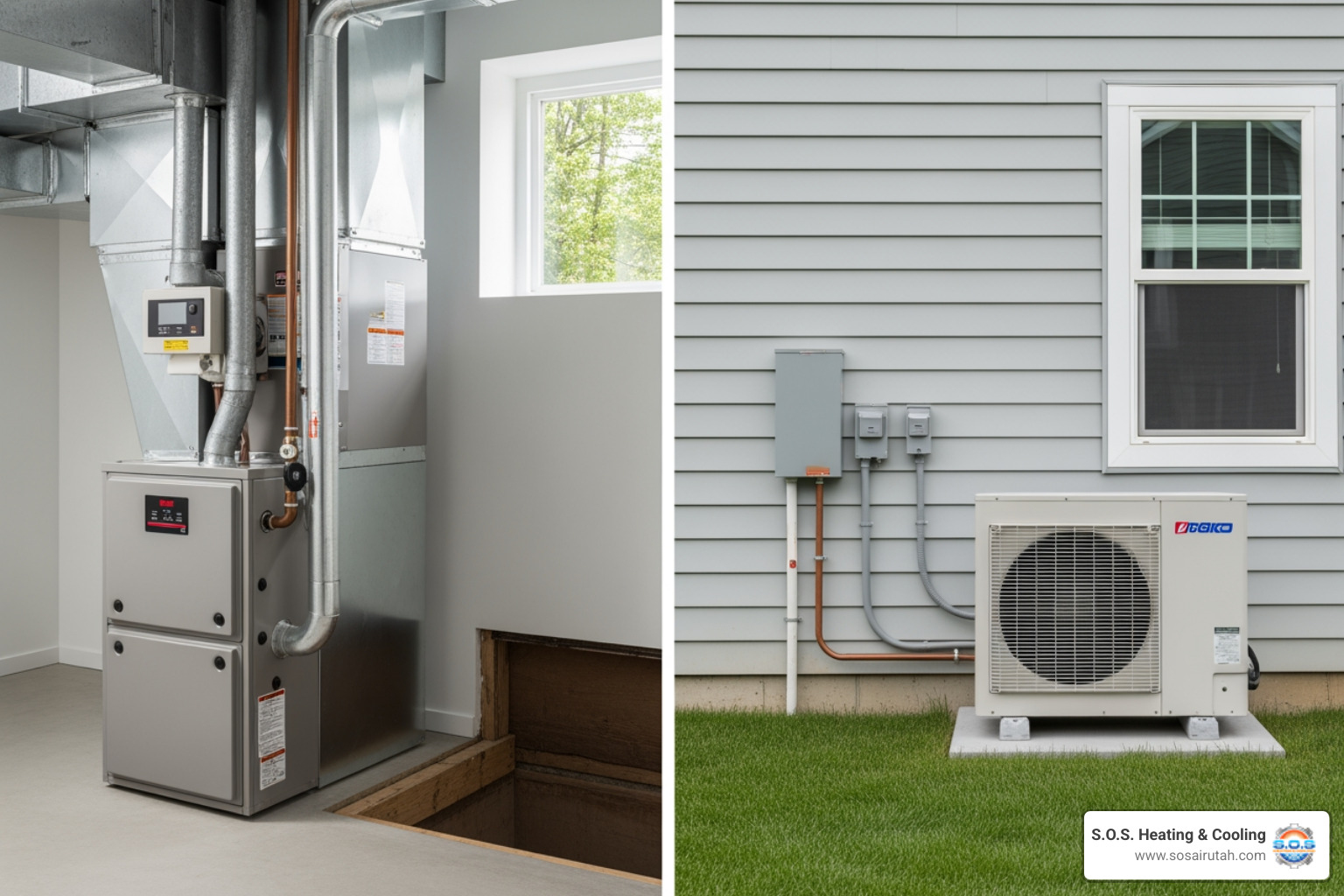
Furnaces: The Traditional Choice
Furnaces are a trusted heating solution in Utah. They generate heat by burning fuel and distribute it through ductwork. Modern furnaces are far more efficient than older models.
- Gas Furnaces: The most common choice in our region. Natural gas is reliable and cost-effective. High-efficiency models can have an AFUE (Annual Fuel Utilization Efficiency) rating of over 95%, meaning very little fuel is wasted. They provide powerful, quick heating perfect for Utah winters.
- Electric Furnaces: A good option for homes without natural gas access. While 100% efficient at converting electricity to heat, operating costs can be higher depending on local electricity rates. They are quiet and have lower upfront installation costs.
- Oil Furnaces: Less common in Salt Lake City due to fluctuating fuel prices and the need for an on-site storage tank.
Heat Pumps: The All-in-One Solution
Heat pumps are an increasingly popular, highly efficient technology. Instead of creating heat, they move it. In winter, a heat pump extracts heat from the outside air and transfers it inside. In summer, it reverses the process for cooling. This means one system provides both heating and cooling.
Because they move heat rather than generate it, heat pumps can be over 300% efficient, delivering more heat energy than the electrical energy they consume. This leads to significant energy savings. Modern cold-climate models perform exceptionally well even in our chilly winters. For a visual explanation, you can see this video on Understanding How Heat Pumps Work.
Here's a quick comparison:
| Feature | Furnace | Heat Pump |
|---|---|---|
| Primary Function | Heating only | Heating and Cooling |
| Energy Source | Natural Gas, Propane, Oil, Electricity | Electricity (moves heat, doesn't generate) |
| Efficiency | Measured by AFUE (up to 99% for gas) | Measured by COP/HSPF (can be 300%+ efficient) |
| Climate Suitability | Excellent for very cold climates | Good for moderate climates; cold-climate models for colder regions |
| Environmental Impact | Produces emissions (gas/oil) | Emissions-free at point of use |
| Comfort | Quick, intense heat; can be drying | Even, consistent heat; better humidity control |
Alternatives to a Traditional Furnace for Your Heating System Replacement
Beyond furnaces and heat pumps, other options might be a perfect fit for your home.
- Boilers and Radiant Heat: Boilers heat water that circulates through radiators or radiant flooring. This provides an incredibly even, comfortable heat without blowing air, which reduces dust and dryness. Radiant floor heating is a luxurious and efficient option.
- Ductless Mini-Splits: These are ideal for homes without ductwork, for additions, or for creating zoned temperature control. An outdoor unit connects to one or more indoor units, each controlled independently. They are highly efficient and easy to install.
Weighing the all-in-one convenience of a heat pump against the specialized comfort of these alternatives is a key part of the decision process. We can help you evaluate all these options to find the best heating system replacement for your needs.
Key Factors for Your New System
Choosing the right heating system involves more than just picking a model. To ensure optimal performance and efficiency for your heating system replacement, several other factors are crucial.
Understanding Furnace Efficiency (AFUE)
AFUE, or Annual Fuel Utilization Efficiency, is a percentage that tells you how much fuel a furnace converts into usable heat. An 80% AFUE furnace wastes 20 cents of every dollar spent on fuel. Modern high-efficiency furnaces in Salt Lake City can have AFUE ratings of 98-99%, meaning almost no energy is wasted.
While high-efficiency models may have a higher initial cost, they provide significant long-term savings on your energy bills, especially in Utah's cold climate. Choosing an ENERGY STAR® certified furnace guarantees a high level of efficiency. You can learn more about how to heat and cool efficiently on the ENERGY STAR website.
Choosing the Right Size Furnace for Your Home
Bigger is not better when it comes to furnaces. An improperly sized system will perform poorly and cost more to run. The only way to determine the correct size is with a professional Manual J load calculation.
This detailed analysis considers your home's square footage, insulation, windows, ceiling height, and local climate to determine its exact heating needs. We follow industry standards like the ACCA Manual J - Residential Load Calculation, 8th Edition-Full, ANSI/ACCA 2-2016 to ensure perfect sizing.
- An oversized system will short cycle (turn on and off too quickly), causing uneven temperatures, poor humidity control, and excess wear.
- An undersized system will run constantly on the coldest days without ever reaching the desired temperature, leading to discomfort and high bills.
Proper sizing is essential for comfort, efficiency, and the longevity of your new system.
The Role of Ductwork in Your Heating System Replacement
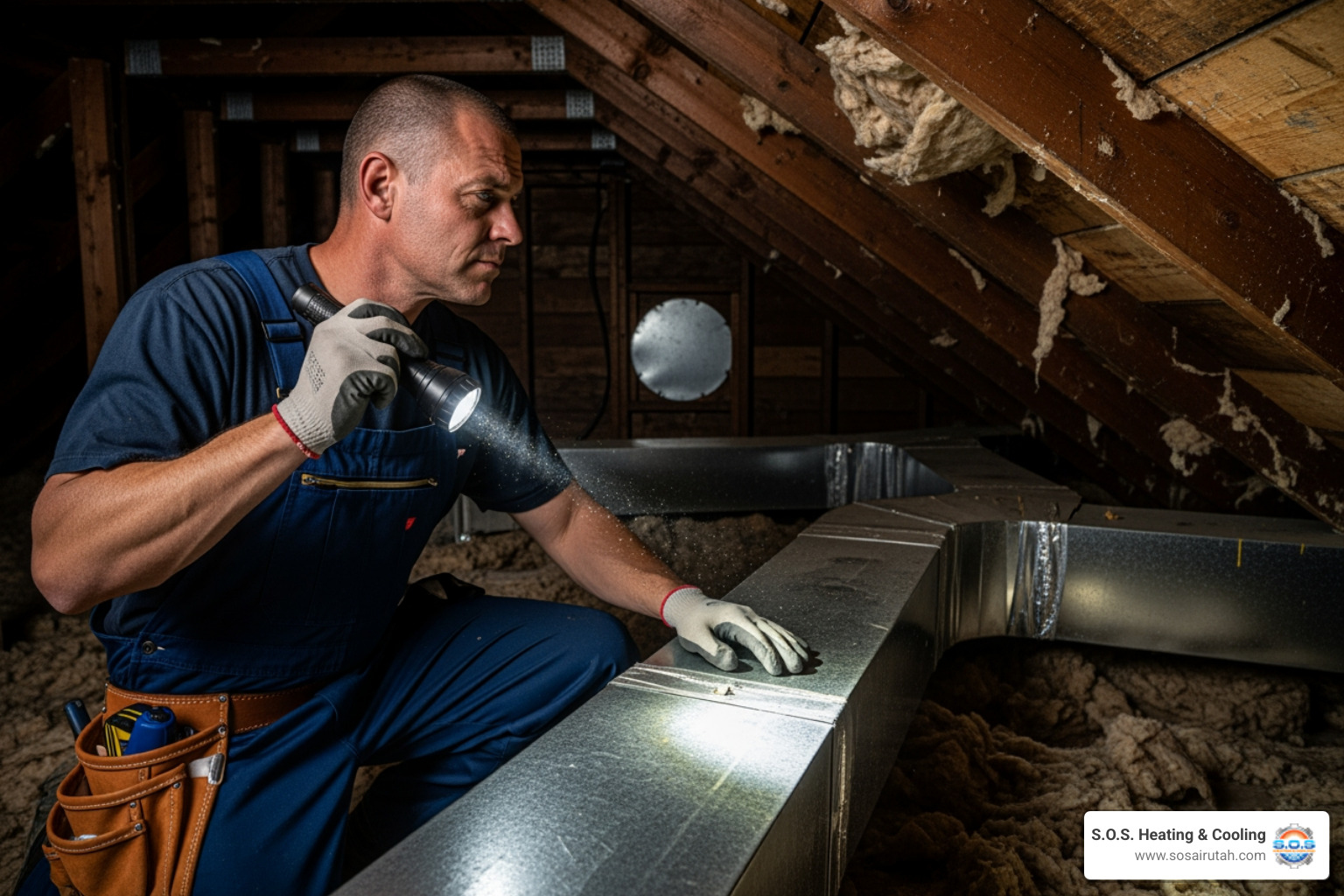
Your ductwork is the delivery system for your heated air. Even the best furnace will underperform if your ducts are leaky, poorly designed, or uninsulated. Leaky ducts can lose up to 30% of the heated air into your attic or crawlspace.
During a heating system replacement, a thorough duct inspection is vital. We recommend sealing leaks and insulating ducts that run through unconditioned spaces. This ensures the warm air your new system produces actually reaches your rooms efficiently. Properly sealed and insulated ducts lead to more even temperatures, lower energy bills, and better indoor air quality. For comprehensive guidelines, we follow standards like ACCA Manual D - Residential Duct Systems, ANSI/ACCA 1-2016.
At S.O.S. Heating & Cooling, we evaluate your entire system—furnace, ductwork, and controls—to ensure everything works together for optimal performance.
The Importance of Professional Installation and Maintenance
After selecting the perfect new heating system, the installation is the most critical step. This is not a DIY project; professional installation is essential for safety, performance, and protecting your investment.
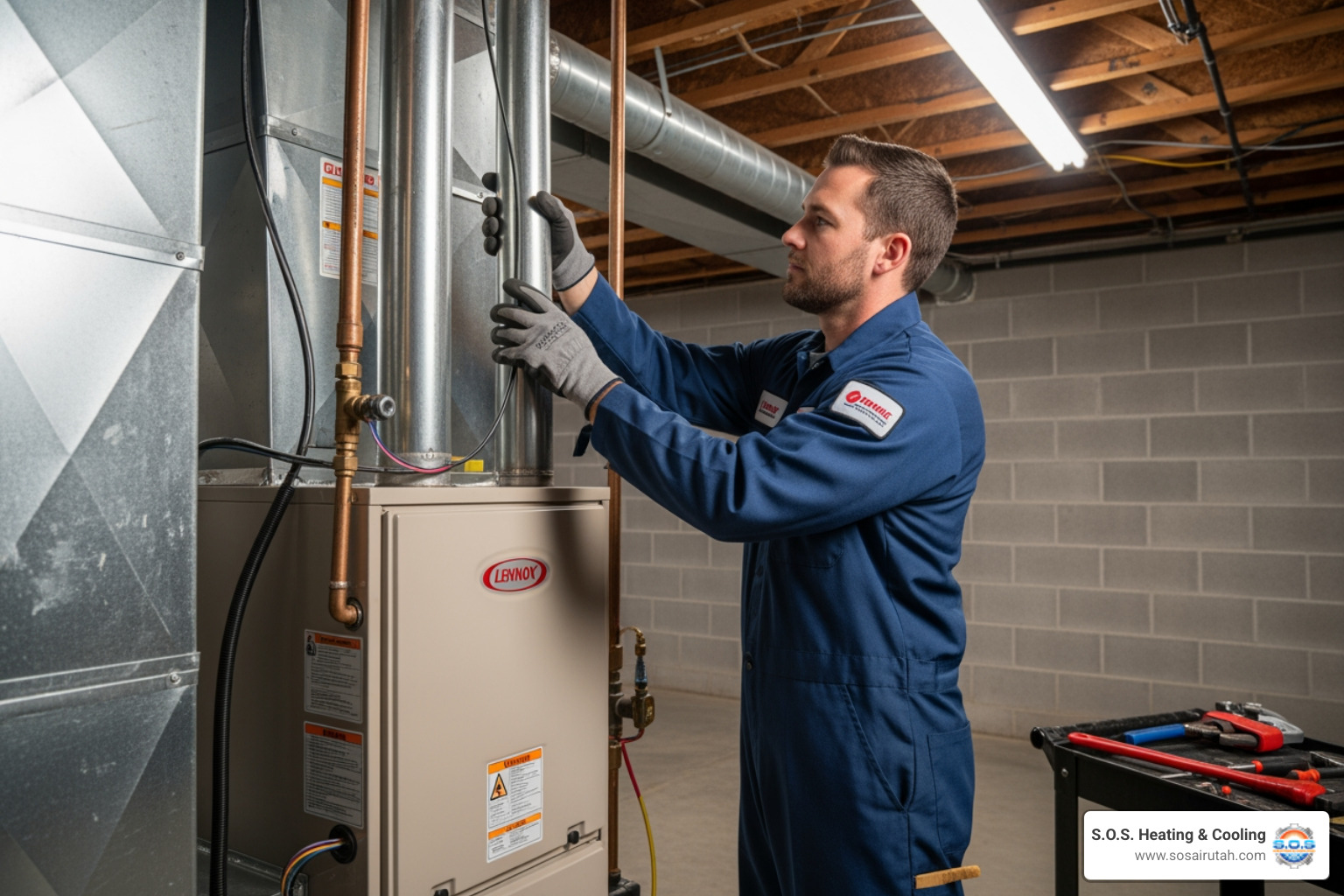
Why Professional Installation is Necessary
A heating system replacement is a complex job requiring technical expertise and adherence to safety codes. Here's why you need a pro:
- Safety: Incorrect electrical work can cause fires, and faulty gas line connections can lead to dangerous leaks. Proper venting is also critical to prevent carbon monoxide buildup in your home.
- Performance: A professional technician commissions the system, meaning they test and calibrate it to operate at peak efficiency according to manufacturer specifications. This step is crucial for maximizing energy savings.
- Warranty Protection: Most manufacturers require installation by a licensed contractor to keep your warranty valid. A DIY installation could void your coverage, leaving you responsible for future repair costs.
Choosing the right contractor is as important as choosing the right system. For guidance, check out these Tips for Hiring a Heating & Cooling Contractor.
Maintaining Your New System
To keep your new system running efficiently for its entire lifespan, regular maintenance is key. Just like a car needs oil changes, your heating system needs annual care.
- Schedule Annual Tune-Ups: A professional tune-up in the fall, before the heating season starts, is the best way to catch minor issues before they become major problems. This maintains efficiency and prolongs the life of your equipment.
- Change Your Filter Regularly: A dirty filter restricts airflow, forcing your system to work harder and reducing indoor air quality. Check your filter monthly and replace it every 1-3 months.
- Keep Units Clear: Ensure your outdoor heat pump unit is free of leaves, snow, and debris. Vacuum around your indoor furnace to prevent dust buildup.
Many manufacturer warranties require proof of annual professional maintenance to remain valid. Following best practices, such as those outlined in the ACCA Standard 4 - Maintenance of Residential HVAC Systems, will protect your investment and ensure your family stays comfortable for years to come.
Frequently Asked Questions about Heating System Replacement
At S.O.S. Heating & Cooling, we've helped many Salt Lake City homeowners with heating system replacement, and a few questions come up frequently.
How long do most heating systems last?
A typical furnace will last between 15 and 20 years, while a heat pump, which handles both heating and cooling, usually has a lifespan of 10 to 15 years. With regular maintenance, these systems can serve you well, but efficiency declines with age. Once a system reaches this age range, replacement is often a smarter financial decision than continuing with repairs.
Does a home warranty cover furnace replacement?
It depends entirely on your policy. Some home warranties cover furnace replacement for failures from normal wear and tear, but there are often significant limitations, service fees, and exclusions. For example, coverage may be denied due to a lack of maintenance or pre-existing conditions. Always read your home warranty contract carefully to understand what is and isn't covered before you need a replacement.
What are government rebates for furnace replacement?
Installing a high-efficiency heating system can make you eligible for financial incentives. Federal, state, and local governments, as well as Utah utility companies, often offer tax credits and rebates for ENERGY STAR® certified models. These programs are designed to promote energy conservation and can help lower the upfront cost of your heating system replacement. We recommend checking with local utility providers and federal energy resources to see what incentives are currently available.
Your Partner for a Warm and Comfortable Home
Choosing the right heating system replacement is a long-term investment in your family's comfort and your home's efficiency. While it's a big decision, having a trusted partner makes the process straightforward.
We've covered how to spot a failing system, explored modern furnaces and heat pumps, and highlighted the importance of proper sizing and professional installation. Each step is crucial for achieving the consistent warmth and energy savings you deserve in your Salt Lake City home.
At S.O.S. Heating & Cooling, we build relationships with our neighbors across the Salt Lake Valley, including Sandy, Draper, Murray, Riverton, and South Jordan. We understand that a heating emergency can't wait, which is why we offer 24/7 emergency repairs. Our customers also benefit from priority service, no evaluation fees during business hours, and flexible financing options to make your investment manageable.
When you're ready for a heating system replacement, we're here to guide you from the initial consultation to the final installation and beyond. We're not just installing a furnace; we're helping you create a warmer, more comfortable home.
Learn more about our furnace replacement services in Sandy, UT and let's discuss the best solution for your family.
Explore Our Latest Insights and Updates in Plumbing Services

How a Holistic Community Approach Makes Trust More Than Just a Buzzword

Why Your High Altitude Home Needs a Special Kind of AC Math
The Dynamic Duo of Home Cooling