
Surviving the High Desert with High Efficiency AC Benefits


.avif)

Why High Efficiency AC Benefits for High Desert Climates Are Impossible to Ignore
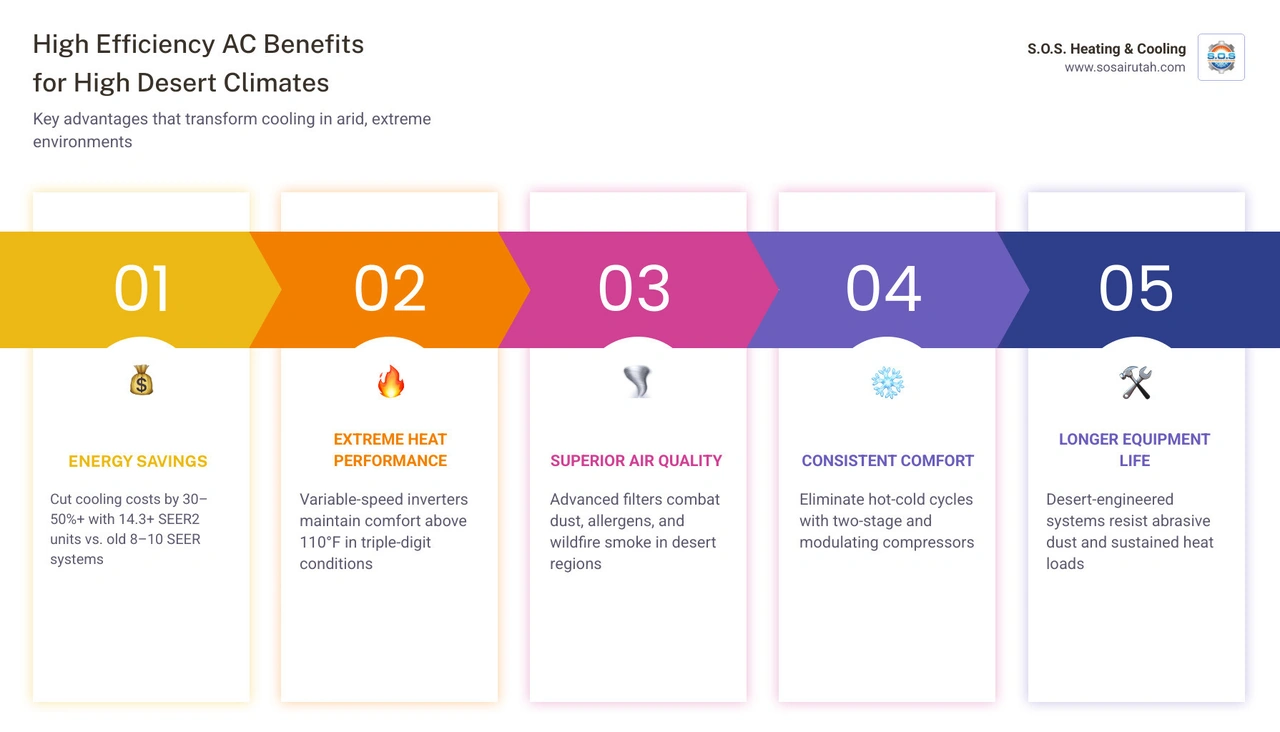
High efficiency AC benefits for high desert climates are real, measurable, and — for homeowners in places like Salt Lake City — genuinely life-changing during a brutal summer. Here is a quick look at what you gain by upgrading:
- Lower energy bills - High-efficiency units (14.3 SEER2 and above) can cut cooling costs by 30–50% or more compared to older 8–10 SEER systems
- Reliable cooling in extreme heat - Variable-speed and inverter-driven systems maintain comfort even when outdoor temperatures exceed 110°F
- Better indoor air quality - Advanced filtration handles the dust, allergens, and wildfire smoke common in arid high desert regions
- Consistent temperatures - Two-stage and variable-speed compressors eliminate the hot-and-cold cycling that single-stage units cause
- Financial incentives - ENERGY STAR heat pumps qualify for up to $2,000 in federal tax credits; traditional high-efficiency AC units qualify for up to $600
- Longer equipment life - Systems designed for desert conditions withstand abrasive dust and sustained heat loads far better than standard units
- Reduced carbon footprint - Heat pumps use up to three times less energy than gas or standard electric heating systems
High desert summers are relentless. In the Salt Lake Valley, temperatures regularly push into triple digits, attic spaces can bake past 130°F, and dust storms clog filters and coat condenser coils faster than most homeowners expect. A standard, entry-level air conditioner was simply not engineered for those conditions. It struggles to keep up, runs longer than it should, and wears out faster — all while driving up your monthly utility bill. Choosing the right high-efficiency system is not just about comfort; in a high desert environment, it is a matter of safety and smart financial planning.
I'm Bryson Ninow, a NATE-certified HVAC professional and energy efficiency specialist with hands-on experience helping high desert homeowners navigate exactly these challenges — from selecting the right SEER2-rated equipment to maximizing available rebates. In this guide, I'll walk you through everything you need to know to unlock the full high efficiency AC benefits for high desert climates — and make a confident, well-informed decision for your home.
The High Desert Cooling Challenge

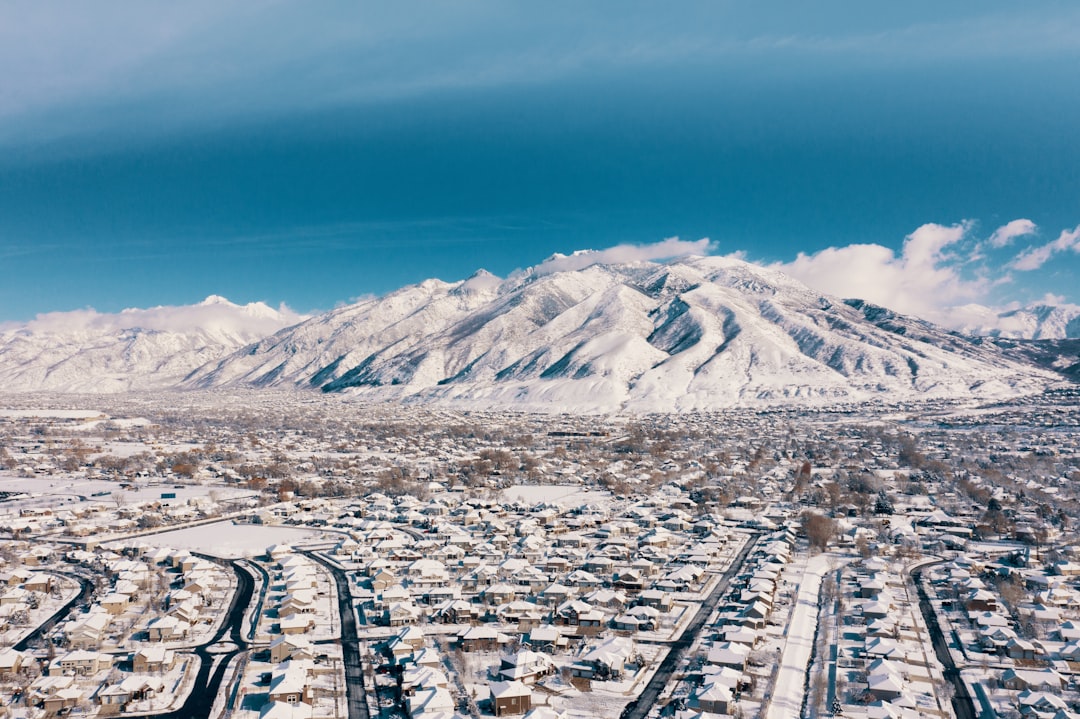
Living in the high desert—whether you are in Salt Lake City, Draper, or Layton—means facing a set of atmospheric conditions that most HVAC systems in other parts of the country never have to deal with. We aren't just dealing with "heat"; we are dealing with a combination of high altitude, intense solar gain, and extreme temperature swings that can exceed 40 degrees in a single 24-hour period.
In May 2026, as we look at the current climate trends, these challenges are becoming more frequent. The low humidity might make the heat feel "dry," but for your air conditioner, that dry air presents a unique thermodynamic hurdle. Without moisture in the air to help hold and move energy, your AC has to work harder to reject heat from your home. When you add in the fine, silty dust common in the Wasatch Front, you have a recipe for system failure if your equipment isn't up to the task.
Why High Desert Climates Demand Specialized Cooling
Most standard air conditioners are tested and rated for "average" conditions. Unfortunately, there is nothing average about a 105°F afternoon in Bountiful or Riverton. When temperatures hit those triple digits, standard units often lose a significant portion of their cooling capacity. They might be rated for 3 tons of cooling at 85°F, but by the time it hits 110°F, that capacity can drop by 15-20%.
Furthermore, the high altitude of the Salt Lake Valley (averaging 4,300 feet) means the air is thinner. Thinner air has lower density, which means the fans in your outdoor condenser unit are moving less "mass" to carry heat away from the coils. High-efficiency systems are specifically designed with larger coil surface areas and more powerful, modulating fans to compensate for this lack of air density.
Without these specialized features, you’ll notice AC Wear and Tear in Salt Lake City's Climate accelerates rapidly. Compressors overheat, capacitors pop, and the system eventually gives up right when you need it most.
The Impact of Arid Conditions on Standard Units
In our region, HVAC professionals talk about "sensible heat" (the temperature you see on the thermometer) versus "latent heat" (humidity). In the desert, almost all our load is sensible heat. Standard AC units are designed to spend a lot of energy removing moisture. In an arid climate, if a system isn't calibrated correctly, the evaporator coil can actually get too cold because there isn't enough moisture to keep it above freezing, leading to a "frozen" unit even when it's 100°F outside. High-efficiency units use sophisticated sensors to balance airflow and refrigerant flow, preventing these freeze-ups while maximizing heat removal.
High Efficiency AC Benefits for High Desert Climates
When we talk about high efficiency, we are usually looking at two main metrics: SEER2 and EER2. As of 2023, the federal minimum became 14.3 SEER2 for our region. However, in the high desert, aiming for 18 to 20+ SEER2 is where the real magic happens.
Investing in an Efficient AC System is one of the few home improvements that pays for itself. While an older 8 or 10 SEER unit is like a car that gets 12 miles per gallon, a modern 20 SEER2 variable-speed system is like a high-end hybrid. You get more cooling for every penny spent on electricity.
| Feature | Single-Stage (Standard) | Two-Stage (High Efficiency) | Variable-Speed (Ultra Efficiency) |
|---|---|---|---|
| Operation | 100% On or 100% Off | High and Low Settings | Modulates from 25% to 100% |
| Energy Savings | Baseline | 20–30% Savings | 40–50%+ Savings |
| Temperature Consistency | Swings of 3–5 degrees | Swings of 1–2 degrees | Within 0.5 degrees of setpoint |
| Humidity/Dust Control | Basic | Enhanced | Superior |
| Noise Level | Loud | Moderate | Whisper-Quiet |
Financial Incentives and Long-Term ROI
The upfront cost of high-efficiency equipment is offset by significant incentives available in 2026. Under the Inflation Reduction Act, homeowners can claim a federal tax credit of up to $2,000 for qualified heat pumps and up to $600 for high-efficiency central AC units. When you combine these with local utility rebates and the 30–50% reduction in monthly cooling costs, the "payback period" for these systems often falls between 3 to 8 years. Given that these units are built to last 15+ years with proper care, you’re looking at a decade of pure profit in energy savings.
Advanced Technology: Variable-Speed and Two-Stage Systems
The biggest technological leap in desert cooling is the move away from "single-stage" compressors. A single-stage unit is like a light switch—it’s either all the way on or all the way off. In the desert, this leads to "short-cycling," where the unit blasts cold air, turns off, and then the home immediately begins to heat up again due to high solar gain through windows.
Variable-speed systems (often called inverter technology) are more like a dimmer switch. They can slow down to run at 25% capacity on a 75°F morning in Murray and ramp up to 100% during a 108°F afternoon in South Jordan. This constant, gentle airflow is one of the best ways to Improve Your AC Unit's Efficiency because it avoids the massive "inrush" of electricity required to start a motor from a dead stop.
Maximizing high efficiency ac benefits for high desert climates with Inverters
Inverter-driven compressors don't just save money; they provide a level of comfort that standard units can't touch. Because they run for longer cycles at lower speeds, they are incredibly effective at filtering the air. The more the air moves through your high-quality MERV filter, the less dust settles on your furniture and in your lungs. Additionally, these units are whisper-quiet. You won't hear that "clunk" and roar every time the AC kicks on while you're trying to sleep or enjoy a backyard BBQ in Holladay. To truly Optimize Your AC's Performance, an inverter system is the gold standard.
How Heat Pumps Provide High Efficiency AC Benefits for High Desert Climates
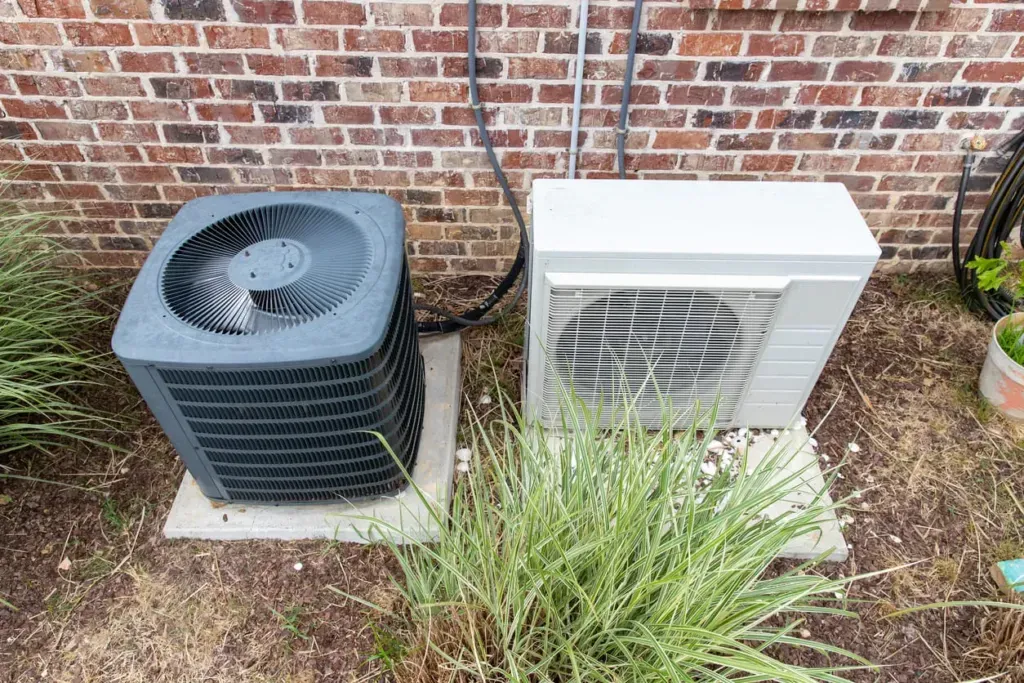
Many people think heat pumps are only for moderate climates, but modern "cold-climate" and "high-ambient" heat pumps are perfect for the Wasatch Front. In the summer, they act as ultra-efficient air conditioners. In the winter, they provide heating that is often 300% efficient or higher because they move heat rather than creating it through combustion.
For many of our customers in places like Sandy or Herriman, a "dual-fuel" system is the ultimate setup. This pairs a high-efficiency heat pump with a gas furnace. The heat pump handles the cooling and the mild winter days, while the gas furnace kicks in only during those rare, sub-zero January nights. This approach offers the best AC Installation for Home Comfort while drastically reducing your carbon footprint.
Essential Maintenance for Desert Efficiency
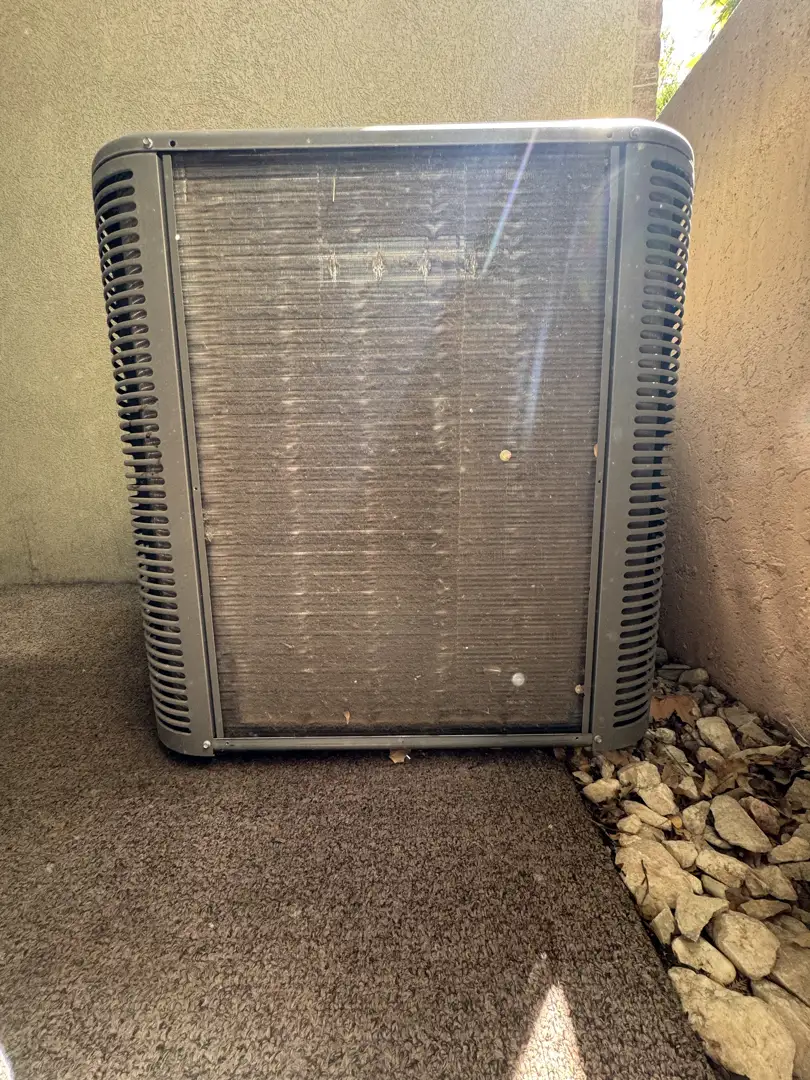
Even the most efficient AC in the world will struggle if it's choked by desert dust. In our region, we recommend a more aggressive maintenance schedule than you might find in a coastal city. Dust and silt from the surrounding salt flats and construction can coat the delicate fins of your outdoor unit, creating an insulating blanket that traps heat inside the system.
The Importance of AC Tune-Ups cannot be overstated. A professional cleaning removes this "biofilm" and dust, reducing the "head pressure" on your compressor and allowing it to run much more efficiently.
Professional Installation and Sizing
The most efficient unit in the world will perform poorly if it's the wrong size. In the desert, "bigger is not better." An oversized unit will cool the air so fast that it shuts off before it can remove the heat stored in your walls and furniture. This leads to a "clammy" feeling and high energy bills.
At S.O.S. Heating & Cooling, we perform a Manual J load calculation for every home. This takes into account your home's orientation to the sun, the number of windows, insulation levels, and the specific altitude of your neighborhood—whether you're in the foothills of Mt. Olympus or the valley floor of West Jordan. We also emphasize duct sealing, as a 15% leak in a 130°F attic can completely negate the benefits of a high-efficiency unit. Understanding the Importance of Proper AC Installation is the first step toward true home comfort.
Frequently Asked Questions about Desert AC
Are heat pumps effective in 110°F+ temperatures?
Yes! Modern high-efficiency heat pumps are designed with "high-ambient" capability. While older models might have struggled once the mercury passed 100°F, today’s inverter-driven units can maintain their rated cooling capacity even in extreme desert heat. In fact, they are often more reliable than standard AC units because their modulating technology prevents the compressor from overheating.
How often should I change filters in a dusty desert?
In the Salt Lake Valley, we recommend checking your filter every 30 days and replacing it at least every 2 months during the peak cooling season. If we experience a "haboob" (dust storm) or a wildfire smoke event, you should change it immediately. We generally recommend a MERV 11 filter for desert homes—it’s strong enough to catch fine silt and smoke particles without putting too much "static pressure" strain on your blower motor.
What tax credits are available for high-efficiency upgrades?
Thanks to the Inflation Reduction Act (valid through 2032), you can receive a federal tax credit of 30% of the project cost, capped at $2,000 per year for a heat pump. For a high-efficiency central AC unit that meets ENERGY STAR requirements, the credit is typically capped at $600. Many local utility providers also offer "instant rebates" that can be applied directly to the cost of your installation.
Conclusion: Investing in Long-Term Comfort
Choosing a high-efficiency system is about more than just surviving the next heatwave; it’s about taking control of your home’s environment. By leveraging high efficiency AC benefits for high desert climates, you are protecting your family's health through better air filtration, saving thousands of dollars in long-term energy costs, and ensuring that your home remains a sanctuary even when the Utah sun is at its most unforgiving.
At S.O.S. Heating & Cooling, we’ve spent years perfecting the art of desert comfort across the Wasatch Front—from Bountiful to Draper and everywhere in between. We understand the unique engineering requirements of high-altitude, low-humidity cooling. Whether you need a 24/7 emergency repair or you’re ready to upgrade to the latest inverter technology, our team is here to ensure your system is sized correctly, installed professionally, and maintained for peak performance.
Don't let another triple-digit summer drain your bank account and leave you sweating. Schedule your high-efficiency upgrade with S.O.S. Heating & Cooling today and experience the difference that specialized desert cooling can make.

Plumbing
Expert plumbing services offering reliable repairs, installations, maintenance, and emergency support.

Air Conditioning
Comprehensive air conditioning services include installation, repairs, maintenance, and energy-efficient solutions.
Heat Pumps
Enjoy year-round comfort with our energy-efficient and professional heat pump solutions.

Indoor Air Quality
Enhance your home’s air with our cutting-edge indoor air quality solutions you can trust.

Fireplaces
Transform your space into a warm and cozy atmosphere with our professional fireplace services.

Heating
Specialized heating services provide reliable installation, repair, system maintenance, and energy-optimization solutions.
Explore Our Latest Insights and Updates in Plumbing Services
HVAC Upgrades 101: Filter Inversion Pollutants in Salt Lake City Homes
Everything You Need to Know About Single Stage vs Two Stage vs Modulating Furnace