
Why Your High Altitude Home Needs a Special Kind of AC Math


.avif)

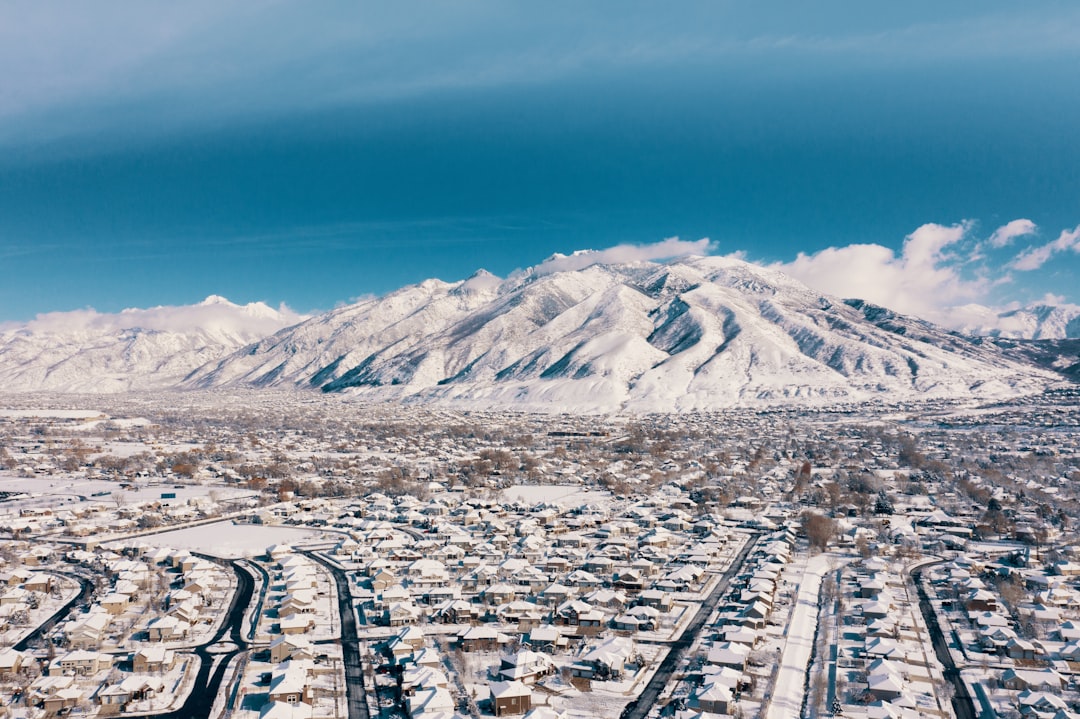
Why Standard AC Sizing Fails High Altitude Homes in Salt Lake City
Understanding how ac load calculations work for high altitude homes starts with one simple fact: the air up here is thinner, and thinner air changes everything about how your cooling system performs.
Here is what that means for your home in Salt Lake City and the surrounding Wasatch Front:
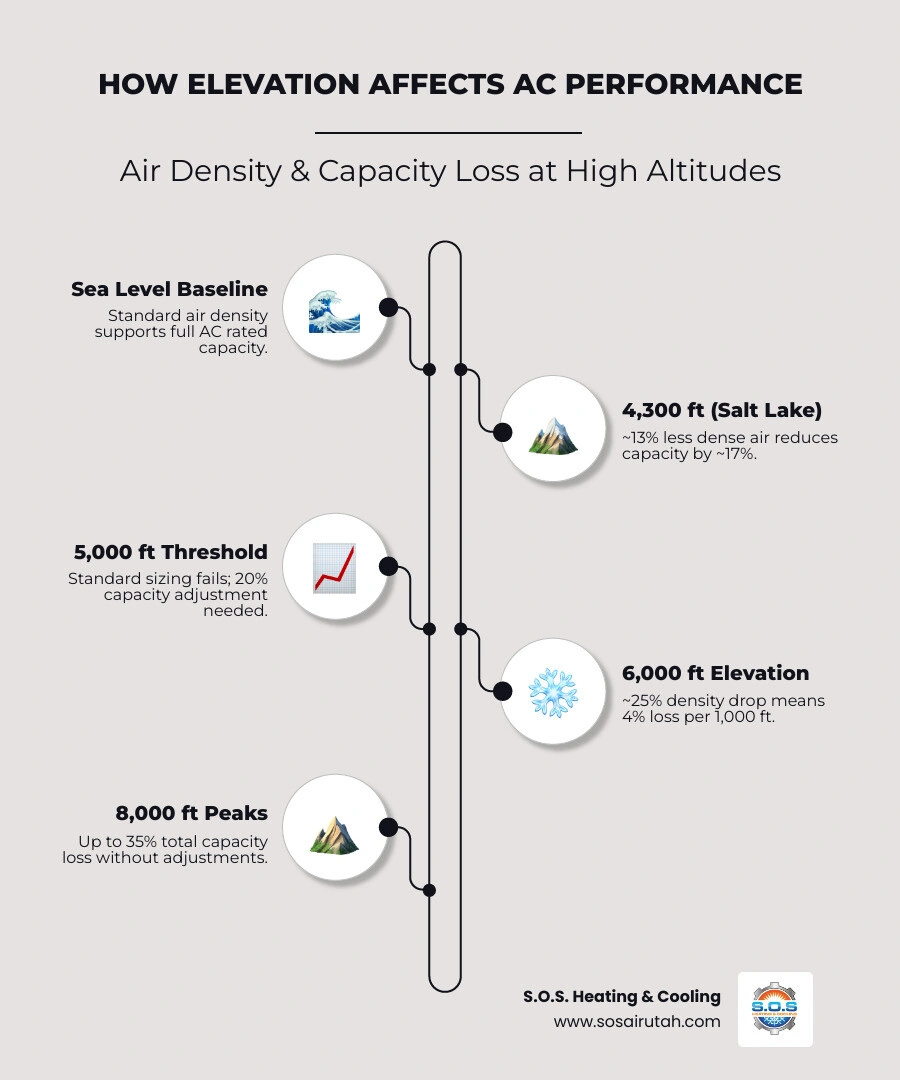
- Air density drops about 3% for every 1,000 feet of elevation. Salt Lake City sits near 4,300 feet, where air is already roughly 13% less dense than at sea level.
- AC units lose up to 4% of their rated capacity for every 1,000 feet above sea level. A system that looks right on paper can fall significantly short in real-world performance.
- Standard sizing calculators are built for sea-level conditions. They routinely undersize systems for high-altitude homes by 10 to 25%.
- A proper high-altitude load calculation adds 10 to 20% more cooling capacity for homes above 5,000 feet, on top of the standard Manual J baseline.
- Solar radiation, temperature swings, and low humidity all add additional load factors that sea-level formulas simply do not account for.
Most homeowners find out their system was wrong-sized the hard way — on the hottest day of July, when the unit runs nonstop and the house still will not cool down. Or worse, an oversized system short-cycles every few minutes, leaving rooms humid and uncomfortable while wearing out components years ahead of schedule.
The good news is that accurate, altitude-adjusted AC load calculations solve this problem before it starts. This guide walks you through exactly how those calculations work and what makes them different for homes at elevation.
I'm Bryson Ninow, an NATE-certified HVAC professional with hands-on experience sizing and commissioning systems across Utah's varied elevations, and I have seen how how ac load calculations work for high altitude homes is one of the most misunderstood topics in residential HVAC. In the sections below, I will break down the science, the math, and the practical steps that lead to a system that actually keeps up with mountain living.
The Physics of Thin Air: Why Standard Sizing Fails
When we talk about "thin air," we are really talking about air pressure and density. At sea level, the weight of the atmosphere above us creates a specific pressure (about 14.7 psi). As we climb into the mountains of Utah—from the Salt Lake Valley floor at 4,300 feet to mountain communities like Park City or Brian Head that sit well above 8,000 feet—that pressure drops significantly.
By the time you reach 5,000 feet, the air pressure is roughly 17% lower than at sea level. This is the critical 4,500-foot threshold where standard HVAC engineering starts to falter. Air conditioners work by moving heat from inside your home to the outdoors using air as the transport medium. If the air is 20% thinner (which it is at roughly 6,000 feet), it simply cannot carry as much heat.
Think of it like trying to move a pile of dirt. If you have a large shovel (dense air), you can move it in ten trips. If your shovel is suddenly 20% smaller (thin air), you have to work much harder and take more trips to move the same amount of dirt. In your AC system, this means the blower fan has to move more volume to achieve the same cooling effect, and the outdoor condenser coil struggles to shed heat into the thin atmosphere. This is a fundamental part of what does HVAC mean when applied to our unique geography; it is about managing comfort in an environment where the physics of air are working against the equipment.
How AC Load Calculations Work for High Altitude Homes
To get the sizing right, we use a process called a Manual J load calculation. This is the industry gold standard for determining exactly how many BTUs (British Thermal Units) of cooling your home needs. However, a standard Manual J is just the starting point.
When we look at how ac load calculations work for high altitude homes, we have to apply a "derating" factor. Most manufacturers specify that cooling capacity drops by about 3% to 4% for every 1,000 feet of elevation. If you live in a home at 6,000 feet, your 3-ton AC unit (rated for 36,000 BTUs at sea level) might only be providing about 28,000 to 30,000 BTUs of actual cooling.
| Elevation (Feet) | Air Density Loss | Typical AC Capacity Loss |
|---|---|---|
| 0 (Sea Level) | 0% | 0% |
| 2,000 | 6% | 0% (Standard threshold) |
| 4,000 | 12% | 8% |
| 6,000 | 18% | 16% |
| 8,000 | 24% | 24% |
Because of this capacity loss, we focus heavily on "sensible heat"—the heat you can actually feel on a thermometer. In Utah’s dry climate, our "latent load" (humidity) is very low, but our sensible load is high due to the intense sun. If your system is failing to keep up with these sensible loads, you might need AC Repair Salt Lake City UT to check if your refrigerant charge is adjusted for the altitude, as thin air changes the saturation pressures inside the coils.
Adjusting Manual J for Elevation in How AC Load Calculations Work for High Altitude Homes
A professional altitude-adjusted calculation looks at more than just the equipment; it looks at the "envelope" of your home.
- Infiltration Rates: Thinner air moves through cracks and gaps more easily, especially when pushed by mountain winds.
- Ceiling Height: Many homes in Millcreek or Holladay feature vaulted or cathedral ceilings. These add 25% to 40% to the cooling load because there is more volume of air to treat.
- Air Sealing: Because thin air is less efficient at carrying heat, keeping the air you have already cooled inside the house is twice as important.
- Window-to-Wall Ratio: High-altitude homes often have large windows to take in the views. Each additional 1% of window area can add 2% to 3% to your total cooling load.
Avoiding Common Mistakes in How AC Load Calculations Work for High Altitude Homes
The most common mistake is the "bigger is better" trap. While we do need to upsize capacity to account for derating, oversizing a system beyond the calculated need is a recipe for disaster. An oversized unit will "short-cycle," turning on and off every 5 to 10 minutes.
This prevents the system from ever reaching its peak efficiency and leads to uneven temperatures—where one room is freezing and the other is warm. Always size based on the derated capacity found in manufacturer tables, not the "nameplate rating" on the side of the box. Regular HVAC Maintenance Utah is essential to ensure that a correctly sized system stays within its narrow performance window at elevation.
Solar Radiation and Mountain Temperature Swings
In April 2026, as we look at the climate data for the Wasatch Front, we see that UV radiation increases by about 4% for every 1,000 feet of elevation. By the time you reach the heights of Sandy or Draper, the sun is roughly 20% to 25% more intense than at sea level.
This creates a massive "solar load" on your AC. Additionally, if you have snow on the ground late into the spring, the "albedo effect" (reflection) can bounce up to 80% of that solar radiation back onto your windows and walls. We have seen cooling systems kick on in March simply because the reflected sun off the snow is heating the home's interior like a greenhouse.
Furthermore, we must account for "diurnal swings." In high-altitude deserts like ours, it is not uncommon to see a 30-degree Fahrenheit temperature shift in a single day. Your AC math must account for a system that can handle a 95-degree afternoon but won't freeze up when the temperature drops to 60 degrees that same evening. This is a common challenge we address during HVAC Services Centerville and other northern Utah locations.
Equipment Selection: SEER2 Ratings and High-Altitude Kits
When selecting equipment in 2026, you will notice ratings like SEER2 and EER2. These are more accurate than old SEER ratings because they test systems against higher static pressures (the resistance in your ducts), which is exactly what happens in high-altitude homes where fans have to spin faster to move the same mass of air.
For the best performance, we recommend:
- Variable Speed Compressors: These systems can ramp up or down, perfectly matching the fluctuating mountain temperatures and air density.
- High-Altitude Kits: For dual-fuel systems (heat pumps paired with gas furnaces), these kits are mandatory above 5,000 feet. They often include smaller gas orifices to ensure the fuel-to-oxygen ratio is correct in the thin air, preventing carbon monoxide buildup.
- Mini-Split Systems: These are excellent for high-altitude additions because they don't rely on ductwork, which can lose significant efficiency in unconditioned mountain attics.
For a deeper dive into equipment types, check out our Ultimate HVAC Salt Lake City Guide.
Professional Commissioning and Maintenance
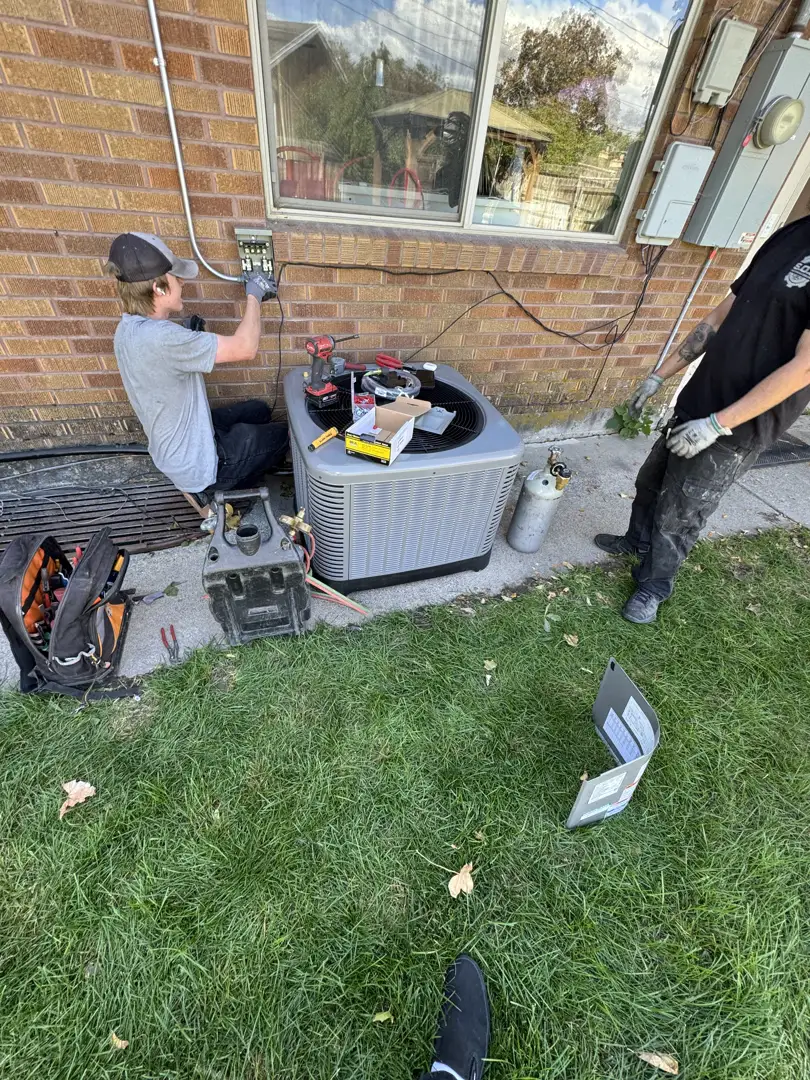
A high-altitude AC system is only as good as its "commissioning"—the final setup after installation. At S.O.S. Heating & Cooling, we perform a thorough site assessment that often includes:
- Blower Door Testing: To see exactly how much air is leaking out of the home.
- Refrigerant Charge Adjustment: We use specialized formulas to adjust the subcooling and superheat targets because standard sea-level gauges will give false readings at 5,000 feet.
- Static Pressure Checks: Ensuring your ducts are large enough to handle the higher CFM (Cubic Feet per Minute) required at altitude.
High-Altitude Maintenance Checklist:
- Filter Frequency: Change filters 25% more often. Thin air means your blower works harder; a dirty filter is like a chokehold on your system.
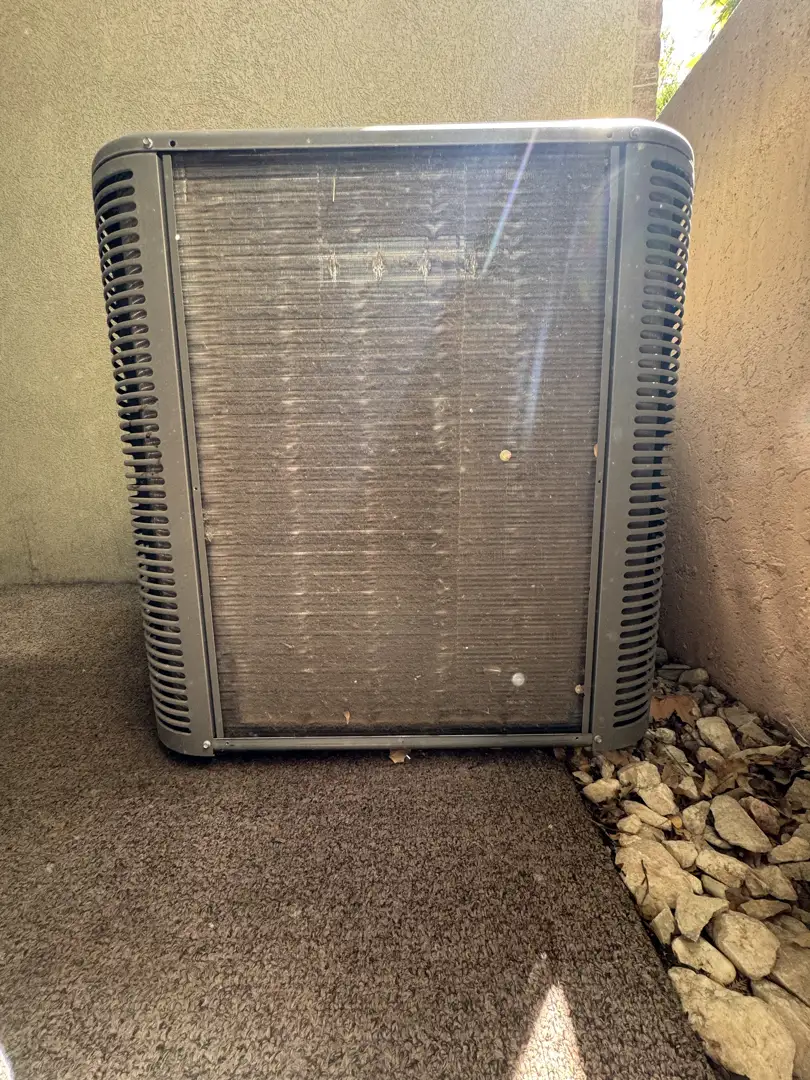
- Coil Cleaning: Clean the outdoor condenser annually. Because the air is thinner, the coil needs to be perfectly clean to shed heat effectively.
- Refrigerant Levels: Have a pro check your pressures every spring. Small leaks that wouldn't matter at sea level can cripple a system at 6,000 feet.
- Electrical Connections: Higher fan speeds mean more vibration; ensure all connections are tight.
Frequently Asked Questions about High Altitude AC
What elevation is considered "high altitude" for HVAC?
Technically, any home above 2,500 feet needs to start looking at adjustments, but 4,500 to 5,000 feet is the major threshold. This is where air density and oxygen levels drop enough to require mandatory equipment derating and modifications to gas-fired components.
Do I need a high-altitude kit for my heat pump or AC?
For the cooling side (AC), you usually don't need a physical "kit," but you do need an "altitude-adjusted" refrigerant charge and blower setting. If you have a dual-fuel system with a gas furnace, you almost certainly need a high-altitude kit (orifices and pressure switches) for the heating side if you are above 5,000 feet.
How often should I change filters in a mountain home?
In the Salt Lake Valley, we recommend checking your filter every 30 days. Because our air is dry and can be dusty, and because your system has to move more air volume to keep you cool, filters clog much faster than they would in a humid, sea-level climate.
Conclusion
Getting your AC sizing right in the mountains is not just about comfort; it is about protecting your investment. When you use accurate how ac load calculations work for high altitude homes, you ensure your system runs efficiently, lasts its full 15-to-20-year lifespan, and keeps your utility bills manageable.
At S.O.S. Heating & Cooling, we live and work in these elevations every day. We understand the specific math required for a home in Herriman versus a home in South Salt Lake. We focus on customer convenience and satisfaction, offering 24/7 emergency repairs and flexible financing to make sure you stay cool no matter how high up you live.
Start your high-altitude cooling plan today and let us help you get the math right the first time.

Plumbing
Expert plumbing services offering reliable repairs, installations, maintenance, and emergency support.

Air Conditioning
Comprehensive air conditioning services include installation, repairs, maintenance, and energy-efficient solutions.
Heat Pumps
Enjoy year-round comfort with our energy-efficient and professional heat pump solutions.

Indoor Air Quality
Enhance your home’s air with our cutting-edge indoor air quality solutions you can trust.

Fireplaces
Transform your space into a warm and cozy atmosphere with our professional fireplace services.

Heating
Specialized heating services provide reliable installation, repair, system maintenance, and energy-optimization solutions.
Explore Our Latest Insights and Updates in Plumbing Services
HVAC Upgrades 101: Filter Inversion Pollutants in Salt Lake City Homes
Everything You Need to Know About Single Stage vs Two Stage vs Modulating Furnace