

How Freeze-Thaw Cycles Stress Utah Sewer Lines (and How to Avoid Damage)


.avif)

Why Utah's Freeze-Thaw Cycles Are Silently Destroying Sewer Lines Underground
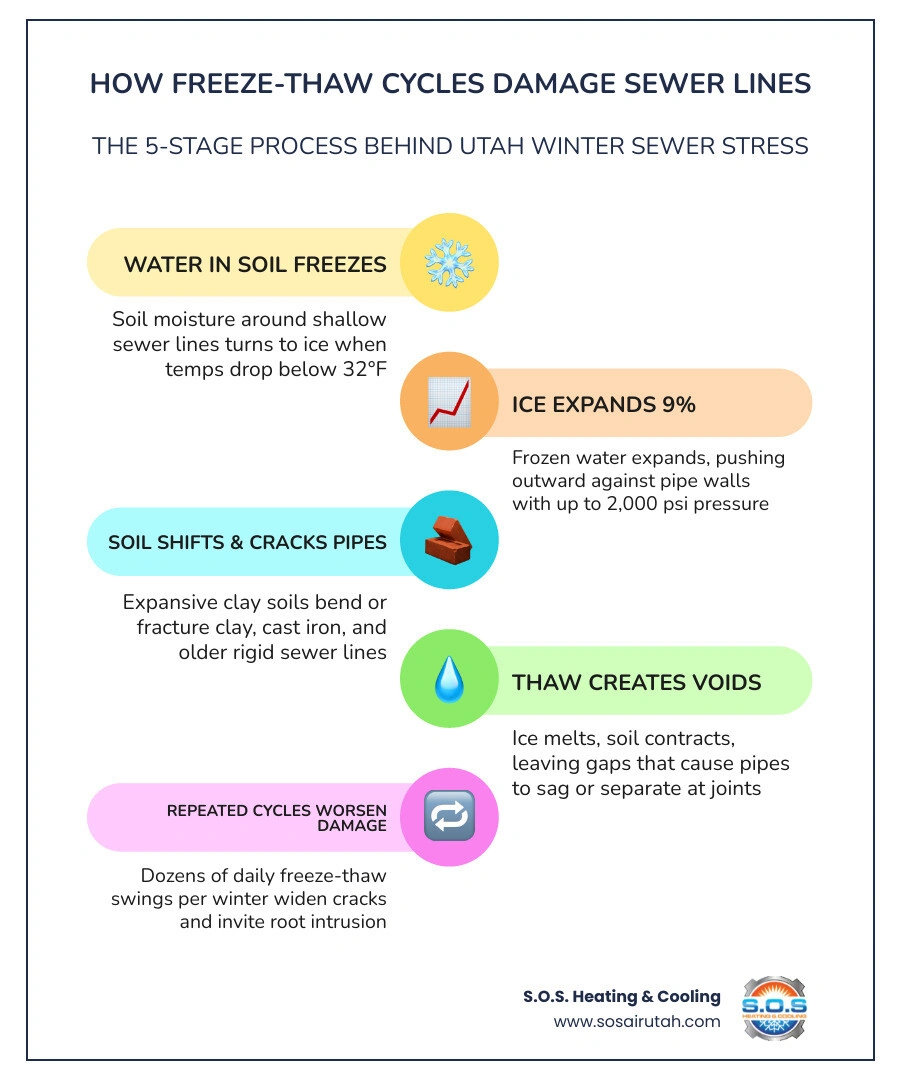
How freeze-thaw cycles in Utah winters stress underground sewer lines is something every Wasatch Front homeowner should understand — because the damage often builds quietly beneath your yard for months before you ever notice a problem. Each time temperatures drop below freezing overnight and climb back above 32°F during the day, the ground around your buried sewer pipes expands and contracts. Water in the soil turns to ice, expands by approximately 9%, and pushes against pipe walls and joints with pressure that can exceed 2,000 psi. Then it thaws, shifts the soil back, and does it all over again — sometimes dozens of times in a single Utah winter.
Here is a quick breakdown of how this process damages sewer lines:
- Ice expansion forces soil outward, bending or cracking rigid pipes
- Thaw contraction pulls soil back, creating voids and causing pipes to sag or misalign
- Repeated cycles widen existing cracks in clay, cast iron, and older pipe materials
- Joint separation opens entry points for tree roots and groundwater infiltration
- Shallow-buried lines (less than 24 inches in Salt Lake City) are at the highest risk of direct freeze damage
- Expansive clay soils common along the Wasatch Front amplify soil movement with every cycle
Salt Lake City's average January temperature hovers around 31°F, with nighttime lows frequently dipping well below freezing while afternoons warm back up. That daily swing is enough to trigger a freeze-thaw event repeatedly throughout the winter season — and the cumulative stress on underground infrastructure adds up fast.
I'm Bryson Ninow, a home services professional with hands-on experience helping Utah homeowners understand how freeze-thaw cycles in Utah winters stress underground sewer lines and the broader plumbing systems that keep their homes running. In the sections ahead, I'll walk you through exactly what's happening beneath your yard, what warning signs to watch for, and what you can do to protect your home before a small crack becomes a costly collapse.
How Freeze-Thaw Cycles in Utah Winters Stress Underground Sewer Lines
To truly understand how winter weather impacts your home’s waste disposal system, we have to look at the physics of freezing water. Most liquids contract when they get cold, but water is a strange and beautiful exception. As it transitions from a liquid to a solid, its molecular structure reorganizes into a crystalline lattice that occupies about 9% more volume.
When water trapped in the soil surrounding your sewer line freezes, this 9% expansion is not a gentle nudge. It exerts an outward hydrostatic force of up to 2,000 psi. To put that in perspective, that is more than enough pressure to crush or warp heavy-duty industrial materials.
In Utah, this underground pressure is dictated by the "frost line"—the maximum depth to which the ground freezes during the coldest parts of winter. In the Salt Lake Valley, the frost line typically reaches about 24 inches down, though it can extend much deeper in our mountain communities.
A 2024 Utah State University study analyzing over 400,000 miles of water lines found that improperly buried lines account for 23% of winter pipe failures in cold climate regions. When sewer lines are buried too shallowly—above or right at the frost line—they bear the direct brunt of this freezing soil.
But the freezing is only half the battle. When the afternoon sun warms the valley, the ice melts. This thaw causes the soil to contract and settle. Because the soil does not always settle back into its original position, it leaves empty voids beneath the pipe. Deprived of stable, underlying support, the heavy sewer pipe sags under its own weight, creating "bellies" or low spots where waste can pool.
This constant shifting also subjects the pipes to intense thermal expansion and contraction. Even if the water inside the sewer line doesn't freeze completely, the pipe material itself expands and contracts as warm household waste flows through a pipe surrounded by freezing soil. This localized thermal stress causes the joints connecting pipe segments to wiggle, loosen, and eventually fail.
For a deeper look at how these underground shifts impact your home, check out our detailed guide on How Shifting Soils Along the Wasatch Front Damage Sewer Pipes.
Vulnerable Pipe Materials and Soil Movement Along the Wasatch Front
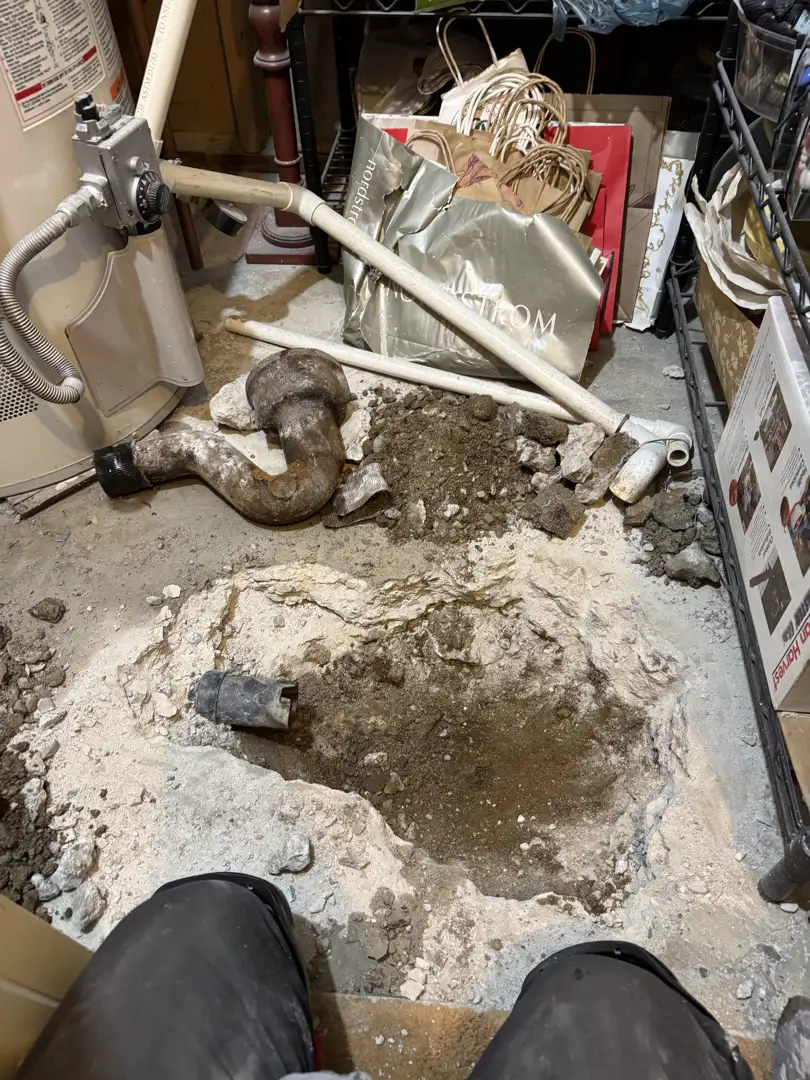
The geology of the Wasatch Front makes our sewer systems uniquely vulnerable to freeze-thaw damage. Much of our local soil is composed of ancient Lake Bonneville sediments, which left behind thick layers of expansive clay.
Clay soil acts like a sponge. It absorbs massive amounts of water during our wet autumns and winter snowstorms, swelling significantly. When that water-saturated clay freezes, the expansion is far more violent than it would be in sandy or gravel-heavy soils.
Additionally, the Wasatch Front is seismically active. While we rarely feel major earthquakes, minor micro-tremors constantly ripple through the ground. When you combine expansive clay, constant freeze-thaw cycles, and seismic shifting, you get a recipe for joint separation and lateral pipe shearing.
Different pipe materials react to these environmental forces in very different ways. The table below outlines how common sewer line materials hold up under freeze-thaw stress:
| Pipe Material | Common Era of Installation | Flexibility Under Stress | Freeze-Thaw Vulnerability | Expected Lifespan in Utah |
|---|---|---|---|---|
| Clay | Pre-1990 | Extremely Low (Brittle) | High (Joints separate, pipe cracks easily) | 50–60 Years (Less in shifting soils) |
| Cast Iron | Pre-1980 | Low | High (Corrosion weakens walls, leading to cracks) | 50–70 Years |
| Orangeburg | 1940s–1970s | Extremely Low | Critical (Flattens and collapses under soil pressure) | 30–50 Years |
| PVC (Plastic) | 1980s–Present | Moderate | Low to Moderate (Joints can fail if improperly glued) | 100+ Years |
| HDPE (High-Density Polyethylene) | Modern Trenchless | Extremely High | Extremely Low (Seamless, bends without breaking) | 50–100 Years |
Clay, Cast Iron, and Orangeburg Pipe Vulnerabilities
If your home was built before 1990, there is a very high probability that your sewer line is made of clay or cast iron. Clay pipes were typically installed in short, three-to-four-foot sections. These sections were joined together using rubber gaskets or, in older homes, concrete mortar.
Over decades, those mortar joints degrade. When freeze-thaw cycles shake the ground, these brittle joints are the first things to break. Once a joint separates, it creates a physical offset where waste gets caught, leading to chronic backups.
Cast iron pipes face a different threat. While strong, cast iron is highly susceptible to internal corrosion and scaling. This process is accelerated by Utah's notoriously hard water, which typically contains 15 to 20 grains of minerals per gallon. As hard water scale builds up, it creates rough patches that snag debris. When the frozen ground shifts around a structurally weakened, corroded cast iron pipe, the metal cannot bend to accommodate the movement. Instead, it cracks longitudinally.
Orangeburg pipe—made of wood pulp sealed with coal tar—is essentially a thick cardboard tube. If your home still has an active Orangeburg line, it is well past its expiration date. The weight of saturated, freezing soil will easily flatten these pipes, leading to total structural collapse.
If you suspect your older pipe material is starting to fail, read through our Sewer Line Repair Salt Lake Guide 2025 to understand your repair options before winter strikes again.
How Freeze-Thaw Cycles in Utah Winters Stress Underground Sewer Lines Made of Rigid Metals
While copper and galvanized steel are more commonly used for water supply lines than main sewer drains, they are still found in older waste systems and vent stacks. Rigid metal lines are highly susceptible to thermal stress.
Because metals conduct heat rapidly, they experience rapid temperature swings. A burst of hot water from a washing machine followed by a period of freezing inactivity causes the metal to expand and contract violently. This thermal cycling weakens solder joints and threaded connections, leading to pinhole leaks.
Once a small leak develops, the escaping water saturates the surrounding soil, creating a localized pocket of highly expansive mud. The next time the temperature drops, this wet pocket freezes, expands, and shears the weakened metal pipe completely.
If you are dealing with an older home in South Salt Lake, these rigid metal failures are incredibly common. Fortunately, modern solutions can address these issues with minimal yard disruption. For localized assistance, you can learn more about how we Fix Sewer Line South Salt Lake UT.
Warning Signs of Winter Sewer Line Damage
Because sewer lines are buried deep underground, identifying freeze-thaw damage requires a bit of detective work. You can't see the pipe, but you can definitely observe the symptoms of a system under stress.
Here are the most common warning signs that your sewer line has suffered winter damage:
- Slow Drains Throughout the House: If only one sink is draining slowly, it’s likely a localized clog. But if your kitchen sink, bathroom tubs, and laundry lines are all sluggish, the restriction is in the main sewer line.
- Gurgling Toilets: When waste cannot flow freely through a cracked or collapsed sewer pipe, air becomes trapped in the line. This air bubbles back up through your toilet traps, creating a distinctive gurgling sound when you run water elsewhere in the house.
- Sewer Odors: A cracked sewer line allows sewer gas to escape into the surrounding soil and seep up into your yard or basement. If you smell rotten eggs or sewage near your foundation, your line has likely separated.
- Unusually Lush, Green Patches of Grass: Sewage is an excellent fertilizer. If you notice a bright green, rapidly growing strip of grass in your lawn during the spring—especially while the rest of your lawn is still dormant—it is a clear sign that a cracked pipe is leaking nutrient-rich water underground.
- Sinkholes or Soggy Spots: As water escapes from a damaged pipe, it washes away the surrounding soil. Over time, the ground above the leak can collapse, leaving a soft, soggy depression in your yard.
Ignoring these warning signs can lead to catastrophic consequences. According to 2025 insurance industry data, water damage claims from frozen and damaged pipes average $13,954 per incident, and a major sewer backup can ruin finished basements in a matter of minutes.
For a comprehensive checklist of what to look out for, read our guide on Drain and Sewer Line Problems Signs and Solutions.
Identifying How Freeze-Thaw Cycles in Utah Winters Stress Underground Sewer Lines and Cause Backups
The ultimate climax of an unresolved sewer leak is a full-scale backup. When a pipe is sheared or collapsed by shifting soil, waste has nowhere to go. It will inevitably follow the path of least resistance, which usually leads directly to your basement floor drain.
If you experience a backup, the first step is to immediately stop running water in the house. Every toilet flush, shower, or dishwasher cycle will only add to the volume of water flooding your basement.
Over time, chronic underground leaks can also erode the soil supporting your home's foundation. As the soil washes away, the foundation can settle unevenly, leading to structural cracks in your drywall, sticking doors, and uneven floors.
If you live in Murray and want to take proactive steps to prevent these messy situations, check out our localized advice on Preventing Sewer Line Backups in Murray.
Preventive Measures and Modern Trenchless Repair Solutions
Fortunately, you do not have to sit idly by and wait for the winter freeze to destroy your plumbing. There are several proactive steps you can take to protect your sewer line and foundation:
- Improve Yard Grading: Ensure the ground around your home slopes away from the foundation. This prevents melting snow and rainwater from pooling directly above your sewer line path, reducing soil moisture saturation.
- Redirect Downspouts: Extend your gutter downspouts at least 10 feet away from your home and away from the underground sewer line.
- Install Root Barriers: If you have mature trees near your sewer line, installing physical root barriers can prevent thirsty roots from seeking out the moisture leaking from minor freeze-thaw cracks.
- Schedule Annual Video Inspections: A professional camera inspection can identify minor cracks, joint offsets, and bellies before they turn into complete structural failures.
If your sewer line has already suffered freeze-thaw damage, the good news is that you likely won't need to have your entire yard excavated. Modern trenchless repair methods allow us to fix or replace your pipes with minimal disruption to your landscaping, driveway, or sidewalks.
- CIPP (Cured-In-Place Pipe) Lining: This method involves inserting a flexible, epoxy-saturated sleeve into your existing pipe. Once in place, the sleeve is inflated and cured using hot water or steam, creating a seamless, jointless "pipe within a pipe." This new lining is highly flexible, allowing it to easily accommodate future soil movement without cracking.
- Pipe Bursting: If your existing pipe is too collapsed or damaged for lining, pipe bursting is an excellent alternative. We pull a heavy, cone-shaped bursting head through the old pipe, shattering it outward. Directly behind the bursting head, we pull a brand-new, seamless HDPE (High-Density Polyethylene) pipe.
HDPE piping is incredibly durable. It is completely rust-proof, immune to root intrusion, and rated to last between 50 and 100 years. Because it is flexible and jointless, it is the ultimate defense against Utah's harsh freeze-thaw cycles and shifting soils.
To understand exactly how we diagnose these issues, explore our article on Sewer Line Camera Inspection What It Reveals. If you are looking for a comprehensive guide on modern sewer repair in the Salt Lake area, check out the Slugfix Sewer Line Salt Lake City Complete Guide.
Frequently Asked Questions About Winter Sewer Line Damage
What is the minimum burial depth for sewer lines in Utah to prevent freezing?
In Utah, the required burial depth for sewer and water lines is dictated by local building codes, which adopt the International Plumbing Code (IPC) with specific state amendments.
To prevent freezing, sewer lines must be buried below the local frost line. In the Salt Lake Valley—including Bountiful, Murray, and Sandy—the frost line is typically around 24 inches. However, in our northern mountain communities and higher elevations, the frost line can easily extend to 48 inches or deeper.
If a sewer line is buried too shallowly, the risk of a catastrophic freeze or structural failure increases dramatically. For more information on local drainage standards, see our resource on Salt Lake City Drains and Sewers.
How does spring snowmelt interact with freeze-thaw sewer damage?
Spring snowmelt is a beautiful sight, but it presents a massive challenge for compromised sewer systems. As the massive snowpack from the Wasatch mountains melts, it saturates the ground with millions of gallons of water.
This sudden influx of water increases groundwater pressure (hydrostatic pressure) against your buried pipes. If winter freeze-thaw cycles have already cracked your sewer line or separated its joints, this groundwater will force its way into the pipe. This process, known as infiltration, can overwhelm your home's drainage system, leading to sudden basement backups and accelerating the structural collapse of weakened pipes.
If you are dealing with a compromised line in Holladay, we can help you address these spring runoff challenges. Learn more about how we Fix Sewer Line Holladay UT.
Can tree roots exploit cracks caused by winter freeze-thaw cycles?
Yes, absolutely. In fact, tree roots are drawn to sewer lines like metal to a magnet.
During the winter, freeze-thaw cycles create hairline cracks and minor joint offsets in older clay and cast iron pipes. As warm, moisture-rich waste flows through these compromised pipes, warm water vapor escapes into the surrounding cold soil.
During the hot, dry Utah summers, thirsty tree roots—especially aggressive species like cottonwoods and willows—smell this moisture vapor. They can grow up to a foot per day, following the vapor trail directly to the crack. Once they find the opening, tiny hair-like root fibers slip inside. Once inside, they feast on the constant supply of water and nutrients, expanding rapidly until they completely block or shatter the pipe.
If you live in Murray and suspect tree roots have invaded your winter-stressed sewer line, discover our specialized solutions to Fix Sewer Line Murray UT.
Conclusion
Understanding how freeze-thaw cycles in Utah winters stress underground sewer lines is the first step toward protecting your home from incredibly messy and expensive plumbing emergencies. The constant expansion and contraction of our clay-heavy soils can easily warp, crack, and collapse older sewer pipes along the Wasatch Front.
At S.O.S. Heating & Cooling, we are dedicated to keeping your home safe, comfortable, and dry all year round. We proudly serve homeowners throughout the Salt Lake Valley and surrounding areas—including Bountiful, Draper, Layton, Millcreek, Murray, and Sandy. Whether you need a routine video camera inspection to assess your pipe health before winter, or you are facing a middle-of-the-night plumbing emergency, our team is ready to help.
We offer 24/7 emergency repairs, priority service for our partners, no evaluation fees during business hours, and flexible financing options designed to fit your family's budget. Don't wait for a small underground crack to turn into a major basement flood. Protect your home with professional sewer line services in Millcreek and schedule your comprehensive sewer inspection with us today!
Explore Our Latest Insights and Updates in Plumbing Services
Ultimate Guide to How a Whole Home Humidifier Makes Your Heating System Feel Warmer in a Dry Utah Winter
A Quick Start Guide to 25C Tax Credit for HVAC in Utah
Hydro Jetting vs Drain Snake: Which Is Better for Stubborn Clogs in Utah?