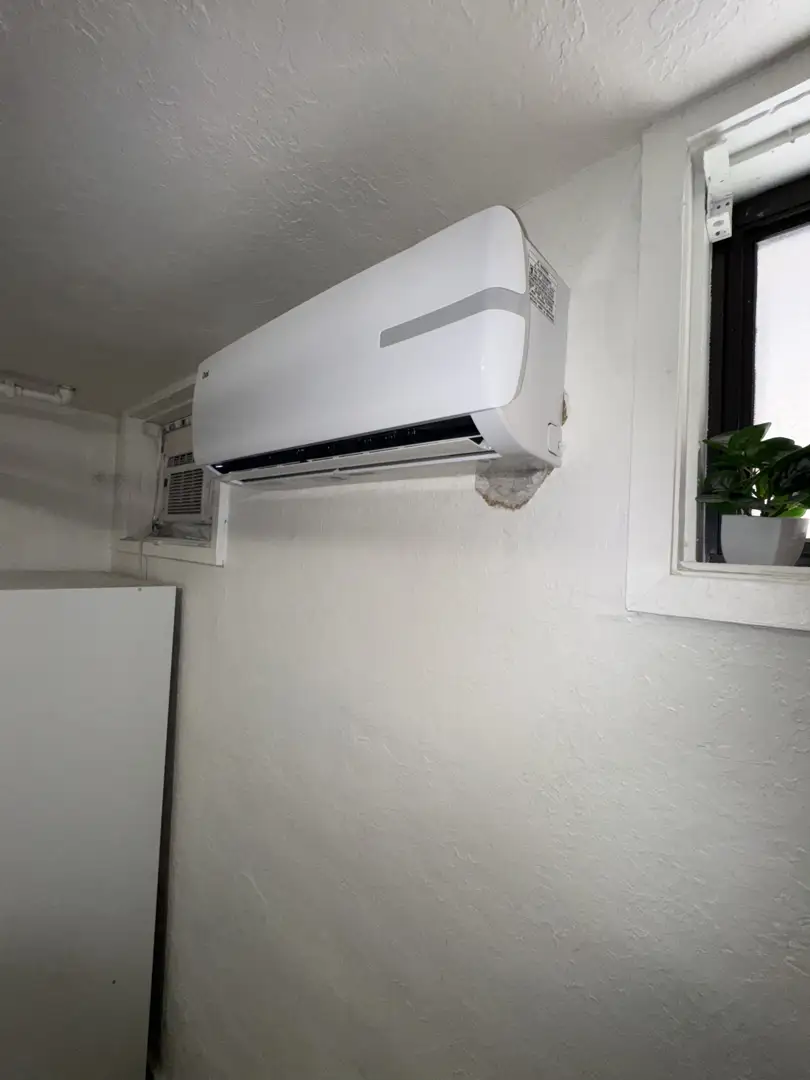

How Often to Change Air Filters in Dry Dusty Utah Home


.avif)

How Often to Change Air Filters in a Dry, Dusty Utah Home (Quick Answer)
Knowing how often to change air filters in a dry dusty Utah home is one of the most important — and most overlooked — things you can do to protect your HVAC system and the air your family breathes. The national "change it every 90 days" guideline printed on most filter packages? It simply does not apply here.
Here is a quick reference based on Utah-specific conditions:
| Situation | Recommended Change Interval |
|---|---|
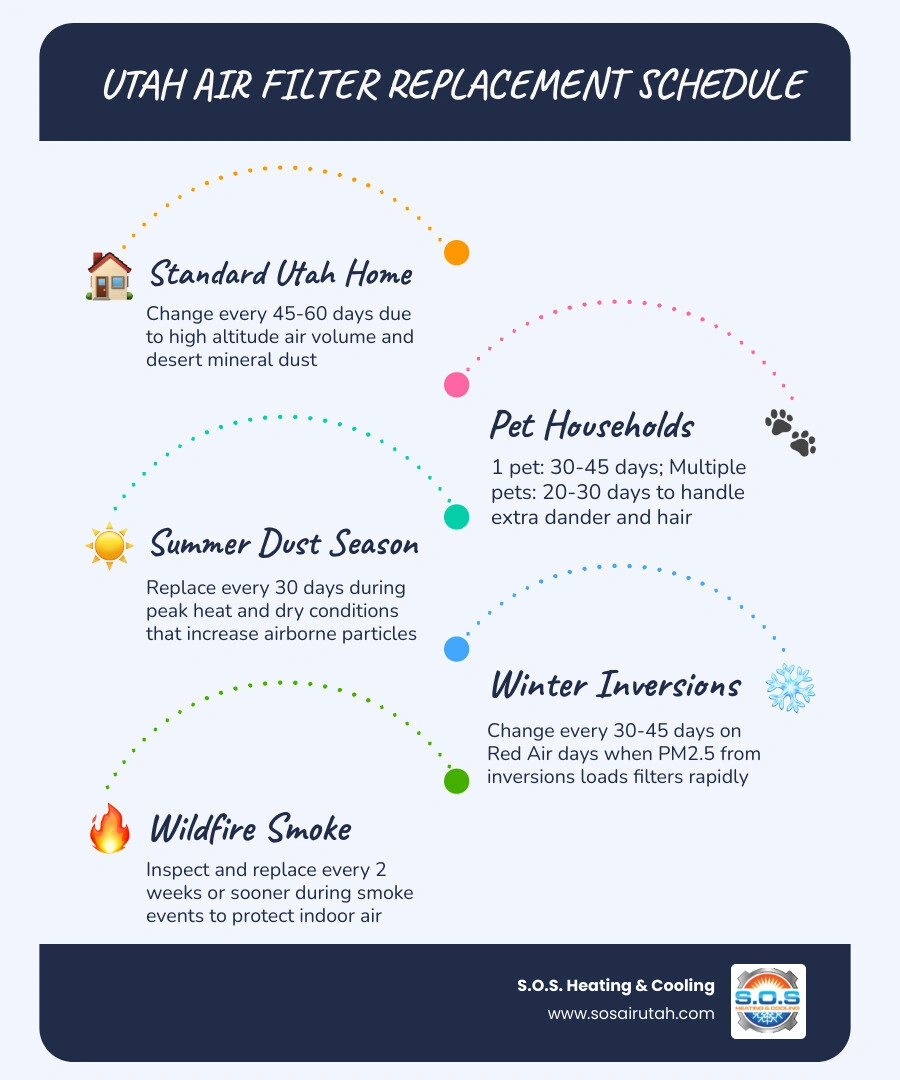
| Average Utah home (no pets) | Every 45-60 days |
| Home with 1 pet | Every 30-45 days |
| Home with multiple pets | Every 20-30 days |
| During summer peak dust season | Every 30 days |
| Near active construction (Eagle Mountain, Lehi, etc.) | Every 20-30 days |
| During winter inversions (Red Air days) | Every 30-45 days |
| During wildfire smoke events | Every 2 weeks or sooner |
Utah's combination of high altitude, dry desert air, Great Salt Lake dust, seasonal inversions, and rapid construction activity means your HVAC filter works far harder than filters in most other states. At over 4,000 feet above sea level, your system moves 15-20% more air volume than it would at sea level — and every cubic foot of that air carries fine mineral dust, PM2.5 particles, and allergens that pack your filter tight in weeks, not months.
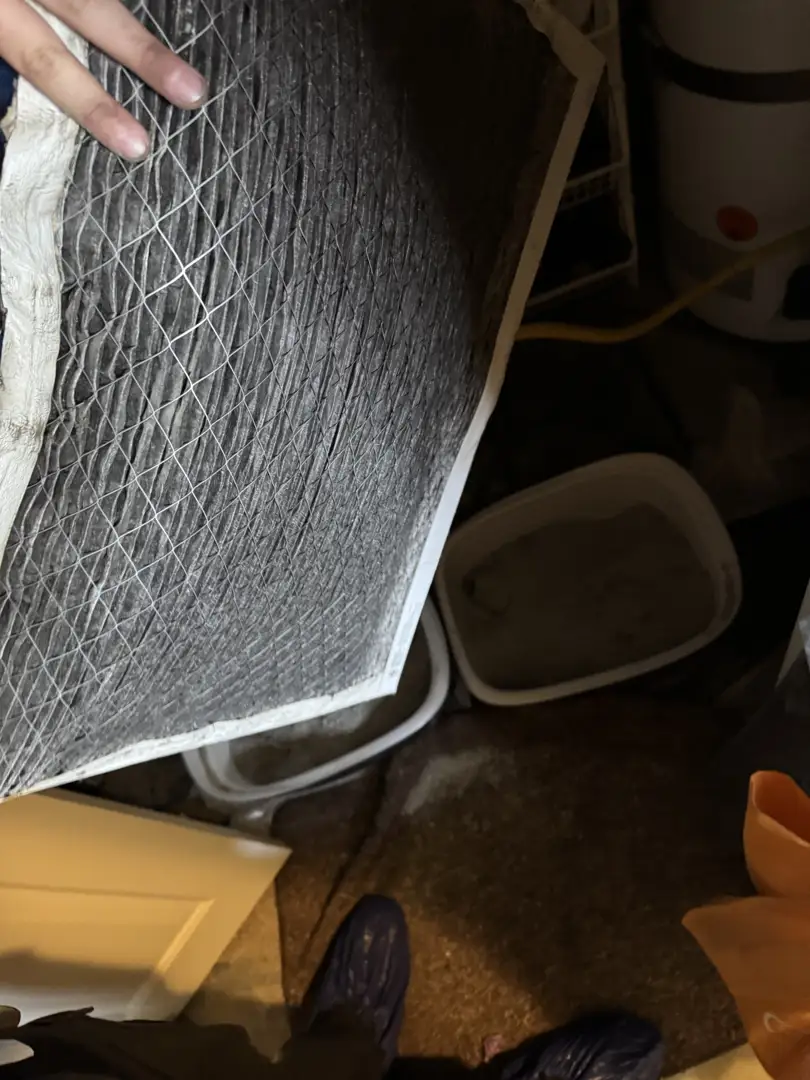
Pull your filter out right now if you have not checked it in the past 30 days. If it looks gray, packed, or you can no longer see light through it, it needed changing yesterday. A clogged filter forces your system to strain harder, drives up your energy bills by as much as 5-15%, and in serious cases can freeze your evaporator coils or burn out your blower motor.
I'm Bryson Ninow, an NATE-certified HVAC professional with years of hands-on experience helping Salt Lake City area homeowners navigate exactly these kinds of Utah-specific challenges — including how often to change air filters in a dry dusty Utah home to keep systems running efficiently and air quality healthy. In this guide, I'll walk you through everything you need to know, season by season, room by room, and filter by filter.
Why Utah’s Climate Accelerates Filter Clogging
Utah is a gorgeous place to live, but our unique geography and climate create a perfect storm for indoor air quality and HVAC systems. Along the Wasatch Front—from Layton and Bountiful down to Sandy, Draper, and South Jordan—our homes are subjected to environmental factors that load up air filters up to three times faster than in more humid, sea-level climates.
First, there is the physics of high altitude. Salt Lake Valley sits at over 4,300 feet of elevation, where the air has only about 82% of the density found at sea level. Because the air is thinner, your HVAC system must move 15% to 20% more air volume to heat or cool your home effectively. More air volume moving through your system means more airborne particulates pass through your filter in any given hour. This significantly accelerates filter loading.
Second, the dry desert air keeps dust particles suspended in the atmosphere much longer than in humid climates, where moisture weighs down dust and pulls it to the ground. In Utah, fine mineral dust remains airborne, easily entering your home every time a door opens or through tiny gaps in window seals.
A major contributor to this particulate matter is the Great Salt Lake. As the lake bed dries, windstorms sweep fine, highly alkaline, and abrasive mineral dust across the valley. When this dust gets pulled into your return vents, it acts like a blanket, quickly choking off airflow.
We also face seasonal challenges like winter temperature inversions. The Wasatch Front acts like a giant bowl, trapping cold air, vehicle emissions, wood smoke, and fine particulate matter (PM2.5) close to the valley floor. Tightly sealed, energy-efficient homes in areas like Riverton and Herriman trap these pollutants inside.
Additionally, summer wildfire smoke events and rapid suburban development in areas like South Jordan introduce high volumes of fine drywall and concrete dust into the air. When these factors combine, it is easy to see why knowing the right Time to Replace Your Air Conditioner Filter is critical for protecting your home.
Why You Cannot Wait 90 Days to Change Air Filters in a Dry Dusty Utah Home
Many homeowners buy a multi-pack of filters, spot the "lasts up to 90 days" label on the box, and set a calendar reminder for three months out. In Utah, following this advice can lead to serious system damage.
The national 90-day guideline is designed for mild, humid climates with low dust levels. In our arid environment, a filter can go from clean to completely caked in just four weeks during the peak of summer or winter. A single severe windstorm or "haboob" can deposit three months' worth of dust into your return air ducts in a single afternoon.
When a filter is left in place for 90 days under these dusty conditions, the system experiences severe static pressure. The blower motor has to work twice as hard to pull air through the clogged fibers. This restriction of airflow causes the system to run longer cycles, accelerating wear and tear. To understand how this hidden strain can lead to expensive breakdowns, read more about How Dirty Air Filters Destroy Your AC Performance.
How Often to Change Air Filters in a Dry Dusty Utah Home
Determining how often to change air filters in a dry dusty Utah home requires looking beyond the calendar and evaluating your specific household conditions. While a baseline of 45 to 60 days works for a quiet, single-occupant home, several everyday factors will quickly shorten that window.
- Pet Ownership: Pets are wonderful, but their dander and shedding fur are major contributors to filter clogs. If you have one dog or cat, your filter should be replaced every 30 to 45 days. If you have multiple shedding pets, that schedule shrinks to every 20 to 30 days. Pet hair captures larger dust particles, creating a thick mat over the filter surface that stops air in its tracks.
- Household Size: More people mean more movement, skin cell shedding, and outdoor dust tracked inside. Larger families will need to replace filters more frequently than a single occupant.
- Proximity to Construction: With rapid development across the Salt Lake Valley, homes in Herriman or South Jordan are often near active construction sites. Fine concrete dust, drywall particles, and kicked-up dirt will bypass standard filtration and load your filter in as little as 20 to 30 days.
- Allergies and Asthma: If anyone in your home suffers from respiratory issues, keeping a fresh filter in place is vital. Replacing filters every 30 days helps keep indoor allergen counts low.
If you suspect your filter is struggling to keep up with your household's demands, learn the key indicators that your HVAC Filter Needs Replacement.
Step-by-Step: How Often to Change Air Filters in a Dry Dusty Utah Home by Season
Because Utah experiences four distinct and dramatic seasons, your filter maintenance schedule must adapt throughout the year.
- Spring (March to May): Change Every 30 to 45 Days
Spring brings a surge of tree and grass pollen. Even if you keep your windows closed, these micro-particles find their way indoors. Additionally, spring winds kick up valley dust, requiring more frequent filter inspections. - Summer (June to August): Change Every 30 Days
This is peak cooling season. Your air conditioner runs up to 12 to 18 hours a day, continuously cycling dusty air. Combined with potential wildfire smoke and dry heat, your filter will load up rapidly. Regular changes during these months ensure Better AC Systems Performance with Maintenance. - Fall (September to November): Change Every 45 to 60 Days
As temperatures cool and your HVAC system runs less frequently, filter loading slows down. This is the ideal time to transition to a slightly longer replacement window, though you should still check the filter monthly. - Winter (December to February): Change Every 30 to 45 Days
While winter air is cold, the Salt Lake Valley's infamous inversions trap high concentrations of fine particulates close to the ground. Every time you open your door, these particles enter your home. Keep your change interval tight during these "Red Air" periods to protect your furnace and indoor air quality.
Choosing the Right MERV Rating for Utah Homes
The Minimum Efficiency Reporting Value (MERV) rating system measures a filter's ability to capture particles of various sizes, ranging from 1 to 20. Choosing the right rating is a delicate balancing act between air purification and maintaining proper airflow.
| MERV Rating | What It Captures | Best For | Recommended Utah Lifespan |
|---|---|---|---|
| MERV 1 - 4 | Large particles, lint, textile fibers | Basic system protection (not recommended for dust) | 30 days (clogs very quickly) |
| MERV 5 - 8 | Mold spores, dust mites, pollen, cement dust | Standard residential homes with no pets | 45 - 60 days |
| MERV 11 | Pet dander, auto emissions, fine dust, pollen | The Utah Sweet Spot (homes with pets/mild allergies) | 30 - 45 days |
| MERV 13 | Bacteria, smoke, microscopic allergens, virus carriers | Homes with severe allergies, asthma, or during wildfire season | 20 - 30 days (must check frequently) |
While it is tempting to buy the highest MERV rating available, doing so can actually harm your HVAC system. Filters with high MERV ratings (such as MERV 13 or higher) have incredibly dense pleats designed to trap microscopic particles. In a dry, dusty Utah climate, these filters will clog very quickly.
If your furnace or air handler is older or not designed to handle the high static pressure of a dense filter, a clogged MERV 13 filter will severely restrict airflow, causing the system to overheat or freeze. For most homes along the Wasatch Front, MERV 11 represents the ideal balance of filtration and airflow. For more help finding the perfect fit for your system, see our guide on Choosing the Right HVAC Filter.
Disposable vs. Washable Filters in Dusty Climates
When shopping for filters, you will generally choose between three main types:
- Fiberglass Filters: These are the inexpensive, flat, semi-transparent filters. They are designed solely to keep large debris out of your furnace cabinet. They do almost nothing to improve indoor air quality and must be replaced every 30 days without exception, as they clog and degrade rapidly in dusty environments.
- Disposable Pleated Filters: Made of synthetic fibers or paper woven into pleats, these are highly recommended for Utah homes. The pleats create a much larger surface area to capture fine dust without immediately choking airflow.
- Washable/Reusable Mesh Filters: These filters can be sprayed down with a hose and reinstalled. While they seem eco-friendly, we generally caution against them in dry, dusty climates. Washable filters must be 100% dry before you slide them back into your system. If even a small amount of moisture remains on the mesh, the dry, alkaline Utah dust will stick to it instantly, creating a cement-like barrier. Furthermore, damp filters create a high risk for mold and mildew growth inside your dark HVAC cabinet.
The Consequences of Neglecting Your Air Filter
Neglecting your air filter does more than just let a few extra dust bunnies settle on your coffee table. It can trigger a chain reaction of system failures and financial headaches.
When an air filter becomes choked with dust, the volume of air passing over your air conditioner's evaporator coils drops significantly. Without enough warm indoor air flowing over these coils, the cold refrigerant inside them causes the temperature of the coils to plummet below freezing.
Any moisture in the air will instantly freeze on the metal surface, turning your indoor AC unit into a solid block of ice. This restricted airflow and ice buildup can quickly lead to compressor failure. To learn more about how this happens, read about How Dirty Filters Cause Frozen Evaporator Coils.
Beyond frozen coils, a dirty filter directly impacts your monthly budget. According to the Department of Energy, replacing a dirty, clogged filter with a clean one can reduce your air conditioner's energy consumption by 5% to 15%. In the heat of a Utah summer, that efficiency loss can easily add up to higher utility bills.
Finally, restricted airflow places immense strain on your blower motor. Over time, this extra work leads to overheating, premature wear, and eventual motor burnout, requiring emergency repairs.
Signs Your Filter Needs Immediate Replacement
You should not always wait for a specific date on the calendar to change your filter. Keep an eye out for these warning signs that indicate your filter is completely full:
- The Light Test: Hold your filter up to a bright light source or a window. If you cannot see light passing through the fibers, the filter is fully loaded and needs to be replaced immediately.
- Weak Airflow: If the air coming out of your supply registers feels weak or lukewarm, a clogged filter is often the primary suspect.
- Dusty Vents and Grilles: If you notice a fine layer of gray dust accumulating on the metal slats of your supply vents or around your return air grilles, your filter is likely overloaded and allowing dust to bypass it.
- Allergy Flare-ups: If family members are experiencing sudden, unexplained sneezing, watery eyes, or respiratory irritation while indoors, your filter is no longer successfully trapping airborne allergens.
How to Correctly Check and Replace Your HVAC Filter
Replacing your air filter is a simple DIY task, but it must be done correctly to prevent air bypass and system strain. Follow these steps for a perfect replacement:
- Turn Off the System: Always turn off your thermostat or shut off the power switch on your furnace cabinet before removing the filter. If the system is running, the suction will pull loose dust off the old filter directly into your blower fan and coils.
- Verify the Dimensions: Look at the frame of your old filter to find its exact dimensions (for example, 16" x 25" x 1"). Using a filter that is even a half-inch too small will create gaps, allowing unfiltered, dusty air to bypass the filter entirely.
- Locate the Airflow Arrow: Every pleated filter has a small arrow printed on the cardboard frame. This arrow indicates the direction the air should flow through the filter. The arrow must always point toward the furnace or air handler cabinet, which is the direction the air is being pulled. Installing a filter backward restricts airflow and can cause the filter to collapse under pressure.
- Ensure a Tight Seal: Slide the new filter into the slot, making sure it sits flush and there are no visible gaps around the edges. Replace the cover door securely to maintain a tight seal.
Common Filter Replacement Mistakes to Avoid
Even well-meaning homeowners can make simple mistakes that compromise their system's health:
- Installing the Filter Backwards: This is the most common error. When installed backward, the structural wire backing cannot support the pleated material, which can lead to the filter bending, collapsing, or getting sucked into the blower motor.
- Using the Wrong Dimensions: Never try to force a filter that is too large into the slot, and never tape together smaller filters to fill a large opening. Always use the exact manufacturer-specified size.
- Ignoring the Calendar: Do not rely on visual checks alone, especially with high-efficiency filters. Fine particulates can pack deep inside the fibers, restricting airflow long before the surface of the filter looks completely black.
Frequently Asked Questions about Utah Air Filters
Can I wash a disposable pleated filter?
No. Disposable pleated filters are made of specialized synthetic fibers and paper. If you get them wet, the water will destroy the structural integrity of the paper frame and fibers, causing the filter to sag and collapse when reinstalled. Additionally, trapped moisture will encourage rapid mold and mildew growth, which will then blow directly into your home's living spaces.
Does a dirty filter really increase my energy bill?
Yes, absolutely. When your filter is clogged, your HVAC system has to run significantly longer cycles to reach the temperature set on your thermostat. This extra run time translates directly into increased electricity and gas consumption. Keeping a fresh filter in place is one of the easiest ways to keep your utility bills manageable during seasonal temperature extremes.
What happens if I ignore my filter during a dust storm or wildfire event?
During a severe windstorm or wildfire smoke event, your filter can become completely choked in a matter of days. If you ignore it, the restricted airflow will quickly cause your AC coils to freeze or your furnace to overheat and shut down. Always inspect your filter immediately after any major weather or air quality event and replace it if it appears gray or dusty.
Conclusion
Living in Utah means enjoying beautiful mountain views, but it also means managing the unique challenges of our dry, dusty climate. Keeping a close eye on how often to change air filters in a dry dusty Utah home is a simple, cost-effective way to protect your HVAC investment, lower your energy bills, and ensure your family breathes clean, healthy air year-round.
At S.O.S. Heating & Cooling, we are dedicated to keeping your home comfortable and efficient. Serving Salt Lake City and surrounding communities—from Layton and Bountiful down to Sandy, Draper, and South Jordan—we offer comprehensive HVAC services, including 24/7 emergency repairs and expert maintenance.
If you want to ensure your system is running at peak efficiency, contact us today to schedule a professional AC Tune-Up. Let our experienced team help you keep your home cool, clean, and comfortable all year long!

Plumbing
Expert plumbing services offering reliable repairs, installations, maintenance, and emergency support.

Air Conditioning
Comprehensive air conditioning services include installation, repairs, maintenance, and energy-efficient solutions.
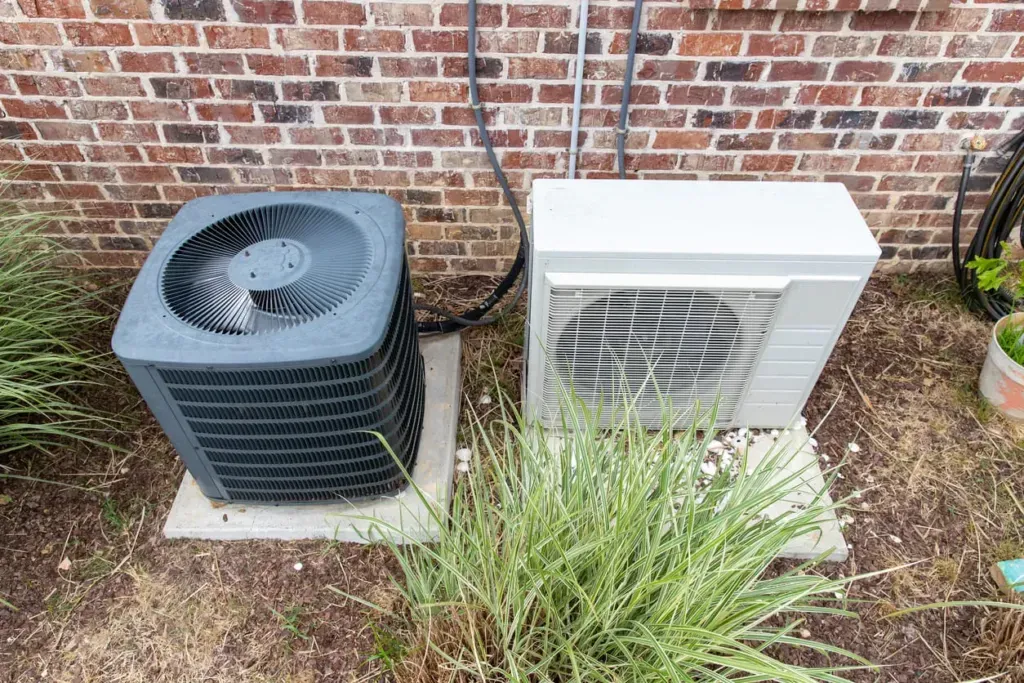
Heat Pumps
Enjoy year-round comfort with our energy-efficient and professional heat pump solutions.

Indoor Air Quality
Enhance your home’s air with our cutting-edge indoor air quality solutions you can trust.

Fireplaces
Transform your space into a warm and cozy atmosphere with our professional fireplace services.

Heating
Specialized heating services provide reliable installation, repair, system maintenance, and energy-optimization solutions.
Explore Our Latest Insights and Updates in Plumbing Services
How Often to Inspect a Sewer Line in Salt Lake Valley
5 Most Common AC Repairs in Hot Dry Wasatch Front Climates