
Why Utah Sewer Lines Break and How to Fix Them


.avif)

Why Shifting Soils Along the Wasatch Front Are Breaking Utah Sewer Lines
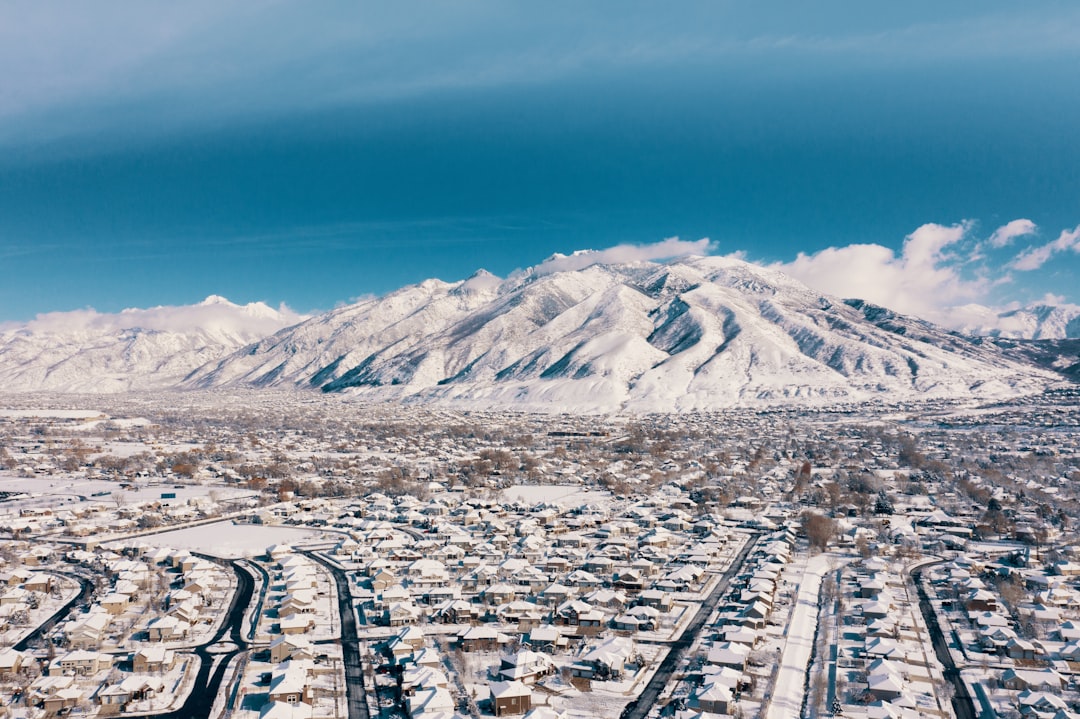
How shifting soils along the wasatch front damage sewer pipes is one of the most underappreciated threats facing Utah homeowners today. Beneath the tree-lined streets of Salt Lake City's historic neighborhoods, a slow and largely invisible process is cracking, misaligning, and collapsing the sewer lines that keep homes functional. The ground here is restless — shaped by ancient Lake Bonneville sediments, expansive clay, and the ever-present pressure of the Wasatch Fault — and older pipes simply were not built to move with it.
Here is a quick breakdown of how this happens:
- Expansive clay soil swells when wet and shrinks when dry, placing constant push-and-pull stress on rigid buried pipes
- Hydrocompaction and land subsidence remove support from beneath pipe runs, causing them to sag, crack, or develop low spots where waste pools
- Earth fissures and vertical ground displacement — often triggered by groundwater changes — can physically shift pipe sections out of alignment or even reverse a sewer line's gravity-fed slope
- Freeze-thaw cycles drive soil movement every winter, widening existing cracks in clay and cast iron pipes
- Tree root intrusion accelerates through any crack caused by soil movement, turning a small joint gap into a full blockage within weeks during Utah's dry summer months
- Seismic activity along the Wasatch Fault adds lateral ground movement that older pipe materials like clay and Orangeburg simply cannot flex to accommodate
Taken together, these forces make the Wasatch Front one of the more geologically demanding environments for underground sewer infrastructure in the American West — and for homeowners in neighborhoods like Sugar House, The Avenues, and Capitol Hill, the pipes buried beneath their yards are often already at or past the end of their expected service life.
I'm Bryson Ninow, a home services professional with hands-on experience diagnosing the unique underground plumbing challenges created by Utah's shifting geology, and my work has shown me how shifting soils along the Wasatch Front damage sewer pipes in ways most homeowners never see coming. In this guide, I'll walk you through exactly what is happening beneath your yard, how to spot the warning signs early, and what modern repair methods can do to protect your home.
The Science of How Shifting Soils Along the Wasatch Front Damage Sewer Pipes
To understand why your sewer line might be struggling, we have to look back about 15,000 years. Much of the Wasatch Front sits on the bed of the ancient Lake Bonneville. As that massive lake receded, it left behind thick layers of fine-grained sediments—mostly silt and clay. These sediments are the primary reason we deal with so much ground movement today.
The Wasatch Fault isn't just a line on a map; it is a living geological feature that influences the very soil our homes are built upon. Along this corridor, we encounter several specific soil behaviors that are notorious for destroying underground utilities:
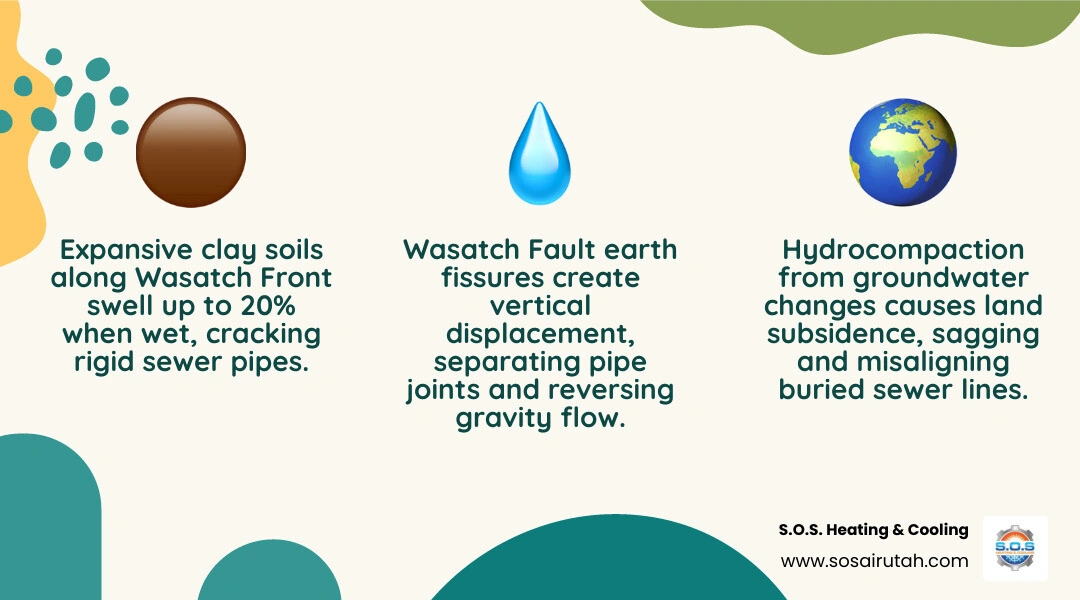
- Expansive Clays: This is the most common culprit. Utah’s clay soil acts like a sponge. When it rains or the snow melts in the spring, the clay minerals absorb water and swell with immense physical force. When the hot Utah summer hits, that same soil shrinks and cracks. This constant "accordion" motion puts relentless stress on rigid sewer pipes.
- Collapsible Soils: In some areas, the soil has a high "void space." It stays stable as long as it's dry, but the moment it gets saturated—perhaps from a small leak in a pipe or heavy spring runoff—the soil structure collapses in a process called hydrocompaction. This leaves the sewer pipe hanging mid-air with no support, leading to "bellies" or full structural failure.
- Land Subsidence and Earth Fissures: In valleys where groundwater has been pumped out faster than it can be recharged, the ground can actually sink. This land subsidence can create earth fissures—cracks that can be miles long. If a fissure crosses your sewer lateral, the vertical displacement can actually reverse the grade of the pipe. Since sewers rely on gravity to move waste, a reversed slope means an instant, permanent backup.
When these geological forces act on your home's infrastructure, you need specialized Sewer Line Repair Salt Lake City UT to ensure the fix accounts for the local ground conditions.
How Shifting Soils Along the Wasatch Front Damage Sewer Pipes in Older Neighborhoods
If you live in Sugar House, The Avenues, Capitol Hill, or Liberty Wells, your home is likely part of Utah's beautiful historic charm. However, these neighborhoods are the "ground zero" for soil-related pipe damage. The reason is twofold: the age of the infrastructure and the materials used at the time of construction.
Before 1990, the standard for Utah sewer lines was clay pipe. Clay is excellent at resisting chemical corrosion, but it is incredibly brittle. It was typically installed in short 3-to-4-foot sections. Every one of those sections is a joint, and every joint is a potential failure point when the soil shifts.
Other materials found in these older areas include:
- Cast Iron: While strong, it is rigid. When the ground moves, cast iron doesn't bend—it snaps.
- Orangeburg: Used in some mid-century builds, this is essentially tar-paper pipe. It’s susceptible to "ovaling" or flattening under the weight of shifting, wet soil.
As the soil moves, these pipes experience joint separation. Once a joint opens even a fraction of an inch, it creates a "moisture beacon" that attracts tree roots. In areas like Millcreek, we often see pipes that have become completely misaligned, meaning the two ends of the pipe no longer meet, allowing sewage to dump directly into the soil and further destabilize the ground. If you're noticing slow drains in these mature areas, it may be time to Fix Sewer Line Millcreek UT before a total collapse occurs.
The Impact of Seismic Activity and Ground Movement
We can't talk about the Wasatch Front without mentioning the fault itself. The East Bench segment of the Wasatch Fault cuts directly across thousands of utility lines. While we all worry about the "Big One," minor seismic activity and constant tectonic creeping contribute to lateral shifting.
In certain parts of the valley—especially lower-lying areas with high water tables—liquefaction is a major concern. During a tremor, saturated soil can behave like a liquid. This can cause buried pipes to "float" upward or shift laterally by several feet in a matter of seconds.
Modern engineering has introduced seismic joint restrainers for main lines, but most residential laterals remain vulnerable. When the ground shifts laterally, it shears the pipe.

Environmental Triggers: Climate and Tree Root Intrusion
Utah’s climate is a "perfect storm" for sewer damage. Our extreme seasonal transitions—from sub-zero winters to triple-digit summers—keep the soil in a constant state of flux.
- Freeze-Thaw Cycles: As water in the soil freezes, it expands. This "frost heave" can push pipes upward. When it thaws, the pipe settles back down, often not in the same place it started.
- Spring Runoff: The massive influx of water during the melt saturates the clay and collapsible soils, triggering the movement we discussed earlier.
However, the most aggressive threat often comes from our leafy neighbors. Tree roots cause more than 50% of all sewer blockages nationwide, and that number is likely higher in Utah's older, tree-heavy neighborhoods. Shifting soils create the cracks; the trees just take advantage of them. For those dealing with persistent backups, understanding Solutions for Tree Root Sewer Blockages is essential.
Why Summer Drought Accelerates Pipe Failure
You might think winter is the hardest time for pipes, but summer is when the real "attack" happens. From June through August, Utah’s topsoil dries out completely. Trees, desperate for water, send their roots deeper into the earth.
Sewer pipes are usually buried 18 to 24 inches deep—the perfect depth for a thirsty root. These pipes carry warm, nutrient-rich water and release moisture vapor through those tiny cracks caused by soil shifting. Roots can actually "smell" this vapor and grow toward it.
During the peak growing season, tree roots in Utah can grow up to one foot per day. They enter the pipe through a hairline crack and, once inside, they feast on the nutrients. A tiny thread of a root can thicken into a woody mass that completely fills the pipe diameter in just a few weeks. If you live in areas with mature trees, Preventing Sewer Line Backups in Murray often starts with managing these summer growth spurts.
The Role of Clay Soil Expansion and Contraction
To visualize what’s happening to your pipes, imagine a rigid glass straw buried in a block of heavy, wet foam. If you squeeze and pull that foam (like clay soil expanding and contracting), the straw will eventually snap.
Clay pipes have a service life of approximately 50 to 60 years in "stable" soil. In the Wasatch Front’s expansive clay, that lifespan is often cut short as the physical pressure of the swelling soil exceeds the pipe's structural strength.
| Pipe Material | Flexibility | Soil Shift Resistance | Typical Lifespan in Utah |
|---|---|---|---|
| Clay | None (Brittle) | Low | 50-60 Years |
| Cast Iron | Very Low | Moderate | 50-70 Years |
| Orangeburg | Low | Very Low | 30-50 Years |
| PVC (Modern) | High | High | 100+ Years |
Identifying Soil-Related Sewer Damage in Your Utah Home
Because your sewer line is buried, you can't see the damage—but you can definitely hear, smell, and see the symptoms. How shifting soils along the wasatch front damage sewer pipes usually manifests in a predictable sequence of warning signs.
- Gurgling Drains: If your toilet bubbles when the shower is running, or your kitchen sink gurgles when the dishwasher drains, you likely have a partial blockage or a "belly" in the line caused by soil settlement.
- Foul Odors: Sewer gas can escape through cracks in the pipe long before a full backup occurs. If you smell "rotten eggs" in your yard or basement, the soil has likely shifted enough to crack the line.
- Lush Lawn Patches: This is a classic Utah sign. If one strip of your grass is suddenly greener and growing faster than the rest of the yard—especially during a dry July—it’s because it’s being "fertilized" by a leaking sewer pipe.
- Sunken Areas: If you notice a depression or "sinkhole" in your yard, it may indicate that soil is being washed into a broken sewer pipe, creating a void underground.
For a deeper dive into these symptoms, check out our guide on Drain and Sewer Line Problems: Signs and Solutions.
Detecting How Shifting Soils Along the Wasatch Front Damage Sewer Pipes Early
Early detection is the difference between a simple maintenance visit and a midnight basement flood. We recommend homeowners in neighborhoods like Holladay monitor their "drain speed." If multiple fixtures in the house are draining slowly at the same time, the problem isn't a simple clog in the P-trap—it’s a main line issue.
If you suspect your line is struggling, it’s vital to Fix Sewer Line Holladay UT before the next heavy rain or "root surge" causes a total failure.
Modern Solutions for Shifting Soil Pipe Failures
The days of digging a massive trench through your prize-winning rose bushes are largely over. Modern technology allows us to diagnose and fix soil-shifted pipes with minimal disruption.
- Video Camera Inspections: We use high-resolution, waterproof cameras to travel the entire length of your sewer line. This allows us to see exactly where the soil has caused a shift, where roots have entered, or where a "belly" has formed. We provide digital records so you can see the damage for yourself.
- Hydro Jetting: If the pipe is still structurally sound but full of roots or debris, we use high-pressure water (up to 4,000 PSI) to scrub the interior of the pipe clean.
- Trenchless Pipe Lining (CIPP): This is the "gold standard" for Utah's shifting soils. We pull a resin-coated sleeve into your existing pipe and inflate it. Once it hardens, it creates a "pipe within a pipe" that has no joints for roots to enter and is flexible enough to withstand future soil movement.
- Pipe Bursting: If the old pipe is too collapsed for lining, we can pull a brand-new, high-density polyethylene (HDPE) pipe through the old one, literally bursting the old pipe outward.
For a comprehensive look at these technologies, see our Slugfix Sewer Line Salt Lake City Complete Guide.
Preventive Measures and Maintenance
While we can't stop the Wasatch Fault from moving, you can take steps to stabilize the environment around your pipes:
- Yard Grading: Ensure your yard slopes away from your home's foundation and sewer line path. This prevents water from pooling and saturating the soil, which triggers expansion and collapse.
- Gutter Management: Direct downspouts at least 10 feet away from the home.
- Root Barriers: If you have a favorite tree near the sewer line, we can install physical barriers to redirect root growth.
- Regular Inspections: For homes older than 30 years, a camera inspection every 1–2 years is the best insurance policy against a disaster.
Frequently Asked Questions about Utah Sewer Damage
Which neighborhoods along the Wasatch Front are most at risk?
Mature neighborhoods like Sugar House, The Avenues, and Capitol Hill are at the highest risk. These areas combine the oldest infrastructure (clay pipes that are 70+ years old) with the most mature tree canopies. Additionally, homes built on the "East Bench" are more susceptible to the direct mechanical stress of the Wasatch Fault movement.
How long do older clay and cast iron pipes last in Utah?
In the shifting soils of the Wasatch Front, clay and cast iron pipes typically have a functional service life of 50 to 60 years. While the material itself can last longer, the joints and the structural integrity usually fail due to the constant expansion and contraction of the surrounding clay soil. If your home was built before 1975 and has never had a sewer update, your pipes are likely in the "high-risk" zone.
Can trenchless repair methods fix soil-shifted pipes?
Absolutely. In fact, trenchless methods like pipe lining are often better than traditional replacement for our soil. Because the lining creates a seamless, jointless pipe, it eliminates the entry points for roots. The materials used in trenchless repair are also more flexible than old clay or iron, allowing the pipe to "give" slightly with ground movement rather than snapping.
Conclusion
Living along the Wasatch Front means dealing with a landscape that is constantly in motion. While we can't change the geology of the Salt Lake Valley, we can certainly adapt our homes to handle it. Understanding how shifting soils along the wasatch front damage sewer pipes is the first step in protecting your property and avoiding the stress of a sudden sewer backup.
At S.O.S. Heating & Cooling, we are Wasatch Front specialists. We know the difference between the sandy loams of the southern valley and the heavy clays of the north. We offer 24/7 emergency repairs, expert plumbing diagnostics, and modern trenchless solutions tailored to Utah's unique environment. Don't wait for a soggy yard or a backed-up basement to tell you there’s a problem.
Schedule your professional sewer inspection today and let us give you the peace of mind that your home’s "hidden" infrastructure is ready for whatever the Utah soil does next.

Plumbing
Expert plumbing services offering reliable repairs, installations, maintenance, and emergency support.

Air Conditioning
Comprehensive air conditioning services include installation, repairs, maintenance, and energy-efficient solutions.
Heat Pumps
Enjoy year-round comfort with our energy-efficient and professional heat pump solutions.

Indoor Air Quality
Enhance your home’s air with our cutting-edge indoor air quality solutions you can trust.

Fireplaces
Transform your space into a warm and cozy atmosphere with our professional fireplace services.

Heating
Specialized heating services provide reliable installation, repair, system maintenance, and energy-optimization solutions.
Explore Our Latest Insights and Updates in Plumbing Services
How to Fix AC Leaking Water Inside Your Utah Home
The Ultimate Guide to Mini Split vs Window Unit Cooling