
How Your AC Actually Works to Keep You Cool


.avif)

The Science of Heat Removal: How the Refrigeration Cycle Cools Your Home
To understand how the refrigeration cycle cools your home, we have to look at it as a closed-loop transport system. Think of the refrigerant as a specialized delivery truck. Its only job is to pick up a "load" of heat from your living room and drive it out to the backyard to drop it off. Once the truck is empty, it heads back inside to pick up another load.
This process relies on two types of heat: sensible heat and latent heat. Sensible heat is what you feel on your skin or see on a thermometer—it’s the actual change in temperature. Latent heat, however, is the "hidden" energy required to change a substance from a liquid to a gas (evaporation) or a gas to a liquid (condensation).
Your AC is a master of latent heat. By forcing refrigerant to evaporate into a gas inside your home, the system "sucks" an enormous amount of heat out of the air. This is a much more efficient way to cool a room than simply blowing air over something cold. If you want to dive deeper into the physics, you can read more about how does air conditioning work the science behind ac.
The Four Essential Components of Your Cooling System
Every standard air conditioner in Salt Lake City, from a small window unit to a massive central air system, relies on four mechanical "anchors." These components work in pairs to manage the high-pressure and low-pressure sides of the system.

| Component | Side of System | State of Refrigerant | Primary Goal |
|---|---|---|---|
| Compressor | High-Pressure | Hot Vapor | Circulate and heat gas |
| Condenser | High-Pressure | Hot Liquid | Reject heat outdoors |
| Expansion Valve | Low-Pressure | Cold Liquid/Vapor | Drop pressure/temperature |
| Evaporator Coil | Low-Pressure | Cold Vapor | Absorb indoor heat |
The Compressor: The Heart of the Refrigeration Cycle
If the refrigerant is the delivery truck, the compressor is the engine. Located in the outdoor unit, the compressor takes in low-pressure, cool refrigerant gas and squeezes it.
When you squeeze a gas, it gets "angry" and hot. This is known as the vapor-compression process. By the time the refrigerant leaves the compressor, it is a high-pressure, superheated vapor. This step is vital because, for the heat to leave the refrigerant later, the refrigerant must be hotter than the outside air. Even if it’s a 100-degree day in Draper, the compressor can pump the refrigerant up to 120 or 140 degrees, ensuring the heat has somewhere to go (outwards!).
This part of the cycle is the most energy-intensive. A typical central air conditioner uses between 3000 and 3500 watts per hour, with the lion’s share going to power this mechanical heart.
The Condenser: Releasing Heat to the Outdoors
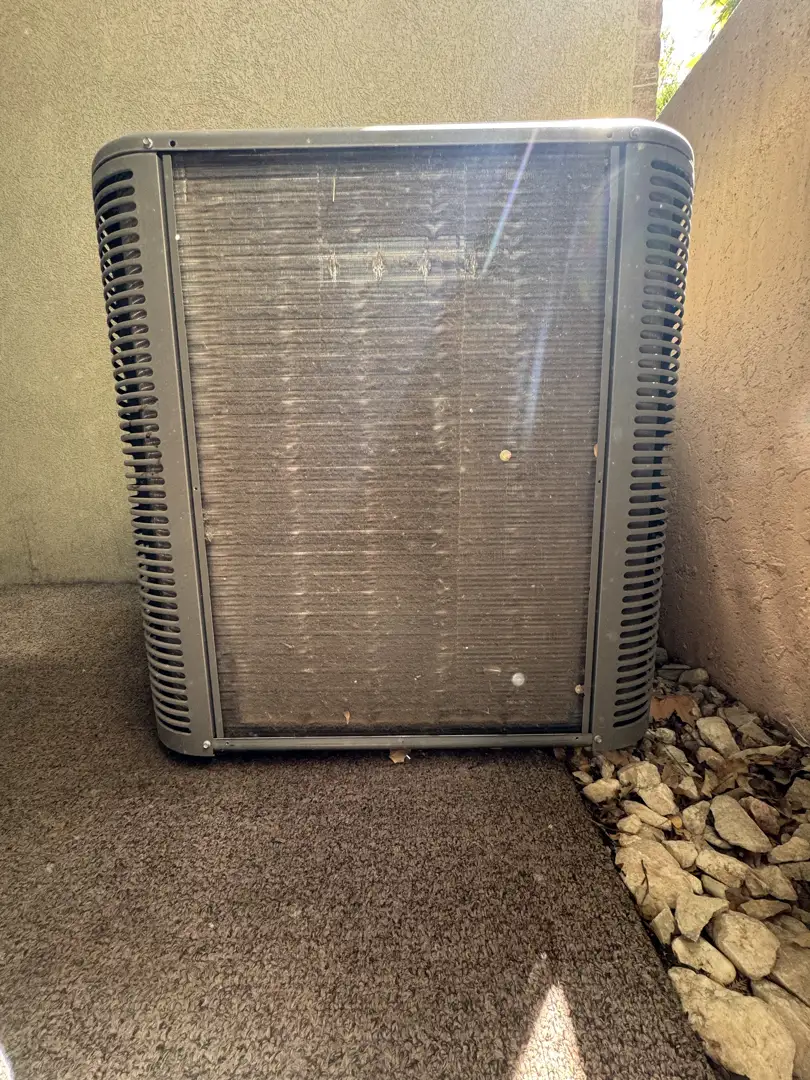
Once the superheated gas leaves the compressor, it enters the condenser coils (also located in your outdoor unit). A large fan pulls outdoor air across these coils, which are usually surrounded by thin aluminum fins designed to increase surface area.
Because the refrigerant is hotter than the outside air, the heat naturally dissipates. As the refrigerant loses heat, it undergoes a phase change, turning from a hot gas into a high-pressure saturated liquid. By the time it exits the condenser, it has successfully "rejected" the heat it gathered from inside your home.
The Expansion Valve: How the Refrigeration Cycle Cools Your Home via Pressure Drops
Now we have a high-pressure liquid, but it’s still too warm to cool your house. It needs to get frigid—and fast. This is where the expansion valve (or metering device) comes in.
Think of an aerosol can. When you spray it, the liquid inside expands rapidly into a mist, and the can feels cold to the touch. The expansion valve does the exact same thing. It forces the liquid through a tiny opening into a low-pressure area. This sudden pressure reduction causes "flashing," where some of the liquid boils instantly into a gas, dropping the temperature of the remaining mixture to around 40 degrees Fahrenheit.
This rapid cooling is exactly how the refrigeration cycle cools your home before the refrigerant ever touches your indoor air. If this valve fails, the whole process grinds to a halt. You can learn more about what causes ac expansion valve failure to keep your system running smoothly.
The Evaporator Coil: How the Refrigeration Cycle Cools Your Home by Absorbing Indoor Heat
The final stop is the evaporator coil, located inside your home (usually above your furnace or in the air handler). This is the "business end" of the cycle.
The cold, low-pressure refrigerant flows through these coils while your indoor blower fan pushes warm house air over them. Following the laws of thermodynamics, the heat in your air jumps onto the cold coils. As the refrigerant absorbs this heat, it evaporates back into a gas.
In a properly functioning system, the evaporator coil drops the indoor air temperature by approximately 20 degrees Fahrenheit as it passes through. It also performs a second, crucial task: dehumidification. As warm air hits the cold coils, moisture condenses into water droplets (just like on a cold soda can), which are then drained away. This is why AC air feels "crisp." However, if airflow is restricted, you might run into ac suction line freeze problems murray, which can stop the cooling process entirely.
Refrigerant: The Essential Ingredient of Air Conditioning
None of this would be possible without the "magic ingredient": refrigerant. Modern systems in places like Layton and Sandy typically use R-410A, a hydrofluorocarbon (HFC) that is much safer for the ozone layer than the older R-22 (Freon).
Refrigerant is unique because it has an incredibly low boiling point. While water boils at 212°F, some refrigerants boil at -27°F or lower. This allows them to change states (liquid to gas) at the exact temperatures needed to move heat efficiently.
Because the refrigeration cycle is a closed loop, you should never "run out" of refrigerant. If your levels are low, it means you have a leak. It is vital to how to prevent ac refrigerant leaks because low levels force the compressor to work harder, leading to higher bills and eventual failure. Furthermore, if the cycle is disrupted, you might need to solve ac refrigerant floodback issues, where liquid refrigerant accidentally enters the compressor and causes mechanical destruction.
Maintaining Efficiency and Troubleshooting Common Cycle Issues
A healthy air conditioner is a balanced air conditioner. Technicians use two main measurements to tell if how the refrigeration cycle cools your home is happening efficiently: superheat and subcooling.
- Superheat ensures that the refrigerant is 100% gas before it hits the compressor.
- Subcooling ensures the refrigerant is 100% liquid before it hits the expansion valve.
If these are off, your system will "short cycle," turning on and off too frequently, which wastes energy and wears out the parts.

Common disruptions to the cycle include:
- Dirty Coils: If the outdoor condenser is covered in cottonwood seeds or dirt, it can't release heat. If the indoor evaporator is dusty, it can't absorb heat.
- Airflow Restrictions: A dirty air filter can cause the evaporator coil to get too cold and freeze into a block of ice.
- Age: The average AC lifespan is 15-20 years. As components age, they become less efficient at maintaining the pressures needed for the cycle.
A well-maintained unit should cycle two or three times per hour for about 15 to 20 minutes at a time. If yours is running 24/7 or turning off every 5 minutes, the cycle is broken.
Frequently Asked Questions about the Refrigeration Cycle
How often should my air conditioner cycle on and off?
In a standard Salt Lake City summer, your AC should cycle 2 to 3 times per hour. Each cycle should last between 15 and 20 minutes. This duration is long enough to effectively dehumidify your home and reach the thermostat's set point without putting excessive wear and tear on the compressor. If it’s "short cycling" (turning on and off every few minutes), you likely have an airflow issue or an oversized system.
Can I run my air conditioner 24/7 during a heatwave?
While it isn't a safety hazard to run your AC continuously, it isn't ideal for your equipment or your wallet. Continuous operation speeds up the wear and tear on the compressor and fan motors, potentially shortening the system's 15-20 year lifespan. If your AC is running 24/7 and the house still isn't cool, the refrigeration cycle is likely struggling due to dirty coils, low refrigerant, or extreme outdoor temperatures (usually above 100°F) where the heat transfer becomes less efficient.
Why is my AC blowing warm air instead of cooling?
If your vents are blowing warm air, the refrigeration cycle has been interrupted. The most common culprits are:
- Refrigerant Leaks: There isn't enough "delivery truck" fluid to carry the heat away.
- Compressor Failure: The "heart" isn't pumping, so the refrigerant isn't moving.
- Clogged Expansion Valve: The refrigerant can't drop in pressure, so it never gets cold.
- Tripped Breaker: The outdoor unit (condenser and compressor) has no power, while the indoor fan keeps blowing warm air.
Conclusion
Understanding how the refrigeration cycle cools your home helps you appreciate the complex work your AC does every second it's running. It isn't just a box that blows cold air; it’s a sophisticated thermodynamic machine that balances pressure, temperature, and phase changes to keep your family comfortable.
Because this cycle relies on high pressures and chemical refrigerants, it’s always best to leave the repairs to the professionals. At S.O.S. Heating & Cooling, we’ve spent years mastering the science of the refrigeration cycle in Salt Lake City and the surrounding areas, from Bountiful down to Herriman. Whether you need a routine tune-up to keep your efficiency high or an emergency repair to get the cycle moving again, we’re here to help.
Don't let a broken cycle ruin your summer. For expert Air Conditioning Services and maintenance that ensures your system lives its full 20-year life, contact us today. We’ll make sure your "heat delivery trucks" are running on time and keeping your home perfectly chilled.

Plumbing
Expert plumbing services offering reliable repairs, installations, maintenance, and emergency support.

Air Conditioning
Comprehensive air conditioning services include installation, repairs, maintenance, and energy-efficient solutions.
Heat Pumps
Enjoy year-round comfort with our energy-efficient and professional heat pump solutions.

Indoor Air Quality
Enhance your home’s air with our cutting-edge indoor air quality solutions you can trust.

Fireplaces
Transform your space into a warm and cozy atmosphere with our professional fireplace services.

Heating
Specialized heating services provide reliable installation, repair, system maintenance, and energy-optimization solutions.
Explore Our Latest Insights and Updates in Plumbing Services
HVAC Upgrades 101: Filter Inversion Pollutants in Salt Lake City Homes
Everything You Need to Know About Single Stage vs Two Stage vs Modulating Furnace