
Plumbing Perfection: Installing Your Hybrid Water Heater
Why Hybrid Hot Water Heater Installation Transforms Your Home's Energy Use Hybrid hot water heater installation is the smart choice for…
Why Hybrid Hot Water Heater Installation Transforms Your Home's Energy Use
Hybrid hot water heater installation is the smart choice for Salt Lake City homeowners looking to cut energy costs. These systems use heat pump technology to pull warmth from the surrounding air and transfer it into your water tank, using up to 70% less energy than traditional electric water heaters. That translates to hundreds of dollars saved annually on utility bills and a significantly smaller carbon footprint.
Quick Answer: How to Install a Hybrid Hot Water Heater
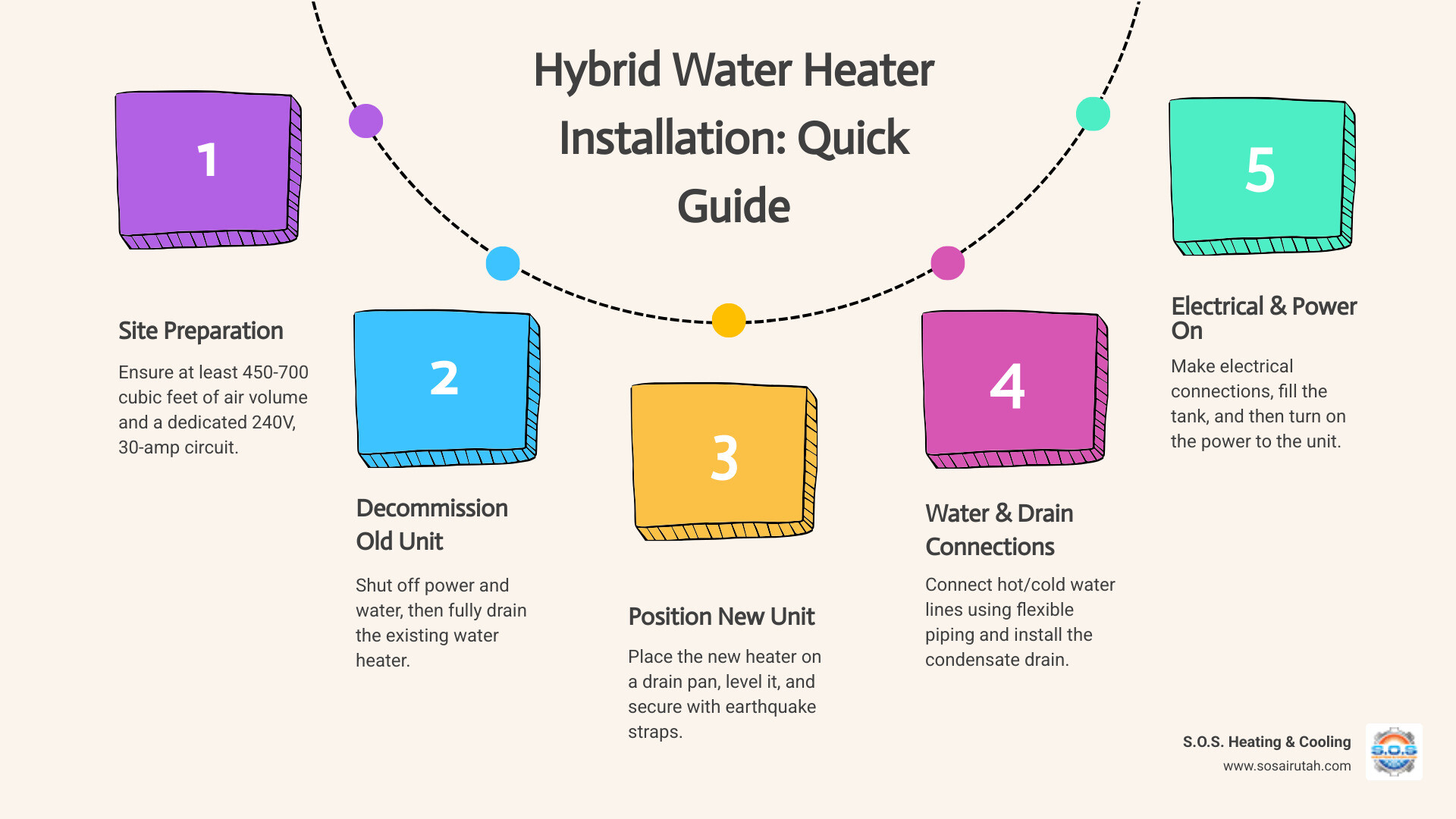
- Check your space – You need at least 450-700 cubic feet of air volume and ambient temperatures between 40°F and 120°F
- Verify electrical requirements – A dedicated 240V, 30-amp circuit is typically required
- Shut off and drain your old unit – Turn off power and water, drain completely
- Position the new heater – Place on a drain pan, level it, and secure with earthquake straps
- Connect water lines – Use flexible piping with Teflon tape on all threaded connections
- Install condensate drain – Route to a floor drain or install a condensate pump
- Make electrical connections – Follow the manufacturer's manual and verify voltage
- Fill and power on – Open a hot water faucet, fill the tank slowly, then turn on power
Upgrading to a hybrid model not only solves your immediate hot water needs but also delivers long-term savings. With the right preparation, you can make this upgrade with confidence—whether you tackle it yourself or bring in professional help.
Find more about hybrid hot water heater installation:
Pre-Installation Checklist: Is a Hybrid Water Heater Right for You?
Before committing to a hybrid hot water heater installation, it's important to understand their benefits. The primary advantage is energy savings. By pulling warmth from the surrounding air, hybrid (or heat pump) water heaters can reduce your water heating energy use by up to 50% compared to standard electric models, saving you hundreds of dollars annually. Some models even combine technologies to deliver high flow rates for larger households.
Additionally, adjusting your tank's temperature from 125°F to 140°F (with a thermostatic mixing valve for safety) can effectively increase your hot water capacity. Don't forget to check for rebates and incentives from utility companies and government programs, which can lower the upfront cost. If you're seeing signs your water heater needs replacement, it's an ideal time to consider an upgrade.
Here’s how hybrid water heaters compare to other options:
| Feature | Hybrid Water Heater | Traditional Tank Water Heater (Electric/Gas) | Tankless Water Heater (Electric/Gas) |
|---|---|---|---|
| Energy Efficiency | Very High (up to 50% energy use reduction) | Low to Moderate | High (on-demand heating) |
| Operating Cost | Lowest | Highest (especially electric resistance) | Moderate to Low |
| Hot Water Delivery | Excellent (heat pump + resistance backup, good first hour rating) | Good (limited by tank size) | Excellent (unlimited, but flow rate dependent) |
| Technology | Heat pump + Electric Resistance | Electric Resistance or Gas Combustion | Electric Resistance or Gas Combustion (on-demand) |
| Space Requirements | Larger footprint, specific air volume/temp needs | Standard footprint | Compact, wall-mounted |
| Environmental Impact | Low carbon footprint | Higher carbon footprint (especially gas) | Low carbon footprint |
| Condensate Drainage | Required | Not required | Required (for high-efficiency gas models) |
| Installation Complexity | Moderate to High (electrical, plumbing, drainage, space) | Moderate (electrical/gas, plumbing) | Moderate to High (electrical/gas, venting) |
Space, Ventilation, and Location Requirements
Proper location is crucial for a successful hybrid hot water heater installation. These units require specific environmental conditions to operate efficiently.
- Air Volume: The space needs at least 450 to 700 cubic feet of air volume, according to ENERGY STAR. A small closet will require a louvered door or ducting to a larger space.
- Temperature: The ambient temperature should remain between 40°F and 120°F. Below 40°F, the unit will rely on its less-efficient electric backup. Unheated basements and garages in Salt Lake City are often ideal.
- Clearance: Hybrid units are often taller than traditional tanks. Ensure you have enough ceiling height and clearance for airflow and maintenance—typically 18-24 inches on the sides.
- Noise and Exhaust: The fan and compressor produce noise similar to a dishwasher (45-55 decibels). The unit also exhausts cool air, which can be a benefit in a warm garage during summer but may be undesirable near a living space.
For more details, consult this HPWH Installation Guide from ENERGY STAR.
Electrical and Plumbing Considerations
Your home's electrical and plumbing systems must be ready for your new unit.
- Electrical: Hybrid water heaters typically require a dedicated 208/240-volt, 30-amp circuit with 10-gauge wire. Verify your electrical panel can support this load.
- Plumbing: Install shutoff valves on both hot and cold water lines for easier maintenance. Use dielectric unions to prevent corrosion between dissimilar metals.
- Thermal Expansion: If your home has a "closed-loop" plumbing system (common in Salt Lake City), a thermal expansion tank is necessary to absorb pressure from heated water and protect your system.
- Water Pressure: Your home's water pressure should be between 50-60 psi. If it's above 80 psi, install a pressure-reducing valve to protect your appliances.
Addressing these details upfront prevents future problems. For more tips, see our water heater repair tips.
Essential Tools and Materials for Your Hybrid Hot Water Heater Installation
Having the right tools and materials is key to a smooth hybrid hot water heater installation.
- Main Components: Hybrid water heater, drain pan, and a condensate pump if no floor drain is nearby.
- Plumbing: PEX tubing or flexible stainless steel connectors, pipe insulation, Teflon tape, pipe wrenches, and a hacksaw or pipe cutter.
- Electrical: Voltage tester, wire strippers, cutters, and wire nuts.
- General & Safety: Work gloves, safety glasses, screwdrivers, a level, shims, earthquake straps, a garden hose, and a hand truck or dolly.
For a visual guide to supplies, see this helpful video at the 1:40 mark.
Your Step-by-Step Hybrid Hot Water Heater Installation Guide
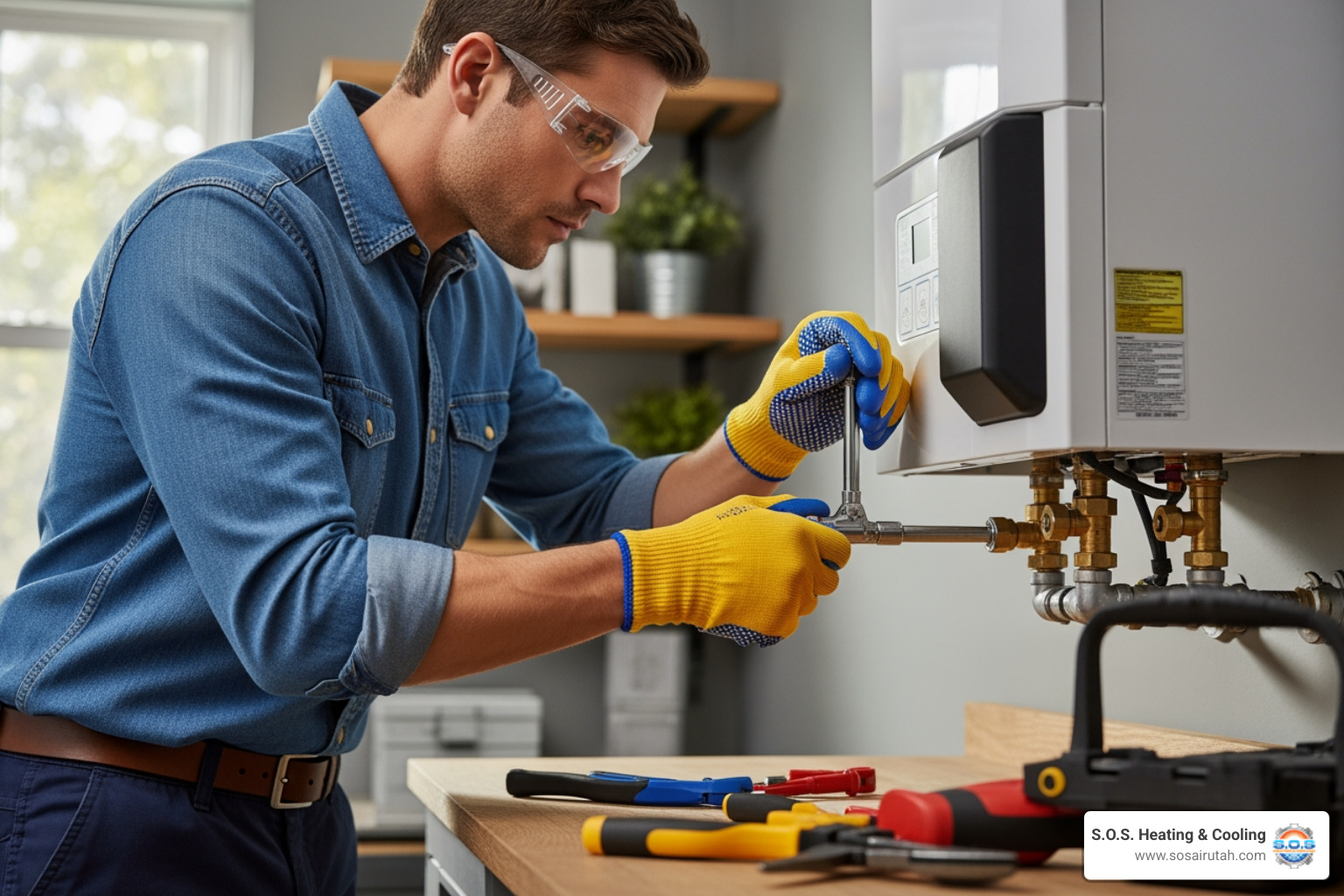
A DIY hybrid hot water heater installation can save on labor costs but requires solid plumbing and 240-volt electrical skills. If you're experienced with home improvement, you might be a good candidate. The project typically takes a full day.
However, professional installation offers peace of mind, ensuring the job is done in 4-8 hours, meets local codes, and includes warranty protection. If you are uncertain about any step, especially electrical work, calling a professional is the safest choice.
This installation video provides a helpful visual guide for the entire process.
Step 1: Safety First and Decommissioning Your Old Unit
Safety is the top priority. Before starting, completely shut off power and water to the old unit.
- Turn Off Power: Go to your electrical panel and flip the breaker for the water heater. For gas models, turn the gas supply valve to "OFF."
- Verify Power is Off: Use a non-contact voltage tester to confirm there is no electrical current at the unit.
- Turn Off Water: Turn the cold water supply valve clockwise to shut it off.
- Drain the Tank: Connect a garden hose to the drain valve at the bottom of the tank and run the other end to a floor drain or outside. Open a hot water faucet on an upper floor to speed up draining by breaking the vacuum seal.
- Disconnect Lines: Once the tank is empty, disconnect the hot and cold water lines and the electrical wiring (or gas line for gas models).
If you encounter issues like stuck valves, our emergency water heater repair Utah guide can help.
Step 2: Removing and Disposing of the Old Water Heater
Even when empty, old water heaters are heavy (100-150 lbs). This is a two-person job. Use a hand truck or appliance dolly to move the unit safely, being mindful of wet floors.
Do not discard the old unit in the trash. Water heaters contain recyclable metals. Contact local waste centers in the Salt Lake City area or a junk removal service for proper disposal. The video at the 6:24 mark offers general guidance on disposal options.
Step 3: Positioning and Securing the New Unit
Proper positioning ensures your new system operates efficiently and safely.
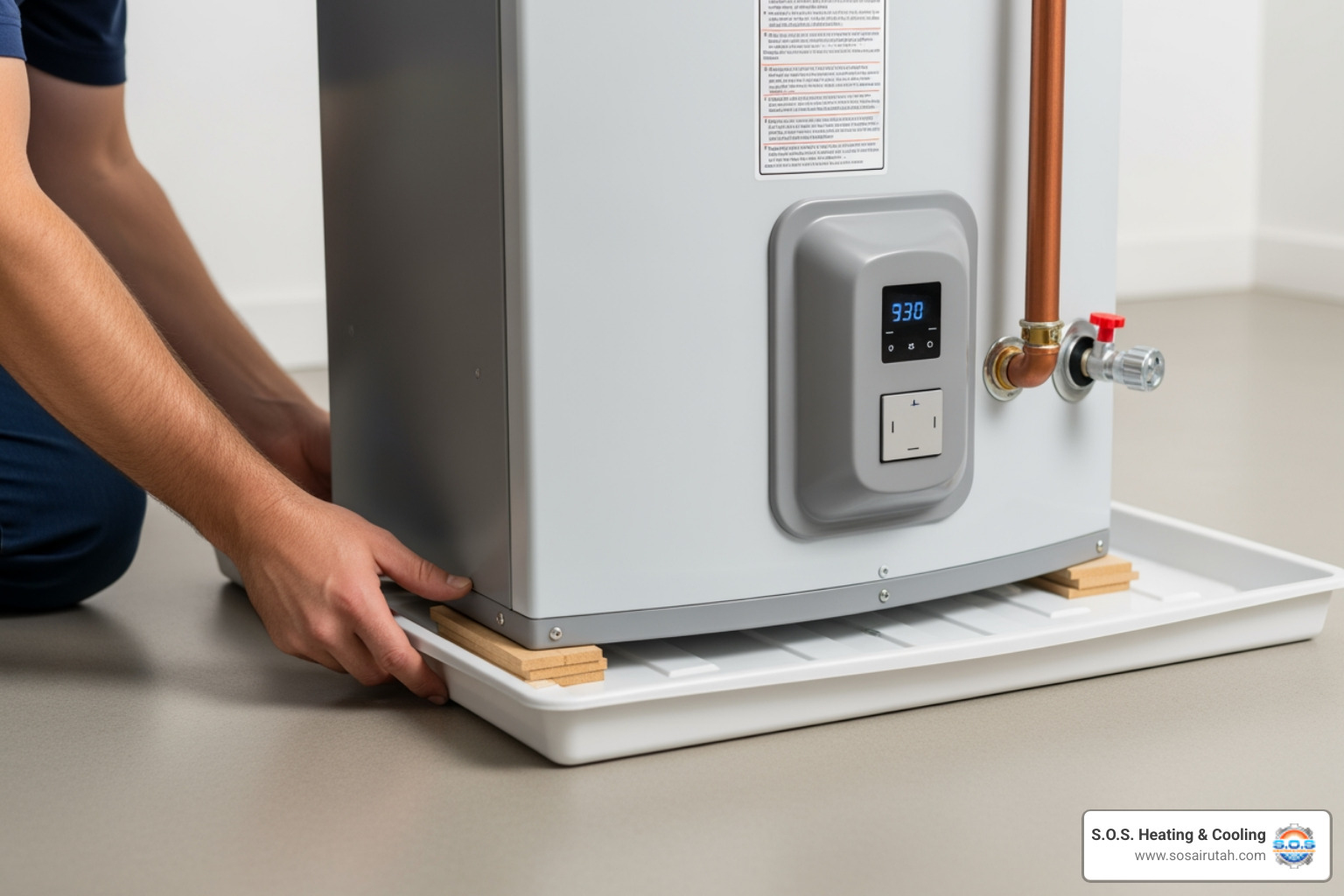
- Prepare the Area: Clean the installation area and ensure the floor is dry and can support the full weight of the new unit (over 570 lbs for a 50-gallon model).
- Install Drain Pan: Place a drain pan (at least 2 inches wider than the heater) in the final location. Attach a drain line and route it to a floor drain. This video at 11:58 shows how to use the pan as a template.
- Position the Heater: Carefully move the new heater onto the drain pan, leaving adequate clearance for airflow and maintenance.
- Level the Unit: Use a level and shims to ensure the heater is perfectly level. This is critical for proper condensate drainage.
- Secure the Unit: Install two heavy-duty earthquake straps—one on the top third and one on the bottom third of the tank—bolting them securely into wall studs as required by Utah building codes.
Step 4: Making the Water Connections
Modern flexible piping simplifies this step. Use Teflon tape (wrapped clockwise 3-5 times) on all threaded connections to ensure a watertight seal.
- Connect Supply Lines: Use flexible water supply lines to connect your cold water supply to the "cold" inlet and your hot water line to the "hot" outlet. This method is forgiving of slight misalignments and requires no soldering, as shown in this video at 18:07.
- Install T&P Valve: Install the Temperature and Pressure (T&P) relief valve in its designated port. This is a critical safety device. Connect a discharge pipe that runs downward to within 6 inches of a drain. Ensure this pipe is never capped or blocked.
- Insulate Pipe: Wrap the first six feet of your hot water supply pipe with pipe insulation to reduce heat loss and improve efficiency.
Step 5: Managing the Condensate Drain
A hybrid heater produces condensate that must be drained. The water is clean and non-acidic.
- Gravity Drain: The simplest method is to run a PVC pipe from the unit's condensate port to a nearby floor drain or washing machine drain.
- Condensate Pump: If no drain is nearby, install a condensate pump. This device collects the water and pumps it to a suitable drain location.
- Outdoor Draining: If routing the line outdoors in Utah, insulate it thoroughly to prevent freezing, which would shut down the heat pump.
This video at 19:30 provides a visual of these options.
Step 6: Completing the Electrical Connections
Warning: If you are not 100% confident working with 240-volt electricity, hire a licensed electrician. Incorrect wiring is a fire hazard and can damage the unit.
- Consult the Manual: Follow the wiring diagram in your manufacturer's manual.
- Connect Wires: Connect the home's supply wires from the dedicated 240-volt, 30-amp circuit to the unit using correctly sized wire nuts. Follow the color coding (black/red for hot, white for neutral, green/copper for ground).
- Ground the Unit: Ensure the ground wire is securely connected per the manual and local codes. This is a critical safety feature.
- Final Check: Before closing the access panel, double-check that all connections are tight and no bare wire is exposed. This video at 20:34 reinforces the importance of professional help if you are in doubt.
Step 7: Filling the Tank and Powering On
Follow these final steps in order to avoid damaging the unit.
- Open a Faucet: Open a hot water faucet in an upstairs bathroom to allow air to escape as the tank fills.
- Fill the Tank: Slowly open the cold water supply valve. You should hear water filling the tank. Inspect all connections for leaks and tighten as needed.
- Purge Air: Wait for a steady, continuous stream of water from the open faucet, then let it run for a few minutes to purge all air before closing it.
- Power On: With the tank full and no leaks, return to the electrical panel and turn the breaker on. At the unit's control panel, press the power button and select an operating mode. It will likely default to "Hybrid" or "Energy Saver" mode for maximum efficiency.
- Verify Drainage: During the first few hours, confirm the condensate drain or pump is working correctly.
This video at 22:24 shows these final steps. Congratulations, your hybrid hot water heater installation is complete!
Post-Installation: Operation and Maintenance for Longevity
Congratulations on your hybrid hot water heater installation! Proper operation and simple maintenance will ensure your system runs efficiently for years.
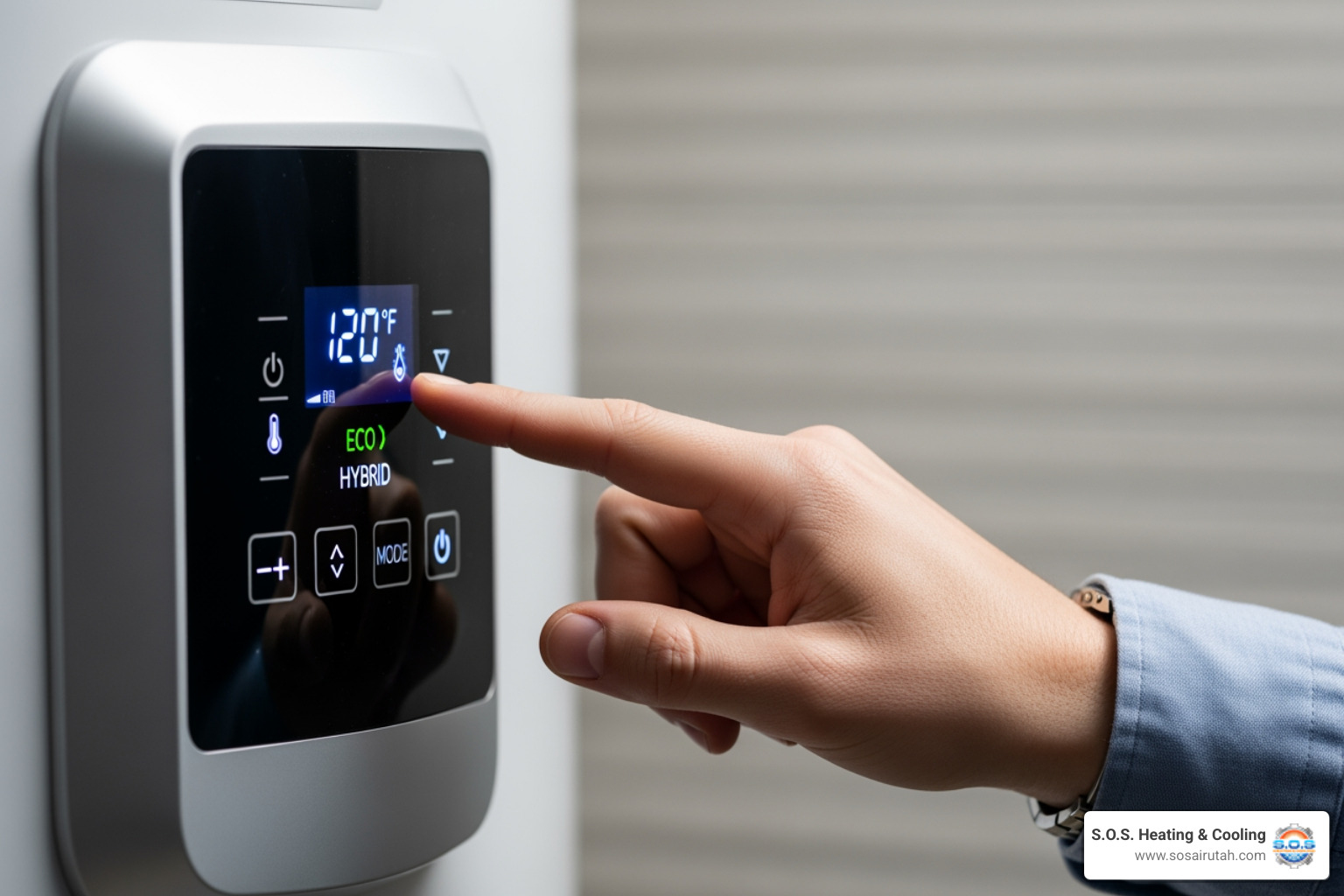
Your unit's digital control panel allows you to choose an operating mode to balance efficiency and hot water demand.
- Efficiency/Economy Mode: The default setting for maximum energy savings. It relies almost exclusively on the heat pump.
- Hybrid Mode: The best balance for most families. It prioritizes the heat pump but uses electric elements for high demand.
- Electric/High Demand Mode: Uses only the electric elements for the fastest recovery. Use this mode sparingly as it consumes more energy.
- Vacation Mode: Lowers the tank temperature to around 50°F to save energy while you're away.
For more technical details, see the Heat Pump Water Heater Guide.
Recommended Maintenance Tasks
Regular maintenance is key to a long lifespan. Here is a simple checklist:
- Clean the air filter (every 6-12 months): A clean filter ensures proper airflow and efficiency. Check more often in dusty environments.
- Inspect condensate lines (annually): Check for and clear any clogs to prevent shutdowns.
- Test the T&P relief valve (annually): Manually lift the lever to ensure water flows freely. Replace it if it sticks or is corroded.
- Drain and flush the tank (annually): In the hard water conditions of Salt Lake City, sediment can build up. Flushing the tank until the water runs clear prevents corrosion and maintains efficiency.
- Inspect the anode rod (annually): This rod protects your tank from corrosion. Replace it when it's mostly depleted to extend the tank's life.
Consistent maintenance protects your investment. Learn more about the pro water heater replacement benefits.
Final Checks for Your Hybrid Hot Water Heater Installation
After powering on the unit, perform a final walkthrough:
- Verify Condensate Drainage: Ensure the drain or pump is working and water is not pooling.
- Check for Leaks: Thoroughly inspect all water connections and the drain pan for any drips.
- Listen for Unusual Noises: A gentle hum is normal. Loud banging or grinding could indicate a problem.
- Test Hot Water Delivery: Check for consistent temperature and flow at faucets throughout your home. If you notice issues like water heater temperature fluctuations in Mt. Olympus, investigate your settings or plumbing.
With these checks complete, you can enjoy the savings and comfort of your new hybrid water heater.
Frequently Asked Questions about Hybrid Water Heaters
How much can I really save with a hybrid water heater?
The savings from a hybrid hot water heater installation are substantial. By cutting water heating energy use by up to 50% compared to traditional electric models, homeowners can save hundreds of dollars per year. The exact amount depends on household usage and local electricity rates, but the savings typically make the initial investment worthwhile over the unit's lifespan.
What happens if my installation space is too small?
If your space doesn't meet the recommended 450-700 cubic feet of air volume or the 40°F-120°F temperature range, the heater's efficiency will decrease. The unit will rely more on its electric backup elements, reducing energy savings. To solve this, you can use a manufacturer-offered ducting kit to pull air from a larger space or consider a split-system model that locates the heat pump component elsewhere.
Can I install a hybrid water heater myself?
While a DIY hybrid hot water heater installation is possible for those with strong plumbing and electrical skills, it's a complex project. Professional installation is recommended to ensure safety, compliance with local building codes in areas like Salt Lake City, and full warranty protection. An expert ensures the unit is configured for optimal performance and longevity. If you're unsure about any step, calling a professional is the wisest choice for a job done right. For help with water heater installation in Salt Lake City, UT or water heater repair in Salt Lake City, UT, professional service provides peace of mind.
Enjoy Efficient Hot Water with Confidence
A hybrid hot water heater installation is a significant upgrade for your home, leading to a more comfortable, cost-effective, and environmentally friendly lifestyle. You now understand the benefits: up to 50% less energy use, hundreds of dollars in annual savings, and a reduced carbon footprint.
While some homeowners may tackle the installation themselves, complex jobs involving tricky electrical or plumbing work are best left to professionals. At S.O.S. Heating & Cooling, we have helped countless homeowners across Salt Lake City, Draper, Kaysville, and other Utah communities with their heat pump water heater needs. Our team ensures your system is installed safely, efficiently, and in compliance with all local codes.
We are available 24/7 for emergencies and offer flexible financing options to make your upgrade stress-free. With no evaluation fees during business hours, you can get the answers you need without worry.
Whether you've completed a DIY project or are ready for professional help, you can move forward with confidence, knowing your new hybrid water heater will provide reliable, efficient hot water for years.
For expert assistance with your heat pump and water heater needs, contact us today! Losing hot water? We provide reliable water heater repair.
Contact Us
Let's Get You From Distress to Rest
No heat, no cool, a backed-up drain, or just due for a tune-up? Call now or request service and our local team will be on the way — upfront pricing, no surprises.