Quick Fixes for Your Instant Hot Water Heater: Don't Get Left in the Cold!
When Your Hot Water Suddenly Runs Cold Instant hot water repair becomes a priority when your tankless heater fails, shows error codes…
When Your Hot Water Suddenly Runs Cold
Instant hot water repair becomes a priority when your tankless heater fails, shows error codes, makes strange noises, or leaks. These issues often stem from mineral buildup, ignition failure, clogged filters, or faulty sensors, especially in hard water areas like Salt Lake City.
Common Instant Hot Water Repair Needs:
- No hot water: Check power, gas, and reset the unit.
- Temperature fluctuations: Clean the inlet filter and descale the heat exchanger.
- Error codes: Consult the manual for specific component failures.
- Leaks or moisture: Inspect connections and the pressure relief valve.
- Strange noises: Flush the system to remove sediment.
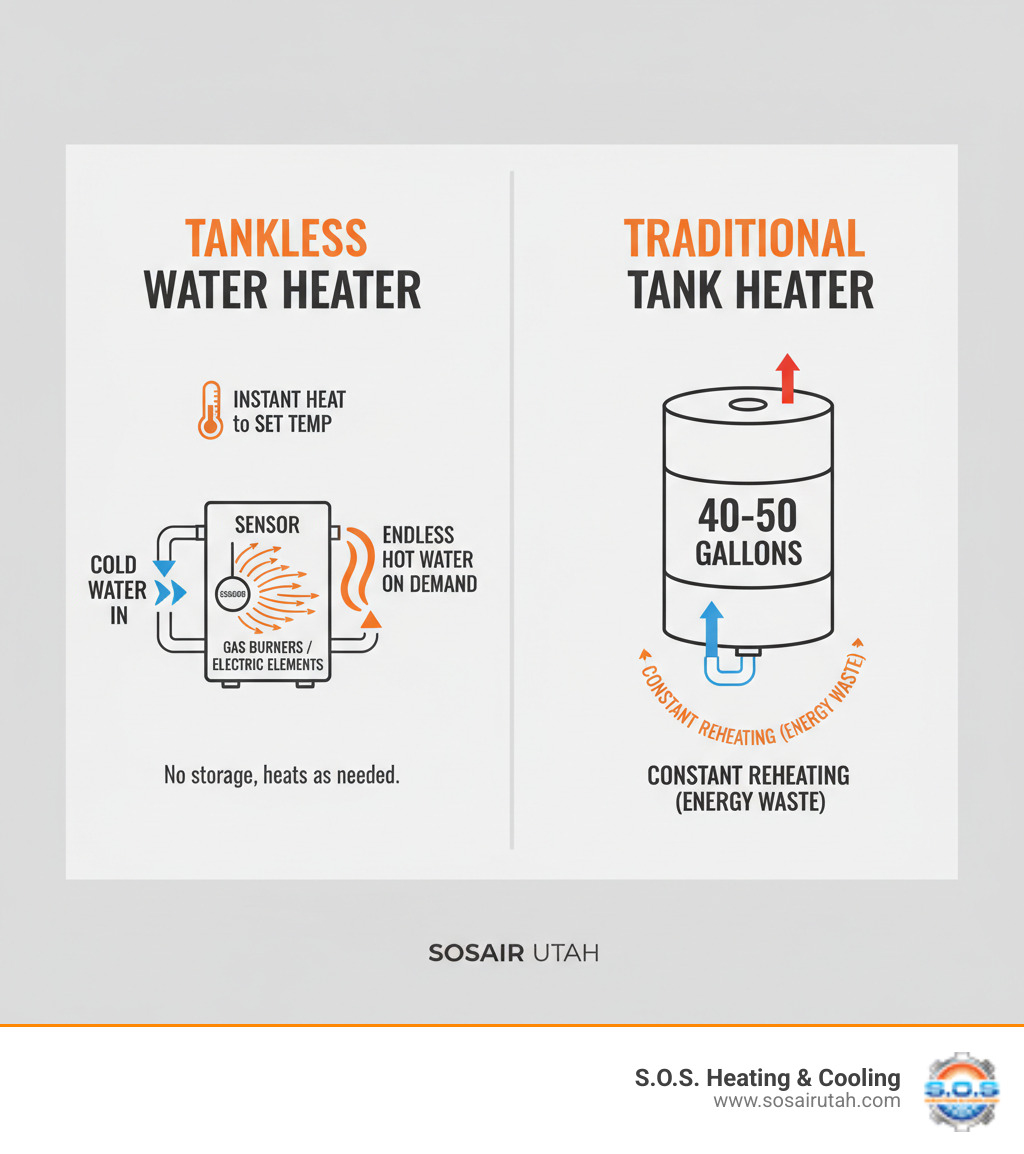
Nothing is more frustrating than an unexpected cold shower. When your instant hot water heater fails, daily tasks like washing dishes or doing laundry come to a halt. Unlike traditional tanks that waste energy keeping water hot, tankless systems heat water on demand. This efficiency can cut water heating bills in half and allows the units to last 20 years or more. But when they fail, you need a fast solution.
This guide will help you recognize warning signs, understand common causes, and know when to call for professional help. We'll cover everything from inconsistent temperatures to error codes, helping you restore reliable hot water to your Salt Lake City home.
If you have no hot water, you may need emergency water heater repair in Utah. For routine service, schedule a water heater repair in Salt Lake City with our certified technicians.
As a certified technician helping Salt Lake City families, I've seen that most instant hot water repair issues are preventable. Catching them early saves homeowners money and frustration.
Is Your Heater Crying for Help? Telltale Signs You Need a Repair
Your tankless water heater usually works quietly, but it will give you warning signs when something is wrong. Recognizing these signs early can help you avoid an emergency breakdown.
- Inconsistent temperatures: If your shower alternates between scalding and lukewarm, it often points to an internal issue like a faulty thermostat, flow sensor, or mineral buildup.
- The "cold water sandwich" effect: This is when you get hot water, then a brief blast of cold, then hot again. While somewhat normal, if it becomes more frequent, it could indicate a sensor or mineral issue.
- Low hot water pressure: If only your hot water pressure is low, mineral deposits are likely narrowing the pipes inside the heat exchanger.
- Strange noises: Rumbling, hissing, or popping sounds are not normal. They often mean mineral buildup is causing water to boil unevenly or a heating element is failing.
- Discolored or rusty water: A reddish-brown tint from your hot taps indicates internal corrosion that needs to be addressed.
- Visible leaks or moisture: Puddles around your unit require immediate attention. They can signal loose connections, a bad pressure relief valve, or a cracked heat exchanger.
- Frequent resets: If your unit constantly shuts off or trips the circuit breaker, its safety mechanisms are detecting a problem like overheating or a component failure.
- Sudden spike in energy bills: If your bills increase without a change in usage, your unit is working harder than it should. This loss of efficiency means it's time for instant hot water repair.
For more detailed information on specific temperature problems, check out our guide on water heater temperature fluctuations in Mt. Olympus.
Uncovering the Cause: Common Problems with Instant Hot Water Heaters
When your tankless water heater acts up, it's usually due to a specific issue. Most instant hot water repair calls are for a handful of common problems, many of which are preventable.
- Ignition failure: On gas units, if the burner doesn't ignite, you'll get no hot water. This can be caused by a dirty or faulty igniter or an issue with the gas supply.
- Clogged filters: Your unit has an inlet water filter and, if it's a gas model, an air intake filter. When clogged with sediment or dust, they restrict flow and can cause shutdowns.
- Blocked ventilation: Gas heaters must vent exhaust safely outside. If the vent is blocked by a bird's nest or debris, safety sensors will shut the unit down to prevent carbon monoxide buildup.
- Overloaded system: Tankless heaters provide endless hot water but have a limited flow rate. Running a shower, dishwasher, and washing machine at once can overwhelm the unit, causing the water temperature to drop.
- Electrical component failures: Key parts like flow sensors, temperature sensors, and circuit boards can fail, leading to error codes, inconsistent heat, or a complete shutdown.
For a deeper dive into how these components work, check out our complete guide to tankless heaters.
The Impact of Mineral Buildup and Sediment
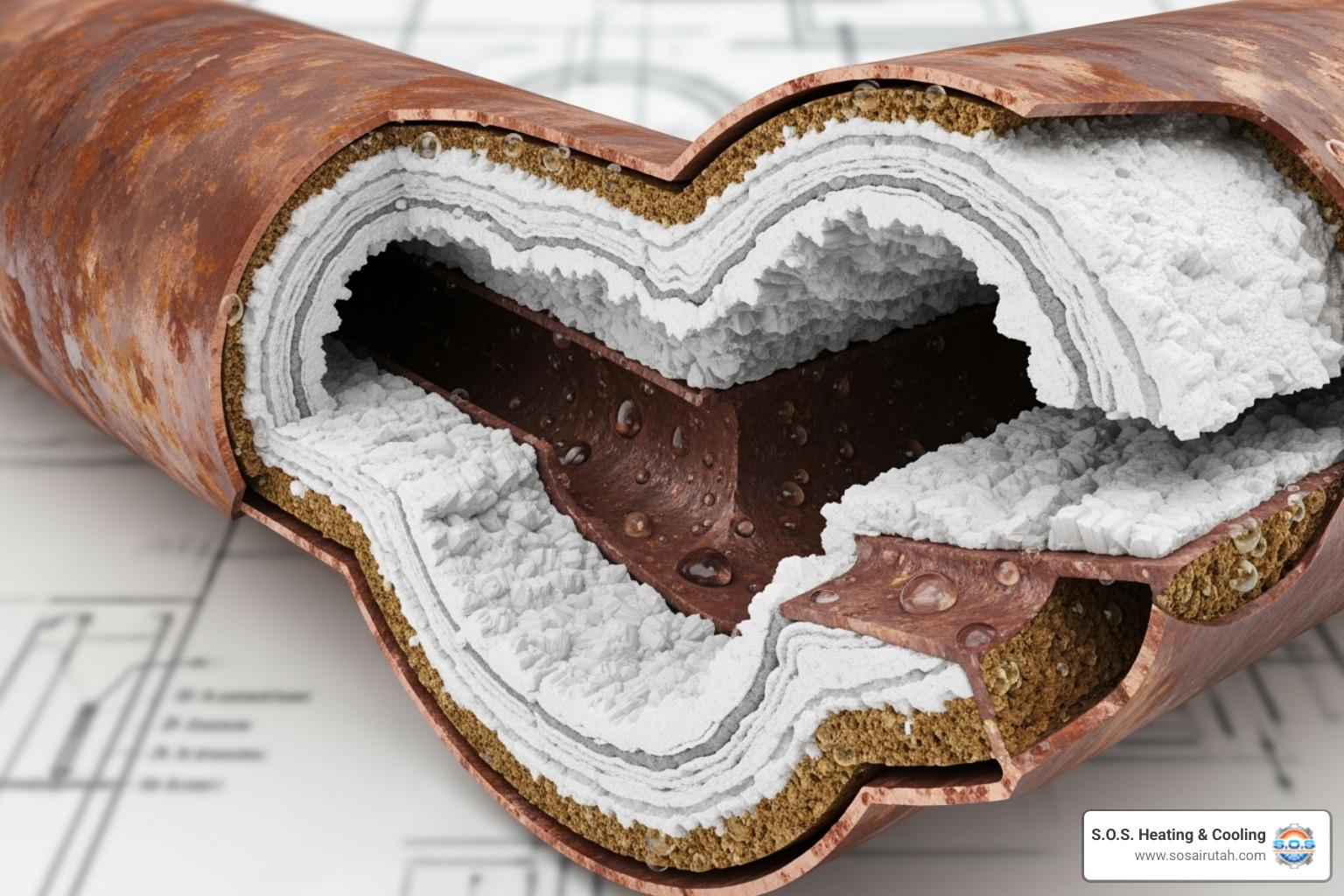
In Salt Lake City, hard water is the primary enemy of tankless water heaters. The high levels of calcium and magnesium form limescale inside the heat exchanger when water is heated. This buildup forces the heater to work harder and longer, increasing energy bills and causing strange noises. The strain can lead to premature failure of the heat exchanger, one of the most expensive parts to replace. Regular flushing and descaling is the best defense. This annual maintenance dissolves mineral deposits, restores efficiency, and can add years to your unit's life.
Decoding Your Heater's Error Codes
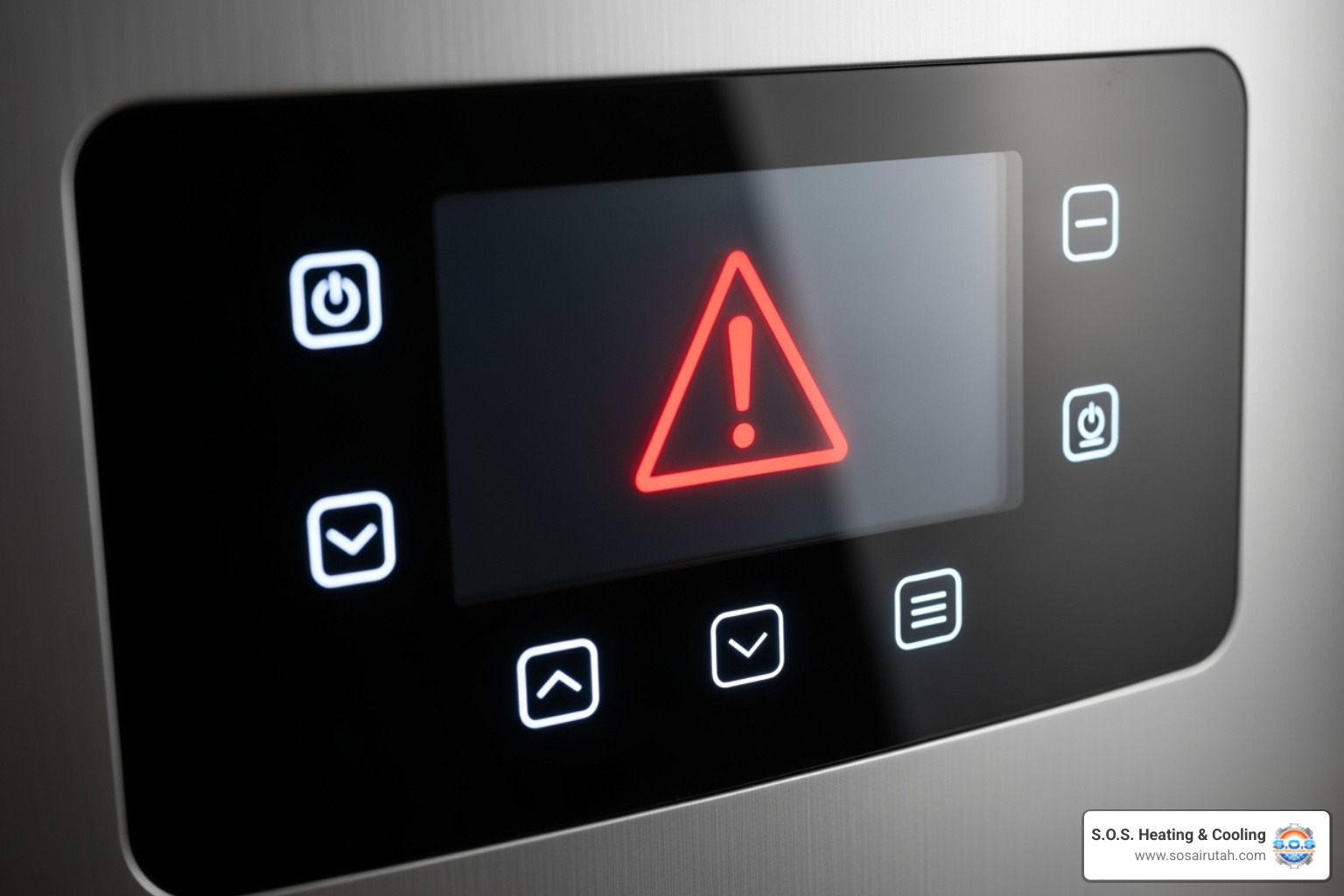
Modern tankless heaters communicate problems through error codes on their digital display. Before calling for service, note the code and check your owner's manual. This can help you identify simple fixes or allow a technician to arrive with the right parts.
Common codes include:
- Flow sensor errors: The unit isn't detecting enough water flow, possibly due to a clogged filter or low water pressure.
- Ignition errors: The burner isn't lighting, which could be a gas supply issue or a failed igniter.
- Temperature sensor errors: Malfunctioning thermistors are causing inconsistent heating.
- Ventilation errors: A critical safety issue on gas units, indicating a blocked exhaust vent.
Understanding these codes helps expedite instant hot water repair. For general information on how these systems work, the Wikipedia page on Tankless water heating is a useful resource.
DIY Fixes vs. Professional Instant Hot Water Repair
While it's tempting to try a DIY fix, instant hot water repair involves a hazardous combination of gas, high-voltage electricity, and pressurized water. It's crucial to know the line between simple checks and repairs that require a professional.
| Feature | DIY Repair (Simple Issues) | Professional Repair |
|---|---|---|
| Safety | Low risk for simple checks (power, settings, visible clogs) | High safety due to certified training, specialized tools, and safety protocols for gas, electrical, and pressurized water systems. Prevents gas leaks, electrical shocks, or water damage. |
| Tools Required | Basic tools (screwdriver, multimeter for simple checks) | Specialized diagnostic equipment, descaling pumps, specific replacement parts. |
| Time Investment | Varies; could be quick for simple fixes, but can escalate to hours of frustration. | Efficient diagnosis and repair, often completed in a single visit with the right parts. |
| Warranty Implications | Risk of voiding manufacturer warranty if repairs are attempted by unlicensed individuals. | Maintains warranty validity; professional work is often guaranteed. |
| Expertise | Basic troubleshooting knowledge, owner's manual consultation. | In-depth knowledge of various models, experience with complex internal components, access to technical support. |
Simple Checks You Can Perform Safely
Before calling for service, try these safe, simple checks:
- Check the Power: For electric units, check for a tripped circuit breaker in your electrical panel.
- Verify Gas Supply: For gas units, ensure the gas valve to the heater is open (parallel to the pipe). Check if other gas appliances are working.
- Reset the Unit: Follow your owner's manual to perform a system reset, which can clear temporary faults.
- Check Thermostat Settings: Make sure the temperature hasn't been accidentally lowered. It should typically be set between 120°F and 140°F.
- Clean the Inlet Filter: Turn off the power and water, then locate and rinse the inlet water filter to remove any sediment.
Why Professional Instant Hot Water Repair is the Safest Choice
Anything beyond simple checks is best left to professionals due to significant safety risks.
- Gas and Electrical Hazards: Improper handling of gas lines can lead to leaks, explosions, or carbon monoxide poisoning. High-voltage components can cause severe electrical shock. Our technicians are certified to handle these systems safely.
- Pressurized Water Dangers: Incorrectly disconnecting components can cause burst pipes and major water damage.
- Specialized Tools and Diagnosis: Professionals use diagnostic equipment to accurately identify the root cause of a problem, saving time and preventing unnecessary parts replacement.
- Warranty Protection: Most manufacturer warranties are voided if repairs are performed by an unlicensed individual. Professional service protects your investment.
Attempting a complex DIY repair can turn a small issue into a costly disaster. Our certified technicians at S.O.S. Heating & Cooling have the tools and experience to get the job done right. If you need immediate help, learn when you need emergency water heater repair.
Proactive Care: How to Extend Your Water Heater's Lifespan
Your instant hot water heater is a significant investment. With proper care, it can provide efficient hot water for decades. Like a car, it needs regular tune-ups to prevent breakdowns and maintain performance.
Annual professional maintenance is key to enjoying these benefits:
- Peak Efficiency: Regular service ensures your unit maintains its energy-saving potential, which can be up to 34% higher than traditional tanks.
- Fewer Breakdowns: Technicians can spot and fix small issues before they become major problems, saving you from an unexpected loss of hot water.
- Longer Lifespan: With annual care, tankless water heaters can last 20 years or more, nearly double the lifespan of tank-style heaters.
Regular Maintenance to Prevent Common Issues
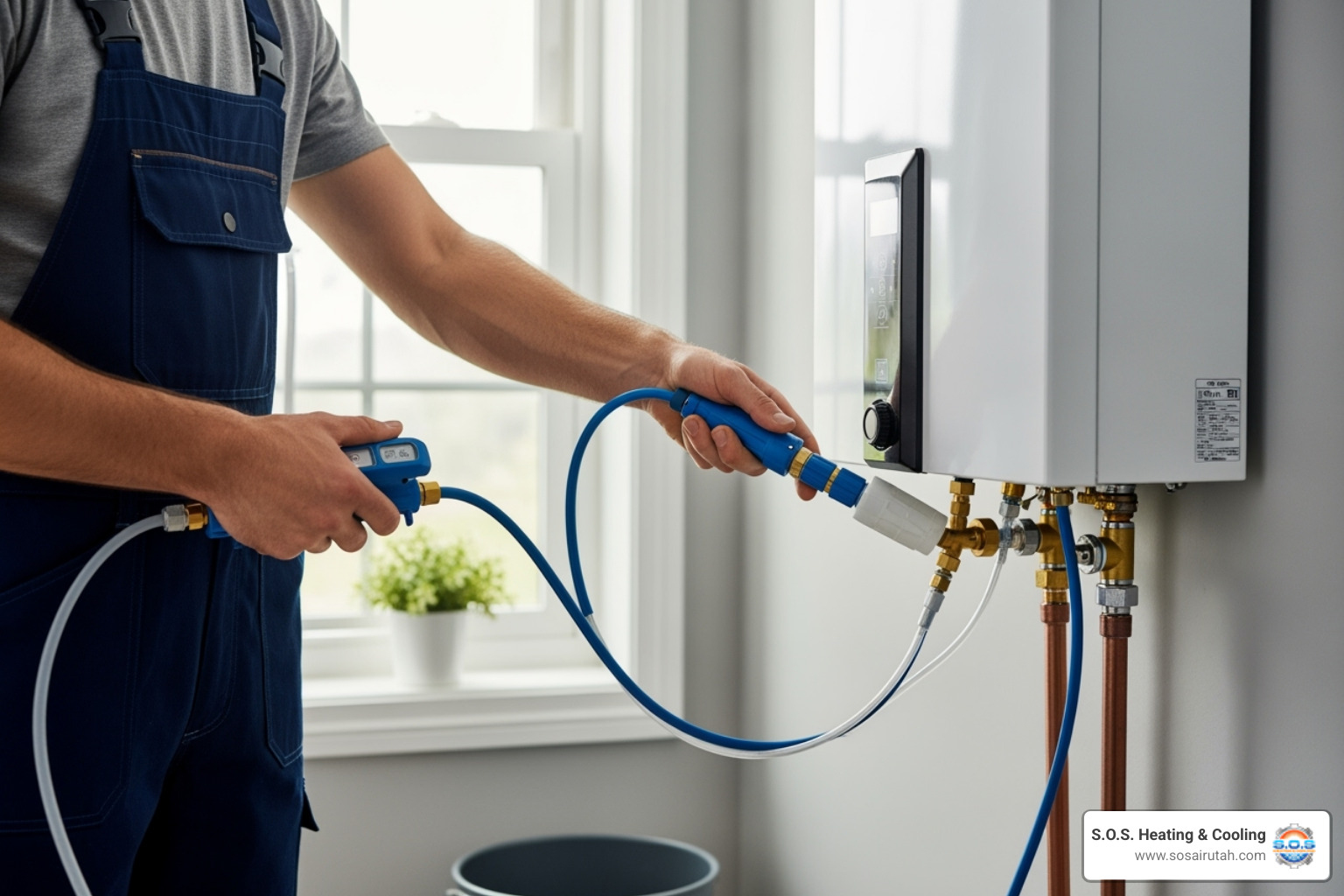
Comprehensive annual maintenance is the cornerstone of a long-lasting unit. A professional service call should include:
- System Flushing and Descaling: This is the most critical task in Salt Lake City's hard water environment. It removes mineral buildup (limescale) that reduces efficiency and strains components.
- Filter Inspection and Cleaning: Clogged inlet water and air intake filters can restrict flow, reduce performance, and cause shutdowns.
- Vent Inspection: For gas units, a clear vent is essential for safety and performance. Blockages can lead to carbon monoxide hazards.
- Pressure Relief Valve Test: This safety feature is tested to ensure it functions correctly, protecting your system from dangerous over-pressurization.
Repair or Replace? Making the Smart Financial Decision
Eventually, any appliance will need to be replaced. Here’s how to decide if it's time to repair or replace your tankless water heater:
- Age: If your unit is over 15 years old and requires a major repair, replacement is often the more economical choice.
- Frequency of Repairs: If you're calling for service multiple times a year, the cumulative cost and inconvenience may justify a new unit.
- Leaking Heat Exchanger: The heat exchanger is the core of the unit. If it fails, the repair cost is often close to the price of a new heater, making replacement the logical option.
- Parts Availability: For older models, parts may become obsolete, making repair impossible.
- Performance and Efficiency: If your unit struggles to provide hot water or your energy bills are rising, a new, more efficient model could provide long-term savings.
We provide honest advice to help you make the best decision for your budget. For more guidance, see our article on signs your water heater needs replacement.
Frequently Asked Questions about Instant Hot Water Heaters
Homeowners in the Salt Lake City area often have similar questions about their tankless water heaters. Here are answers to some of the most common ones.
How often should I have my tankless water heater professionally maintained?
We recommend professional service once a year. Annual maintenance is essential in areas with hard water like Salt Lake City. This service includes flushing and descaling to remove mineral buildup, which keeps the unit efficient, prevents breakdowns, and helps it reach its full 20+ year lifespan. Skipping this small investment can lead to higher energy bills and costly future repairs. For more details, see our complete guide to tankless heaters.
What is the 'cold water sandwich' effect and how do I fix it?
The cold water sandwich effect is a brief burst of cold water between two streams of hot water. This happens because the cold water sitting in the pipes has to pass through the faucet after the initial hot water and before the newly heated water arrives. It's a normal characteristic of most tankless systems and not a malfunction. However, if the effect suddenly becomes worse, it could indicate a problem with a flow sensor or mineral buildup that requires instant hot water repair.
Is it more cost-effective to repair or replace my older unit?
The decision depends on several factors. Repair is usually best for units under 10-15 years old with minor issues. Replacement becomes the smarter investment when:
- The unit is over 15-20 years old.
- It requires frequent repairs.
- The heat exchanger is leaking (a very expensive repair).
- Replacement parts are no longer available.
- Energy bills are rising due to declining efficiency.
A new unit offers better efficiency, a full warranty, and peace of mind. We provide an honest assessment to help you choose the right option. Learn more by reading our article on signs your water heater needs replacement.
Conclusion: Keep Your Hot Water Flowing Reliably
Understanding your tankless water heater is the first step to ensuring it runs reliably. By recognizing warning signs, knowing the common causes of failure, and understanding the importance of proactive care, you can avoid most hot water emergencies.
The key takeaway is that regular maintenance is not optional—it's essential for longevity, efficiency, and preventing costly breakdowns. Annual flushing and descaling is the single best thing you can do for your heater in Salt Lake City's hard water environment.
While simple troubleshooting is fine, instant hot water repair should be left to professionals. The risks associated with gas, electricity, and pressurized water are too high for a DIY project. The certified technicians at S.O.S. Heating & Cooling have the training and tools to perform repairs safely and effectively, protecting your warranty and your home.
We proudly serve Salt Lake City, Bountiful, Centerville, Farmington, Holladay, Kaysville, Layton, Millcreek, Mt. Olympus, Murray, Riverton, Sandy, South Jordan, South Salt Lake, Woods Cross, Draper, and Herriman with 24/7 emergency service. Your comfort and safety are our top priorities.
Don't wait for a cold-water surprise. Contact us for expert water heater repair in Salt Lake City and keep your hot water flowing for years to come.
 Losing hot water? We provide reliable water heater repair.
Contact Us
Let's Get You From Distress to Rest
No heat, no cool, a backed-up drain, or just due for a tune-up? Call now or request service and our local team will be on the way — upfront pricing, no surprises.