

5 Most Common AC Repairs in Hot Dry Wasatch Front Climates


.avif)

Why the Wasatch Front's Climate Creates Unique AC Repair Challenges
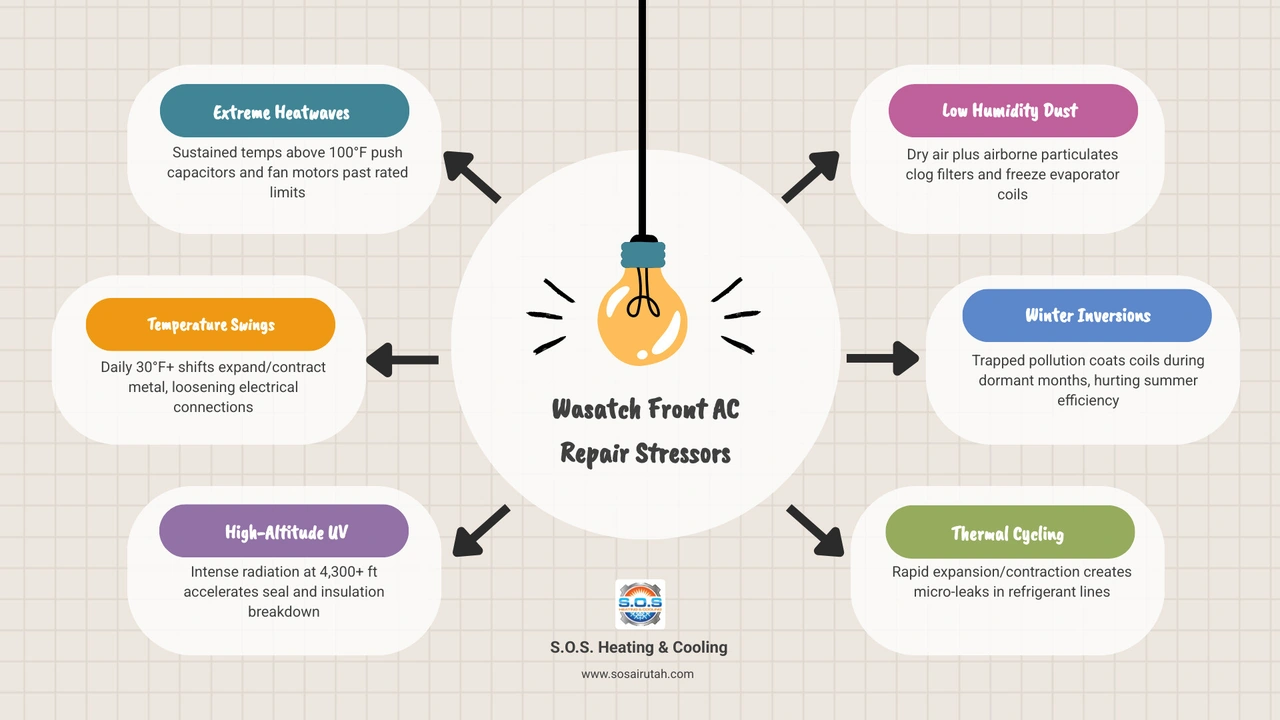
The most common air conditioner repairs in a hot dry Wasatch Front climate are not the same ones technicians see in humid or mild regions. Utah's combination of triple-digit summer heat, humidity below 15%, high elevation UV exposure, and winter inversion pollution creates a unique set of stresses that wear down AC components faster than most homeowners expect.
Here is a quick look at the five repairs Wasatch Front homeowners face most often:
- Failed capacitors and fan motors - sustained heat above 100°F pushes electrical components past their rated limits
- Refrigerant leaks and seal degradation - extreme temperature swings dry out rubber gaskets and cause micro-leaks in copper lines
- Frozen evaporator coils - Utah dust clogs filters and coils, blocking airflow even in dry air
- Clogged condensate drain lines - airborne dust and debris mix with moisture to create blockages
- Electrical contactor wear and loose connections - daily 30°F+ temperature swings cause metal to expand and contract, loosening wiring over time
Most of these failures share a common root: Utah's climate forces AC systems to work harder, longer, and under more physical stress than the equipment was originally designed to handle. A dirty filter that might go unnoticed for months in a cooler climate can trigger a frozen coil or compressor damage within weeks during a Salt Lake Valley July.
Understanding why these failures happen — and what warning signs to watch for — can help you catch problems early and avoid a full breakdown during the hottest days of the year.
I'm Bryson Ninow, an NATE-certified HVAC professional with years of hands-on experience diagnosing the most common air conditioner repairs in a hot dry Wasatch Front climate across Salt Lake, Davis, and Utah County. Living and working in this region means I've seen how quickly Utah's desert conditions can turn a minor maintenance gap into an expensive emergency repair.
Understanding the Most Common Air Conditioner Repairs in a Hot Dry Wasatch Front Climate
To understand why your cooling system struggles, it helps to look at the geographical realities of living along the Wasatch Front. Our valley floors sit at roughly 4,300 feet above sea level, with surrounding communities like Draper, Herriman, and Mt. Olympus climbing even higher.
At this elevation, the air is thinner, which inherently reduces its ability to carry heat away from your outdoor condenser unit. Furthermore, our high-altitude atmosphere filters out less solar radiation. This intensifies ultraviolet (UV) exposure by up to 20%, rapidly degrading exposed plastics, wiring insulation, and foam pipe wraps on your outdoor unit.
When you combine this intense UV exposure with summer relative humidity that regularly drops below 15%, you get a recipe for accelerated equipment wear. To learn more about how our high-desert climate alters your system's life expectancy, read our detailed guide on How High-Desert Weather Affects AC Equipment Lifespan.
Low humidity also fundamentally changes how air conditioning systems operate. In humid climates, an AC spends a massive amount of energy pulling moisture out of the air. In our arid climate, the system can focus almost entirely on lowering the dry-bulb temperature. However, this dry air is incredibly thirsty, carrying fine silica dust, construction dirt, and seasonal pollen across the valley. This dust acts as an abrasive sandpaper on moving parts and blankets heat-exchange surfaces, drastically reducing efficiency. For a deeper look into how low humidity shapes your home comfort and equipment load, check out How Low Humidity Affects Your Comfort and Your AC.
The 5 Most Common AC Repairs in Utah's High Desert
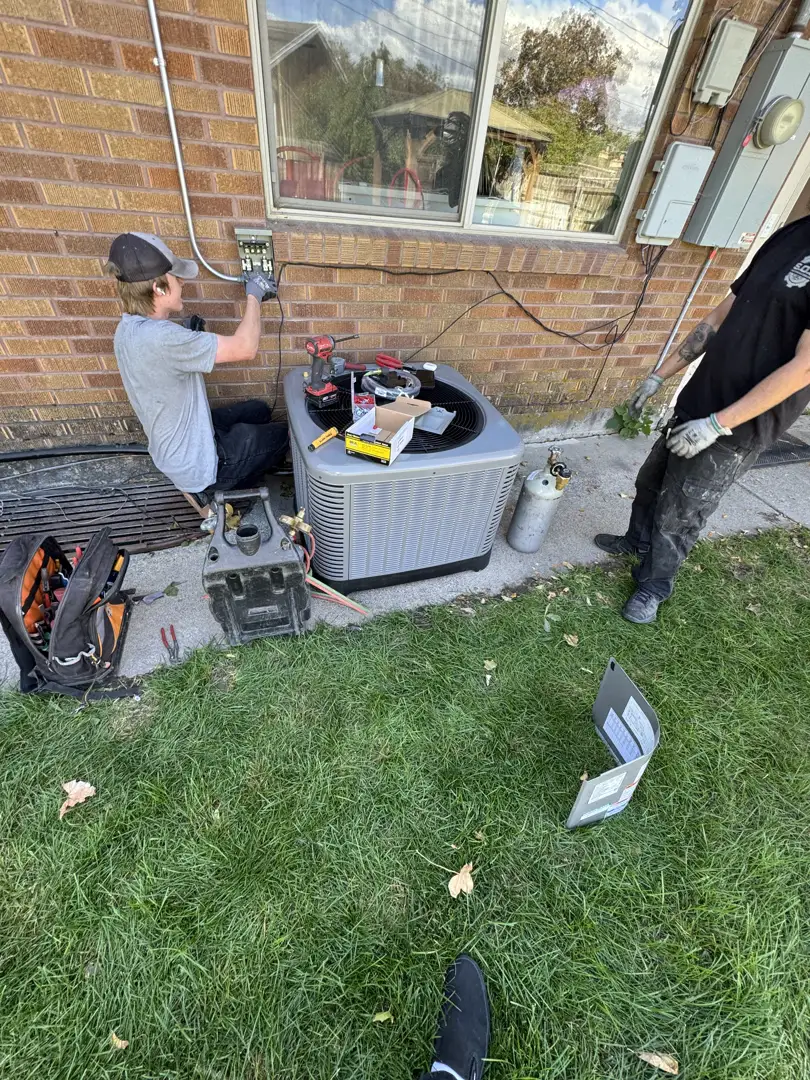
When hot desert winds sweep through Salt Lake City, Sandy, and Layton, your air conditioner becomes your home’s primary defense system. Unfortunately, the relentless grind of keeping a home at 70°F when it is 102°F outside causes specific mechanical and electrical components to fail.
By identifying these issues early, you can avoid the discomfort of a mid-summer system failure. Let's explore the most frequent mechanical culprits we encounter in the field. If you suspect your system is already struggling, review our comprehensive list of Common AC Repair Issues and learn What to Do When Your AC Stops Cooling to prevent further damage.
1. Failed Capacitors and Fan Motors Due to Extreme Heatwaves
If your air conditioner suddenly stops blowing cold air and you hear a faint humming sound coming from the outdoor unit, you are likely dealing with a failed run capacitor or a seized condenser fan motor. These two components are the most frequent casualties of Utah's intense summer heatwaves.
The capacitor acts like a heavy-duty battery, providing the electrical boost needed to start and run the compressor and fan motor. Inside the metal housing of a capacitor is a delicate mix of oil and conductive film. When ambient temperatures exceed 100°F, the temperature inside the outdoor unit's electrical cabinet can easily soar past 150°F. Under this extreme thermal stress, the oil inside the capacitor expands, causing the top of the metal canister to bulge and pop. Once a capacitor fails, the fan motor and compressor cannot run, leaving you without cooling.
Sustained heat also places immense strain on the condenser fan motor. The fan's job is to pull outdoor air through the condenser coils to disperse the heat extracted from your home. When outdoor temperatures remain high for consecutive days, the fan motor must run at maximum capacity for hours on end. The combination of high ambient heat, abrasive airborne dust entering the motor bearings, and electrical strain can cause the motor windings to overheat and burn out.
If you are dealing with a fan that refuses to spin or a unit that won't turn on, read our troubleshooting guides on Fixing AC Condenser Fan Problems and AC Not Turning On: What to Check First.
2. Refrigerant Leak Repairs and Seal Degradation
Refrigerant is the lifeblood of your air conditioner. It does not get consumed by the system; rather, it continuously cycles between the indoor and outdoor units to move heat. To understand this process, you can read about How Refrigerant Absorbs and Releases Heat and How the Refrigeration Cycle Cools Your Home.
In the Wasatch Front, refrigerant leaks are incredibly common due to a phenomenon known as thermal cycling. Our high-desert climate experiences dramatic temperature swings, often shifting by 30°F to 40°F between hot summer afternoons and cool desert nights. This rapid temperature fluctuation forces the copper refrigerant lines and aluminum coils to expand and contract constantly. Over time, this physical movement creates metal fatigue, leading to microscopic cracks in the copper joints and service valves.
Furthermore, our incredibly dry air accelerates the aging of the rubber seals, gaskets, and O-rings within the refrigerant system. As these seals dry out, they become brittle and crack, allowing refrigerant to slowly escape.
Operating an AC system with a low refrigerant charge is highly damaging. It forces the compressor to run hotter and longer, which can eventually lead to complete compressor failure. If your system is blowing lukewarm air or making a faint hissing sound, it is critical to have a licensed technician locate the leak, repair the physical connection, and recharge the system.
3. Frozen Evaporator Coils Caused by Dust and Airflow Restrictions
It sounds completely backward: how can an air conditioner freeze up inside a hot, dry home when it is 100°F outside? Yet, frozen evaporator coils are a daily occurrence for our repair teams in July and August.
In a dry climate, the primary cause of a frozen coil is restricted airflow. Your indoor evaporator coil relies on a steady stream of warm household air passing over its metal fins to keep the refrigerant inside from dropping below freezing. If that airflow is restricted, the temperature of the coil plummets, causing any trace moisture in the air to instantly freeze on the metal fins. Once a thin layer of ice forms, it acts as an insulator, blocking all heat transfer and causing the entire coil to turn into a solid block of ice.
Our high-desert air is loaded with fine dust, pollen, and wildfire ash. This airborne debris quickly blankets your home's air filter. A heavily clogged filter can reduce system airflow by 30% to 40%, triggering a freeze-up. Additionally, fine dust that slips past cheap or ill-fitting filters settles directly onto the damp surface of the evaporator coil, creating a thick layer of mud that chokes off heat exchange.
To prevent this frustrating issue, you must keep your air filters clean. Discover the mechanics behind this problem by reading How Dirty Filters Cause Frozen Evaporator Coils and learn what steps to take if you spot ice by visiting Ice Forming on Your AC Unit: Causes and What to Do.
4. Clogged Condensate Lines from Dust and Bio-Slime
Even though Utah is exceptionally dry, your air conditioner still extracts a surprising amount of moisture from your indoor air as it cools. This moisture drips off the evaporator coil into a drain pan and flows out of your home through a narrow condensate drain line.
In the Salt Lake Valley, high winds and summer dust storms blow fine particulate matter through our windows, doors, and ductwork. When this dust gets pulled into the cooling system, it settles on the wet evaporator coil and washes down into the condensate drain pan.
This mixture of water, fine silica dust, and household organic matter creates a thick, muddy sludge. Over time, opportunistic bacteria and algae feed on this mixture, forming a stubborn "bio-slime" that easily plugs the small drain line.
When the condensate line clogs, the water has nowhere to go. It will either overflow the drain pan—potentially damaging your drywall, ceilings, and furnace electronics—or trigger a safety float switch that shuts your entire system down to prevent a flood. Keeping your indoor air clean with high-quality filtration is your best defense. You can learn more about selecting the correct filtration level in our guide on How the Right Filter Improves Your AC Efficiency.
5. Electrical Contactor Wear and Loose Connections
Your outdoor AC unit contains an electrical switch called a contactor. When your indoor thermostat calls for cooling, it sends a low-voltage signal to the contactor, closing the switch and sending high-voltage power to the compressor and fan motor.
Because our hot, dry climate forces AC units to cycle on and off frequently to maintain comfortable indoor temperatures, these contactors experience rapid wear and tear. Every time the contacts slam together, a tiny electrical arc occurs. Over time, this arcing burns and pits the metal contacts. In dusty conditions, airborne grit can settle between the contacts, causing them to stick together (forcing the unit to run constantly) or preventing them from making a solid connection (preventing the unit from starting).
Additionally, the dramatic daily temperature swings along the Wasatch Front cause the copper and aluminum wiring terminals inside your system's electrical cabinet to expand and contract. This physical movement can slowly loosen screw terminals and wire nuts over time. Loose electrical connections create high electrical resistance, which generates intense heat, melts wire insulation, and can cause voltage drops that damage your compressor.
If your system is making strange clicking, buzzing, or chattering noises when it tries to start, it is a clear warning sign of electrical wear. Learn more about these warning sounds in our guide, AC Making Strange Noises: What They Mean.
How Winter Inversion Season Compounds Summer AC Problems
Many Wasatch Front homeowners do not realize that our infamous winter inversion season directly impacts how well their air conditioners perform the following summer.
During the winter months, cold air becomes trapped on the valley floor beneath a layer of warm air, sealing in vehicle emissions, wood smoke, and industrial particulates. This creates a dense, visible haze of fine particulate matter (PM2.5).
While your outdoor air conditioner sits dormant under a cover or exposed to the winter elements, these microscopic pollutants settle deep inside the condenser cabinet. This fine particulate matter acts as a corrosive agent, slowly degrading the aluminum fins and copper tubing of your condenser coil.
When spring arrives and you turn your system on, that accumulated winter grime is still baked onto your coils. This layer of dirt acts as an insulating blanket, preventing the condenser from releasing heat efficiently. As a result, your system starts the summer season already compromised, forcing it to run at higher pressures and temperatures.
To protect your system from this year-over-year contamination, proactive spring maintenance is essential. Learn how to prepare your system for the seasonal transition by reading our AC Maintenance Guide for Wasatch Front Homeowners and find out How Often Should You Schedule an AC Tune-Up to maximize your equipment's lifespan.
Preventing most common air conditioner repairs in a hot dry wasatch front climate with Spring Tune-Ups
The single most effective way to protect your cooling system from both winter inversion grime and summer desert heat is a professional spring tune-up. A comprehensive maintenance visit goes far beyond a simple visual inspection. It includes:
- Deep Coil Cleaning: Chemically washing the outdoor condenser coils to remove baked-on inversion soot, dust, and cottonwood seeds.
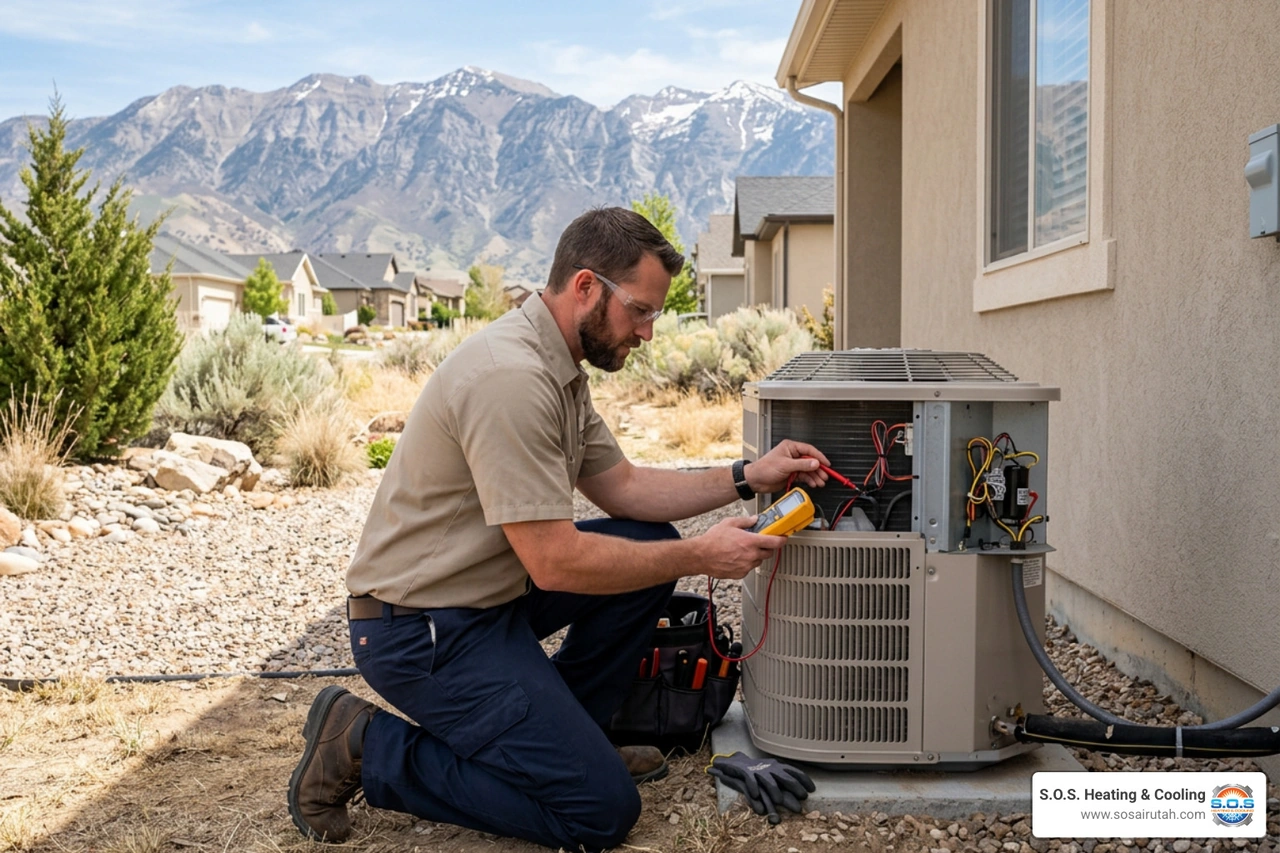
- Electrical Calibration: Testing the capacitance of your run capacitors, checking contactor wear, and tightening all electrical connections.
- Refrigerant Optimization: Verifying that your system has the exact refrigerant charge required by the manufacturer to prevent compressor strain.
- Airflow Calibration: Cleaning blower components and verifying that static pressures are within safe limits.
Taking these steps before the summer heat hits can reduce your monthly energy bills by 10% to 15% and prevent up to 80% of unexpected summer breakdowns. For more practical advice on optimizing your home for the summer, check out our Summer AC Efficiency Tips for High-Desert Homes.
Repair vs. Replacement: Navigating the Tipping Point in Utah
When your air conditioner breaks down in the middle of a July heatwave, you face a critical decision: should you pay to repair the aging unit, or is it time to invest in a modern replacement?
In Utah's demanding climate, an air conditioner's average operational lifespan is 12 to 16 years—significantly shorter than the 15 to 20 years seen in milder parts of the country. To help you evaluate your system, we use a helpful decision framework known as the $5,000 Rule.
| Evaluation Factor | Leaning Toward Repair | Leaning Toward Replacement |
|---|---|---|
| The $5,000 Rule | Age of system × repair cost is under $5,000 | Age of system × repair cost exceeds $5,000 |
| Refrigerant Type | System uses modern R-410A or R-32 | System uses phased-out R-22 refrigerant |
| System Efficiency | High SEER rating; stable energy bills | Low SEER rating; utility bills rising year-over-year |
| Equipment Age | Under 10 years old | Over 12–15 years old |
| Repair History | First major issue in several seasons | Multiple component failures in a single summer |
If you are considering upgrading to a modern system, check out How Variable Speed AC Handles Utah Temperature Swings to see how newer technology can lower your energy bills and improve comfort.
When to replace instead of scheduling the most common air conditioner repairs in a hot dry wasatch front climate
While minor repairs like replacing a capacitor or cleaning a drain line are highly cost-effective, certain major failures strongly indicate that replacement is the wiser financial decision:
- Compressor Failure: The compressor is the most expensive part of your system. If it fails on a unit that is over 10 years old, replacing the entire system is almost always more practical than replacing just the compressor.
- R-22 Refrigerant: If your older AC uses R-22 refrigerant (which was banned from production in 2020), any leak repair will be incredibly costly due to the scarcity of reclaimed R-22. Upgrading to a modern, eco-friendly system is the best path forward.
- Frequent Breakdowns: If you have had to call for repairs multiple times over the past two seasons, your system is telling you that its components are reaching the end of their operational life.
If you are noticing warning signs like rising utility bills, weak airflow, or unusual noises, review our guides on Signs Your AC Needs Repair and Indicators for Immediate AC Repair to help make an informed choice.
Frequently Asked Questions about Wasatch Front AC Repairs
What signs indicate my AC needs professional attention before summer?
The most common warning signs include short-cycling (turning on and off every few minutes), weak or warm airflow from your vents, unusual grinding or squealing noises, and sudden, unexplained spikes in your monthly energy bills. If you notice any of these symptoms during the spring, it is best to address them before extreme heat arrives. For self-diagnostic steps you can take at home, read our guide on AC Troubleshooting Tips Before Calling a Pro.
Why do Utah's winter inversions affect summer cooling performance?
During winter inversions, fine particulate matter (PM2.5) settles out of the stagnant air and forms a thin, dirty film over your dormant outdoor condenser coils. This soot acts as an insulator, restricting the unit's ability to release heat when summer arrives. This forces your system to run at higher internal temperatures and pressures, accelerating wear on the compressor and electrical components.
How often should I replace my air filter in the Salt Lake Valley?
In the Salt Lake Valley, we recommend checking your air filter every 30 days during the peak summer cooling season. If you have pets, live near active construction zones (such as Herriman or South Jordan), or experience high-wind dust events, you may need to replace your filter monthly. For standard homes, a high-quality MERV 8 to MERV 11 pleated filter offers the ideal balance of effective dust filtration and healthy airflow.
Conclusion
Living along the Wasatch Front means enjoying beautiful mountain views, but it also means putting up with a climate that is notoriously tough on residential air conditioning systems. From the abrasive valley dust to the intense high-altitude UV rays and winter inversion soot, your AC faces a continuous battle of attrition.
At S.O.S. Heating & Cooling, we have spent years helping our neighbors in Salt Lake City, Sandy, Draper, Bountiful, and Layton keep their homes comfortable through the hottest summer stretches. We are proud to offer 24/7 emergency repairs, flexible financing options, and no evaluation fees during normal business hours.
Don't wait for the next triple-digit heatwave to find out if your cooling system can handle the strain. Schedule professional AC repair in Salt Lake City with our team of NATE-certified technicians today, and let us ensure your home stays cool, safe, and efficient all summer long!
Explore Our Latest Insights and Updates in Plumbing Services
How Often to Service Your AC in Dry Utah Climate
How to Troubleshoot AC Not Cooling but Running
How to Stop Your AC from Running All Day in Utah Summers