

Step-by-Step Guide to Diagnosing Simultaneous Drain Backups


.avif)

When Multiple Drains Back Up at Once, Your Home Is Telling You Something Important
Multiple drains backing up at once is almost never a coincidence — and what it usually means is that the problem is not in any single sink, shower, or toilet. It means something is blocking the main sewer line, the shared pipe that carries all wastewater out of your home.
Here is a quick breakdown of what simultaneous drain backups typically signal:
- Two or more drains slow or blocked at the same time — points to a shared main sewer line restriction, not individual clogs
- Gurgling sounds from toilets or drains — trapped air escaping past a blockage deeper in the system
- Lowest fixtures backing up first (basement floor drain, ground-floor shower) — wastewater has nowhere to go and rises through the nearest low point
- Flushing one toilet makes another drain react — a clear sign the main line is involved
- Foul sewer odor near floor drains — pressure from a blocked line is pushing sewer gases back up through drain traps
If you are seeing two or more of these signs right now, the most important thing you can do is stop running water in your home and call a licensed plumber. Do not use chemical drain cleaners — they cannot reach a main line blockage and can make the situation worse.
My name is Bryson Ninow, and through years of hands-on work in home services across the Salt Lake City area, I have seen how quickly multiple drains backing up at once can go from a minor nuisance to a serious plumbing emergency. In the sections below, I will walk you through exactly what causes this problem, how to confirm it is your main sewer line, and what to do next.
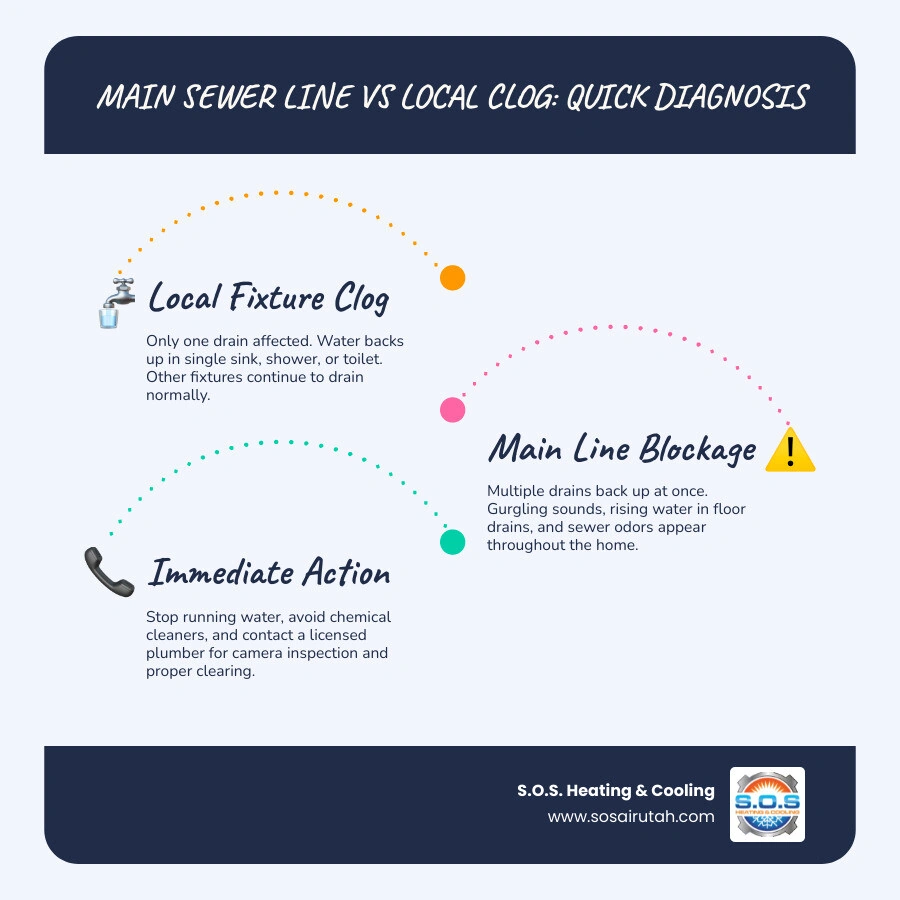
Multiple Drains Backing Up at Once: What It Usually Means
When you turn on the kitchen faucet and suddenly see dirty water bubbling up in your utility sink, or when you flush a master bathroom toilet only to hear an ominous gurgling sound coming from your master shower, your home is sending a clear, loud distress signal.
In a standard household plumbing system, every single sink, tub, shower, washing machine, and toilet operates as an individual branch. However, all of these branches eventually converge into one single "trunk" line: your home's main sewer lateral. Knowing what to do when this trunk line becomes obstructed is the difference between a quick, professional fix and a costly home restoration project. Recognizing the need for professional Clogged Drain Repair early on can save you from a major headache.
Understanding Multiple Drains Backing Up at Once: What It Usually Means for Your Plumbing
To understand why multiple drains fail together, think of your home's plumbing as a tree. The individual sinks, showers, and toilets are the leaves and small twigs. The pipes running through your walls and under your floors are the branch lines. Finally, the main sewer line buried beneath your yard is the tree trunk.
If a single leaf or twig is damaged, the rest of the tree continues to function perfectly. If you drop a thick clump of hair down your bathroom sink, only that sink will drain slowly. The shower next to it and the toilet across the hall will continue to drain without a hitch.
However, if the trunk of the tree is severed or blocked, every single branch upstream of that point is affected. When a blockage occurs deep within your main sewer lateral, wastewater from your household fixtures has nowhere to go. It cannot pass the obstruction to reach the municipal sewer system or your septic tank. As a result, the wastewater reverses direction, filling up the branch lines and spilling out of the nearest available exit. This is why professional Drain Blockage Removal is required to clear the primary pathway and restore proper flow.
Why Multiple Drains Backing Up at Once: What It Usually Means Points to a Main Sewer Line Clog
A system-wide failure occurs because household plumbing relies entirely on gravity. Wastewater flows downward. When the main sewer line is obstructed, gravity continues to pull the water down, but the physical barrier in the pipe stops it.
As you continue to run faucets, run the dishwasher, or flush toilets, you are adding more volume to a closed, blocked system. The water level inside your pipes rises. Eventually, the dirty wastewater will escape through the lowest physical openings in your home. This is not a series of unfortunate coincidences; it is a single, unified plumbing failure.
Ignoring this pattern or trying to treat it as several independent clogs will only result in repeated backups. Successfully Addressing Clogged Drains when multiple fixtures are acting up requires looking past the surface symptoms and targeting the main sewer lateral itself.
How to Tell If the Problem Is in the Main Sewer Line vs. a Single Fixture
Determining whether you are dealing with a simple, localized clog or a major main line obstruction is crucial. It tells you whether you can use a simple plunger or if you need to shut off your water immediately and call for professional backup.
| Symptom | Local Fixture Clog | Main Sewer Line Blockage |
|---|---|---|
| Number of Affected Drains | Only one specific sink, tub, or toilet is slow or blocked. | Two or more drains on different floors or walls are backing up. |
| Toilet Behavior | Toilet may flush slowly or overflow, but nearby shower is unaffected. | Flushing the toilet causes water to bubble up in the tub or shower. |
| Gurgling Sounds | Occurs only at the blocked fixture while it is draining. | Gurgling occurs across multiple fixtures, even when they aren't in use. |
| Lowest Drains (Basement) | Dry and clear, unless the clog is specifically in that basement fixture. | Basement floor drains or low-level showers show standing wastewater. |
| Using Washing Machine | Utility sink next to washer may overflow slightly, but toilets flush fine. | Running the washing machine causes toilets to bubble or overflow. |
If your symptoms align with the "Main Sewer Line Blockage" column, searching for a Clogged Drain Service Near Me is your best next step.
Early Warning Signs of a Main Line Blockage
A main sewer line does not always clog overnight. Often, it gives off subtle warning signs weeks before a complete, catastrophic backup occurs.
- Persistent, Slow Drainage: If you notice that every sink and tub in your house is taking slightly longer to drain than it did last month, the main line is likely narrowing due to grease, scale, or tree roots.
- Fluctuating Toilet Water Levels: Watch the water level in your toilet bowls. If the water level rises unusually high after a flush and then slowly drains down to a very low level over several hours, it indicates a pressure imbalance caused by a downstream restriction.
- Faint Sewer Odors: A healthy plumbing system keeps sewer gases trapped underground using water-filled "P-traps." When a main line is partially blocked, sewer gases can bubble through these traps, releasing a distinct rotten-egg smell near your basement floor drains or laundry area.
Recognizing these Drain and Sewer Line Problems Signs and Solutions early can help you schedule a cleanout before sewage actually overflows into your living spaces.
The Role of Gravity: Why Lowest Drains Back Up First
When a main sewer line is blocked, wastewater will always exit through the path of least resistance. Because water naturally seeks its lowest level, the lowest drains in your home will show symptoms first.
In many Utah homes along the Wasatch Front, this means a basement floor drain, a basement shower, or a laundry room sink will overflow long before your upstairs kitchen sink shows any signs of trouble. If you live in a multi-level home in Bountiful, Woods Cross, or Centerville, checking your basement drains is the fastest way to verify a main line issue. If you see water pooling around the floor drain in your basement utility room, it is a textbook sign of a main line blockage. Homeowners dealing with this in Davis County can look to specialized local help, such as services for a Clogged Drain Woods Cross UT, to stop the rising water before it ruins finished basement flooring.
Common Causes of Main Sewer Line Blockages
Main sewer lines are buried deep underground, out of sight and out of mind. However, they are constantly subjected to external forces, environmental changes, and whatever we send down our drains. If you are experiencing repeated backups, understanding the underlying cause is the first step toward finding a permanent solution. For older homes or properties with mature landscaping, referring to a comprehensive resource like the Sewer Line Repair Salt Lake Guide 2025 can help clarify your options.
Tree Roots, Grease, and Flushed Items
The three most common culprits behind main line blockages are tree roots, accumulated grease, and non-flushable items.
- Tree Root Intrusion: Underground sewer pipes carry a warm, constant flow of moisture and nutrient-rich water. Trees, especially older species with aggressive root systems like willows or maples, can detect this moisture. Tiny hair-like roots find their way into microscopic cracks or joint separations in older clay or cast iron pipes. Once inside, they feed on the wastewater, growing into massive, thick root masses that act as a net, catching toilet paper and solid waste. This is incredibly common in mature neighborhoods across Sandy and Murray. If you are dealing with a stubborn clog in these areas, contacting a professional for a Clogged Drain Sandy UT can help clear those stubborn root intrusions.
- Grease and "Fatbergs": Pouring cooking grease, oils, or butter down the kitchen sink is a recipe for disaster. While grease may be liquid when warm, it quickly cools and solidifies once it hits the cold underground sewer pipes. Over time, grease coats the pipe walls, narrowing the opening and catching other debris to form solid, concrete-like blockages known as fatbergs.
- "Flushable" Wipes and Foreign Objects: Despite what product packaging claims, baby wipes, cleaning wipes, and feminine hygiene products do not break down in water like toilet paper. They remain fully intact, catching on pipe imperfections, tree roots, or offset joints until they completely choke off the flow.
Structural Pipe Damage and Soil Shifting
Sometimes, the blockage is not caused by what went down the drain, but rather by the physical condition of the pipe itself.
- Pipe Bellies (Sags): A pipe belly occurs when a section of the sewer line sinks or sags due to soil compaction, shifting, or poor installation. Because sewer lines rely on a continuous downward slope to move waste, a sag creates a standing pool of water. Solid waste settles in this low spot, gradually building up until the line is completely blocked.
- Offset Joints and Collapsed Pipes: Older homes built before the 1980s often utilized clay tile or cast iron sewer pipes. Over time, clay pipes can crack, and cast iron can corrode and scale internally.
- Wasatch Front Soil Movement: In Utah, we live in a unique geological zone. The shifting clay soils along the Wasatch Front expand and contract significantly with seasonal moisture and temperature changes. This movement can put immense pressure on underground pipes, causing joints to separate or older, brittle pipes to collapse entirely. Understanding How Shifting Soils Along the Wasatch Front Damage Sewer Pipes is essential for local homeowners who want to protect their properties from sudden structural sewer failures.
Immediate Action Steps and Emergency Protocols
When multiple drains start backing up, time is of the essence. What you do in the first fifteen minutes can mean the difference between a simple drain cleaning and thousands of dollars in water damage restoration. Having an Emergency Plumbing Salt Lake City Guide handy is incredibly helpful, but here are the immediate steps you must take.
When Is a Sewer Backup Considered an Emergency?
A sewer backup is not just an inconvenience; it is a legitimate sanitary and safety emergency.
Wastewater backing up from a main sewer line is classified as Category 3 water (also known as "black water"). This water contains raw sewage, pathogenic bacteria, viruses, mold, and other hazardous biological contaminants. Exposure to black water poses severe health risks, including gastrointestinal infections, skin rashes, and respiratory issues.
Furthermore, standing sewage will quickly ruin drywall, baseboards, carpets, and subfloors. If sewage is actively backing up into your living spaces, especially if you have a finished basement or valuable items stored on lower levels, it is a critical emergency. Homeowners in Holladay can refer to the Emergency Plumbing Repairs Holladay UT Guide for rapid-response protocols to protect their property and health.
What Homeowners Should Do Right Away
If you notice multiple drains backing up, follow these steps immediately:
- Stop Using All Water: Do not flush toilets, run faucets, turn on the shower, or run the washing machine or dishwasher. Any water you send down any drain will only add to the backup and overflow into your home.
- Turn Off the Main Water Supply: If you cannot guarantee that everyone in the house will stop using water, locate your main water shut-off valve (usually in the basement or utility closet) and turn it off.
- Keep Pets and Children Away: Isolate the affected area. Do not let anyone walk through the standing water, as tracking sewage through the house spreads harmful bacteria.
- Locate Your Sewer Cleanout: If you know where your main sewer cleanout is (typically a white or black plastic pipe cap located in your yard or basement floor), point it out to the plumber when they arrive. Do not attempt to open a basement cleanout cap yourself if the system is backed up, as high pressure can cause sewage to spray out.
- Avoid Chemical Drain Cleaners: Do not pour liquid drain openers down the drains. They are highly corrosive, completely ineffective on main line clogs, and create a chemical hazard for the plumber who has to clear the line manually.
If you are located in Davis County, getting a professional on-site quickly is simple with local services like Clogged Drain Kaysville UT to handle the situation safely.
How Plumbers Diagnose and Clear Main Sewer Line Clogs
When a professional plumber arrives at your home, they won't just start blindly guessing or running equipment down your pipes. Modern plumbing relies on advanced diagnostic tools to locate the exact cause and position of the blockage before taking action. Knowing what to expect during a Sewer Line Camera Inspection What It Reveals can help put your mind at ease.
Diagnostic Tools: Sewer Camera Inspections
The gold standard for diagnosing main line issues is a high-resolution, waterproof sewer camera.
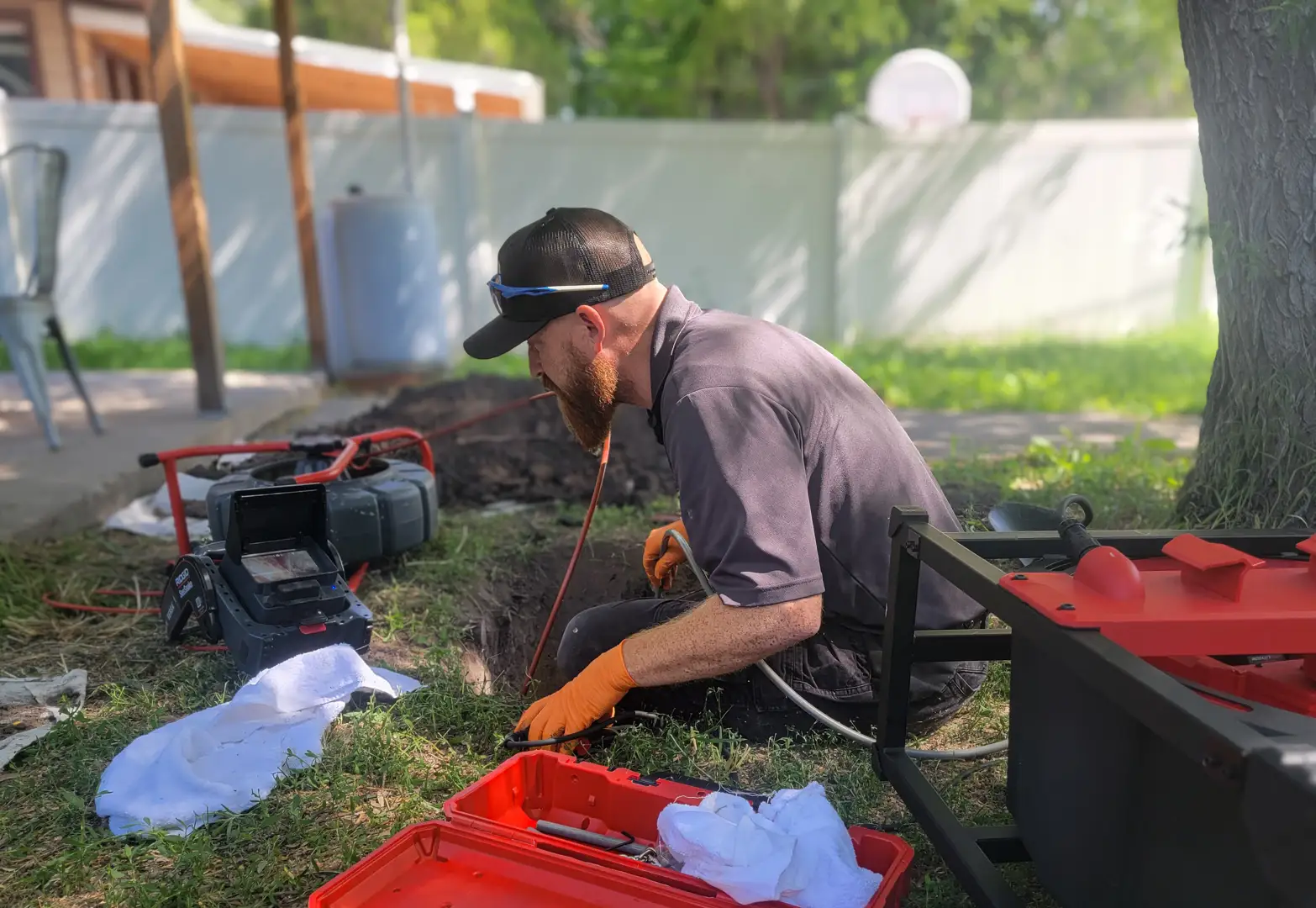
A technician will insert a flexible rod with a camera on the tip into your sewer line via an accessible cleanout. As the camera travels through the pipe, it transmits real-time video to a monitor. This allows us to see exactly what is going on inside your sewer lateral.
A camera inspection reveals:
- The exact location and depth of the blockage.
- The material of your pipes (clay, cast iron, PVC).
- The structural integrity of the line (cracks, collapses, offset joints).
- The presence of tree root intrusions or heavy scale buildup.
For residents in Murray, getting a precise diagnostic look is easy with a professional Sewer Line Inspection in Murray UT to pinpoint the exact issue before any digging or clearing begins.
Clearing Methods: Snaking vs. Hydro Jetting vs. Repair
Once the problem is diagnosed, we will recommend the most effective clearing or repair method based on the condition of your pipes.
- Sewer Snaking (Cabling): A motorized drain snake uses a heavy steel cable with a cutting blade on the end. It is fed into the sewer line to punch through solid blockages, cut through moderate tree roots, and restore basic flow. Snaking is highly effective for immediate relief but may leave grease or residual roots behind.
- Hydro Jetting: Hydro jetting uses high-pressure water (up to 4,000 PSI) sprayed through a specialized nozzle to scrub the inside of your pipes. It easily pulverizes tree roots, flushes out heavy grease deposits, and removes mineral scale, restoring the pipe to nearly its original diameter. It is the most thorough cleaning method available.
- Sewer Line Repair or Replacement: If the camera reveals a collapsed pipe, severe offset joints, or a deep pipe belly, cleaning alone will not solve the problem. In these cases, physical repair is necessary. Depending on the location and depth, this can involve traditional excavation or modern trenchless pipe lining, which seals cracks from the inside without tearing up your yard. If you live in Holladay, securing a long-term solution is straightforward through options to Fix Sewer Line Holladay UT.
Frequently Asked Questions About Multiple Drain Backups
Dealing with multiple clogged drains can lead to a lot of questions. Here are some of the most common questions we hear from homeowners along the Wasatch Front.
Can a clogged plumbing vent cause multiple drains to back up?
Your plumbing system includes a network of vent pipes that exit through your roof (the vent stack). These vents introduce fresh air into the system, allowing wastewater to flow smoothly without creating a vacuum.
If a bird's nest, leaves, or ice blocks your roof vent, it can create negative pressure inside your pipes. This can cause slow drainage, bubbling toilet bowls, and distinct gurgling sounds as air struggles to escape. However, a blocked vent stack will not cause actual wastewater or raw sewage to back up and pool in your sinks or floor drains. If you have standing water rising out of your drains, the issue is a physical blockage in the drain line, not the vent.
If you are experiencing slow drains and gurgling in Davis County, having a professional inspect the system, such as through services for a Clogged Drain Centerville UT, can help rule out vent issues and clear the real blockage.
Is it safe to use chemical drain cleaners on a main line clog?
No, it is never safe or effective to use chemical drain cleaners on a main line clog.
First, chemical drain cleaners are designed for small, localized clogs near a fixture trap (like hair in a bathroom sink). Because a main line clog is located dozens of feet deep underground, the chemical will dilute in the standing water long before it reaches the blockage, rendering it completely useless.
Second, these chemicals are highly corrosive. If you have older cast iron or clay pipes, the chemicals can eat through the pipe walls, turning a simple clog into a collapsed pipe. Finally, if the chemical fails to clear the clog, your pipes will remain filled with highly toxic, acidic water. When a plumber arrives to clear the line mechanically, this chemical mixture poses a severe burn hazard to the technician and can ruin their equipment. If you are in Salt Lake County, skip the store-bought chemicals and call for professional help with a Clogged Drain Millcreek UT to clear the line safely.
How can I prevent future main sewer line blockages?
The best way to handle a sewer backup is to prevent it from happening in the first place.
- Practice Good Drain Habits: Never pour grease, fats, or cooking oils down the sink. Collect them in a container and throw them in the trash. Never flush anything other than toilet paper and human waste—even if a product claims to be "flushable."
- Use Mesh Drain Strainers: Place strainers in all showers and tubs to catch hair and soap scum before they enter your branch lines.
- Schedule Regular Maintenance: If you live in an older home with mature trees nearby, scheduling annual or biennial hydro jetting or sewer snaking is a smart preventive measure. This keeps small tree roots and grease from building up into a full-scale emergency. Understanding How Regular Drain Maintenance Prevents Costly Backups is the key to keeping your home's plumbing running smoothly year after year.
Conclusion
Seeing multiple drains backing up at once is a stressful experience, but understanding what it usually means helps you take control of the situation. By stopping your water use immediately, avoiding harsh chemical cleaners, and calling in the professionals, you can protect your home from severe water damage and restore your peace of mind.
At S.O.S. Heating & Cooling, we provide comprehensive HVAC and professional plumbing services across the Salt Lake City area, including Bountiful, Draper, Sandy, Murray, Holladay, and beyond. We understand that a sewer backup is a true emergency, which is why we offer 24/7 emergency repairs, flexible financing options, and no evaluation fees during business hours. Our licensed plumbing experts use state-of-the-art camera inspections and advanced clearing techniques to get to the root of your drain problems quickly and cleanly.
If your home's drains are gurgling, backing up, or running slow, don't wait for a full-scale flood. Contact us today to schedule our expert Plumbing Services and keep your home safe, clean, and comfortable.
Explore Our Latest Insights and Updates in Plumbing Services

A Practical Guide to Drain Cleaning Frequency in the Wasatch Front

The Ins and Outs of How Hard Utah Water Causes Mineral Buildup in Toilet and Drain Lines
How Often to Service Your AC in Dry Utah Climate