
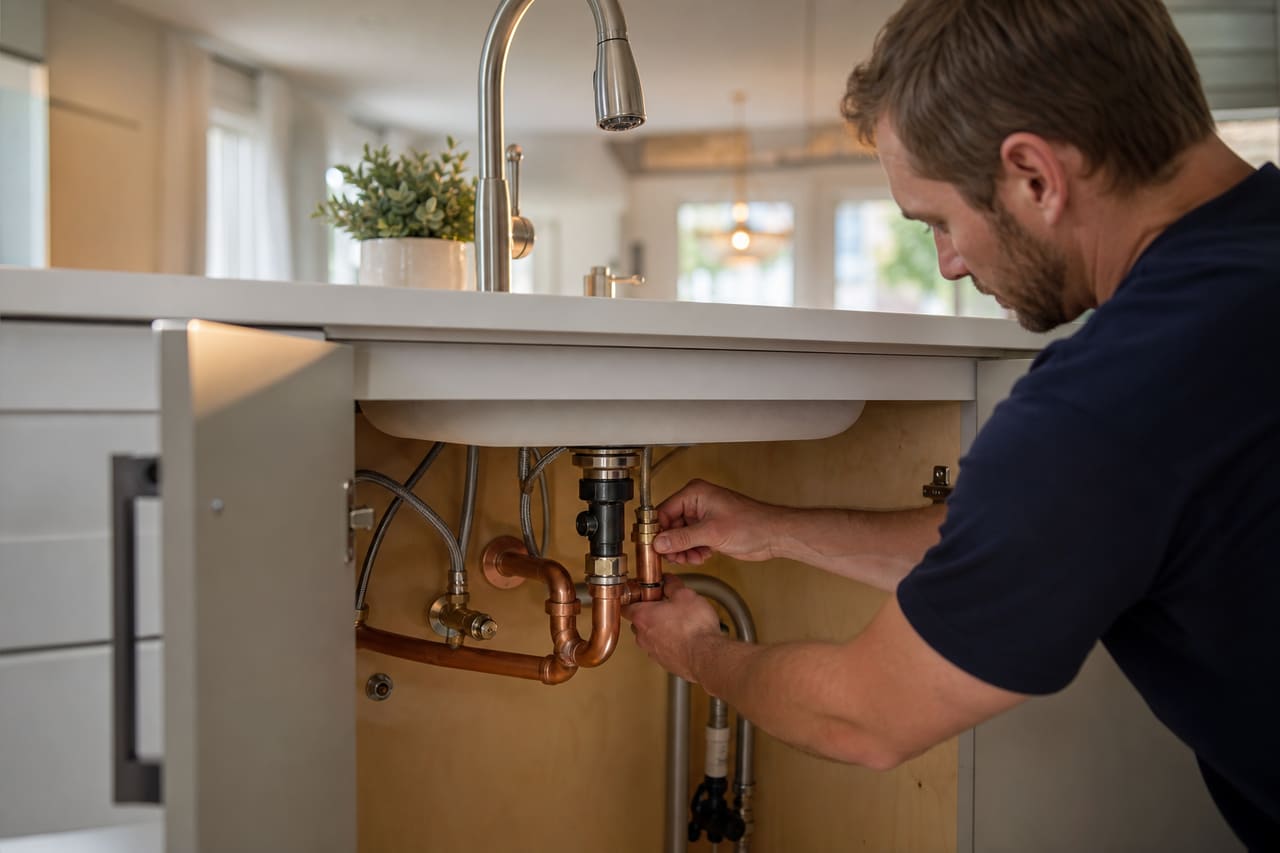
Is Your Water Heater Hooked Up Right? A Troubleshooting Guide
Your Guide to Water Heater Connections Water heater hook ups are the plumbing and electrical or gas connections that supply fuel and cold…
Your Guide to Water Heater Connections
Water heater hook ups are the plumbing and electrical or gas connections that supply fuel and cold water to your tank and deliver hot water to your home. Correct installation ensures your water heater operates safely and efficiently. Incorrect hookups risk leaks, scalding, energy waste, and dangerous gas or carbon monoxide exposure.
Key components of a proper water heater hook up include:
- Cold water inlet - Brings fresh water into the tank
- Hot water outlet - Delivers heated water to your fixtures
- Shutoff valve - Allows you to turn off water supply for maintenance or emergencies
- Temperature and Pressure (T&P) Relief Valve - Critical safety device that prevents tank explosions
- Gas supply line or electrical connection - Powers the heating element or burner
- Discharge pipe - Safely directs T&P valve overflow away from living areas
- Expansion tank - Manages pressure in closed-loop plumbing systems
- Flexible connectors or hard piping - The physical lines connecting water supply to your tank
If you're in the Salt Lake City area and have issues with your water heater hookup—like leaks, inconsistent hot water, or code compliance concerns—understanding these systems helps you know when to call for help. For comprehensive water heater services and expert installations, reach out to S.O.S. Heating & Cooling.
As Bryson Ninow, I've helped Utah homeowners with everything from simple water heater hook up adjustments to full system replacements. My goal is to help you understand your system to make informed decisions for a safe, comfortable home.
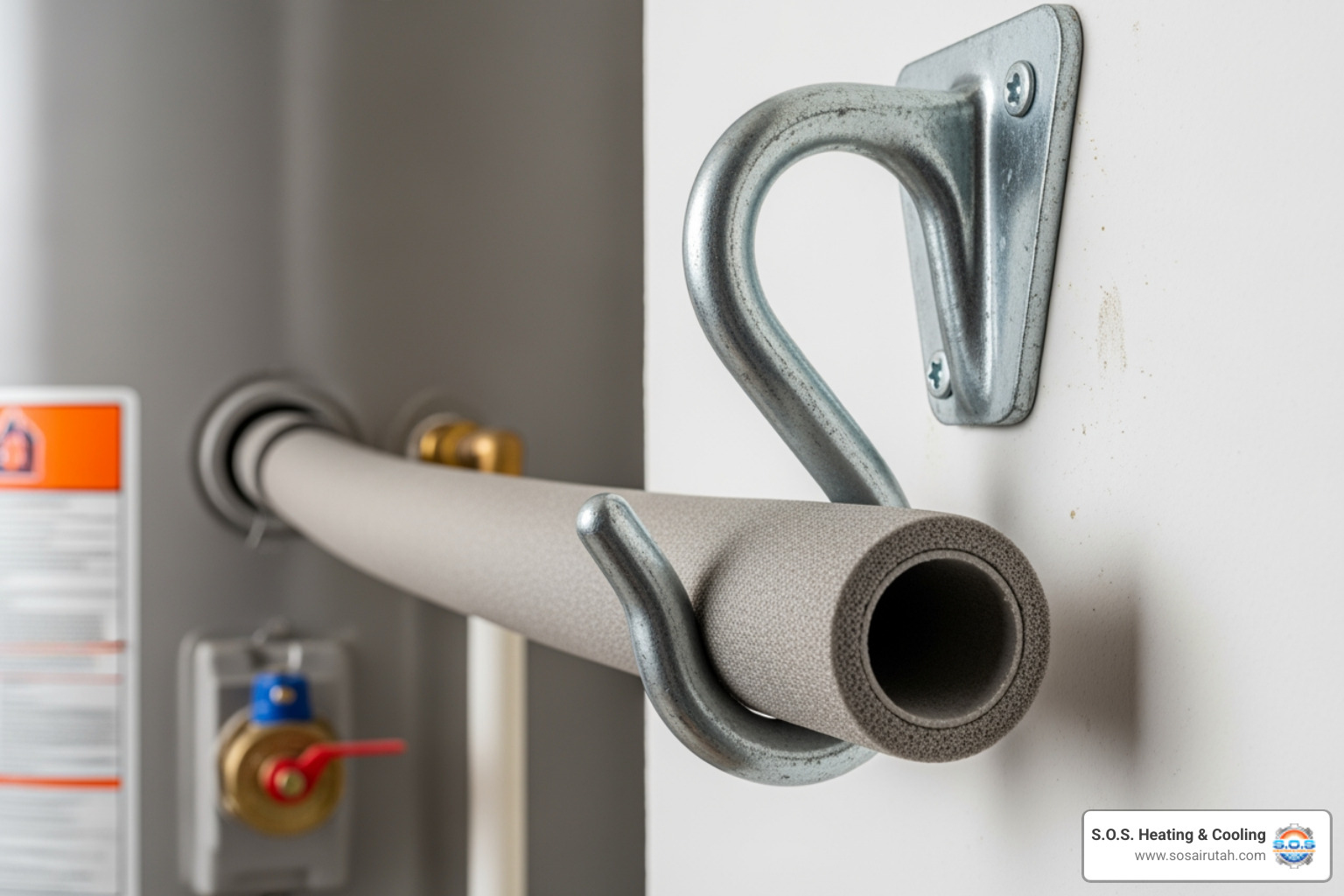
Understanding the Anatomy of Your Water Heater Connections
A water heater hook up is the network of pipes, valves, and lines that make your water heater work. Understanding each part is key to a safe, efficient system.
Key Components and Their Purpose
Let's explore the core components that make up your water heater's connections:
- Temperature and Pressure (T&P) Relief Valve: This is a critical safety device. It automatically opens to discharge water if the tank's temperature or pressure gets too high. A blocked T&P valve can lead to an explosion, so its discharge pipe must never be capped. The discharge pipe should be at least 3/4” inside diameter, made of approved material like copper, PEX, or CPVC, and terminate 1-6 inches above a floor drain or outside. We always install a new T&P relief valve with every new water heater.
- Shutoff Valve: Located on the cold water inlet line, this valve allows us to quickly cut off the water supply for maintenance, repairs, or in case of a leak.
- Expansion Tank: An expansion tank is necessary for "closed" plumbing systems. Water expands when heated, and in a closed system, this creates excess pressure. The tank absorbs this pressure, protecting your water heater and fixtures and preventing the T&P valve from dripping. It's often required by code and extends your water heater's life. We always consider water heater code compliance in our installations.
- Dip Tube: This tube sends cold water to the bottom of the tank for efficient heating. A damaged dip tube results in lukewarm water.
Common Connection Materials
The materials used for your water heater hook ups affect their longevity and reliability.
- Copper Pipes: Traditional, durable, and corrosion-resistant. Often used for hard piping.
- PEX Tubing: A flexible, corrosion-resistant plastic tubing that's easy to install and resists freezing.
- CPVC Pipes: A rigid plastic pipe suitable for hot water lines.
- Braided Stainless Steel Connectors: Flexible hoses with a braided steel exterior. Easy to install in tight spaces and kink-resistant.
- Corrugated Copper Connectors: Flexible copper tubes that simplify connecting misaligned pipes.
Flexible Connectors vs. Hard Piping
When connecting your water heater, you'll generally choose between flexible connectors or hard piping.
Flexible Connectors (e.g., braided stainless steel, corrugated copper):
- Pros:
- Easy Installation: Quicker to install, especially for misaligned pipes.
- Vibration Absorption: Reduces noise and stress on plumbing.
- Seismic Safety: Often required in earthquake zones as they withstand movement.
- Cons:
- Durability: Internal components can degrade over time, causing leaks. Regular inspection is recommended.
- Flow Restriction: Can reduce water flow if not sized correctly (use 3/4" ID or larger).
- Code Limitations: Some local codes may restrict their use.
Hard Piping (e.g., copper, PEX, CPVC):
- Pros:
- Longevity: Offers a very long-lasting, permanent connection.
- Optimal Flow: Provides excellent water flow with minimal restriction.
- Appearance: Looks clean and professional when installed neatly.
- Cons:
- Difficult Installation: Requires more skill, tools, and precision.
- Vibration Transfer: Can be noisier.
- Rigidity: Less flexible in seismic events.
- Corrosion Risk: Higher risk of galvanic corrosion if dissimilar metals aren't isolated.
For homeowners in Salt Lake City, local codes often dictate the acceptable materials and methods for a water heater hook. We stay up-to-date on all local regulations to ensure your installation is compliant and safe.
The Silent Killer: Preventing Galvanic Corrosion
Galvanic corrosion is a silent threat to your water heater's lifespan and its water heater hook ups. We often address this issue in our service areas, from Bountiful to South Jordan.
What is Galvanic Corrosion?
This electrochemical process happens when two different metals touch while in water. One metal (the more active) corrodes to protect the other (the more noble). Typically, the steel tank or nipples corrode to protect copper pipes.
This process accelerates with certain water types, like artificially softened water, which is highly corrosive. Without regular anode rod maintenance, a tank's lifespan can be just 5 to 7 years due to corrosion. Proper maintenance significantly extends its life.
The Role of Dielectric Unions and Brass Fittings
To prevent this at the water heater hook up, we isolate dissimilar metals:
- Dielectric Unions: These use a non-conductive gasket or insulator to separate metals and stop corrosion. However, the gaskets can sometimes fail.
- Plastic-Lined Nipples: New heaters often have these to insulate the steel tank from copper pipes, though it doesn't completely stop corrosion.
- Brass Fittings: Brass is a good transition metal between steel and copper, reducing corrosion. We often use brass adapters on the heater's nipples before connecting copper piping. Flexible stainless steel hoses should have a 3/4" ID and often include dielectric fittings.
The anode rod is a sacrificial metal rod inside your tank designed to corrode instead of the tank itself. We inspect and replace these during routine maintenance to maximize your water heater's life.
Signs of Corrosion on Your Water Heater Hook Up
Watch for these signs of corrosion:
- Rust-colored water: A classic indicator that the inside of your tank or pipes are corroding.
- Flakes in water: Small metallic flakes in your hot water can signal internal corrosion.
- Leaks at the top of the tank: Corrosion often starts at the connections. Water pooling around the hot or cold water connections could be a sign of corrosion eating through the metal.
- Pitting or discoloration: Visibly inspect your water heater hook ups for green or white buildup or rust.
If you see these signs, act quickly. A hot water heater leaking can cause major damage. Early detection can prevent a full replacement. We can diagnose if it's simple corrosion or time for a new unit, as detailed in our guide on signs your water heater needs replacement.
A Guide to a Secure Water Heater Hook Up
A secure, leak-free water heater hook up is key to a reliable hot water system. Precision is essential for any installation or replacement.
Essential Tools and Supplies
Having the right tools and materials is crucial for a successful connection:
- Pipe Wrenches: For tightening threaded connections.
- Tube Cutter: For making clean cuts on copper or PEX pipes.
- Deburring Tool: To smooth the edges of cut pipes.
- Teflon Tape (PTFE Tape): Used on male pipe threads for a watertight seal.
- Pipe Joint Compound (Pipe Dope): An alternative or supplement to Teflon tape for sealing threaded connections.
- Flexible Connectors: Ensure they are the correct length and diameter (at least 3/4" ID).
- Dielectric Unions or Brass Adapters: For isolating dissimilar metals.
- Soldering Torch and Solder: For hard piping copper.
- PEX Crimp Tool and Rings: For securing PEX connections.
- Non-Contact Circuit Tester: To ensure power is off before electrical work.
- Gas Leak Detection Solution: To check for gas leaks.
Ensuring a Leak-Free Connection
Here’s how we ensure a secure, leak-free water heater hook up:
- Preparation: All pipe ends must be clean and deburred. We apply Teflon tape (3-5 wraps clockwise) and/or pipe joint compound to male threads.
- Tightening: Hand-tighten connections first, then use a wrench for another quarter to half turn. Over-tightening damages threads, while under-tightening causes leaks.
- Avoid Direct Soldering: Never solder pipes directly to the heater's connections, as heat can damage internal parts. We use threaded adapters instead.
- Checking for Leaks: After connecting, we slowly fill the tank and purge air by opening a hot water faucet. Once water flows steadily, we close the faucet and inspect every connection for drips. Any leaks are addressed immediately. For more general advice, check out our water heater repair tips.
Gas vs. Electric Hookup Differences
While water connections are similar, the fuel source creates key differences in the water heater hook up process:
Gas Water Heaters:
- Gas Supply Line: Requires a manual shut-off valve, a sediment trap to protect the gas valve, and a union for easy disconnection. All connections must be leak-tested.
- Venting: Combustion byproducts must be vented outside through a properly sized and sloped vent pipe. Proper ventilation and combustion air are critical to prevent carbon monoxide poisoning.
- Carbon Monoxide Safety: We recommend installing CO detectors. If you smell gas, evacuate immediately and call your gas supplier or the fire department from a safe location.
- Pilot Light: If you’re having trouble with your pilot light, our guide on how to troubleshoot water heater pilot light issues can help.
Electric Water Heaters:
- Wiring: Requires a dedicated circuit with correct wire size and voltage, connected to the heater's junction box, often in a protective conduit.
- Circuit Breaker: Must be connected to a breaker of the correct amperage.
- Grounding: Proper electrical grounding is essential for safety.
- "Dry Fire" Prevention: Never power on an electric heater before the tank is completely full of water. Doing so will burn out the heating elements.
Regardless of your water heater type, turning off the main power or gas supply before starting any work is a non-negotiable safety step.
Common Problems and When to Call for a Professional Repair
A DIY water heater hook up can go wrong. Knowing when to call a professional is key to safety. Our team at S.O.S. Heating & Cooling assists homeowners across Utah, from Layton to Holladay.
Risks of an Improper Water Heater Hook Up
The consequences of an incorrect installation can be severe:
- Water Damage: Loose or poorly sealed connections can cause leaks, leading to significant property damage.
- Reduced Efficiency: Improper installation can make your heater work harder, increasing energy bills.
- Scalding Risk: Faulty safety devices or high thermostat settings can lead to dangerously hot water and severe burns.
- Gas Leaks & CO Poisoning: Faulty gas connections can cause leaks, fire, or explosions. Improper venting can lead to deadly carbon monoxide buildup.
- Shortened Lifespan: Corrosion, high pressure, or connection stress can drastically reduce your water heater's life.
Troubleshooting Connection Issues
Here are common water heater hook up issues and their likely causes:
- No Hot Water: Check the pilot light (gas) or circuit breaker (electric). Could also be a faulty dip tube or heating element. Our water heater repair salt lake city guide offers more insights.
- Low Hot Water Pressure: Often caused by a restriction in the outlet pipe, sediment buildup, or a partially closed valve.
- Leaks at Fittings: Check all connections, hoses, and the T&P valve for drips.
- Hissing/Sizzling Sounds: Could be normal condensation on a gas heater, but a persistent sound may indicate a leak.
- Water Temperature Fluctuations: If you're experiencing water heater temperature fluctuations in mt olympus, it might indicate issues with the dip tube, thermostat, or a faulty mixing valve.
Signs You Need a Professional Water Heater Installation
Some issues require a professional. Call us for your water heater hook up if you encounter these situations:
- Gas Line Work: Always leave gas line work to a licensed professional.
- Major Plumbing Changes: Call an expert if your new heater requires significant plumbing reconfiguration.
- Code Compliance: A professional ensures your installation meets all local Salt Lake City, UT, codes for safety.
- Leaking Tank: A tank leak usually means it's time for a full replacement by a professional.
- Upgrading Your Unit: Switching heater types or sizes requires complex adjustments best handled by a pro.
- Electrical Work: If you're not comfortable with wiring, call a qualified professional.
- You're Unsure: When in doubt, call for help. It's the safest option.
For reliable water heater installation salt lake city services, our team has the tools and experience to get the job done right. We offer 24/7 emergency repairs, so you're never left in the cold. If you need an emergency water heater repair utah guide, we are here to help.
Frequently Asked Questions about Water Heater Connections
Here are answers to common questions about water heater connections from homeowners in the Salt Lake City area:
How do I know if I need a thermal expansion tank?
You need an expansion tank if you have a "closed-loop" plumbing system (one with a check valve or pressure-reducing valve). As water heats and expands, this tank absorbs the excess pressure that would otherwise build up.
Signs you might need one include:
- Frequent dripping from your T&P relief valve.
- High water pressure in your home.
- Premature failure of fixtures or appliances.
Most local codes in Utah now require expansion tanks on new installations with closed-loop systems. We ensure all our installations are compliant.
What's the difference between a tank and tankless water heater hookup?
The water heater hook up process differs significantly between tank and tankless models:
Tank Model Connections: These use standard 3/4-inch water lines, a dedicated electrical circuit or standard gas line, and a simple flue vent for gas models.
Tankless Model Connections:
- Water Lines: Need larger lines (3/4" or 1") for high flow rates and isolation valves for flushing.
- Gas/Electrical: Gas models need a larger gas line and higher BTU input. Electric models require significant power, often needing multiple circuits and an electrical panel upgrade.
- Venting: Gas models use specialized, sealed venting systems (often PVC or stainless steel).
- Condensate Drain: High-efficiency models produce condensate that must be drained.
For a comprehensive dive into tankless systems, check out our utah tankless water heater complete guide.
How long do flexible water heater connectors last?
High-quality braided stainless steel connectors can last 5-10 years. However, their internal lining can degrade over time from heat, pressure, and water chemistry.
Signs of wear to watch for include:
- Bulging or swelling of the hose.
- Fraying or rusting of the steel braiding.
- Leaks or drips at the connections.
- Hardening or brittleness of the connector.
Inspect flexible connectors regularly and replace them if they show wear or are over 5-7 years old. We recommend replacing them with any new water heater installation to prevent future issues, as it's a small part of the overall water heater replacement process.
Ensure Your Water Heater is Connected for Safety and Longevity
The water heater hook up is a critical part of your home's plumbing. Every connection, from the water lines to the safety devices, is vital for safe, efficient operation and a long lifespan for your heater.
Proper installation and maintenance prevent leaks, corrosion, and other hazards. Understanding the components, materials, and safety features helps you spot potential problems early.
While a basic understanding is helpful, professional help is crucial for complex issues, new installations, or when dealing with gas and electrical lines. Our team at S.O.S. Heating & Cooling is dedicated to providing expert, reliable service for homeowners throughout the Salt Lake City area, including Murray, Sandy, and Draper. We ensure your water heater is hooked up correctly, adhering to all local codes and best practices.
For expert water heater services and peace of mind, contact our team today. We're here 24/7 for emergency repairs and committed to keeping your home safe and comfortable. Losing hot water? We provide reliable water heater repair.
Contact Us
Let's Get You From Distress to Rest
No heat, no cool, a backed-up drain, or just due for a tune-up? Call now or request service and our local team will be on the way — upfront pricing, no surprises.