The Ins and Outs of Whole Home Air Purifiers and HVAC Integration
Why Indoor Air Quality Starts With Understanding Your HVAC System If you've ever wondered what is a whole home air purifier and how does…
Why Indoor Air Quality Starts With Understanding Your HVAC System
If you've ever wondered what is a whole home air purifier and how does it work with your HVAC, here's the short answer:
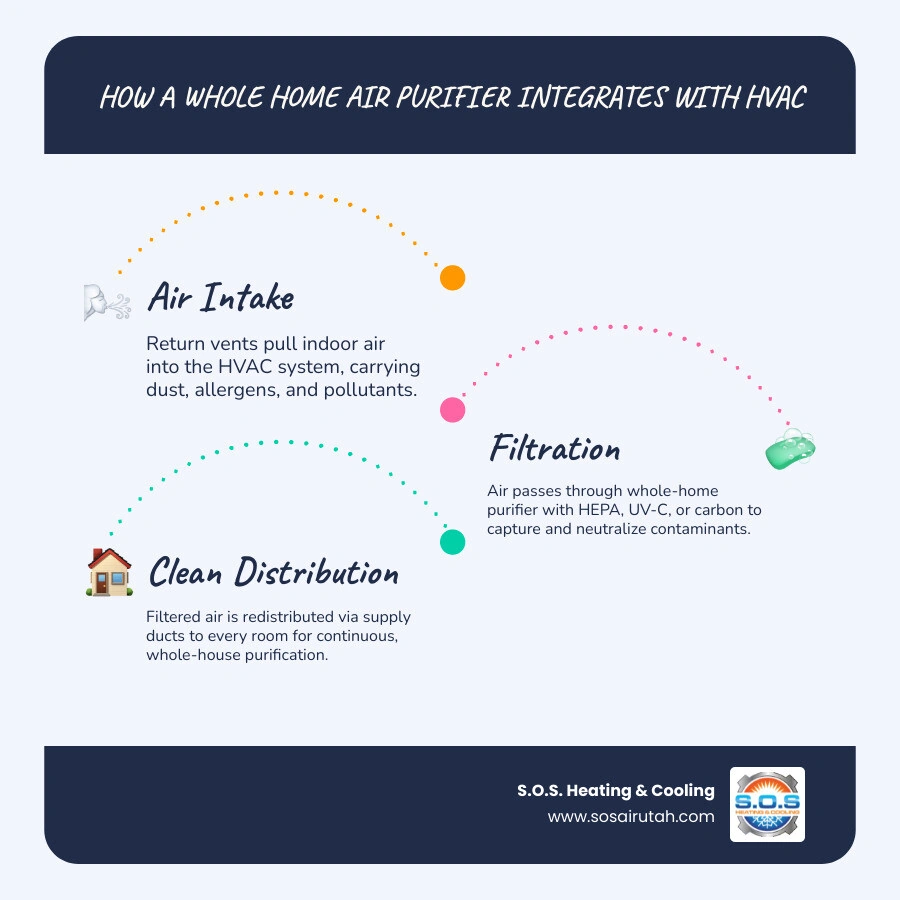
A whole home air purifier is a filtration system installed directly into your HVAC ductwork. As your heating or cooling system runs, it pulls air through the purifier before redistributing it throughout your home. Unlike portable units that clean one room at a time, a whole home system treats every cubic foot of air that circulates through your HVAC — automatically, continuously, and without taking up any floor space.
Here's how it works at a glance:
- Air is pulled in through your home's return vents and travels toward your furnace or air handler.
- It passes through the purification system, which may use HEPA filters, activated carbon, UV-C light, or other technologies to capture and neutralize airborne contaminants.
- Cleaned air is pushed back out through your supply ducts and into every room in your home.
- The cycle repeats every time your HVAC blower runs, gradually reducing dust, allergens, bacteria, mold spores, and other pollutants throughout the entire house.
Most homeowners don't give much thought to what's floating around in the air they breathe at home — but the numbers are hard to ignore. According to the American Lung Association, indoor air can be 2 to 5 times more polluted than outdoor air, and in some cases up to 100 times worse. That's especially concerning when you consider that most people spend more than 90% of their time indoors.
The air inside a typical Salt Lake City home can carry dust mites, pet dander, pollen, mold spores, volatile organic compounds (VOCs) from cleaning products and furniture, and even bacteria or viruses — all cycling silently through your HVAC system with every breath. Standard one-inch furnace filters catch some of the larger particles, but they're designed primarily to protect your equipment, not your lungs.
That's where a whole home air purifier changes the equation entirely.
I'm Bryson Ninow, an HVAC professional with certifications in EPA, NATE, RMGA, and DOPL, and I've helped many Utah homeowners navigate the question of what is a whole home air purifier and how does it work with your HVAC to find solutions that genuinely improve comfort and health inside their homes. In the sections below, I'll walk you through everything you need to know — from how these systems integrate with your existing ductwork to which filtration technologies actually deliver results.
What Is a Whole Home Air Purifier and How Does It Work with Your HVAC?
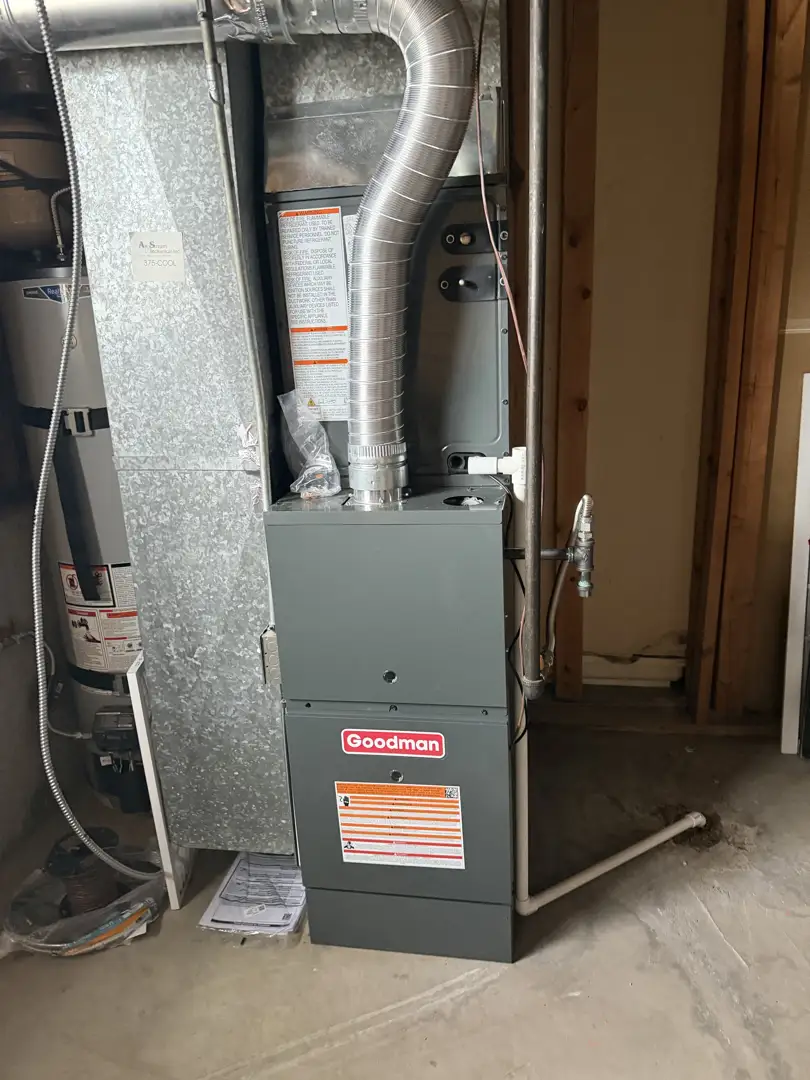
To truly understand how this technology works, we need to look at your heating and cooling system as the "lungs" of your house. Every time your furnace or air conditioner kicks on, it creates a continuous loop of airflow. It draws stale air out of your rooms, conditions it to your desired temperature, and pushes it back into your living spaces.
When we install a whole-house purification system, we are essentially placing a high-tech security guard at the main entrance of this airflow loop. Instead of relying on a tiny, standalone device sitting in the corner of your living room, you leverage your home's existing network of ducts to clean all your air. Understanding how these systems integrate is the first step when you decide to Improve Your Indoor Air Quality.
Defining the System: What Is a Whole Home Air Purifier and How Does It Work with Your HVAC?
A central air purifier is vastly different from a standard furnace filter. Your basic one-inch disposable fiberglass filter is only designed to catch large debris like giant dust bunnies, carpet fibers, and pet hair. Its main job is to keep those massive particles from settling on your expensive furnace blower motor and air conditioning coils. It does absolutely nothing to clean microscopic pollutants out of the air you breathe.
In contrast, a whole-home air purifier is a dedicated, heavy-duty housing unit installed directly into your return air duct. While a standard filter has a Clean Air Delivery Rate (CADR) of around 10, a premium whole-home system can achieve a CADR of 1200 or more. This massive jump in performance allows the system to capture microscopic, sub-micron particles — including mold spores, bacteria, viruses, smoke, and ultra-fine dust.
Because these systems are physically built into your ductwork, they can clean all the air in a typical house multiple times an hour. When you are looking into Choosing an Air Filtration System, it is helpful to think of a whole-home purifier as an active, medical-grade defense system rather than a passive barrier.
Seamless Integration: What Is a Whole Home Air Purifier and How Does It Work with Your HVAC System's Ductwork?
The physical installation of a whole-home air purifier typically occurs in the return air plenum — the large metal chamber where air gathers just before entering your furnace or air handler. By placing the purifier here, we ensure that 100% of the air returning from your rooms must pass through the purification media before it is heated, cooled, or redistributed.
As your HVAC system's blower fan runs, it pulls air through your home's return vents. The air passes through the purifier, which cleanses it of impurities. The air handler then conditions the clean air and pushes it back through your supply ducts. This creates a continuous cycle of purification.
For a whole-home system to work effectively, we must carefully calculate your home's required air changes per hour (ACH) alongside your HVAC system's specific airflow capacity, measured in cubic feet per minute (CFM). If a filter is too restrictive, it can create excessive static pressure, which forces your blower motor to work harder, reducing efficiency and potentially causing system damage. This is why professional sizing and installation are absolutely critical for Maintaining Optimal Indoor Air Quality without compromising your HVAC equipment's performance.
Advanced Filtration Technologies for Whole-House Systems
Not all whole-home air purifiers clean the air in the same way. Depending on your family's health needs, allergies, or local air concerns (such as the winter inversion we often experience here in the Salt Lake Valley), different technologies can be utilized individually or combined for a layered defense. If you are considering an Air Scrubber Installation Utah, understanding these core technologies is essential.
- High-Efficiency Media Filters (MERV Ratings): Minimum Efficiency Reporting Value (MERV) ratings scale from 1 to 16 for residential systems. Standard filters are usually MERV 1 to 4. Whole-home media filters typically range from MERV 11 to 16. A MERV 13 filter is often considered the "sweet spot" for residential use, capturing up to 90% of airborne particles like mold spores, pollen, and bacteria. Hospital-grade MERV 16 filters capture up to 95% of microscopic particles down to 0.3 microns.
- True HEPA Filtration: High-Efficiency Particulate Air (HEPA) filters are the gold standard for particle removal, capturing 99.97% of particles as small as 0.3 microns. Because HEPA filters are highly restrictive to airflow, they cannot simply be slid into a standard furnace slot. Instead, they require a "bypass" configuration with a dedicated auxiliary blower fan that pulls a portion of the circulating air through the HEPA filter and returns it to the main airstream.
- Activated Carbon Filters: While media and HEPA filters excel at trapping physical particles, they cannot capture gases, chemical fumes, or odors. Activated carbon filters use a process called adsorption to chemically bond with volatile organic compounds (VOCs), cooking smells, pet odors, and smoke, neutralizing them as they pass through the system.
- UV-C Light Purifiers: Installed near your indoor air conditioning evaporator coil or directly inside your supply ducts, UV-C germicidal lamps emit high-intensity ultraviolet light. This light disrupts the DNA of biological contaminants like mold, bacteria, and viruses, rendering them harmless. In laboratory testing, quality UV-C systems have demonstrated up to a 99.9% reduction in bacteria and mold spores on HVAC surfaces.
- Bipolar Ionization: This advanced technology releases positive and negative ions into the moving airstream. These ions attach to microscopic airborne particles, causing them to cluster together (agglomerate). As these clusters grow larger, they become heavy enough to fall out of the air or easily get caught by your system's main media filter. Bipolar ionization also actively deactivates pathogens by stripping them of life-sustaining hydrogen.
Whole-Home Systems vs. Portable Units: Pros and Cons
When deciding how to clean your indoor air, you will likely compare a single, integrated whole-home system against placing multiple portable room purifiers throughout your house. While portable units can be excellent for renters or targeted, single-room relief, they work very differently than a system integrated directly into your central ductwork.
To help you visualize the differences, here is a direct comparison of how these two approaches stack up:
| Feature | Whole-Home Air Purifiers | Portable Room Units |
|---|---|---|
| Coverage Area | Complete home coverage (every room with a vent) | Single room or localized zone (limited by walls) |
| Maintenance Frequency | Typically once or twice a year | Every 3 to 6 months per unit |
| Noise Levels | Virtually silent (components are located in utility spaces) | Noticeable fan hum in the living space |
| System Lifespan | 10 to 15+ years (built to match HVAC lifespan) | Approximately 3 to 5 years |
| Floor Space | Zero (completely hidden within ductwork) | Requires dedicated floor space and electrical outlets |
| Equipment Protection | Actively protects HVAC coils and blower from dust | No protection for your heating and cooling equipment |
If you are a homeowner with central heating and air, investing in a Whole Home Air Filtration Salt Lake City UT system typically offers superior long-term performance, convenience, and value.
Because whole-home systems have up to ten times the filter surface area of a standard furnace filter, they do not clog nearly as quickly as small portable units. While you might find yourself constantly changing filters and cleaning collector plates on four or five portable units scattered across your house, a whole-home system keeps things simple with a single filter replacement once or twice a year.
Frequently Asked Questions About HVAC Air Purification
Do whole-home air purifiers produce harmful ozone?
This is an incredibly important question, especially for families dealing with asthma, COPD, or other respiratory conditions. In the past, some older electronic air cleaners and ionizers produced trace amounts of ozone as a byproduct of their electrical charging process. Ozone is a known lung irritant that can worsen breathing issues.
Today, the industry is highly regulated. When choosing an electronic or ionizing air purifier, look for systems that carry the UL 2998 certification. This certification guarantees that the device emits zero ozone (less than 5 parts per billion, which is the limit of detection). Modern, high-quality bipolar ionization and electrostatic systems are designed to be completely safe for continuous residential use, providing the benefits of advanced particle charging without any harmful chemical byproducts.
Can a whole-home air purifier extend the lifespan of my HVAC system?
Yes, absolutely! While we often focus on the health benefits for your lungs, a whole-home air purifier does wonders for the "health" of your heating and cooling equipment.
When dust and dirt bypass a cheap, standard filter, they settle directly on your air conditioner's indoor evaporator coil and your furnace's blower motor. A dusty evaporator coil cannot transfer heat efficiently, forcing your system to run longer cycles and consume more energy. Over time, this buildup can cause frozen coils, overheating blower motors, and compressor failures. By capturing these particles before they ever reach your equipment, a whole-home purifier keeps your system running at peak efficiency, which can significantly extend its operational lifespan. You can read more about this in our guide on How Dirty Air Filters Destroy Your AC Performance.
How often do whole-home filters and UV bulbs need to be replaced?
One of the greatest conveniences of a whole-home air purifier is its low-maintenance schedule. Because these systems use thick, deeply pleated media filters (often 4 to 5 inches deep), they can hold an incredible amount of dust before restricting airflow.
- Media Filters: In most homes, a high-quality whole-home media filter only needs to be replaced every 6 to 12 months. If you have multiple pets, live near a dusty dirt road, or have active construction nearby, you may want to check it every 4 months.
- UV-C Lamps: Ultraviolet bulbs run continuously to keep mold from growing on your AC coils. While the blue glow of the bulb may last for years, the germicidal effectiveness of the UV-C light degrades over time. Most manufacturers recommend replacing UV-C bulbs every 12 to 24 months (or about every 9,000 hours of operation) to ensure they are actively neutralizing pathogens.
- Electronic Plates: If you have an electronic air cleaner with metal collector plates instead of a disposable media filter, these plates should be washed in warm, soapy water every 1 to 3 months to maintain their electrostatic charge.
Conclusion
Understanding what is a whole home air purifier and how does it work with your HVAC reveals that clean air isn't just about placing a small appliance in a room. It is about transforming your entire home's HVAC system into a powerful, continuous air scrubbing machine. By integrating advanced filtration directly into your central ductwork, you protect your family's health, keep your home cleaner, and extend the life of your heating and cooling equipment.
At S.O.S. Heating & Cooling, we are dedicated to helping our neighbors throughout the Salt Lake City metro area — from Bountiful and Layton down to Sandy and Draper — breathe easier in their homes. We offer professional indoor air quality assessments, expert equipment integration, and a commitment to keeping your home comfortable year-round.
If you are ready to take control of your home's air quality, we are here to help. Breathe easier with professional indoor air quality solutions and contact us today to schedule your consultation!
Contact Us
Let's Get You From Distress to Rest
No heat, no cool, a backed-up drain, or just due for a tune-up? Call now or request service and our local team will be on the way — upfront pricing, no surprises.